Vietnam Cement Expo Highlights Chinese Admixture Solutions Amid Rising SEA Infrastructure Demand




From May 27–28, 2026, the sixth Vietnam International Cement & Concrete Exhibition took place in Ho Chi Minh City — one of Southeast Asia’s largest specialized building materials trade fairs. The event spotlighted growing procurement interest from Vietnamese real estate and infrastructure developers in Chinese concrete admixture solutions, particularly those meeting environmental compliance standards, offering reliable export lead times, and supporting localized technical service.
Event Overview
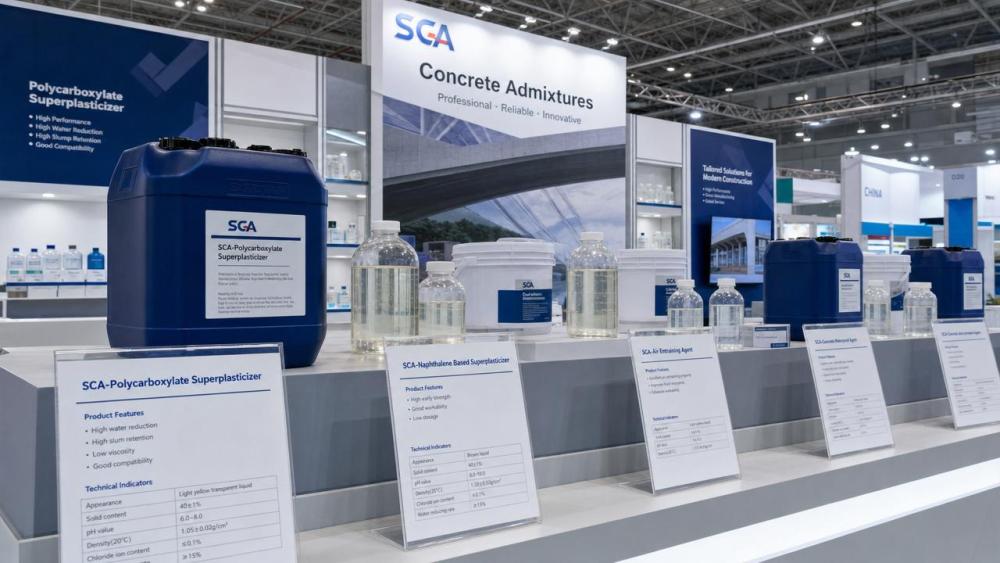
The sixth Vietnam International Cement & Concrete Exhibition was held in Ho Chi Minh City on May 27–28, 2026. RedWall Co., Ltd. participated with its portfolio of concrete admixtures and integrated upstream-downstream solutions. Multiple procurement representatives from Vietnam’s real estate and infrastructure sectors engaged in on-site inquiries and technical discussions. The exhibition is recognized as one of the region’s leading professional construction materials events.
Industries Affected
Direct Exporters of Construction Chemicals
Exporters of concrete admixtures and related chemical additives face increased inbound demand signals from Vietnam and neighboring markets. The emphasis on environmental certification (e.g., EU REACH, ISO 14001-aligned documentation) and delivery reliability means compliance readiness and logistics transparency are now key differentiators — not just product performance.
Raw Material Suppliers to Admixture Manufacturers
Suppliers of base chemicals (e.g., polycarboxylate ether polymers, lignosulfonates, retarders) may experience shifting order patterns. Vietnamese buyers’ focus on stable supply chains and shorter export lead times implies greater scrutiny of upstream production capacity, batch traceability, and documentation consistency — especially for export-controlled or regulated substances.
Contract Manufacturing & Blending Facilities
Firms providing toll manufacturing or regional blending services for admixture formulations may see renewed interest in joint ventures or local co-location models. The stated preference for ‘localized technical service capability’ suggests that physical presence or certified partner networks in Vietnam — rather than purely remote support — are gaining strategic weight.
Distribution & Technical Service Providers
Regional distributors and technical service providers active in Southeast Asia must align their support infrastructure with evolving buyer expectations: bilingual technical documentation, on-site troubleshooting capacity, and familiarity with Vietnamese construction standards (e.g., TCVN 7571, TCVN 8826) are becoming baseline requirements — not value-adds.
What Stakeholders Should Monitor and Act On
Track official regulatory updates from Vietnam’s Ministry of Construction and General Department of Vietnam Customs
Recent procurement interest coincides with ongoing revisions to national standards for concrete admixtures (TCVN draft revisions under consultation). Stakeholders should monitor formal adoption timelines and testing protocol changes — especially those affecting environmental labeling and VOC thresholds.
Prioritize documentation readiness for key export markets
Vietnamese importers increasingly request third-party environmental compliance reports (e.g., EPD, RoHS declarations), full ingredient disclosure, and verified delivery schedules. Preparing these documents in advance — rather than reacting to RFPs — reduces procurement cycle time.
Distinguish between market signals and scalable demand
While on-site inquiries at the exhibition reflect genuine interest, they do not yet indicate committed volume or long-term contracts. Companies should treat such engagements as diagnostic opportunities — assessing actual project pipelines, decision-making authority of attendees, and alignment with local tendering cycles — before scaling commercial efforts.
Assess feasibility of localized technical response capability
Given repeated emphasis on ‘local technical service’, stakeholders should evaluate whether deploying certified field engineers, partnering with accredited labs in Vietnam, or co-developing training modules with local contractors offers higher near-term ROI than expanding sales outreach alone.
Editorial Perspective / Industry Observation
Observably, this exhibition outcome functions more as a directional signal than an immediate market inflection point. It reflects tightening alignment between Vietnam’s infrastructure acceleration — driven by national development plans and ASEAN connectivity initiatives — and the maturing expectations of local specifiers regarding foreign-sourced chemical solutions. Analysis shows the shift is less about price competition and more about verifiable compliance, logistical predictability, and embedded service depth. From an industry perspective, the trend underscores that export success in Southeast Asian construction markets is increasingly contingent on operational integration — not just product specification.
Conclusion: This event signals a broadening of procurement criteria in Vietnam’s construction sector — moving beyond technical performance to encompass environmental accountability, supply chain resilience, and localized support infrastructure. It is best understood not as an isolated opportunity, but as an indicator of evolving regional standards for imported construction chemicals — warranting structured, evidence-based preparation rather than reactive market entry.
Source: Official exhibition records and participant engagement summary from the sixth Vietnam International Cement & Concrete Exhibition (Ho Chi Minh City, May 27–28, 2026). Note: Ongoing monitoring is recommended for formal tender announcements and regulatory updates from Vietnam’s Ministry of Construction, which have not yet been published as of the exhibition date.
Ready when you are. Send us a message to get started.
Related News
- How corrugation angle affects heat transfer in plate heat exchangersAuthor :Thermodynamics Analyst

- R22 Prices Retreat as China's Refrigerant Market Faces Tight Quotas and Soft DemandAuthor :Cryogenic Systems Expert

- How to select industrial equipment for automation with existing PLCsAuthor :

- Carrier Plans $600 Million Manufacturing and Engineering Center in Fort WorthAuthor :

- How electricity prices shape industrial compressed air price trendsAuthor :

- Chemours Faces Investor Lawsuit Over Opteon Refrigerant Sales ForecastsAuthor :Cryogenic Systems Expert

- Choosing air filtration systems for heavy dust in the Middle EastAuthor :

- LG Expands R290 Monobloc Heat Pump Range with New 12–16 kW ModelsAuthor :Cryogenic Systems Expert

- How to size a chiller for pharmaceutical cleanroom temperature controlAuthor :Cryogenic Systems Expert

- Kentucky Regulators Approve $191 Million Cooling Tower at Mitchell Coal PlantAuthor :Thermodynamics Analyst

- How much does a fully installed compressed air monitoring system cost?Author :

- What documentation supports CE marking for industrial equipment?Author :

- When do plate heat exchangers suit Middle East seawater cooling?Author :Thermodynamics Analyst

- EU Issues Updated Guidance on Industrial Refrigeration Efficiency and F-gas AlternativesAuthor :Cryogenic Systems Expert

- How does base pressure affect film purity in vacuum deposition?Author :Vacuum Process Fellow

- Do U.S. refrigerant regulations require replacing R-410A systems?Author :Cryogenic Systems Expert

- When does variable gas flow justify a custom screw compressor system?Author :Pneumatic Power Engineer

- How local support affects vacuum system costs in Southeast AsiaAuthor :

- How worldwide industry category guides help compare market opportunitiesAuthor :

- How to verify food-grade purity in compressed air systemsAuthor :Pneumatic Power Engineer

- When high-pressure waste heat recovery boilers make economic senseAuthor :Thermal Energy Strategist

- How to size compressed air equipment for pneumatic toolsAuthor :Pneumatic Power Engineer

- How to size vacuum process equipment for the required pump-down timeAuthor :Vacuum Process Fellow

- What determines the price of pure air compression systems?Author :Pneumatic Power Engineer

- How steam generation efficiency shapes thermal power system designAuthor :Thermal Energy Strategist

- What drives sustainable thermal systems cost over their operating life?Author :

- Which vacuum specification best protects semiconductor process yield?Author :Vacuum Process Fellow

- When do smart thermal systems with sensors reduce chiller energy use?Author :Cryogenic Systems Expert

- When does gasketed plate heat exchanger technology suit your process?Author :Thermodynamics Analyst

- How to size oil-free compressors for instrumentation air demandAuthor :Pneumatic Power Engineer

- How Class 0 oil-free compressors protect product quality in food productionAuthor :Pneumatic Power Engineer

- Which industrial solution comparison criteria prevent project delays?Author :

- Chiller Optimization Checklist for Rising Energy Use and Unstable Cooling OutputAuthor :Cryogenic Systems Expert

- How to Specify a High-Precision Temperature Chiller for Tight-Tolerance ProcessesAuthor :Cryogenic Systems Expert

- Designing Energy-Efficient Industrial Cooling for Variable Process LoadsAuthor :Cryogenic Systems Expert

- Low-GWP Cooling Solutions for Process Plants: Comparing Safety, Efficiency, and CostAuthor :Cryogenic Systems Expert