How steam generation efficiency shapes thermal power system design




Steam generation efficiency sets the technical boundaries of a thermal power system long before a boiler is selected. It determines the required fuel input for a given steam duty, the size of heat-transfer surfaces, the value of exhaust heat recovery, the burden on emissions equipment, and the economic tolerance for auxiliary power consumption. A design that appears efficient at rated load can still perform poorly if steam pressure, feedwater temperature, blowdown practice, or load profile were treated as secondary details.
For thermal power systems, the useful output is not simply tonnes of steam per hour. It is the enthalpy delivered at the required pressure, temperature, purity, and availability. Efficiency assessment therefore begins with an energy balance across the full steam-generation island: fuel entering the system, combustion air and its conditioning, feedwater, useful steam, flue-gas losses, radiation losses, blowdown, drains, and electricity consumed by fans, pumps, mills, or fuel-handling equipment.
Define efficiency at the correct boundary
A boiler efficiency figure without its test boundary is easy to misread. Direct efficiency compares useful steam heat output with fuel heat input. Indirect, or heat-loss, analysis calculates the losses associated with dry flue gas, water formed from hydrogen in the fuel, moisture in fuel and air, incomplete combustion, unburned carbon, radiation, and blowdown. Both approaches are valid, but they answer different diagnostic questions.
The fuel heating-value basis must also remain consistent. Higher heating value includes the recoverable latent heat of water vapor produced during combustion, while lower heating value excludes it. A comparison between systems using different bases can create an apparent efficiency difference that does not exist. The same issue arises when gross electrical output is compared with net output after auxiliary loads. Forced-draft fans, induced-draft fans, condensate pumps, feedwater pumps, cooling systems, and emissions-control equipment all consume power. A plant can improve boiler combustion efficiency while losing part of the gain through higher pressure drop or increased parasitic electrical demand.
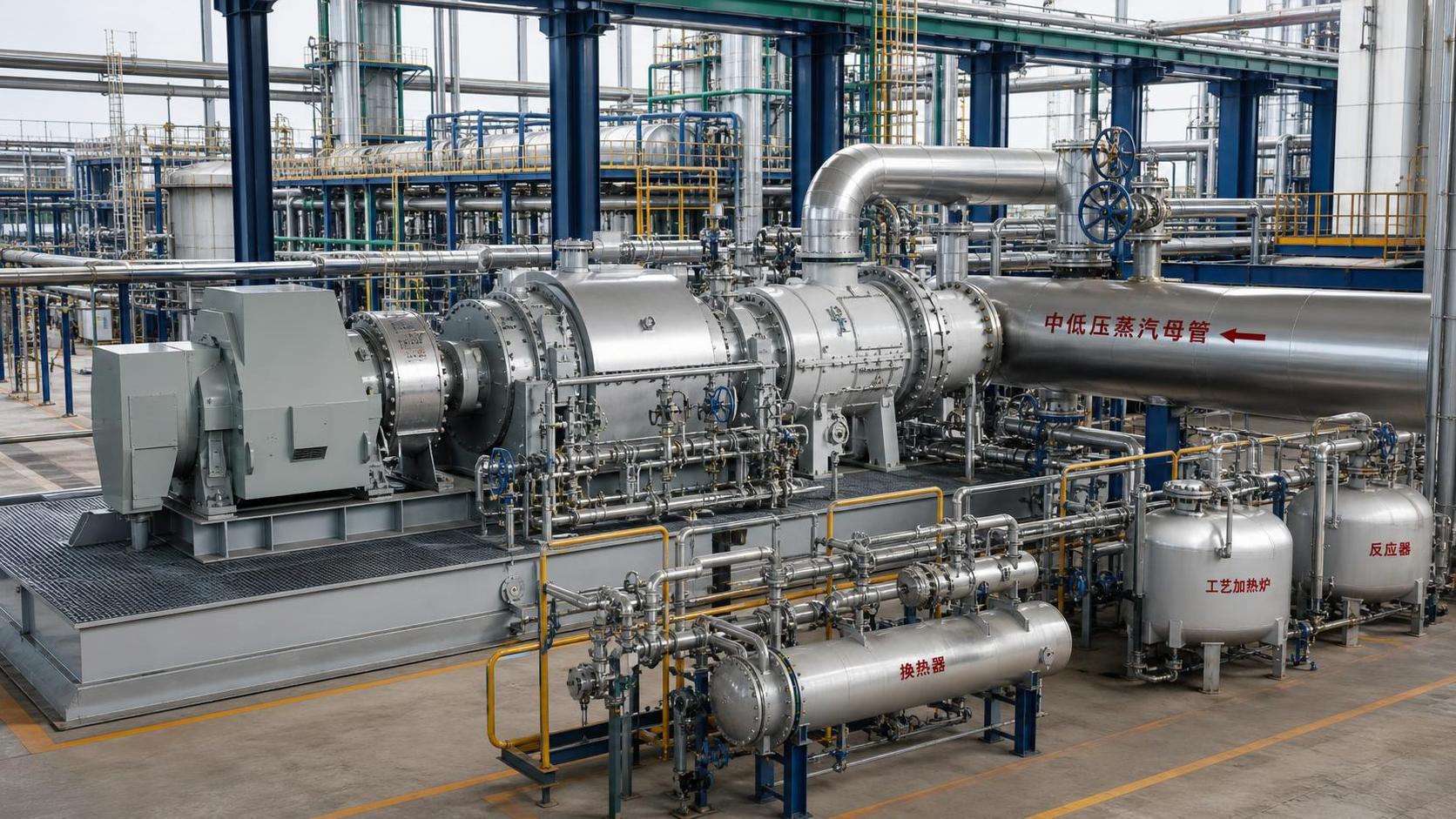
Steam conditions define the useful side of the equation. Raising pressure or superheat temperature increases the enthalpy carried by each unit of steam and may improve the downstream cycle, but it also increases material demands, control complexity, and the sensitivity of the system to thermal stress. A steam header serving process heating may value stable pressure and dryness more highly than maximum turbine-cycle efficiency. A system designed around high-temperature superheat is not automatically superior when the steam is throttled later or mixed with lower-pressure process steam.
Combustion and heat transfer shape the boiler arrangement
Efficiency targets influence furnace geometry, burner layout, heat-recovery sections, and gas-path design. The furnace must provide adequate residence time, mixing, and heat release without producing local temperatures that accelerate slagging, tube wastage, or nitrogen oxide formation. Those requirements can conflict. Aggressive firing intensity reduces equipment volume but may narrow the margin for stable combustion and create uneven heat flux on waterwall tubes.
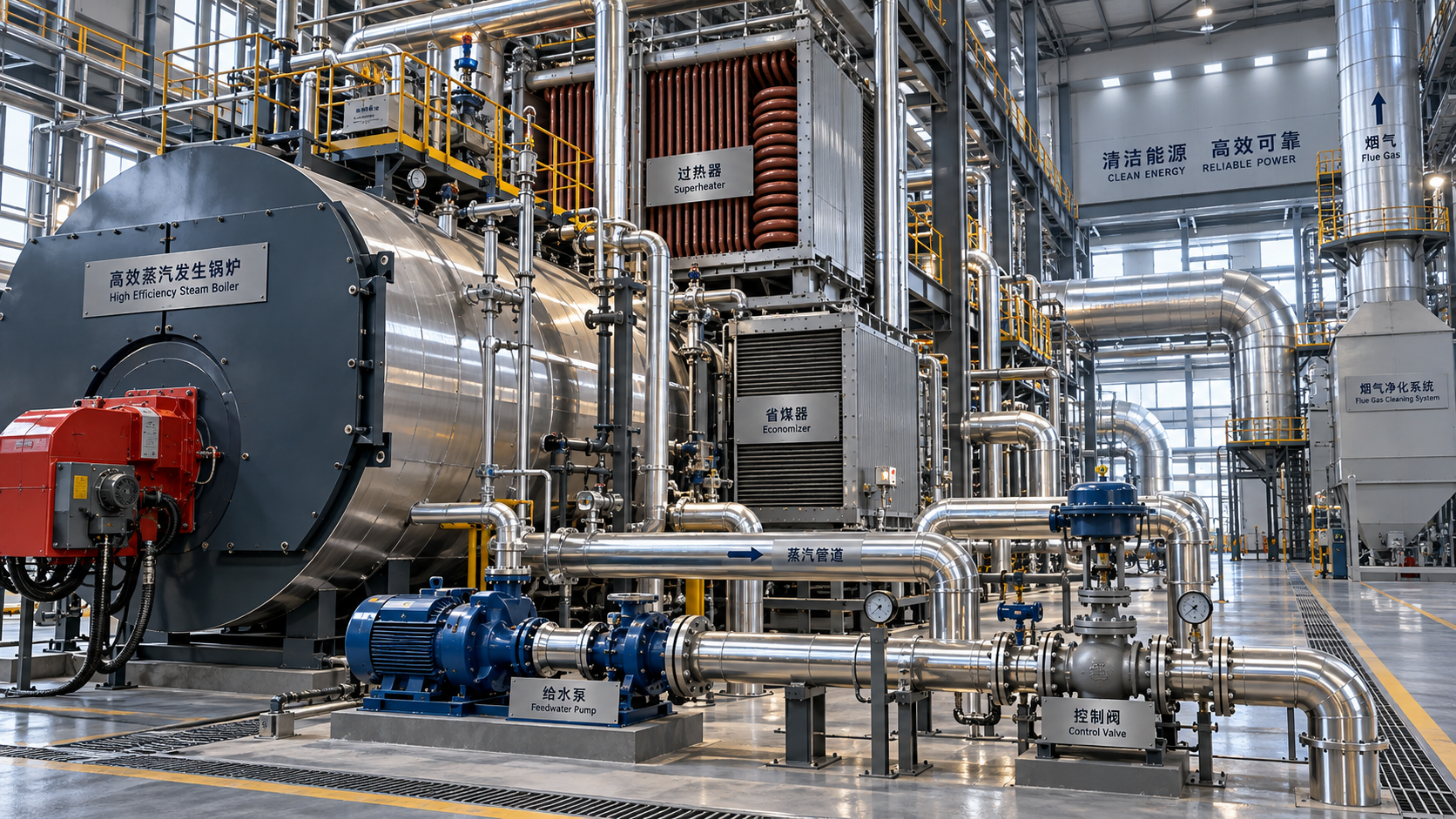
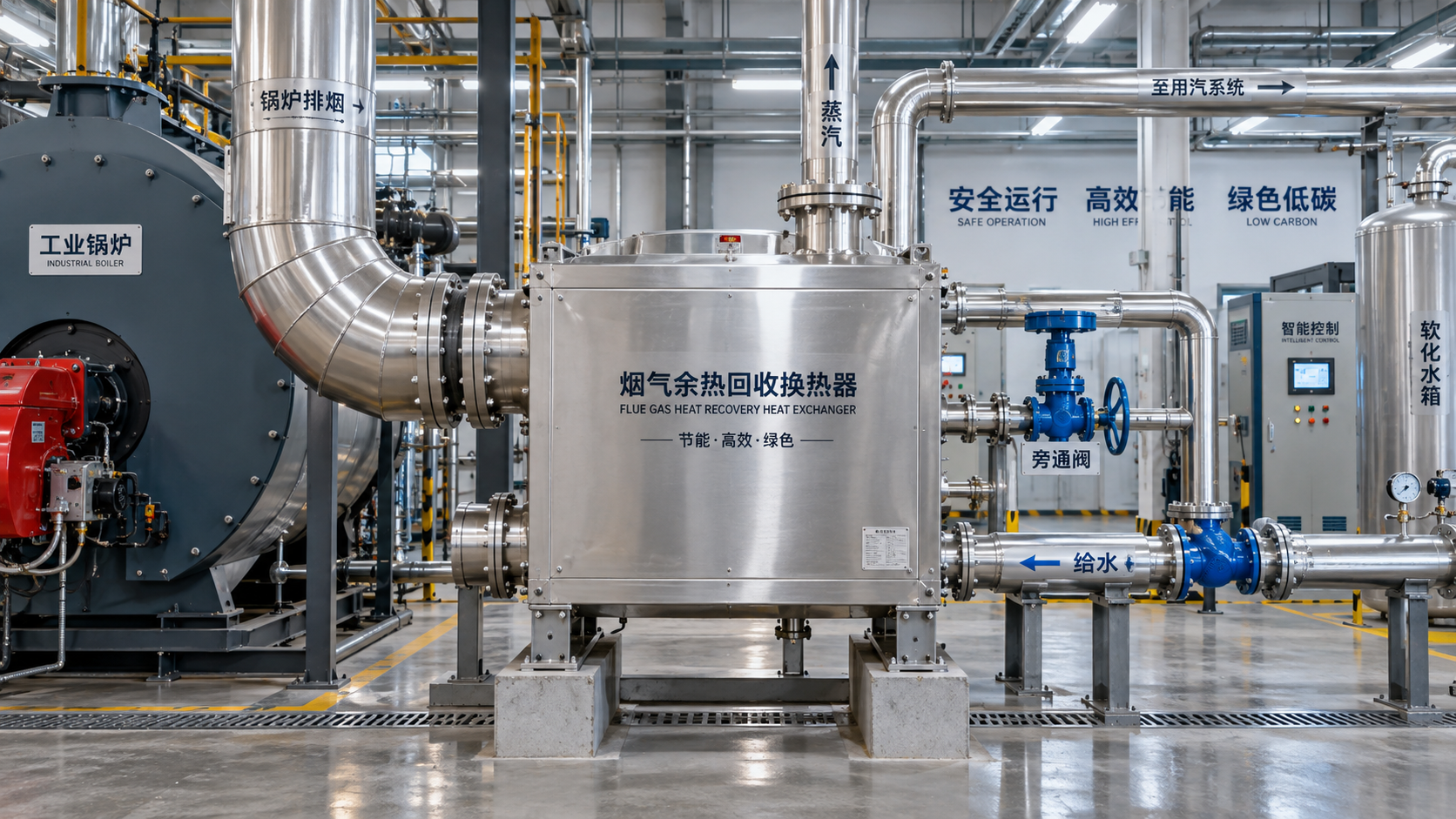
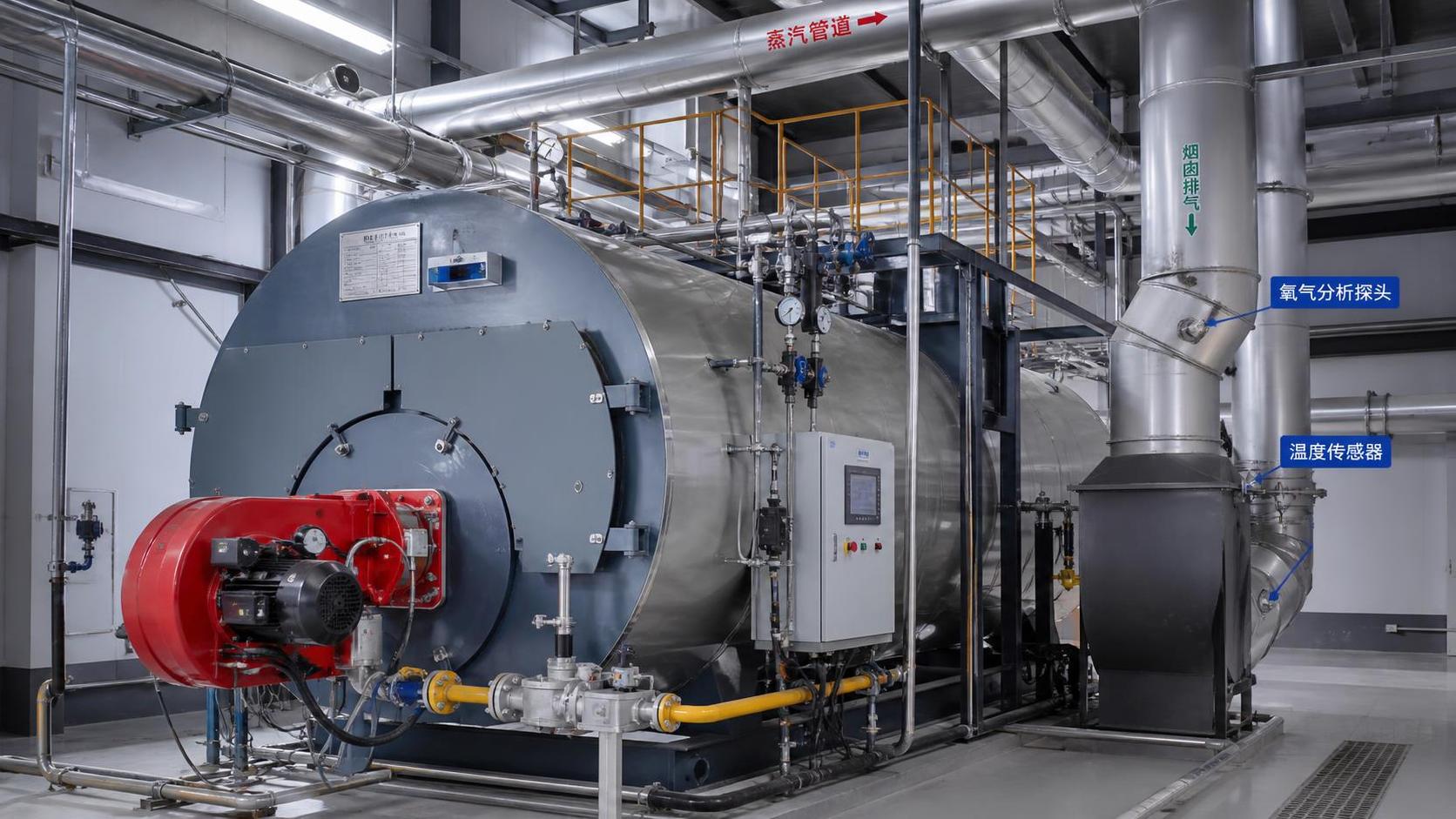
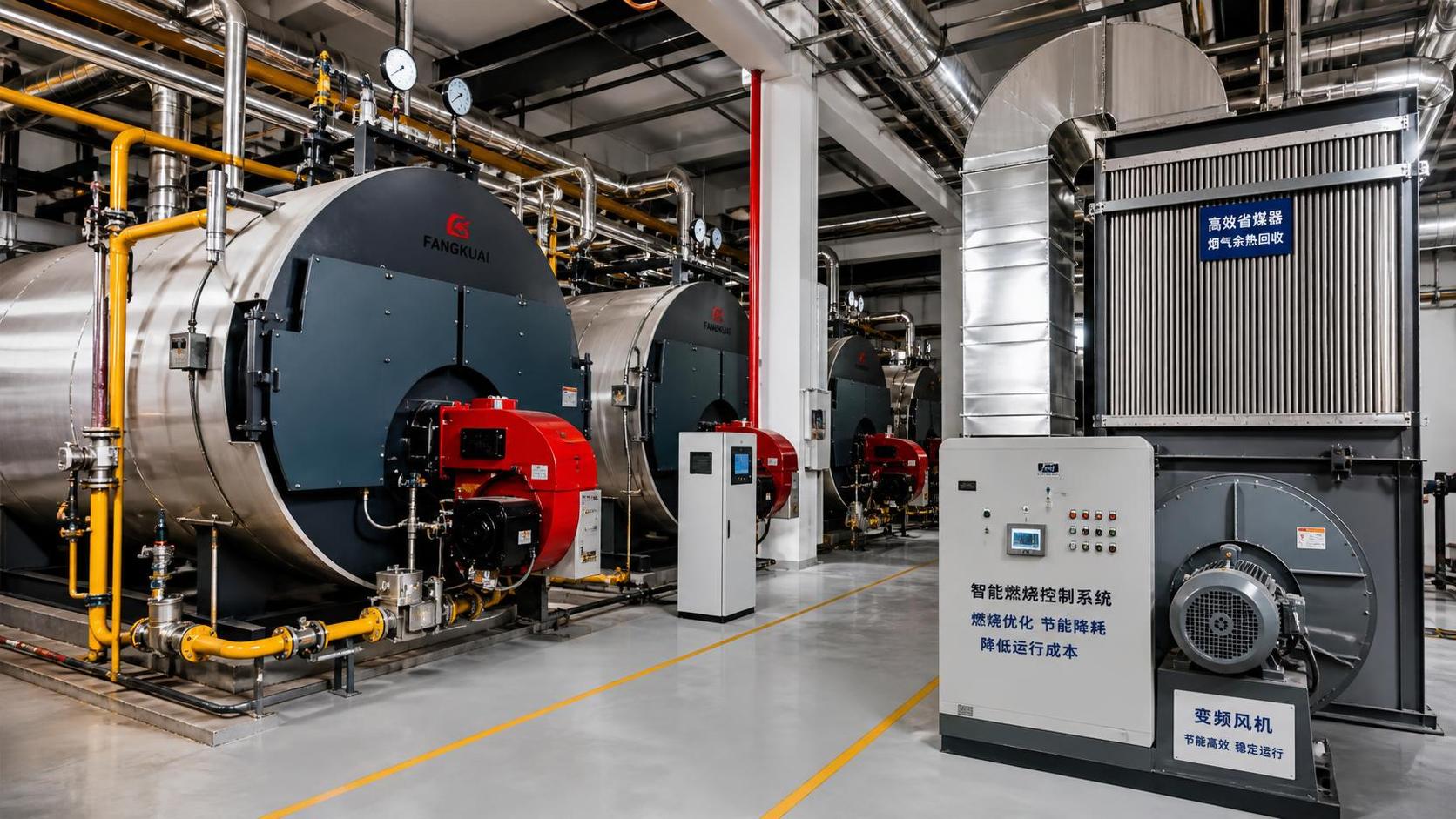
Downstream heat-transfer surfaces are arranged to recover energy from flue gas in stages. Economizers raise feedwater temperature before it enters the evaporative circuit. Air preheaters transfer remaining sensible heat to combustion air. Superheaters and reheaters control final steam temperature. The sequence is constrained by fluid temperatures, allowable tube-metal temperature, ash characteristics, fouling tendency, and the minimum stack temperature needed to control corrosion.
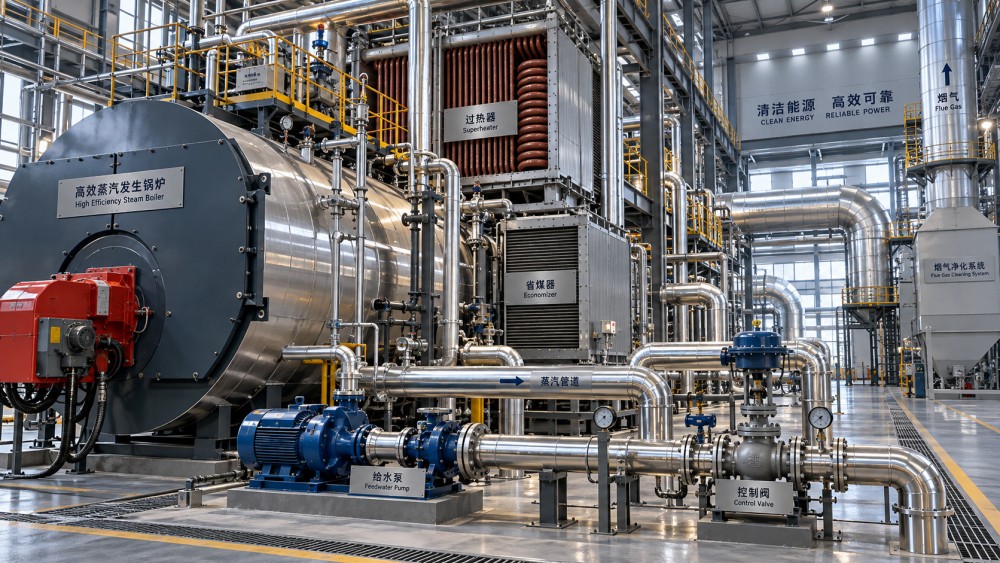
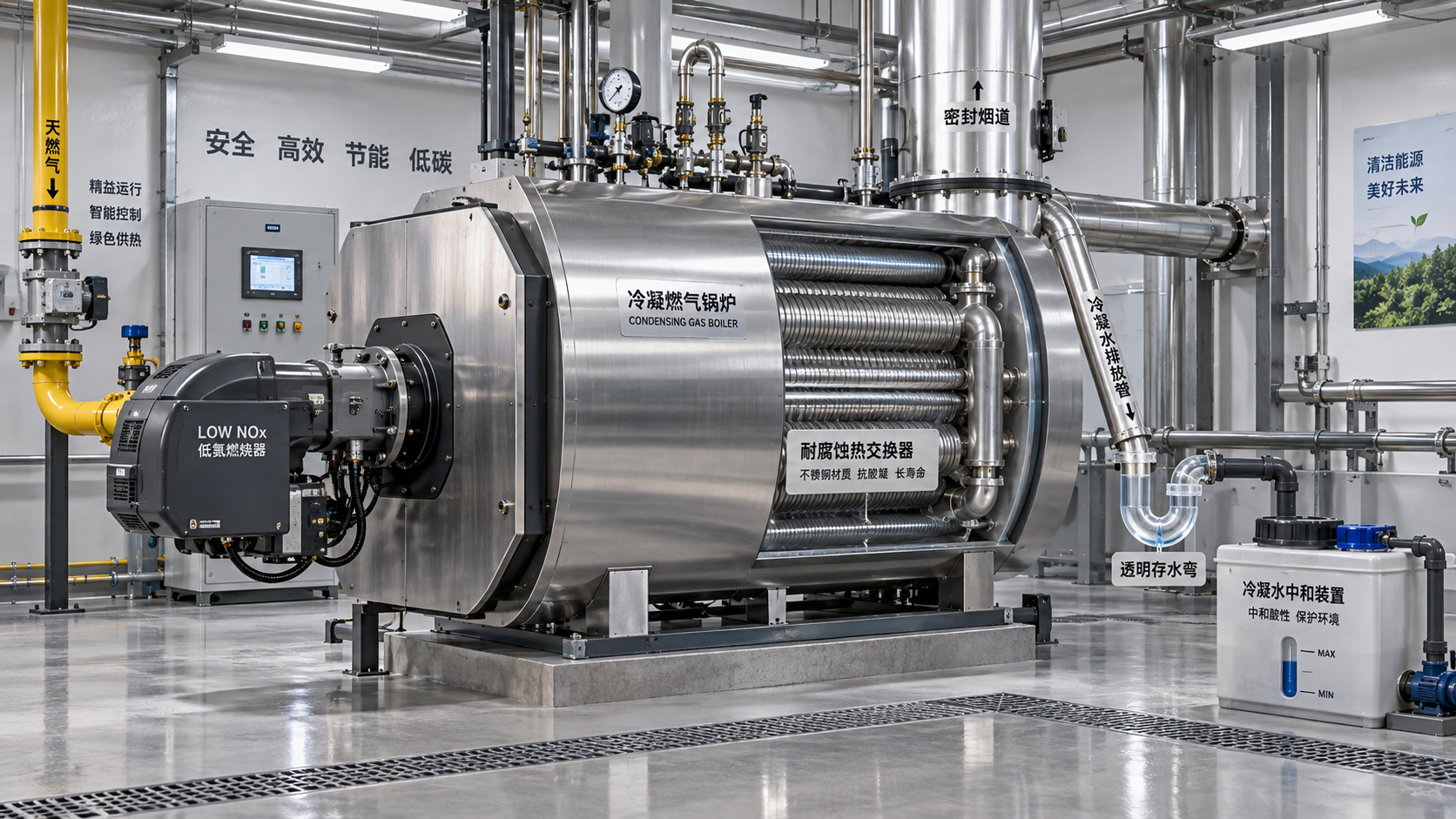
Lowering stack temperature is beneficial only until the cold-end limit is reached. With sulfur-bearing fuels, sulfuric acid condensation can attack air-preheater baskets, ducts, stacks, and downstream equipment. Biomass, waste-derived fuels, and some coal blends can introduce chlorine, alkalis, or sticky ash that change deposit behavior and corrosion mechanisms. A heat-recovery surface that is thermodynamically attractive may be operationally unsuitable unless material selection, gas temperature control, sootblowing access, and cleaning arrangements are designed together.
Natural-gas firing generally permits cleaner convective surfaces and lower excess-air operation than solid-fuel firing, yet a gas-fired system still loses efficiency through excessive flue-gas oxygen, poor burner turndown, leaking dampers, and cycling. Solid fuels add milling, drying, ash handling, and fuel-quality variability. Moisture and particle-size distribution affect flame stability and unburned carbon. These factors make nameplate boiler efficiency an incomplete representation of expected annual performance.
Feedwater temperature is a system-level variable
Every increment of recovered heat returned to feedwater reduces furnace duty, but the arrangement must respect the steam cycle. In a condensing power cycle, regenerative feedwater heating extracts steam from turbine stages to increase feedwater temperature. This lowers boiler fuel demand while changing turbine work output and extraction pressures. The correct comparison is based on the complete cycle, not on boiler fuel savings alone.
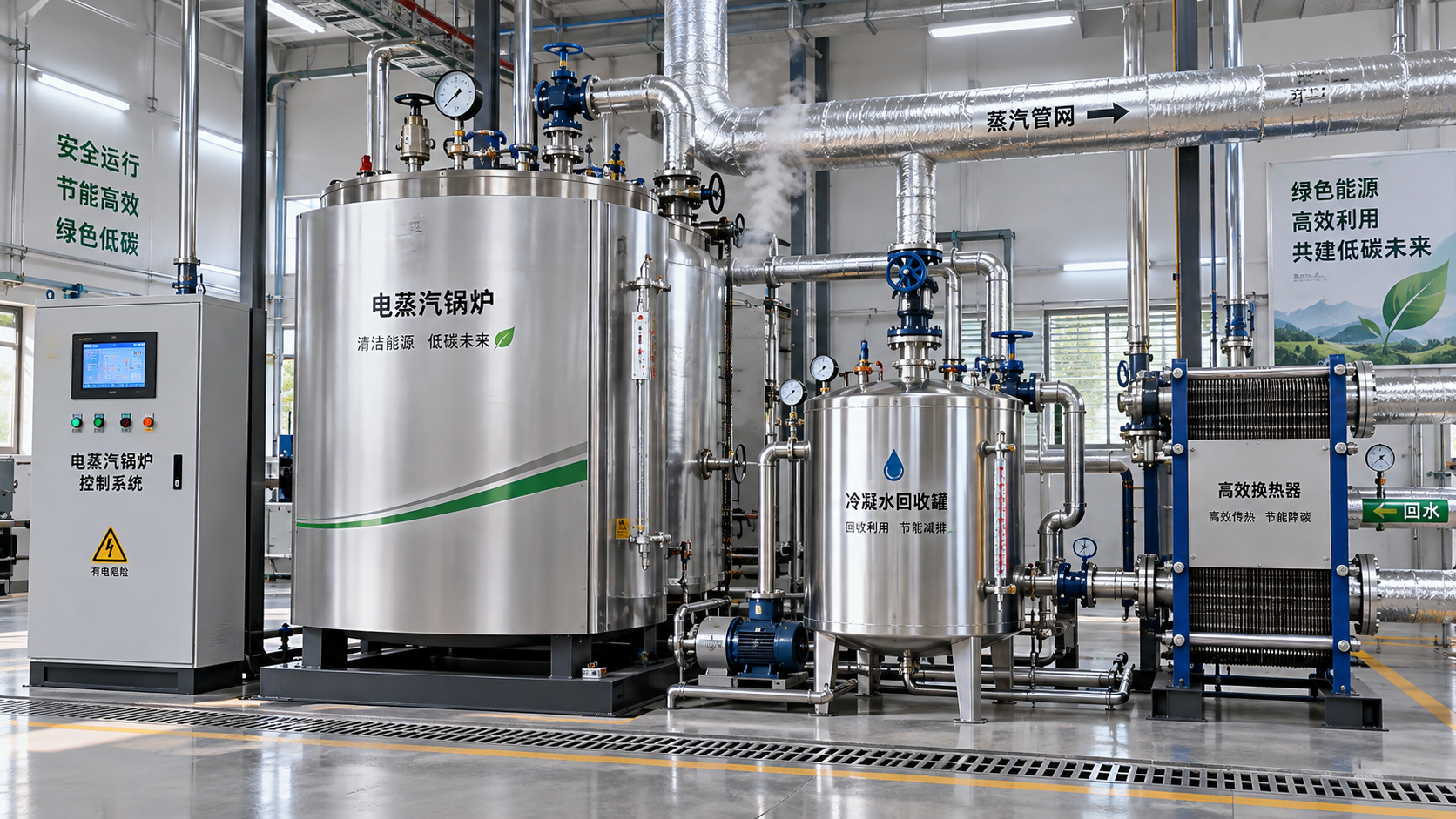
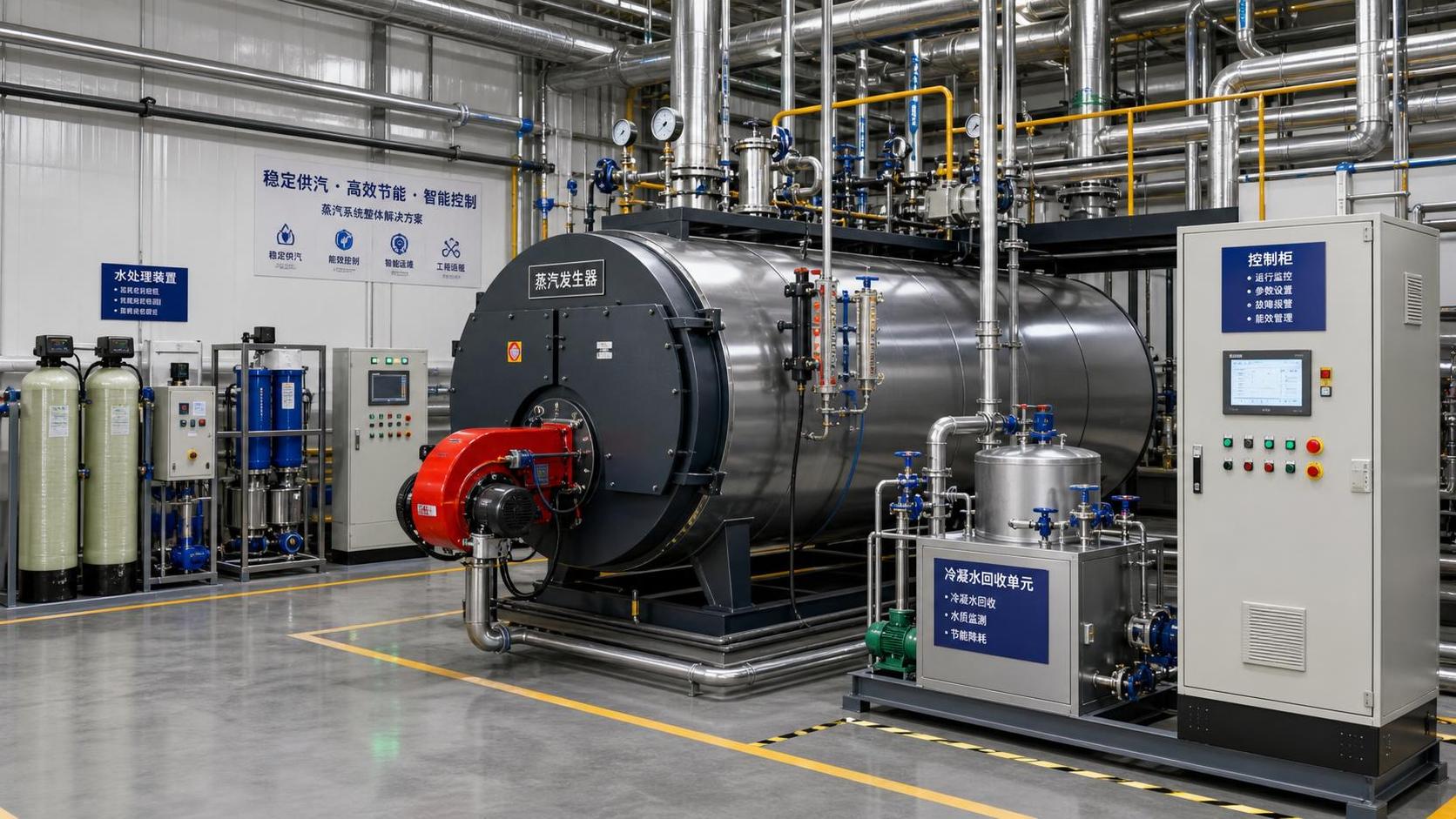
For industrial systems, condensate recovery has a similarly broad effect. Hot, clean condensate reduces make-up water demand, chemical treatment load, deaerator steam consumption, and fuel input. Its value depends on contamination risk. Condensate exposed to process chemicals, hydrocarbons, food residues, or corrosion products cannot be returned blindly to the boiler circuit. Conductivity, pH, dissolved oxygen, iron transport, and targeted contaminant monitoring determine whether direct return, segregated recovery, polishing, or disposal is appropriate.
Deaeration is another frequent source of mistaken optimization. Reducing deaerator venting too far can retain non-condensable gases and increase corrosion risk. Excessive venting wastes flashed steam. The appropriate vent rate is tied to oxygen removal performance, pressure control, water chemistry, and load stability. The best setting is established from measured conditions rather than from a fixed rule applied to every installation.
Pressure level, temperature control, and part-load operation
Higher steam pressure often improves cycle efficiency because heat is added at a higher average temperature. The benefit must be weighed against thicker pressure parts, stronger supports, more demanding welding procedures, longer start-up constraints, and more stringent water chemistry. For thick-wall drums, headers, and high-temperature piping, rapid temperature changes can create damaging differential expansion. A design optimized for continuous baseload duty may be poorly suited to frequent starts and stops.
Part-load behavior deserves the same attention as rated performance. Many thermal power systems spend substantial periods below design output. At reduced load, excess-air ratio can rise, stack losses can increase, burner stability can deteriorate, and turbine efficiency can fall. Cycling also creates repeated thermal expansion in superheater tubes, headers, valves, and steam piping. A lower-rated boiler with good turndown, staged burners, variable-speed drives, and responsive control logic can produce better annual fuel performance than a larger unit that operates far from its efficient range.
Steam temperature control introduces a specific tradeoff. Attemperation protects downstream components by spraying water into superheated steam, but extensive spray flow indicates that high-grade heat has been created and then diluted. Some spray demand is normal during transients. Persistent spray at stable conditions can point to superheater surface imbalance, burner tilt issues, poor gas distribution, or a steam-temperature target mismatched to actual operation. Correcting the source is usually preferable to treating attemperation as a harmless control action.
Emissions controls alter the heat balance
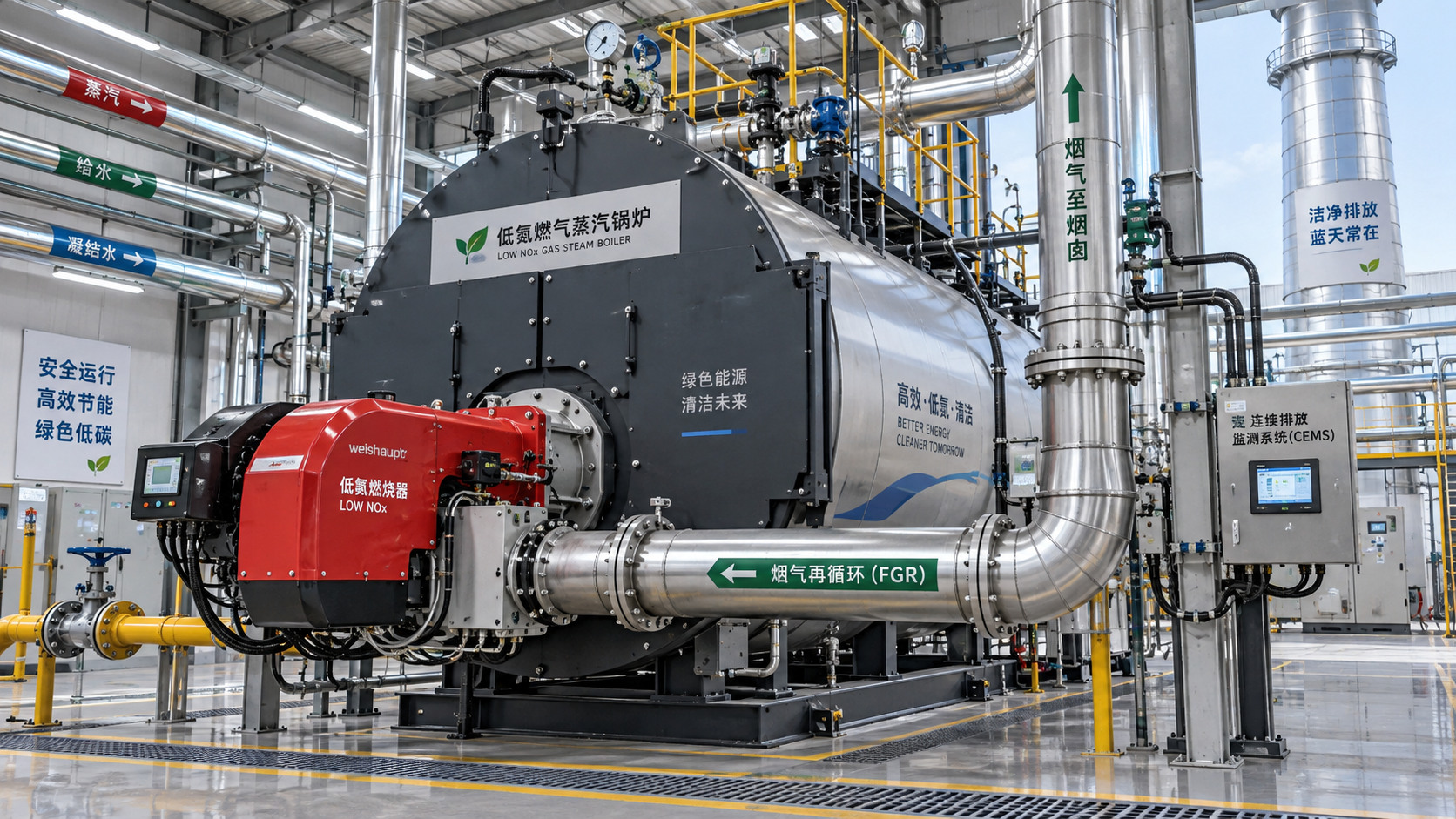
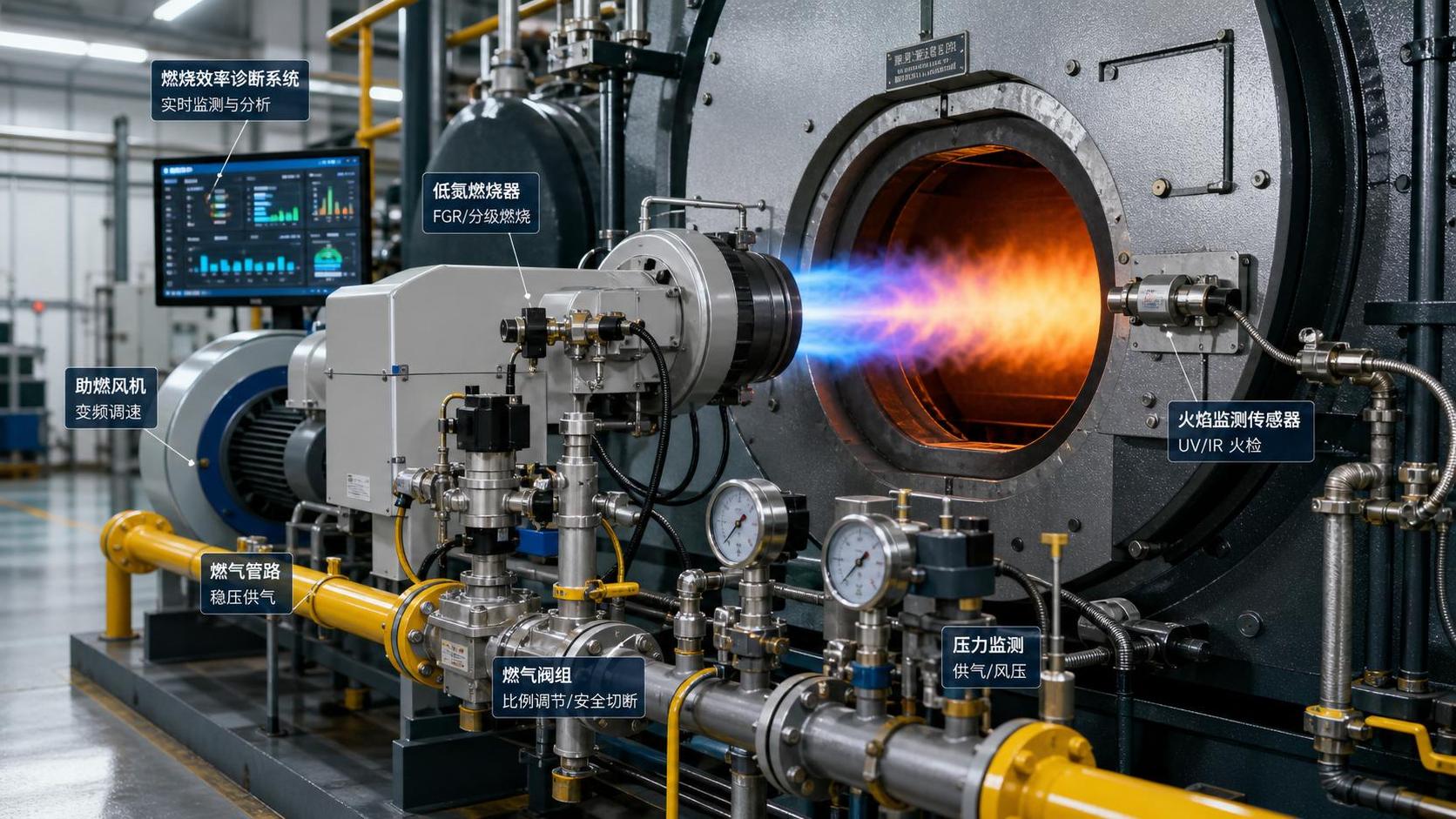
Combustion efficiency and emissions performance must be engineered as linked variables. Lower excess oxygen reduces dry flue-gas loss, yet insufficient oxygen or poor mixing can increase carbon monoxide and unburned combustibles. Low-NOx firing commonly uses staged combustion, flue-gas recirculation, or reduced peak flame temperature. These measures can affect carbon burnout, furnace heat absorption, fan power, and the temperature entering convective banks.
Selective catalytic or non-catalytic reduction systems, particulate collectors, scrubbers, and gas-cleaning equipment add pressure drop, reagent requirements, heat loss, and maintenance interfaces. Their placement changes the flue-gas temperature window available for air preheating and corrosion control. A stack temperature target should therefore be evaluated after considering the whole gas-cleaning train, not just the boiler outlet. Designs that isolate emissions equipment from boiler thermal calculations commonly require later ductwork changes, fan resizing, or operating compromises.
Materials, fabrication, and installation affect retained efficiency
Efficiency is retained through operating life only when pressure parts and heat-transfer surfaces remain clean, tight, and within temperature limits. Tube alloys are selected for creep strength, oxidation resistance, corrosion environment, weldability, and expected metal temperature. Selecting a material solely by design steam temperature ignores local conditions. A tube facing high radiant heat flux, ash deposition, or steam-side scale can run substantially hotter than a nominal bulk-gas calculation suggests.
Fabrication quality has direct thermal consequences. Poor tube-to-header welds, incorrect tube expansion, misaligned baffles, leaking casing joints, and inadequate insulation create losses or reliability risks that are not visible in a simplified heat-and-mass balance. During installation, support clearances and expansion paths require careful coordination. Pipe loads transmitted into boiler nozzles can distort connections or restrict thermal movement. Duct leakage upstream of an induced-draft fan raises gas volume and fan power while complicating oxygen-based combustion control.
Insulation should be assessed as part of surface-loss control and personnel protection, but its value is not limited to the casing. Uninsulated valves, strainers, steam separators, and short fittings can create concentrated losses, especially in distributed steam networks. Wet insulation, damaged cladding, and gaps around penetrations degrade over time. Infrared surveys identify external hot spots, while steam-balance data reveal losses that surface inspections cannot see.
Use measurements that distinguish cause from symptom
Stack oxygen alone does not prove efficient combustion. Air in-leakage after the furnace can elevate measured oxygen without improving burner mixing. High stack temperature can result from fouled economizer surfaces, bypassing, excess firing, altered fuel moisture, incorrect gas distribution, or a deliberately elevated corrosion margin. Low stack temperature can coexist with poor net efficiency if fans consume excessive power or if an economizer causes recurring outages.
A useful performance review aligns measurements in time: fuel flow and composition, steam flow, pressure and temperature, feedwater flow and temperature, condensate return, blowdown rate, flue-gas oxygen, carbon monoxide where applicable, stack temperature, draft, and auxiliary electrical load. Instrument location and calibration matter. A leaking steam-flow transmitter impulse line or a temperature sensor installed in a stratified pipe section can produce a convincing but false efficiency trend.
Blowdown is often treated as a small loss, yet it also indicates the interaction between water quality and heat recovery. Raising cycles of concentration reduces thermal loss and make-up demand only while dissolved solids, silica, alkalinity, and carryover risk remain controlled. Intermittent bottom blowdown and continuous surface blowdown serve different purposes. Combining their flows into one unexplained operating figure hides whether the underlying issue is sludge accumulation, poor feedwater quality, unstable chemistry, or a control-valve problem.
Efficiency targets must survive operating reality
The most durable thermal power system design treats steam generation as an integrated energy, materials, controls, and maintenance problem. Heat recovery must be accessible for cleaning. Instruments need isolation and validation points. Burner and fan control must remain stable across the intended load range. Feedwater treatment, condensate handling, blowdown management, and steam distribution need to preserve the conditions assumed in the original heat balance.
When these relationships are assessed together, efficiency becomes a practical design criterion rather than a single quoted value. The result is a system whose fuel use, steam quality, emissions behavior, auxiliary demand, and equipment life remain aligned under the loads and fuel conditions it is expected to face.
Related News
- How steam generation efficiency shapes thermal power system designAuthor :Thermal Energy Strategist

- Boiler Optimization: Cutting Fuel Use Without Compromising Steam ReliabilityAuthor :Thermal Energy Strategist

- How to size thermal fluid systems for stable process temperaturesAuthor :Thermal Energy Strategist

- Industrial Boiler Heat Recovery: Diagnosing Lost Savings in Existing PlantsAuthor :Thermal Energy Strategist

- Boiler Heat Recovery Systems: Sizing Waste-Heat Recovery for Stable Steam LoadsAuthor :Thermal Energy Strategist

- Can Condensing Boilers Cut NOx Emissions Without Creating Corrosion Risks?Author :Thermal Energy Strategist

- Low-NOx Boilers Industry Trends: What New Rules Mean for Plant UpgradesAuthor :Thermal Energy Strategist

- A Practical Roadmap for Industrial Steam System Decarbonization ProjectsAuthor :Thermal Energy Strategist

- Industrial Steam System Vendor Comparison: Criteria Beyond Equipment PriceAuthor :Thermal Energy Strategist

- How to Choose an Industrial Steam Generator for Load Profile, Fuel, and RedundancyAuthor :Thermal Energy Strategist

- When Does a Heat Recovery Steam Generator Make Economic Sense?Author :Thermal Energy Strategist

- How pressure control prevents unstable steam supply in industrial systemsAuthor :Thermal Energy Strategist

- How excess air affects boiler efficiency in steam systemsAuthor :Thermal Energy Strategist

- When a Refinery Steam Turbine Should Prioritize Process Steam Over Maximum OutputAuthor :Thermal Energy Strategist

- Which boiler upgrades deliver the fastest efficiency cost reductionAuthor :Thermal Energy Strategist

- What to check before choosing a steam generation systems supplierAuthor :Thermal Energy Strategist

- When do industrial boiler systems cost less than electric heatAuthor :Thermal Energy Strategist

- How to Compare Boiler Systems in Latin America by Fuel Cost and ComplianceAuthor :Thermal Energy Strategist

- How to Size Low-Pressure Industrial Steam Systems for Stable Heat DemandAuthor :Thermal Energy Strategist

- Low Emissions Boilers: What to Compare Before You ChooseAuthor :Thermal Energy Strategist

- Low-NOx Boilers Cost Breakdown: Upfront Price, Fuel Savings, and PaybackAuthor :Thermal Energy Strategist

- Boiler Combustion Systems: Common Causes of Unstable Fuel PerformanceAuthor :Thermal Energy Strategist

- Hot Water Industrial Boilers: When Efficiency Gains Justify ReplacementAuthor :Thermal Energy Strategist

- What Boiler Efficiency Really Means in Daily Operation and Energy BillsAuthor :Thermal Energy Strategist

- Boiler Efficiency Testing Methods That Expose Heat Loss and Fuel WasteAuthor :Thermal Energy Strategist

- Industrial Burner Systems: Key Factors for Safe Heat OutputAuthor :Thermal Energy Strategist

- Gas-Fired Boiler Combustion Technology: Key Efficiency and Emissions Trade-OffsAuthor :Thermal Energy Strategist

- Unfired Heat Recovery Steam Generators: When Do They Pay Off?Author :Thermal Energy Strategist

- How to Evaluate Steam Generation Systems Electric for Process Heat ProjectsAuthor :Thermal Energy Strategist

- Thermal Power Systems for Industrial Heating: Common Sizing Mistakes to AvoidAuthor :Thermal Energy Strategist

- Low-NOx Condensing Boilers: How to Compare Efficiency and EmissionsAuthor :Thermal Energy Strategist
![]()
- Low Emissions Boilers for Food Processing: Key Compliance and Fuel Cost FactorsAuthor :Thermal Energy Strategist

- Steam System Efficiency Calculation: Key Inputs That Change the ResultAuthor :Thermal Energy Strategist

- How to Evaluate a Steam Boiler Components Exporter Before OrderingAuthor :Thermal Energy Strategist

- Burner Systems Troubleshooting: Common Efficiency Loss CausesAuthor :Thermal Energy Strategist

- EU PED Q2 Rules Require Digital Compliance TagsAuthor :Thermal Energy Strategist