New Refrigerator Energy Standard Takes Effect June 1, 2026




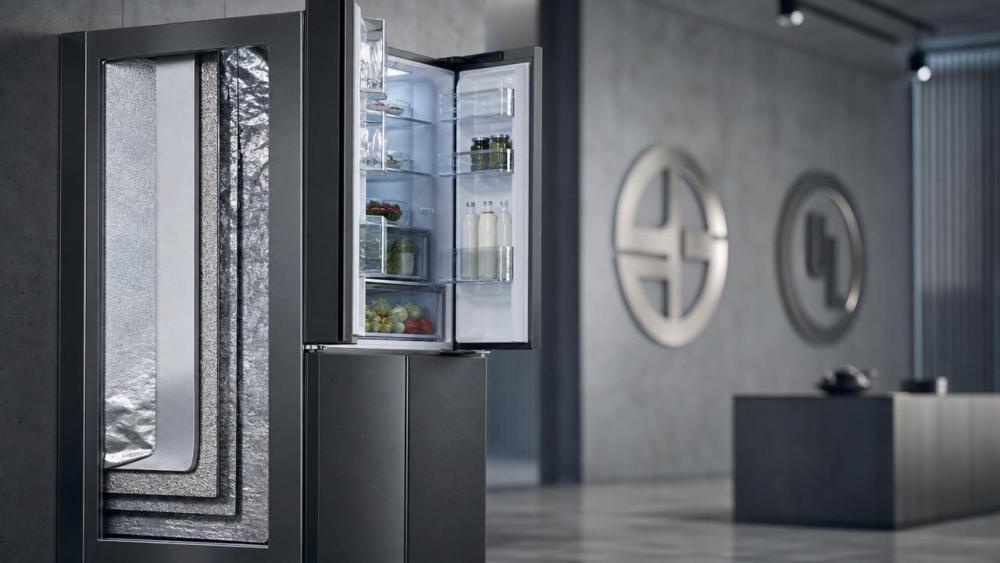
China’s updated national energy efficiency standard for refrigerators—GB 12021.2–2025—comes into mandatory effect on June 1, 2026. The regulation introduces stricter daily energy consumption limits (e.g., ≤0.55 kWh/day for 500L French-door units at Level 1 efficiency) and a new volumetric utilization requirement. As traditional polyurethane insulation can no longer meet these benchmarks, vacuum insulated panels (VIPs) have become essential for compliant ‘slim-body, high-capacity’ refrigerator designs. Export-oriented refrigeration equipment manufacturers must now align with VAP certification requirements to access key overseas markets.
Event Overview
The revised refrigerator energy efficiency standard GB 12021.2–2025 becomes effective on June 1, 2026. It mandates that 500L French-door refrigerators achieve Level 1 energy efficiency with a maximum daily electricity consumption of 0.55 kWh and introduces a hard requirement for internal volume utilization. The standard renders conventional polyurethane foam insulation insufficient for compliance. Vacuum insulated panels (VIPs) are identified as the only viable thermal insulation solution to meet both the energy and spatial efficiency targets.赛特新材’s ‘Yu Jia VAP’ VIP product has obtained UL and IEC 62133 international safety certifications and is being rapidly adopted by global ODM manufacturers for export-oriented cold cabinets and medical refrigerators.
Industries Affected
Export-Oriented Appliance OEM/ODM Manufacturers
These manufacturers face direct compliance pressure: newly designed or refreshed models destined for the Chinese domestic market must meet the June 2026 deadline, while export models require compatibility with VAP-related safety certifications (e.g., UL/IEC 62133). Design cycles, component qualification, and factory-level process validation must be accelerated to avoid delays in market entry or certification rejection.
Thermal Insulation Material Suppliers
Suppliers of traditional polyurethane systems will see reduced demand for high-volume residential refrigerator applications. Conversely, suppliers capable of producing certified VIPs—including those meeting UL, IEC 62133, and other regional safety standards—are positioned for increased procurement volume. However, VIP supply chain scalability, barrier film integrity control, and long-term aging performance remain critical technical constraints.
Medical & Specialty Cold Chain Equipment Producers
Manufacturers of medical refrigerators and low-temperature transport units are affected due to the cascading adoption of VIPs for space-constrained, high-efficiency designs. The inclusion of ‘medical refrigerated cabinets’ in the reported design integration list signals expanding application scope beyond household appliances—particularly where regulatory-grade temperature stability and compact footprint intersect.
International Certification & Testing Service Providers
Third-party labs and certification bodies supporting UL, IEC 62133, and related electrical safety testing for VIP-integrated appliances may experience higher inquiry volume and tighter turnaround expectations. Demand for VIP-specific aging, thermal bridging, and puncture resistance assessments is likely to rise alongside broader adoption.
Key Considerations and Recommended Actions
Monitor official implementation guidance from CNCA and CQC
While the standard takes effect on June 1, 2026, enforcement protocols—including transitional arrangements, verification methods for volume utilization, and acceptable VIP lifetime degradation thresholds—may be clarified through supplementary notices from China’s Certification and Accreditation Administration (CNCA) and China Quality Certification Center (CQC). Stakeholders should track updates issued between Q3 2025 and Q2 2026.
Prioritize VIP qualification for high-volume and export-bound SKUs
Given limited VIP production capacity and extended lead times for certified batches, manufacturers should identify top-selling domestic models (especially ≥500L French-door units) and priority export SKUs (e.g., cold cabinets for EU/US healthcare distributors) for early VIP integration and safety certification. Avoid blanket rollouts before thermal performance and reliability validation is complete.
Distinguish between regulatory signal and operational readiness
The mandate signals a structural shift in insulation technology requirements—not merely an incremental efficiency tweak. However, full industry-wide VIP adoption will depend on cost parity, yield rates, and field failure data over time. Near-term compliance may rely on hybrid solutions or targeted VIP use in critical zones; full substitution remains a medium-term objective.
Initiate cross-functional alignment on procurement, QA, and engineering timelines
Procurement teams should engage VIP suppliers now to assess capacity, lead time, and documentation readiness. QA departments must update test plans to include VIP-specific parameters (e.g., surface temperature uniformity, edge thermal bridging, post-assembly handling tolerance). Engineering must revise thermal simulation workflows to reflect VIP boundary conditions and aging assumptions.
Editorial Perspective / Industry Observation
Observably, this standard represents more than a technical update—it reflects a tightening convergence of energy policy, spatial efficiency imperatives, and export market alignment. The explicit linkage between domestic compliance (GB 12021.2–2025) and international safety certification (VAP/UL/IEC 62133) suggests intentional harmonization rather than parallel development. Analysis shows that VIP adoption is not optional for targeted product categories but remains constrained by manufacturing maturity and cost. This makes the June 2026 date less a hard cutoff and more a decisive inflection point: companies that treat it as a trigger for systemic R&D and supply chain reengineering—not just a compliance checkbox—will gain measurable advantage in both domestic competitiveness and export readiness.
Conclusion
GB 12021.2–2025 marks a calibrated escalation in refrigerator energy policy, with vacuum insulated panels emerging as a non-substitutable enabler for next-generation designs. Its significance lies not in novelty alone, but in the binding linkage it creates between domestic regulatory compliance and internationally recognized safety certification. For stakeholders, the current phase is best understood as a structured transition period—one requiring coordinated technical, procurement, and certification planning rather than reactive compliance. The standard is neither a sudden disruption nor a distant horizon; it is a defined milestone demanding deliberate preparation.
Source Attribution:
• Official release of GB 12021.2–2025 (Standard Publication Number: GB 12021.2–2025)
• Public announcement of June 1, 2026 enforcement date
• Confirmed adoption of ‘Yu Jia VAP’ VIP by global ODM manufacturers for cold cabinets and medical refrigerators, per disclosed supply chain integration reports
Note: Implementation details—including CNCA/CQC enforcement procedures, allowable VIP lifetime modeling assumptions, and volume utilization measurement methodology—remain subject to official clarification and are under active observation.
Ready when you are. Send us a message to get started.
Related News
- How corrugation angle affects heat transfer in plate heat exchangersAuthor :Thermodynamics Analyst

- R22 Prices Retreat as China's Refrigerant Market Faces Tight Quotas and Soft DemandAuthor :Cryogenic Systems Expert

- How to select industrial equipment for automation with existing PLCsAuthor :

- Carrier Plans $600 Million Manufacturing and Engineering Center in Fort WorthAuthor :

- How electricity prices shape industrial compressed air price trendsAuthor :

- Chemours Faces Investor Lawsuit Over Opteon Refrigerant Sales ForecastsAuthor :Cryogenic Systems Expert

- Choosing air filtration systems for heavy dust in the Middle EastAuthor :

- LG Expands R290 Monobloc Heat Pump Range with New 12–16 kW ModelsAuthor :Cryogenic Systems Expert

- How to size a chiller for pharmaceutical cleanroom temperature controlAuthor :Cryogenic Systems Expert

- Kentucky Regulators Approve $191 Million Cooling Tower at Mitchell Coal PlantAuthor :Thermodynamics Analyst

- How much does a fully installed compressed air monitoring system cost?Author :

- What documentation supports CE marking for industrial equipment?Author :

- When do plate heat exchangers suit Middle East seawater cooling?Author :Thermodynamics Analyst

- EU Issues Updated Guidance on Industrial Refrigeration Efficiency and F-gas AlternativesAuthor :Cryogenic Systems Expert

- How does base pressure affect film purity in vacuum deposition?Author :Vacuum Process Fellow

- Do U.S. refrigerant regulations require replacing R-410A systems?Author :Cryogenic Systems Expert

- When does variable gas flow justify a custom screw compressor system?Author :Pneumatic Power Engineer

- How local support affects vacuum system costs in Southeast AsiaAuthor :

- How worldwide industry category guides help compare market opportunitiesAuthor :

- How to verify food-grade purity in compressed air systemsAuthor :Pneumatic Power Engineer

- When high-pressure waste heat recovery boilers make economic senseAuthor :Thermal Energy Strategist

- How to size compressed air equipment for pneumatic toolsAuthor :Pneumatic Power Engineer

- How to size vacuum process equipment for the required pump-down timeAuthor :Vacuum Process Fellow

- What determines the price of pure air compression systems?Author :Pneumatic Power Engineer

- How steam generation efficiency shapes thermal power system designAuthor :Thermal Energy Strategist

- What drives sustainable thermal systems cost over their operating life?Author :

- Which vacuum specification best protects semiconductor process yield?Author :Vacuum Process Fellow

- When do smart thermal systems with sensors reduce chiller energy use?Author :Cryogenic Systems Expert

- When does gasketed plate heat exchanger technology suit your process?Author :Thermodynamics Analyst

- How to size oil-free compressors for instrumentation air demandAuthor :Pneumatic Power Engineer

- How Class 0 oil-free compressors protect product quality in food productionAuthor :Pneumatic Power Engineer

- Which industrial solution comparison criteria prevent project delays?Author :

- Chiller Optimization Checklist for Rising Energy Use and Unstable Cooling OutputAuthor :Cryogenic Systems Expert

- How to Specify a High-Precision Temperature Chiller for Tight-Tolerance ProcessesAuthor :Cryogenic Systems Expert

- Designing Energy-Efficient Industrial Cooling for Variable Process LoadsAuthor :Cryogenic Systems Expert

- Low-GWP Cooling Solutions for Process Plants: Comparing Safety, Efficiency, and CostAuthor :Cryogenic Systems Expert