



When high-pressure waste heat recovery boilers make economic sense




When High-Pressure Waste Heat Recovery Boilers Make Economic Sense
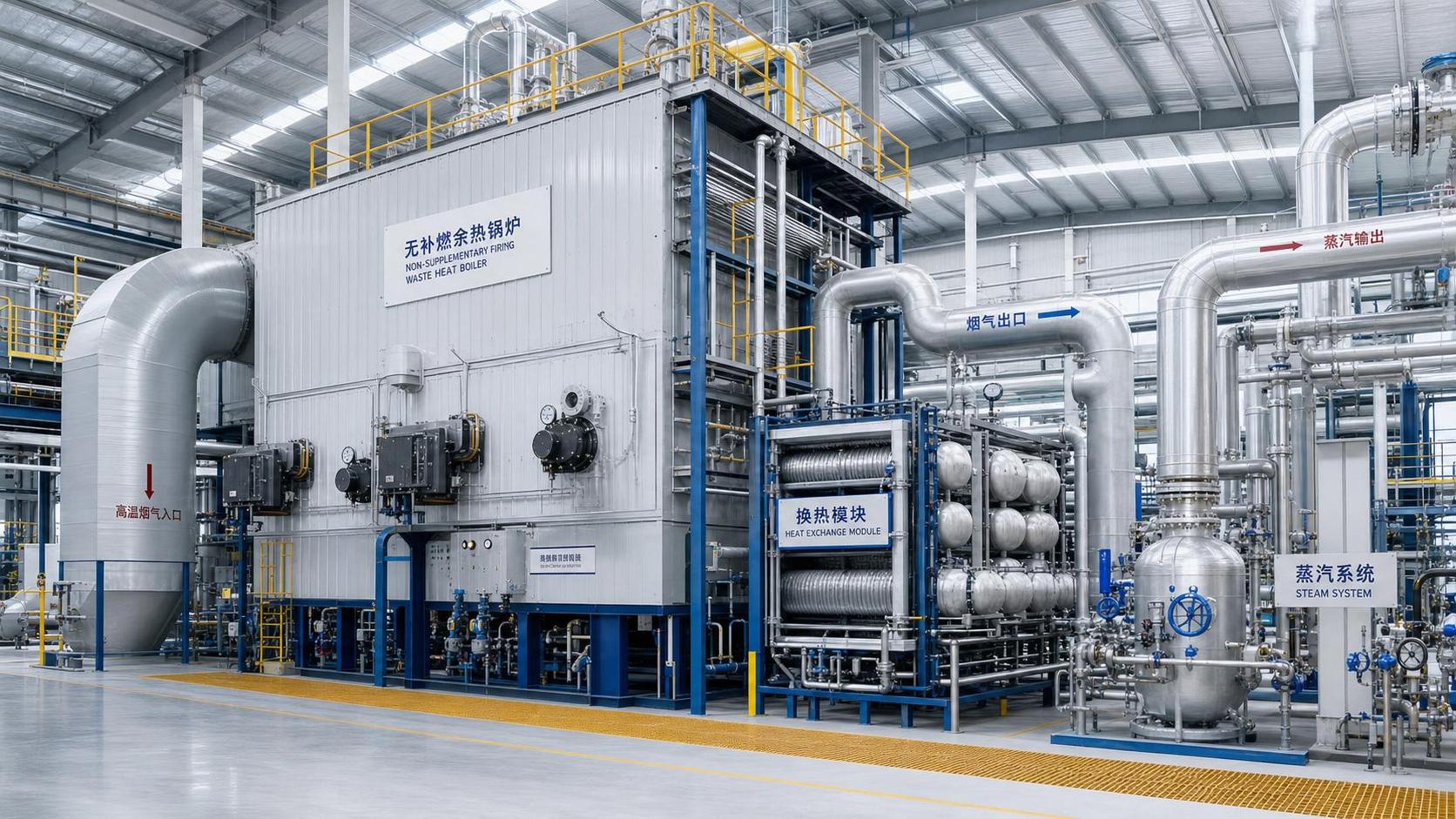
High-pressure waste heat recovery boilers can transform energy-intensive operations from a cost center into a strategic advantage—but only when process conditions, steam demand, fuel prices, and capital economics align. For enterprise decision-makers, evaluating waste heat recovery boilers high pressure applications requires more than estimating recovered energy. It demands a clear view of reliability, emissions compliance, operating risk, steam-system integration, and the return expected over the full operating life of the asset.
The central question is not whether hot exhaust contains usable energy. In many plants, it clearly does. The harder question is whether that energy can be recovered at a pressure and temperature that the facility can consistently use, without creating a maintenance burden or production constraint larger than the fuel savings. High-pressure recovery is often technically impressive; it is not automatically commercially rational.
This distinction matters in cement, metals, glass, refining, chemicals, waste-to-energy, power generation, and large manufacturing sites. These industries may have high-temperature exhaust streams from kilns, furnaces, gas turbines, incinerators, reformers, or oxidation processes. Yet their operating profiles differ sharply. A project with steady exhaust flow and a reliable internal steam consumer is fundamentally different from one that depends on intermittent heat, seasonal demand, or uncertain export arrangements.
Why pressure changes the investment logic
A waste heat recovery boiler transfers thermal energy from a process stream into water and steam. Raising the required steam pressure generally raises the engineering challenge. The boiler must withstand higher internal pressure, the feedwater system becomes more demanding, water chemistry control carries greater consequences, and the steam network may require more sophisticated protection, control, and condensate handling.
The reward is that high-pressure steam can serve higher-value duties. It may drive a steam turbine, support a process header, supply mechanical drives, or be reduced through a pressure-reducing station to meet several downstream users. In the right configuration, one recovered heat source can displace purchased fuel, purchased electricity, or both. In the wrong configuration, the plant produces steam that is too valuable in theory and inconvenient in practice.
A practical procurement discussion should therefore start with the steam balance rather than the boiler. What steam pressure is genuinely needed at the point of use? Is the demand continuous, or does it collapse during shutdowns, grade changes, or low-production periods? Can lower-pressure steam meet most of the need with less capital exposure? A high-pressure design should be selected because it fits the site’s energy architecture, not because higher pressure appears to maximize recovery on a process diagram.
This is also why simple “available heat × operating hours” calculations are insufficient. They tend to overlook pressure mismatch, stack-temperature constraints, startup fuel, bypass operation, auxiliary power, water treatment, and the commercial value of steam at different times of day. A credible model treats recovered steam as a usable product with a variable value, not as an abstract number of megajoules.
The conditions that usually support a strong business case
High-pressure waste heat recovery is most compelling when several conditions reinforce one another. The exhaust source should be substantial and reasonably predictable in temperature, flow, composition, and operating hours. The plant should have a stable requirement for medium- or high-pressure steam, or a well-defined pathway to convert steam into power. Fuel displaced by recovered heat should be expensive enough, carbon-constrained enough, or strategically sensitive enough to make avoided consumption meaningful.
Continuity matters more than peak conditions. A heat source that reaches impressive temperatures for short campaigns may not justify a complex boiler island. Conversely, a moderate but year-round exhaust stream can support sound economics because the equipment is productive for more hours and the steam network can be designed around a known baseline. Operating discipline is part of the asset’s value.
Projects also become more attractive when they replace an aging package boiler, relieve a constrained utility system, or reduce exposure to imported fuel. In those cases, the benefit is broader than energy savings. Recovery capacity may defer a boiler-house expansion, improve resilience during fuel disruptions, or create headroom for production growth. Those benefits should be documented separately from the thermal calculation, rather than being casually added as optimistic assumptions.
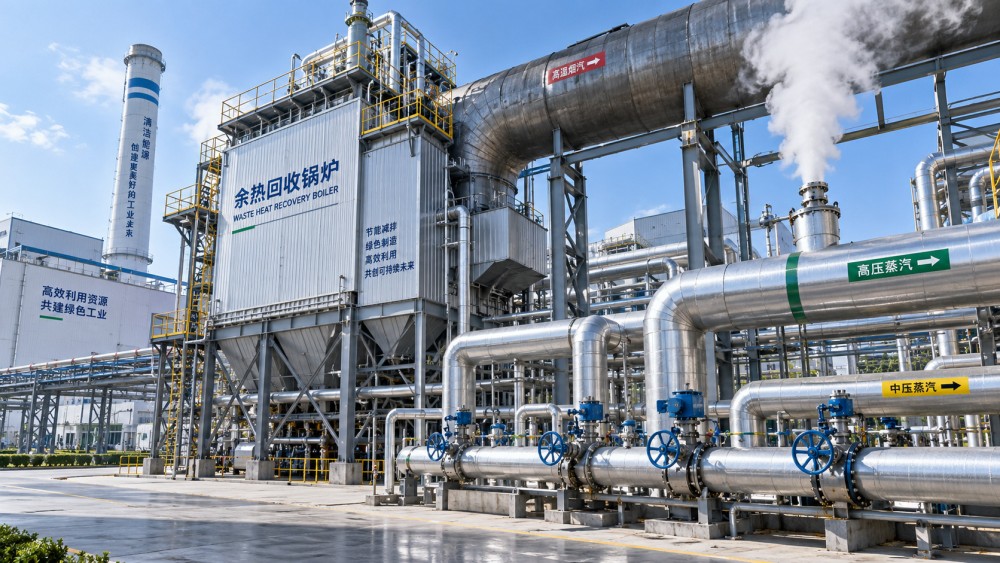
A useful decision lens is the relationship between source quality and demand quality. High-grade exhaust paired with low-grade, irregular heat demand often points toward a simpler recovery arrangement, thermal storage, or no recovery at all. High-grade exhaust paired with a dependable high-pressure steam header is where a purpose-designed boiler deserves detailed consideration.
Costs that are often underestimated during procurement
The boiler package is only one component of project cost. Depending on the site, the balance of plant may include ductwork, diverter or bypass systems, induced-draft fans, particulate control adaptations, feedwater treatment, condensate return upgrades, deaeration, electrical integration, controls, foundations, structural steel, insulation, access platforms, and steam-piping modifications. A compact thermal design can still become a difficult construction project if tie-in space is restricted or a shutdown window is narrow.
At higher pressures, quality assurance and inspection requirements deserve early attention. Applicable pressure-equipment rules, fabrication codes, local permitting obligations, and third-party inspection practices vary by jurisdiction and project scope. Buyers should establish the governing requirements before comparing supplier quotations. A lower initial offer can become misleading if it excludes documentation, inspections, materials traceability, testing, or site support needed for final acceptance.
Water quality is another area where projects can be judged too narrowly. High-pressure steam systems are less forgiving of inadequate feedwater treatment and poor condensate management. Scale, corrosion, carryover, and deposits do not merely reduce performance; they can shorten run length and complicate inspections. The operating model should identify who owns chemistry monitoring, blowdown management, sampling, and corrective action. These are operating commitments, not minor auxiliary details.
Do not separate recovery efficiency from availability
A design can achieve a low outlet-gas temperature on paper and still be economically weak. As the gas is cooled, the risk of condensation, corrosion, particulate deposition, plugging, or difficult cleaning may increase, depending on the source gas composition. The optimum heat-transfer surface is therefore not always the maximum possible surface. It is the point where additional recovered energy remains worth the added pressure drop, maintenance demand, material selection, and outage exposure.
Fouling characteristics should be examined with the same seriousness as steam capacity. Dust-bearing streams, corrosive constituents, sticky deposits, and cycling temperatures can determine tube spacing, gas velocity, access arrangement, soot-blowing or cleaning strategy, and the need for a bypass. These design choices affect capital cost, but they also decide whether the unit stays online between planned outages.
There is a common tendency to use annual average process data in feasibility studies. Average values are useful for an initial screen, but design decisions require the operating envelope: minimum, normal, maximum, transient, and upset conditions. A boiler must remain safe and controllable when the source process changes load, not merely when it performs at its nominal point.
How to value steam without overstating the return
The most defensible financial model starts with the marginal energy actually displaced. If recovered steam replaces output from an existing gas-fired boiler, its value relates to the boiler’s real fuel consumption, efficiency at that load, water and chemical use, maintenance implications, and fuel price exposure. If it supports a turbine-generator, the model must account for turbine performance, auxiliary loads, dispatch conditions, grid value, and periods when the power cannot be used or exported.
Avoid valuing every tonne of recovered steam at the price of the site’s most expensive steam source. That may be valid during certain operating periods, but not throughout the year. It is better to use scenarios: conservative, expected, and stressed. The stressed case should include lower plant utilization, reduced fuel spread, higher maintenance allowance, and delayed commissioning. Decision-makers do not need false precision; they need to know which assumptions most change the investment outcome.
Carbon costs or emissions incentives may strengthen the case, but they should be handled carefully. Their relevance depends on local rules, reporting boundaries, fuel substitution logic, and the durability of the applicable mechanism. Treat them as a verified project-specific input, not a universal benefit attached to every recovery boiler.
Questions to resolve before issuing a request for proposal
A strong request for proposal does more than ask vendors for a steam rate and price. It makes the engineering and commercial boundary visible. Before entering supplier discussions, the owner’s team should be able to define or investigate the following:
- Source-gas composition, temperature, flow range, pressure, dust loading, and expected process transients.
- Required steam conditions, minimum stable demand, condensate-return assumptions, and treatment-water availability.
- Permissible pressure drop and the production consequences of fan power, backpressure, or bypass operation.
- Target availability, cleaning philosophy, inspection access, spares strategy, and planned outage windows.
- Battery limits for civil work, electrical systems, ducting, controls, permitting, commissioning, and performance testing.
This level of clarity allows bids to be compared on more than headline efficiency. It also helps expose where one supplier has assumed clean gas, unrestricted plot space, owner-supplied utilities, or a simplified control interface. Those exclusions can materially alter installed cost and schedule risk.
A system view produces better decisions
Waste heat recovery sits at the intersection of process engineering, boiler design, power economics, emissions management, and plant operations. It should not be evaluated by a single department in isolation. Process teams understand the heat source; utilities teams understand header behavior and water chemistry; maintenance teams identify access and reliability issues; finance teams test economic resilience. A sound investment case needs all four perspectives.
This systems view is central to the work followed by GTC-Matrix. Its Strategic Intelligence Center connects thermodynamic analysis with compression power, heat exchange, low-NOx combustion developments, and industrial economics. For organizations considering high-pressure recovery, the useful question is rarely “Which boiler is best?” It is “Which recovery configuration fits our process, utility network, risk tolerance, and energy-cost outlook?”
High-pressure waste heat recovery boilers make economic sense when recovered energy has a reliable, high-value destination and the plant can support the discipline required to operate a pressure system well. Where the source is unstable, the steam cannot be consumed, or fouling and downtime risks dominate, a lower-pressure approach—or a decision not to recover heat—may be the more commercial choice. Before committing capital, validate the operating envelope, steam balance, installed scope, and downside case with the same rigor used for the heat-duty calculation.
Ready when you are. Send us a message to get started.
Related News
- When high-pressure waste heat recovery boilers make economic senseAuthor :Thermal Energy Strategist

- How steam generation efficiency shapes thermal power system designAuthor :Thermal Energy Strategist

- Boiler Optimization: Cutting Fuel Use Without Compromising Steam ReliabilityAuthor :Thermal Energy Strategist

- How to size thermal fluid systems for stable process temperaturesAuthor :Thermal Energy Strategist

- Industrial Boiler Heat Recovery: Diagnosing Lost Savings in Existing PlantsAuthor :Thermal Energy Strategist

- Boiler Heat Recovery Systems: Sizing Waste-Heat Recovery for Stable Steam LoadsAuthor :Thermal Energy Strategist

- Can Condensing Boilers Cut NOx Emissions Without Creating Corrosion Risks?Author :Thermal Energy Strategist

- Low-NOx Boilers Industry Trends: What New Rules Mean for Plant UpgradesAuthor :Thermal Energy Strategist

- A Practical Roadmap for Industrial Steam System Decarbonization ProjectsAuthor :Thermal Energy Strategist

- Industrial Steam System Vendor Comparison: Criteria Beyond Equipment PriceAuthor :Thermal Energy Strategist

- How to Choose an Industrial Steam Generator for Load Profile, Fuel, and RedundancyAuthor :Thermal Energy Strategist

- When Does a Heat Recovery Steam Generator Make Economic Sense?Author :Thermal Energy Strategist

- How pressure control prevents unstable steam supply in industrial systemsAuthor :Thermal Energy Strategist

- How excess air affects boiler efficiency in steam systemsAuthor :Thermal Energy Strategist

- When a Refinery Steam Turbine Should Prioritize Process Steam Over Maximum OutputAuthor :Thermal Energy Strategist

- Which boiler upgrades deliver the fastest efficiency cost reductionAuthor :Thermal Energy Strategist

- What to check before choosing a steam generation systems supplierAuthor :Thermal Energy Strategist

- When do industrial boiler systems cost less than electric heatAuthor :Thermal Energy Strategist

- How to Compare Boiler Systems in Latin America by Fuel Cost and ComplianceAuthor :Thermal Energy Strategist

- How to Size Low-Pressure Industrial Steam Systems for Stable Heat DemandAuthor :Thermal Energy Strategist

- Low Emissions Boilers: What to Compare Before You ChooseAuthor :Thermal Energy Strategist

- Low-NOx Boilers Cost Breakdown: Upfront Price, Fuel Savings, and PaybackAuthor :Thermal Energy Strategist

- Boiler Combustion Systems: Common Causes of Unstable Fuel PerformanceAuthor :Thermal Energy Strategist

- Hot Water Industrial Boilers: When Efficiency Gains Justify ReplacementAuthor :Thermal Energy Strategist

- What Boiler Efficiency Really Means in Daily Operation and Energy BillsAuthor :Thermal Energy Strategist

- Boiler Efficiency Testing Methods That Expose Heat Loss and Fuel WasteAuthor :Thermal Energy Strategist

- Industrial Burner Systems: Key Factors for Safe Heat OutputAuthor :Thermal Energy Strategist

- Gas-Fired Boiler Combustion Technology: Key Efficiency and Emissions Trade-OffsAuthor :Thermal Energy Strategist

- Unfired Heat Recovery Steam Generators: When Do They Pay Off?Author :Thermal Energy Strategist

- How to Evaluate Steam Generation Systems Electric for Process Heat ProjectsAuthor :Thermal Energy Strategist

- Thermal Power Systems for Industrial Heating: Common Sizing Mistakes to AvoidAuthor :Thermal Energy Strategist

- Low-NOx Condensing Boilers: How to Compare Efficiency and EmissionsAuthor :Thermal Energy Strategist
![]()
- Low Emissions Boilers for Food Processing: Key Compliance and Fuel Cost FactorsAuthor :Thermal Energy Strategist

- Steam System Efficiency Calculation: Key Inputs That Change the ResultAuthor :Thermal Energy Strategist

- How to Evaluate a Steam Boiler Components Exporter Before OrderingAuthor :Thermal Energy Strategist

- Burner Systems Troubleshooting: Common Efficiency Loss CausesAuthor :Thermal Energy Strategist