What determines the price of pure air compression systems?




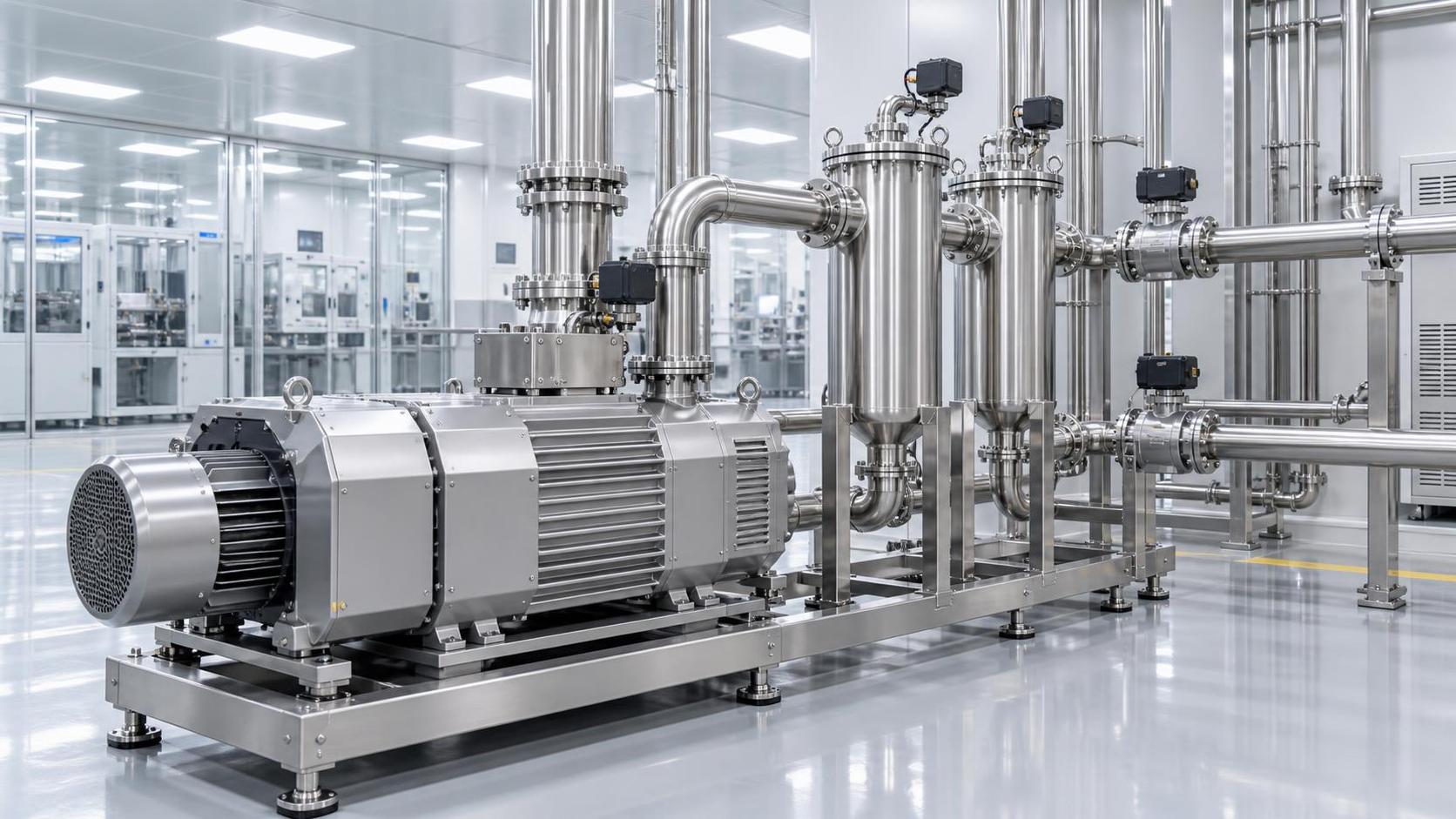
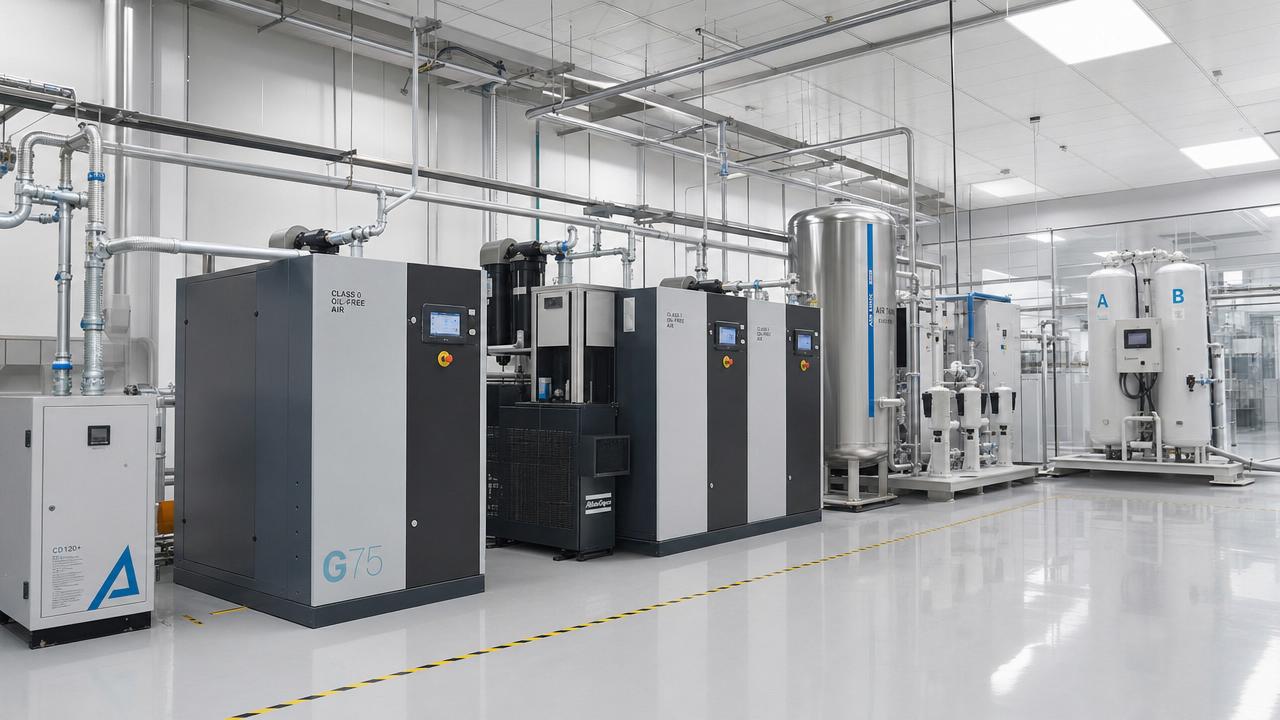
The price of a pure air compression system is determined less by the compressor alone than by the level of air purity that must be delivered, verified, and maintained at the point of use. Two quotations with the same nominal motor size can differ substantially because one covers only oil-free compression while the other includes dryers, filtration, condensate management, controls, monitoring, validation documents, installation engineering, and long-term service obligations.
The first purchasing question is therefore not “What does an oil-free compressor cost?” It is: “What quality of compressed air is required at each critical use point, under which operating conditions, and who carries the risk if that quality is not achieved?” The answer determines the technical scope—and the real investment.
“Pure Air” Is Not a Single Equipment Category
In industrial sourcing, “pure air” can mean several different things. It may refer to compressed air produced without lubricating oil in the compression chamber. It may mean air with very low oil aerosol and vapor content. In more demanding applications, it can also involve controlled particle levels, low pressure dew point, odor control, microbial risk management, or validated air quality for direct or indirect contact with a product.
These requirements should be translated into measurable specifications rather than left as general wording in a request for quotation. ISO 8573-1 is widely used to classify compressed-air contaminants, including particles, water, and oil. The required purity class must be aligned with the actual process, because a high-purity requirement applied to the entire plant can create unnecessary capital and energy cost. Conversely, specifying only “oil-free” may leave major gaps in water, particulate, or downstream contamination control.
For example, an assembly line using pneumatic actuators may only need clean, dry air for reliable equipment operation. A filling process, laboratory instrument, food-contact application, or electronics process may require much tighter controls at selected points. The system price changes when purity must be assured throughout the distribution network rather than merely at the compressor discharge.
Capacity and Pressure Create the Starting Price, but Not the Final Price
Air demand is the base variable behind every pure air compression systems price. Suppliers size systems according to delivered free air delivery (FAD), required discharge pressure, operating hours, ambient conditions, and demand profile. A system designed for a stable base load has a different cost structure from one that must repeatedly handle sharp peaks, intermittent production, or multiple pressure zones.
Nominal compressor output should not be compared without confirming the reference conditions. FAD can vary with intake temperature, altitude, humidity, pressure, and the stated measurement standard. A quotation that appears less expensive may be based on a different pressure rating or a less conservative allowance for site conditions. The practical comparison point is delivered air at the required operating pressure after treatment losses, not only the motor kW shown on a brochure.
Pressure deserves particular attention. Every additional pressure requirement increases compression energy and may require heavier-duty components. If the process only needs a lower pressure but the system is selected around the highest-pressure user, the entire plant can pay for that decision through higher electricity consumption. Separating high-pressure users, correcting pressure drops, or redesigning poorly matched points of use can sometimes reduce the required compressor scope more effectively than negotiating a lower unit price.
Redundancy also affects the purchase price. A single compressor sized at full demand may have the lowest initial equipment cost, but it creates a single point of failure. N+1 arrangements, standby treatment trains, bypass capability, or modular units increase capital expenditure while reducing production interruption risk. Whether that cost is justified depends on the consequences of an air-quality failure or unplanned shutdown, not on a universal rule.
Compression Technology Has Different Cost and Risk Profiles
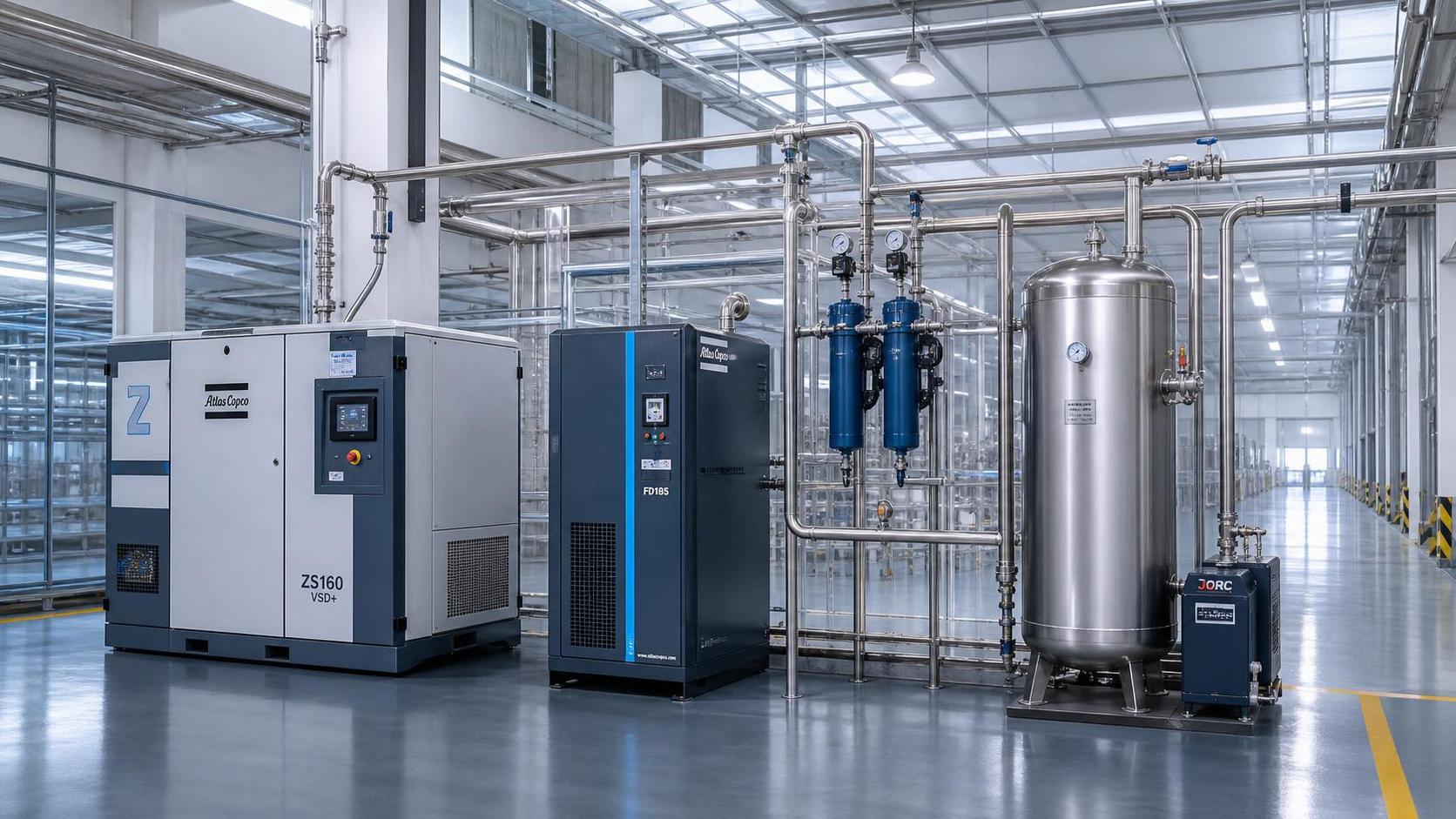
Oil-free rotary screw compressors are frequently selected where continuous industrial air demand and oil contamination risk are central concerns. They generally command a higher initial price than comparable lubricated screw machines because of their compression design, materials, manufacturing tolerances, cooling arrangement, and control requirements. Water-injected oil-free screw designs have a different configuration and maintenance profile from dry oil-free designs, so they should not be treated as interchangeable simply because both are marketed as oil-free.
Oil-free scroll compressors are often relevant for smaller or distributed demand, especially where quiet operation, modularity, or local point-of-use supply matters. Their economics can be attractive at modest flow rates, but a multi-unit arrangement must be evaluated for service access, control coordination, reserve capacity, and replacement parts availability.
Oil-free reciprocating systems may be appropriate in specific pressure ranges or lower-flow duties, while centrifugal compressors become relevant for high, relatively stable flow requirements. Centrifugal equipment can offer strong efficiency in a well-matched operating envelope, but its installed cost, civil requirements, commissioning complexity, and sensitivity to demand variation require a different level of project assessment.
The lowest-priced technology is not automatically the lowest-cost option. A technology mismatch can create excessive unloading losses, unstable pressure, frequent cycling, premature wear, or a treatment system that is oversized to compensate for inconsistent upstream operation.
Air Treatment Often Explains the Largest Difference Between Quotes
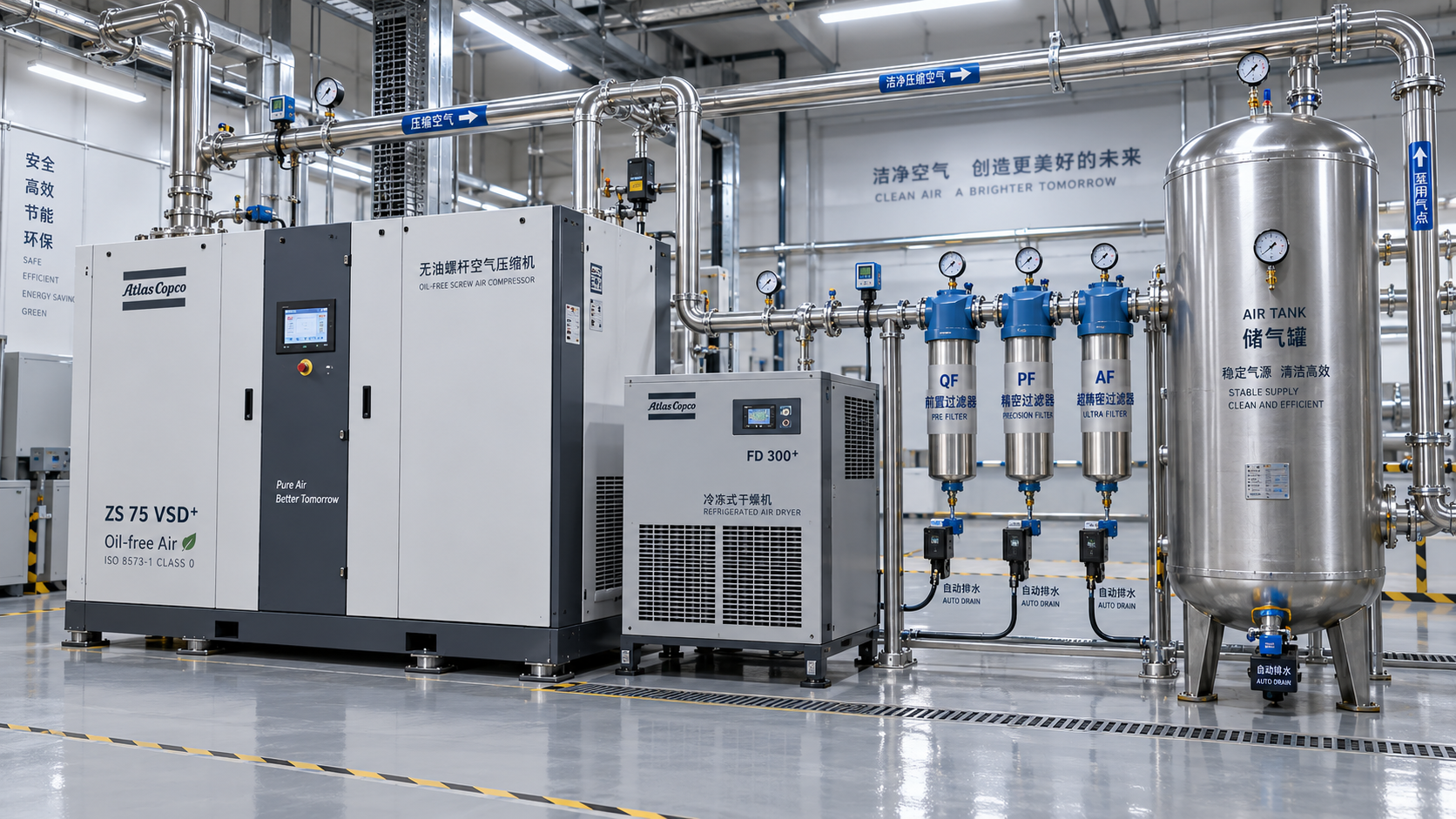
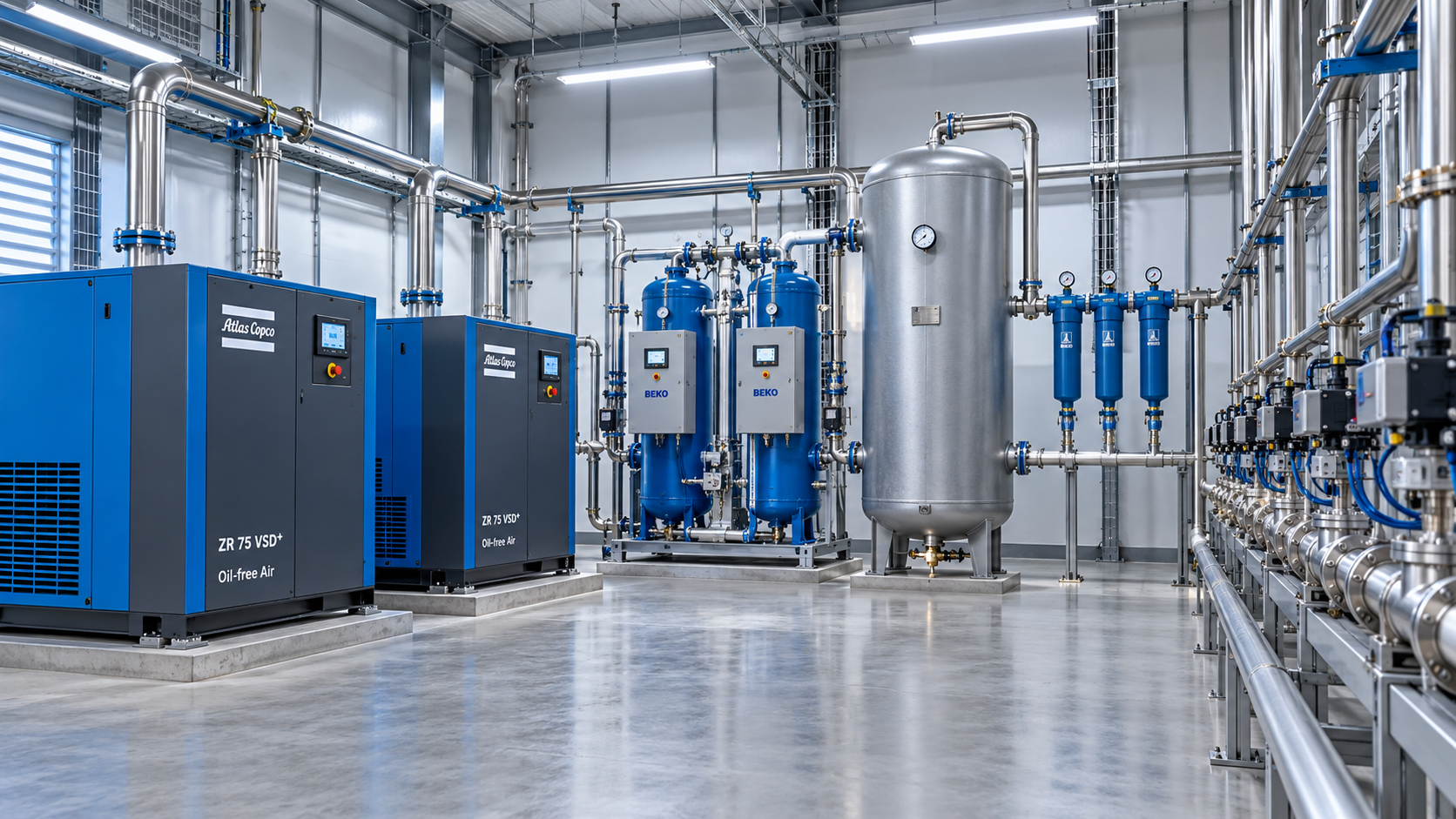
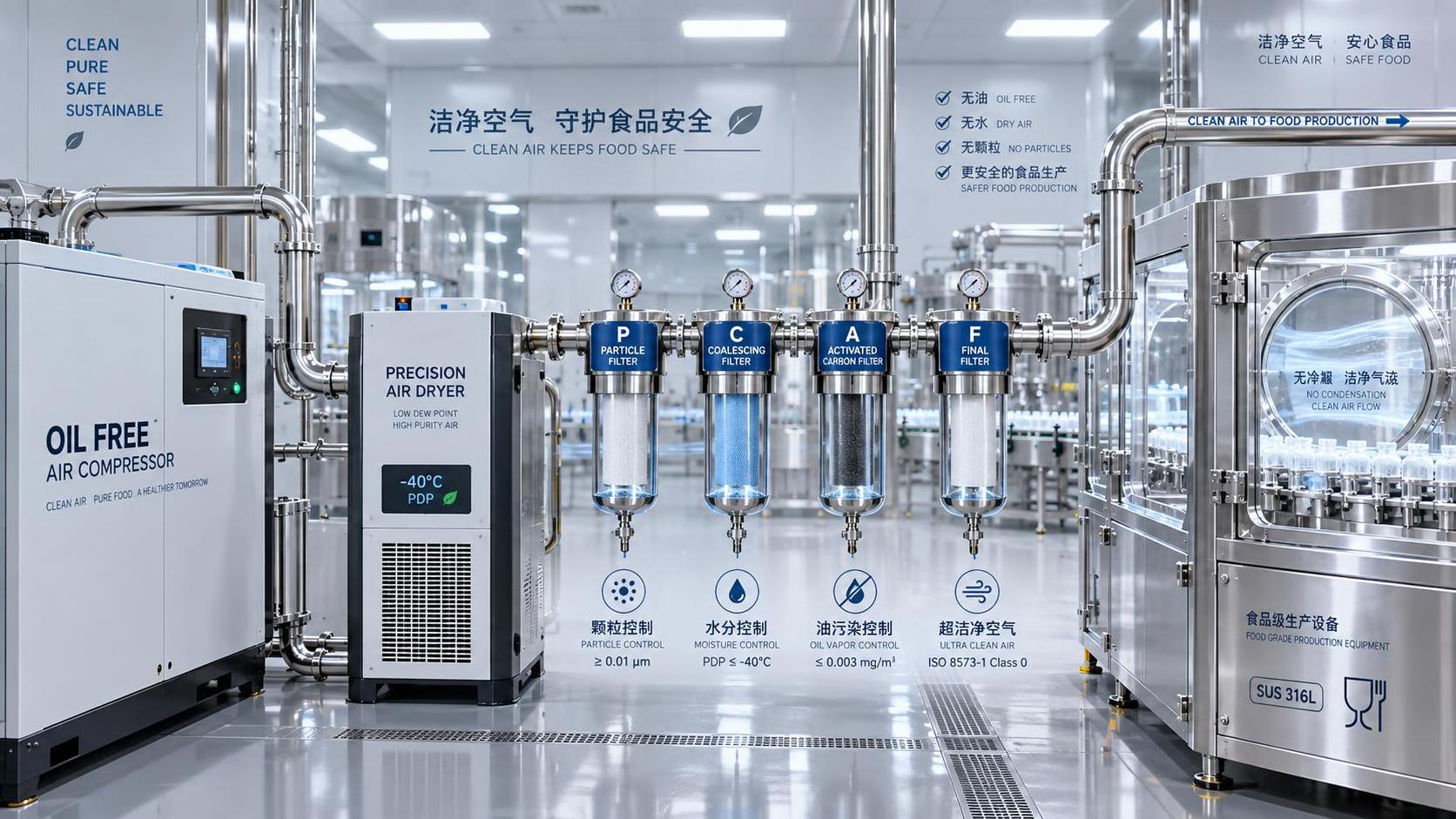
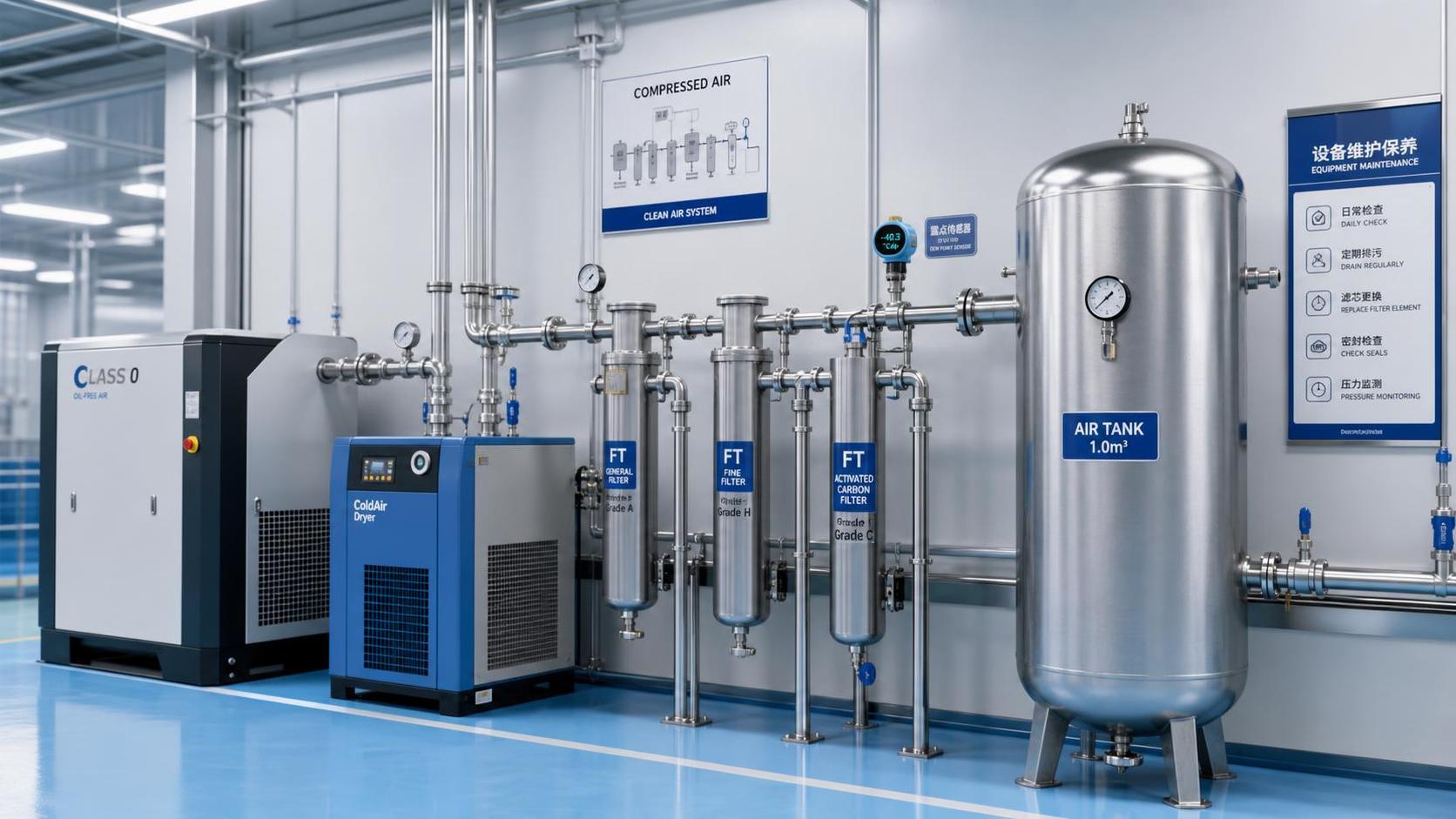
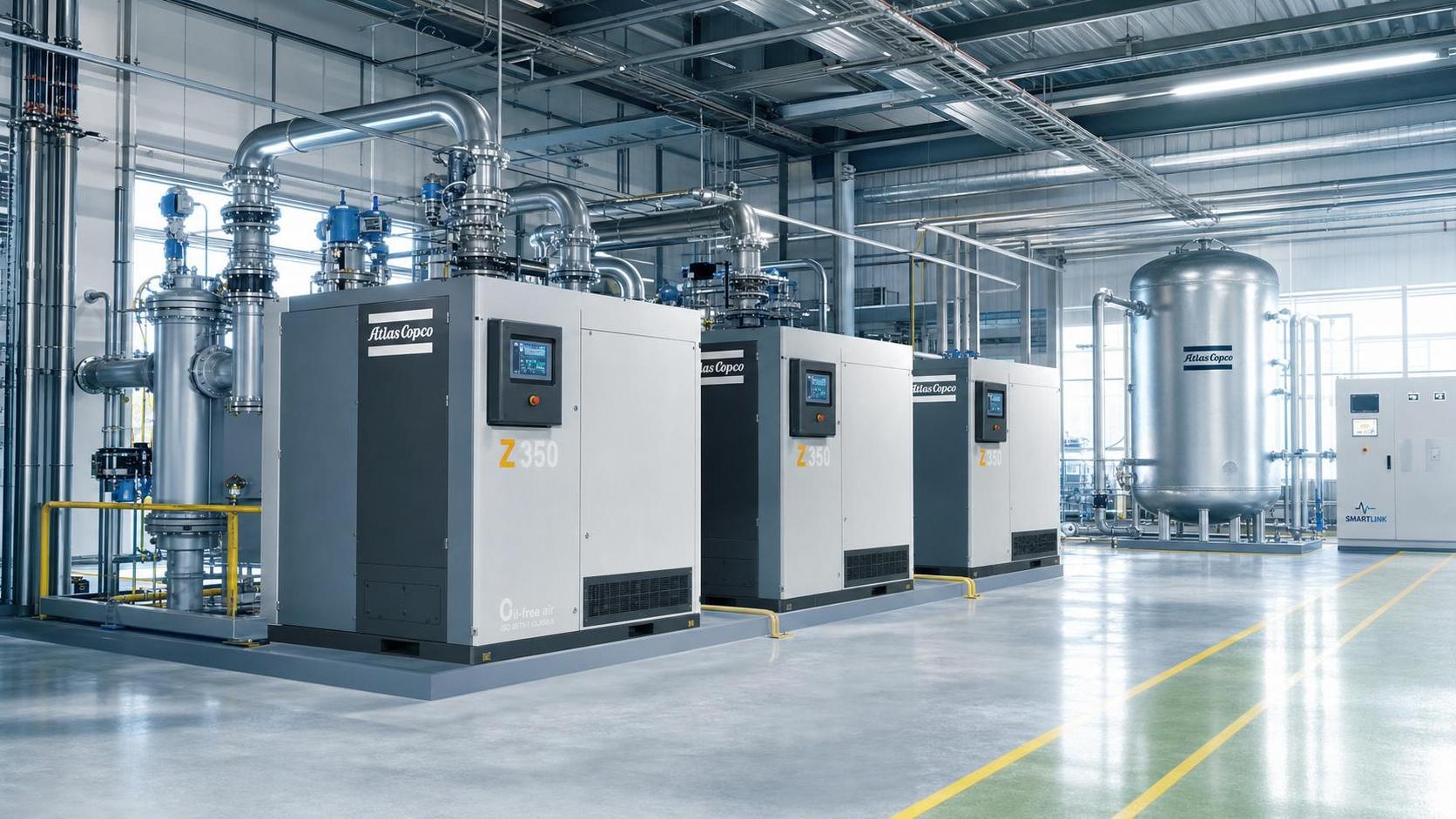
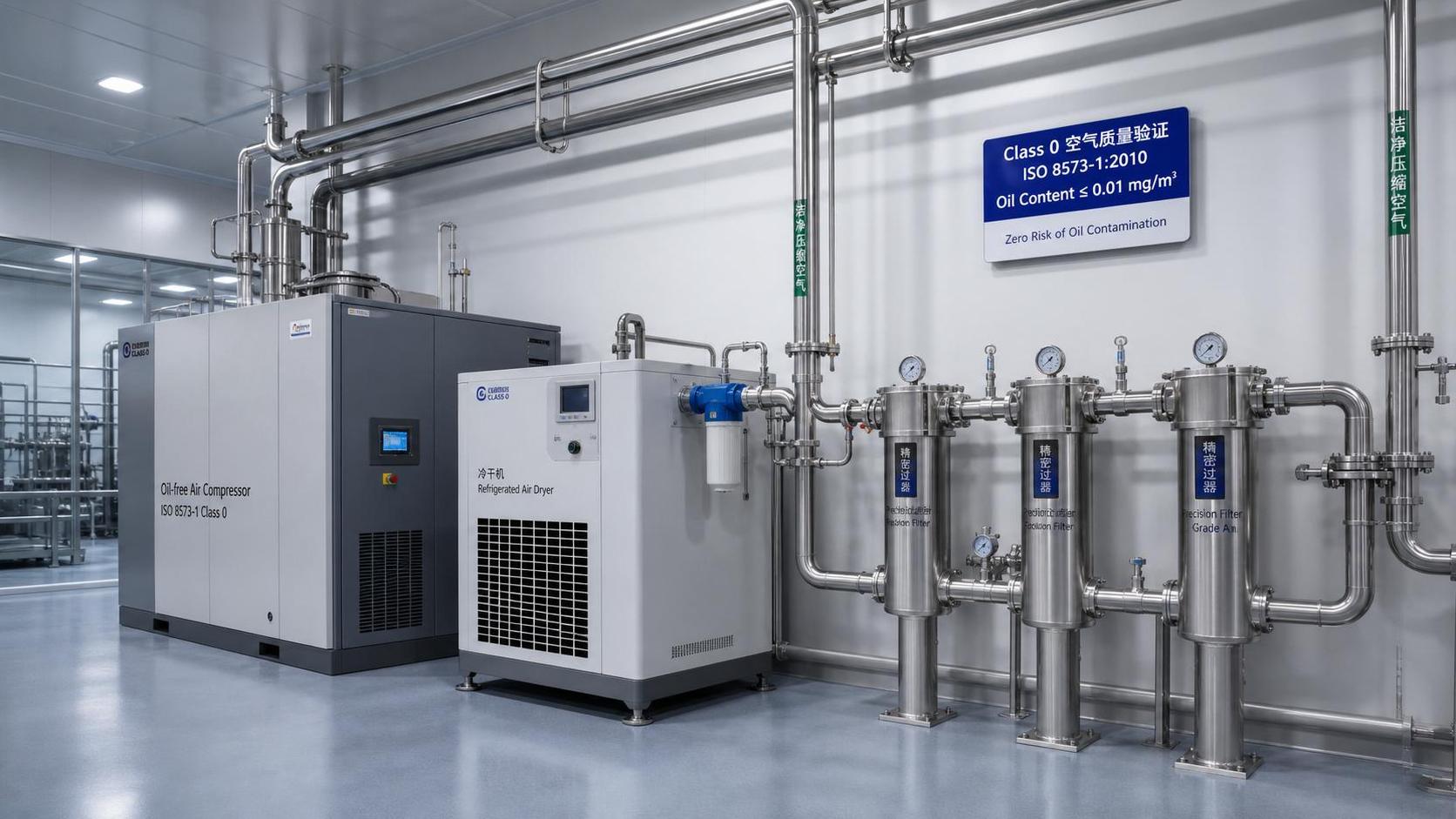
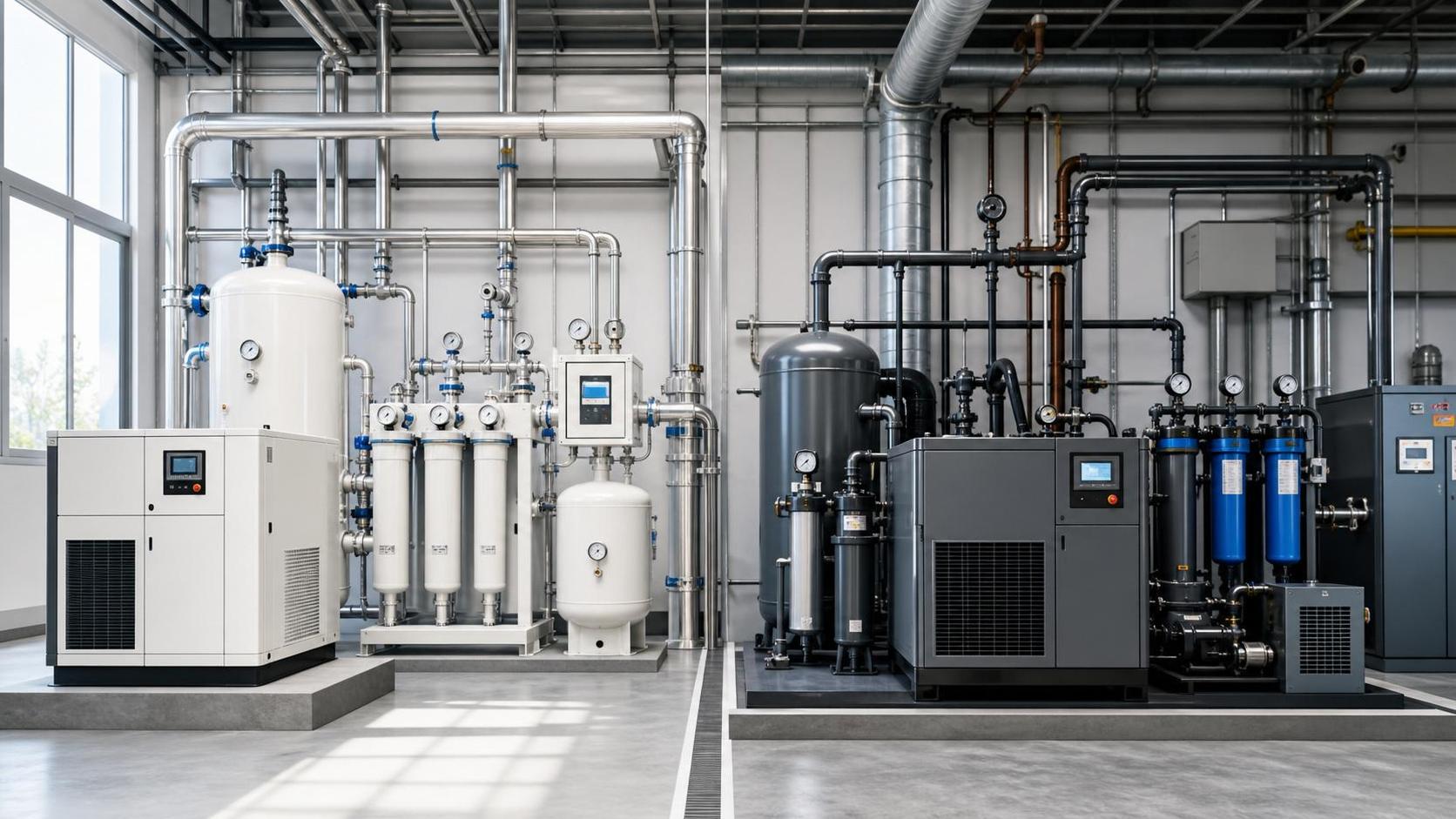
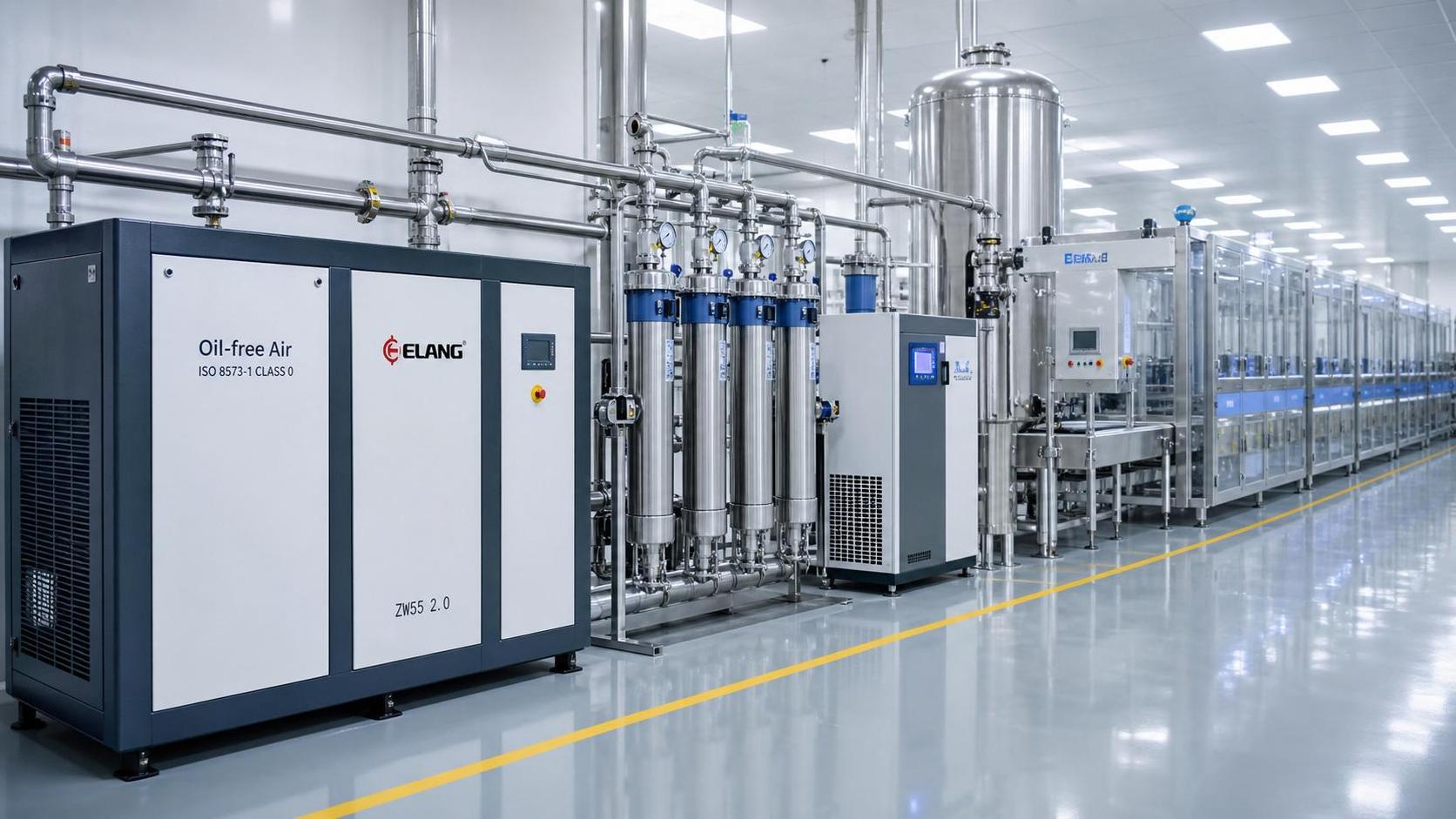
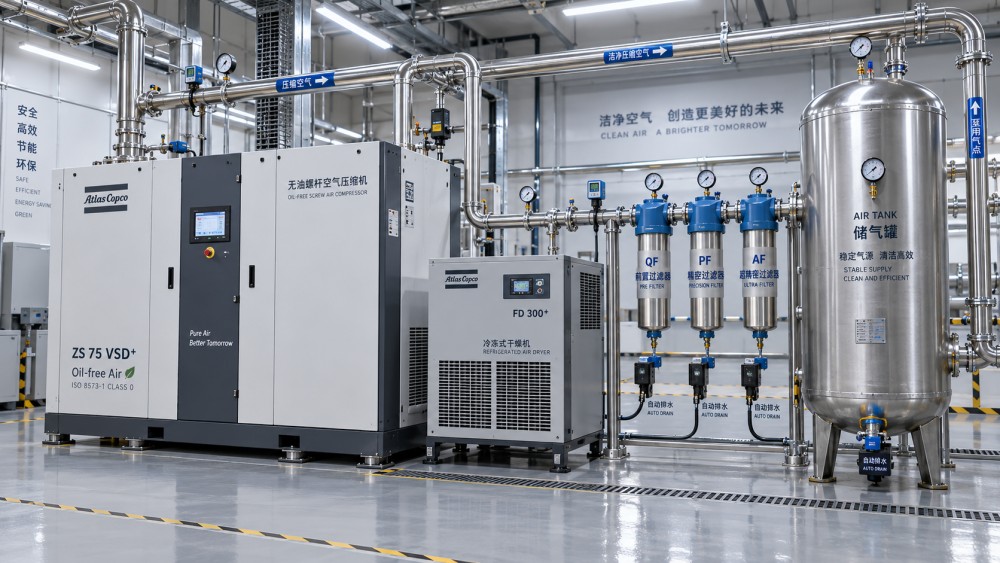
A compressor package and a complete pure air system are not equivalent purchases. The treatment train can include aftercoolers, moisture separators, drains, refrigerated dryers, desiccant dryers, particulate filters, coalescing filters, activated-carbon filters, breathing-air treatment, sterile filters, and monitoring instruments. Each item has a distinct purpose and operating cost.
Water control is especially important because compressed air leaving a compressor is warm and moisture-laden. As air cools in receivers and piping, water can condense, causing corrosion, instrument failures, microbial concerns in certain settings, and damage to downstream tools. The required pressure dew point determines whether a refrigerated dryer is sufficient or whether a desiccant dryer is required. Desiccant drying generally carries higher purchase and operating costs because it may involve regeneration energy, purge-air losses, valves, heaters, switching controls, and desiccant replacement over time.
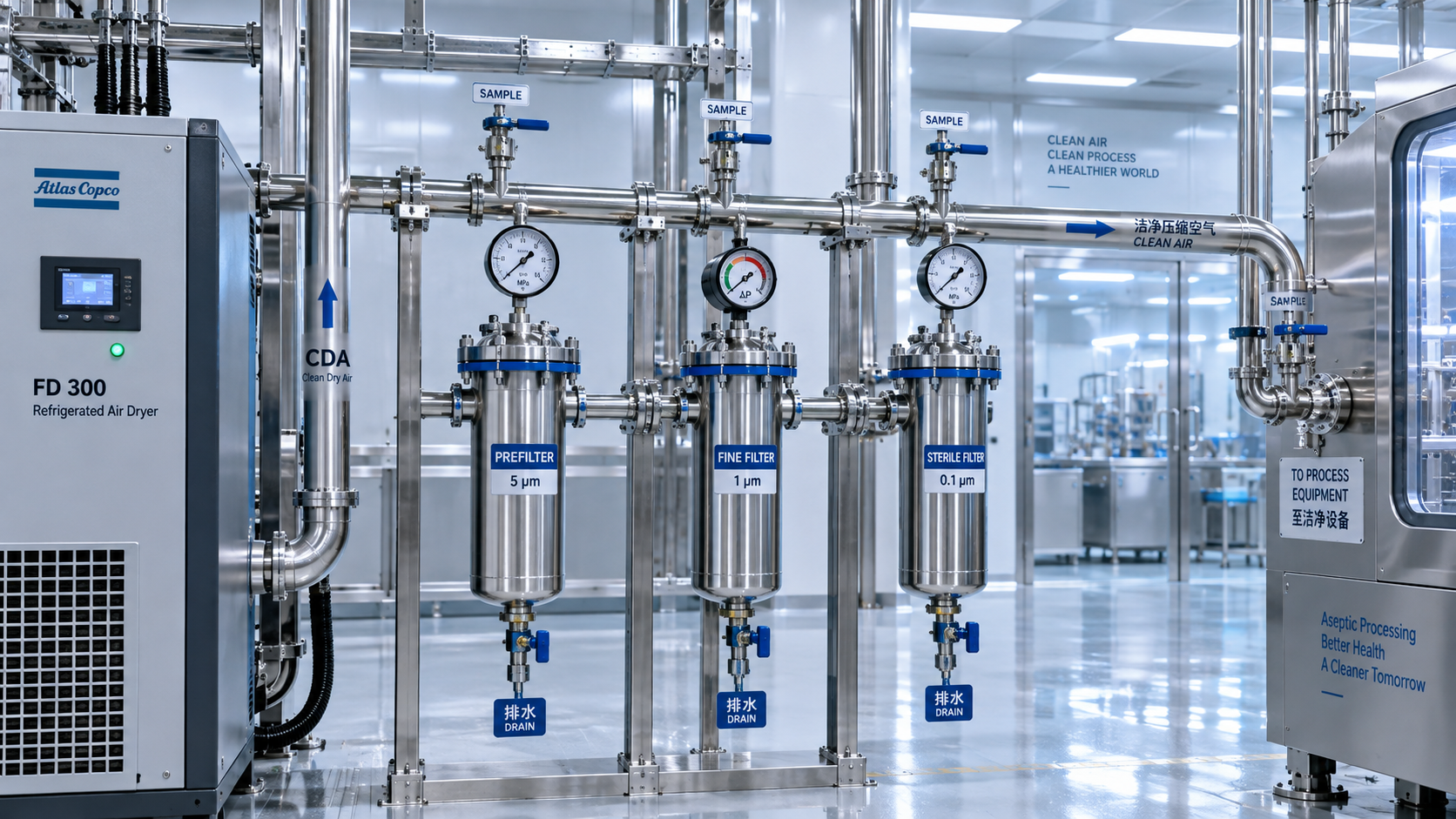
Filtration needs equally careful definition. A fine coalescing filter can remove aerosols and particles, but it does not solve every vapor-related issue. Activated-carbon filtration may be used where oil vapor or odor is relevant, although its performance depends on inlet conditions and cartridge maintenance. A sterile filter addresses a different contamination concern and requires appropriate placement, cleaning or replacement discipline, and pressure-drop management.
The common sourcing error is to compare a quotation containing only a compressor and dryer against a quotation that includes a full filtration and monitoring train. The first may look materially cheaper while leaving essential components, installation interfaces, and compliance responsibilities outside the stated scope.
Air Quality Claims Must Be Separated from System-Level Assurance
“Oil-free” does not automatically mean that every point of use receives contamination-free air under all conditions. Ambient intake air can contain hydrocarbons, dust, moisture, and process contaminants. Distribution piping can introduce rust, scale, residual debris, or condensate. Incorrectly maintained filters can become a source of pressure loss and reduced protection. A compressor room located near vehicle traffic, solvent emissions, cooling towers, or production exhaust may require a more robust intake-air strategy.
Where air quality is critical, the quotation should distinguish among:
- compression technology and its oil-related design characteristics;
- the guaranteed quality at a defined measurement location;
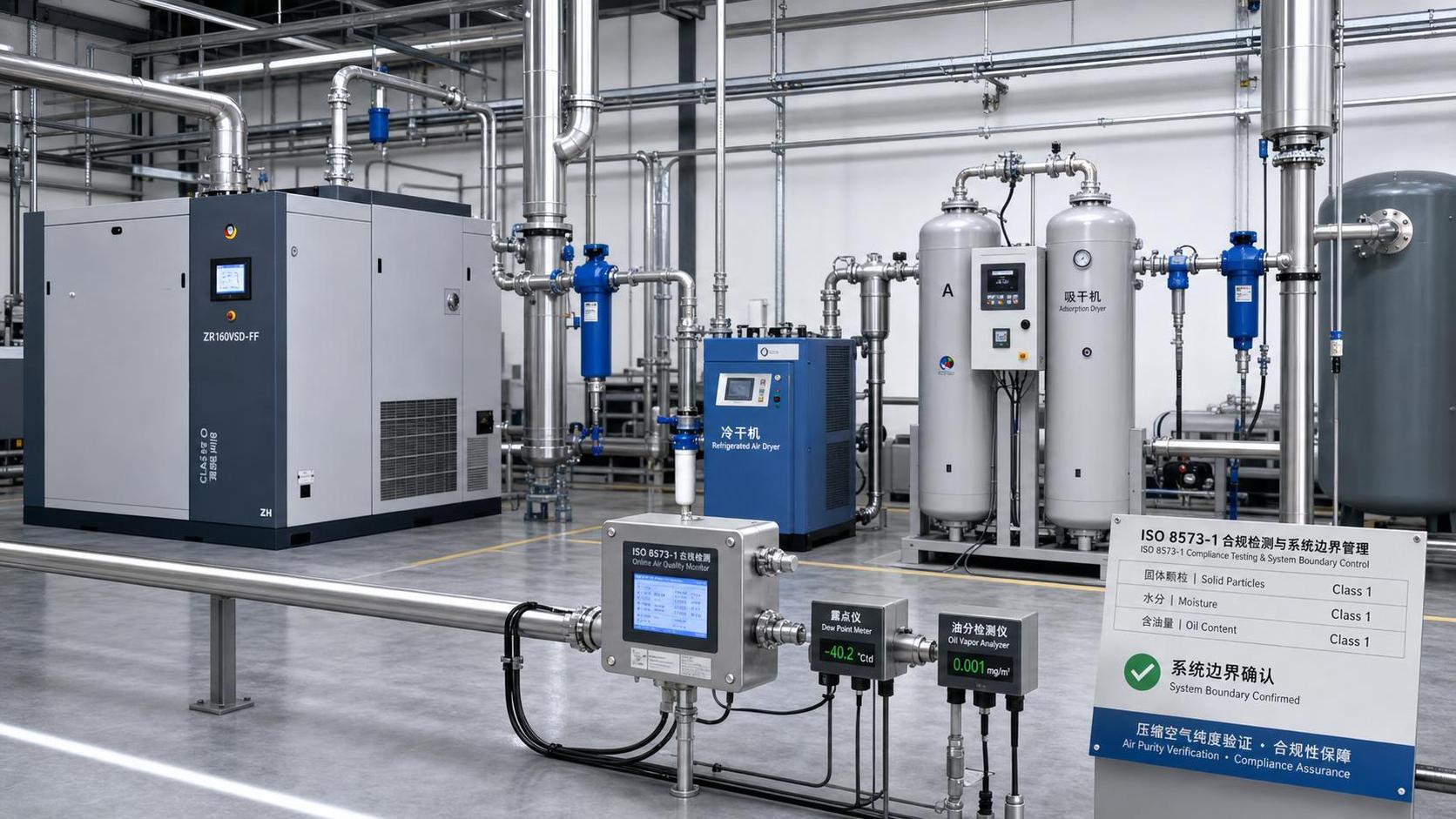
- the required ISO 8573-1 class or other applicable process specification;
- the instruments, sampling ports, and testing method used for verification;
- conditions that must be maintained for the guarantee to remain valid.
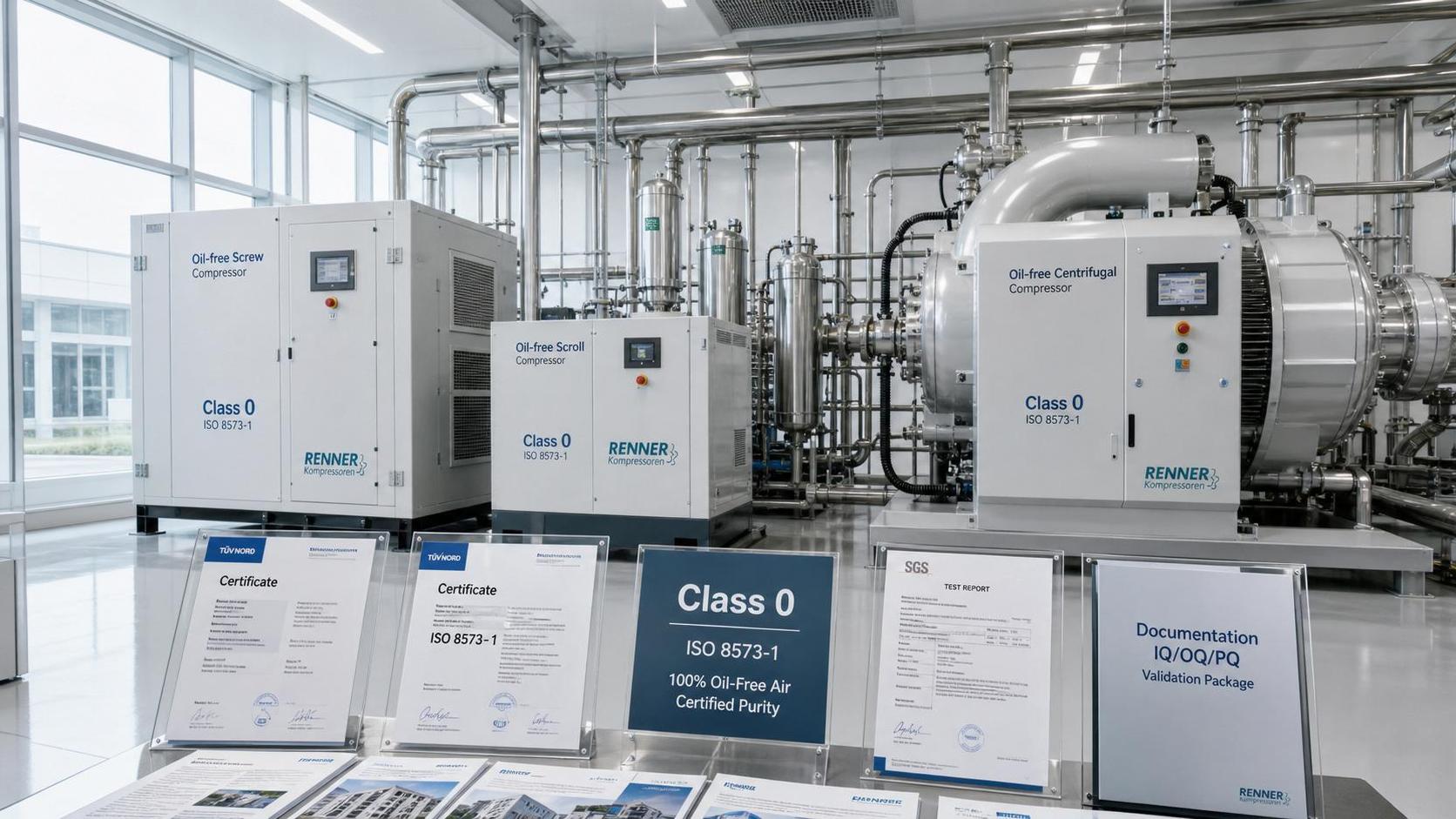
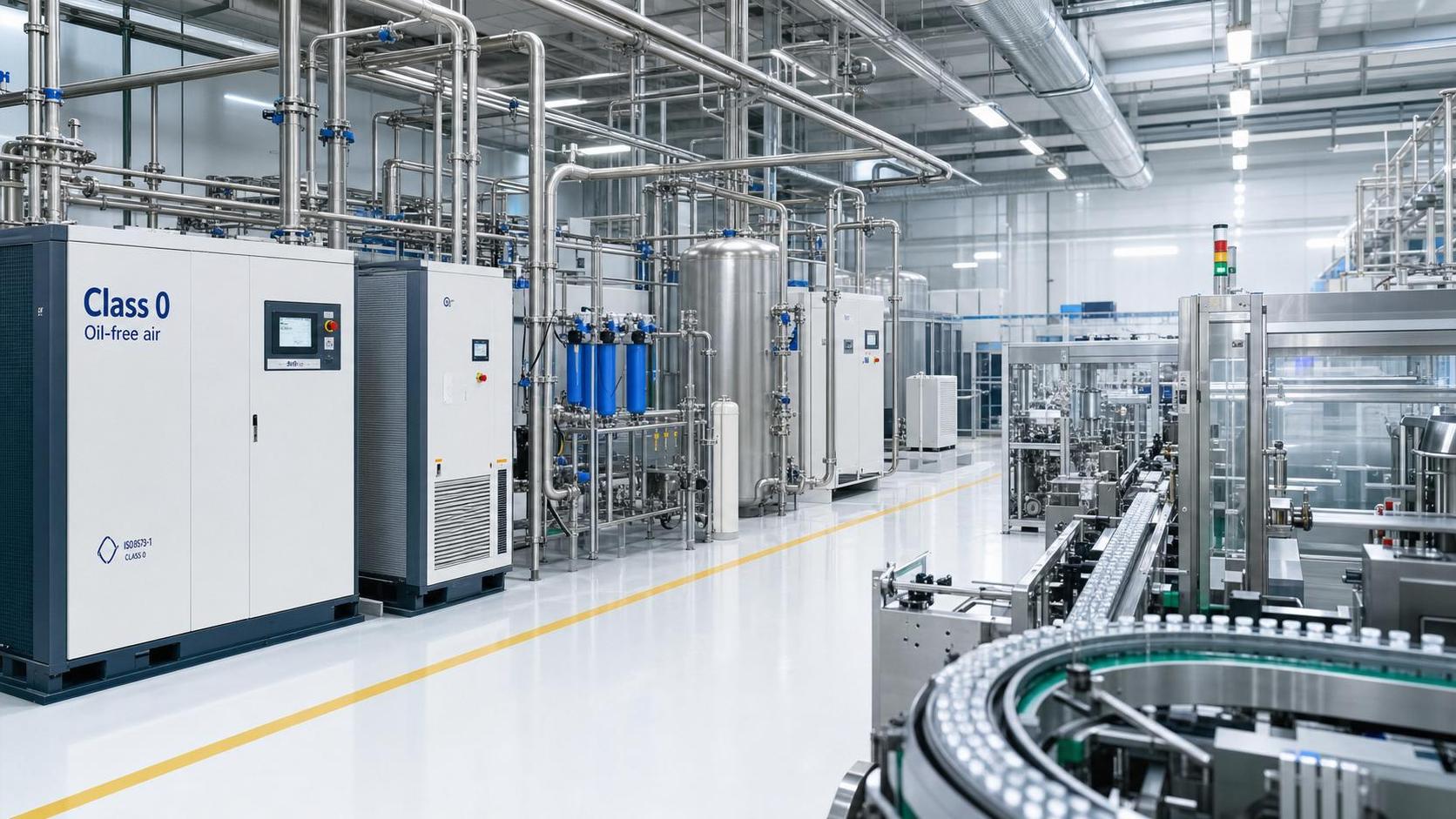
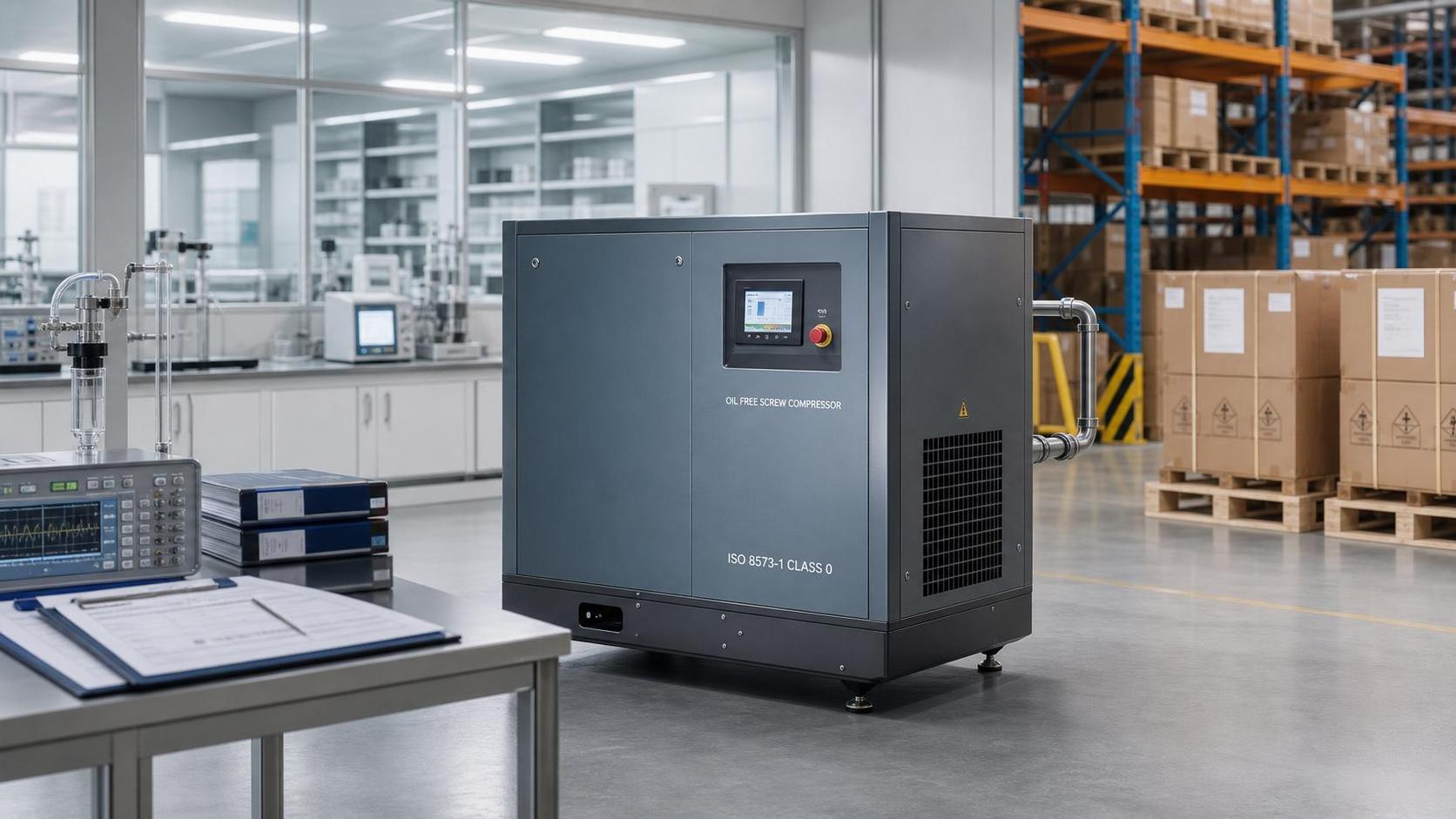
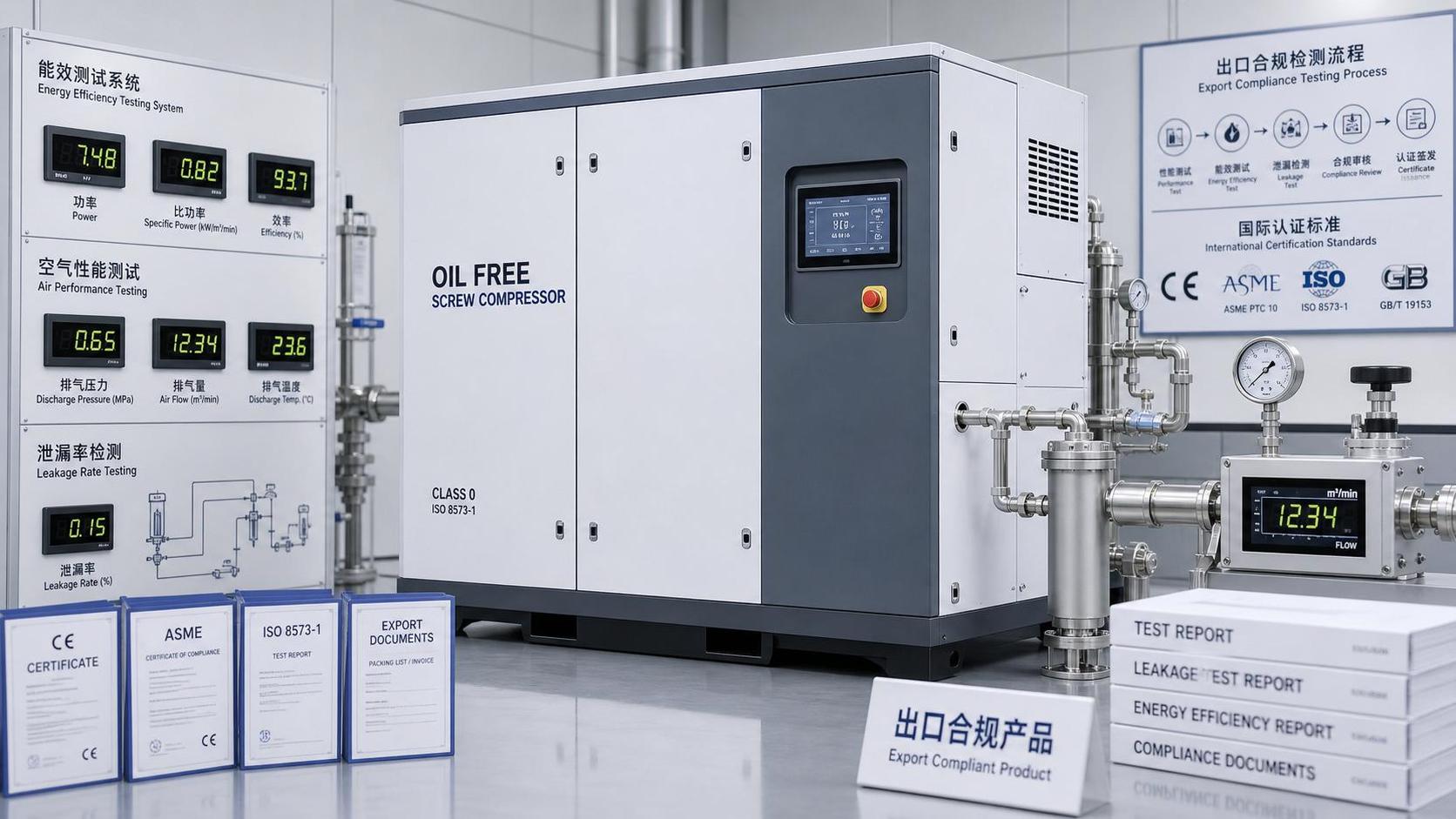
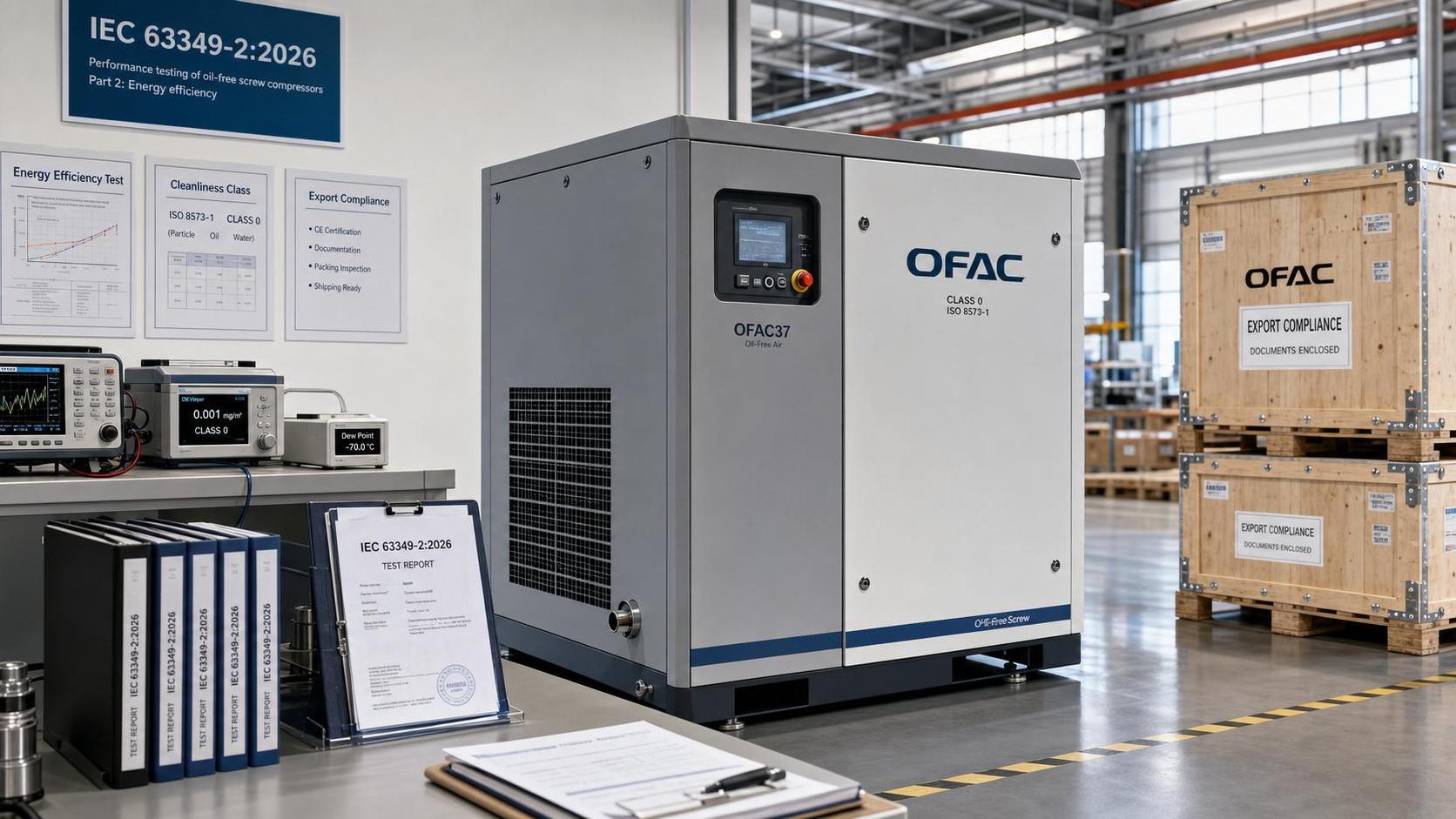
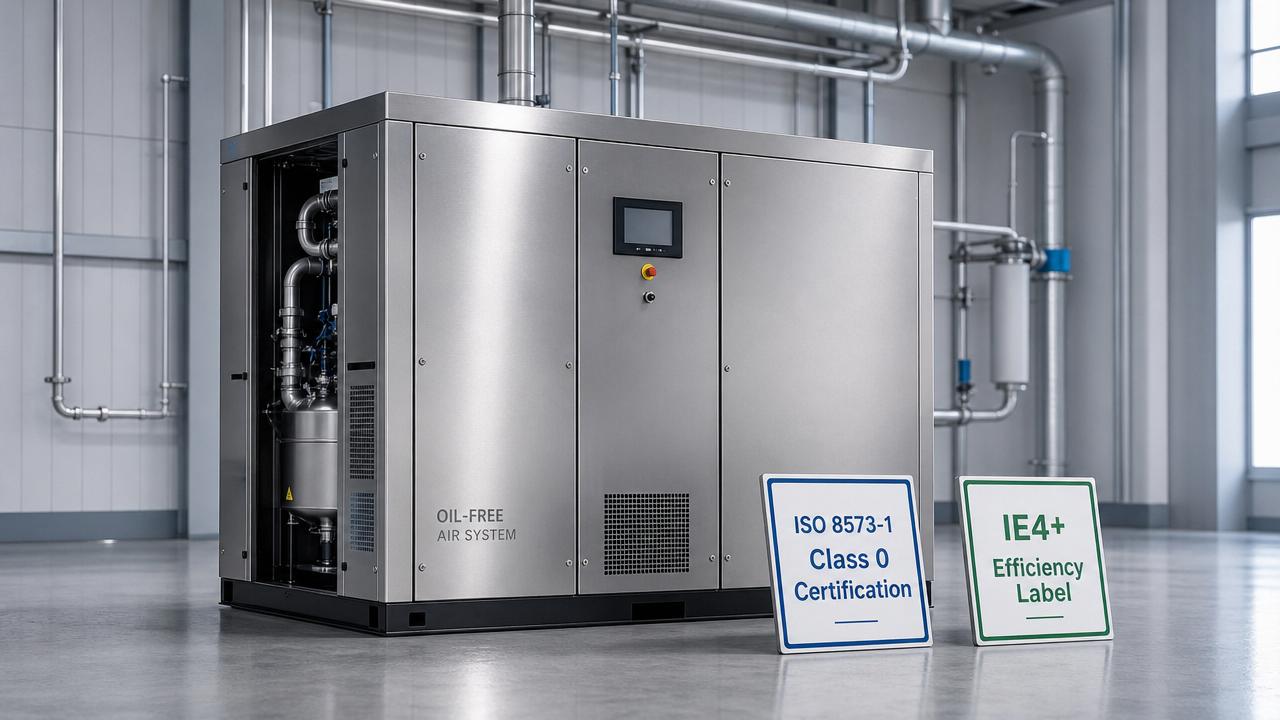
Some suppliers reference “Class 0” in connection with oil-free compressor technology. Under ISO 8573-1, Class 0 is not a fixed universal contaminant limit in the same way as the numbered classes; it is defined by the equipment manufacturer and user as a requirement more stringent than Class 1. That makes the underlying stated limit, test method, and measurement point more important than the label alone.
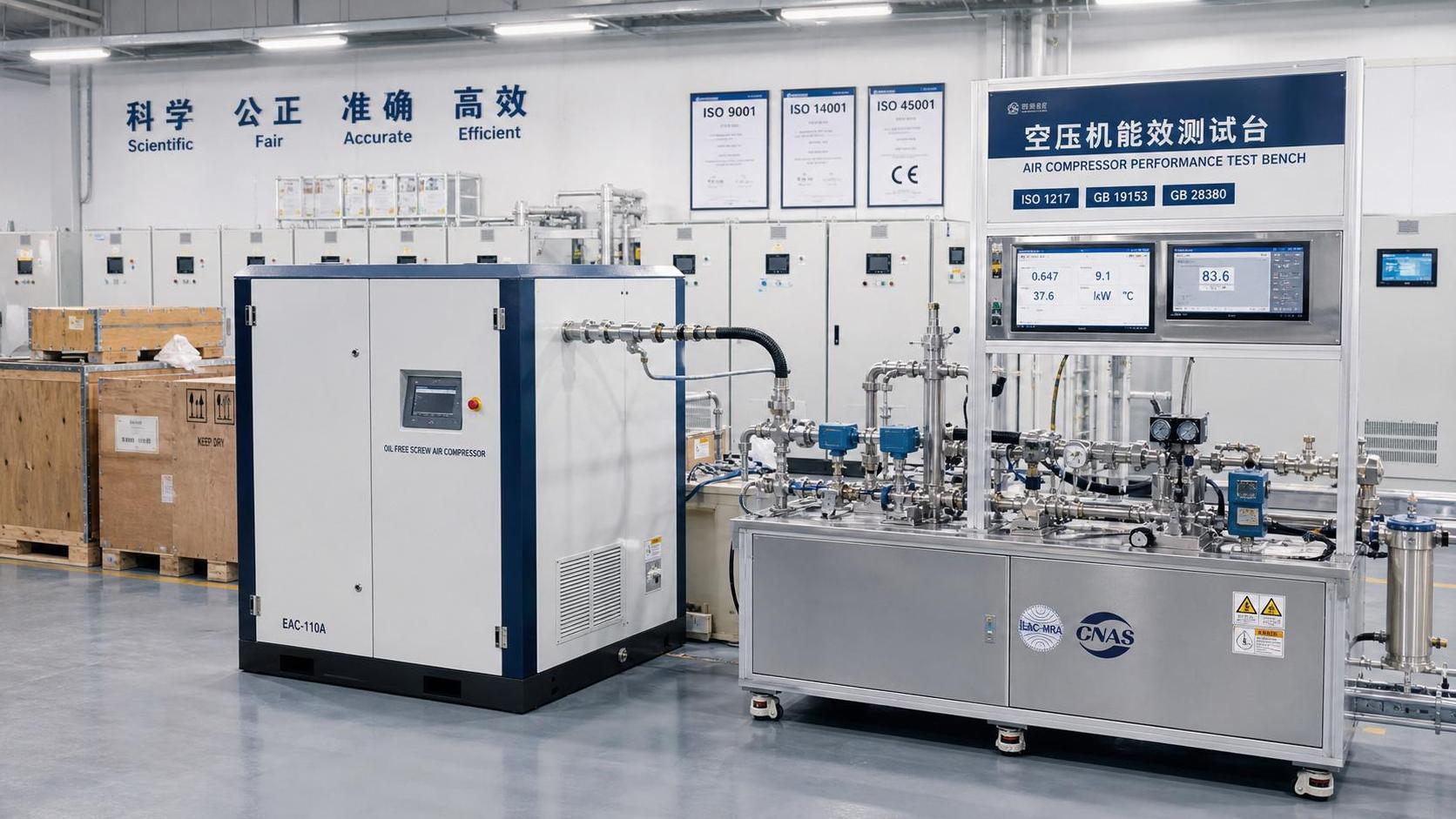
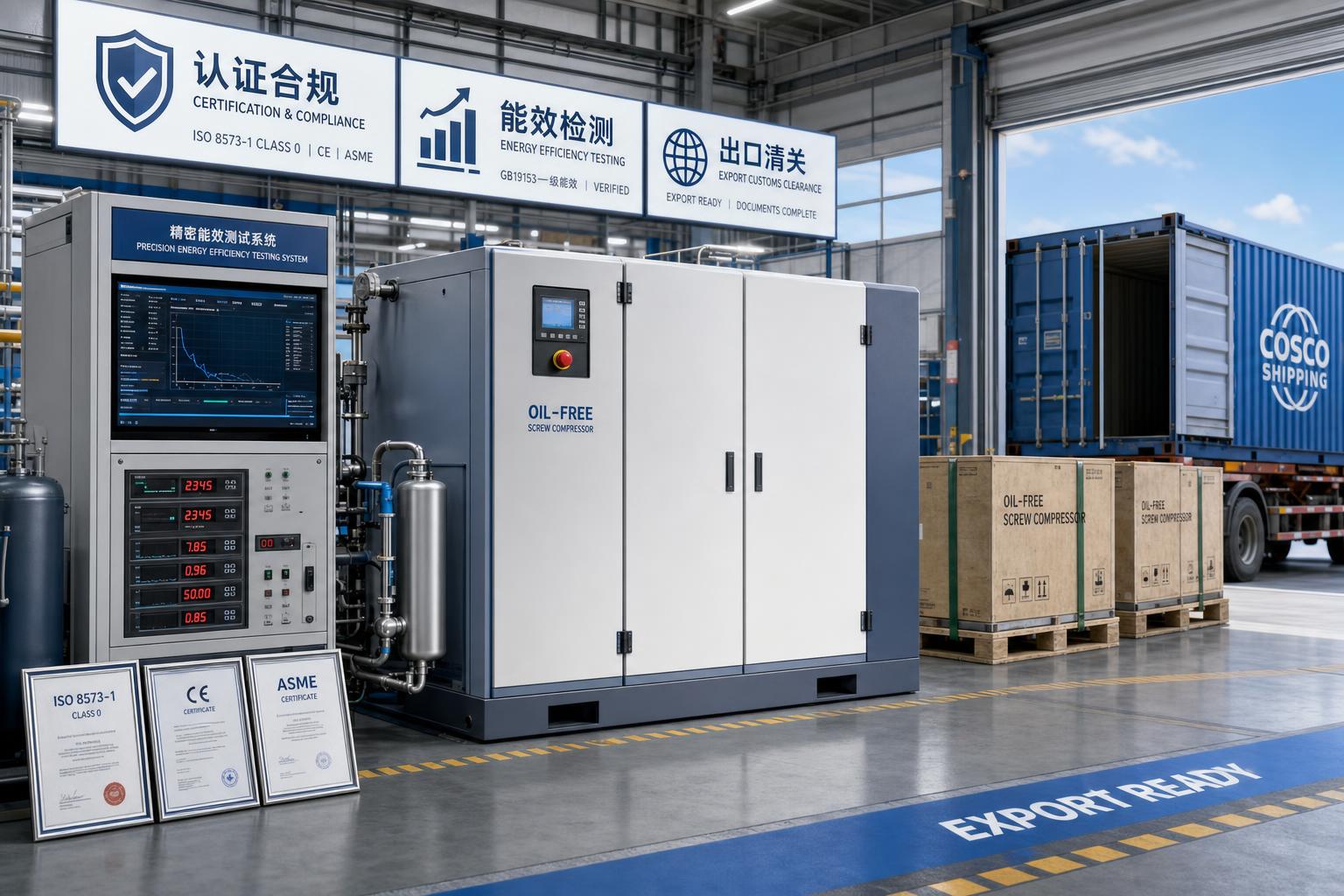
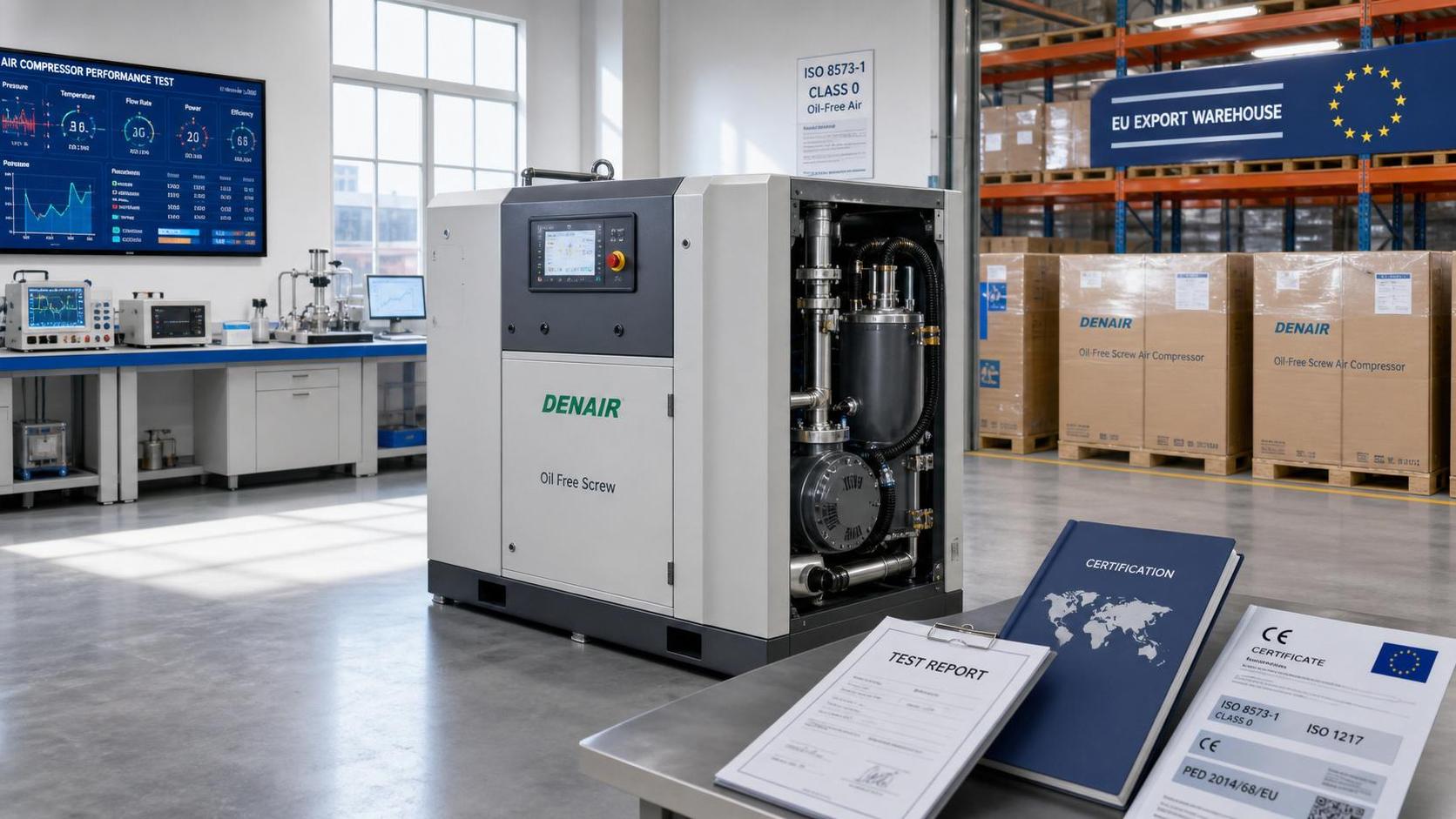
Formal verification, factory acceptance testing, site acceptance testing, material certificates, calibration records, and documented maintenance procedures add cost. They can be necessary where compressed air affects product integrity, regulated operations, or a contractual quality obligation. They should be requested only to the extent needed, but not omitted when the resulting liability is significant.
Energy Cost Depends on the Whole System, Not the Compressor Nameplate
For continuously operated systems, electricity can outweigh the initial purchase price over the equipment life. Energy performance should therefore be evaluated using the expected operating profile rather than only a single full-load efficiency figure. A fixed-speed compressor may perform satisfactorily against a stable load; a variable-speed drive may offer value where demand changes meaningfully. Yet variable-speed operation is not automatically the best choice for every installation. Poorly sized variable-speed units can operate outside their efficient range, while multiple compressors with well-designed sequencing may better match a broad demand range.
Energy-related price drivers include variable-speed drives, premium-efficiency motors, integrated controls, heat-recovery provisions, remote monitoring, leak-management integration, and high-efficiency dryer configurations. These options should be assessed against site-specific hours, power tariffs, load variability, and maintenance needs. A feature that reduces energy in one duty cycle can add little value in another.
Pressure drop is a hidden cost source. Every filter, dryer, undersized pipe, corroded line, restrictive coupling, and poorly selected regulator adds resistance. If the compressor discharge pressure is increased merely to overcome downstream losses, the system consumes more energy while still delivering inconsistent air at the point of use. Suppliers should state expected clean and end-of-life pressure drops for treatment equipment, particularly filters.
Controls, Storage, and Distribution Are Priced as Engineering, Not Accessories
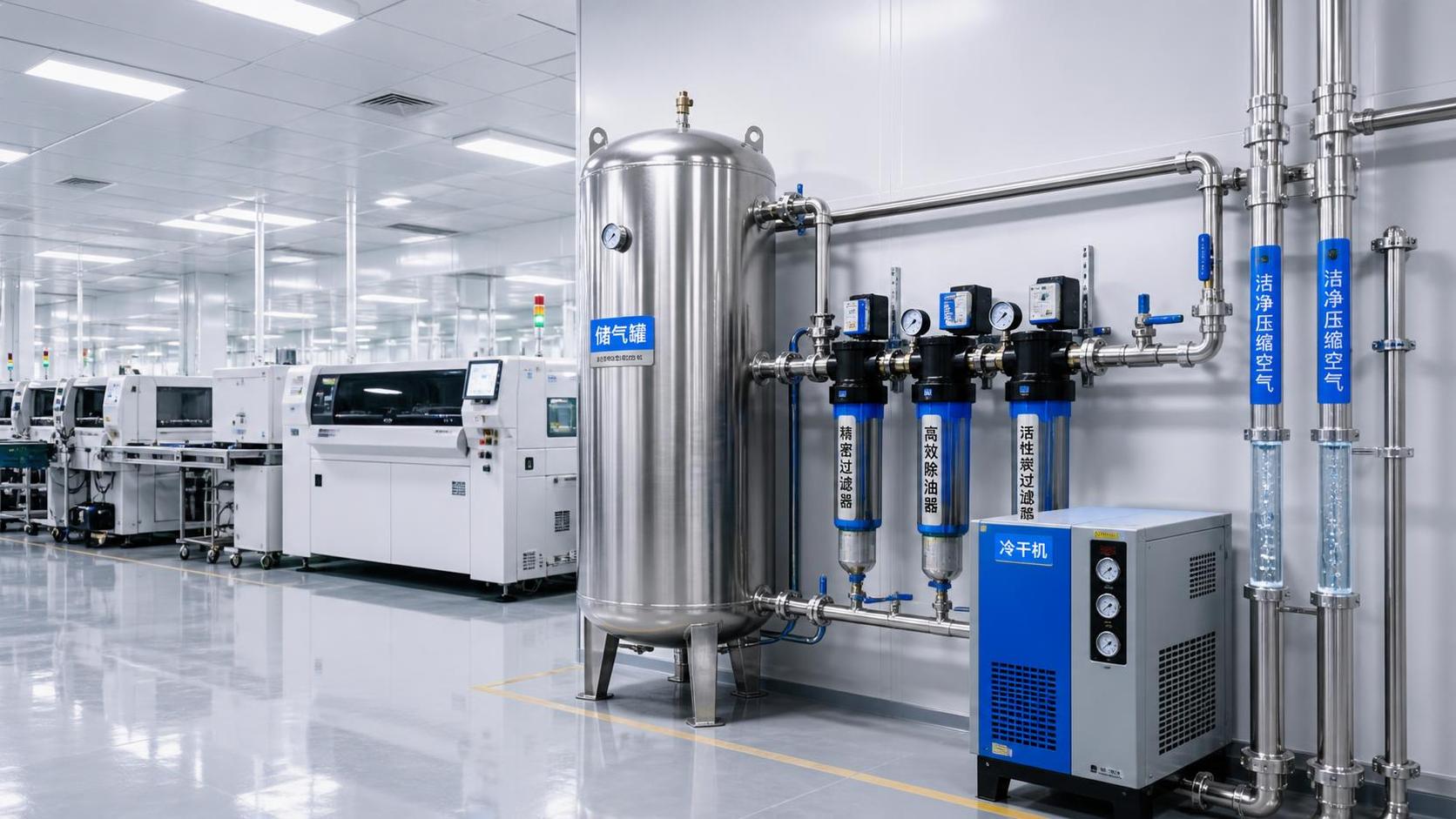
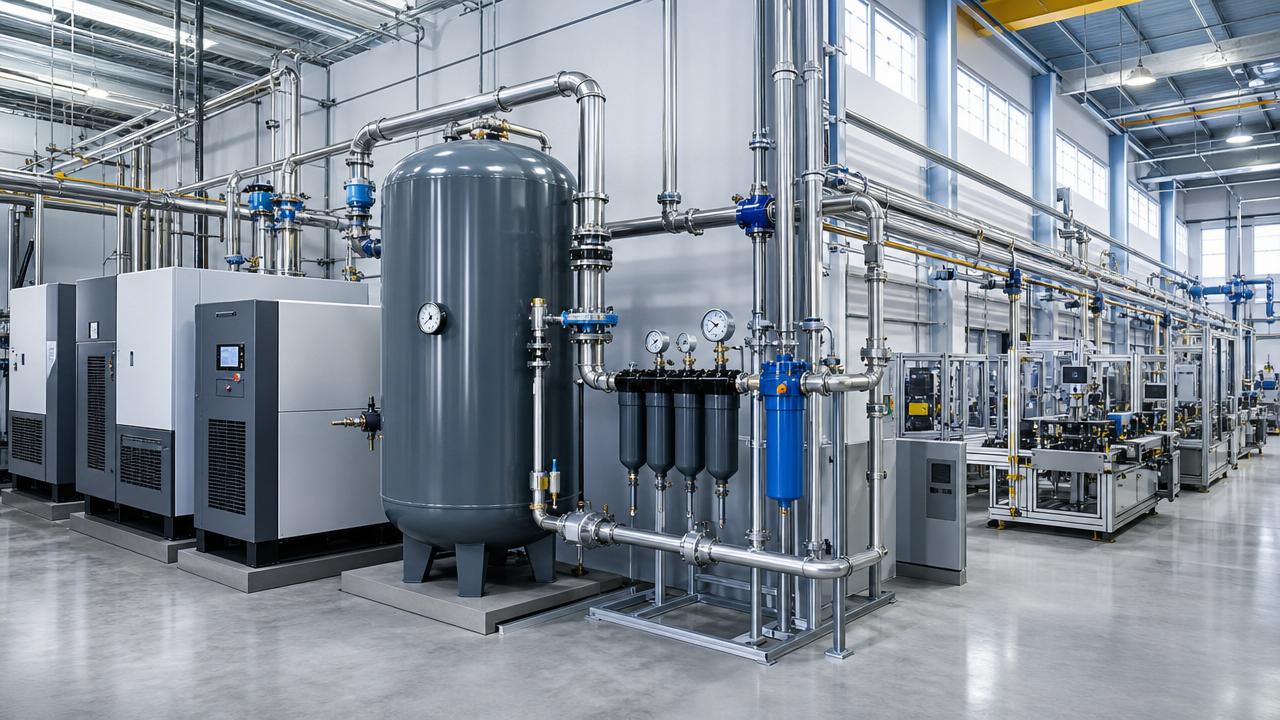
Air receivers, piping, automatic drains, condensate treatment, isolation valves, pressure sensors, flow meters, and central controllers are often treated as peripheral line items. In reality, they influence compressor stability, air quality, usable capacity, and serviceability.
Storage can buffer short-duration demand peaks and reduce unnecessary compressor cycling. Wet and dry receiver placement can affect moisture management and dryer loading. Ring-main distribution may provide better continuity and lower pressure drop than poorly routed dead-end piping, but the appropriate layout depends on the facility and maintenance strategy. Stainless steel, aluminum, galvanized steel, and polymer piping systems have different installed costs, cleanliness characteristics, mechanical limits, and long-term maintenance implications.
Remote monitoring also changes the price. Basic run-hour reporting is not equivalent to continuous dew point measurement, differential-pressure monitoring, flow metering, alarm history, or integration with plant supervisory systems. The more critical the air-quality obligation, the more valuable it becomes to identify a deteriorating dryer, saturated filter, abnormal pressure drop, or unusual demand before it affects production.
Installation Scope Can Distort Quote Comparisons
Many apparently comparable proposals exclude different parts of the project. One may include equipment delivery only; another may include electrical panels, cable runs, ventilation ducting, foundations, pipework, lifting, commissioning, operator training, and performance verification. Import duties, inland freight, crating, marine insurance, currency exposure, and local certification requirements can further change the landed cost in cross-border projects.
Compressor-room conditions matter as well. Heat rejection must be managed to avoid high inlet temperatures and reduced performance. Cooling-water availability, water quality, drainage, floor loading, noise limits, access for maintenance, and safe handling of condensate can all alter the installation budget. A low equipment price is not meaningful if the site requires major enabling work that was never captured in the initial comparison.
A disciplined commercial comparison should identify whether each proposal includes the same boundary of supply:
Service Coverage and Consumables Are Part of the Acquisition Cost
Pure air systems contain components that require scheduled attention: filters load with contaminants, desiccant can degrade, drain valves can fail, sensors require calibration, and control systems need periodic review. The cost and availability of these items vary by supplier and region.
Long lead times for proprietary filters, valves, electronic modules, or air-end components can create a production risk that is not visible in an initial capital quotation. Service agreements should be reviewed for response commitments, exclusions, travel charges, emergency-call terms, remote diagnostic access, and the treatment of wear parts. A broad warranty has limited value if it excludes the failure modes most likely to affect availability.
For installations requiring consistent documented air quality, maintenance intervals should be tied to operating conditions and verified performance rather than only calendar dates. A system exposed to high ambient dust, humidity, or hydrocarbons can consume filters and treatment capacity differently from a system operating in a controlled utility room.
A Lower Purchase Price May Reflect a Narrower Risk Transfer
The most useful way to compare pure air compression systems is to identify what each supplier is actually guaranteeing. One offer may transfer responsibility for delivered air quality, commissioning, performance testing, and service availability to the supplier. Another may provide equipment only, leaving system integration and verification to the purchaser or installer. Neither approach is inherently wrong, but they are not equivalent transactions.
A sound decision compares total installed cost, expected energy use, treatment consumables, maintenance, downtime exposure, and quality risk over the intended operating period. It also tests whether the design is proportionate to the application. Over-specifying purity for non-critical uses wastes capital and energy; under-specifying it can expose production, product quality, and contractual commitments to avoidable risk.
The final price is therefore best understood as the cost of a defined air-quality outcome, at a defined flow and pressure, supported by a defined level of verification and service. Once those boundaries are explicit, quotations become far easier to compare—and the cheapest number is less likely to become the most expensive decision.
Related News
- What determines the price of pure air compression systems?Author :Pneumatic Power Engineer

- How to size oil-free compressors for instrumentation air demandAuthor :Pneumatic Power Engineer

- How Class 0 oil-free compressors protect product quality in food productionAuthor :Pneumatic Power Engineer

- How to verify compressed air cleanroom standards before installationAuthor :Pneumatic Power Engineer

- When oil free vacuum pumps make sense for European cleanroom projectsAuthor :Pneumatic Power Engineer

- When do pure air compression systems need ISO 8573-1 Class 0?Author :Pneumatic Power Engineer

- How do compressed air systems for electronics prevent contamination?Author :Pneumatic Power Engineer

- When does an oil-free process vacuum pump justify its higher cost?Author :Pneumatic Power Engineer

- Does ISO 9001 certification apply to compressed air quality?Author :Pneumatic Power Engineer

- How to Specify Clean Compressed Air Systems in Southeast Asia for Food and Pharma PlantsAuthor :Pneumatic Power Engineer

- How to Compare Oil Free Vacuum Pumps for Clean Process RequirementsAuthor :Pneumatic Power Engineer

- How to Evaluate a Clean Compressed Air Systems Supplier for ISO 8573-1 ComplianceAuthor :Pneumatic Power Engineer

- How to Choose the Right Oil-Free Vacuum PumpAuthor :Pneumatic Power Engineer

- VDI 2083 Update Makes Class 0 Proof MandatoryAuthor :Pneumatic Power Engineer

- When to Use Oil Free Vacuum Pumps for High Purity LinesAuthor :Pneumatic Power Engineer

- Compressed Air Solutions: When Oil-Free Systems Lower Total Operating CostAuthor :Pneumatic Power Engineer

- ATMOsphere Europe 2026 Adds Oil-free Systems ZoneAuthor :Pneumatic Power Engineer

- Oil-Free Compressors: Key Selection Criteria for Clean Air SystemsAuthor :Pneumatic Power Engineer

- How to Compare Oil Free Centrifugal Compressors for Stable Plant Air SupplyAuthor :Pneumatic Power Engineer

- Compressed Air Class 0 vs Oil-Free: What Really MattersAuthor :Pneumatic Power Engineer

- Oil-Free Compression Class 0: What the Standard Really Means in ProductionAuthor :Pneumatic Power Engineer

- Air Compression Cost Comparison: Oil-Free vs Screw Systems in Daily OperationAuthor :Pneumatic Power Engineer

- Saudi SASO Tightens IEC 63349-2 for Oil-Free CompressorsAuthor :Pneumatic Power Engineer

- Saudi SASO Tightens Oil-Free Compressor Efficiency RulesAuthor :Pneumatic Power Engineer

- Pure Air Compression Systems for Clean Production LinesAuthor :Pneumatic Power Engineer

- IEC 63349-2:2026 makes energy certification mandatoryAuthor :Pneumatic Power Engineer

- IEC 63349-2:2026 Sets New Entry Rules for Oil-Free Screw CompressorsAuthor :Pneumatic Power Engineer

- IEC 63349-2:2026 Takes Effect for Oil-Free Screw CompressorsAuthor :Pneumatic Power Engineer

- IEC 63349-2:2026 Sets New Efficiency Gate for Oil-Free Screw CompressorsAuthor :Pneumatic Power Engineer

- IEC 63349-2:2026 Takes Effect for Oil-Free Screw CompressorsAuthor :Pneumatic Power Engineer

- SABIC Methanol Force Majeure Extended, Tightening R134a/R407C FeedstocksAuthor :Pneumatic Power Engineer

- How to Evaluate Pneumatic Power Systems for Stable OutputAuthor :Pneumatic Power Engineer

- Oil-Free Compression vs Lubricated Systems: Key Trade-OffsAuthor :Pneumatic Power Engineer
![]()
- Oil-Free Compression: 2026 Cost and Compliance Trade-OffsAuthor :Pneumatic Power Engineer

- Oil-Free Compression: Cost and Contamination RisksAuthor :Pneumatic Power Engineer
![]()
- Euro PMI Drop Delays Oil-Free Systems OrdersAuthor :Pneumatic Power Engineer