How vacuum level affects vacuum process efficiency




Vacuum level is a critical variable in determining vacuum process efficiency. It influences evaporation rates, contamination control, energy consumption, cycle time, and product consistency. Yet “more vacuum” is often treated as an automatic improvement, even though a deeper vacuum can increase capital cost, maintenance burden, heat-transfer constraints, and sensitivity to leaks or vapor loading.
The practical question is not whether a system can achieve the lowest possible pressure. It is whether it can maintain the required absolute pressure, at the required gas load, for the required duration, without creating unnecessary operating cost or process instability. That distinction matters in drying, distillation, coating, freeze-drying, degassing, semiconductor processing, resin impregnation, food packaging, pharmaceutical production, and many other industrial operations.
Vacuum level means absolute pressure, not gauge pressure
Vacuum is commonly described as pressure below atmospheric pressure, but process evaluation should be based on absolute pressure. Atmospheric pressure is approximately 1013 mbar absolute at sea level, while a system operating at 10 mbar absolute is at a much deeper vacuum than one operating at 100 mbar absolute.
Gauge instruments can be useful for routine operation, but they may create ambiguity when comparing specifications across suppliers, sites, or regions. A stated value of “-0.9 bar” does not reveal enough about actual process conditions unless the reference pressure and local atmospheric conditions are clear. For process design, pump selection, and acceptance testing, pressure should be expressed in recognized absolute units such as mbar(a), Pa, kPa(a), Torr, or microns.
The relationship between pressure and process behavior is often nonlinear. Reducing pressure from 1000 mbar to 100 mbar can produce a major change in boiling point and gas density. Moving from 10 mbar to 1 mbar may be equally important for a moisture-sensitive or high-boiling-point process, but it usually requires far more careful system engineering.
Why lower pressure changes process performance
The central effect of vacuum is that it lowers the partial pressure of gases and vapors. This changes evaporation, gas removal, molecular transport, and contamination behavior. The consequences differ by application.
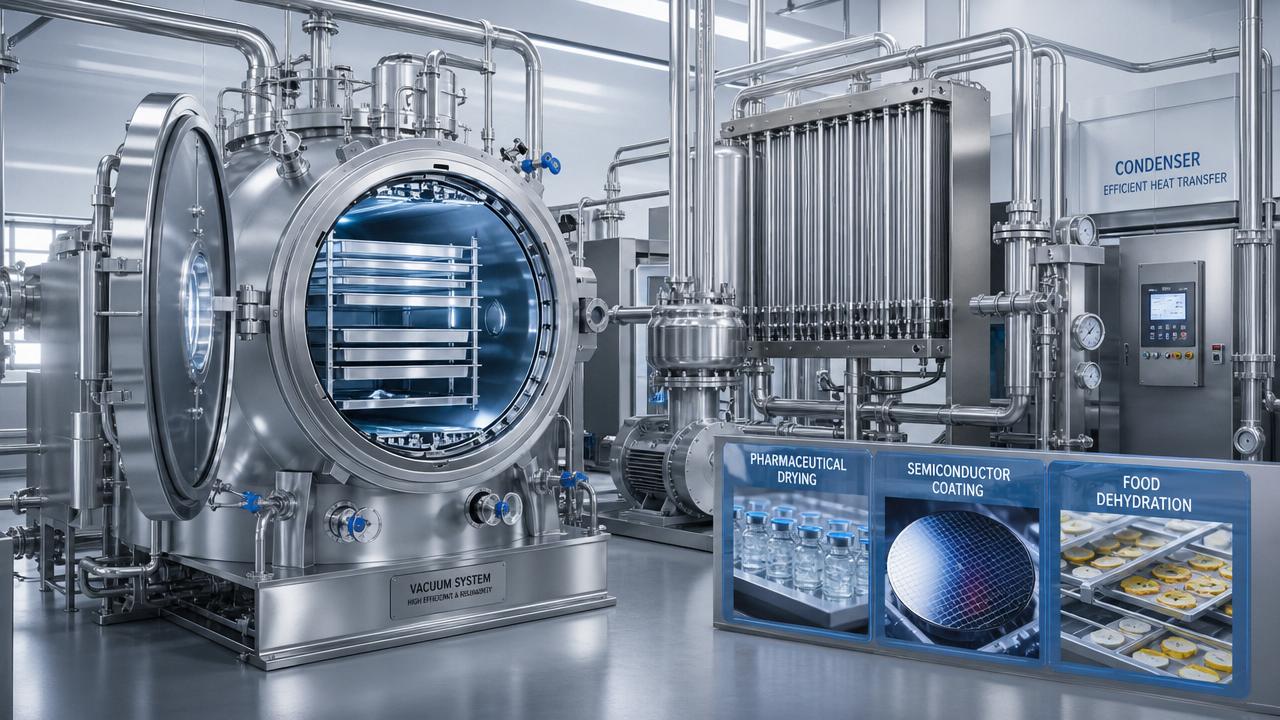
In vacuum drying, a lower chamber pressure reduces the boiling point of water or solvents. This allows drying at lower product temperatures, which can protect heat-sensitive materials. In pharmaceutical freeze-drying, for example, chamber pressure must be coordinated with product temperature and condenser capability; pressure cannot be selected in isolation. In wood drying, battery materials, transformer insulation, or polymer processing, vacuum may accelerate moisture removal, but the rate can eventually be limited by internal diffusion rather than the chamber pressure itself.
In vacuum distillation, reduced pressure enables separation of compounds that would degrade at normal boiling temperatures. However, lower pressure also reduces vapor density and may alter column hydraulics, condenser loading, entrainment risk, and the effectiveness of mass-transfer internals. A vacuum level that appears favorable from a boiling-point calculation may not produce the best separation or throughput in a real column.
For degassing and impregnation, the objective is generally to remove trapped air or dissolved gas from pores, liquids, castings, windings, or resin systems. Here, pressure reduction helps expand bubbles and improve gas release. But deep vacuum alone will not compensate for poor material wetting, unsuitable viscosity, inadequate hold time, or restricted flow paths.
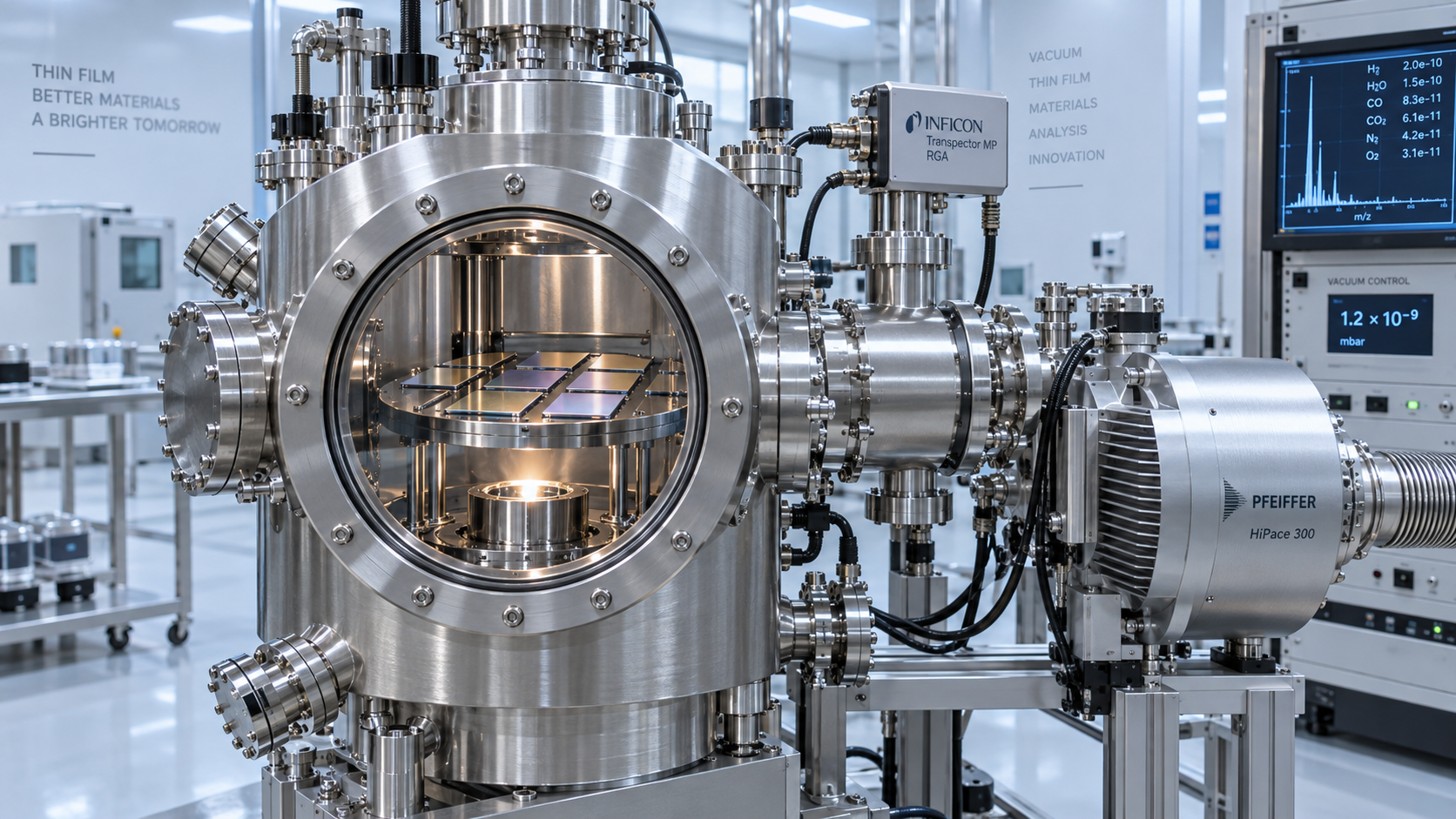
In high-vacuum coating and semiconductor processes, pressure affects mean free path: the average distance molecules travel before colliding. At lower pressure, vaporized material can travel more directly from source to substrate, and the background concentration of reactive contaminants declines. That said, the relevant requirement is not simply total pressure. Partial pressures of water vapor, oxygen, hydrocarbons, and process gases can be more consequential than the overall chamber reading.
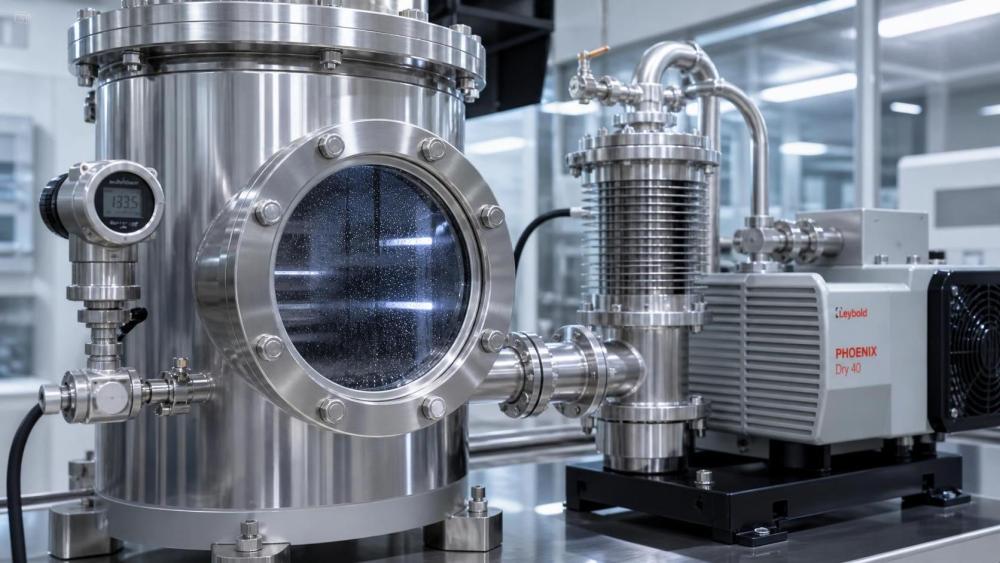
Process efficiency is a balance of pressure, pumping speed, and conductance
A vacuum pump’s ultimate pressure is frequently overemphasized. Ultimate pressure is measured under limited gas load and under defined test conditions. Industrial processes rarely operate that way. During evacuation, drying, degassing, or vapor removal, the system continuously receives gas from leaks, outgassing surfaces, deliberate gas injection, product moisture, solvent evaporation, and desorption from chamber walls.
The more useful relationship is:
Q = S × P
where Q is gas throughput, S is effective pumping speed at the chamber, and P is absolute pressure. The equation is simplified, but it highlights an important point: a process must remove a real gas or vapor load at a target pressure. A pump that reaches 0.01 mbar in an empty test vessel may be unsuitable for a chamber that must remove kilograms of water vapor per hour at 20 mbar.
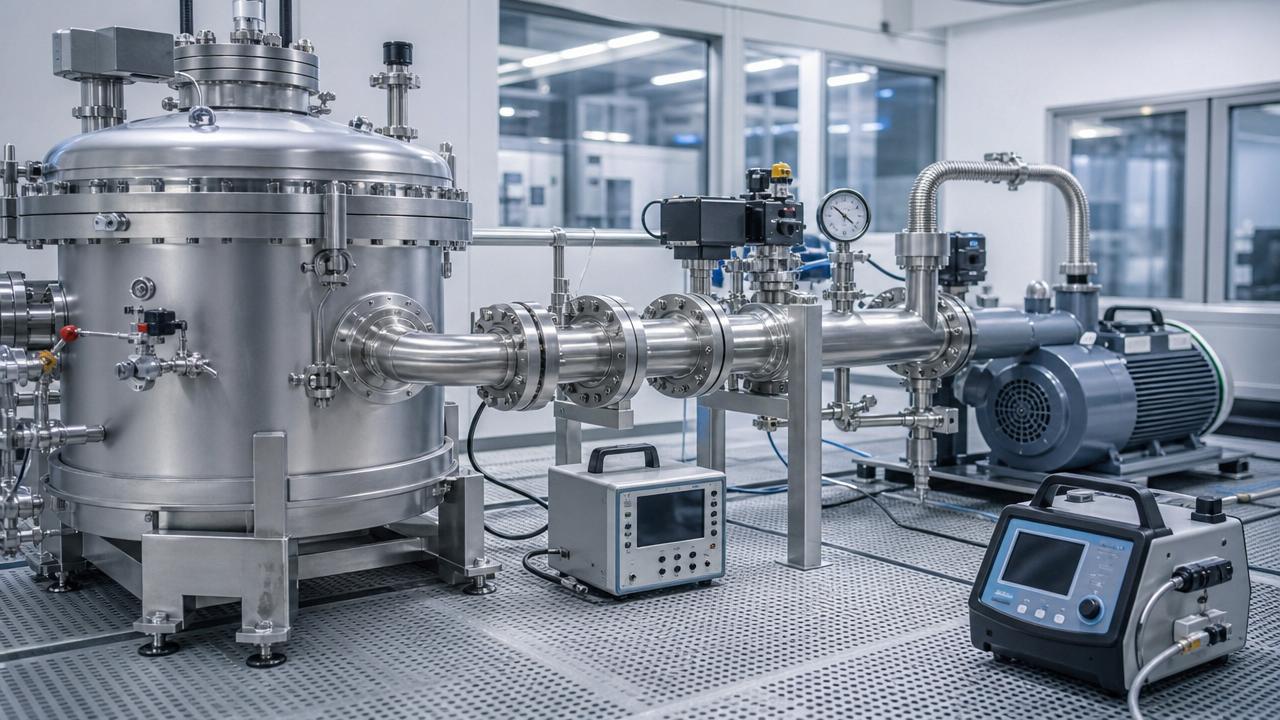
Effective pumping speed at the process chamber is often much lower than the nominal pump speed. Restrictions in pipework, undersized valves, sharp elbows, long hoses, filters, condensers, and narrow inlet ports all reduce conductance. At lower pressures, this effect becomes increasingly significant. A high-capacity pump placed behind poorly designed piping can deliver disappointing evacuation times and unstable pressure control.
For this reason, vacuum process efficiency should be assessed as a system characteristic rather than a pump characteristic. The chamber, piping, vapor handling equipment, control valves, instrumentation, seals, process recipe, and maintenance condition all contribute to the final result.
Deeper vacuum does not always reduce cycle time
In the early part of an evacuation cycle, increasing pumping speed or improving conductance can significantly reduce pump-down time. As pressure falls, however, the dominant gas source often changes. Bulk air removal gives way to leaks, water vapor release, material outgassing, and surface desorption. At that stage, simply installing a deeper-vacuum pump may have little effect.
Consider a vacuum dryer handling a porous product containing water. Lowering pressure will initially support evaporation. But evaporative cooling can reduce product temperature, and lower product temperature reduces vapor pressure. If the heating system cannot provide sufficient and uniform energy, the drying rate can slow despite a lower chamber pressure. The bottleneck has shifted from pumping capacity to heat transfer.
A similar effect appears in vacuum distillation. Reducing operating pressure lowers boiling temperature, but if the condenser cannot handle the resulting vapor load, or if the vacuum control valve hunts under changing conditions, throughput and product quality may deteriorate. The “best” pressure is therefore the point at which vapor generation, heat input, condensation, separation performance, and pump capacity remain in balance.
Cycle time should also include stabilization, not merely pump-down. A chamber may reach its nominal setpoint quickly but fail to hold it because of a leak, insufficient pumping speed during vapor release, or inadequate control tuning. Production efficiency is determined by repeatable time-to-process-condition, not the empty-chamber evacuation curve shown in a pump brochure.
Leakage and outgassing can make the specified vacuum irrelevant
Leakage is an external inflow of air or process gas through imperfect seals, flanges, valve stems, welds, instrumentation ports, and damaged gaskets. Outgassing originates within the system: absorbed moisture, solvents, plasticizers, lubricants, cleaning residues, elastomer components, and porous product materials can all release vapor under vacuum.
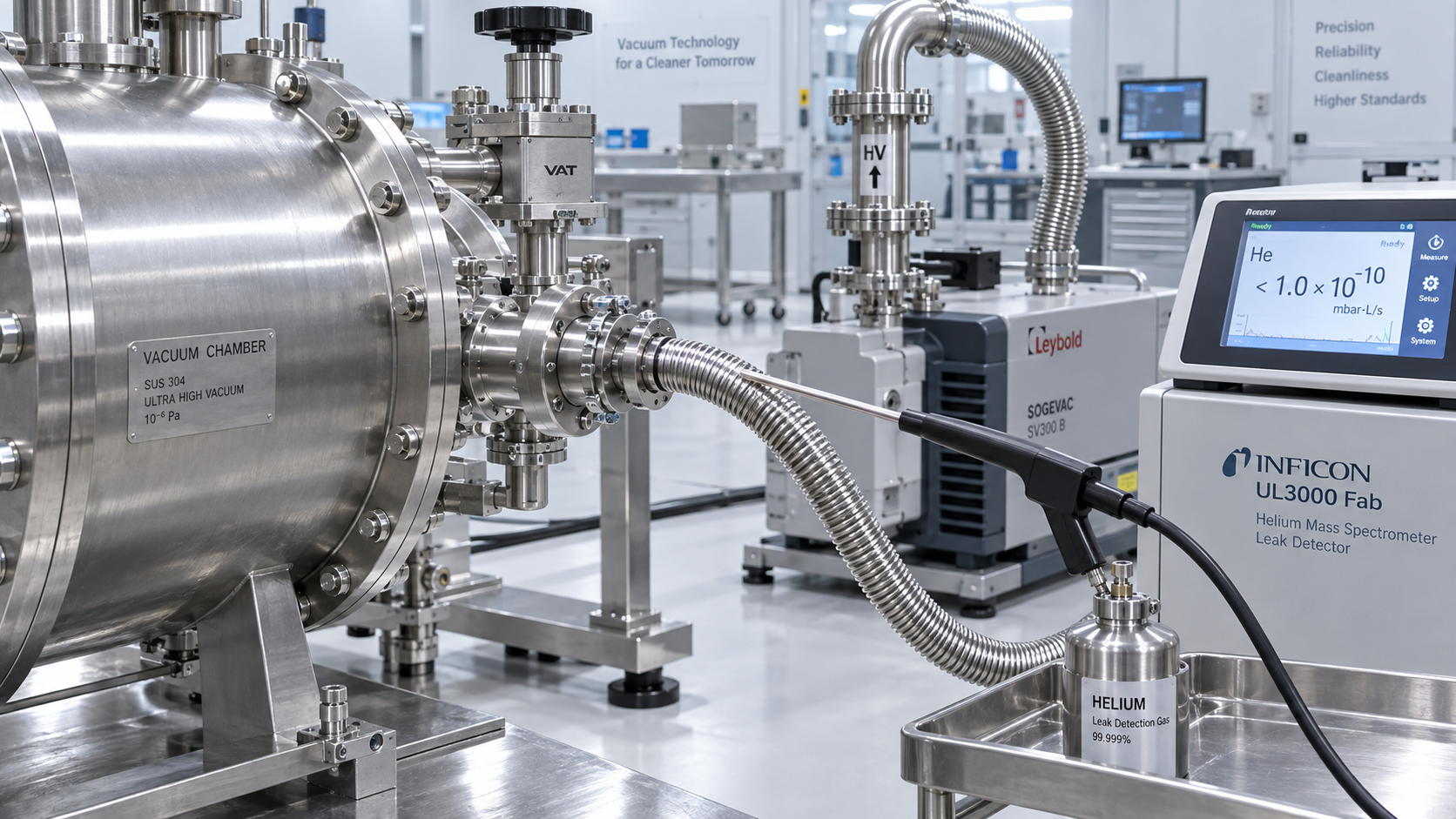
These two sources are often confused because both prevent pressure from falling. Their remedies are different. A true leak may require helium leak testing, pressure-rise testing, inspection of joints, and seal replacement. Outgassing may require cleaning, baking, longer pre-evacuation, improved material selection, controlled venting, or a different process sequence.
Water vapor is particularly important. It is common in atmospheric manufacturing environments, readily adsorbs to surfaces, and can dominate the gas load after most air has been removed. In systems intended for medium or high vacuum, roughing with a contaminated chamber may produce a pressure plateau that is mistakenly blamed on pump performance.
Pressure-rise testing can provide useful diagnostic evidence. After isolating a sufficiently evacuated chamber from the pump, the rate of pressure increase indicates the combined effect of leaks and internal gas release. Interpretation requires care because the rate may change over time, especially where water desorption is involved. Still, it is often more informative than repeatedly comparing a live operating pressure with a nominal pump ultimate vacuum.
Vapor handling determines both efficiency and pump reliability
Many industrial vacuum systems fail economically not because the pump is undersized for air, but because vapor and condensable loads were underestimated. Water, solvents, oils, monomers, acids, and reactive gases may condense in pump oil, corrode internal components, dilute lubricants, reduce ultimate vacuum, or create emissions-control problems.
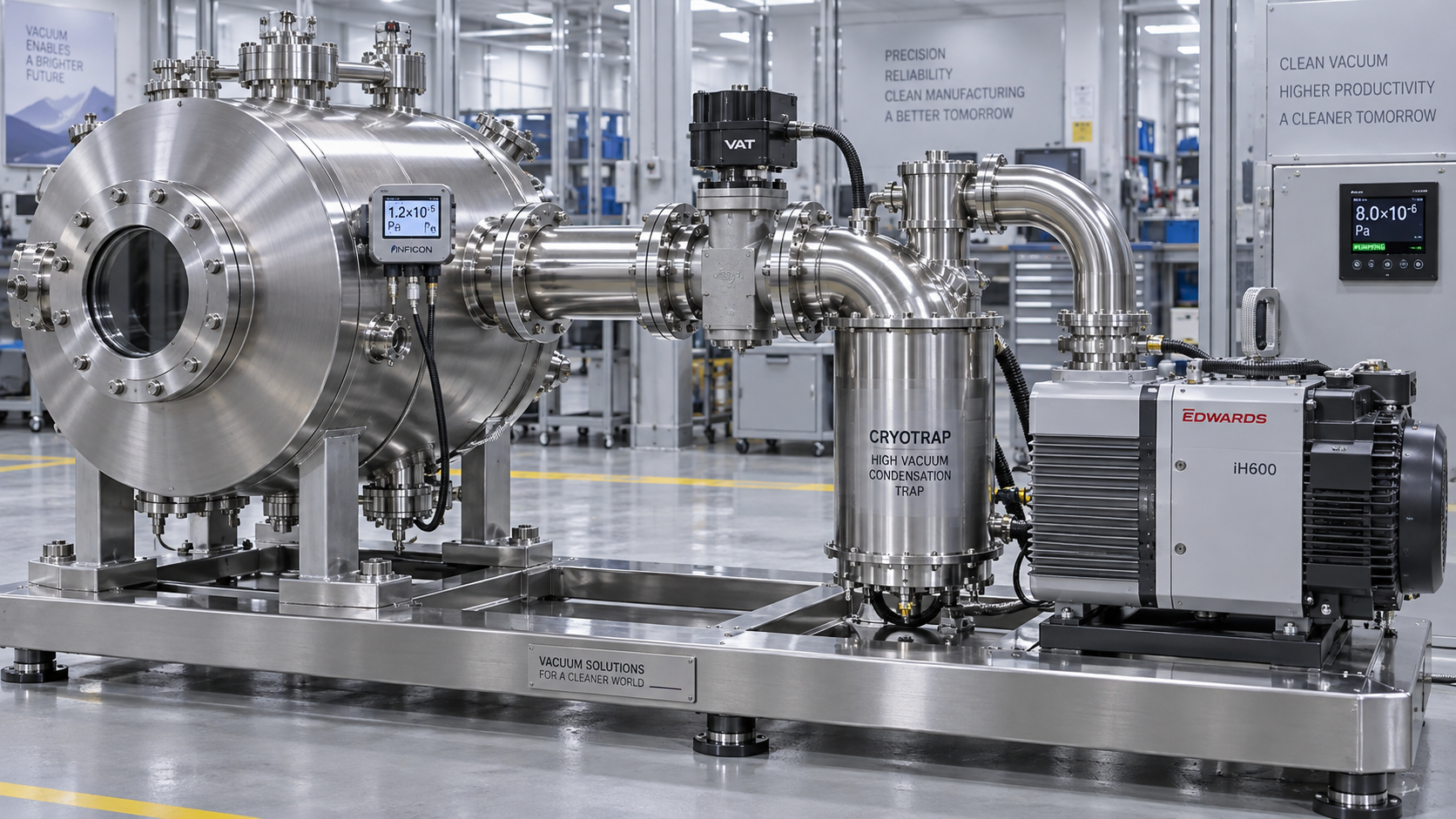
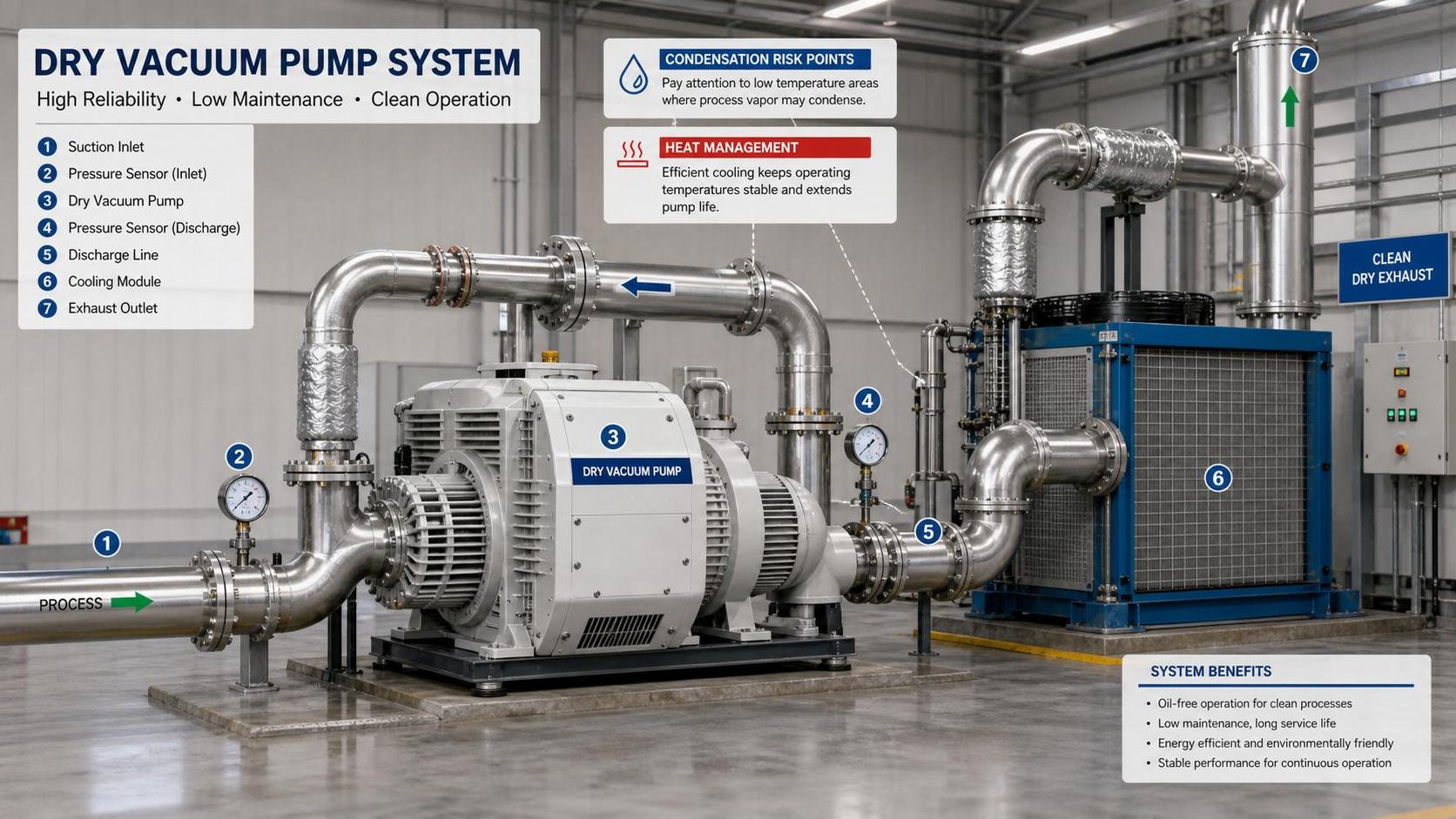
Vacuum architecture should match the process gas composition. Common measures include condensers, cold traps, knock-out vessels, inlet separators, heated lines, gas ballast operation, dry screw pumps, liquid-ring pumps, roots boosters, and adsorption or abatement equipment. Each approach has trade-offs.
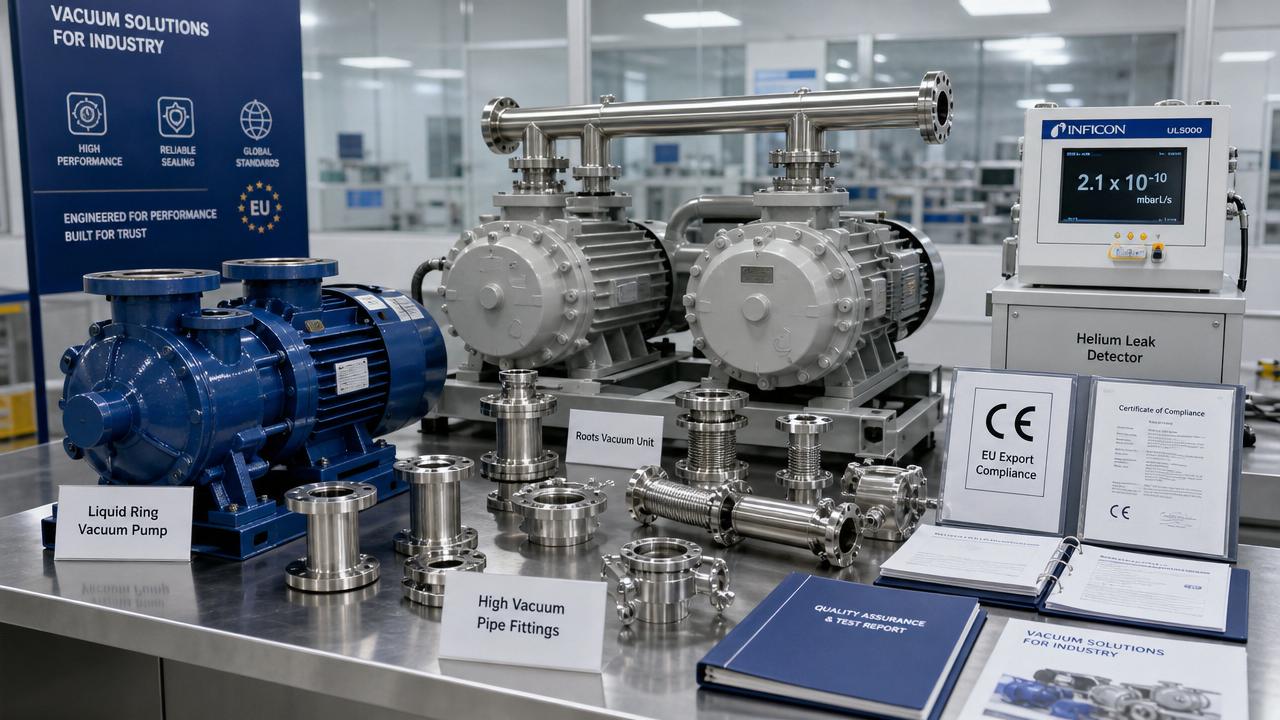
For example, a liquid-ring pump can tolerate wet service and some particulate carryover, but its sealing-liquid management, temperature rise, and liquid consumption must be considered. An oil-sealed rotary vane pump can be highly effective in clean or controlled applications, yet repeated solvent ingestion may increase maintenance and contamination risk. Dry screw pumps avoid oil contamination in the compression chamber, but may require careful thermal management and materials compatibility when handling reactive or condensable vapors.
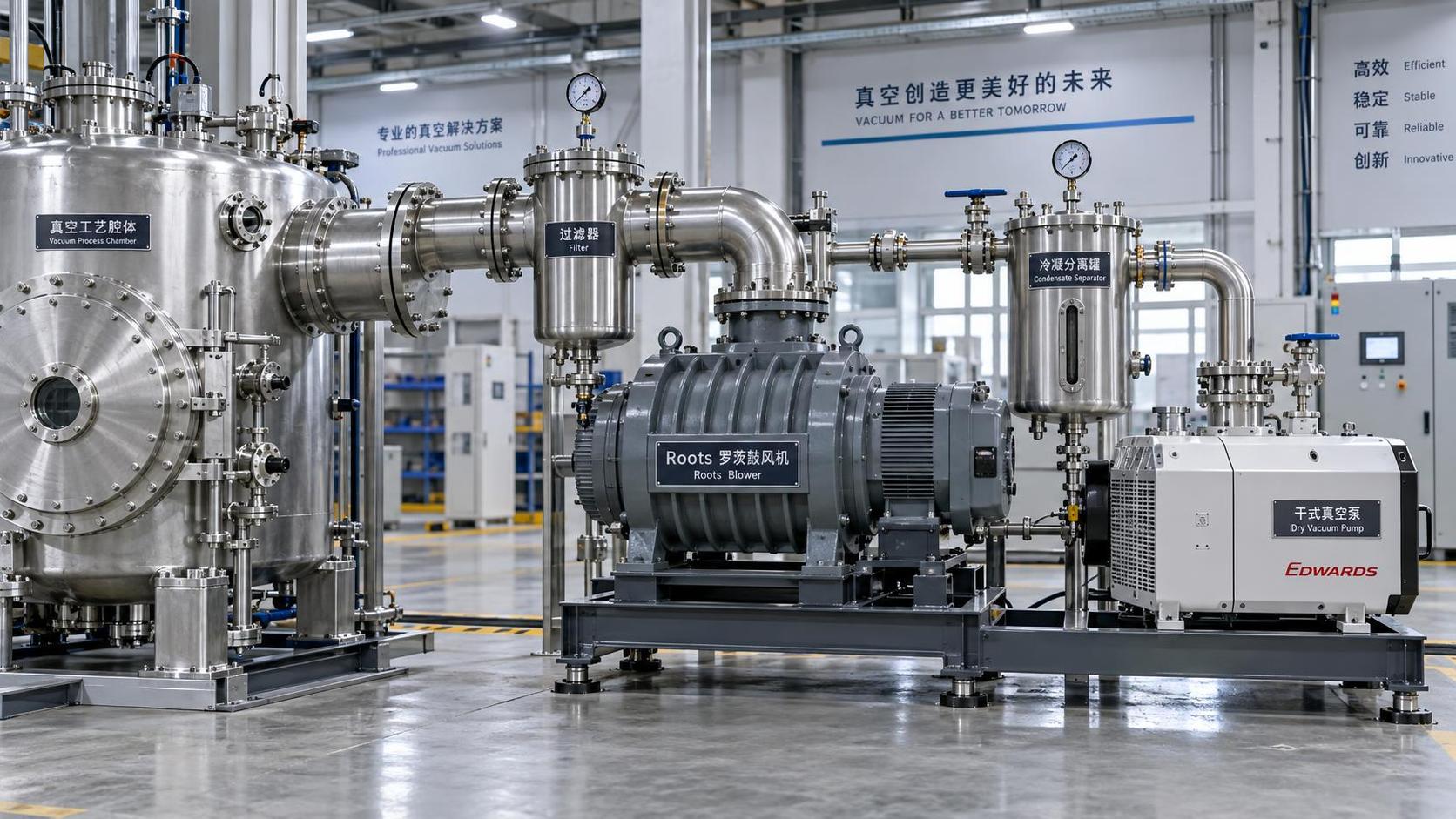
Adding a roots blower can increase effective pumping speed in a defined pressure range, especially for large chambers and high gas loads. However, it does not eliminate the need for adequate backing capacity, correct bypass protection, and upstream vapor control. A booster arrangement selected only on nominal displacement can become unstable or overloaded during startup and peak evaporation.
Pressure measurement must fit the operating range and gas composition
No single vacuum gauge is ideal across the full pressure range. Mechanical gauges and capacitance diaphragm gauges measure pressure more directly and are useful where gas independence and accuracy matter. Thermal conductivity gauges, such as Pirani-type instruments, are practical across rough and medium vacuum ranges but can be affected by gas species and contamination. Ionization gauges are used at much lower pressures but require appropriate operating conditions and clean installation practices.
A common source of disagreement is comparing readings from gauges based on different physical principles without accounting for calibration, gas composition, location, or temperature. If a process introduces nitrogen, argon, solvent vapor, hydrogen, or other gases, a gauge calibrated for air may not indicate the same true pressure. For critical processes, the measurement plan should define the gauge type, placement, calibration basis, allowable uncertainty, and response to process gases.
Gauge location also matters. A sensor near the pump inlet may show a better vacuum than the chamber itself, particularly where conductance is limited or vapor is released inside the vessel. The control sensor should represent the pressure that governs the process, not merely the pressure most convenient to measure.
Standards support common language, not automatic process qualification
Vacuum equipment and systems are evaluated through a combination of supplier specifications, application testing, safety requirements, and recognized measurement practices. ISO 21360 provides standardized approaches for determining vacuum pump performance characteristics, including pumping speed and ultimate pressure under specified conditions. It is useful when comparing pump data, but the standard test condition should not be mistaken for actual process behavior.
Leak detection practices may draw on ISO 20485, which addresses non-destructive testing methods for leak testing, including tracer-gas techniques. In regulated sectors, process qualification may also involve industry-specific good manufacturing practice, contamination-control procedures, material traceability, cleaning validation, or emissions requirements. Those obligations depend on the facility, product, and jurisdiction; they cannot be resolved by a vacuum-level specification alone.
For acceptance criteria, it is better to specify measurable operating outcomes: chamber pressure at a stated gas load, pump-down time from one absolute pressure to another, maximum pressure rise after isolation, allowable contamination level, vapor recovery performance, and energy consumption over a representative cycle. These criteria are far more useful than requiring an isolated ultimate pressure that has little connection to production.
A practical way to define the required vacuum level
A robust specification begins with the process window. Identify the pressure range at which evaporation, degassing, coating quality, product temperature, reaction control, or contamination limits are achieved. Then establish the expected gas load throughout the cycle, rather than using a single average value. Startup, peak vapor release, steady operation, cleaning, and venting may each impose different demands.
From there, assess the following questions:
- What is the required chamber pressure under maximum expected gas and vapor load?
- What pump-down time is needed before the productive step begins?
- Is the process limited by pumping, heat transfer, mass transfer, condensation, or material diffusion?
- What gases, vapors, particles, and chemicals will enter the vacuum train?
- What conductance losses exist between chamber and pump?
- How will leakage, seal aging, and maintenance condition affect performance over time?
- Which measurement method will verify pressure at the actual process location?
- What happens during abnormal loads, power interruptions, cooling-water variation, or control-valve failure?
Energy consumption should be assessed over the full duty cycle. Running a large pump continuously at a deeper-than-needed pressure can consume substantial power while adding little process value. Variable-speed drives, staged pumping, correctly sized receivers or buffers, and recipe-based control can reduce unnecessary operation. However, energy-saving measures should not compromise pressure stability where product quality or safety depends on rapid vapor removal.
The most efficient vacuum process is rarely the one with the lowest pressure reading. It is the one that achieves stable process conditions with enough pumping capacity, adequate vapor management, low leakage, valid measurement, and a pressure setpoint tied directly to product or operational outcomes. When vacuum level is treated as one element of a complete thermodynamic and gas-handling system, performance evaluations become more accurate—and capital decisions become far less vulnerable to costly overdesign.
Ready when you are. Send us a message to get started.
Related News
- How does base pressure affect film purity in vacuum deposition?Author :Vacuum Process Fellow

- How to size vacuum process equipment for the required pump-down timeAuthor :Vacuum Process Fellow

- Which vacuum specification best protects semiconductor process yield?Author :Vacuum Process Fellow

- How Can Contamination Be Prevented in a Semiconductor Vacuum Chamber?Author :Vacuum Process Fellow

- Which Vacuum Pump Specifications Matter Most for Semiconductor Processes?Author :Vacuum Process Fellow

- How to find leaks in vacuum pump systems before pump performance dropsAuthor :Vacuum Process Fellow

- How to size a Roots blower for vacuum process equipmentAuthor :Vacuum Process Fellow

- How vacuum level affects vacuum process efficiencyAuthor :Vacuum Process Fellow

- China Imposes Temporary Helium Export BanAuthor :Vacuum Process Fellow

- Semiconductor Vacuum Systems Factory Checklist for Process Stability and Cleanroom UseAuthor :Vacuum Process Fellow

- Vacuum Process Optimization Services: Signs Your Line Needs a Performance ReviewAuthor :Vacuum Process Fellow

- Vacuum Chambers for Cleanroom Use: Key Design Points That Prevent ContaminationAuthor :Vacuum Process Fellow

- Vacuum Distillation Systems: Key Performance Metrics That Affect Product PurityAuthor :Vacuum Process Fellow

- Vietnam Halts High Vacuum Pump Import Licenses for 30 DaysAuthor :Vacuum Process Fellow

- Vacuum Technology Database: What to Check Before Using Technical DataAuthor :Vacuum Process Fellow

- Dry Pump Vacuum System Design Mistakes That Raise DowntimeAuthor :Vacuum Process Fellow

- When Vacuum Systems Lose Performance: Common Causes and FixesAuthor :Vacuum Process Fellow
![]()
- EU Tightens EN 13445-3 Weld Testing for Vacuum VesselsAuthor :Vacuum Process Fellow
![]()
- EPA Cuts R-1234ze(E) Quota 35%, Tightening Vacuum Cooling SupplyAuthor :Vacuum Process Fellow
 Quota 35%, Tightening Vacuum Cooling Supply")
- ICA Warns of Tight Copper Alloy Supply for Vacuum PumpsAuthor :Vacuum Process Fellow

- Vacuum System Leak Detection: Signs, Tests, and FixesAuthor :Vacuum Process Fellow

- How to Compare Vacuum Systems Factory Capabilities for Stable Process UptimeAuthor :Vacuum Process Fellow

- Vacuum Pump Lead Times Extend to 26 WeeksAuthor :Vacuum Process Fellow

- Semiconductor Vacuum Systems Explained for Stable Process YieldAuthor :Vacuum Process Fellow

- Vacuum Process Efficiency: 7 Hidden Causes of Energy LossAuthor :Vacuum Process Fellow

- Vacuum Technology Solutions for Stable Low-Pressure ProductionAuthor :Vacuum Process Fellow

- Vacuum Processes: Common Efficiency Losses and FixesAuthor :Vacuum Process Fellow

- Common Vacuum Processes Problems and How to Prevent DowntimeAuthor :Vacuum Process Fellow

- Tantalum Spike Extends Vacuum Crucible Lead TimesAuthor :Vacuum Process Fellow

- Vacuum Process Efficiency: 5 Hidden Losses to Check FirstAuthor :Vacuum Process Fellow

- How Heat Transfer Design Impacts Vacuum Process EfficiencyAuthor :Vacuum Process Fellow

- EN 13445-4:2026 Takes Effect for High-Vacuum ComponentsAuthor :Vacuum Process Fellow

- EU Vacuum Components Face New EN 13445-4:2026 Leak Test RuleAuthor :Vacuum Process Fellow

- UBS: Fed Cut View May Ease Vacuum Pump Lead TimesAuthor :Vacuum Process Fellow

- Vacuum Processes: Common Causes of Unstable PerformanceAuthor :Vacuum Process Fellow
![]()
- SiC Certification Signals New Entry Path for Vacuum and Compressor DrivesAuthor :Vacuum Process Fellow
![]()