Plate Heat Exchanger Efficiency: What Affects Real-World Performance




Plate heat exchanger efficiency depends on far more than nameplate data. In real operating conditions, fouling, flow distribution, temperature approach, pressure drop, and fluid properties often change actual results. Understanding heat exchanger efficiency helps reduce hidden losses, compare designs fairly, and improve lifecycle energy performance across industrial systems.
What does heat exchanger efficiency really mean in daily operation?
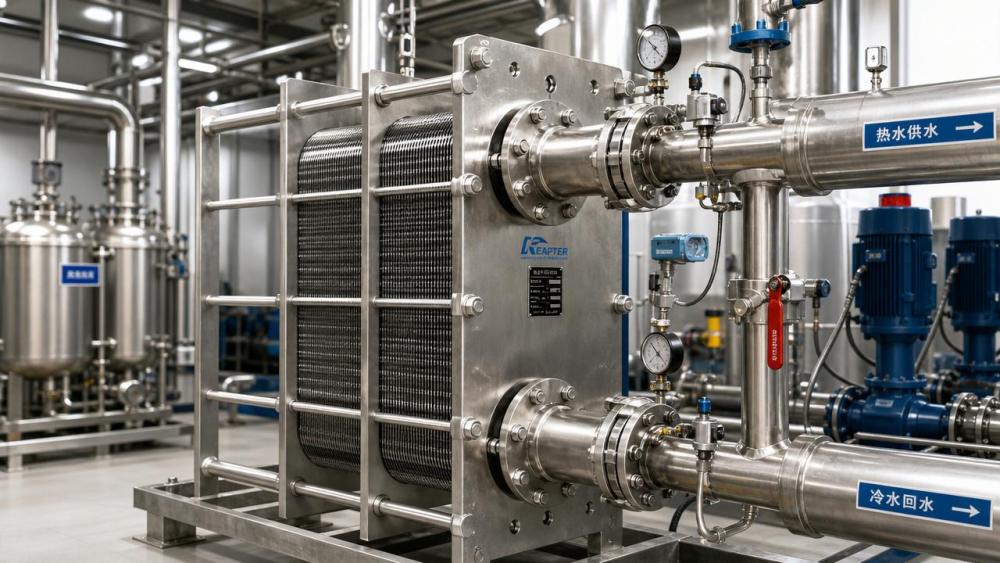
Many people define heat exchanger efficiency only by thermal duty. That is incomplete. Real heat exchanger efficiency combines heat transfer, pressure drop, stability, cleaning intervals, and energy consumption.
A plate heat exchanger may reach target outlet temperatures in testing. Yet field conditions can reduce performance quickly. Small hydraulic changes often create large thermal penalties.
In practical terms, heat exchanger efficiency reflects how effectively the unit transfers heat with acceptable pumping power and manageable maintenance requirements.
Several metrics are commonly used:
- Thermal effectiveness between hot and cold streams
- Overall heat transfer coefficient under real load
- Pressure drop across both circuits
- Approach temperature at design and partial load
- Performance retention between cleaning cycles
For comprehensive industry applications, heat exchanger efficiency must be viewed as a system outcome, not only a laboratory rating.
Which operating factors reduce plate heat exchanger efficiency most?
Fouling is usually the largest hidden factor. Deposits create thermal resistance and narrow channels. That lowers heat exchanger efficiency while raising pressure drop at the same time.
Flow distribution is another major issue. Plate packs need uniform channel loading. Uneven flow causes bypassing, local dead zones, and underused heat transfer area.
Temperature approach also matters. Very tight approach temperatures require more area and stronger thermal driving control. Minor deviations can noticeably reduce actual heat exchanger efficiency.
Pressure drop should never be ignored. Higher turbulence improves heat transfer, but excessive resistance increases pump energy and may limit flow rate.
Fluid properties strongly influence real performance. Viscosity, density, solids content, scaling tendency, and specific heat all shape heat exchanger efficiency under industrial duty.
Common field factors include:
- Scaling from hard water or mineral-rich loops
- Biofouling in cooling water circuits
- Viscosity shifts during seasonal temperature changes
- Entrained air reducing wetting and flow stability
- Incorrect valve settings causing maldistribution
These factors explain why two similar units can show very different heat exchanger efficiency in service.
How should real-world heat exchanger efficiency be compared during selection?
Do not compare only nominal heat duty. A better approach uses matched operating data, including inlet temperatures, allowable pressure drop, fluid quality, and expected fouling margin.
Ask whether the quoted heat exchanger efficiency is based on clean conditions or expected dirty service. This difference changes lifecycle value significantly.
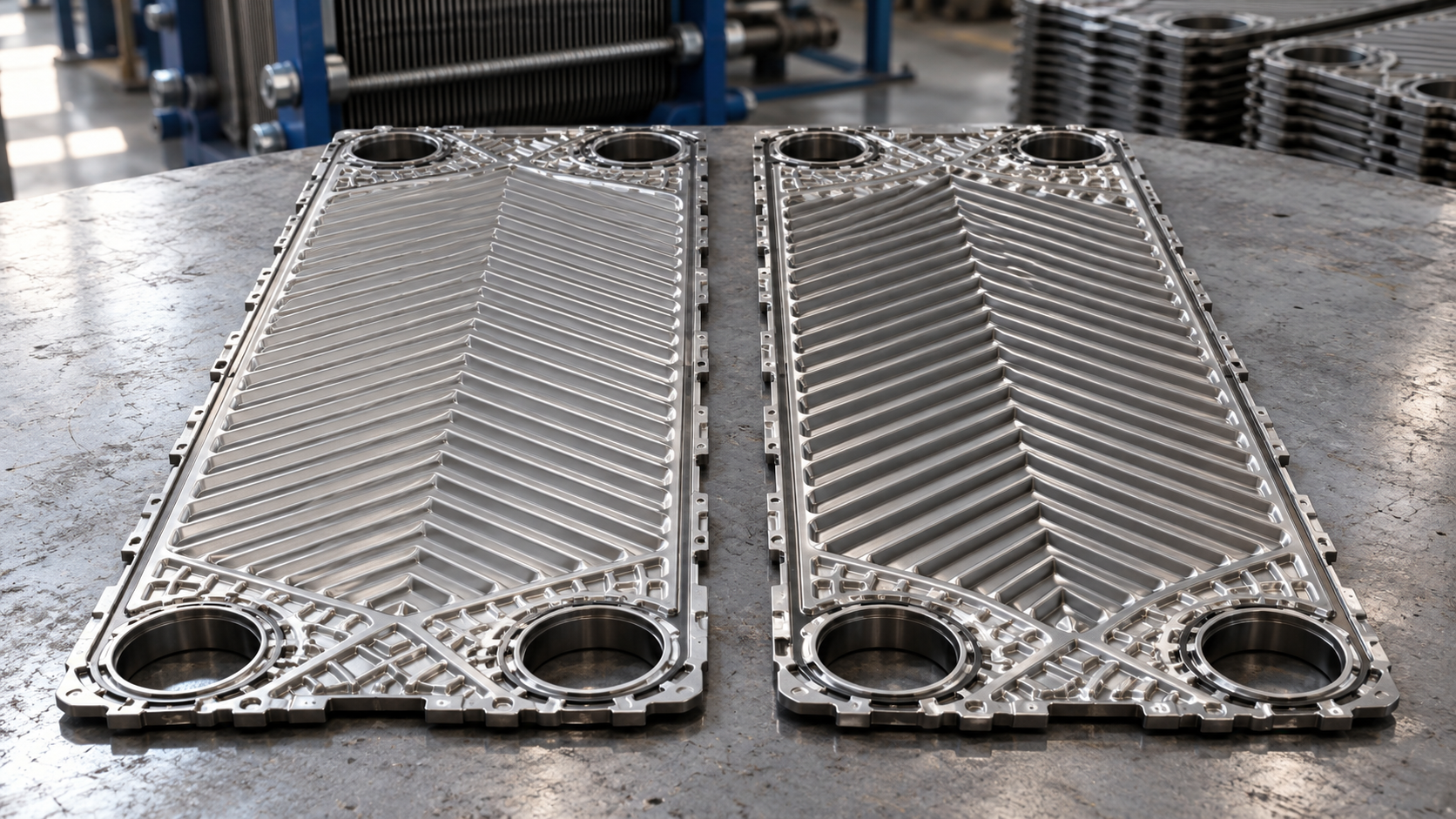
It is also useful to compare plate geometry. Narrow-gap designs may improve heat transfer, yet they can be less tolerant to particles or unstable water quality.
A realistic comparison framework should include:
- Design duty at full load and partial load
- Pressure drop limits on both sides
- Clean versus fouled heat transfer assumptions
- Serviceability and cleaning method
- Expected annual energy cost impact
In many industrial settings, the best heat exchanger efficiency comes from balanced design, not the highest transfer coefficient alone.
Why partial-load behavior deserves close attention
Many systems rarely operate at full design point. Seasonal variation, batch processing, or utility load swings change temperatures and flows throughout the year.
A unit that looks excellent at peak conditions may show weaker heat exchanger efficiency at lower flow, where control instability and reduced turbulence become relevant.
What are the most common mistakes when evaluating plate heat exchanger efficiency?
One frequent mistake is assuming a lower approach temperature always means better value. It may require more pumping energy, tighter control, and higher sensitivity to fouling.
Another mistake is ignoring water chemistry. If fluid treatment is inconsistent, short cleaning intervals can erase expected gains in heat exchanger efficiency.
Some evaluations overlook installation layout. Poor venting, uneven piping, or inadequate strainers can reduce flow balance and lower actual performance.
There is also a tendency to focus only on first cost. However, heat exchanger efficiency affects electricity use, downtime, thermal recovery, and process consistency over time.
How can heat exchanger efficiency be improved after installation?
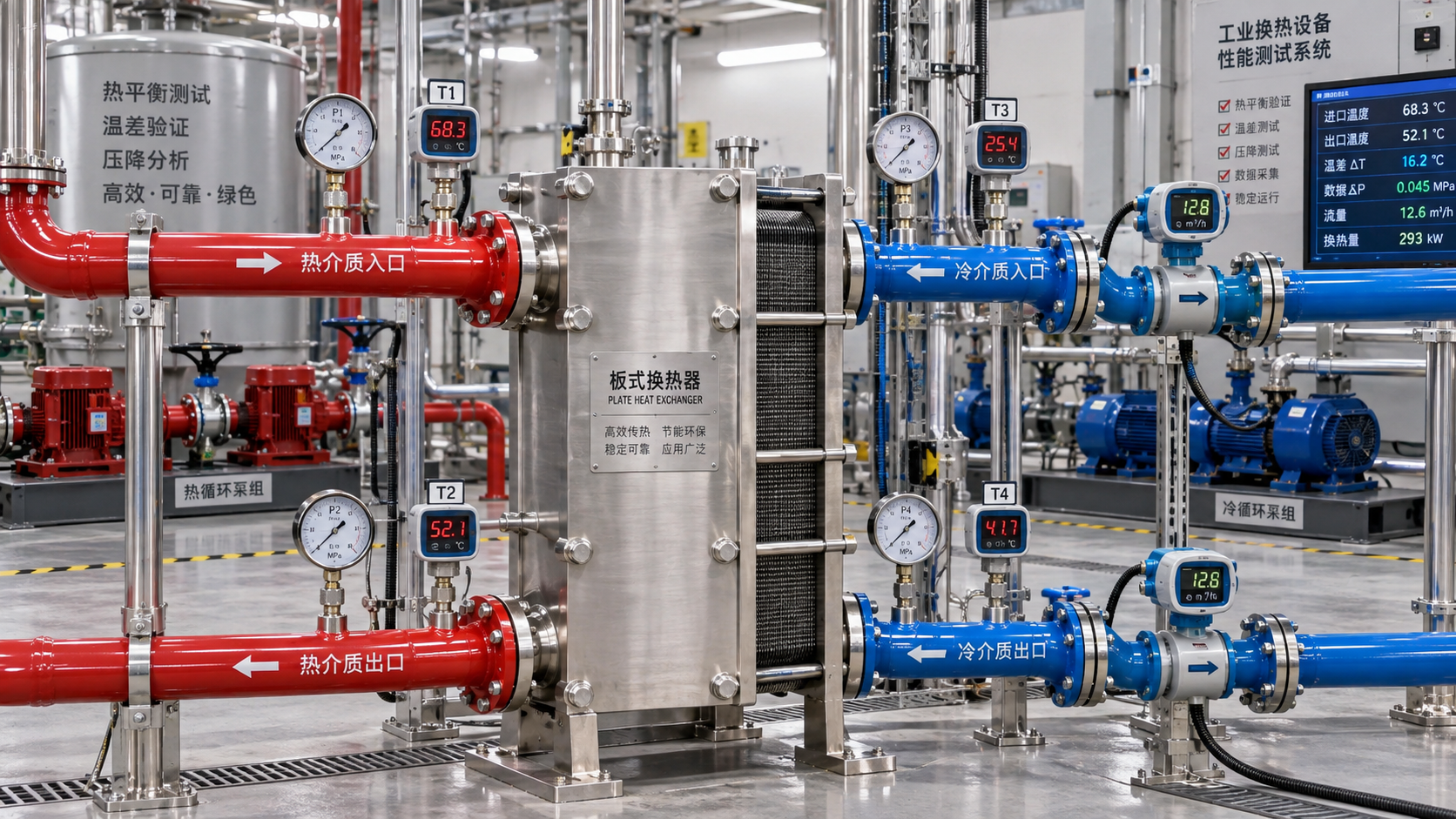
Improvement usually starts with monitoring. Track inlet and outlet temperatures, pressure drop, flow rate, and cleaning intervals. Trends reveal declining heat exchanger efficiency before production is affected.
Water treatment and filtration often deliver the fastest gains. Cleaner circuits reduce scale formation, protect plate channels, and stabilize long-term thermal performance.
Flow balancing is equally important. Correct valve settings, proper venting, and removal of trapped air help recover lost heat exchanger efficiency without hardware replacement.
Where duty has changed, a plate pack review may be needed. Capacity expansion, fluid changes, or new process temperatures can require re-rating.
Practical actions include:
- Set baseline thermal and hydraulic data after commissioning
- Schedule cleaning by performance trend, not calendar alone
- Use strainers where particle load is uncertain
- Confirm pump and control valve matching
- Review gasket and plate condition during maintenance
These steps support stronger heat exchanger efficiency and more predictable operating cost.
Which questions should be asked before trusting a performance claim?
A sound review starts with clear questions. They help separate theoretical ratings from usable heat exchanger efficiency in actual industrial environments.
FAQ quick-reference table
Useful verification questions include asking for design assumptions, fluid analysis inputs, allowable pressure drop, service factor, and expected heat exchanger efficiency at partial load.
For systems tied to cooling, compressed air, vacuum, or heat recovery loops, these questions support stronger thermal decision quality and lower risk.
Heat exchanger efficiency is not a fixed label. It is a moving result shaped by design choices, water quality, control conditions, and maintenance discipline.
A more reliable path is to compare real operating windows, monitor field data, and judge performance as part of the entire thermal system.
When heat exchanger efficiency is evaluated this way, hidden energy losses become visible, lifecycle cost becomes clearer, and equipment decisions become more resilient.
For the next step, build a simple review sheet using duty, pressure drop, fouling risk, and annual operating profile. That will lead to better thermal outcomes.
Ready when you are. Send us a message to get started.
Related News
- How corrugation angle affects heat transfer in plate heat exchangersAuthor :Thermodynamics Analyst

- When do plate heat exchangers suit Middle East seawater cooling?Author :Thermodynamics Analyst

- When does gasketed plate heat exchanger technology suit your process?Author :Thermodynamics Analyst

- When does heat recovery improve data center cooling efficiency?Author :Thermodynamics Analyst

- How Do I Verify Heat Transfer Calculations in a Supplier Quotation?Author :Thermodynamics Analyst

- How to evaluate a plate heat exchangers supplier before orderingAuthor :Thermodynamics Analyst

- EU Tightens Fatigue Checks for Plate Heat ExchangersAuthor :Thermodynamics Analyst

- EU PFAS Rule Adds New Export Filing for Cooling EquipmentAuthor :Thermodynamics Analyst

- EU EN 13445-4:2026 Adds Fatigue Report RequirementAuthor :Thermodynamics Analyst

- EU Updates EN 13445-4 for Plate ExchangersAuthor :Thermodynamics Analyst

- How to Compare Energy-Efficient Heat Exchange SolutionsAuthor :Thermodynamics Analyst

- Brazed Plate Exchanger Design: 7 Factors That Affect Heat TransferAuthor :Thermodynamics Analyst

- EU CBAM Pilot List Adds Plate ExchangersAuthor :Thermodynamics Analyst

- How Heat Exchange Systems Improve Temperature Control StabilityAuthor :Thermodynamics Analyst

- Japan to Require Efficiency Labels for Plate ExchangersAuthor :Thermodynamics Analyst

- EU REACH Adds PFAS Ban for Plate Heat ExchangersAuthor :Thermodynamics Analyst

- India Enforces BIS Rule for Plate Heat ExchangersAuthor :Thermodynamics Analyst

- DIN EN 13445-6:2026 Tightens Plate Exchanger CE RulesAuthor :Thermodynamics Analyst

- EU REACH Restricts PFAS Seals for Plate Heat ExchangersAuthor :Thermodynamics Analyst

- India Mandates BIS Certification for Imported Plate ExchangersAuthor :Thermodynamics Analyst

- Vietnam Requires QR Labels on Imported Plate Heat ExchangersAuthor :Thermodynamics Analyst

- EU EN 13445-4:2026 Tightens NDT Rules for Heat ExchangersAuthor :Thermodynamics Analyst

- EPA Clears R-1234ze(E) for Plate Exchanger SystemsAuthor :Thermodynamics Analyst
 for Plate Exchanger Systems")
- Heat Exchange Equipment Selection: Key Performance Checks Before You Compare ModelsAuthor :Thermodynamics Analyst

- ASHRAE 90.1-2026 Raises Plate Exchanger Efficiency ThresholdAuthor :Thermodynamics Analyst

- Heat Exchange Systems: How to Choose the Right SetupAuthor :Thermodynamics Analyst

- EPA SNAP 89 Takes Effect for Plate ExchangersAuthor :Thermodynamics Analyst

- How to Compare Heat Exchange Solutions for Lower Energy UseAuthor :Thermodynamics Analyst

- EPA SNAP 89 Expands Filing Rules for Plate Heat ExchangersAuthor :Thermodynamics Analyst

- EPA SNAP update adds filing rule for plate heat exchangersAuthor :Thermodynamics Analyst

- Industrial Heat Recovery: Where the Payback Is Fastest in 2026Author :Thermodynamics Analyst

- California EPR Deadline Nears for Cooling Equipment MakersAuthor :Thermodynamics Analyst

- Heat Exchanger Technology: Plate vs Shell and Tube for EfficiencyAuthor :Thermodynamics Analyst

- Industrial Heat Recovery Options for High-Temperature ProcessesAuthor :Thermodynamics Analyst

- Heat Transfer Problems in Process Lines: Causes and Practical FixesAuthor :Thermodynamics Analyst

- India Tightens Plate Exchanger Import Clearance RulesAuthor :Thermodynamics Analyst