How Heat Exchange Systems Improve Temperature Control Stability




How Heat Exchange Systems Improve Temperature Control Stability
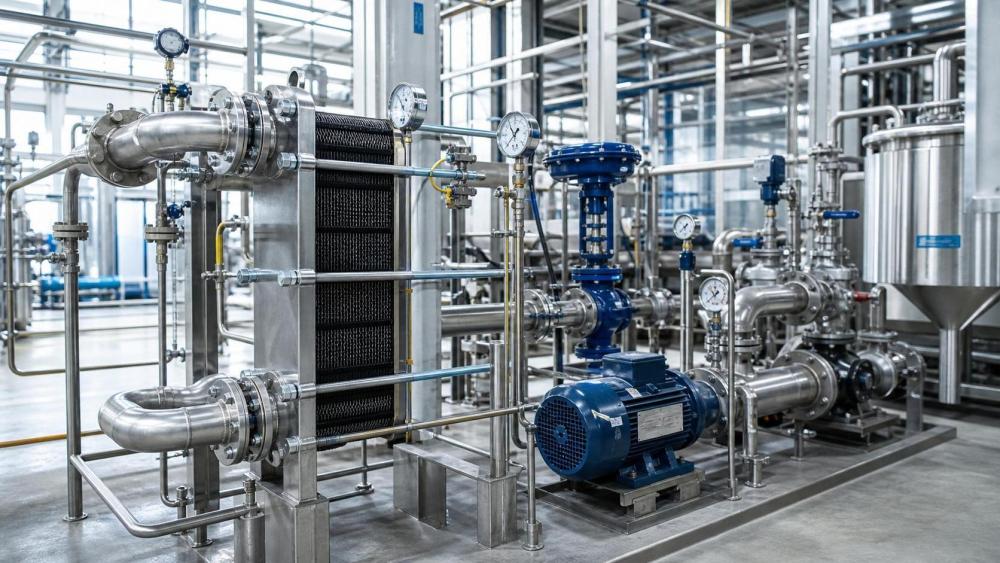
For technical evaluators, temperature stability is rarely a secondary metric. It directly affects yield, equipment life, compliance, and energy performance across industrial processes.
That is why heat exchange systems temperature control performance deserves close review. Small thermal swings often create larger process deviations than many teams initially expect.
In practical terms, stable control means keeping the process near its target despite load changes, ambient shifts, variable flow, and intermittent production schedules.
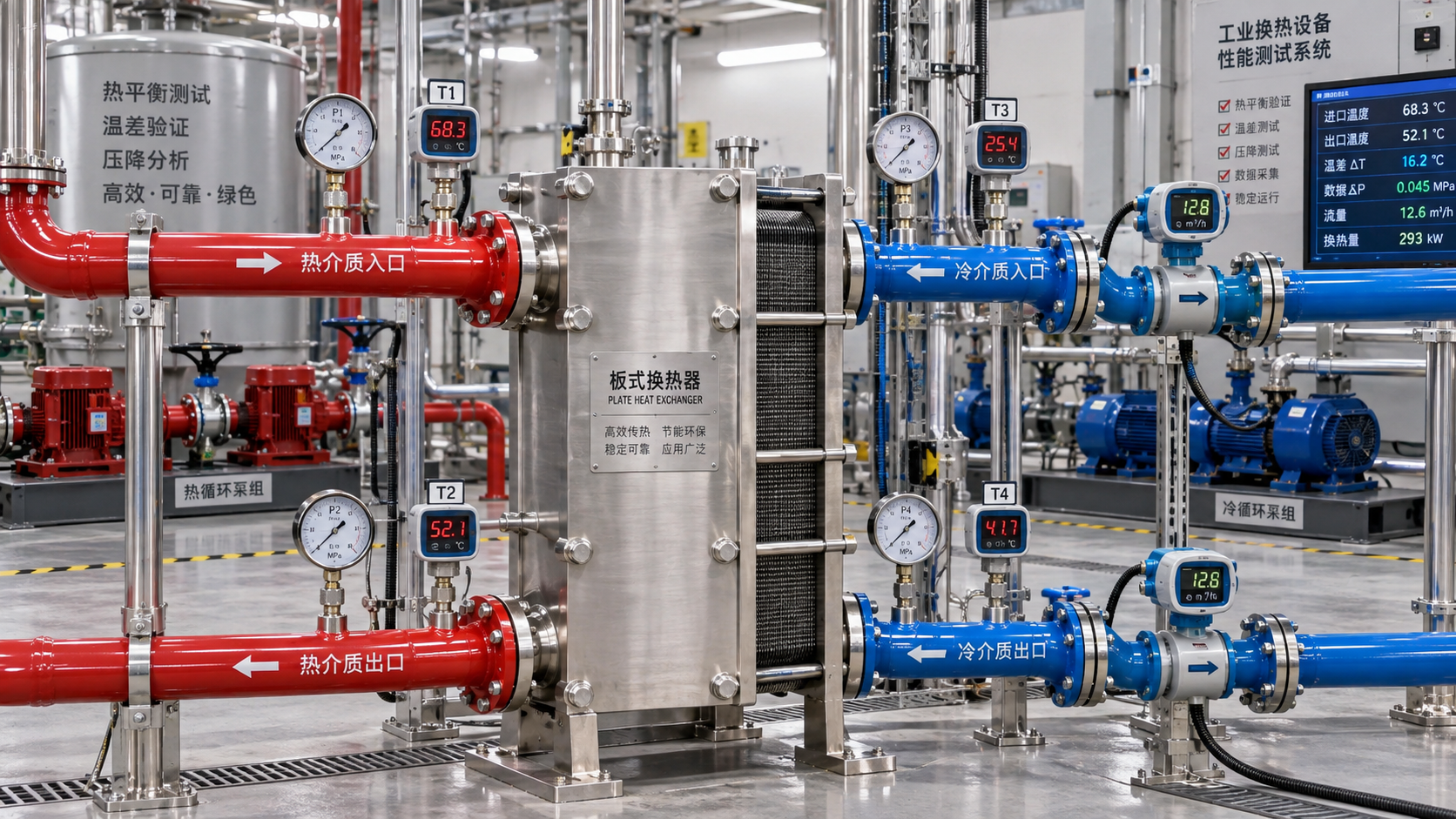
Modern heat exchange systems support that goal by transferring heat faster, more evenly, and with less overshoot than basic thermal arrangements.
This matters in cooling loops, compressed air aftercooling, vacuum processes, reactor jackets, food lines, and clean manufacturing environments where repeatability drives value.
From a technical standpoint, the best designs balance response speed, controllability, fouling resistance, pressure drop, and maintenance access rather than chasing one number alone.
Why Temperature Control Stability Depends on Heat Transfer Quality
Temperature control loops only perform well when heat moves predictably. If transfer rates drift, the controller reacts late, then corrects too aggressively.
That pattern produces oscillation, hunting, and thermal lag. In many plants, those issues are blamed on controls when the real limitation is exchanger performance.
Heat exchange systems temperature control stability improves when the exchanger delivers consistent thermal conductance under expected operating ranges.
Three variables usually dominate that consistency:
- surface area available for transfer
- temperature difference between media
- flow behavior on both sides of the exchanger
When those variables are stable, outlet temperature becomes easier to predict. That also reduces control valve cycling and compressor or pump loading variability.
More importantly, stable transfer supports tighter approach temperatures without pushing the system into unstable control territory.
How Modern Heat Exchange Systems Reduce Thermal Fluctuation
Recent design changes have made heat exchange systems temperature control more robust under variable demand. The improvement is not just about higher capacity.
It comes from better flow distribution, lower dead zones, faster response, and smarter integration with sensors and control logic.
1. Faster thermal response
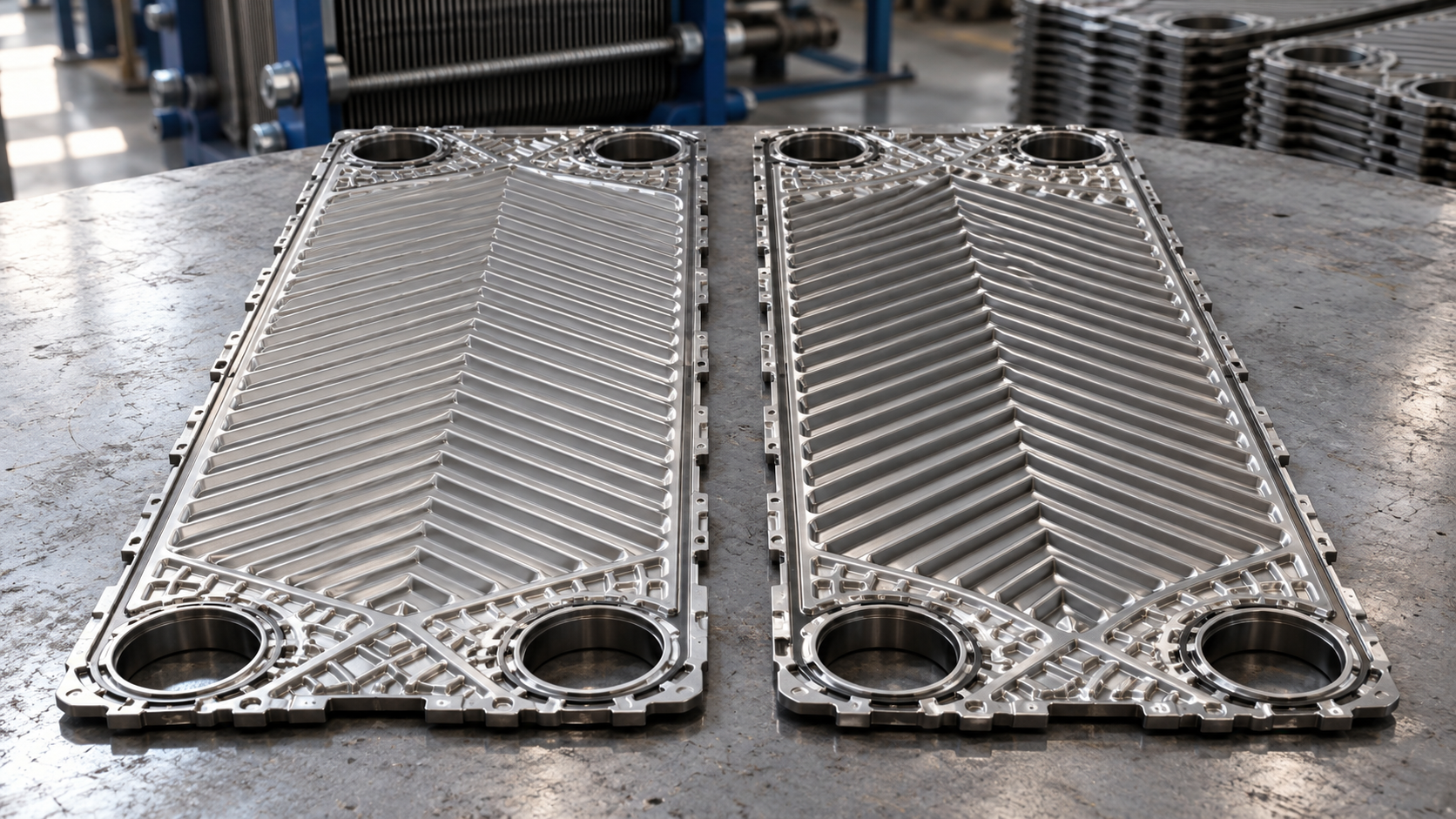
Plate, microchannel, and compact shell-and-tube designs often reduce thermal mass. That allows the exchanger to react faster to load changes.
A faster response shortens delay in the loop. The controller sees results sooner and avoids large corrective moves.
2. More uniform flow paths
Uneven flow creates hot spots and cold spots. These local deviations can distort measured outlet temperature and reduce effective controllability.
Improved channel geometry and distributor design help maintain repeatable heat transfer across the whole exchange surface.
3. Better turndown behavior
Many industrial lines no longer run at fixed loads. They start, stop, ramp, and idle throughout the day.
Heat exchange systems temperature control performance is stronger when the exchanger remains stable at partial flow and partial thermal duty.
4. Cleaner surfaces over time
Fouling slowly changes heat transfer coefficients. As surfaces degrade, the original tuning of the control loop becomes less accurate.
Designs that resist scaling or allow easier cleaning preserve temperature control stability for longer operating periods.
Key Design Factors Technical Evaluators Should Compare
A strong evaluation process goes beyond nominal capacity. The question is whether the exchanger will hold stable temperatures during real operating variation.
The following comparison points usually reveal the true stability potential of heat exchange systems temperature control designs.
In real projects, these factors should be reviewed against actual load profiles, not only nameplate conditions. That is where many selection errors begin.
Common Industrial Scenarios Where Stability Gains Matter Most
The value of heat exchange systems temperature control becomes clearer when viewed through specific operating environments.
Pharmaceutical production
Batch quality depends on tight thermal repeatability. Even minor drift can alter reaction timing, viscosity, or active ingredient consistency.
Semiconductor processing
Tool cooling must remain precise under sensitive loads. Thermal instability can affect dimensional control, yield, and contamination risk.
Food and beverage operations
Stable cooling and heating protect product quality, texture, shelf life, and regulatory compliance across cleaning and production cycles.
Compressed air and gas systems
Aftercoolers and intercoolers help control discharge temperature and moisture behavior. Better stability also improves downstream air treatment performance.
Vacuum and electronics cooling
These systems often operate with tight tolerances and compact footprints. That combination increases the importance of stable, efficient heat rejection.
Risk Signals That Suggest Temperature Control Instability
During technical assessment, several warning signs suggest the selected exchanger may struggle to maintain stable control over time.
- Outlet temperature swings widen during partial load operation.
- Control valves frequently cycle near open or near closed positions.
- Approach temperature deteriorates faster than maintenance schedules predict.
- Pressure drop rises sharply after short service intervals.
- Sensor locations do not reflect mixed, representative process temperature.
- The design basis ignores startup, shutdown, and rapid ramp conditions.
These issues usually appear before major failure. Catching them early helps prevent wasted energy, product loss, and unnecessary control retuning.
A Practical Evaluation Framework for Better Selection Decisions
A useful review process should connect exchanger physics, control behavior, and maintenance reality. Looking at one dimension alone is not enough.
A practical evaluation path can be structured in five steps:
- Define the full load envelope, including transient events and seasonal ambient variation.
- Check whether heat exchange systems temperature control remains stable across turndown conditions.
- Review fouling assumptions, cleaning intervals, and material fit with actual process media.
- Verify sensor placement, valve authority, and control loop tuning strategy.
- Compare lifecycle energy impact, not only initial thermal performance.
This approach improves decision quality because it aligns thermal design with operational continuity. It also helps distinguish robust systems from merely adequate ones.
Closing View
Heat exchangers do more than move heat from one medium to another. They shape how stable the whole process can remain under real operating pressure.
When heat exchange systems temperature control is evaluated through response speed, flow quality, fouling behavior, and control integration, selection becomes much clearer.
That perspective supports stronger risk judgment, better energy efficiency, and more dependable process output across modern industrial applications.
For teams comparing technologies, the most useful next step is simple: test stability under realistic variation, then choose the exchanger that stays predictable.
Ready when you are. Send us a message to get started.
Related News
- How corrugation angle affects heat transfer in plate heat exchangersAuthor :Thermodynamics Analyst

- When do plate heat exchangers suit Middle East seawater cooling?Author :Thermodynamics Analyst

- When does gasketed plate heat exchanger technology suit your process?Author :Thermodynamics Analyst

- When does heat recovery improve data center cooling efficiency?Author :Thermodynamics Analyst

- How Do I Verify Heat Transfer Calculations in a Supplier Quotation?Author :Thermodynamics Analyst

- How to evaluate a plate heat exchangers supplier before orderingAuthor :Thermodynamics Analyst

- EU Tightens Fatigue Checks for Plate Heat ExchangersAuthor :Thermodynamics Analyst

- EU PFAS Rule Adds New Export Filing for Cooling EquipmentAuthor :Thermodynamics Analyst

- EU EN 13445-4:2026 Adds Fatigue Report RequirementAuthor :Thermodynamics Analyst

- EU Updates EN 13445-4 for Plate ExchangersAuthor :Thermodynamics Analyst

- How to Compare Energy-Efficient Heat Exchange SolutionsAuthor :Thermodynamics Analyst

- Brazed Plate Exchanger Design: 7 Factors That Affect Heat TransferAuthor :Thermodynamics Analyst

- EU CBAM Pilot List Adds Plate ExchangersAuthor :Thermodynamics Analyst

- How Heat Exchange Systems Improve Temperature Control StabilityAuthor :Thermodynamics Analyst

- Japan to Require Efficiency Labels for Plate ExchangersAuthor :Thermodynamics Analyst

- EU REACH Adds PFAS Ban for Plate Heat ExchangersAuthor :Thermodynamics Analyst

- India Enforces BIS Rule for Plate Heat ExchangersAuthor :Thermodynamics Analyst

- DIN EN 13445-6:2026 Tightens Plate Exchanger CE RulesAuthor :Thermodynamics Analyst

- EU REACH Restricts PFAS Seals for Plate Heat ExchangersAuthor :Thermodynamics Analyst

- India Mandates BIS Certification for Imported Plate ExchangersAuthor :Thermodynamics Analyst

- Vietnam Requires QR Labels on Imported Plate Heat ExchangersAuthor :Thermodynamics Analyst

- EU EN 13445-4:2026 Tightens NDT Rules for Heat ExchangersAuthor :Thermodynamics Analyst

- EPA Clears R-1234ze(E) for Plate Exchanger SystemsAuthor :Thermodynamics Analyst
 for Plate Exchanger Systems")
- Heat Exchange Equipment Selection: Key Performance Checks Before You Compare ModelsAuthor :Thermodynamics Analyst

- ASHRAE 90.1-2026 Raises Plate Exchanger Efficiency ThresholdAuthor :Thermodynamics Analyst

- Heat Exchange Systems: How to Choose the Right SetupAuthor :Thermodynamics Analyst

- EPA SNAP 89 Takes Effect for Plate ExchangersAuthor :Thermodynamics Analyst

- How to Compare Heat Exchange Solutions for Lower Energy UseAuthor :Thermodynamics Analyst

- EPA SNAP 89 Expands Filing Rules for Plate Heat ExchangersAuthor :Thermodynamics Analyst

- EPA SNAP update adds filing rule for plate heat exchangersAuthor :Thermodynamics Analyst

- Industrial Heat Recovery: Where the Payback Is Fastest in 2026Author :Thermodynamics Analyst

- California EPR Deadline Nears for Cooling Equipment MakersAuthor :Thermodynamics Analyst

- Heat Exchanger Technology: Plate vs Shell and Tube for EfficiencyAuthor :Thermodynamics Analyst

- Industrial Heat Recovery Options for High-Temperature ProcessesAuthor :Thermodynamics Analyst

- Heat Transfer Problems in Process Lines: Causes and Practical FixesAuthor :Thermodynamics Analyst

- India Tightens Plate Exchanger Import Clearance RulesAuthor :Thermodynamics Analyst