India Enforces BIS Rule for Plate Heat Exchangers




On July 10, 2026, the market significance of India’s latest BIS action lies less in headline wording and more in its immediate compliance effect: imported plate heat exchangers now face a mandatory gate tied to the new IS 17845:2026 standard, with added thermal efficiency and helium leak test thresholds. For exporters, importers, certification teams, procurement functions, and delivery planning personnel, this is a live rule change affecting customs clearance, test readiness, registration timing, and shipment execution rather than a policy signal that can be deferred.
What the New BIS Requirement Confirms
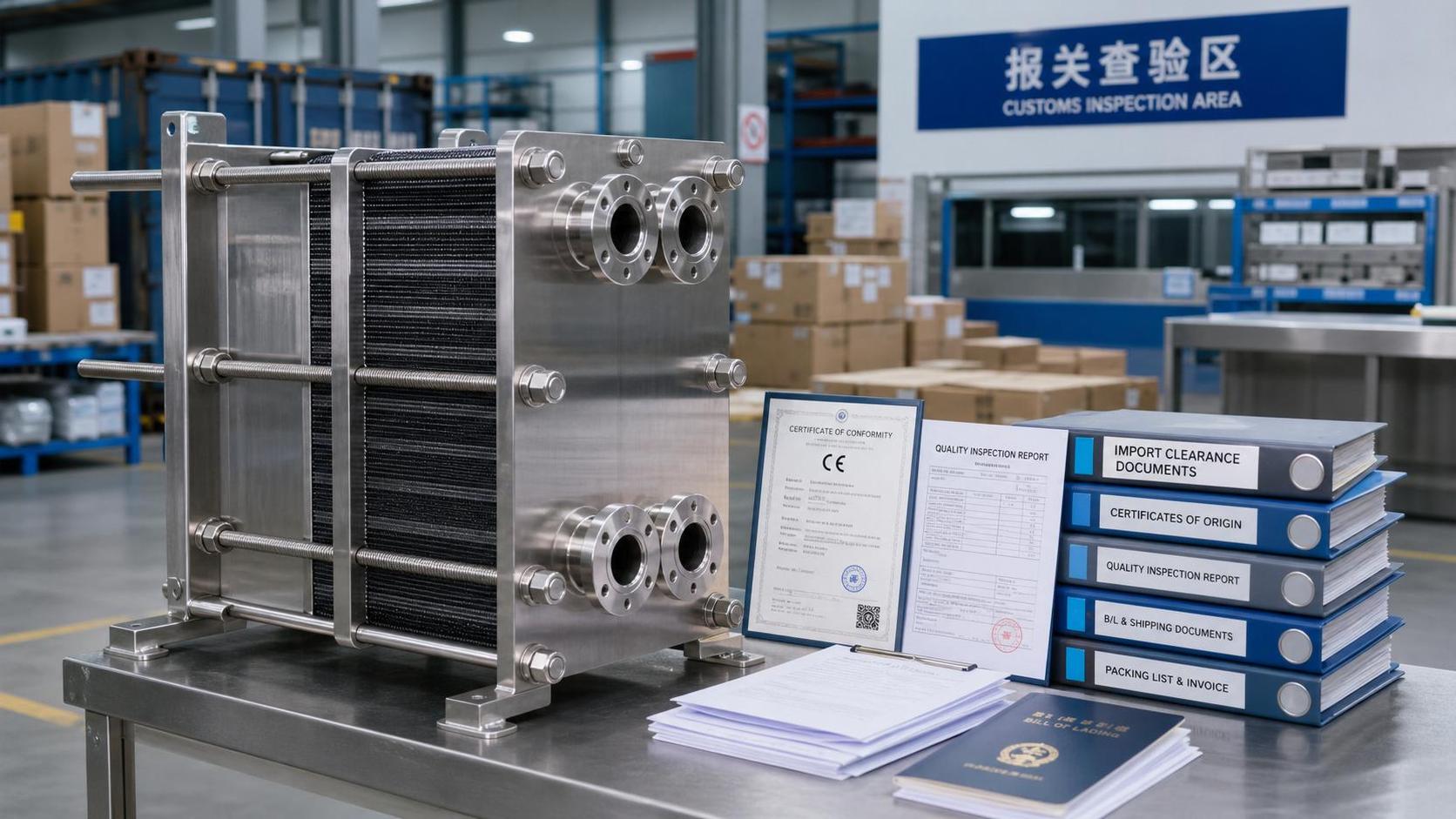
The confirmed facts are limited but clear. The Bureau of Indian Standards (BIS) formally made the new IS 17845:2026, covering performance and safety requirements for plate heat exchangers, mandatory on July 9, 2026. The updated standard adds a thermal efficiency threshold of at least 68% and a helium leak limit of no more than 5×10⁻⁷ mbar·L/s. The rule applies to all imported plate heat exchangers. Products that do not hold BIS certification are barred from customs clearance from the effective date. The event summary also indicates that major Chinese exporters are facing pressure from expedited type testing and local representative registration.
Where the Pressure Appears Across the Business Chain
Export shipments now depend on certification timing
Export-oriented manufacturers and trading companies are likely to be affected first because the rule directly links market entry to BIS certification status. The practical impact is concentrated in pre-shipment compliance review, test preparation, and export scheduling. What deserves closer attention is whether current product files, technical claims, and shipment plans are aligned with the new thermal efficiency and leak test requirements before goods move toward clearance.
Import and procurement teams face a stricter release condition
For import-side buyers and procurement functions, the immediate issue is not only product selection but whether ordered equipment can legally clear customs under the new rule. From an industry perspective, this may affect purchase timing, supplier qualification review, and document checks tied to certified status. Procurement teams should pay close attention to whether suppliers can demonstrate BIS certification readiness and whether tender or purchasing documents need to reflect the new compliance condition.
Testing and certification workflows become a near-term bottleneck
Certification-related service providers, internal compliance teams, and testing support functions may see pressure because the summary points to accelerated type testing and local representative registration. The effect is likely to appear in application sequencing, technical dossier preparation, and coordination around required test evidence. Analysis shows that even where product demand remains unchanged, the compliance workflow itself can become the limiting factor for market access and delivery continuity.
What Companies Should Track Immediately
Check whether product claims match the new thresholds
Companies shipping plate heat exchangers into India should review whether existing product specifications and test documentation are capable of supporting the newly stated thermal efficiency and helium leak limits. Where supporting records are incomplete or not clearly mapped to the updated standard, the commercial risk may shift from pricing or demand to basic admissibility at the border.
Review certification status before dispatch and customs handoff
Because non-certified products are stated to be prohibited from customs clearance from the effective date, shipment release planning should be reviewed together with certification status rather than handled as separate steps. Observably, this is especially relevant for goods close to dispatch, goods already committed under contract, and orders tied to fixed delivery windows.
Prepare for local registration and documentation coordination
The event summary specifically mentions pressure around local representative registration. Companies should therefore pay attention to whether their local registration arrangements, application materials, and technical files are sufficiently organized for the new enforcement environment. The current input does not provide detailed procedural rules, so this should be treated as a compliance watchpoint rather than a settled execution path.
Watch for changes in tender language and buyer-side requirements
Where projects or industrial procurement involve plate heat exchangers for the Indian market, bid documents, supplier qualification clauses, and acceptance conditions may begin to reflect the new BIS position. Analysis shows that companies should monitor not only official certification steps but also how buyers, distributors, and project counterparties start translating the rule into purchasing and delivery requirements.
How This Development Is Best Read for Now
Analysis shows that this development is more appropriately understood as an implemented market-access rule rather than an early consultation signal. The reason is straightforward: the event summary states that the standard has been made mandatory and that non-certified imports are prohibited from customs clearance from the effective date. At the same time, it still remains necessary to observe how enforcement language, certification practice, and commercial documentation standards are applied in day-to-day transactions, because the input does not provide further operational detail.
The Practical Meaning for the Market
From an industry perspective, the immediate message is that compliance for imported plate heat exchangers in India has moved from a technical quality topic into a direct trade and delivery condition. The most rational reading at this stage is not that the entire market structure has already shifted, but that certification readiness, test evidence, and local registration coordination have become immediate execution issues for companies serving this route.
Basis of This Article and What Still Needs Verification
This article is generated on the basis of the user-provided news title, event date, and event summary. For developments of this type, commonly relevant source categories may include official notices, regulator publications, customs or trade authority information, industry association updates, standards organization documents, and reporting by authoritative media. A specific official source link was not provided in the input, so the exact official publication path still needs to be verified on an ongoing basis. Observably, further attention should remain on any detailed enforcement guidance, certification interpretation, tender document changes, market feedback, and how affected companies are handling implementation in practice.
Ready when you are. Send us a message to get started.
Related News
- How corrugation angle affects heat transfer in plate heat exchangersAuthor :Thermodynamics Analyst

- When do plate heat exchangers suit Middle East seawater cooling?Author :Thermodynamics Analyst

- When does gasketed plate heat exchanger technology suit your process?Author :Thermodynamics Analyst

- When does heat recovery improve data center cooling efficiency?Author :Thermodynamics Analyst

- How Do I Verify Heat Transfer Calculations in a Supplier Quotation?Author :Thermodynamics Analyst

- How to evaluate a plate heat exchangers supplier before orderingAuthor :Thermodynamics Analyst

- EU Tightens Fatigue Checks for Plate Heat ExchangersAuthor :Thermodynamics Analyst

- EU PFAS Rule Adds New Export Filing for Cooling EquipmentAuthor :Thermodynamics Analyst

- EU EN 13445-4:2026 Adds Fatigue Report RequirementAuthor :Thermodynamics Analyst

- EU Updates EN 13445-4 for Plate ExchangersAuthor :Thermodynamics Analyst

- How to Compare Energy-Efficient Heat Exchange SolutionsAuthor :Thermodynamics Analyst

- Brazed Plate Exchanger Design: 7 Factors That Affect Heat TransferAuthor :Thermodynamics Analyst

- EU CBAM Pilot List Adds Plate ExchangersAuthor :Thermodynamics Analyst

- How Heat Exchange Systems Improve Temperature Control StabilityAuthor :Thermodynamics Analyst

- Japan to Require Efficiency Labels for Plate ExchangersAuthor :Thermodynamics Analyst

- EU REACH Adds PFAS Ban for Plate Heat ExchangersAuthor :Thermodynamics Analyst

- India Enforces BIS Rule for Plate Heat ExchangersAuthor :Thermodynamics Analyst

- DIN EN 13445-6:2026 Tightens Plate Exchanger CE RulesAuthor :Thermodynamics Analyst

- EU REACH Restricts PFAS Seals for Plate Heat ExchangersAuthor :Thermodynamics Analyst

- India Mandates BIS Certification for Imported Plate ExchangersAuthor :Thermodynamics Analyst

- Vietnam Requires QR Labels on Imported Plate Heat ExchangersAuthor :Thermodynamics Analyst

- EU EN 13445-4:2026 Tightens NDT Rules for Heat ExchangersAuthor :Thermodynamics Analyst

- EPA Clears R-1234ze(E) for Plate Exchanger SystemsAuthor :Thermodynamics Analyst
 for Plate Exchanger Systems")
- Heat Exchange Equipment Selection: Key Performance Checks Before You Compare ModelsAuthor :Thermodynamics Analyst

- ASHRAE 90.1-2026 Raises Plate Exchanger Efficiency ThresholdAuthor :Thermodynamics Analyst

- Heat Exchange Systems: How to Choose the Right SetupAuthor :Thermodynamics Analyst

- EPA SNAP 89 Takes Effect for Plate ExchangersAuthor :Thermodynamics Analyst

- How to Compare Heat Exchange Solutions for Lower Energy UseAuthor :Thermodynamics Analyst

- EPA SNAP 89 Expands Filing Rules for Plate Heat ExchangersAuthor :Thermodynamics Analyst

- EPA SNAP update adds filing rule for plate heat exchangersAuthor :Thermodynamics Analyst

- Industrial Heat Recovery: Where the Payback Is Fastest in 2026Author :Thermodynamics Analyst

- California EPR Deadline Nears for Cooling Equipment MakersAuthor :Thermodynamics Analyst

- Heat Exchanger Technology: Plate vs Shell and Tube for EfficiencyAuthor :Thermodynamics Analyst

- Industrial Heat Recovery Options for High-Temperature ProcessesAuthor :Thermodynamics Analyst

- Heat Transfer Problems in Process Lines: Causes and Practical FixesAuthor :Thermodynamics Analyst

- India Tightens Plate Exchanger Import Clearance RulesAuthor :Thermodynamics Analyst