Brazed Plate Exchanger Design: 7 Factors That Affect Heat Transfer




Brazed Plate Exchanger Design: 7 Factors That Affect Heat Transfer
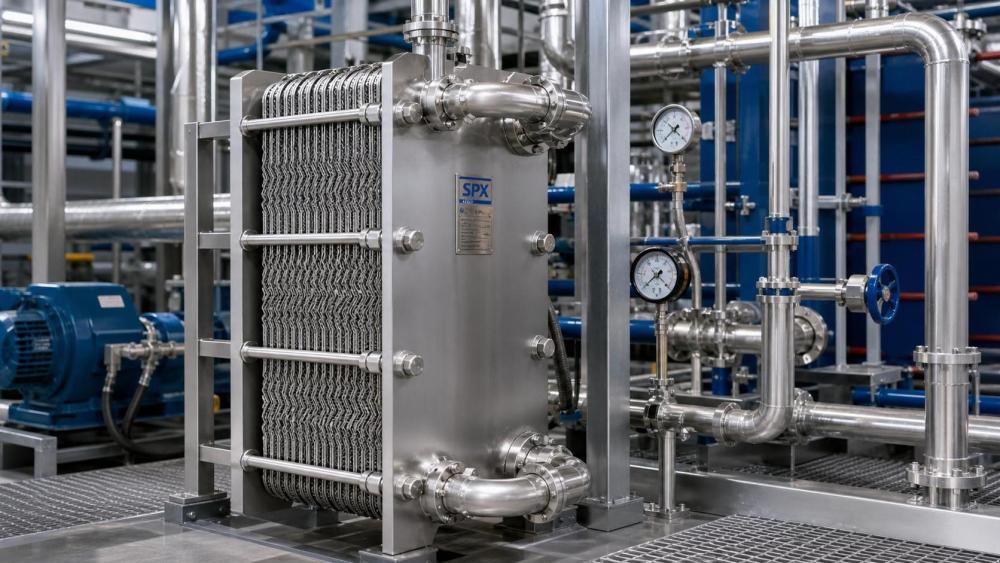
In brazed plate exchanger design, small structural choices can create large performance gaps. Heat transfer, pressure drop, fouling rate, and service life all move together.
That matters when comparing equipment for cooling, heating, recovery, or process control. A unit that looks similar on paper can behave very differently in operation.
From a technical and standards perspective, the real question is simple. Which design factors most directly change thermal performance, and how should they be evaluated?
Below are seven factors that shape brazed plate exchanger design, along with the practical tradeoffs behind each one.
1. Plate Pattern and Chevron Angle
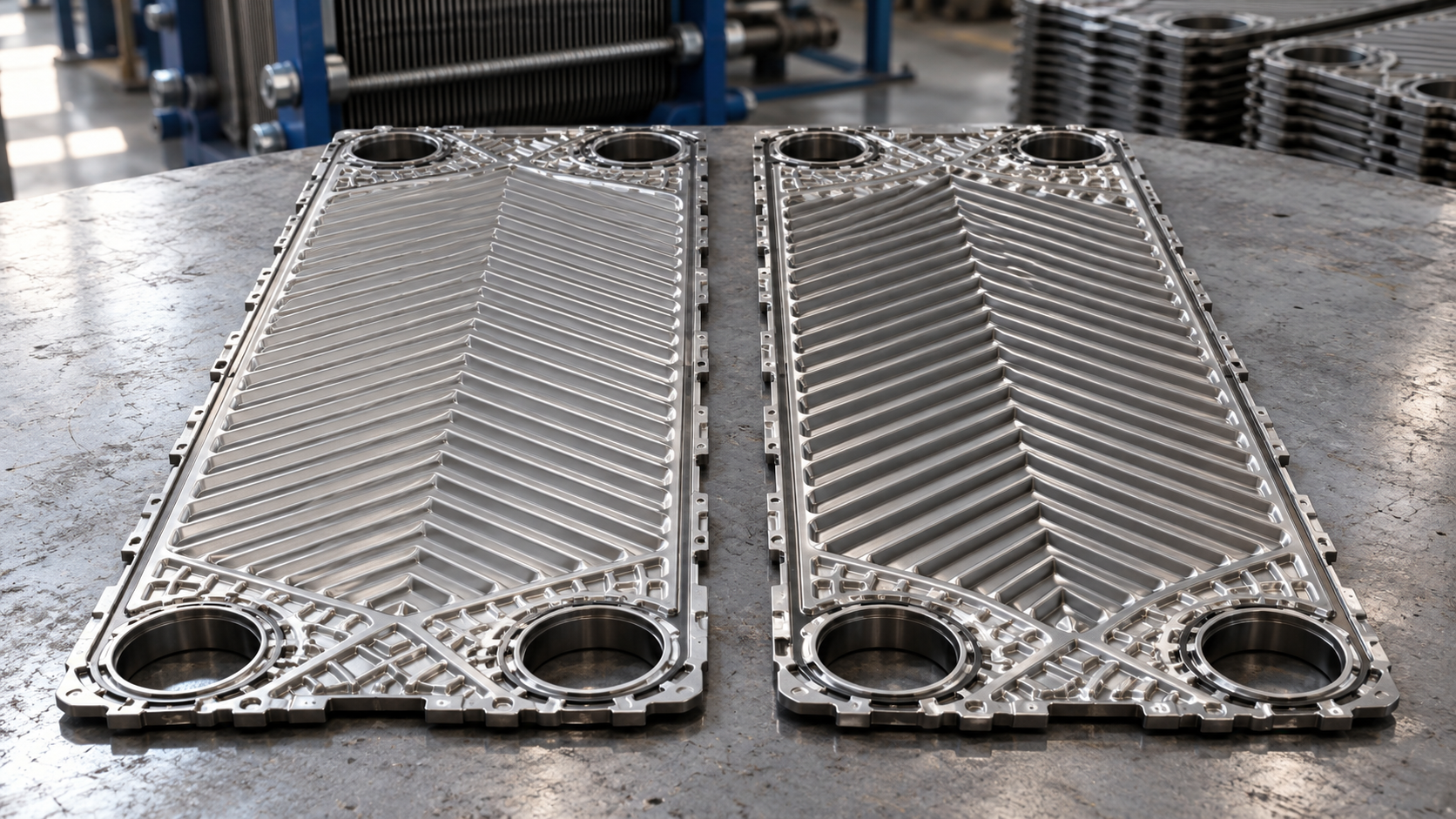
The plate pattern is the first driver of heat transfer. In brazed plate exchanger design, corrugation geometry controls turbulence, fluid mixing, and wall contact.
A steeper chevron angle usually increases turbulence. That improves the heat transfer coefficient, especially at moderate flow rates. The tradeoff is higher pressure drop.
A shallower pattern reduces resistance. It may suit viscous fluids or systems with tight pump limits, but thermal performance can flatten under the same footprint.
When reviewing brazed plate exchanger design, compare plate geometry with the actual duty. Strong turbulence is useful, but only when the pumping cost still makes sense.
2. Number of Plates and Effective Heat Transfer Area
More plates generally mean more surface area. More area supports more heat exchange, but the gain is not infinite. Flow distribution and channel velocity still matter.
In brazed plate exchanger design, oversizing can reduce velocity too much. When velocity drops, turbulence weakens, and the expected thermal improvement may not appear.
Undersizing creates a different problem. The exchanger may hit the target only under clean conditions, then fall short once fouling or seasonal load variation appears.
A sound review checks effective area against design approach temperature, duty fluctuation, and allowable pressure loss. Area alone is never a complete selection metric.
3. Channel Gap and Flow Velocity
Channel gap affects both thermal efficiency and fouling behavior. Narrow channels raise velocity and improve boundary layer disruption, which usually helps heat transfer.
However, narrow passages also increase clogging risk. In real plants, this becomes critical with hard water, suspended solids, sticky organics, or unstable process streams.
Wider gaps reduce plugging sensitivity. They are often selected for less clean media, but thermal compactness may decrease, especially when approach temperatures are aggressive.
This is where brazed plate exchanger design becomes application specific. Food, HVAC, chemical, refrigeration, and pharmaceutical systems can need very different channel strategies.
A practical check is to review fluid cleanliness, particle size, cleaning method, and velocity window together. Looking at only nominal capacity hides real operating risk.
4. Flow Arrangement and Temperature Profile
Counterflow is usually the preferred arrangement in brazed plate exchanger design. It maintains a stronger temperature gradient across the plate length.
That stronger gradient supports better thermal effectiveness. It also helps when the system needs a close approach temperature without excessive exchanger size.
Parallel flow is simpler in some layouts, but it generally delivers weaker heat recovery. The outlet temperatures tend to converge too early.
Phase change duties make this more nuanced. Condensing or evaporating refrigerants can create local performance shifts that require closer thermal modeling.
When assessing brazed plate exchanger design, review the full temperature program, not just inlet and outlet targets. Pinch points often reveal hidden limitations.
5. Material Selection and Brazing Quality
Heat transfer is not only about geometry. Plate material and brazing quality also influence thermal conductivity, corrosion resistance, and long-term stability.
Stainless steel plates are common because they balance strength and corrosion performance. Copper brazing is widely used, but it is not suitable for every fluid chemistry.
For ammonia or aggressive media, nickel-brazed options may be necessary. That choice can affect cost, compatibility, and acceptable operating envelope.
Brazed joints also matter mechanically. Poor joint consistency can create weak thermal paths, leakage risk, and premature failure under pressure cycling.
In technical evaluation, brazed plate exchanger design should be checked against fluid composition, chlorides, refrigerant type, thermal shock exposure, and relevant pressure standards.
6. Fouling Tendency and Cleanliness Control
Even a strong thermal design will drift if fouling is underestimated. Deposits add thermal resistance and can sharply reduce real heat transfer over time.
This is a frequent issue in cooling water loops, glycol systems, and process streams with scaling potential. Initial test data often looks better than year-two performance.
Good brazed plate exchanger design accounts for expected fouling factors, filtration quality, water treatment, and maintenance intervals from the start.
More importantly, design should match the plant’s actual cleaning reality. If chemical cleaning is difficult or downtime is expensive, a tighter channel may be the wrong choice.
Recent changes in efficiency targets make this even more visible. Plants now track lifecycle energy loss more closely, not only nameplate thermal performance.
7. Pressure Drop Limits and System Integration
The final factor is system integration. Brazed plate exchanger design cannot be judged by heat transfer alone because pressure drop affects pump power and operating cost.
A design with excellent thermal compactness may still be a poor fit if it overloads the circulation pump or destabilizes upstream process control.
This becomes more obvious in energy recovery systems, heat pumps, oil cooling skids, compressed air dryers, and tightly controlled manufacturing lines.
Evaluate allowable pressure drop on both sides, part-load behavior, viscosity changes, startup conditions, and future expansion margins. Those details often determine the better design.
In practice, the best brazed plate exchanger design is the one that balances thermal duty, hydraulic limits, and service stability across the full operating window.
What to Check During Technical Evaluation
A short checklist helps turn theory into comparison. It also reduces the chance of selecting a unit that looks efficient but underperforms in service.
- Confirm duty, approach temperature, and flow rates under normal and peak conditions.
- Review plate pattern, channel gap, and expected Reynolds number range.
- Check pressure drop limits for both circuits, not only one side.
- Match materials and brazing alloy to fluid chemistry and cleaning agents.
- Include fouling assumptions based on actual water and process conditions.
- Ask for performance data at part load, seasonal variation, or viscosity change.
- Verify compliance with applicable pressure vessel and thermal design standards.
This approach makes brazed plate exchanger design easier to compare across suppliers and operating scenarios. It also improves lifecycle cost judgment.
A Practical Decision View
The strongest thermal option is not always the best industrial option. The better decision usually comes from balancing transfer efficiency with durability and controllability.
That is why brazed plate exchanger design should be reviewed as a system decision, not just a component decision. Geometry, materials, fouling risk, and hydraulic fit all interact.
For industrial cooling, compressed air, vacuum processes, and heat recovery applications, better evaluation usually starts with better thermal logic. The details above provide that framework.
Use these seven factors as a technical screen before comparing quotes or validating standards. That will make brazed plate exchanger design decisions more accurate, more defensible, and more energy efficient over time.
Ready when you are. Send us a message to get started.
Related News
- How corrugation angle affects heat transfer in plate heat exchangersAuthor :Thermodynamics Analyst

- When do plate heat exchangers suit Middle East seawater cooling?Author :Thermodynamics Analyst

- When does gasketed plate heat exchanger technology suit your process?Author :Thermodynamics Analyst

- When does heat recovery improve data center cooling efficiency?Author :Thermodynamics Analyst

- How Do I Verify Heat Transfer Calculations in a Supplier Quotation?Author :Thermodynamics Analyst

- How to evaluate a plate heat exchangers supplier before orderingAuthor :Thermodynamics Analyst

- EU Tightens Fatigue Checks for Plate Heat ExchangersAuthor :Thermodynamics Analyst

- EU PFAS Rule Adds New Export Filing for Cooling EquipmentAuthor :Thermodynamics Analyst

- EU EN 13445-4:2026 Adds Fatigue Report RequirementAuthor :Thermodynamics Analyst

- EU Updates EN 13445-4 for Plate ExchangersAuthor :Thermodynamics Analyst

- How to Compare Energy-Efficient Heat Exchange SolutionsAuthor :Thermodynamics Analyst

- Brazed Plate Exchanger Design: 7 Factors That Affect Heat TransferAuthor :Thermodynamics Analyst

- EU CBAM Pilot List Adds Plate ExchangersAuthor :Thermodynamics Analyst

- How Heat Exchange Systems Improve Temperature Control StabilityAuthor :Thermodynamics Analyst

- Japan to Require Efficiency Labels for Plate ExchangersAuthor :Thermodynamics Analyst

- EU REACH Adds PFAS Ban for Plate Heat ExchangersAuthor :Thermodynamics Analyst

- India Enforces BIS Rule for Plate Heat ExchangersAuthor :Thermodynamics Analyst

- DIN EN 13445-6:2026 Tightens Plate Exchanger CE RulesAuthor :Thermodynamics Analyst

- EU REACH Restricts PFAS Seals for Plate Heat ExchangersAuthor :Thermodynamics Analyst

- India Mandates BIS Certification for Imported Plate ExchangersAuthor :Thermodynamics Analyst

- Vietnam Requires QR Labels on Imported Plate Heat ExchangersAuthor :Thermodynamics Analyst

- EU EN 13445-4:2026 Tightens NDT Rules for Heat ExchangersAuthor :Thermodynamics Analyst

- EPA Clears R-1234ze(E) for Plate Exchanger SystemsAuthor :Thermodynamics Analyst
 for Plate Exchanger Systems")
- Heat Exchange Equipment Selection: Key Performance Checks Before You Compare ModelsAuthor :Thermodynamics Analyst

- ASHRAE 90.1-2026 Raises Plate Exchanger Efficiency ThresholdAuthor :Thermodynamics Analyst

- Heat Exchange Systems: How to Choose the Right SetupAuthor :Thermodynamics Analyst

- EPA SNAP 89 Takes Effect for Plate ExchangersAuthor :Thermodynamics Analyst

- How to Compare Heat Exchange Solutions for Lower Energy UseAuthor :Thermodynamics Analyst

- EPA SNAP 89 Expands Filing Rules for Plate Heat ExchangersAuthor :Thermodynamics Analyst

- EPA SNAP update adds filing rule for plate heat exchangersAuthor :Thermodynamics Analyst

- Industrial Heat Recovery: Where the Payback Is Fastest in 2026Author :Thermodynamics Analyst

- California EPR Deadline Nears for Cooling Equipment MakersAuthor :Thermodynamics Analyst

- Heat Exchanger Technology: Plate vs Shell and Tube for EfficiencyAuthor :Thermodynamics Analyst

- Industrial Heat Recovery Options for High-Temperature ProcessesAuthor :Thermodynamics Analyst

- Heat Transfer Problems in Process Lines: Causes and Practical FixesAuthor :Thermodynamics Analyst

- India Tightens Plate Exchanger Import Clearance RulesAuthor :Thermodynamics Analyst