Heat Exchanger Efficiency: What Impacts Output Most




Heat exchanger efficiency is rarely determined by one specification; it reflects design, fluid behavior, fouling, materials, and operating conditions working together.
For energy-intensive systems, heat exchanger efficiency affects output stability, utility cost, emissions, maintenance timing, and lifecycle investment decisions.
This article explains which variables matter most across real scenarios, and how data-driven assessment supports smarter thermal decisions.
Heat Exchanger Efficiency Starts With the Operating Scenario
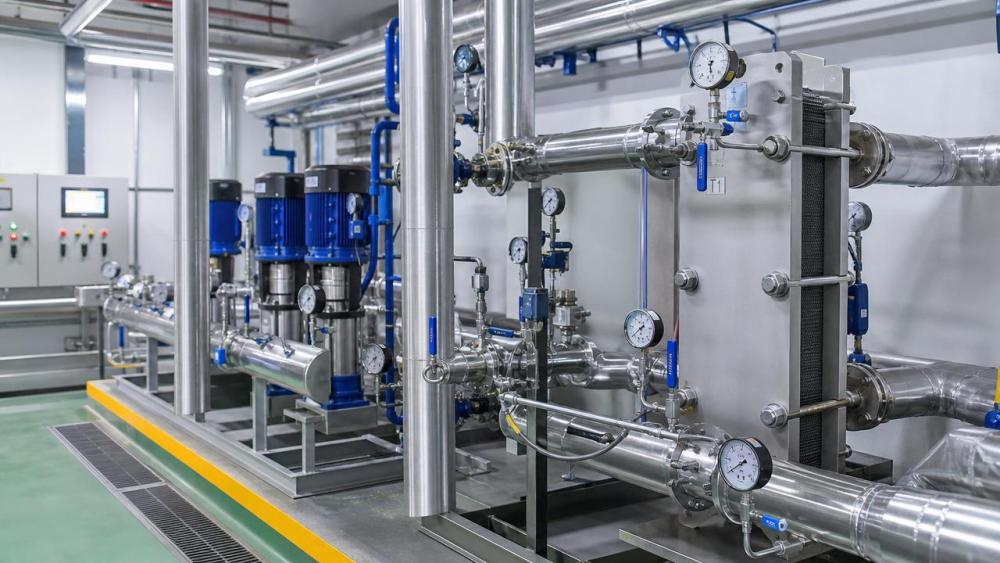
The same unit can perform differently in refrigeration, compressed air recovery, chemical processing, food heating, or semiconductor temperature control.
A laboratory rating may show strong heat exchanger efficiency, yet field output can decline under variable flow, contamination, or unstable inlet temperatures.
Scenario judgment matters because each application prioritizes different limits: pressure drop, approach temperature, cleanability, compactness, or corrosion resistance.
GTC-Matrix evaluates thermal systems through this practical lens, connecting thermodynamic logic with operating economics and energy conversion intelligence.
Why Rated Capacity Does Not Guarantee Real Output
Rated capacity usually assumes clean surfaces, stable flows, specified fluids, and controlled inlet temperatures.
Industrial operation is less controlled. Pumps drift, compressors cycle, cooling water quality changes, and process loads fluctuate.
Heat exchanger efficiency drops when actual conditions move away from design assumptions, even if the equipment remains mechanically intact.
The most useful evaluation compares rated duty, measured duty, pressure drop, fouling trend, and energy consumed by supporting equipment.
Scenario 1: Cooling Loops Where Flow Balance Defines Performance
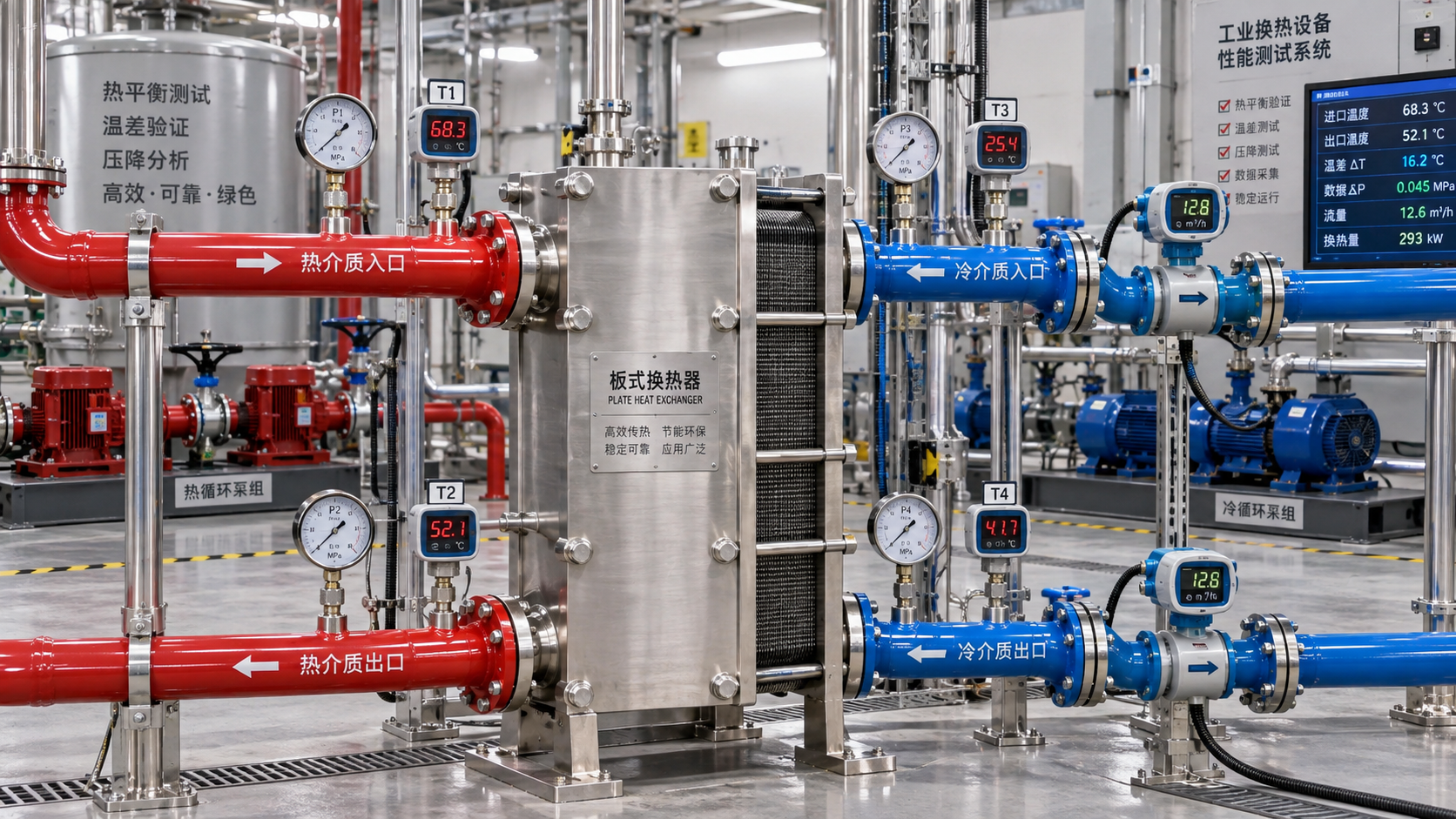
In closed cooling loops, heat exchanger efficiency depends heavily on mass flow balance between the hot and cold sides.
Too little flow reduces heat transfer. Excessive flow may increase pumping power without proportional thermal benefit.
The key judgment point is not maximum flow, but stable flow that maintains turbulent transfer with acceptable pressure loss.
Temperature sensors should be placed near inlet and outlet nozzles to avoid misleading readings caused by pipe mixing or heat loss.
Scenario 2: Compressed Air Heat Recovery and Variable Load
Compressed air systems produce large quantities of recoverable heat, especially in oil-injected and oil-free compression platforms.
Heat exchanger efficiency in this scenario is shaped by compressor load profile, oil temperature, cooling circuit design, and downstream heat demand.
A high-efficiency exchanger may underperform when heat demand is intermittent or when bypass control wastes recoverable thermal energy.
Good assessment includes compressor operating hours, load-unload behavior, hot water demand timing, and control valve response.
Scenario 3: Process Heating Where Approach Temperature Is Critical
In process heating, small approach temperatures often indicate strong heat exchanger efficiency, but they require careful surface area and flow design.
A tighter approach temperature can raise capital cost, pressure drop, and fouling sensitivity.
The correct question is whether the additional recovered heat justifies larger equipment and higher maintenance exposure.
Food, pharmaceutical, and specialty chemical processes may also require hygienic surfaces, drainability, and predictable cleaning cycles.
Scenario 4: Refrigeration and HVAC Systems Under Seasonal Variation
Refrigeration and HVAC systems face changing ambient temperatures, part-load operation, and refrigerant-side pressure constraints.
Heat exchanger efficiency affects compressor power directly because poor heat rejection or evaporation increases lift and energy consumption.
Microchannel heat exchangers can improve compactness and refrigerant charge, but they demand clean airflow and careful condensate management.
Seasonal evaluation should include peak weather, shoulder months, defrost events, coil cleanliness, and fan energy.
Scenario 5: Corrosive or Fouling Services Where Materials Decide Longevity
In corrosive liquids, cooling water, exhaust gas recovery, or wastewater streams, material selection can dominate heat exchanger efficiency over time.
A thermally conductive material may not be the best choice if corrosion creates deposits, leaks, or early replacement.
Stainless steel, titanium, nickel alloys, coated surfaces, or polymers may be justified when reliability protects long-term output.
The practical metric is sustained heat exchanger efficiency after months of operation, not only clean-condition performance.
Which Factors Impact Heat Exchanger Efficiency Most?
1. Temperature Difference and Thermal Driving Force
Heat moves because a temperature difference exists. Larger differences generally increase transfer, but may reduce energy recovery opportunities.
Log mean temperature difference helps compare designs, especially when inlet and outlet temperatures change along the exchanger length.
2. Flow Arrangement and Residence Time
Counterflow arrangements usually support higher heat exchanger efficiency than parallel flow because they preserve useful temperature gradients.
However, layout must also consider cleaning access, pressure limits, phase change, and available space.
3. Fouling Resistance and Surface Cleanliness
Fouling adds thermal resistance and narrows flow passages, reducing heat transfer while increasing pumping or fan energy.
Water scaling, oil films, biological growth, particulates, and crystallization are common causes of heat exchanger efficiency loss.
4. Pressure Drop and Auxiliary Energy
More turbulence can improve heat transfer, but it may increase pressure drop and auxiliary power.
A balanced design optimizes total system efficiency, not heat exchanger efficiency in isolation.
5. Control Strategy and Load Stability
Poor controls can waste heat transfer area, create thermal shock, or keep equipment operating outside its efficient range.
Variable-speed pumps, modulating valves, bypass logic, and predictive monitoring can protect heat exchanger efficiency under changing loads.
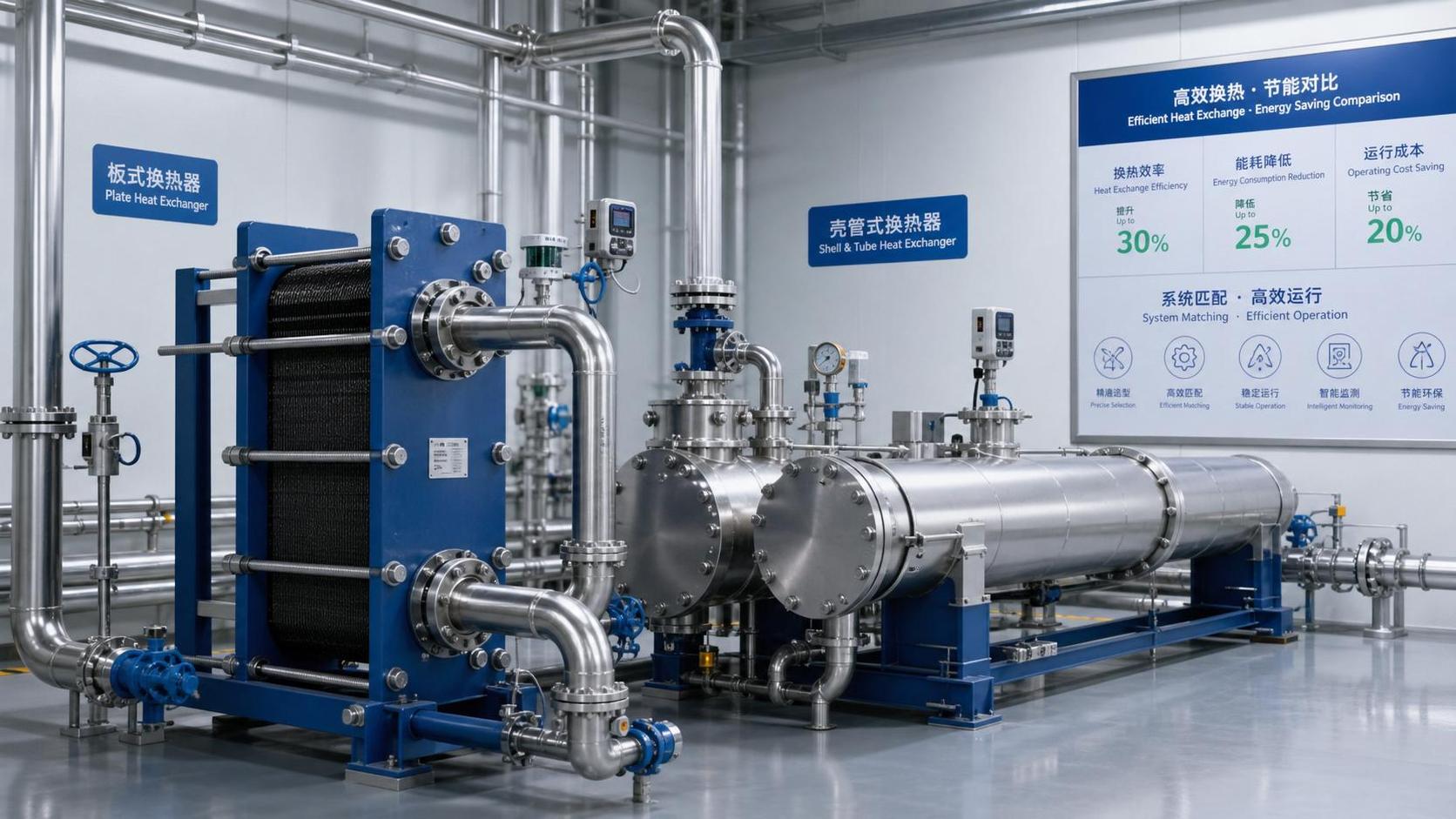
Different Scenarios Demand Different Efficiency Priorities
This comparison shows why one universal efficiency claim is not enough for technical selection.
The strongest choice is the unit that fits the duty cycle, maintenance reality, and energy price environment.
Scenario-Based Adaptation Recommendations
- Map inlet temperatures, outlet targets, flow ranges, and seasonal variations before comparing equipment.
- Calculate heat exchanger efficiency using measured field data, not only nameplate conditions.
- Include pumping, fan, compressor, or control energy in the total efficiency picture.
- Select materials based on fluid chemistry, cleaning method, and expected operating life.
- Plan fouling monitoring through temperature approach, pressure drop, and inspection intervals.
- Use lifecycle economics to compare energy savings, downtime risk, and replacement cost.
These steps make heat exchanger efficiency measurable, repeatable, and connected to business outcomes.
Common Misjudgments That Reduce Output
Mistaking Clean Performance for Field Performance
Clean-condition datasheets are useful, but they do not show how fouling, aging, or unstable operation will change output.
A fouling allowance may look conservative, yet the wrong allowance can oversize equipment or hide cleaning problems.
Ignoring Pressure Drop Penalties
Higher heat exchanger efficiency can be misleading if the design demands excessive pump or fan power.
System-level energy analysis prevents a thermal gain from becoming an electrical loss.
Using Average Loads for Dynamic Systems
Average load data can hide short peaks, deep turndown, startup transients, and batch process behavior.
Heat exchanger efficiency should be checked across the full operating envelope, not at one convenient point.
Separating Equipment Selection From Controls
Even a well-designed exchanger can underperform when valves hunt, pumps are fixed-speed, or bypass loops remain open.
Controls often decide whether theoretical heat exchanger efficiency becomes actual energy savings.
How Data-Driven Assessment Improves Decisions
A reliable evaluation starts with temperature, flow, pressure, and energy measurements collected under representative operating conditions.
Trending these values reveals whether heat exchanger efficiency is limited by fouling, flow imbalance, control instability, or incorrect sizing.
Digital monitoring can also identify when cleaning produces real savings and when replacement becomes more economical.
GTC-Matrix supports this intelligence approach by tracking thermal technology evolution, energy cost changes, and industrial decarbonization priorities.
Such context helps align heat exchanger efficiency decisions with carbon-neutral manufacturing and high-efficiency production strategies.
Practical Next Steps for Improving Heat Exchanger Efficiency
- Verify actual duty using measured flow and inlet-outlet temperature data.
- Compare current approach temperature with original design expectations.
- Check pressure drop trends to detect blockage, fouling, or flow maldistribution.
- Review water treatment, filtration, cleaning procedures, and fluid compatibility.
- Evaluate whether controls match the current operating scenario.
- Calculate total energy impact, including pumps, fans, compressors, and downtime.
These actions convert heat exchanger efficiency from a static rating into a continuous performance discipline.
The strongest output gains usually come from matching design intent with real process behavior, maintenance discipline, and intelligent monitoring.
For complex thermal and compression systems, the next step is a scenario-based audit of performance data and lifecycle cost.
When heat exchanger efficiency is evaluated this way, energy savings become clearer, reliability improves, and investment decisions become easier to defend.
Ready when you are. Send us a message to get started.
Related News
- How corrugation angle affects heat transfer in plate heat exchangersAuthor :Thermodynamics Analyst

- When do plate heat exchangers suit Middle East seawater cooling?Author :Thermodynamics Analyst

- When does gasketed plate heat exchanger technology suit your process?Author :Thermodynamics Analyst

- When does heat recovery improve data center cooling efficiency?Author :Thermodynamics Analyst

- How Do I Verify Heat Transfer Calculations in a Supplier Quotation?Author :Thermodynamics Analyst

- How to evaluate a plate heat exchangers supplier before orderingAuthor :Thermodynamics Analyst

- EU Tightens Fatigue Checks for Plate Heat ExchangersAuthor :Thermodynamics Analyst

- EU PFAS Rule Adds New Export Filing for Cooling EquipmentAuthor :Thermodynamics Analyst

- EU EN 13445-4:2026 Adds Fatigue Report RequirementAuthor :Thermodynamics Analyst

- EU Updates EN 13445-4 for Plate ExchangersAuthor :Thermodynamics Analyst

- How to Compare Energy-Efficient Heat Exchange SolutionsAuthor :Thermodynamics Analyst

- Brazed Plate Exchanger Design: 7 Factors That Affect Heat TransferAuthor :Thermodynamics Analyst

- EU CBAM Pilot List Adds Plate ExchangersAuthor :Thermodynamics Analyst

- How Heat Exchange Systems Improve Temperature Control StabilityAuthor :Thermodynamics Analyst

- Japan to Require Efficiency Labels for Plate ExchangersAuthor :Thermodynamics Analyst

- EU REACH Adds PFAS Ban for Plate Heat ExchangersAuthor :Thermodynamics Analyst

- India Enforces BIS Rule for Plate Heat ExchangersAuthor :Thermodynamics Analyst

- DIN EN 13445-6:2026 Tightens Plate Exchanger CE RulesAuthor :Thermodynamics Analyst

- EU REACH Restricts PFAS Seals for Plate Heat ExchangersAuthor :Thermodynamics Analyst

- India Mandates BIS Certification for Imported Plate ExchangersAuthor :Thermodynamics Analyst

- Vietnam Requires QR Labels on Imported Plate Heat ExchangersAuthor :Thermodynamics Analyst

- EU EN 13445-4:2026 Tightens NDT Rules for Heat ExchangersAuthor :Thermodynamics Analyst

- EPA Clears R-1234ze(E) for Plate Exchanger SystemsAuthor :Thermodynamics Analyst
 for Plate Exchanger Systems")
- Heat Exchange Equipment Selection: Key Performance Checks Before You Compare ModelsAuthor :Thermodynamics Analyst

- ASHRAE 90.1-2026 Raises Plate Exchanger Efficiency ThresholdAuthor :Thermodynamics Analyst

- Heat Exchange Systems: How to Choose the Right SetupAuthor :Thermodynamics Analyst

- EPA SNAP 89 Takes Effect for Plate ExchangersAuthor :Thermodynamics Analyst

- How to Compare Heat Exchange Solutions for Lower Energy UseAuthor :Thermodynamics Analyst

- EPA SNAP 89 Expands Filing Rules for Plate Heat ExchangersAuthor :Thermodynamics Analyst

- EPA SNAP update adds filing rule for plate heat exchangersAuthor :Thermodynamics Analyst

- Industrial Heat Recovery: Where the Payback Is Fastest in 2026Author :Thermodynamics Analyst

- California EPR Deadline Nears for Cooling Equipment MakersAuthor :Thermodynamics Analyst

- Heat Exchanger Technology: Plate vs Shell and Tube for EfficiencyAuthor :Thermodynamics Analyst

- Industrial Heat Recovery Options for High-Temperature ProcessesAuthor :Thermodynamics Analyst

- Heat Transfer Problems in Process Lines: Causes and Practical FixesAuthor :Thermodynamics Analyst

- India Tightens Plate Exchanger Import Clearance RulesAuthor :Thermodynamics Analyst