When to Use Oil Free Vacuum Pumps for High Purity Lines




When to Use Oil Free Vacuum Pumps for High Purity Lines
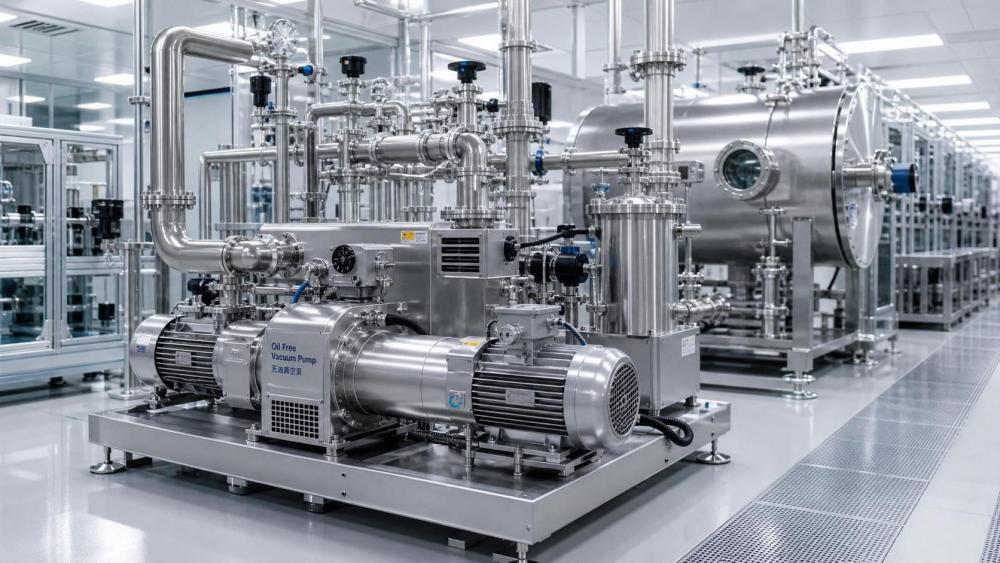
For contamination-sensitive systems, the timing of vacuum technology selection matters as much as the equipment itself.
That is why oil free vacuum pumps high purity operations rely on are now central in many engineering decisions.
In semiconductor fabs, sterile production suites, and clean food lines, purity failures spread quickly across quality, compliance, and uptime.
A pump that introduces oil vapor or backstreaming risk can quietly undermine an otherwise well-designed process.
This also means vacuum selection should be treated as a process protection decision, not only a utility purchase.
The practical question is simple: when do oil free vacuum pumps high purity lines need become the better choice?
The answer depends on contamination tolerance, media sensitivity, cleaning costs, validation burden, and lifecycle operating risk.
Why High Purity Lines Push Vacuum Choices Higher
High purity lines are built to control particles, condensable vapors, trace hydrocarbons, and cross-batch contamination.
In these environments, vacuum is part of the product pathway, even when it looks like background infrastructure.
Oil-lubricated systems may perform well in general service, but they create a residual contamination pathway.
That pathway includes oil mist, vapor migration, maintenance handling, and accidental carryover during upset conditions.
Where acceptance limits are tight, those risks become project-level concerns, not maintenance details.
Oil free vacuum pumps high purity facilities select help remove one major source of process uncertainty.
They also simplify cleaning logic, startup validation, and root-cause analysis when performance drift appears.
Key Signs You Should Use Oil Free Vacuum Pumps for High Purity Applications
The clearest signal is product sensitivity to hydrocarbons, even at very low concentrations.
Another strong signal is when the vacuum line directly interfaces with process chambers, transfer paths, or packaging zones.
You should also look closely when changeover cleaning is expensive or difficult to validate.
In practice, oil free vacuum pumps high purity systems use most often share several conditions:
- The process has strict residue, odor, or extractables limits.
- Audits require cleaner utility design and clear contamination control logic.
- Batch losses carry high financial or regulatory impact.
- Frequent shutdowns for oil-related service create unacceptable downtime.
- End users expect documented purity performance across the full operating window.
From recent industry movement, a more visible pattern is the rise of integrated quality and energy reviews.
That shifts oil free vacuum pumps high purity decisions from optional upgrades to baseline design criteria.
Typical Industries Where the Choice Becomes Necessary
Semiconductor manufacturing is one of the clearest examples.
Etch, deposition, wafer handling, and chamber evacuation all depend on stable, clean vacuum conditions.
Trace contamination can damage yield long before it becomes visible in routine inspection.
Pharmaceutical plants also lean heavily on oil free vacuum pumps high purity production requires.
They are common in drying, filtration, solvent recovery, sterile transfer, and packaging operations.
Food and beverage lines follow a similar logic, especially for aroma-sensitive and shelf-life-sensitive products.
Dairy powders, aseptic filling, freeze drying, and vacuum packaging benefit from cleaner vacuum architecture.
Biotech, medical device, and specialty chemicals also fit this profile when purity thresholds are narrow.
Across these sectors, the same lesson holds: utility contamination is still contamination.
How to Judge the Real Risk Before Specifying
A useful approach is to assess the line through process exposure, not through pump catalog language.
Start with four practical questions.
- Can any backstreamed material reach the product, product-contact surface, or critical gas path?
- Would contamination force scrapping, rework, additional cleaning, or regulatory documentation?
- Is the process sensitive during startup, transient operation, or emergency shutdown?
- Will maintenance frequency interfere with production windows or cleanroom discipline?
If the answer is yes to two or more, the case for oil free vacuum pumps high purity service strengthens quickly.
This is especially true when contamination cost exceeds the upfront price difference.
In actual project work, hidden costs often sit in delays, validation repeats, and rejected product lots.
Oil Free Vacuum Pumps High Purity Lines Benefit From Most
The benefits are not limited to cleaner gas paths.
They also affect maintenance planning, energy control, and system transparency.
That said, benefits are realized only when pump type matches gas load, vapor profile, and operating pressure.
A poorly matched dry pump can still create instability, overheating, or shortened service intervals.
Common Mistakes in High Purity Vacuum Planning
One common mistake is assuming all oil free vacuum pumps high purity lines use are interchangeable.
Dry screw, claw, scroll, and other technologies behave differently under moisture, particulates, and solvent loads.
Another mistake is focusing only on normal operation while ignoring startup and upset conditions.
Transient events often reveal where purity risk really lives.
Teams also underestimate the value of filtration, condensate management, and line layout.
The pump matters, but the surrounding system determines how clean the result stays over time.
Finally, lifecycle reviews are often too narrow, leaving out cleaning labor, rejected product, and audit response costs.
A Practical Selection Framework for Project Execution
A workable selection framework keeps the discussion tied to operational outcomes.
- Define the purity threshold and the consequence of failure.
- Map every point where vacuum contacts product zones or critical transfer paths.
- Characterize gas composition, condensables, temperature swings, and pressure range.
- Compare pump technologies by contamination risk and maintenance burden.
- Review utility integration, exhaust treatment, and monitoring requirements.
- Model total cost using downtime, cleaning, validation, and scrap exposure.
This kind of framework helps separate true high purity needs from routine vacuum service.
It also gives procurement, operations, and quality teams a common basis for alignment.
Final Decision Point
Use oil free vacuum pumps high purity lines require when contamination risk is not negotiable.
That usually means direct process exposure, strict validation demands, or expensive failure consequences.
The strongest decisions come from linking purity targets with real operating behavior and lifecycle cost.
In the current market, cleaner utility architecture is increasingly part of competitive manufacturing capability.
For teams evaluating upgrades or new builds, now is the right time to review where vacuum still carries hidden contamination exposure.
When the line must stay clean, stable, and audit-ready, oil free vacuum pumps high purity service often stop being optional and start becoming the correct engineering standard.
Ready when you are. Send us a message to get started.
Related News
- How to verify food-grade purity in compressed air systemsAuthor :Pneumatic Power Engineer

- What determines the price of pure air compression systems?Author :Pneumatic Power Engineer

- How to size oil-free compressors for instrumentation air demandAuthor :Pneumatic Power Engineer

- How Class 0 oil-free compressors protect product quality in food productionAuthor :Pneumatic Power Engineer

- How to verify compressed air cleanroom standards before installationAuthor :Pneumatic Power Engineer

- When oil free vacuum pumps make sense for European cleanroom projectsAuthor :Pneumatic Power Engineer

- When do pure air compression systems need ISO 8573-1 Class 0?Author :Pneumatic Power Engineer

- How do compressed air systems for electronics prevent contamination?Author :Pneumatic Power Engineer

- When does an oil-free process vacuum pump justify its higher cost?Author :Pneumatic Power Engineer

- Does ISO 9001 certification apply to compressed air quality?Author :Pneumatic Power Engineer

- How to Specify Clean Compressed Air Systems in Southeast Asia for Food and Pharma PlantsAuthor :Pneumatic Power Engineer

- How to Compare Oil Free Vacuum Pumps for Clean Process RequirementsAuthor :Pneumatic Power Engineer

- How to Evaluate a Clean Compressed Air Systems Supplier for ISO 8573-1 ComplianceAuthor :Pneumatic Power Engineer

- How to Choose the Right Oil-Free Vacuum PumpAuthor :Pneumatic Power Engineer

- VDI 2083 Update Makes Class 0 Proof MandatoryAuthor :Pneumatic Power Engineer

- When to Use Oil Free Vacuum Pumps for High Purity LinesAuthor :Pneumatic Power Engineer

- Compressed Air Solutions: When Oil-Free Systems Lower Total Operating CostAuthor :Pneumatic Power Engineer

- ATMOsphere Europe 2026 Adds Oil-free Systems ZoneAuthor :Pneumatic Power Engineer

- Oil-Free Compressors: Key Selection Criteria for Clean Air SystemsAuthor :Pneumatic Power Engineer

- How to Compare Oil Free Centrifugal Compressors for Stable Plant Air SupplyAuthor :Pneumatic Power Engineer

- Compressed Air Class 0 vs Oil-Free: What Really MattersAuthor :Pneumatic Power Engineer

- Oil-Free Compression Class 0: What the Standard Really Means in ProductionAuthor :Pneumatic Power Engineer

- Air Compression Cost Comparison: Oil-Free vs Screw Systems in Daily OperationAuthor :Pneumatic Power Engineer

- Saudi SASO Tightens IEC 63349-2 for Oil-Free CompressorsAuthor :Pneumatic Power Engineer

- Saudi SASO Tightens Oil-Free Compressor Efficiency RulesAuthor :Pneumatic Power Engineer

- Pure Air Compression Systems for Clean Production LinesAuthor :Pneumatic Power Engineer

- IEC 63349-2:2026 makes energy certification mandatoryAuthor :Pneumatic Power Engineer

- IEC 63349-2:2026 Sets New Entry Rules for Oil-Free Screw CompressorsAuthor :Pneumatic Power Engineer

- IEC 63349-2:2026 Takes Effect for Oil-Free Screw CompressorsAuthor :Pneumatic Power Engineer

- IEC 63349-2:2026 Sets New Efficiency Gate for Oil-Free Screw CompressorsAuthor :Pneumatic Power Engineer

- IEC 63349-2:2026 Takes Effect for Oil-Free Screw CompressorsAuthor :Pneumatic Power Engineer

- SABIC Methanol Force Majeure Extended, Tightening R134a/R407C FeedstocksAuthor :Pneumatic Power Engineer

- How to Evaluate Pneumatic Power Systems for Stable OutputAuthor :Pneumatic Power Engineer

- Oil-Free Compression vs Lubricated Systems: Key Trade-OffsAuthor :Pneumatic Power Engineer
![]()
- Oil-Free Compression: 2026 Cost and Compliance Trade-OffsAuthor :Pneumatic Power Engineer

- Oil-Free Compression: Cost and Contamination RisksAuthor :Pneumatic Power Engineer
![]()