Saudi SASO Tightens Oil-Free Compressor Efficiency Rules




On June 24, 2026, Saudi Arabia’s Standards, Metrology and Quality Organization (SASO) issued a technical notice that immediately raises the compliance bar for oil-free screw compressor efficiency certification under SASO IEC 63349-2. For Chinese suppliers exporting Oil-free Systems to the GCC market, the change matters not only because of the new test thresholds, but because certification timing, shipment planning, and market access now depend on whether type-testing can be upgraded within the stated 30-day window.

What the notice changes immediately
According to the provided event information, SASO released technical notice SASO/TN-2026/087 on June 24, 2026 and announced immediate enforcement of all provisions of IEC 63349-2:2026.
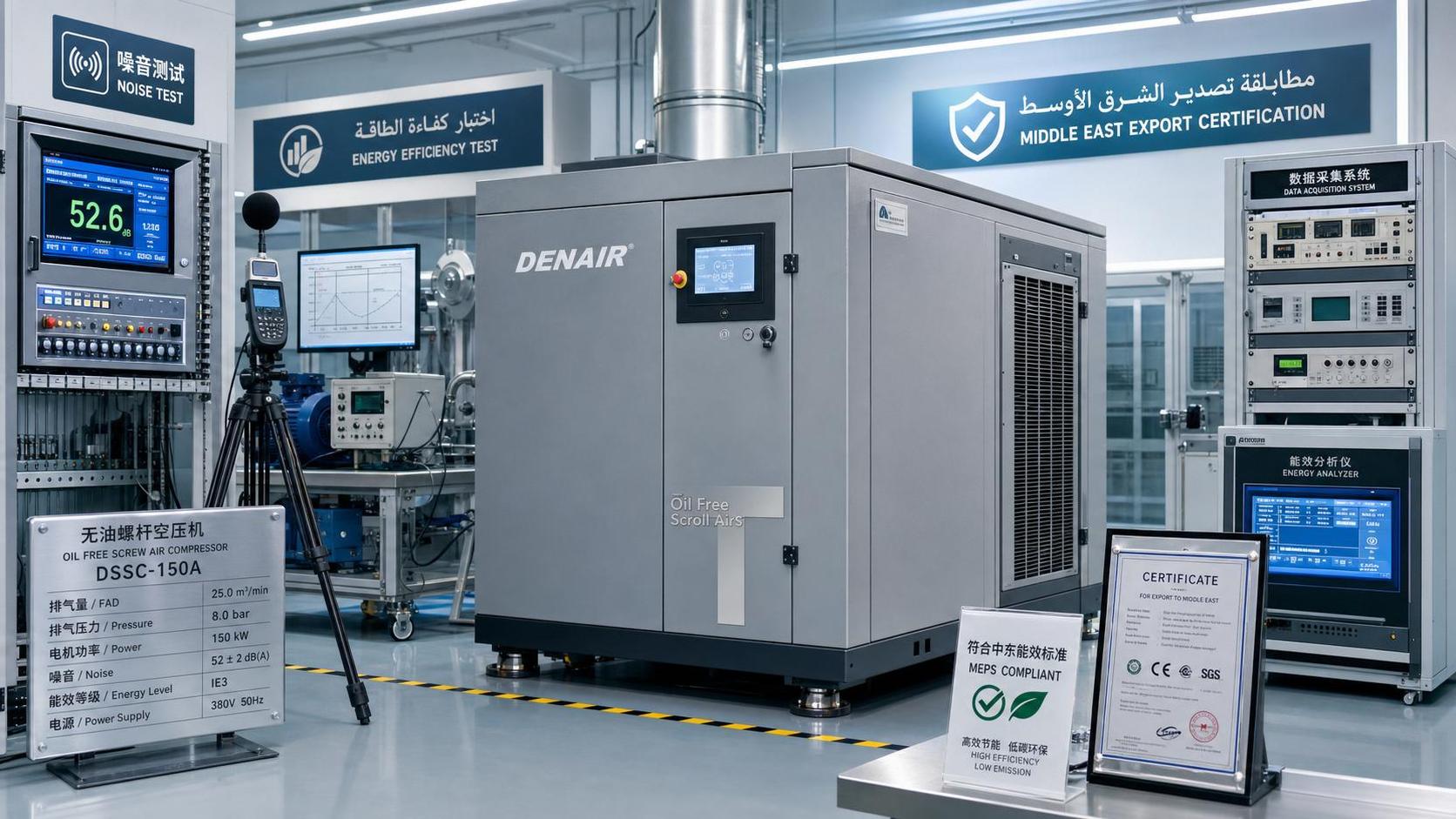
The notice specifically adds two mandatory requirements: idle power fluctuation must be no more than ±3%, and partial-load efficiency bandwidth testing must cover at least five operating conditions.
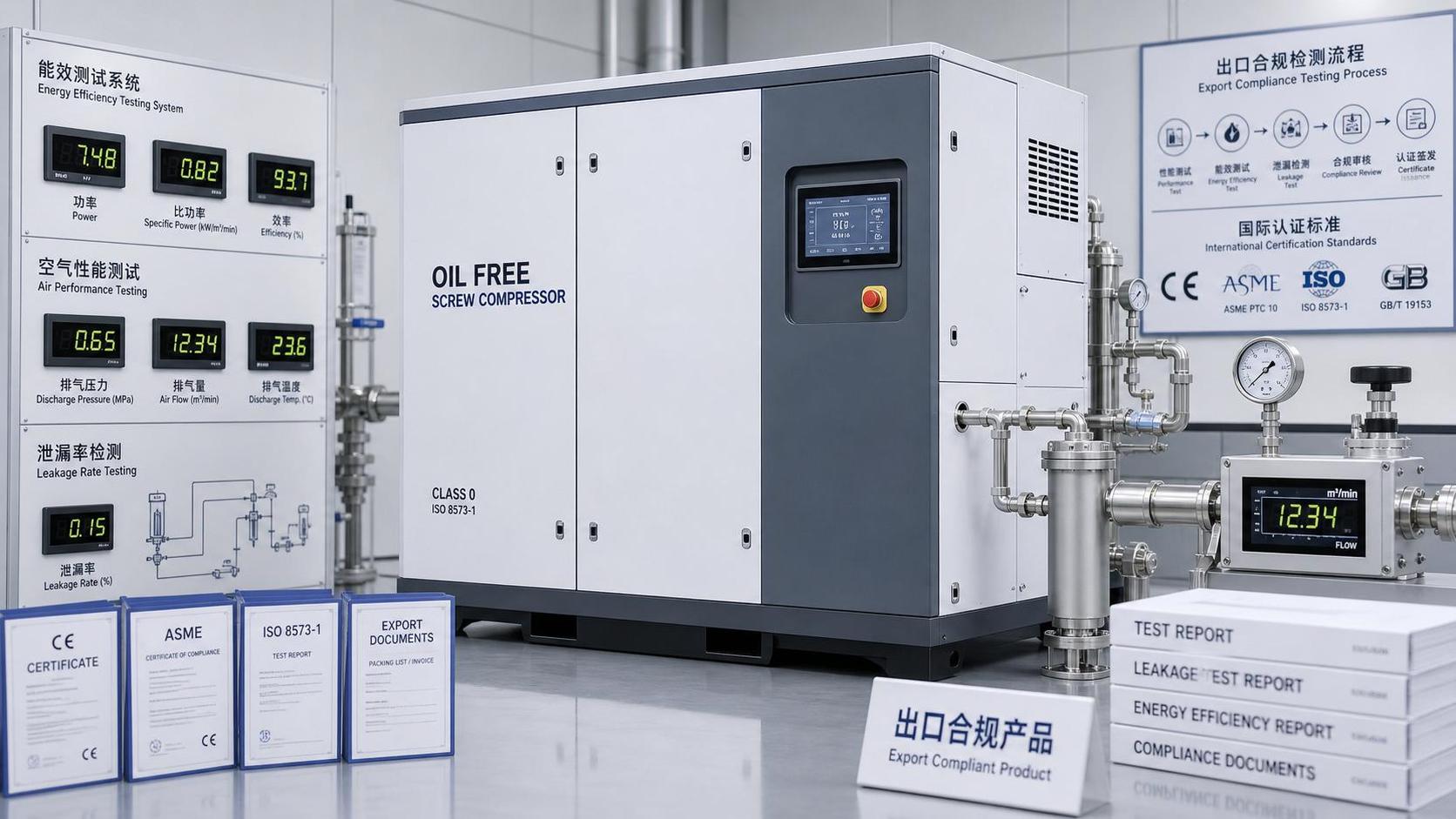
The same information states that Chinese Oil-free Systems manufacturers exporting to the GCC market must complete upgraded type testing within 30 days. If they do not, they will be unable to obtain the SASO CoC certificate.
Where the pressure is likely to appear first
Export certification workflows face a shorter adjustment window
From an industry perspective, the most direct impact falls on exporters whose market entry depends on SASO CoC issuance. Because the notice links upgraded type testing to certificate access, the pressure is likely to appear first in certification scheduling, document readiness, and the coordination between product teams and compliance teams.
Manufacturing and technical teams may need to revisit test preparedness
Analysis shows that the new mandatory metrics are not only paperwork changes. They point to a stricter verification path around idle power stability and partial-load efficiency coverage. For manufacturers, this may affect test preparation, technical file review, and whether existing product data can still support current applications without additional validation.
Procurement and delivery planning may need closer alignment
What deserves closer attention is the connection between certification status and delivery execution. If upgraded type testing is not completed in time, downstream effects may appear in order confirmation, shipment timing, and project procurement planning for products intended for the GCC market. This is especially relevant where purchase orders or supply commitments are tied to proof of compliant certification.
Testing and compliance service providers may see urgent demand shifts
Observably, laboratories, certification support firms, and trade compliance service providers connected to these products may face immediate demand for test upgrades, document checks, and application support. The rule change therefore reaches beyond manufacturers and into the service layer that supports export readiness.
What companies should check now
Review whether current type-test files match the new mandatory items
Companies involved in relevant exports should closely verify whether existing type-test records already reflect the newly required idle power fluctuation limit and the minimum five-point partial-load efficiency bandwidth test. If the existing file structure does not clearly support these items, certification progress may be exposed to delay risk.
Recheck certificate-dependent shipment and bidding documents
Where contracts, tender documents, or shipping arrangements depend on SASO CoC availability, companies should examine whether current timelines still hold under the 30-day upgrade requirement. This is not yet proof of a specific delivery outcome, but it is a practical checkpoint for export control, customer communication, and internal release planning.
Keep technical documents and compliance statements consistent
Analysis shows that test reports, product specifications, application dossiers, and compliance declarations should be reviewed together rather than separately. When standards are enforced immediately, inconsistencies between technical files and certification submissions can become a practical bottleneck even before any broader market response becomes visible.
Watch for further clarification in execution language
The provided information confirms the notice and the mandatory requirements, but it does not provide additional operational detail on implementation practice. Companies should therefore continue monitoring how certification language, submission expectations, and related market-facing documents are expressed in subsequent official or transactional materials.
Why this reads as an execution signal
Observably, this development is better understood as an active compliance tightening rather than a distant policy direction. The immediate enforcement date, the addition of specific mandatory test requirements, and the explicit link to SASO CoC eligibility all point to a rule change with direct operational consequences.
At the same time, analysis shows that some parts still require continued observation. The provided information confirms the standard update and certification consequence, but market participants still need to watch how the rule is reflected in practical certification handling, procurement wording, and feedback from actual applications.
How the market may need to interpret this update
For the industry, the main significance of this notice is not simply that a standard text has been revised, but that certification access for oil-free screw compressors is now tied more tightly to defined efficiency test conditions and a short transition window. It is more appropriate to understand this as a rule already entering execution, while still recognizing that the detailed compliance path and market response deserve ongoing verification.
Basis of this article
This article is generated based on the user-provided news title, event date, and event summary. Typical source types for developments of this kind may include official notices, regulator releases, trade authority information, industry association updates, standards organization documents, and reporting by established professional media.
No specific official source link was provided in the input, so the exact official publication path still requires follow-up verification. What remains worth monitoring includes detailed implementation wording, certification enforcement practice, changes in tender or procurement documents, industry feedback, and how affected companies complete the required testing upgrades.
Related News
- How to verify compressed air cleanroom standards before installationAuthor :Pneumatic Power Engineer

- When oil free vacuum pumps make sense for European cleanroom projectsAuthor :Pneumatic Power Engineer

- When do pure air compression systems need ISO 8573-1 Class 0?Author :Pneumatic Power Engineer

- How do compressed air systems for electronics prevent contamination?Author :Pneumatic Power Engineer

- When does an oil-free process vacuum pump justify its higher cost?Author :Pneumatic Power Engineer

- Does ISO 9001 certification apply to compressed air quality?Author :Pneumatic Power Engineer

- How to Specify Clean Compressed Air Systems in Southeast Asia for Food and Pharma PlantsAuthor :Pneumatic Power Engineer

- How to Compare Oil Free Vacuum Pumps for Clean Process RequirementsAuthor :Pneumatic Power Engineer

- How to Evaluate a Clean Compressed Air Systems Supplier for ISO 8573-1 ComplianceAuthor :Pneumatic Power Engineer

- How to Choose the Right Oil-Free Vacuum PumpAuthor :Pneumatic Power Engineer

- VDI 2083 Update Makes Class 0 Proof MandatoryAuthor :Pneumatic Power Engineer

- When to Use Oil Free Vacuum Pumps for High Purity LinesAuthor :Pneumatic Power Engineer

- Compressed Air Solutions: When Oil-Free Systems Lower Total Operating CostAuthor :Pneumatic Power Engineer

- ATMOsphere Europe 2026 Adds Oil-free Systems ZoneAuthor :Pneumatic Power Engineer

- Oil-Free Compressors: Key Selection Criteria for Clean Air SystemsAuthor :Pneumatic Power Engineer

- How to Compare Oil Free Centrifugal Compressors for Stable Plant Air SupplyAuthor :Pneumatic Power Engineer

- Compressed Air Class 0 vs Oil-Free: What Really MattersAuthor :Pneumatic Power Engineer

- Oil-Free Compression Class 0: What the Standard Really Means in ProductionAuthor :Pneumatic Power Engineer

- Air Compression Cost Comparison: Oil-Free vs Screw Systems in Daily OperationAuthor :Pneumatic Power Engineer

- Saudi SASO Tightens IEC 63349-2 for Oil-Free CompressorsAuthor :Pneumatic Power Engineer

- Saudi SASO Tightens Oil-Free Compressor Efficiency RulesAuthor :Pneumatic Power Engineer

- Pure Air Compression Systems for Clean Production LinesAuthor :Pneumatic Power Engineer

- IEC 63349-2:2026 makes energy certification mandatoryAuthor :Pneumatic Power Engineer

- IEC 63349-2:2026 Sets New Entry Rules for Oil-Free Screw CompressorsAuthor :Pneumatic Power Engineer

- IEC 63349-2:2026 Takes Effect for Oil-Free Screw CompressorsAuthor :Pneumatic Power Engineer

- IEC 63349-2:2026 Sets New Efficiency Gate for Oil-Free Screw CompressorsAuthor :Pneumatic Power Engineer

- IEC 63349-2:2026 Takes Effect for Oil-Free Screw CompressorsAuthor :Pneumatic Power Engineer

- SABIC Methanol Force Majeure Extended, Tightening R134a/R407C FeedstocksAuthor :Pneumatic Power Engineer

- How to Evaluate Pneumatic Power Systems for Stable OutputAuthor :Pneumatic Power Engineer

- Oil-Free Compression vs Lubricated Systems: Key Trade-OffsAuthor :Pneumatic Power Engineer
![]()
- Oil-Free Compression: 2026 Cost and Compliance Trade-OffsAuthor :Pneumatic Power Engineer

- Oil-Free Compression: Cost and Contamination RisksAuthor :Pneumatic Power Engineer
![]()
- Euro PMI Drop Delays Oil-Free Systems OrdersAuthor :Pneumatic Power Engineer

- Germany/France May PMI Decline; Oil-free Systems EU Projects DelayedAuthor :Pneumatic Power Engineer
![]()
- Compression Technology Options for Cleaner Oil-Free Air SupplyAuthor :Pneumatic Power Engineer

- TUV Rheinland Enforces Full-Chain Class 0 Certification for Oil-Free SystemsAuthor :Pneumatic Power Engineer