



Does ISO 9001 certification apply to compressed air quality?




Does ISO 9001 Certification Apply to Compressed Air Quality?
Does ISO 9001 certification apply to compressed air quality? For quality-control and safety managers, the answer lies in understanding ISO 9001 as a management framework, not an air-purity specification.
Effective compressed air ISO 9001 practices connect documented controls, risk assessment, monitoring, supplier management, and corrective action to protect production quality, worker safety, and regulatory readiness.
ISO 9001 does not define acceptable oil, water, particles, microorganisms, pressure, or dew-point limits for compressed air. However, it can require organizations to control them.
The requirement depends on whether compressed air can affect product conformity, process capability, customer requirements, workplace safety, or applicable legal and industry obligations.
ISO 9001 Does Not Set Air-Purity Classes
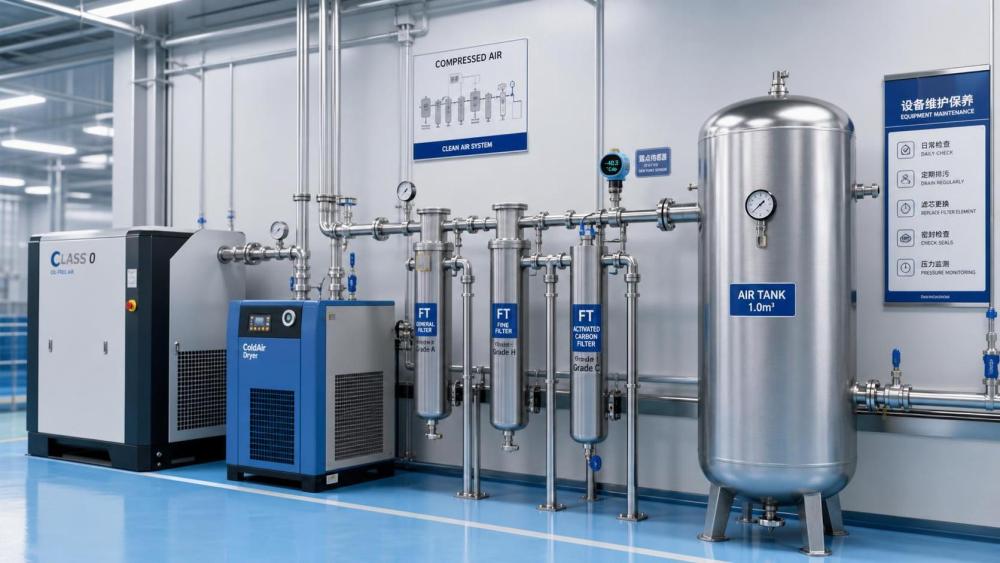
The most important distinction is simple: ISO 9001 is not a compressed air testing standard. It does not replace ISO 8573, GMP guidance, or customer specifications.
ISO 8573 is commonly used to classify compressed air contamination, including solid particles, water, and oil. Some industries also require microbial monitoring or application-specific limits.
Therefore, an ISO 9001 certificate does not automatically mean a facility has clean, dry, oil-free, or food-safe compressed air at every point of use.
Likewise, an organization cannot claim compressed air quality compliance merely because its compressor supplier, service provider, or production site holds ISO 9001 certification.
Certification confirms that a quality management system has been assessed against ISO 9001 requirements. Auditors examine whether processes are defined, implemented, monitored, and improved.
For compressed air, the key audit question is usually whether the organization has recognized air quality as a controlled process input where relevant.
That distinction matters because compressed air may be harmless in one application but a direct contamination source in another production line.
For example, air used to power a general workshop tool may need different controls than air contacting food packaging, pharmaceutical ingredients, electronics, or painted surfaces.
When Compressed Air Becomes an ISO 9001 Quality Issue
Compressed air becomes relevant under ISO 9001 when its condition can influence the ability to provide conforming products and services consistently.
Quality managers should begin with a practical question: where does compressed air touch, transport, clean, cool, actuate, dry, test, or otherwise influence the product?
Direct product contact is the clearest trigger. Blow-off air, pneumatic conveying air, aseptic filling air, and air used for drying can introduce contamination.
Indirect contact can also matter. A leaking lubricated air system may contaminate a cleanroom, affect coating adhesion, damage instruments, or create inconsistent automation performance.
Compressed air quality may also affect measurement reliability. Pneumatic test fixtures, control valves, analyzers, and precision equipment can drift or fail when water and oil enter the system.
For safety personnel, poor air quality can create additional concerns, including hose failures, corrosion, unexpected equipment movement, contaminated breathing air, and poor visibility during cleaning operations.
Breathing air requires separate attention. ISO 9001 alone does not establish breathing-air requirements, so safety managers must identify applicable occupational safety standards and local regulations.
Where compressed air is used for respiratory protection, cleaning workers, or confined-space activities, treating ordinary plant air as breathable air is an unacceptable assumption.
The organization should identify every critical use point, determine the consequence of air-quality failure, and document controls proportionate to that risk.
What ISO 9001 Actually Expects From Your Air System
ISO 9001 expects organizations to determine resources needed for effective process operation. Where compressed air is a necessary resource, its adequacy must be managed.
This normally includes defining required air quality, pressure, flow, availability, and reliability for each product-sensitive or process-critical application.
Requirements may originate from customer drawings, contracts, internal specifications, regulatory rules, machine manufacturers, validated process documents, or recognized standards such as ISO 8573.
Do not rely on a single plant-wide statement such as “clean dry air.” That language is too vague to verify, purchase, maintain, or defend during an audit.
A useful specification identifies the point of use, intended application, required air-quality class, testing method, sampling frequency, acceptable pressure range, and response to failure.
For example, a packaging line may require a stated particle, water, and oil class, while a pneumatic cylinder network may only need dry air and stable pressure.
These requirements should be controlled documents. Staff must use current versions, and changes to products, processes, customers, or equipment should trigger a review.
ISO 9001 also emphasizes competence. Operators, maintenance teams, quality technicians, and external contractors need enough training to recognize compressed-air risks and follow defined procedures.
Training should cover drain checks, filter replacement, contamination indicators, sample handling, abnormal pressure conditions, escalation routes, and the limitations of visual inspection.
Build a Risk-Based Compressed Air Control Plan
Risk-based thinking is central to ISO 9001. The organization does not need identical controls everywhere; it needs controls that match the consequences of failure.
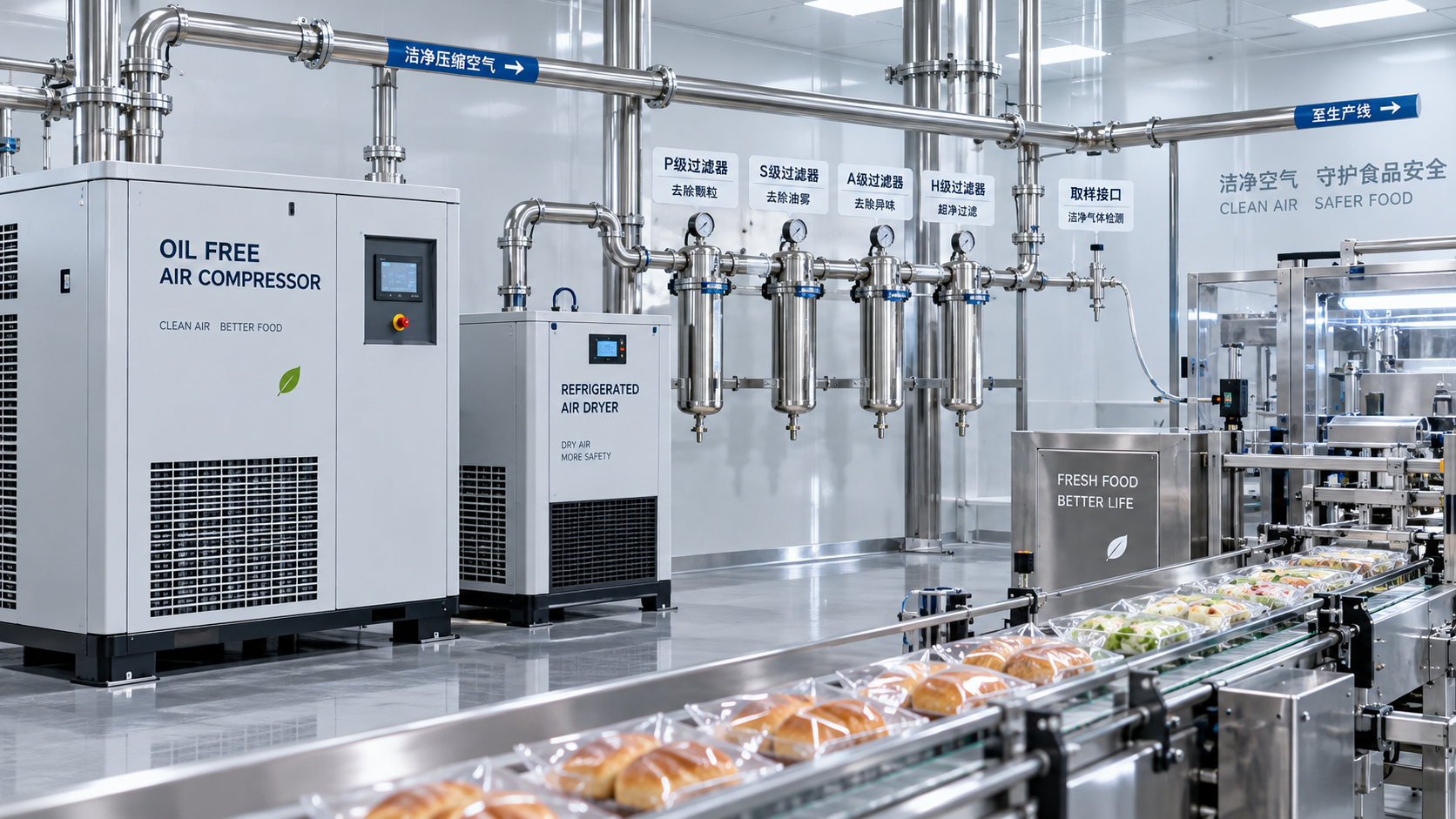
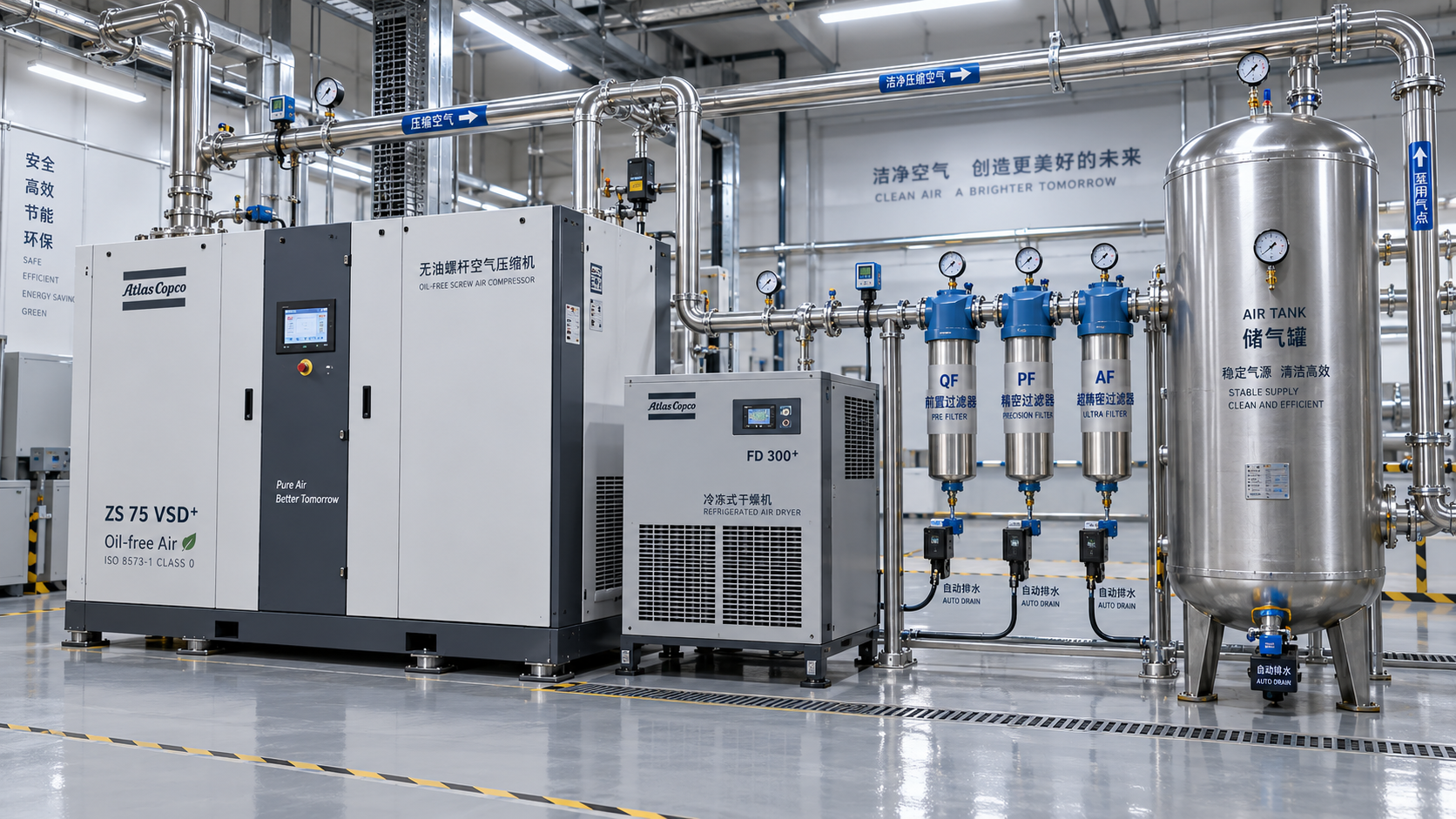
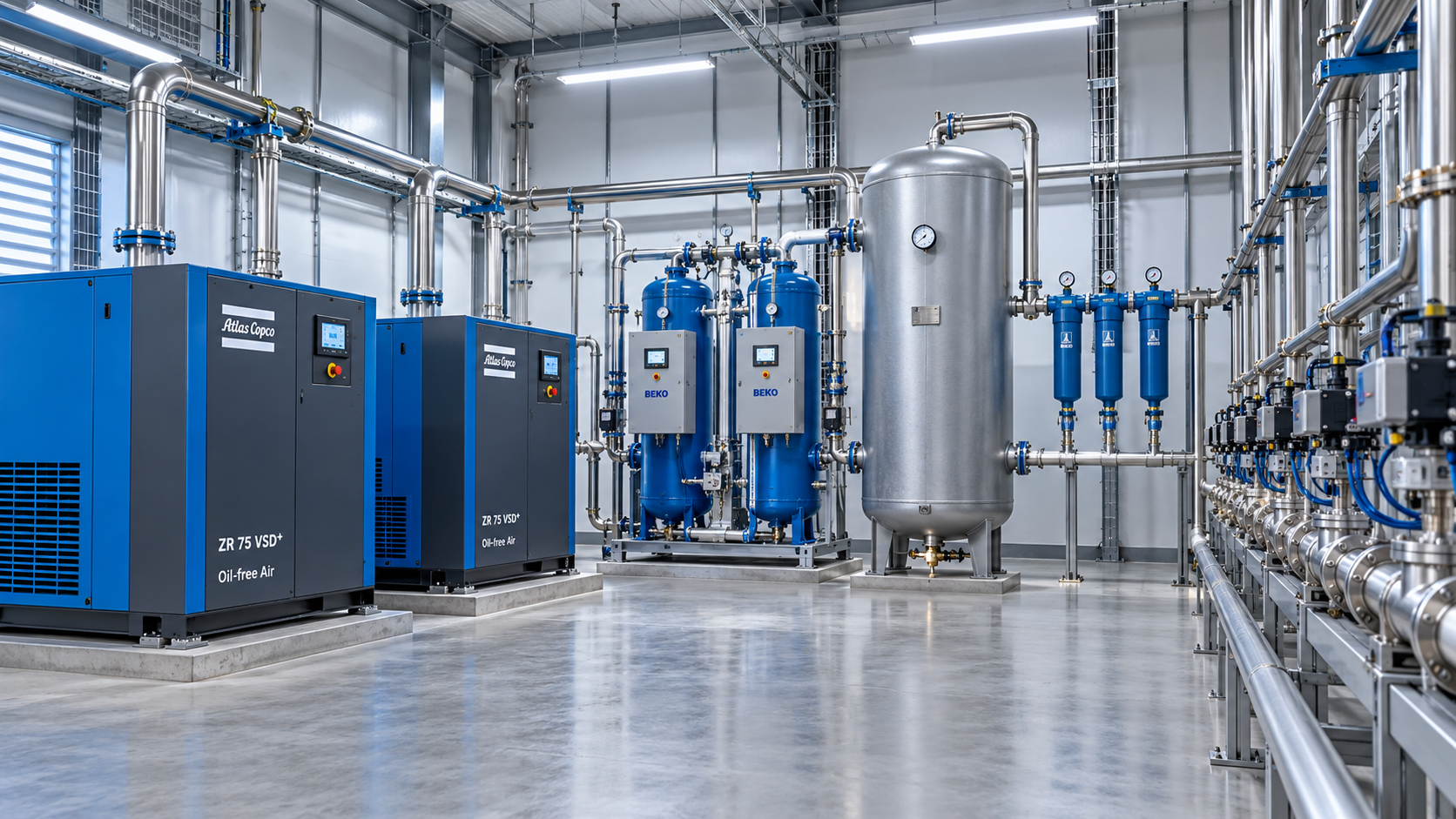
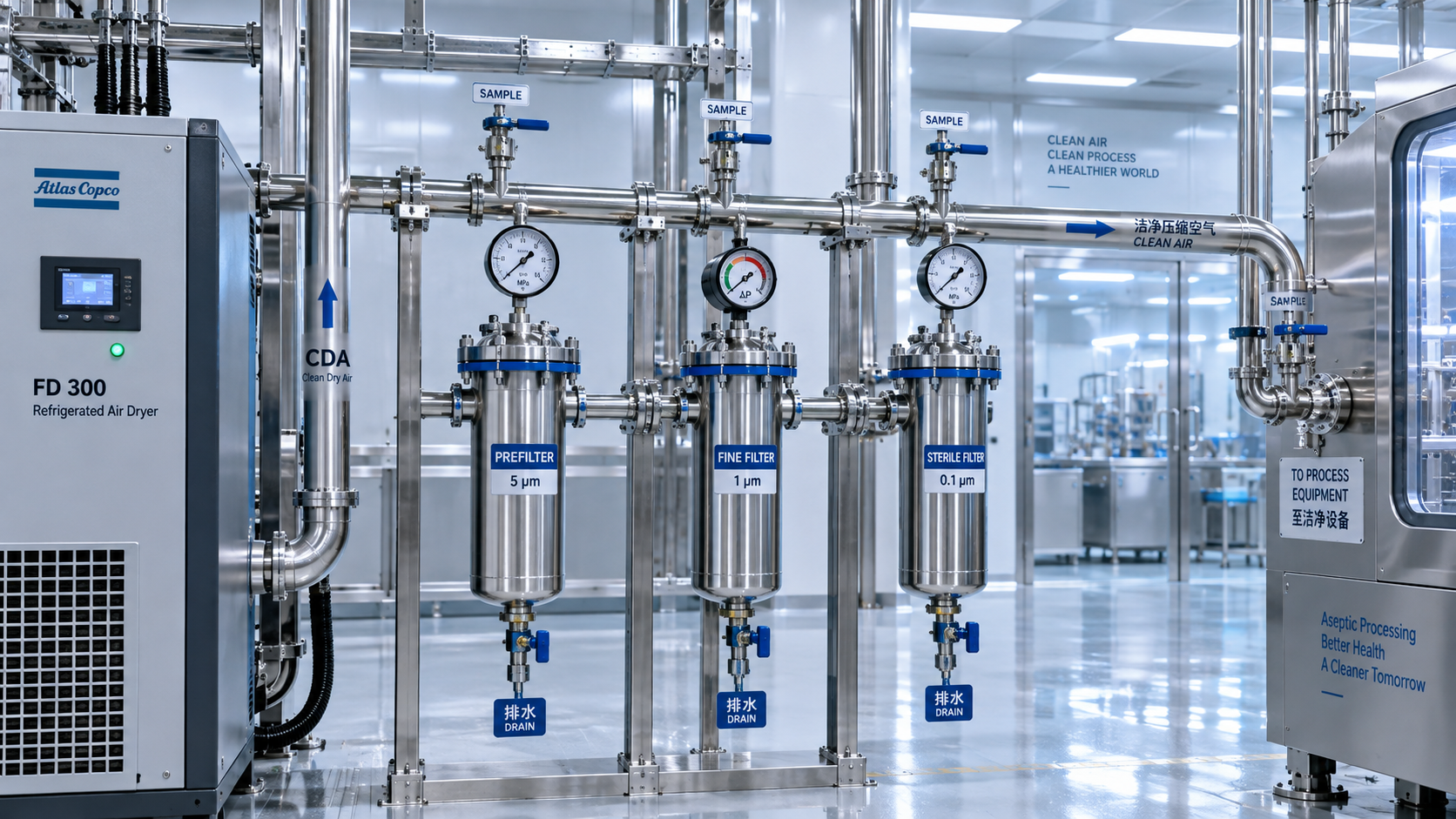
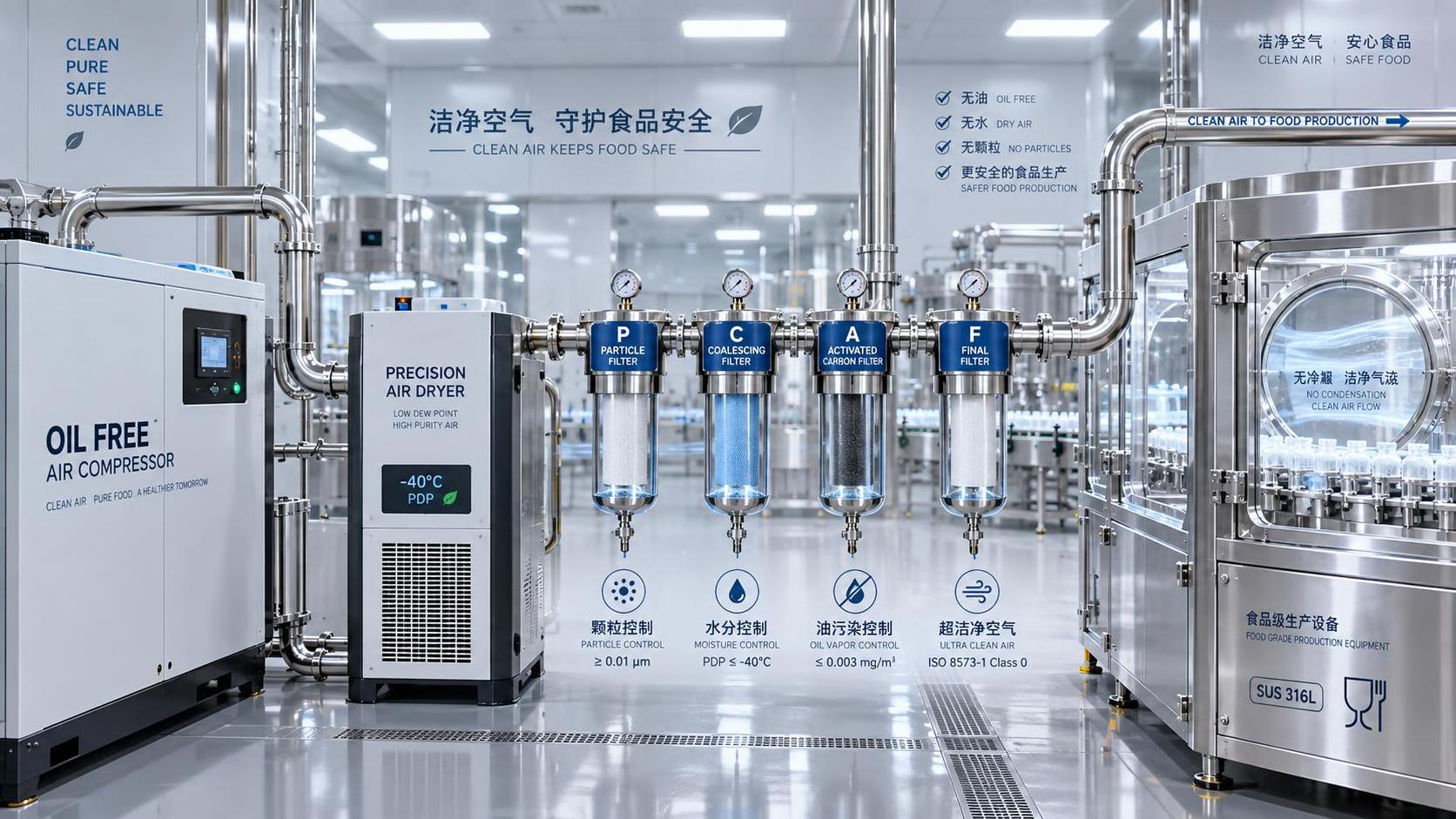
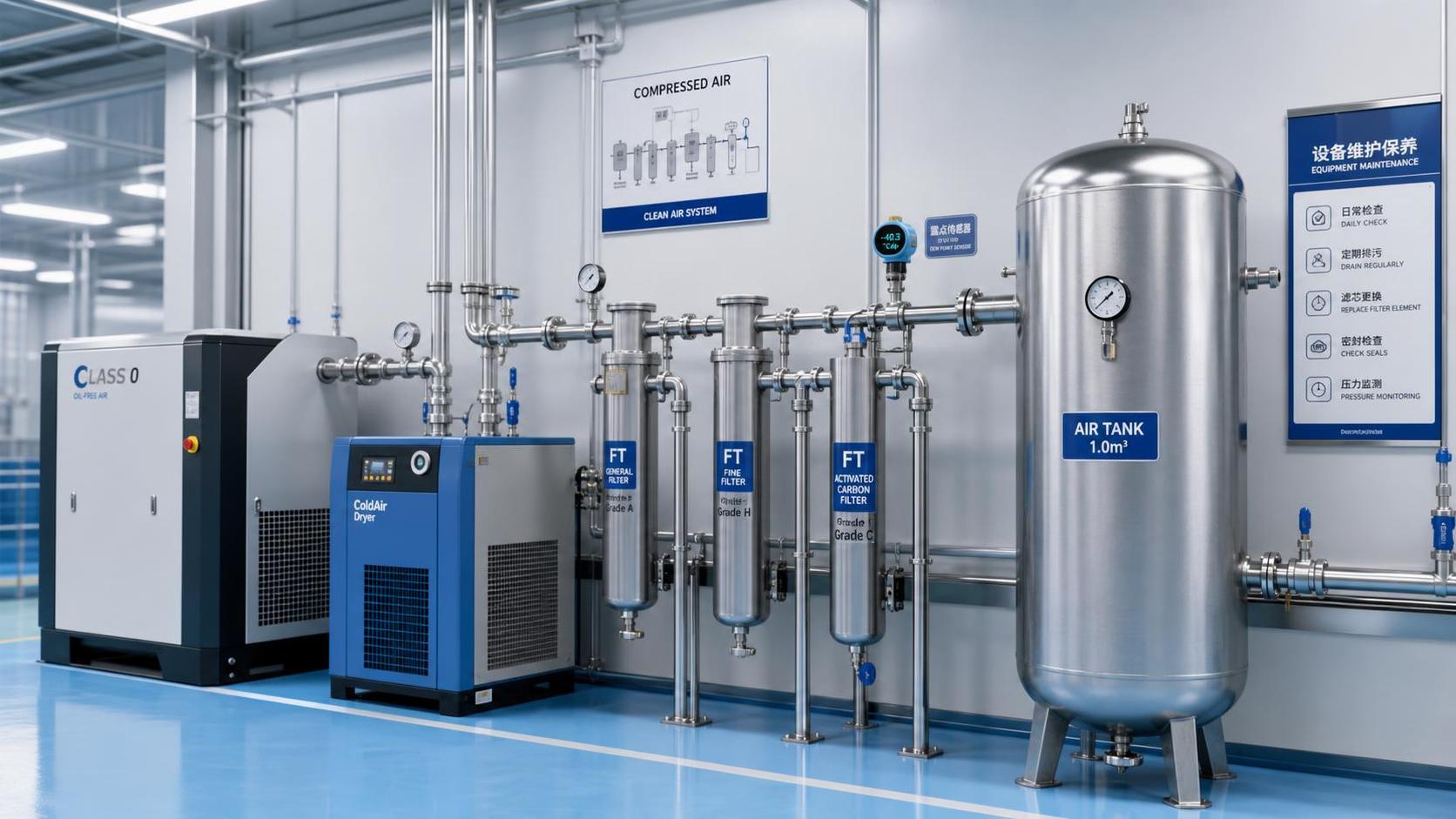
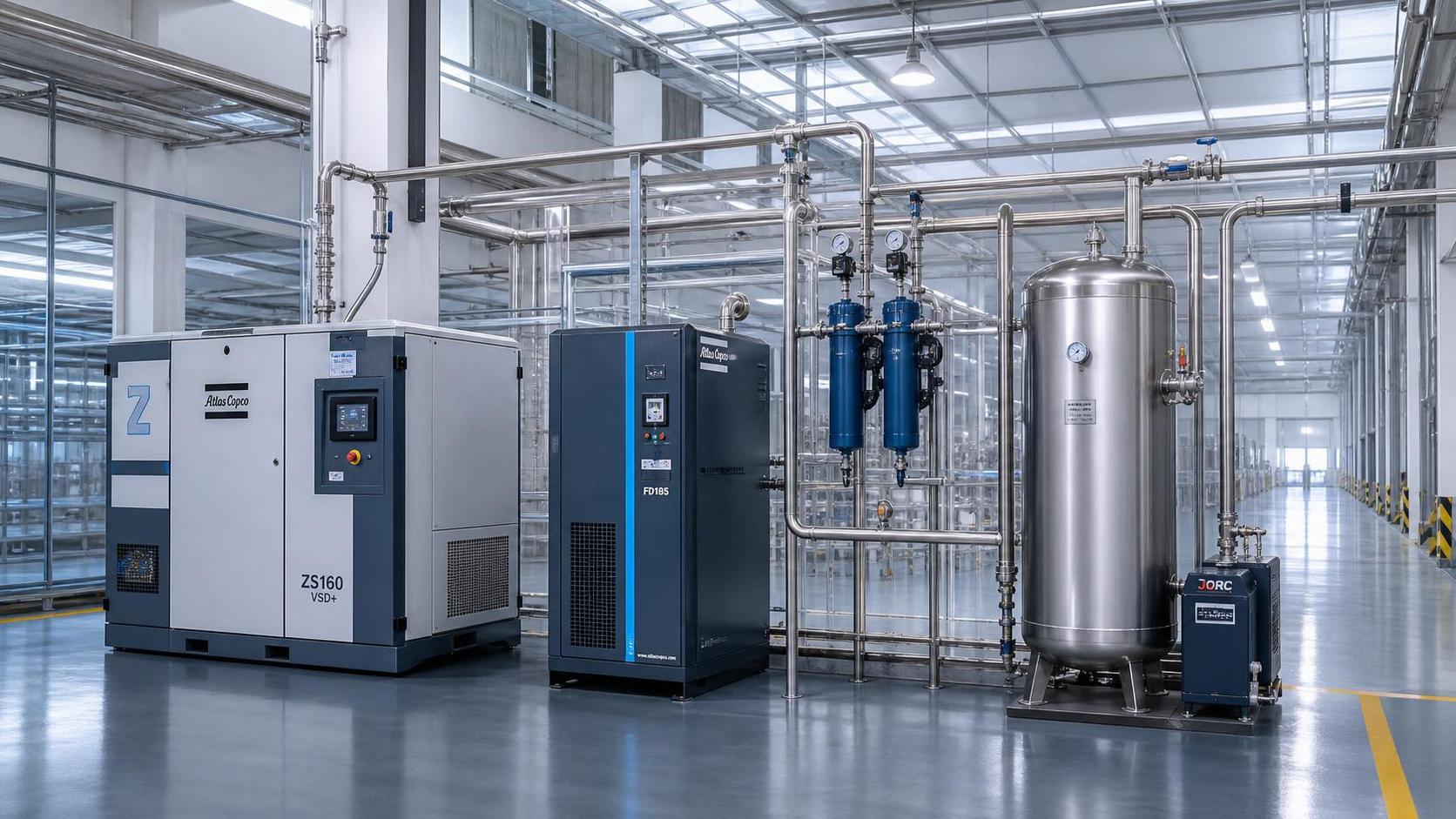
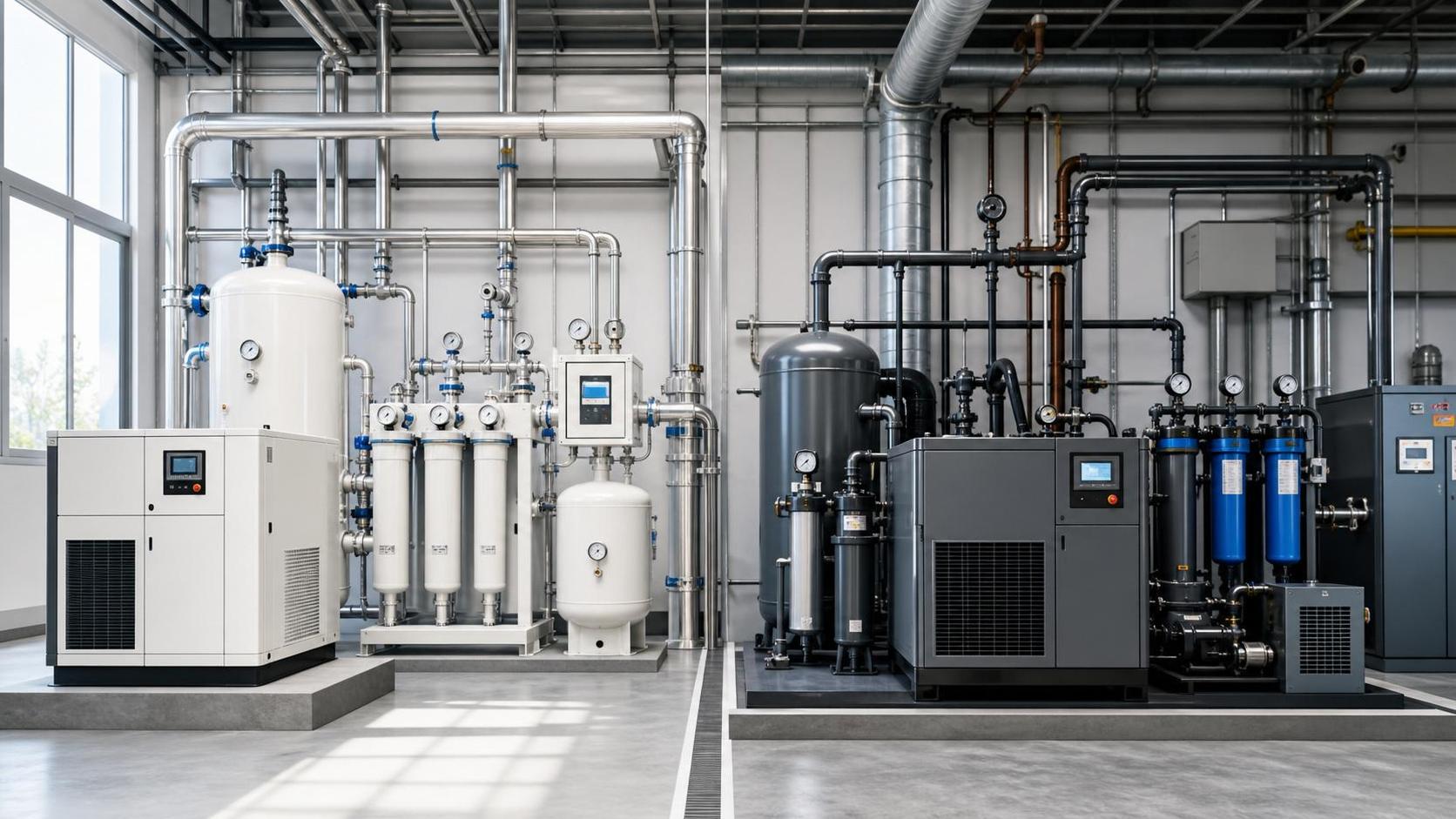
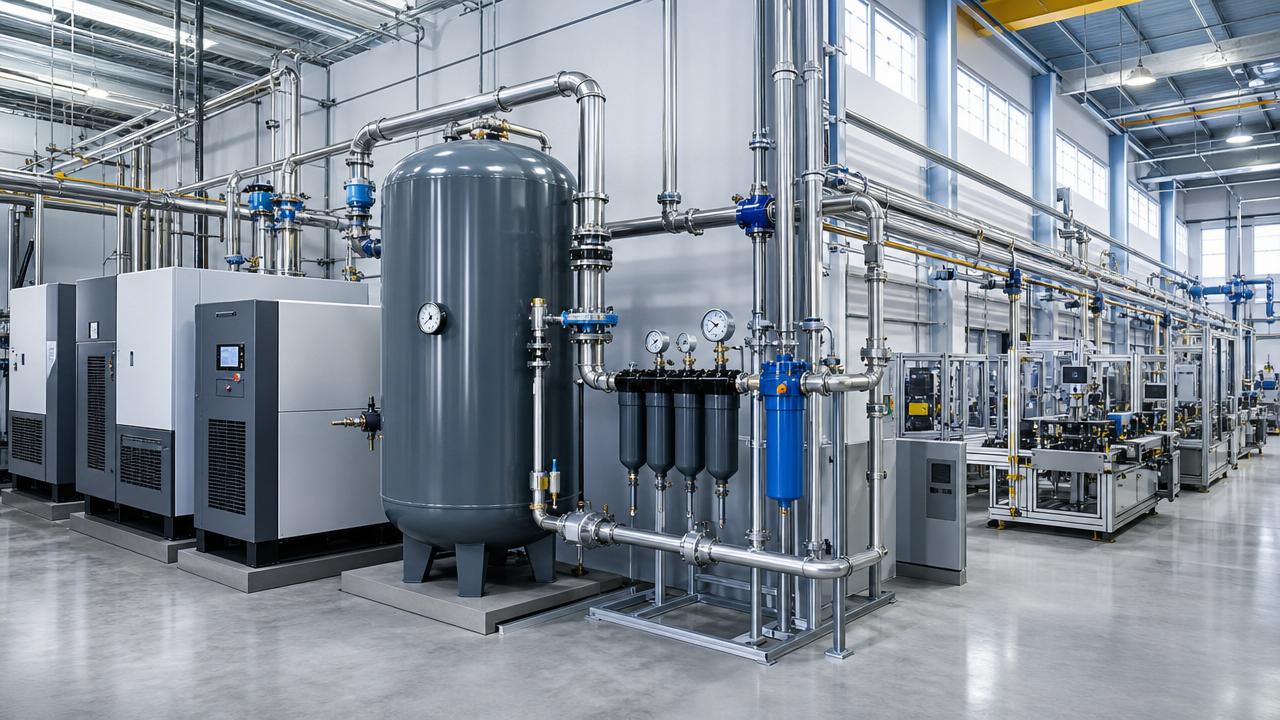
Start by mapping the complete system: intake air, compressor, aftercooler, moisture separation, storage receiver, dryers, filters, distribution piping, drains, and points of use.
Then identify hazards at each stage. Common issues include particulate ingress, lubricant carryover, condensate accumulation, corrosion, microbial growth, pressure drops, and unauthorized connection changes.
Next, assess the effect of each hazard on product quality, food safety, worker safety, production uptime, customer acceptance, and compliance obligations.
Higher-risk applications typically justify dedicated filtration, point-of-use treatment, more frequent testing, alarmed monitoring, redundant equipment, and stricter change-control requirements.
Lower-risk applications may require only preventive maintenance and basic verification. The objective is evidence-based control, not unnecessary complexity or expensive over-specification.
A risk register can link each critical air use to its specification, hazard, control measure, monitoring activity, responsible owner, and corrective-action pathway.
This document provides a clear bridge between compressed air engineering decisions and ISO 9001 quality-management requirements during internal or external audits.
Review the risk assessment whenever there is a new product, supplier change, compressor overhaul, filter redesign, process relocation, or customer complaint involving contamination.
Monitoring and Testing: What Evidence Will Auditors Expect?
Auditors generally do not expect every facility to continuously test every compressed-air parameter. They do expect objective evidence that controls are suitable and working.
The right verification method depends on the risk level and specification. Options include pressure logs, dew-point monitoring, differential-pressure readings, laboratory testing, and inspection records.
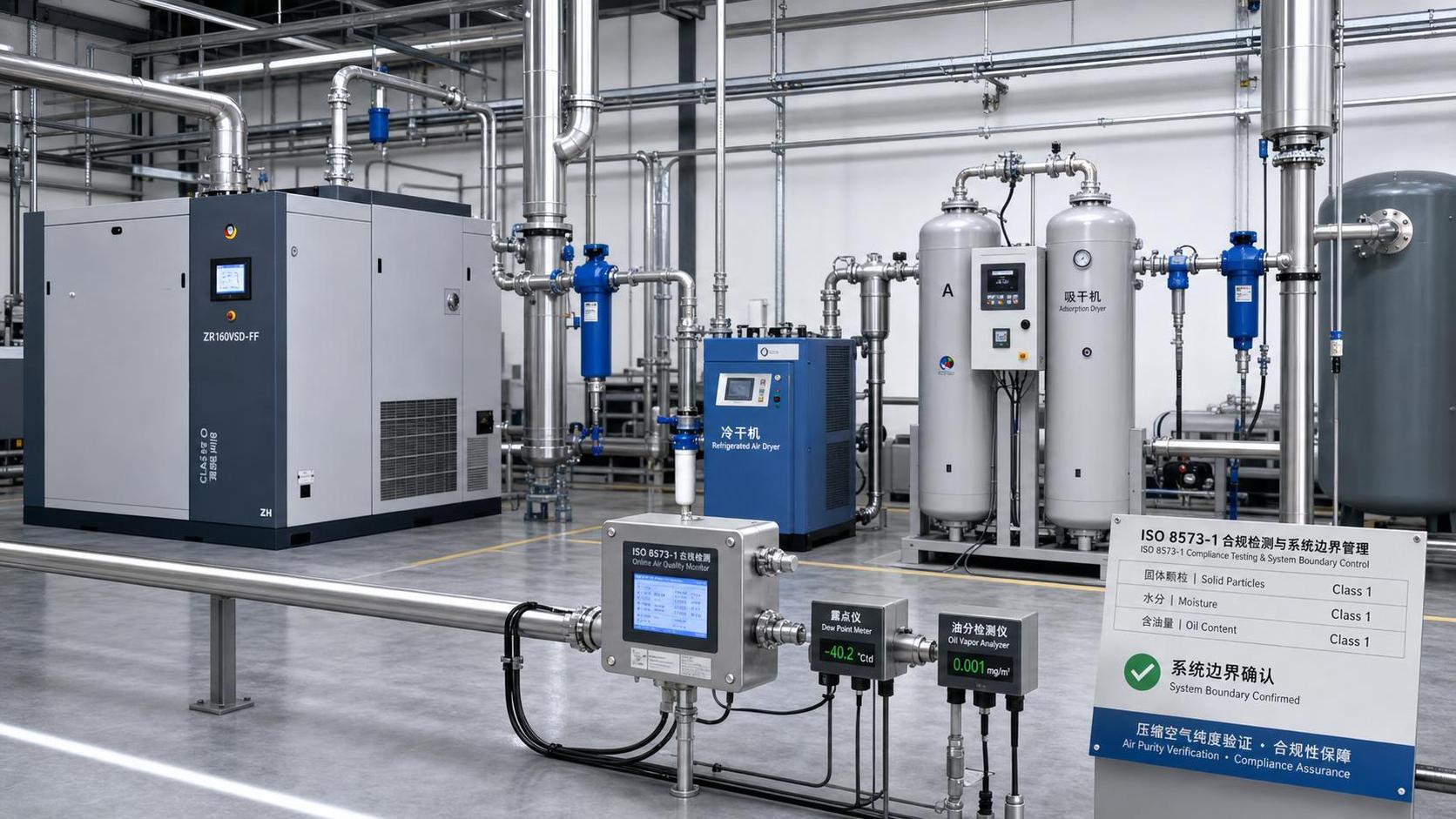
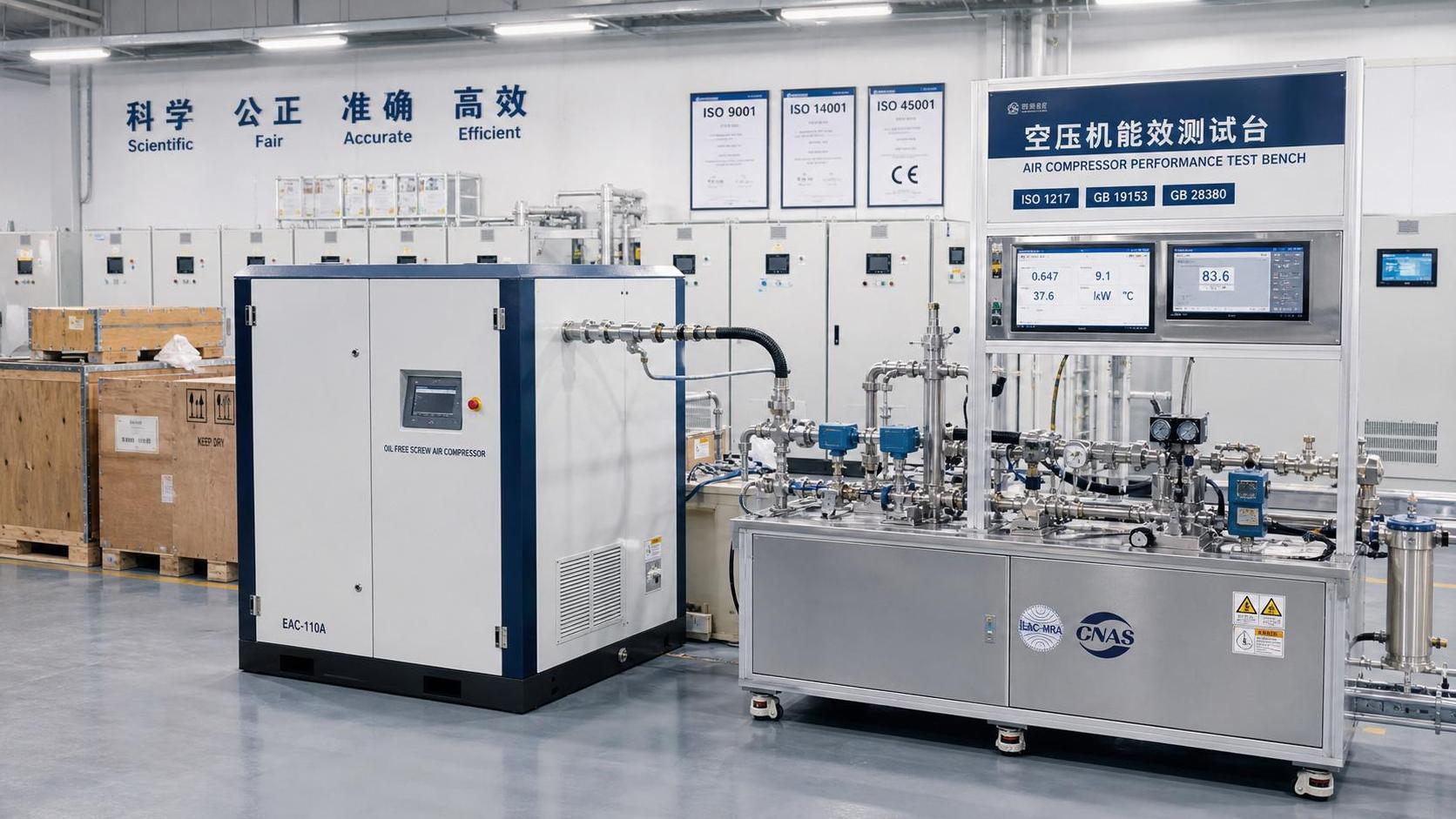
For quality-critical applications, periodic ISO 8573 testing can demonstrate particle, water, and oil performance at representative points of use.
Testing should reflect actual production conditions. Samples collected from an unused outlet or immediately after maintenance may not represent normal operating contamination risks.
Develop a sampling plan that identifies locations, operating conditions, test parameters, methods, acceptance criteria, responsibilities, and actions when results are outside specification.
Continuous sensors can provide early warning for dew point, pressure, temperature, or filter differential pressure. However, sensor readings do not eliminate the need for calibration control.
ISO 9001 requires monitoring and measuring resources to be suitable for their purpose. Calibration, verification, maintenance, and traceable records are essential for critical instruments.
Trend data is particularly valuable. A gradual rise in pressure drop, dew point, oil carryover, or compressor temperature can reveal degradation before product quality is affected.
When using external testing laboratories, evaluate their competence, reporting quality, method suitability, turnaround time, and ability to support investigations after a nonconforming result.
Preventive Maintenance Is a Quality Control, Not Only an Engineering Task
Compressed air equipment often falls under maintenance ownership, but ISO 9001 requires quality consequences to be considered across departmental boundaries.
A maintenance schedule should cover compressor service, lubricant controls, intake filtration, drain operation, dryer performance, receiver inspection, filter replacement, leak repair, and piping integrity.
Each task should have a defined interval, competent owner, completion record, required spare parts, and clear criteria for returning equipment to service.
Filter replacement based only on calendar intervals can be inadequate. Differential pressure, contamination load, operating hours, and manufacturer guidance may all influence replacement decisions.
Automatic drains deserve special attention. Failed drains allow water accumulation, while uncontrolled discharge can create environmental, housekeeping, and slip hazards.
Condensate handling should be documented where oil-lubricated systems are used. Separation, disposal, and environmental controls may be governed by local legal requirements.
Maintenance records should demonstrate more than task completion. They should show that identified defects were evaluated for potential impact on products already manufactured.
After significant maintenance, confirm that the system is restored to its approved condition. This may require leak testing, pressure verification, dew-point confirmation, or air-quality retesting.
Quality and safety teams should be notified when critical air treatment equipment is bypassed, isolated, or unavailable, even temporarily during repairs.
Supplier Control and Purchased Compressed Air Services
Many organizations rely on compressor manufacturers, rental-air providers, maintenance contractors, filter suppliers, or external laboratories. ISO 9001 requires control of externally provided processes and services.
Supplier approval should consider more than price. Assess technical competence, emergency response capability, product traceability, service documentation, test methods, and relevant industry experience.
For rental compressors, confirm whether the unit is oil-free or lubricated, what filtration is supplied, how hoses are cleaned, and whether the setup meets required air-quality classes.
Emergency rentals can create hidden risks. A temporary compressor connected without review may introduce oil, moisture, particles, incompatible fittings, or inadequate capacity into a validated process.
Define acceptance requirements in purchase orders and service agreements. Include specified filtration, dryer performance, test certificates, maintenance records, and notification of material equipment changes.
Supplier performance should be reviewed when recurring failures, late service, incomplete reports, contamination incidents, or unsupported technical claims affect operational reliability.
ISO 9001 certification from a supplier can be useful evidence of management-system maturity, but it does not replace technical qualification of the supplied air solution.
Handling Nonconforming Air Quality Results
When compressed air fails a specification, the immediate objective is to contain risk before investigating root causes. Do not treat a failed test as a paperwork issue.
First, identify affected points of use, products, production dates, batches, customers, and safety activities. Determine whether the air was directly or indirectly involved.
Place affected production on hold when product conformity cannot be demonstrated. The disposition decision should be risk-based and supported by quality, technical, and regulatory expertise.
Next, investigate the technical cause. Common findings include saturated filters, dryer failure, damaged piping, oil carryover, incorrect installation, poor sample technique, and untreated bypass lines.
Corrective action must address the system cause, not merely the visible symptom. Replacing one filter is insufficient when contamination originated from neglected maintenance or poor design.
Document correction, root-cause analysis, product-impact evaluation, actions taken, verification of effectiveness, and any required updates to risk assessments or operating procedures.
Trending complaints and test failures can identify weak control points. Repeated issues at one location may indicate dead legs, inadequate drainage, undersized treatment, or unsuitable pipe materials.
A well-managed nonconformance process demonstrates ISO 9001 maturity because it turns evidence of failure into preventive learning across the compressed-air system.
A Practical Audit Checklist for Quality and Safety Managers
Before an ISO 9001 audit, verify whether compressed air has been identified as a process resource in relevant process maps, risk assessments, work instructions, and maintenance plans.
Confirm that every critical application has a measurable requirement. Avoid relying on general statements, supplier brochures, or verbal assurances that air is “high quality.”
Check that current drawings show treatment equipment, distribution routes, isolation valves, drains, dedicated lines, and critical points of use where practical.
Review maintenance records for missed tasks, repeated faults, overdue filter changes, drain failures, dryer alarms, pressure deviations, and unapproved temporary connections.
Ensure monitoring devices have suitable calibration or verification records. Verify that alarms, limits, and action responsibilities are understood by responsible personnel.
Examine recent air-quality tests for sample locations, test methods, results, acceptance criteria, laboratory competence, and clear conclusions about compliance with applicable specifications.
Interview operators and technicians. They should know which air uses are critical, how to report abnormal conditions, and why bypassing treatment equipment creates quality or safety risk.
Finally, verify that management review considers significant compressed-air performance issues, resource needs, reliability risks, customer concerns, and improvement opportunities where applicable.
Conclusion: Use ISO 9001 to Control the Risk, Not Define the Purity
ISO 9001 certification does apply to compressed air quality when compressed air can influence product conformity, process performance, customer satisfaction, or safety-related operational controls.
It does not provide a universal compressed-air purity class. Organizations must determine relevant technical requirements through product risks, customer demands, regulations, and suitable standards such as ISO 8573.
For quality-control and safety managers, the strongest approach is to define critical uses, document specifications, maintain treatment equipment, verify performance, control suppliers, and investigate failures thoroughly.
That approach makes compressed air ISO 9001 compliance practical and defensible. It also reduces contamination incidents, production disruption, audit uncertainty, and avoidable safety exposure.
Ready when you are. Send us a message to get started.
Related News
- How to verify food-grade purity in compressed air systemsAuthor :Pneumatic Power Engineer

- What determines the price of pure air compression systems?Author :Pneumatic Power Engineer

- How to size oil-free compressors for instrumentation air demandAuthor :Pneumatic Power Engineer

- How Class 0 oil-free compressors protect product quality in food productionAuthor :Pneumatic Power Engineer

- How to verify compressed air cleanroom standards before installationAuthor :Pneumatic Power Engineer

- When oil free vacuum pumps make sense for European cleanroom projectsAuthor :Pneumatic Power Engineer

- When do pure air compression systems need ISO 8573-1 Class 0?Author :Pneumatic Power Engineer

- How do compressed air systems for electronics prevent contamination?Author :Pneumatic Power Engineer

- When does an oil-free process vacuum pump justify its higher cost?Author :Pneumatic Power Engineer

- Does ISO 9001 certification apply to compressed air quality?Author :Pneumatic Power Engineer

- How to Specify Clean Compressed Air Systems in Southeast Asia for Food and Pharma PlantsAuthor :Pneumatic Power Engineer

- How to Compare Oil Free Vacuum Pumps for Clean Process RequirementsAuthor :Pneumatic Power Engineer

- How to Evaluate a Clean Compressed Air Systems Supplier for ISO 8573-1 ComplianceAuthor :Pneumatic Power Engineer

- How to Choose the Right Oil-Free Vacuum PumpAuthor :Pneumatic Power Engineer

- VDI 2083 Update Makes Class 0 Proof MandatoryAuthor :Pneumatic Power Engineer

- When to Use Oil Free Vacuum Pumps for High Purity LinesAuthor :Pneumatic Power Engineer

- Compressed Air Solutions: When Oil-Free Systems Lower Total Operating CostAuthor :Pneumatic Power Engineer

- ATMOsphere Europe 2026 Adds Oil-free Systems ZoneAuthor :Pneumatic Power Engineer

- Oil-Free Compressors: Key Selection Criteria for Clean Air SystemsAuthor :Pneumatic Power Engineer

- How to Compare Oil Free Centrifugal Compressors for Stable Plant Air SupplyAuthor :Pneumatic Power Engineer

- Compressed Air Class 0 vs Oil-Free: What Really MattersAuthor :Pneumatic Power Engineer

- Oil-Free Compression Class 0: What the Standard Really Means in ProductionAuthor :Pneumatic Power Engineer

- Air Compression Cost Comparison: Oil-Free vs Screw Systems in Daily OperationAuthor :Pneumatic Power Engineer

- Saudi SASO Tightens IEC 63349-2 for Oil-Free CompressorsAuthor :Pneumatic Power Engineer

- Saudi SASO Tightens Oil-Free Compressor Efficiency RulesAuthor :Pneumatic Power Engineer

- Pure Air Compression Systems for Clean Production LinesAuthor :Pneumatic Power Engineer

- IEC 63349-2:2026 makes energy certification mandatoryAuthor :Pneumatic Power Engineer

- IEC 63349-2:2026 Sets New Entry Rules for Oil-Free Screw CompressorsAuthor :Pneumatic Power Engineer

- IEC 63349-2:2026 Takes Effect for Oil-Free Screw CompressorsAuthor :Pneumatic Power Engineer

- IEC 63349-2:2026 Sets New Efficiency Gate for Oil-Free Screw CompressorsAuthor :Pneumatic Power Engineer

- IEC 63349-2:2026 Takes Effect for Oil-Free Screw CompressorsAuthor :Pneumatic Power Engineer

- SABIC Methanol Force Majeure Extended, Tightening R134a/R407C FeedstocksAuthor :Pneumatic Power Engineer

- How to Evaluate Pneumatic Power Systems for Stable OutputAuthor :Pneumatic Power Engineer

- Oil-Free Compression vs Lubricated Systems: Key Trade-OffsAuthor :Pneumatic Power Engineer
![]()
- Oil-Free Compression: 2026 Cost and Compliance Trade-OffsAuthor :Pneumatic Power Engineer

- Oil-Free Compression: Cost and Contamination RisksAuthor :Pneumatic Power Engineer
![]()