



IEC 63349-2:2026 Takes Effect for Oil-Free Screw Compressors




On June 18, 2026, the IEC formally issued IEC 63349-2:2026 for oil-free rotary compressors, bringing a new compliance baseline to energy-efficiency assessment for oil-free screw compressors. The change matters not only to manufacturers, exporters, and testing bodies, but also to procurement, certification, delivery, and market-access workflows, because the new standard is already effective in 32 IEC member countries and directly affects access to CE, KC, and PSB-linked entry requirements for relevant exports from China.
What the new standard formally changes
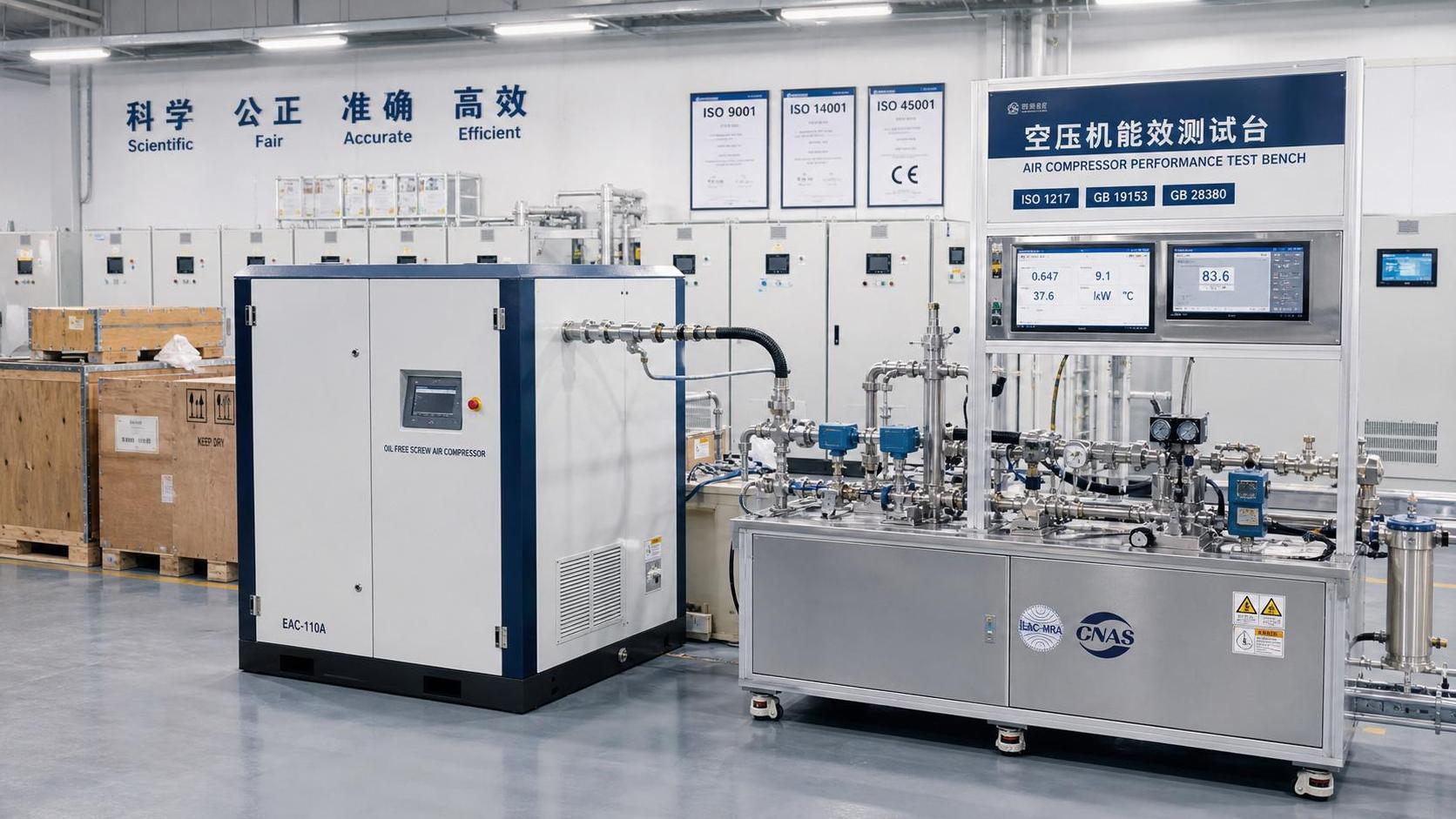
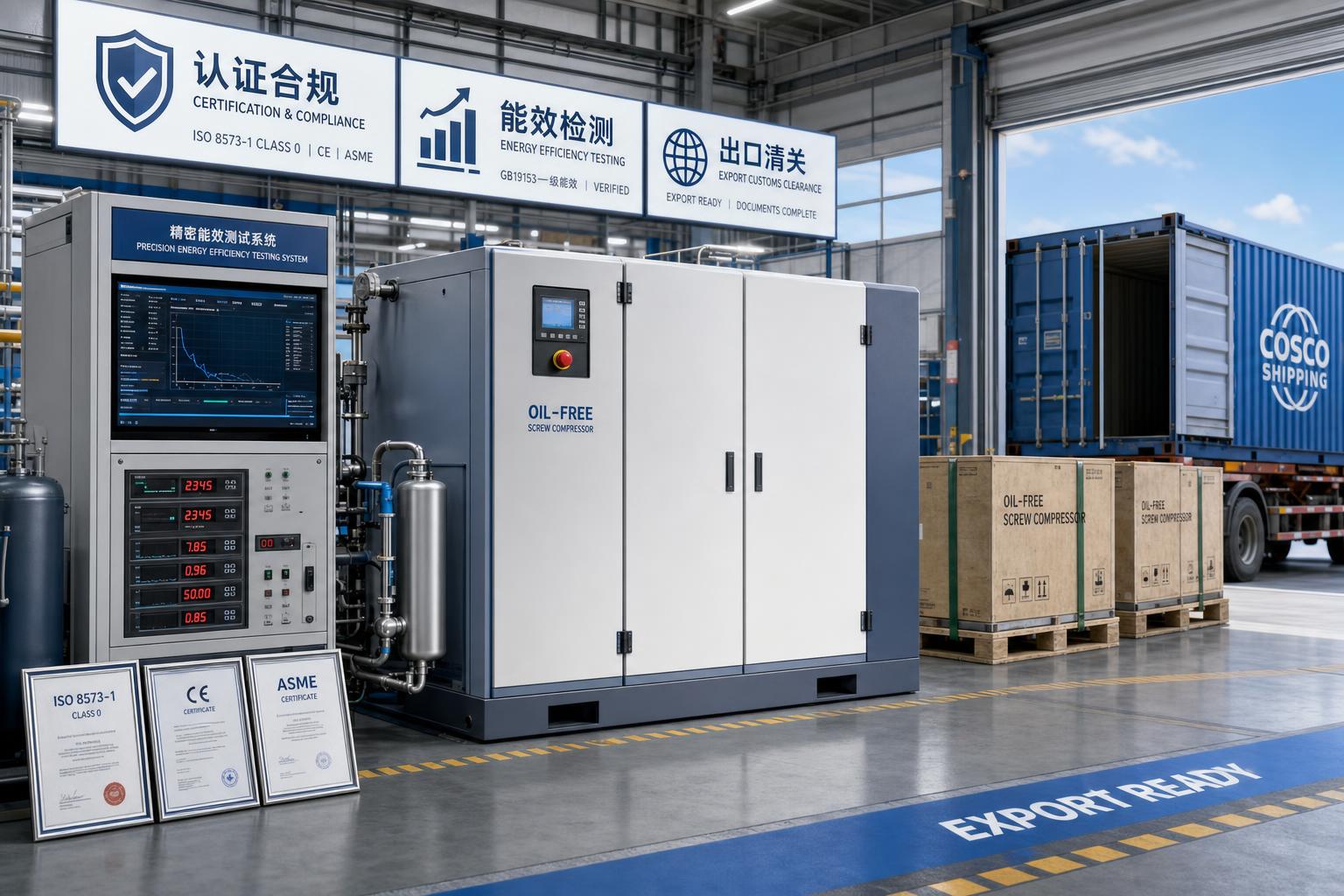
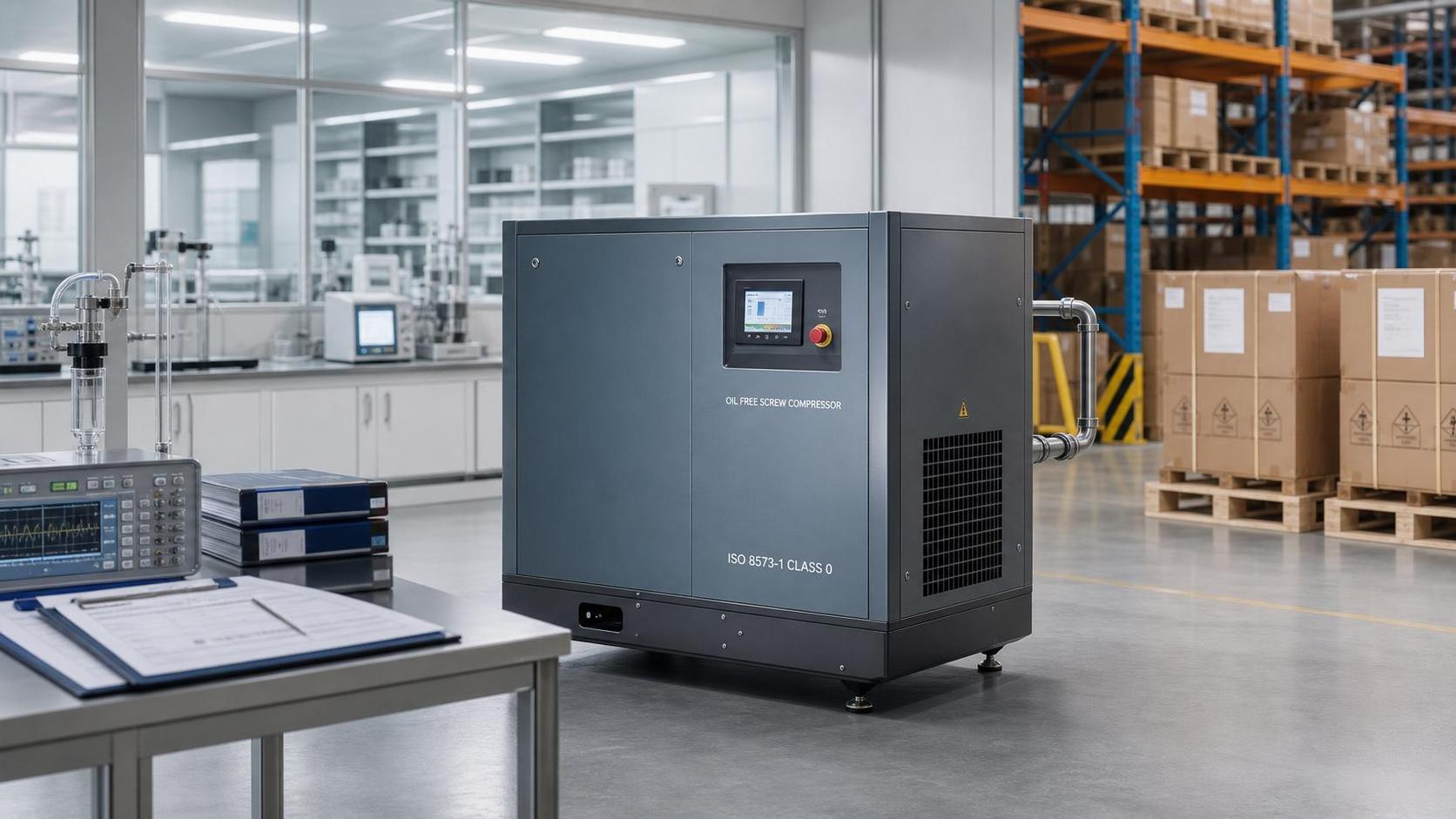
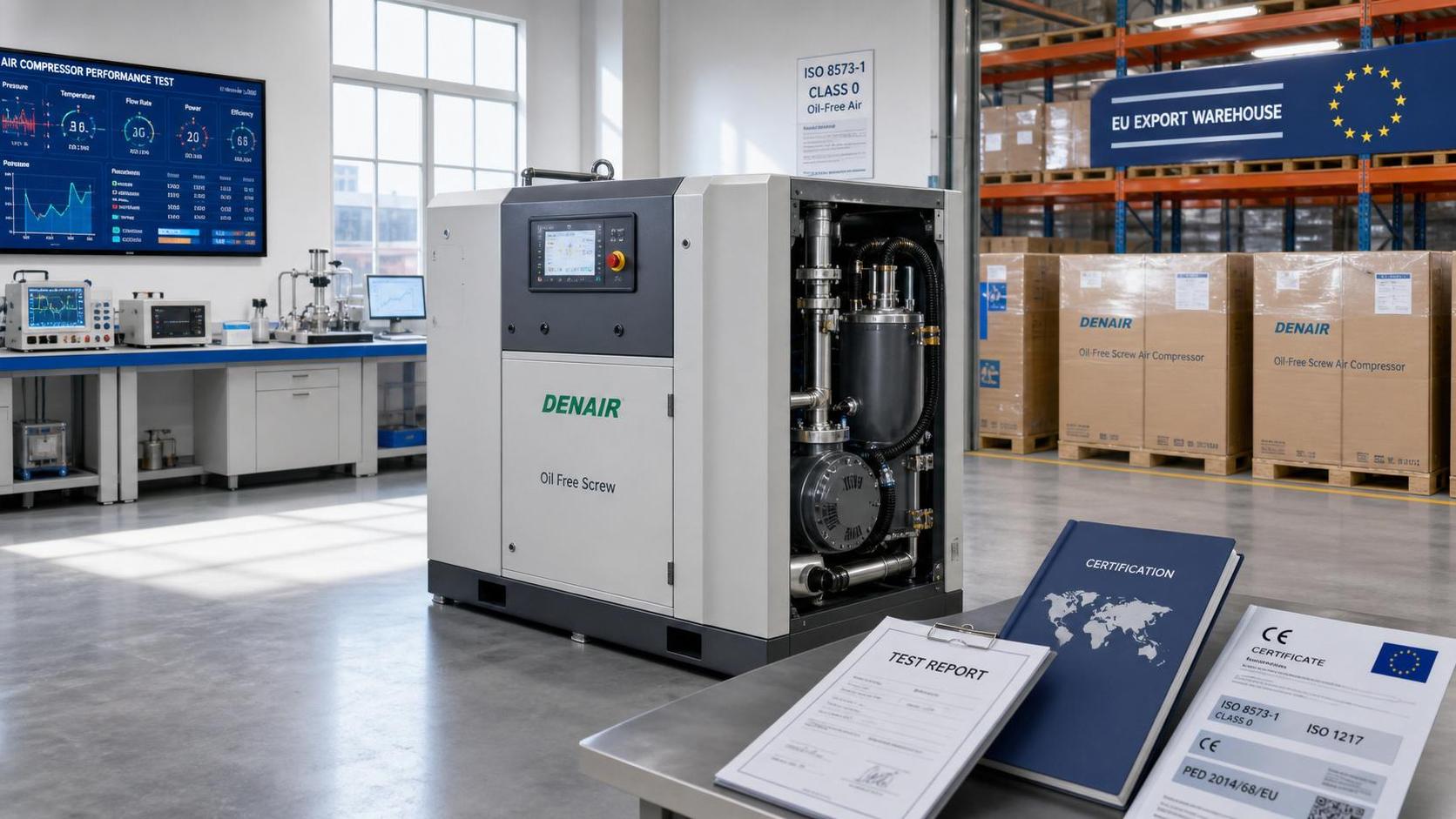
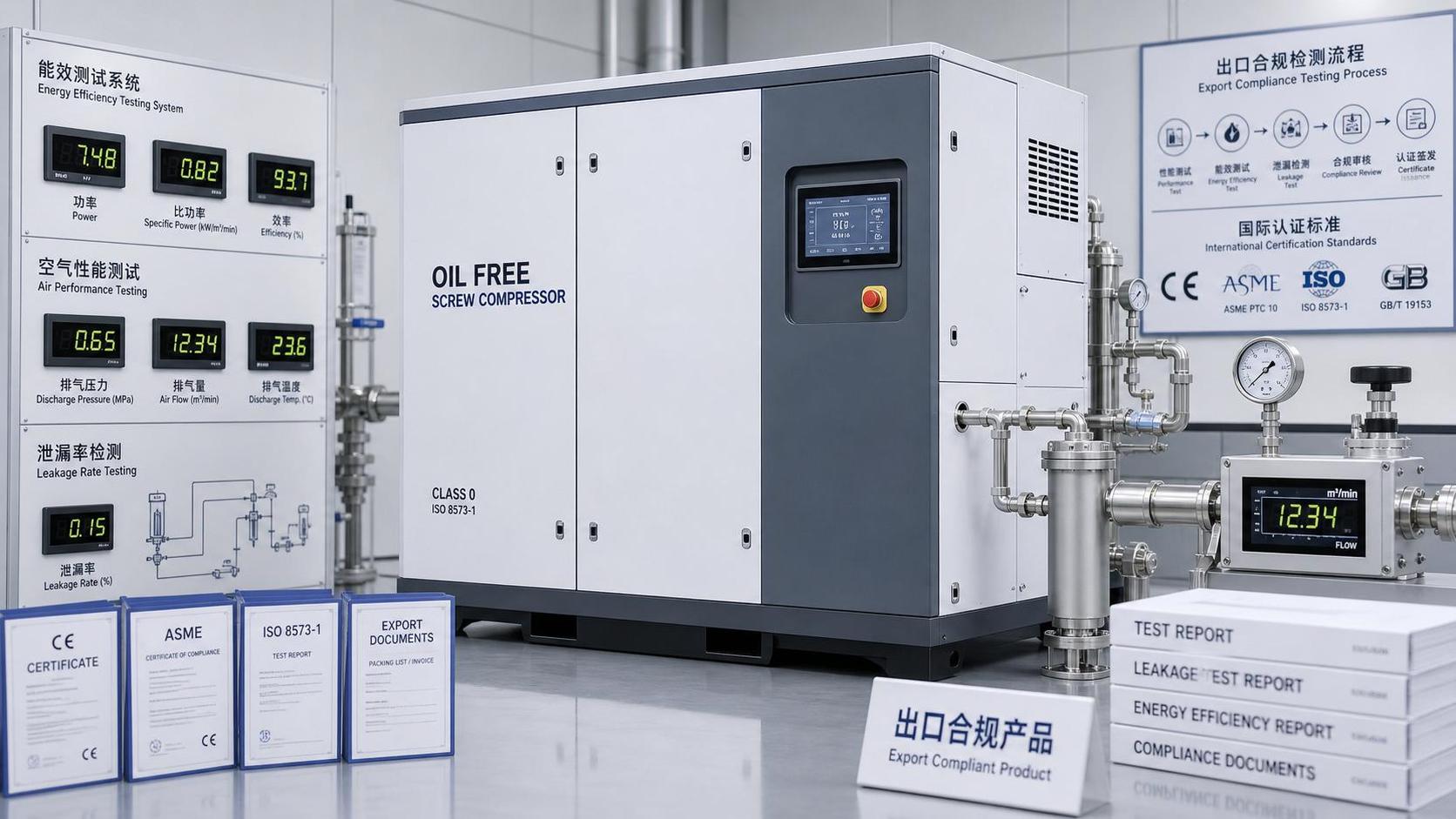
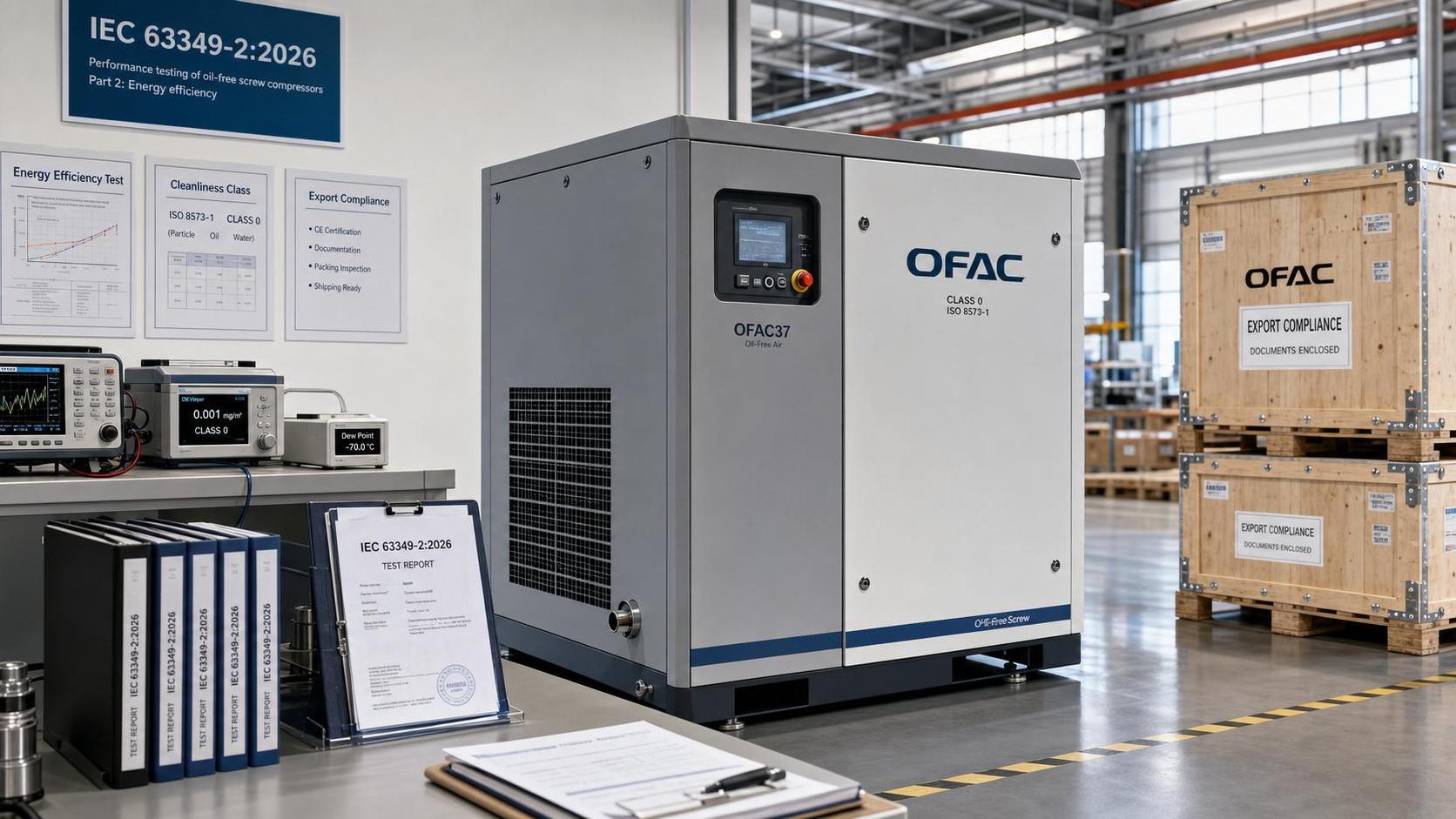
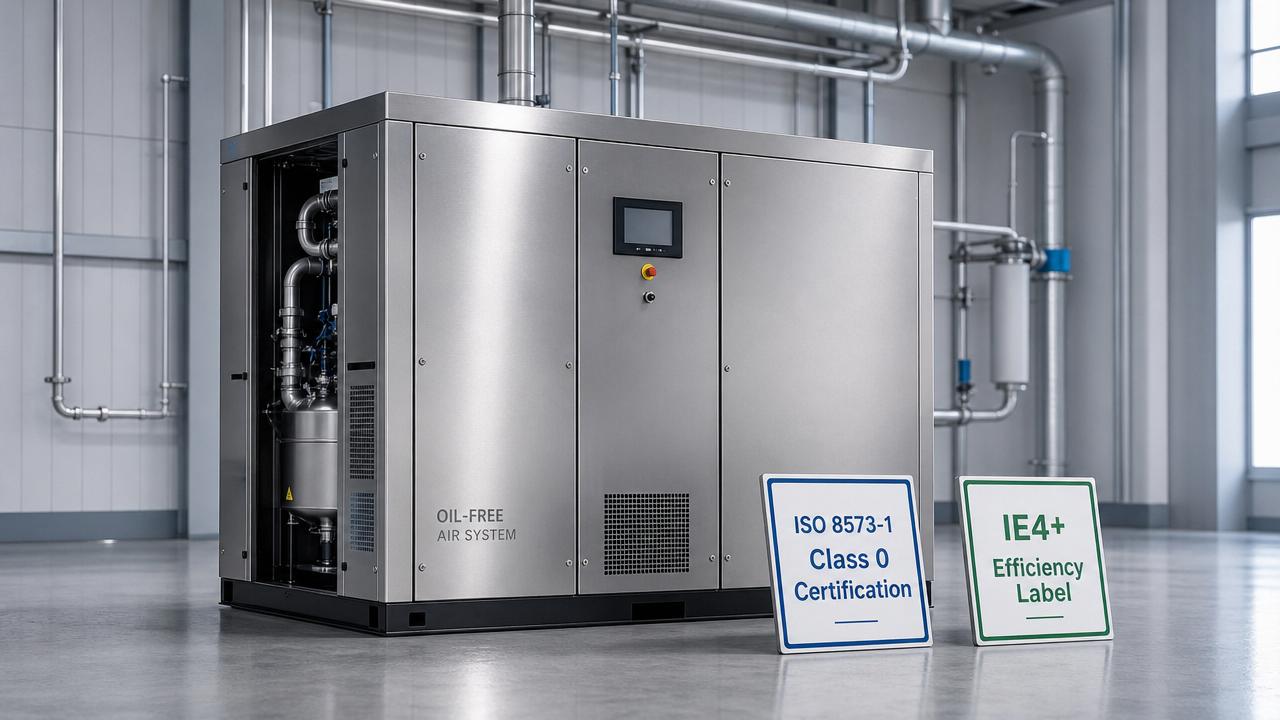
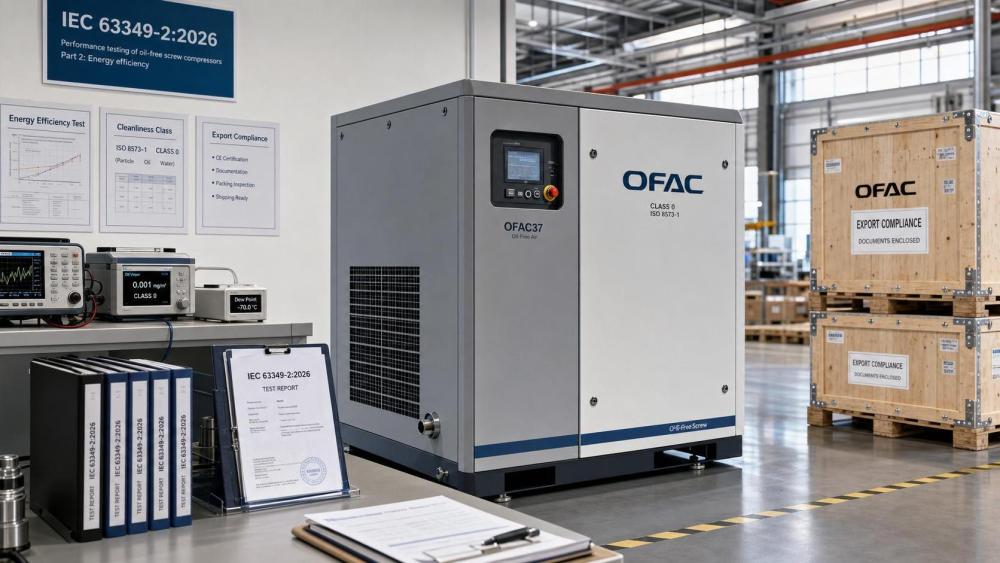
According to the information provided, IEC released IEC 63349-2:2026, titled Oil-free rotary compressors — Part 2: Energy efficiency testing and classification, on June 18, 2026. The standard newly places ISO 8573-1 Class 0 cleanliness and IEER as dual mandatory assessment indicators. It is stated to take effect immediately in 32 IEC member countries including the European Union, South Korea, and Singapore. For oil-free screw compressors exported from China, retesting under the new standard through a CNAS-accredited laboratory is required; otherwise, the products lose access to CE, KC, and PSB entry qualification.
Where the pressure will appear across business chains
Export shipments now face a tighter certification gate
From an industry perspective, exporters of oil-free screw compressors are among the first affected parties because market access is now tied to retesting under the newly issued standard. The practical impact is likely to fall on certification scheduling, document readiness, shipment planning, and customer acceptance in destinations where the standard is already in force. What deserves closer attention is whether existing test reports, compliance files, and market-entry documentation remain usable without rework under the updated assessment framework.
Manufacturing and technical teams must align product claims with test evidence
Manufacturers may be affected because the rule change links cleanliness grade and energy-efficiency performance within one mandatory evaluation structure. Analysis shows that technical documentation, product declarations, bid materials, and factory-side validation work may need closer coordination so that performance claims match the new testing and grading basis. This is especially relevant where product positioning has relied on either cleanliness or efficiency claims separately in the past.
Testing and certification workflows become a critical delivery checkpoint
Certification-related service providers and testing institutions may see immediate workload shifts because retesting through CNAS-accredited laboratories is explicitly required for relevant exports from China. Observably, the impact is not limited to laboratory testing itself; it also extends to report timing, conformity review, application sequencing, and coordination with downstream certification or customs-facing documentation. For supply-chain service providers, this may become a practical issue in delivery planning if compliance clearance is not synchronized with shipment schedules.
Buyers and project procurement teams may tighten document review
Procurement-side participants may also be affected because compliance under the new standard can influence supplier qualification, technical bid alignment, and acceptance conditions for oil-free screw compressors in affected markets. Analysis shows that buyers may need to pay closer attention to whether test reports are based on IEC 63349-2:2026, whether cleanliness and IEER indicators are both covered, and whether the certification path remains valid for the intended destination market.
What companies should verify now
Recheck certification status against the new testing basis
Companies involved in export, certification, or project delivery should first verify whether currently marketed oil-free screw compressor models require retesting under IEC 63349-2:2026. Based on the provided information, the immediate issue is not a general policy interpretation but a specific compliance condition tied to continued access to CE, KC, and PSB-related market entry.
Review technical files and report consistency
What deserves closer attention is whether existing technical files, test reports, product brochures, tender responses, and compliance statements consistently reflect both ISO 8573-1 Class 0 cleanliness and IEER under the new standard. If document language and laboratory evidence are not aligned, the risk may appear first in certification review, buyer audits, or delivery acceptance rather than in product design alone.
Watch for execution language in market-facing documents
Observably, companies should monitor how the new standard is referenced in certification applications, customer specifications, tender documents, and destination-market compliance requirements. The provided information confirms the rule change and immediate effectiveness in relevant IEC member countries, but it does not provide detailed implementation wording for every downstream process, so execution language still requires careful checking.
Factor testing dependencies into lead times and shipment planning
Analysis shows that even where product demand is unchanged, delivery commitments may be affected if retesting, report issuance, or certification coordination becomes a prerequisite for shipment or acceptance. For that reason, exporters, procurement teams, and after-sales coordinators should pay attention to whether orders in progress rely on documentation that predates IEC 63349-2:2026.
Why this reads as an execution signal, not just a standard update
Analysis shows that this development is more appropriate to understand as a rule now entering operational use rather than as a distant policy direction. The key reason is that the information provided already connects the standard to immediate effectiveness in multiple IEC member countries and to concrete market-access consequences for Chinese exports. At the same time, observably, the full market impact still depends on how certification bodies, buyers, and project documents apply the new requirement in day-to-day transactions.
How to read the current stage of change
At this stage, the event should be read as a compliance threshold that has already moved, especially for export-facing oil-free screw compressor business involving affected IEC member markets. A cautious interpretation is more suitable than a dramatic one: the confirmed change is clear, but the pace and strictness of downstream execution may still vary by certification workflow, procurement practice, and document review. For industry participants, the immediate priority is to treat IEC 63349-2:2026 as a live market-access requirement where applicable, while continuing to observe how implementation details settle in practice.
Basis of this article and points that still need tracking
This article is generated from the user-provided news title, event date, and event summary. For developments of this type, source categories usually relevant to verification include official announcements, regulator releases, trade or customs authority information, industry association updates, standard-issuing organization documents, and reporting by authoritative media. A specific official source link was not provided in the input, so further verification remains necessary. What still needs continued tracking includes detailed implementation wording, certification interpretation in practice, changes in tender and procurement documents, industry feedback, and how companies execute retesting and compliance updates in affected markets.
Related News
- When oil free vacuum pumps make sense for European cleanroom projectsAuthor :Pneumatic Power Engineer

- When do pure air compression systems need ISO 8573-1 Class 0?Author :Pneumatic Power Engineer

- How do compressed air systems for electronics prevent contamination?Author :Pneumatic Power Engineer

- When does an oil-free process vacuum pump justify its higher cost?Author :Pneumatic Power Engineer

- Does ISO 9001 certification apply to compressed air quality?Author :Pneumatic Power Engineer

- How to Specify Clean Compressed Air Systems in Southeast Asia for Food and Pharma PlantsAuthor :Pneumatic Power Engineer

- How to Compare Oil Free Vacuum Pumps for Clean Process RequirementsAuthor :Pneumatic Power Engineer

- How to Evaluate a Clean Compressed Air Systems Supplier for ISO 8573-1 ComplianceAuthor :Pneumatic Power Engineer

- How to Choose the Right Oil-Free Vacuum PumpAuthor :Pneumatic Power Engineer

- VDI 2083 Update Makes Class 0 Proof MandatoryAuthor :Pneumatic Power Engineer

- When to Use Oil Free Vacuum Pumps for High Purity LinesAuthor :Pneumatic Power Engineer

- Compressed Air Solutions: When Oil-Free Systems Lower Total Operating CostAuthor :Pneumatic Power Engineer

- ATMOsphere Europe 2026 Adds Oil-free Systems ZoneAuthor :Pneumatic Power Engineer

- Oil-Free Compressors: Key Selection Criteria for Clean Air SystemsAuthor :Pneumatic Power Engineer

- How to Compare Oil Free Centrifugal Compressors for Stable Plant Air SupplyAuthor :Pneumatic Power Engineer

- Compressed Air Class 0 vs Oil-Free: What Really MattersAuthor :Pneumatic Power Engineer

- Oil-Free Compression Class 0: What the Standard Really Means in ProductionAuthor :Pneumatic Power Engineer

- Air Compression Cost Comparison: Oil-Free vs Screw Systems in Daily OperationAuthor :Pneumatic Power Engineer

- Saudi SASO Tightens IEC 63349-2 for Oil-Free CompressorsAuthor :Pneumatic Power Engineer

- Saudi SASO Tightens Oil-Free Compressor Efficiency RulesAuthor :Pneumatic Power Engineer

- Pure Air Compression Systems for Clean Production LinesAuthor :Pneumatic Power Engineer

- IEC 63349-2:2026 makes energy certification mandatoryAuthor :Pneumatic Power Engineer

- IEC 63349-2:2026 Sets New Entry Rules for Oil-Free Screw CompressorsAuthor :Pneumatic Power Engineer

- IEC 63349-2:2026 Takes Effect for Oil-Free Screw CompressorsAuthor :Pneumatic Power Engineer

- IEC 63349-2:2026 Sets New Efficiency Gate for Oil-Free Screw CompressorsAuthor :Pneumatic Power Engineer

- IEC 63349-2:2026 Takes Effect for Oil-Free Screw CompressorsAuthor :Pneumatic Power Engineer

- SABIC Methanol Force Majeure Extended, Tightening R134a/R407C FeedstocksAuthor :Pneumatic Power Engineer

- How to Evaluate Pneumatic Power Systems for Stable OutputAuthor :Pneumatic Power Engineer

- Oil-Free Compression vs Lubricated Systems: Key Trade-OffsAuthor :Pneumatic Power Engineer
![]()
- Oil-Free Compression: 2026 Cost and Compliance Trade-OffsAuthor :Pneumatic Power Engineer

- Oil-Free Compression: Cost and Contamination RisksAuthor :Pneumatic Power Engineer
![]()
- Euro PMI Drop Delays Oil-Free Systems OrdersAuthor :Pneumatic Power Engineer

- Germany/France May PMI Decline; Oil-free Systems EU Projects DelayedAuthor :Pneumatic Power Engineer
![]()
- Compression Technology Options for Cleaner Oil-Free Air SupplyAuthor :Pneumatic Power Engineer

- TUV Rheinland Enforces Full-Chain Class 0 Certification for Oil-Free SystemsAuthor :Pneumatic Power Engineer

- Sustainable Manufacturing and Oil-Free Systems: Where Reliability Improves MostAuthor :Pneumatic Power Engineer