When does an oil-free process vacuum pump justify its higher cost?




The purchase question is not “oil-free or not?”
An oil-free process vacuum pump often carries a visibly higher capital cost than an oil-sealed alternative. For procurement teams, that price difference can be hard to defend when the required vacuum level appears achievable with either technology. But purchase price is the wrong starting point in many process applications.
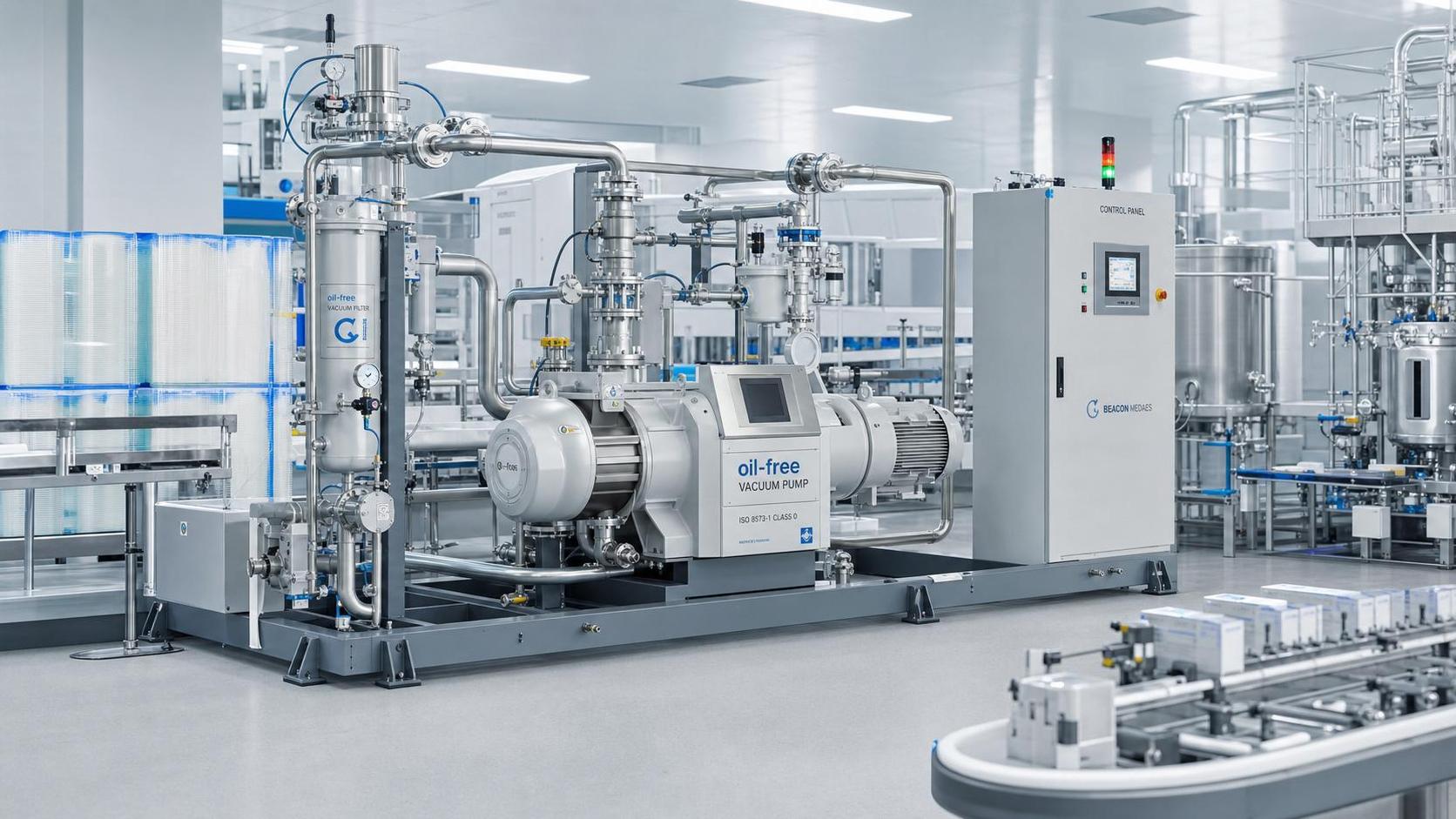
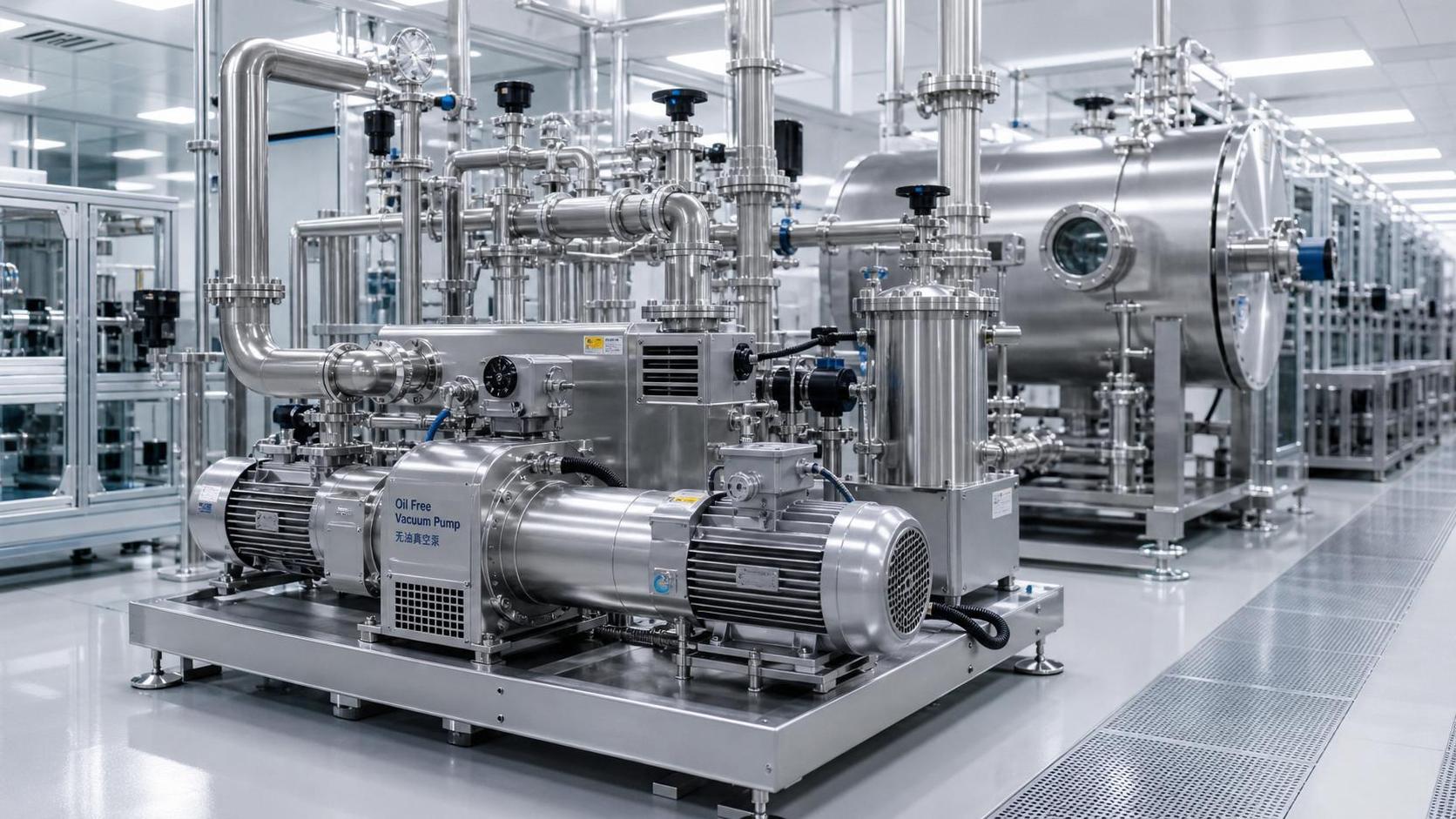
The practical question is whether oil in the vacuum-generation system creates a material cost, quality, compliance, uptime, or recovery risk for the operation. Where it does, a process vacuum oil free configuration can justify its premium quickly. Where it does not, paying for oil-free technology may simply move cost forward without producing a measurable operational return.
This distinction matters because “oil-free” is often treated as a universal quality upgrade. It is not. It is a risk-control choice whose value depends on what is being evacuated, what can migrate back into the process, how the system is cleaned, how often it runs, and what a contaminated batch or failed inspection would actually cost.
Start with the consequence of contamination
Oil-sealed vacuum pumps are established, capable machines. In many industrial duties, their lubricant is contained effectively and does not threaten the product or the process. A robust oil-sealed rotary vane pump can remain a sensible, economical choice for general packaging, non-critical fixture holding, drying of non-sensitive materials, or intermittent workshop duties.
The economics change when hydrocarbon carryover, backstreaming, oil mist, or maintenance-related exposure could affect a high-value process. In pharmaceutical production, food processing, electronics, lithium battery manufacturing, specialty chemicals, analytical laboratories, and certain coating or heat-treatment operations, even a relatively small contamination event can have effects beyond the pump itself.
Those effects may include rejected product, additional cleaning validation, delayed release, filter replacement, downstream equipment cleaning, customer complaints, or an internal investigation into trace contaminants. In regulated environments, the commercial damage can also include incomplete batch records, deviation handling, and production capacity lost while the cause is established.
Procurement should therefore ask the process owner a direct question: if oil-derived contamination entered this process, what would happen next? A credible answer should assign consequences by category: safety, product quality, customer specification, regulatory exposure, rework, and lost output. If the answer is “little or nothing,” an oil-free premium needs stronger justification elsewhere. If the answer involves a batch hold, a cleanroom investigation, or scrapping high-value material, the decision framework changes immediately.
Not all “oil-free” claims mean the same thing
A procurement specification should not stop at the phrase “oil-free.” Suppliers may use it to describe the compression chamber, while the overall package still contains lubricated bearings, gearboxes, cooling circuits, or auxiliary equipment. This does not automatically make the solution unsuitable. It does mean the buyer needs to understand the real contamination pathway rather than treating a marketing term as a system guarantee.
For process vacuum applications, the relevant questions are more specific:
- Is the gas path entirely free of sealing oil during normal operation?
- What prevents backflow or backstreaming when the pump stops, trips, or loses power?
- Does the package require oil in a gearbox or bearing housing, and can a failure introduce it into the process stream?
- What exhaust treatment is required for vapours, particulates, or condensables?
- How does pump performance change as deposits form or as process gases vary?
- Which components must be cleaned, replaced, or inspected during scheduled service?
Dry screw, claw, scroll, and dry rotary vane technologies can all be relevant, but they behave differently under vapour load, particle load, corrosive gases, high cycling frequency, and deep-vacuum demand. A technology selection made solely on the basis of base pressure or nominal pumping speed can miss the actual operating condition that determines maintenance cost.
A dry pump may eliminate lubricant management in the compression space, yet require more deliberate process protection. Condensable vapours may demand gas ballast, heating, purge gas, inlet separation, or a recovery arrangement. Abrasive powders may require filtration or a different pump architecture. Reactive gases can require compatible materials, controlled flushing, and an exhaust-abatement plan. In other words, oil-free does not remove engineering responsibility; it changes where that responsibility sits.
Calculate total cost against the operating profile
The higher price of an oil-free pump is most defensible in continuous or heavily utilized processes. Capital cost is a one-time event. Energy, service labour, consumables, production interruptions, and quality losses recur throughout the equipment life.
A useful total-cost-of-ownership model should compare at least five years where the process and asset strategy support that horizon. The model need not claim false precision. Its value comes from exposing assumptions that are often hidden inside a low initial quotation.
- Purchase and installation: pump package, controls, piping changes, cooling, electrical work, commissioning, and process protection equipment.
- Energy: annual operating hours, load profile, control method, inlet pressure range, and expected power draw at real duty points rather than nameplate maximums.
- Routine maintenance: oil changes, filters, separators, seals, service kits, labour, waste-oil handling, and planned downtime.
- Corrective maintenance: expected overhaul intervals, availability of local service, spare-part lead times, and cost of a pump failure.
- Process risk: product losses, cleanup time, validation work, rejected inspections, and lost production capacity arising from contamination or instability.
Energy analysis needs particular care. Oil-free equipment is not automatically the lower-energy choice. At a given duty point, the result depends on pump type, pressure range, variable-speed control, sizing margin, inlet restrictions, leakage, and how the vacuum is controlled. An oversized pump running against a throttled system can waste energy regardless of lubrication method.
Request power data at the actual required pressure and gas load, including start-up and regeneration conditions where relevant. If the supplier offers only nominal motor power or best-case performance curves, the energy estimate is not yet procurement-grade. Site measurements from a comparable installation are preferable; if they are unavailable, assumptions should be marked clearly as 【to be verified】 before a financial approval is built around them.
When the premium is usually justified
There are several recurring situations in which an oil-free process vacuum pump has a strong commercial case.
High-value, contamination-sensitive production. Semiconductor and electronics operations, precision coatings, pharmaceutical processing, food-contact applications, and specialty material production often have limited tolerance for hydrocarbon exposure. The cost of avoiding a single serious contamination investigation can outweigh a substantial share of the equipment premium.
Processes with difficult cleaning or validation requirements. If a vacuum line connects to vessels, chambers, dryers, filling equipment, or surfaces that require documented cleaning, the impact of possible oil migration is larger than the cost of replacing lubricant. Here, simplified cleaning logic and reduced contamination pathways may be more valuable than a narrowly calculated maintenance saving.
Centralized vacuum systems serving multiple users. A central system can magnify both benefits and failures. An oil-related issue in a shared system may affect several production assets, while an oil-free architecture can reduce the risk of cross-process exposure. At the same time, centralized systems deserve a detailed redundancy and isolation review because their failure consequences are broader.
Sites with expensive waste handling or constrained maintenance windows. Used oil, oil-contaminated filters, separator elements, and unplanned service activities have different costs by region and facility. In plants where access is restricted, shutdowns are rare, or environmental controls are strict, lower routine lubricant handling may carry tangible value.
Applications where the customer specification demands it. Some buyer requirements are contractual rather than technical preferences. If a customer, internal quality standard, or qualified process specifies an oil-free gas path, attempting to substitute an oil-sealed solution can create a qualification burden that exceeds the savings.
When the case is weaker
There are also situations where the premium is often difficult to recover. A low-utilization pump in a non-sensitive process may consume little oil, need modest servicing, and expose no product to the vacuum stream. Replacing it with a dry machine because “oil-free is more modern” is not a business case.
The case is similarly weak where the process gas is dirty, wet, corrosive, or heavily laden with particulates and the proposed dry pump requires extensive upstream conditioning. If knock-out vessels, filters, heaters, purge systems, abatement equipment, and frequent cleaning are necessary, their acquisition and operating burden must be included. In some duties, an appropriately protected oil-sealed pump remains more forgiving and economically sound.
Buyers should also be cautious with claims that oil-free pumps are maintenance-free. They are not. They may avoid oil changes in the compression stage, but they still have wear components, filters, seals, bearings, cooling requirements, and process-specific service needs. A supplier that cannot provide a duty-specific maintenance schedule, service interval assumptions, and replacement-part pricing is leaving a material cost category undefined.
Specify the process, not just the pump
The most common procurement failure is issuing a generic vacuum-pump request and allowing suppliers to fill in the operating assumptions. This tends to produce quotations that cannot be compared fairly. One vendor may include inlet filtration and control hardware; another may price only the pump. One may assume clean, dry air; another may include protection for solvent vapours. The lower quote then appears attractive because it is incomplete.
A better request for quotation identifies the real process envelope:
- Required operating pressure, not only ultimate vacuum.
- Required pumping speed at the operating pressure.
- Gas composition, expected vapours, solids, humidity, and possible upset conditions.
- Inlet temperature, discharge requirements, and any hazardous-area constraints.
- Duty cycle, starts per hour, annual operating hours, and required availability.
- Cleanliness requirements for the gas path and any required documentation.
- Noise, cooling-water, compressed-air, and electrical constraints.
- Site service capability, spare-part expectations, and acceptable repair lead time.
This information supports a meaningful comparison between a process vacuum oil free package and an oil-sealed alternative. It also reveals whether the real opportunity lies elsewhere: reducing system leaks, improving chamber-cycle logic, installing variable-speed control, separating dirty and clean duties, or redesigning the header arrangement may produce greater savings than changing pump technology alone.
Challenge the lifecycle assumptions before award
Before selecting a supplier, procurement should require each bidder to state the assumptions behind its lifecycle estimate. Ask for the expected service intervals under the declared gas load, not under ideal laboratory conditions. Request exclusions in writing. Confirm whether commissioning includes performance verification at site duty conditions. Establish who is responsible if the pump cannot sustain the required pressure once connected to the actual process.
Service capacity deserves equal attention. A technically attractive pump with limited local support can create a costly dependency on imported kits or specialist technicians. For critical production, assess the availability of exchange units, the recommended on-site spares, remote monitoring options, and the delivery commitment for major components. A lower maintenance frequency is not the same as lower downtime risk.
It is also worth separating warranted performance from projected savings. Suppliers may reasonably offer energy or service estimates, but they should not be converted into guaranteed savings unless operating conditions, measurement methods, and responsibilities are defined. Energy prices, production schedules, and gas loads can change substantially during the equipment life.
A defensible decision is conditional, not ideological
Oil-free vacuum technology earns its higher cost when it addresses an expensive and credible business risk: contamination of a valuable product, complex cleaning and validation, high maintenance burden, constrained environmental handling, or lost output from process instability. Its value rises as operating hours, product sensitivity, and the cost of a quality event increase.
It is less compelling where vacuum is a simple utility, product exposure is absent, utilization is low, and the process is inherently harsh on dry pumping equipment. In those cases, the disciplined choice may be an oil-sealed pump with suitable filtration, monitoring, and maintenance controls.
For a procurement team, the decision should end with a documented view of the process consequence, duty profile, protection scope, and lifecycle assumptions. Once those are visible, the apparent premium is no longer an abstract price difference. It becomes a specific cost of reducing risk, or a cost that the operation does not need to pay.
Ready when you are. Send us a message to get started.
Related News
- How to verify food-grade purity in compressed air systemsAuthor :Pneumatic Power Engineer

- What determines the price of pure air compression systems?Author :Pneumatic Power Engineer

- How to size oil-free compressors for instrumentation air demandAuthor :Pneumatic Power Engineer

- How Class 0 oil-free compressors protect product quality in food productionAuthor :Pneumatic Power Engineer

- How to verify compressed air cleanroom standards before installationAuthor :Pneumatic Power Engineer

- When oil free vacuum pumps make sense for European cleanroom projectsAuthor :Pneumatic Power Engineer

- When do pure air compression systems need ISO 8573-1 Class 0?Author :Pneumatic Power Engineer

- How do compressed air systems for electronics prevent contamination?Author :Pneumatic Power Engineer

- When does an oil-free process vacuum pump justify its higher cost?Author :Pneumatic Power Engineer

- Does ISO 9001 certification apply to compressed air quality?Author :Pneumatic Power Engineer

- How to Specify Clean Compressed Air Systems in Southeast Asia for Food and Pharma PlantsAuthor :Pneumatic Power Engineer

- How to Compare Oil Free Vacuum Pumps for Clean Process RequirementsAuthor :Pneumatic Power Engineer

- How to Evaluate a Clean Compressed Air Systems Supplier for ISO 8573-1 ComplianceAuthor :Pneumatic Power Engineer

- How to Choose the Right Oil-Free Vacuum PumpAuthor :Pneumatic Power Engineer

- VDI 2083 Update Makes Class 0 Proof MandatoryAuthor :Pneumatic Power Engineer

- When to Use Oil Free Vacuum Pumps for High Purity LinesAuthor :Pneumatic Power Engineer

- Compressed Air Solutions: When Oil-Free Systems Lower Total Operating CostAuthor :Pneumatic Power Engineer

- ATMOsphere Europe 2026 Adds Oil-free Systems ZoneAuthor :Pneumatic Power Engineer

- Oil-Free Compressors: Key Selection Criteria for Clean Air SystemsAuthor :Pneumatic Power Engineer

- How to Compare Oil Free Centrifugal Compressors for Stable Plant Air SupplyAuthor :Pneumatic Power Engineer

- Compressed Air Class 0 vs Oil-Free: What Really MattersAuthor :Pneumatic Power Engineer

- Oil-Free Compression Class 0: What the Standard Really Means in ProductionAuthor :Pneumatic Power Engineer

- Air Compression Cost Comparison: Oil-Free vs Screw Systems in Daily OperationAuthor :Pneumatic Power Engineer

- Saudi SASO Tightens IEC 63349-2 for Oil-Free CompressorsAuthor :Pneumatic Power Engineer

- Saudi SASO Tightens Oil-Free Compressor Efficiency RulesAuthor :Pneumatic Power Engineer

- Pure Air Compression Systems for Clean Production LinesAuthor :Pneumatic Power Engineer

- IEC 63349-2:2026 makes energy certification mandatoryAuthor :Pneumatic Power Engineer

- IEC 63349-2:2026 Sets New Entry Rules for Oil-Free Screw CompressorsAuthor :Pneumatic Power Engineer

- IEC 63349-2:2026 Takes Effect for Oil-Free Screw CompressorsAuthor :Pneumatic Power Engineer

- IEC 63349-2:2026 Sets New Efficiency Gate for Oil-Free Screw CompressorsAuthor :Pneumatic Power Engineer

- IEC 63349-2:2026 Takes Effect for Oil-Free Screw CompressorsAuthor :Pneumatic Power Engineer

- SABIC Methanol Force Majeure Extended, Tightening R134a/R407C FeedstocksAuthor :Pneumatic Power Engineer

- How to Evaluate Pneumatic Power Systems for Stable OutputAuthor :Pneumatic Power Engineer

- Oil-Free Compression vs Lubricated Systems: Key Trade-OffsAuthor :Pneumatic Power Engineer
![]()
- Oil-Free Compression: 2026 Cost and Compliance Trade-OffsAuthor :Pneumatic Power Engineer

- Oil-Free Compression: Cost and Contamination RisksAuthor :Pneumatic Power Engineer
![]()