How to Specify Clean Compressed Air Systems in Southeast Asia for Food and Pharma Plants




If you are specifying clean compressed air systems Southeast Asia for a food or pharmaceutical plant, the hard part is rarely choosing a compressor brand. The real challenge is defining air quality, moisture control, redundancy, and validation requirements clearly enough that the final system performs in a tropical plant, passes audits, and does not become an expensive energy burden. In this region, heat, humidity, variable utility conditions, and mixed compliance expectations make compressed air design less forgiving than many datasheets suggest.
A short answer is this: start from the point of use and the product risk, not from the compressor room. Once you know which applications need direct or indirect product contact, what ISO 8573 air quality is required, how the plant will be cleaned, and how often humidity spikes occur, the specification becomes far more realistic.
Many evaluation teams get stuck because they treat “clean air” as a generic requirement. It is not. In food and pharma, one process may tolerate instrument-grade air, while another needs much tighter control of oil, particles, pressure dew point, and microbial risk. If those uses are grouped under one vague specification, the system is either undersized for the critical points or overengineered everywhere else.
What “clean” really means in food and pharma plants
In practice, clean compressed air is a combination of four things: low particle load, low oil carryover, controlled moisture, and a distribution system that does not recontaminate the air after treatment. For pharmaceutical production, validation and documented consistency matter as much as the hardware itself. For food plants, the level of control depends heavily on whether the air touches product, packaging interior, process surfaces, or only actuators and valves.
That is why technical evaluators should resist broad statements such as “oil-free required everywhere” or “a dryer and filters are enough.” The right question is narrower: where can contamination create product, regulatory, or recall risk, and where is utility air sufficient?
Most projects benefit from classifying use points into three groups:
- Critical contact applications: product contact, fermentation support, tablet coating, aseptic packaging, blow-off over open product, or air used in direct process steps.
- Controlled non-contact applications: packaging machines, cleanroom support utilities, and process-adjacent uses where contamination still creates audit or quality problems.
- General plant utility air: cylinders, tools, non-product utilities, and remote services.
That separation often saves both capex and opex because not every branch needs the same treatment train.
Why Southeast Asia changes the specification
Compressed air systems that work acceptably in temperate climates can struggle in Southeast Asia if the design basis ignores local operating reality. High ambient temperature reduces compressor efficiency. High relative humidity increases moisture loading at the intake. Coastal or corrosive environments can shorten the life of receivers, coolers, drains, and piping. In some industrial zones, power quality and cooling water stability also deserve attention.
This is where many otherwise solid designs fail: the equipment is selected for catalog conditions, not for the actual plant room.
For example, a dryer sized too tightly for humid ambient conditions may meet dew point on paper but drift during monsoon periods, startup peaks, or low-load cycling. A filter package may be technically correct, yet difficult to maintain in a plant where service intervals slip and condensate management is inconsistent. In pharma, those “small” deviations can create documentation issues. In food, they often show up later as line contamination, wet air complaints, or inconsistent pneumatic performance.
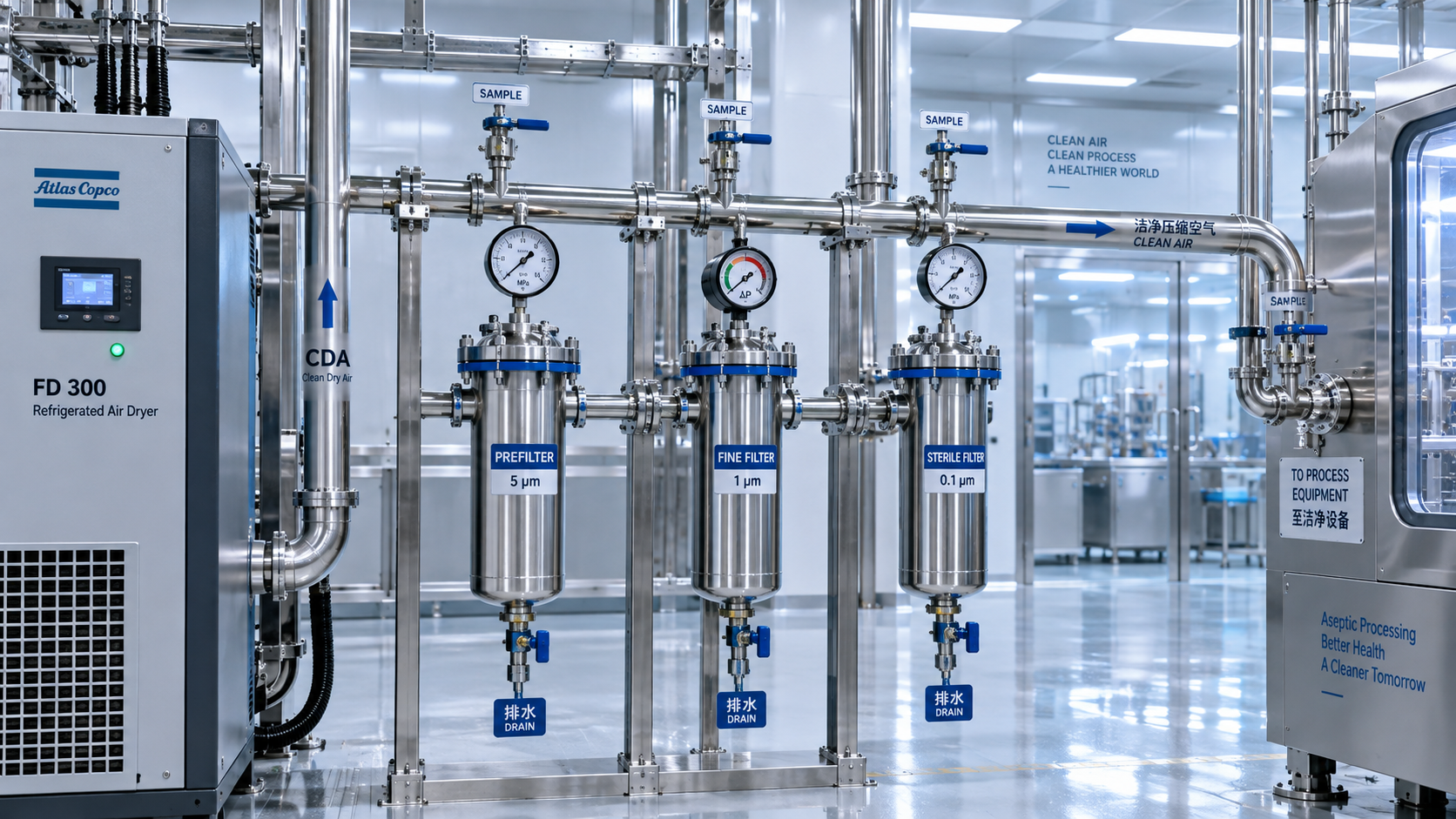
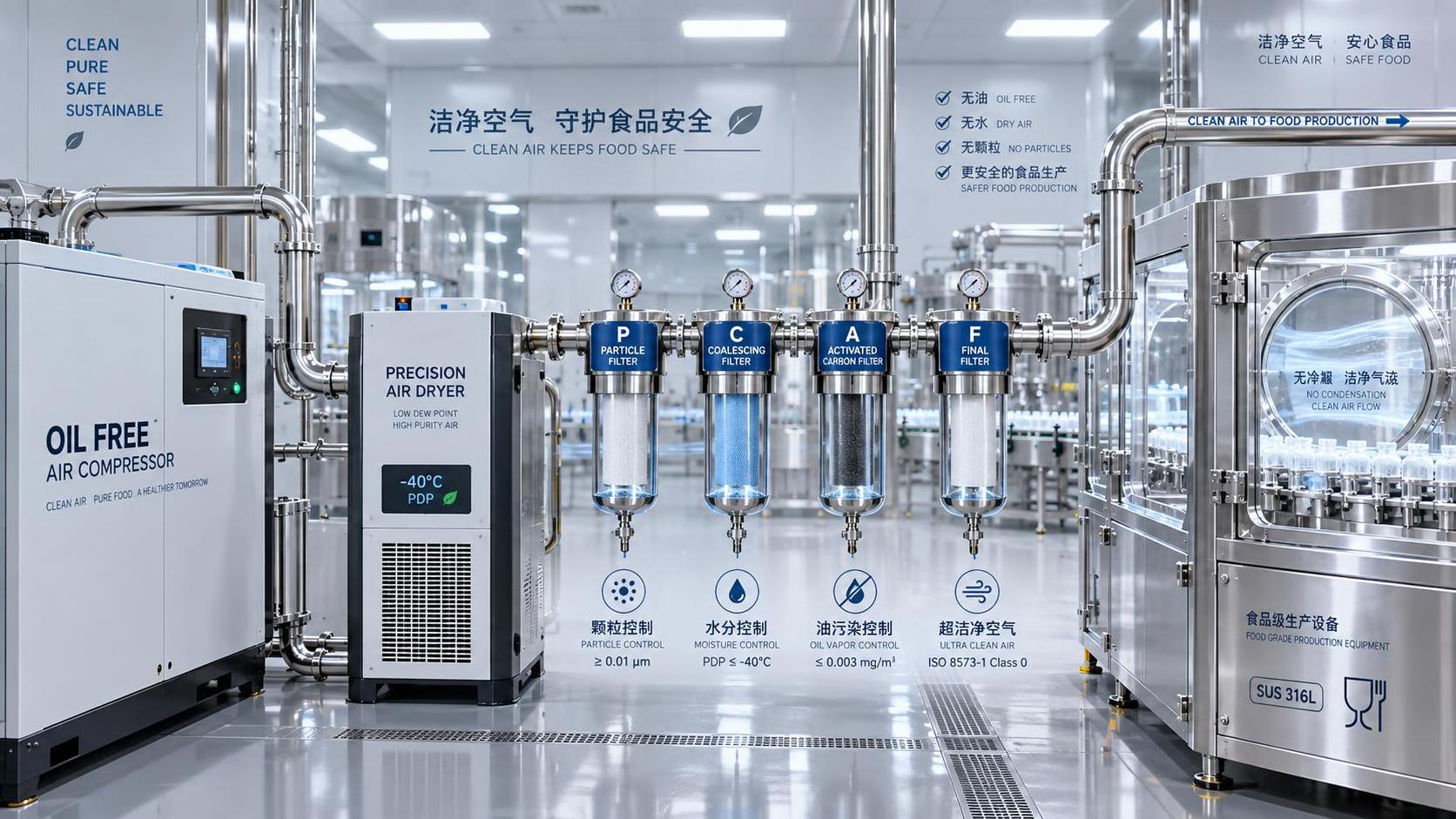
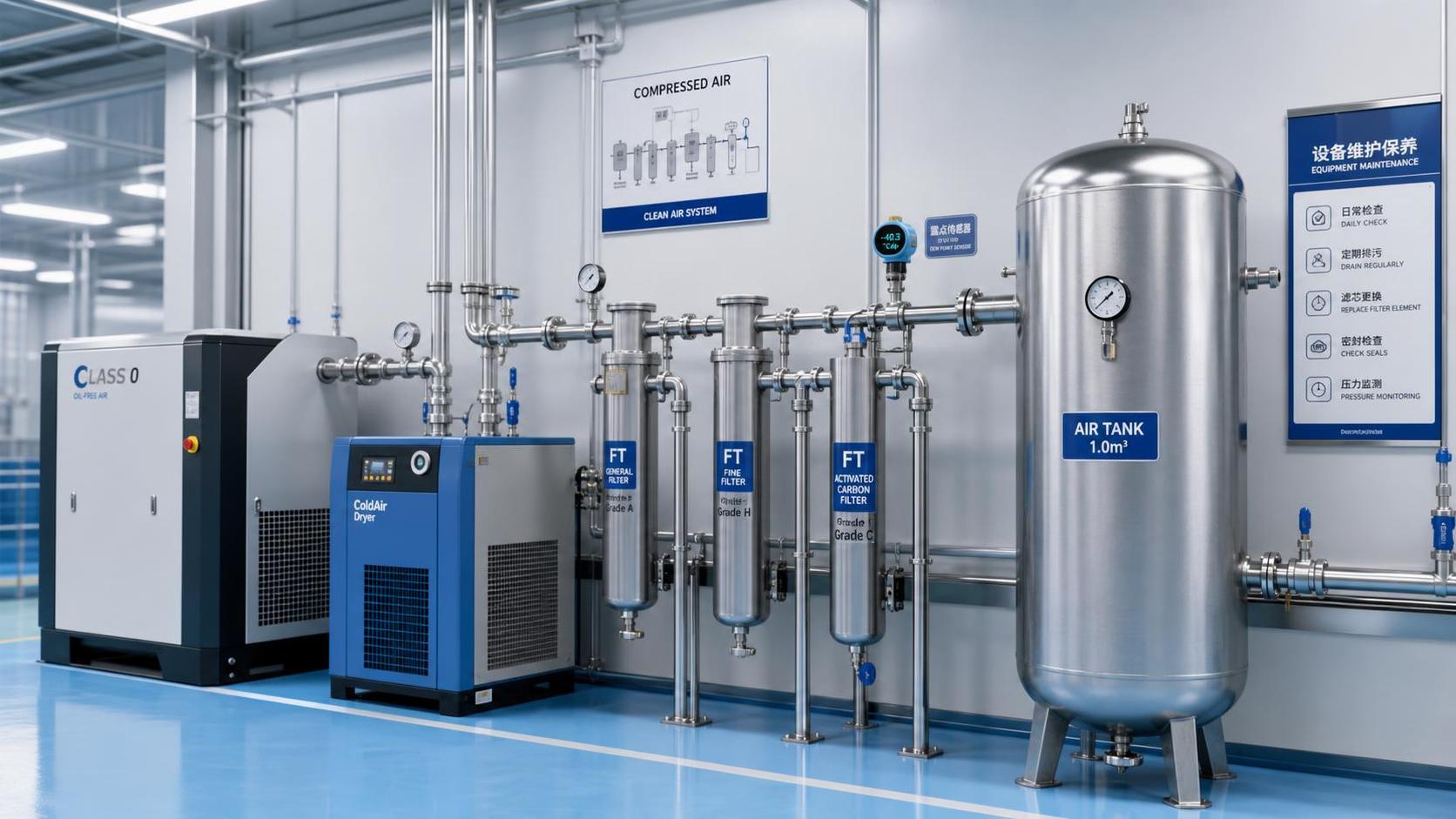
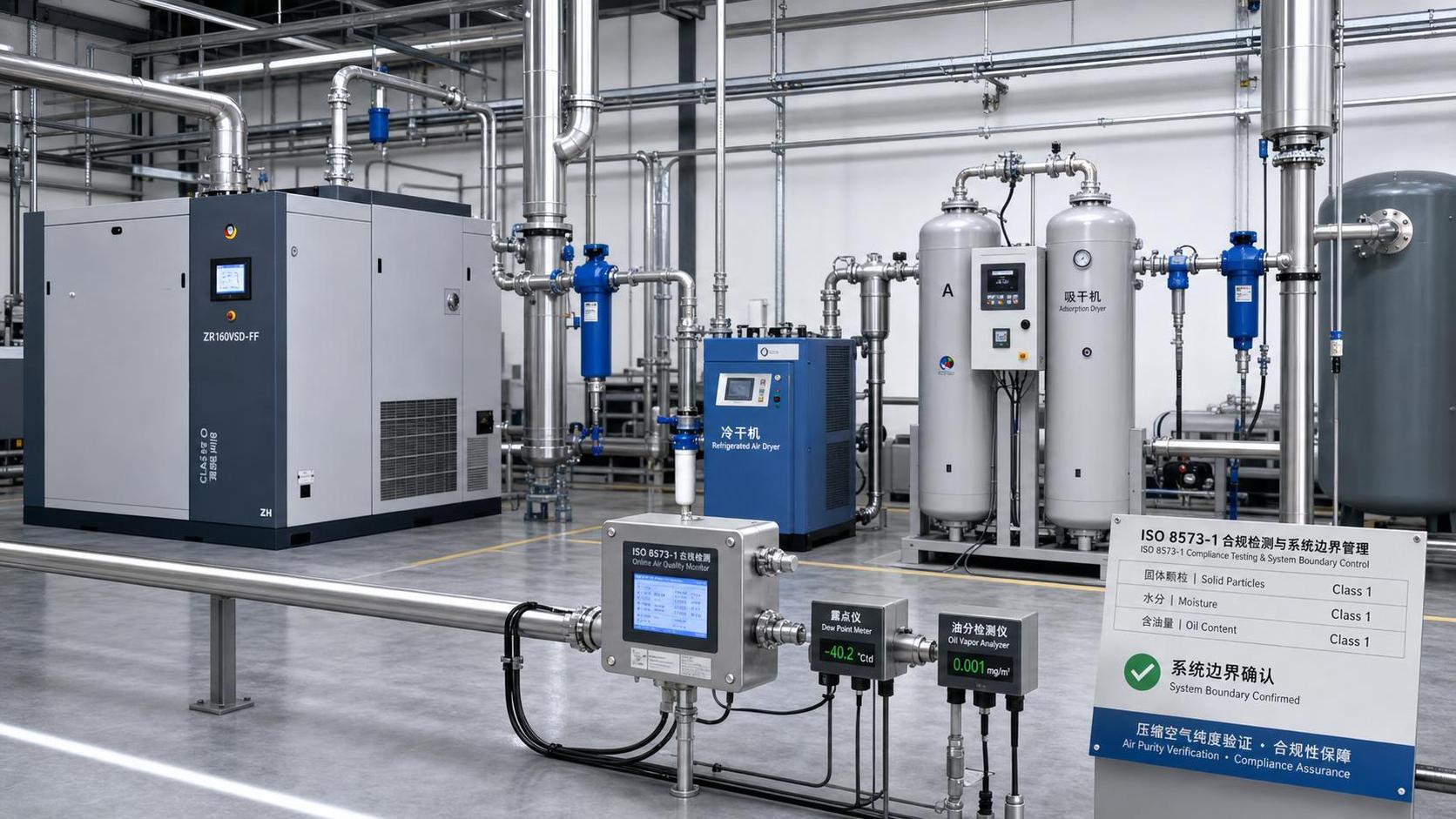
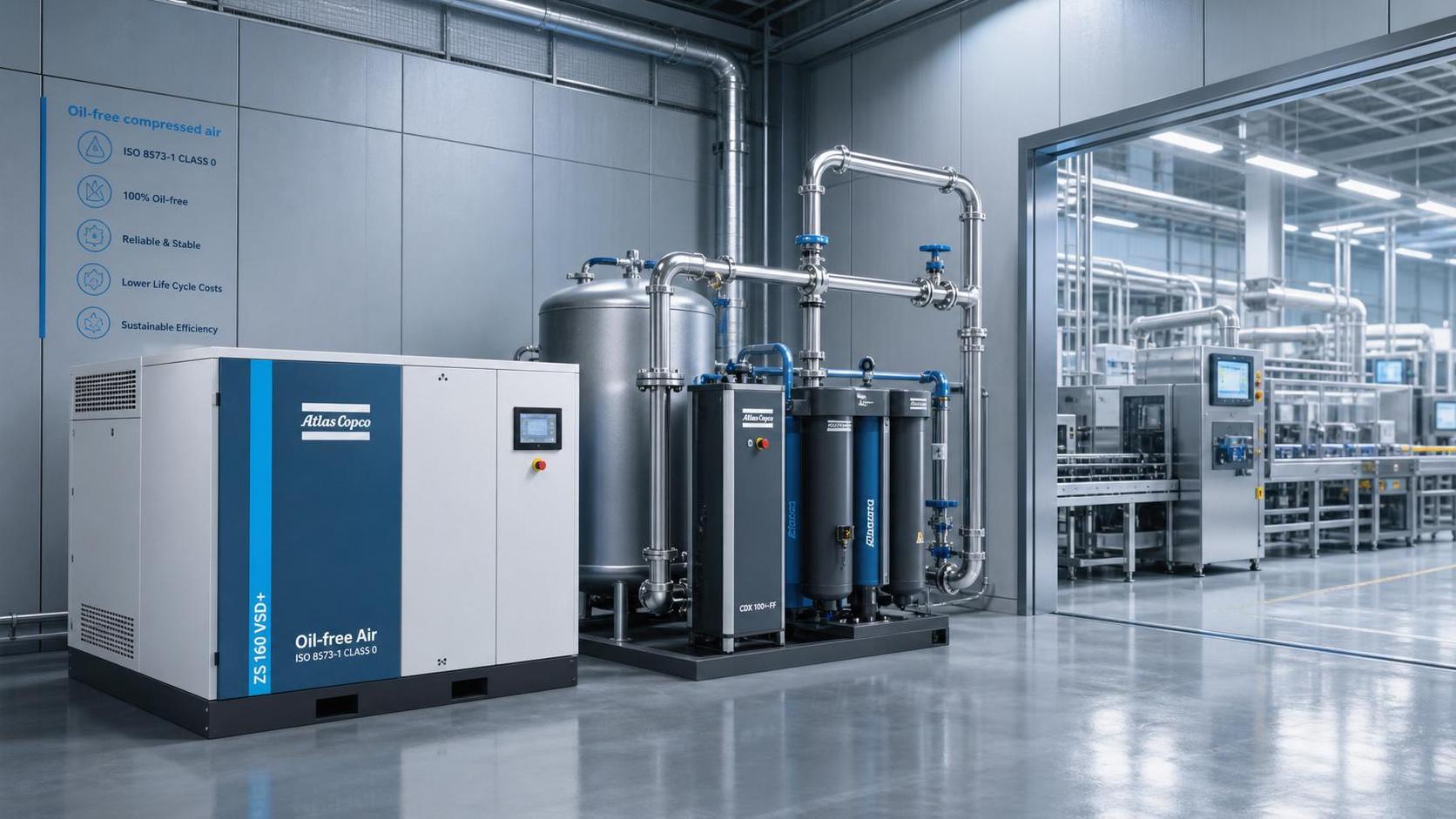
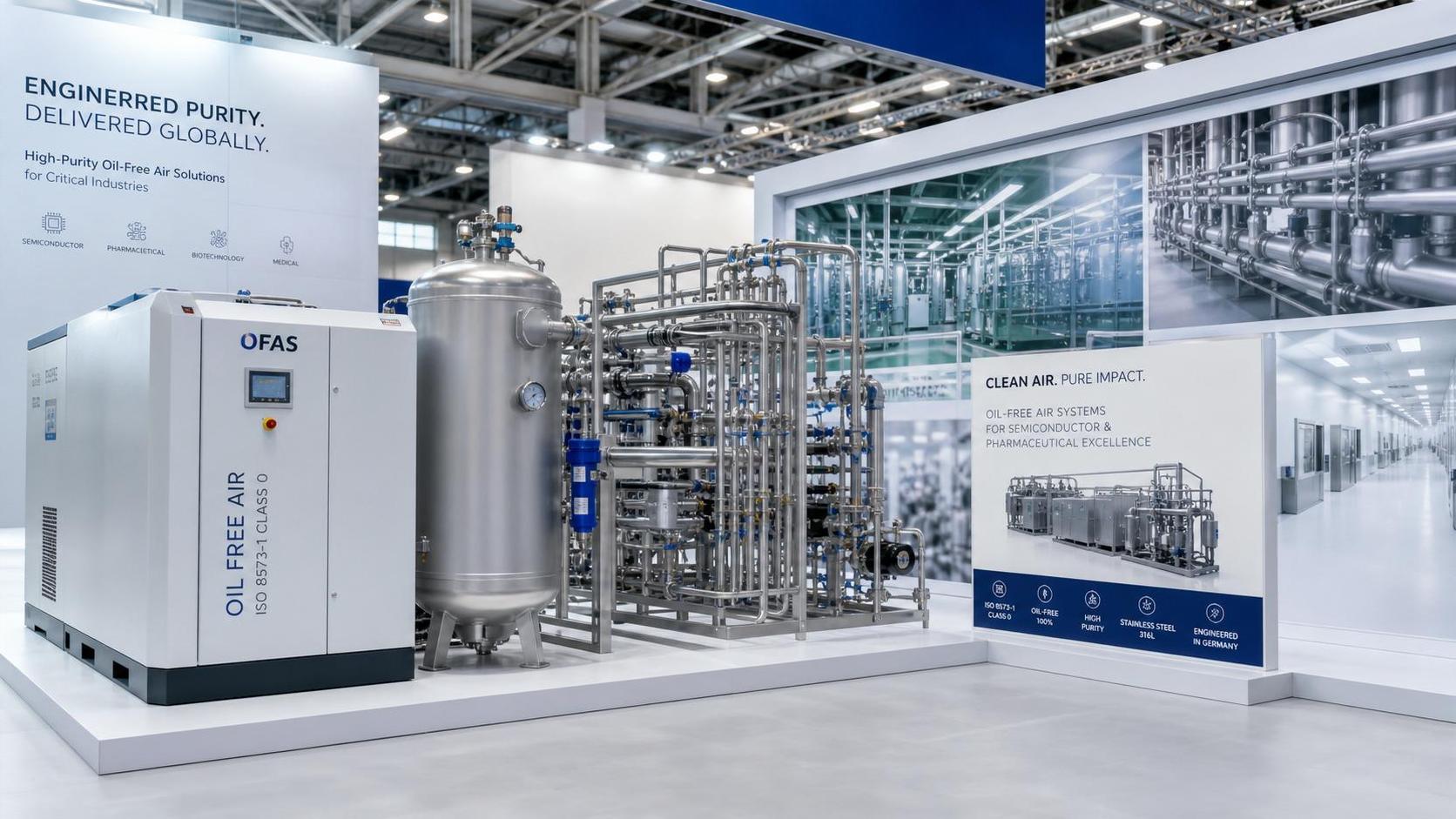
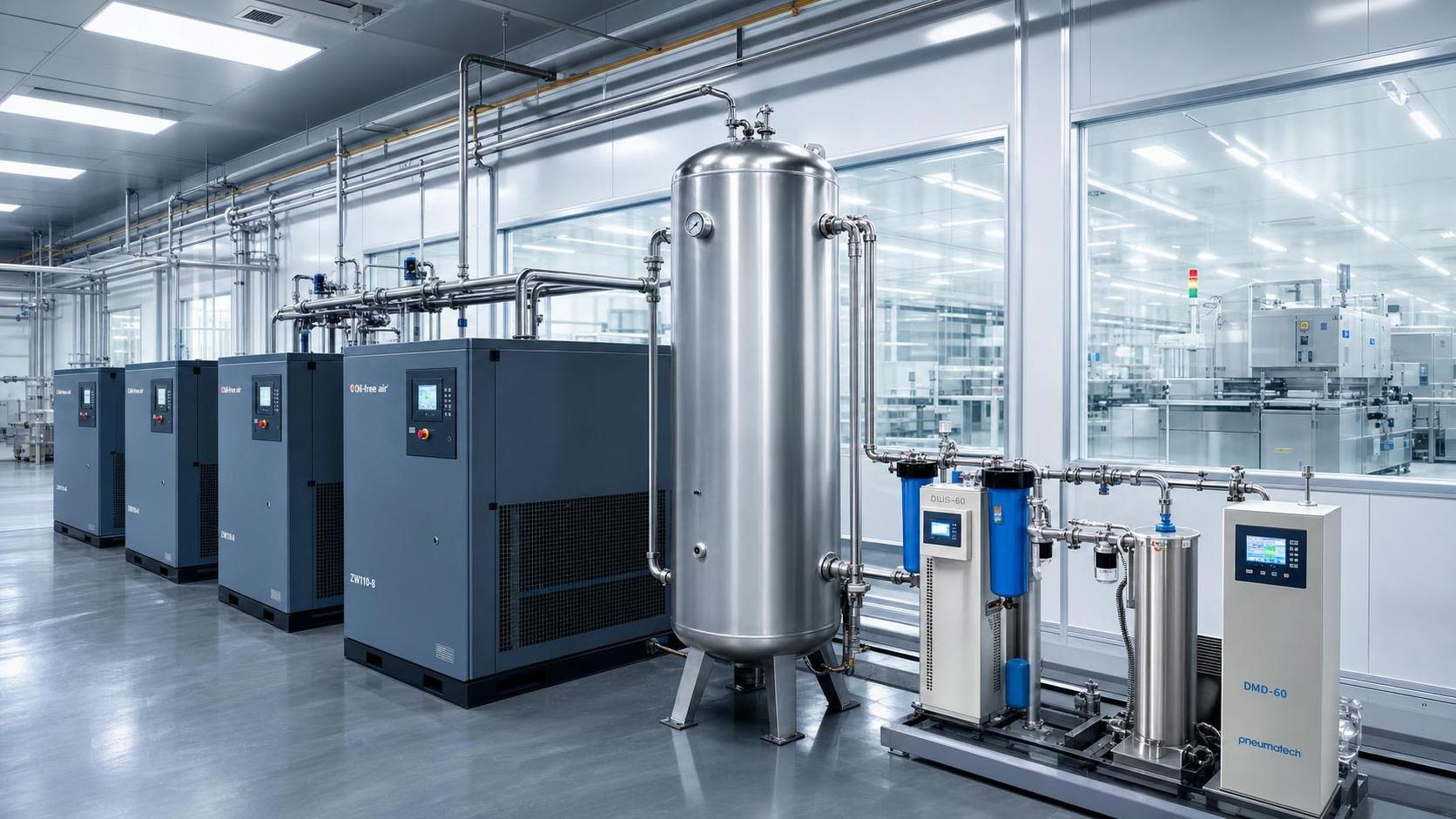
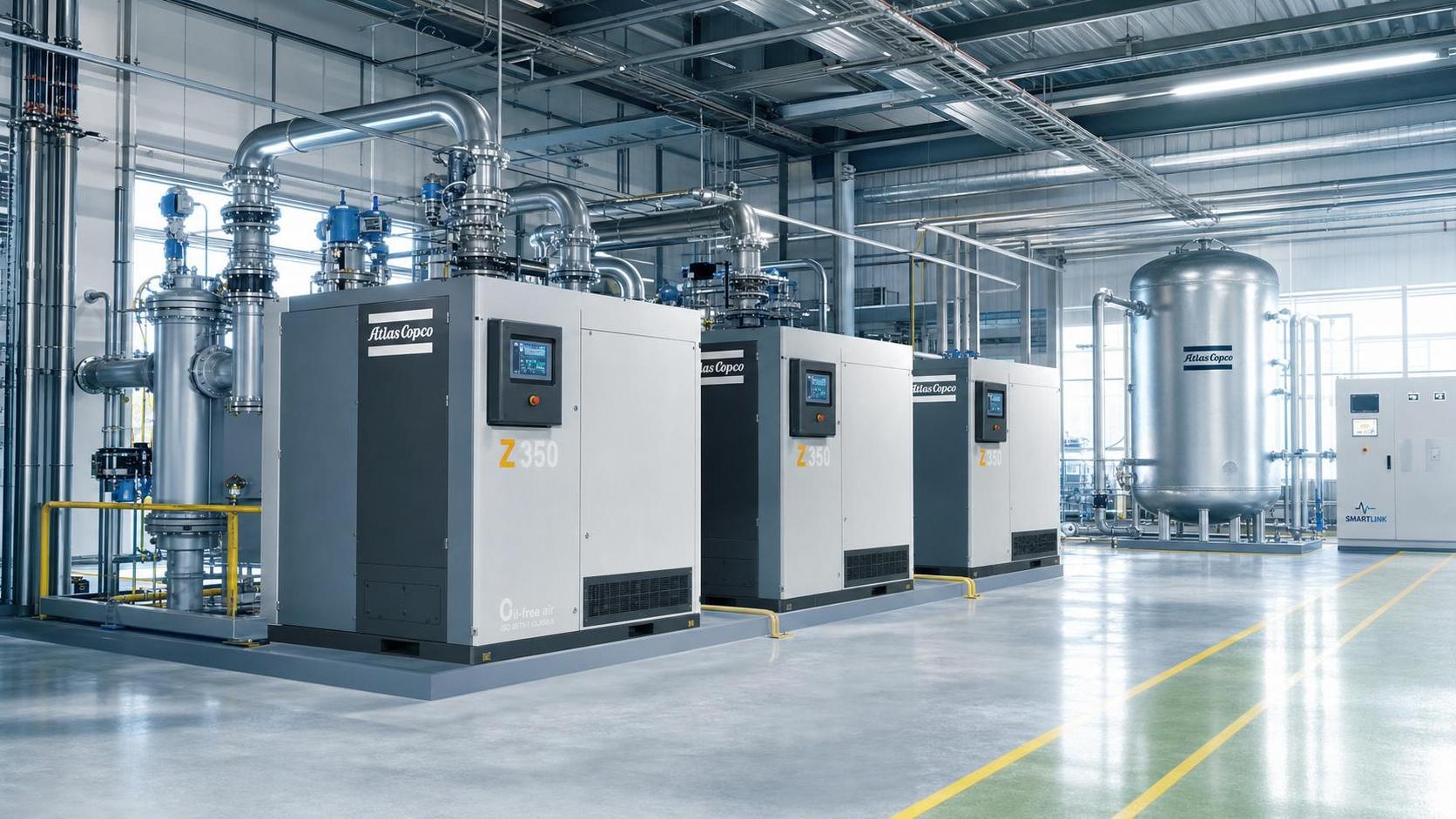
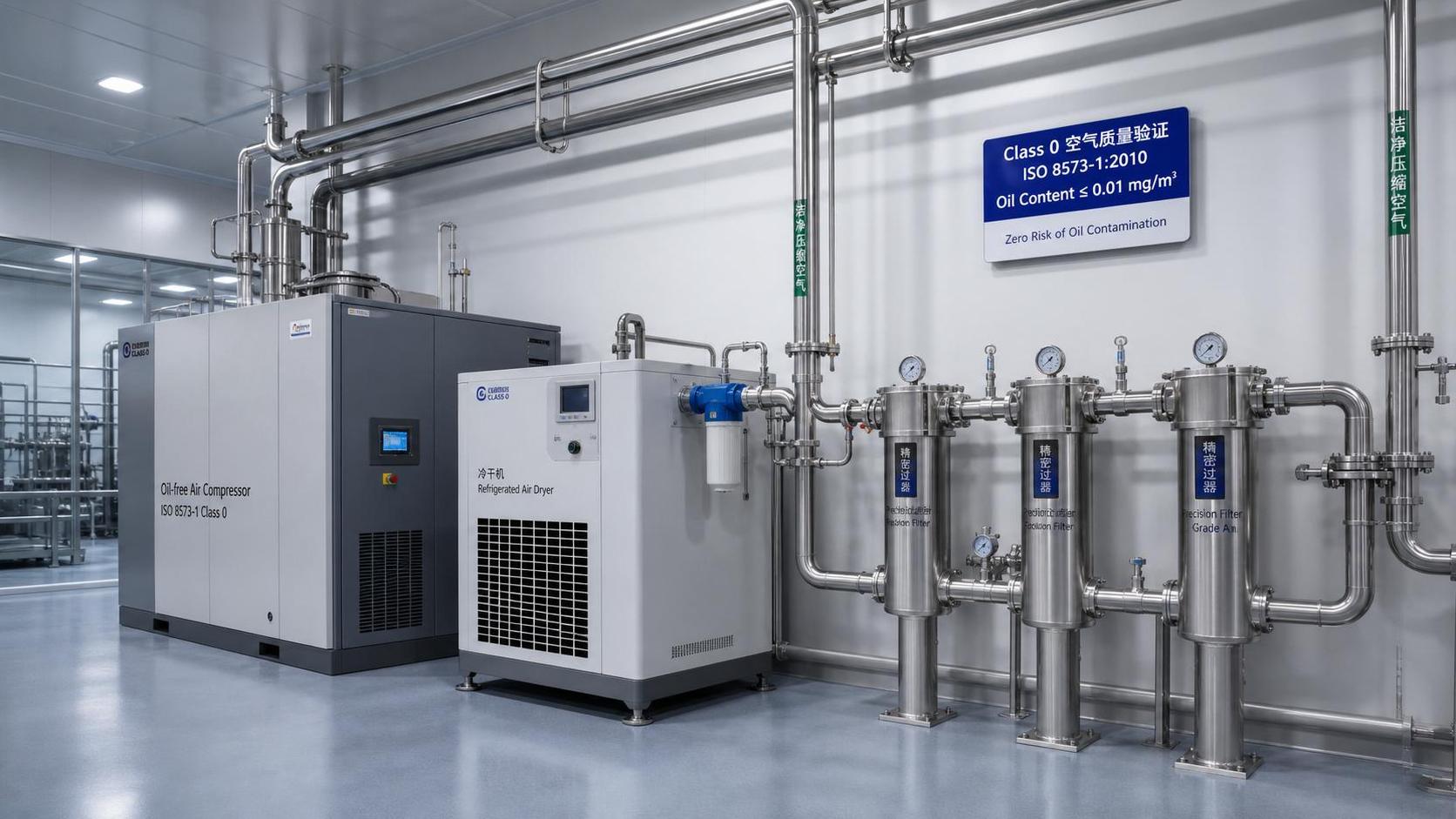
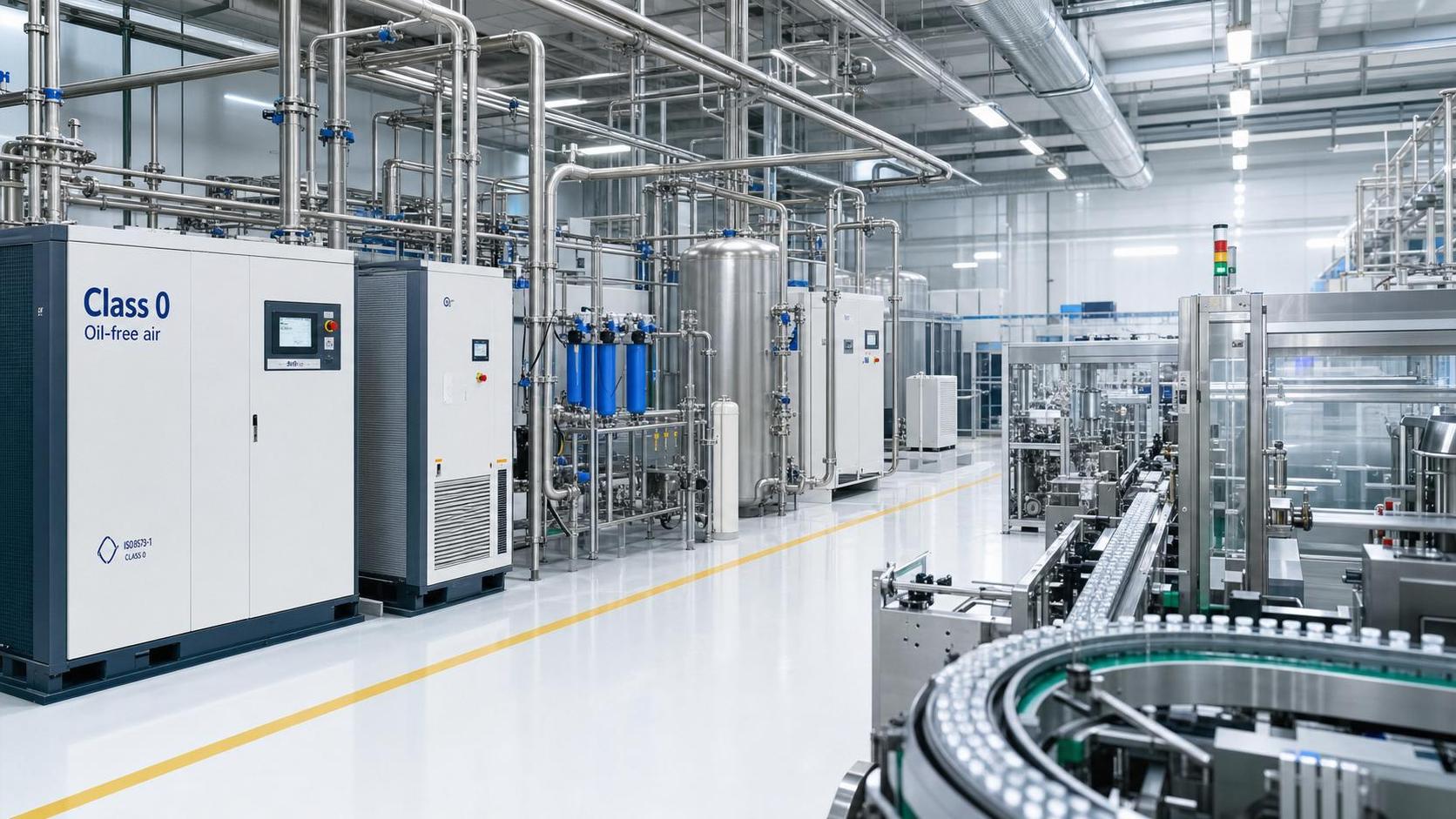
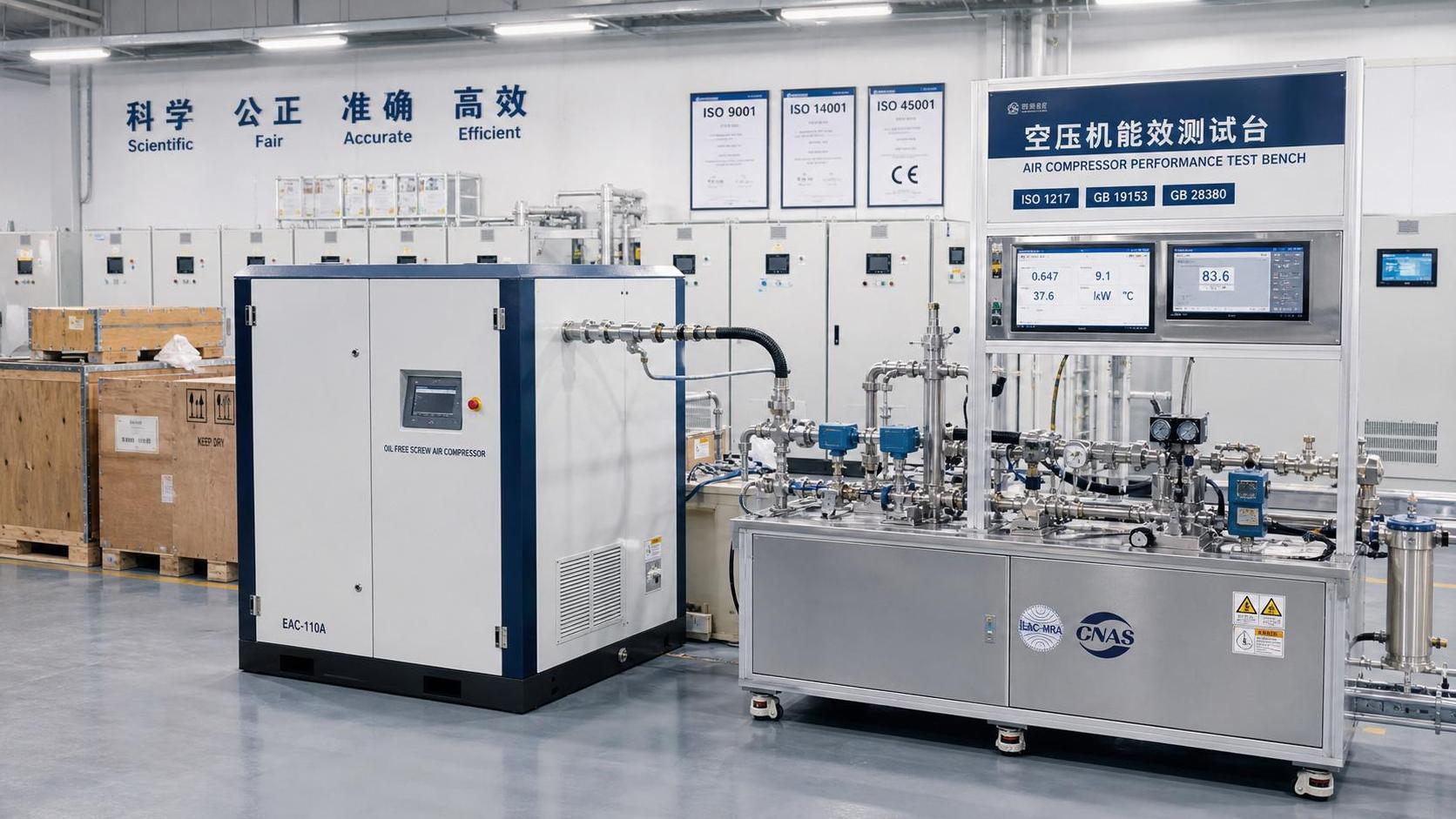
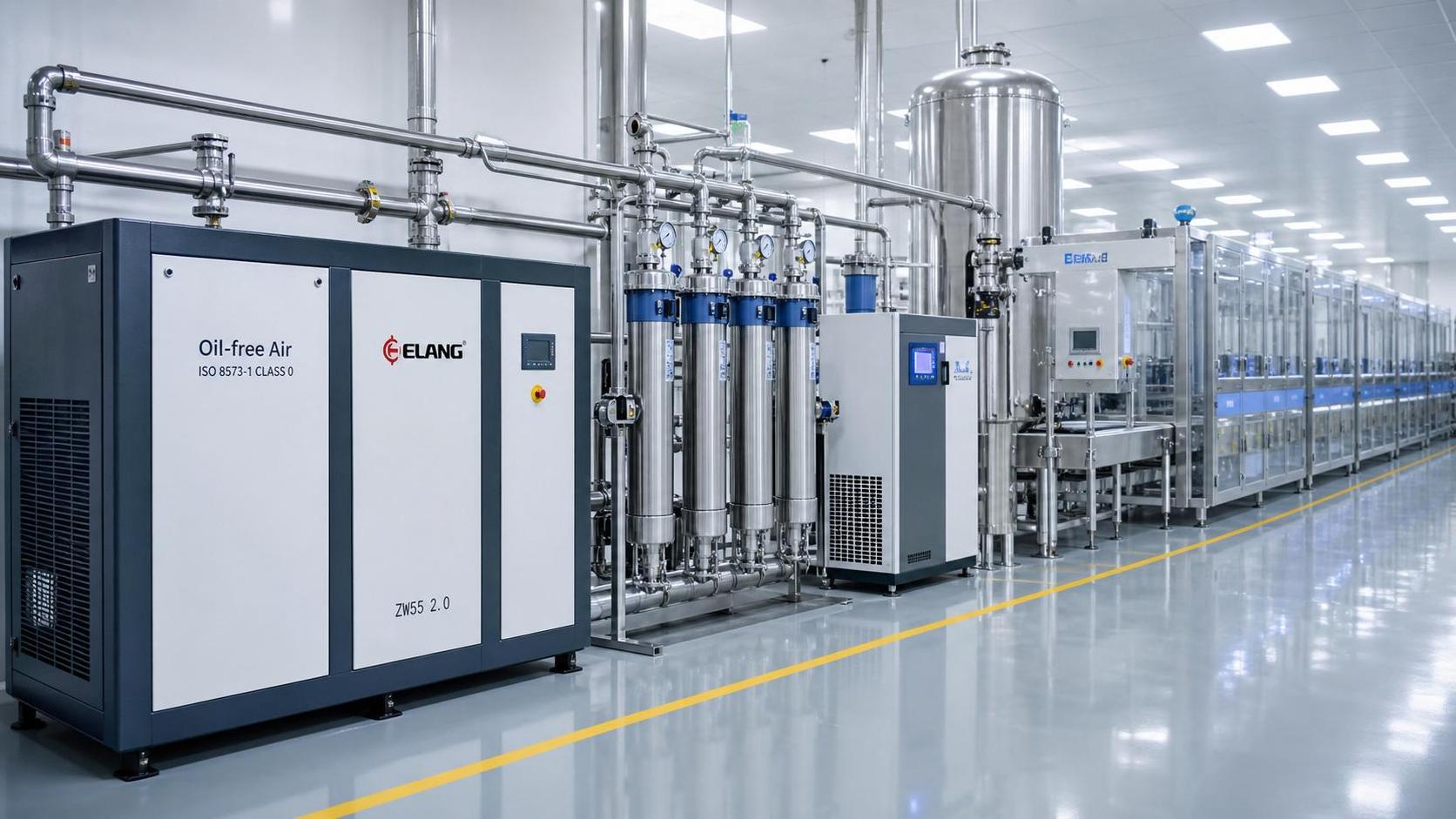
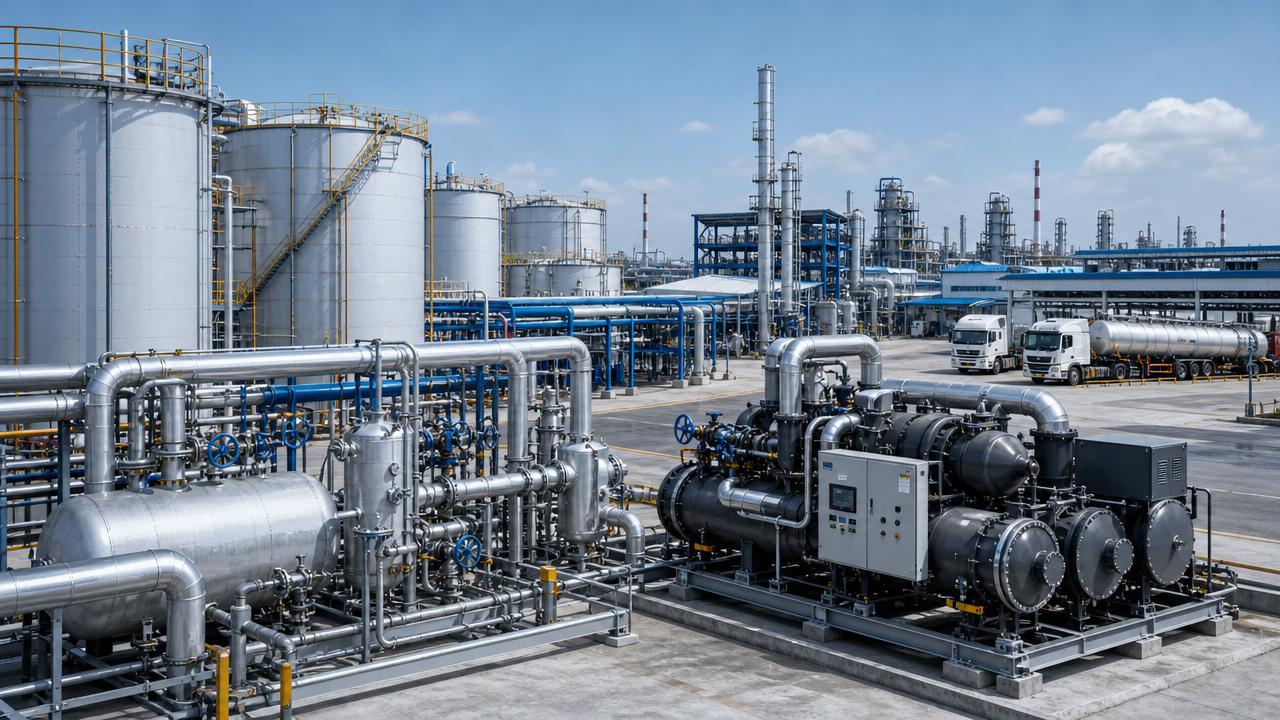
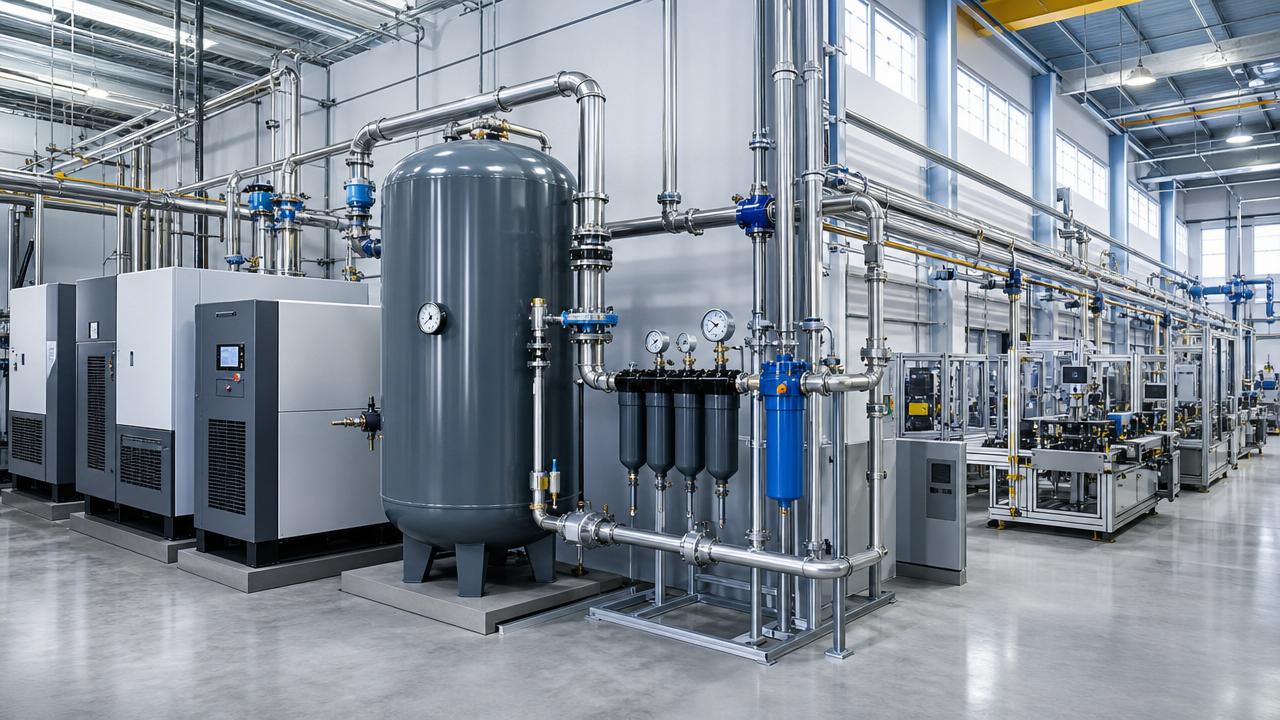
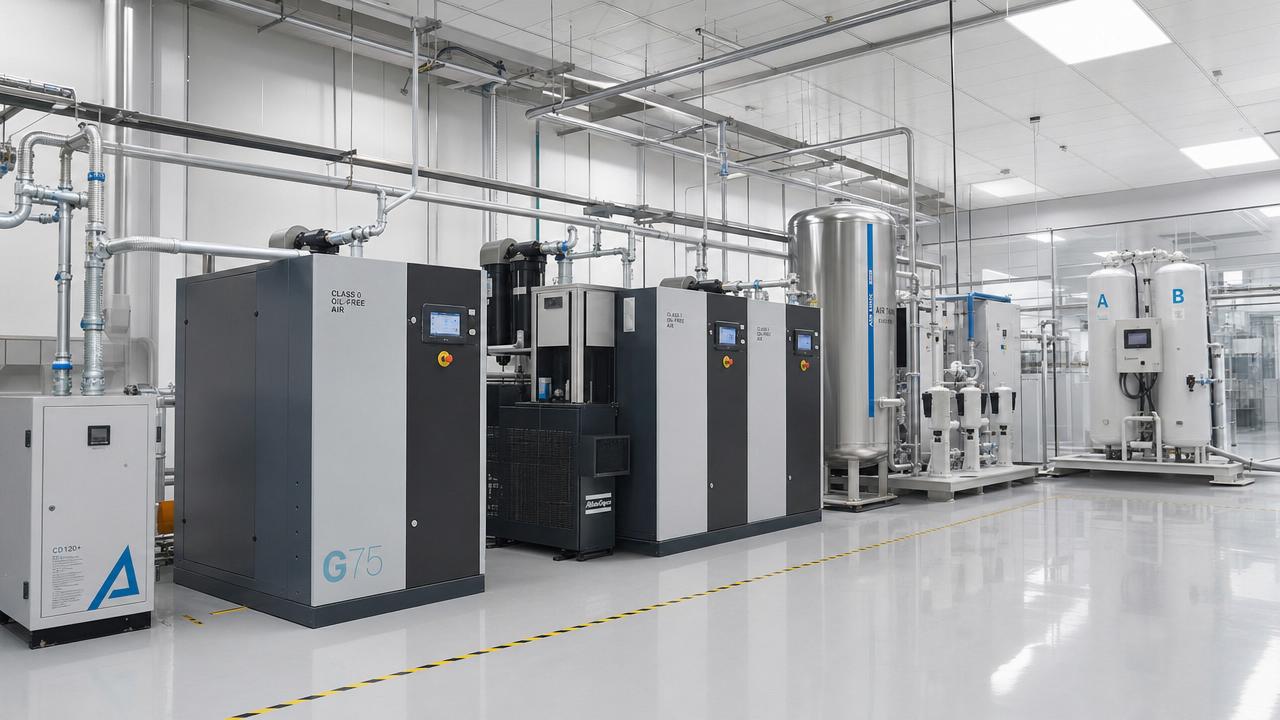
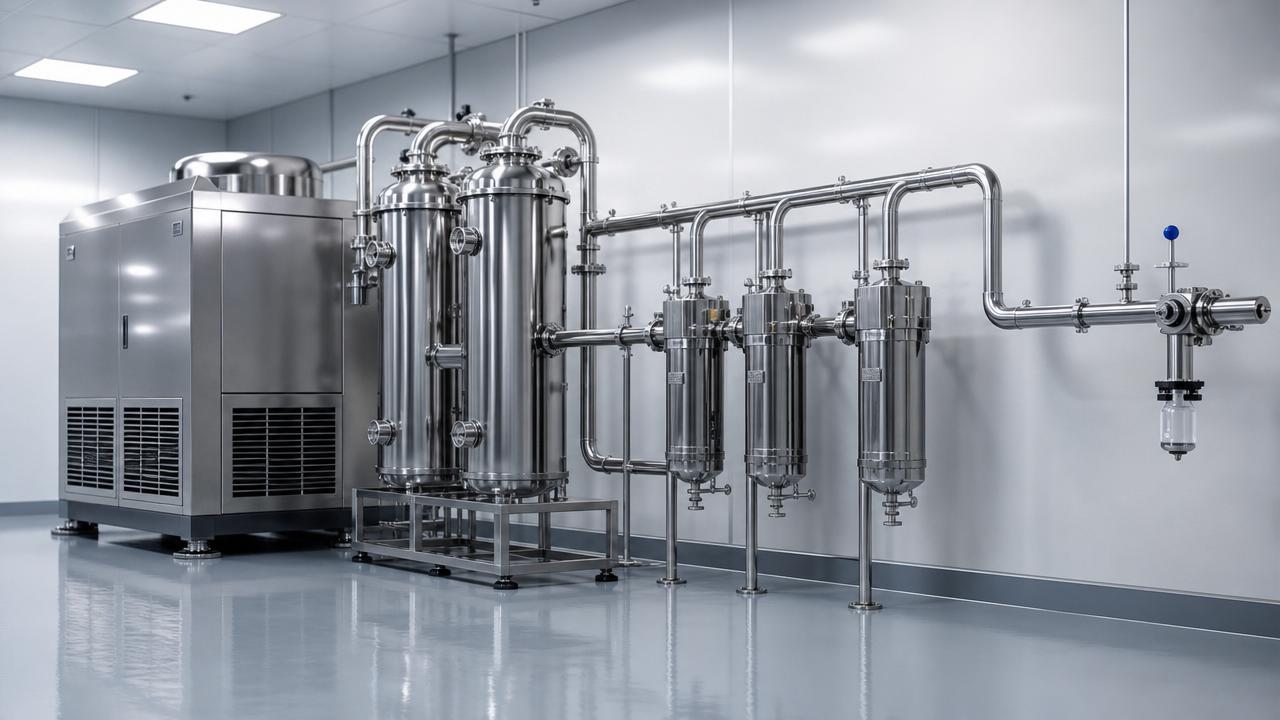
[图片占位符1:热带工厂内洁净压缩空气系统的典型配置示意,包括压缩机、干燥机、过滤器和环形管网,alt="clean compressed air systems Southeast Asia layout for food and pharma plants"]
Start the specification from the risk assessment, not the equipment list
A good specification usually begins with a simple internal workshop. Quality, production, engineering, validation, and maintenance should agree on five points before vendors are asked to quote:
- Which use points have direct or indirect product contact?
- What air quality class is required at each critical point?
- What pressure, flow profile, and peak demand are actually needed?
- What level of redundancy is acceptable for production continuity?
- What evidence will be needed for commissioning, qualification, and audits?
Without this step, vendors are forced to guess. Some will guess conservatively and price high. Others will quote a lighter system that looks attractive in procurement review but creates trouble after startup.
In food and pharma plants, the compressed air specification should also state where measurement matters. It is common to monitor pressure at the compressor room while ignoring pressure loss at the farthest process line, where the real performance issue happens.
Oil-free versus oil-injected: the question is not ideological
This topic tends to become more emotional than technical. In critical applications, oil-free compression is often preferred because it reduces one contamination pathway and simplifies risk control. But “oil-free” should not be used as a shortcut for “problem solved.” You still need intake filtration, drying, point-of-use filtration where necessary, suitable piping materials, condensate management, and a monitoring plan.
Oil-injected systems may still be acceptable in some non-contact or segregated utility applications if the plant’s risk assessment, filtration design, and quality policy support that choice. The mistake is assuming one architecture fits the whole site.
For technical evaluators, the practical question is this: does the cost and complexity of a fully oil-free central system produce meaningful risk reduction across all loads, or would a segmented design serve the plant better? In mixed-use factories, a hybrid approach is sometimes more rational than a single standard applied everywhere.
Drying and dew point control usually matter more than people expect
In Southeast Asia, moisture is often the hidden driver of performance problems. Wet air does not only threaten product quality. It also affects valve reliability, encourages corrosion, destabilizes powder handling, and creates microbial concern in vulnerable environments.
That is why the required pressure dew point should be written into the specification with the operating conditions that matter. “Include refrigerated dryer” is not a specification. It says nothing about ambient conditions, load variation, seasonal humidity, or the consequences of off-spec dew point.
For many food applications, a properly sized dryer with reliable prefiltration and drainage may be adequate. For tighter pharmaceutical or especially dry process requirements, desiccant drying may be justified. The choice depends on the validated need at the point of use, not on habit.
Two checks are worth making early:
- Is the required dew point being specified at the dryer outlet or at the critical use point?
- Is the dryer sized for local intake humidity and realistic summer operating conditions?
That distinction sounds minor. It is not. It often explains why a system passes factory acceptance but underperforms in the real plant.
Filtration strategy should match the application path
A common buying error is stacking filters without a clear contamination control logic. More filters do not automatically mean safer air. They can increase pressure drop, energy use, and maintenance frequency if they are applied indiscriminately.
A better approach is to define the treatment sequence based on the contaminants you need to remove and the point where removal is most effective. Bulk liquid removal, particulate filtration, oil aerosol removal, vapor control where necessary, and point-of-use polishing each have their place. In clean manufacturing, the distribution network matters just as much. Poorly designed dead legs, low points without drains, or old carbon steel piping can undo an otherwise expensive treatment package.
For food plants with washdown zones, it is also worth checking whether downstream piping and point-of-use assemblies are protected against local environmental ingress. Some teams specify a high-grade central system and then install weak downstream hardware in the dirtiest parts of the factory.
Do not treat compliance as a document exercise
Food and pharmaceutical plants across Southeast Asia operate under different customer standards, internal quality systems, and local regulatory frameworks. Because requirements vary by product type, export market, and facility classification, the exact compliance basis should be confirmed with the plant’s quality and regulatory teams. What matters for specification is that the compressed air system can be tested, maintained, and documented in a repeatable way.
For pharma, that usually means clear user requirement specifications, traceable component data, calibration planning, and defined qualification support. For food, supplier declarations and routine testing plans may be more relevant than a complex validation package, depending on the process.
If your plant expects third-party audits, ask vendors very plainly what they will provide at handover: material documentation, filter performance data, P&IDs, instrument lists, recommended sampling points, maintenance intervals, alarm philosophy, and commissioning records. A technically decent system with weak documentation is still a poor fit for regulated production.
Energy efficiency belongs in the specification, but not as the first filter
It is reasonable to compare specific power, control strategy, heat recovery potential, and pressure drop. Still, energy performance should be assessed after the contamination and reliability basis is clear. A system that saves energy while creating dew point excursions or unstable pressure at critical lines is not efficient in any useful operational sense.
That said, many plants in the region do leave easy savings on the table. Oversized compressors, excessive system pressure, neglected leak management, and dirty filters can erase the value of a premium machine quickly. When you evaluate proposals, ask for lifecycle assumptions, not just rated motor efficiency. You want to know how the package will perform under your part-load profile, standby philosophy, and maintenance reality.
This is one area where an industry intelligence source such as GTC-Matrix can be useful. Not as a substitute for site engineering, but as a way to track broader trends in oil-free compression, energy cost shifts, and component technologies that may affect medium-term decisions.
Questions that expose weak proposals fast
When reviewing vendor offers, a few practical questions usually separate robust engineering from brochure-level quoting:
- What inlet temperature and humidity assumptions were used for sizing?
- What pressure dew point is guaranteed, under what conditions, and how will it be measured?
- What is the expected pressure drop across the full treatment train at end-of-life filter condition?
- How is redundancy arranged for compressor, dryer, filters, drains, and controls?
- What piping material and layout practices are recommended for this hygiene level?
- What testing and documentation are included for audit readiness?
If the answers stay vague, the proposal is still immature.
Common mistakes in food and pharma compressed air projects
One is specifying a purity class without defining the sampling plan. Another is placing all treatment centrally when the risk profile really needs additional point-of-use protection. A third is assuming the cleanest possible air class is automatically the best commercial decision.
There is also a recurring maintenance mistake: systems are bought for high-spec production but operated with low-discipline utility practices. Filters are changed late, drains fail open or shut, dew point is not trended, and distribution modifications happen without design review. When this gap exists, even a strong initial specification will not hold its value.
That is why the best specification is one the plant can actually sustain. In other words, choose the clean air architecture your site can maintain with discipline.
Where to draw the line before you buy
Before final approval, confirm these four items in writing: required air quality at critical use points, local design conditions, documentation and validation deliverables, and ownership of ongoing monitoring. If any one of those is still assumed rather than stated, the project is not fully specified.
For buyers comparing clean compressed air systems Southeast Asia, that is usually the difference between a system that looks compliant and one that remains stable through audits, production growth, and wet-season operating stress.
FAQ
Is oil-free compression always necessary for food and pharma plants?
No. It is often preferred for critical applications, but not every use point requires the same architecture. The decision should follow product risk, contact level, and quality policy.
What is the most overlooked design factor in Southeast Asia?
Ambient humidity. Many systems are sized correctly for flow but too optimistically for moisture load, especially during seasonal peaks.
Should air quality be specified at the compressor room or at the point of use?
For critical applications, the point of use matters more. Distribution piping, pressure loss, and local contamination risks can change the air condition after central treatment.
Can one central system serve both critical and general utility air?
Sometimes, but it is not always the best answer. Mixed-use plants often benefit from segmentation or added downstream treatment for critical branches.
What should be requested from vendors besides equipment data?
Ask for sizing assumptions, pressure drop details, dew point guarantee conditions, maintenance requirements, and documentation for commissioning, testing, and audits.
Image Placeholder List
- Position suggestion: After the section discussing regional humidity and plant-room reality
- Image content: A schematic of a tropical food or pharma compressed air system showing compressor, dryer, filters, receiver, drains, and loop piping
- Alt text: "clean compressed air systems Southeast Asia layout for food and pharma plants"
Internal Link Anchor Text Suggestions
- Compressed air ISO 8573 air quality classes: guide or explainer page
- Oil-free vs oil-injected compressors for regulated manufacturing: comparison page
- How to size industrial air dryers in humid climates: technical guide
- Compressed air validation and monitoring for pharma plants: checklist page
- Energy efficiency factors in industrial compressed air systems: insights page
External Authority Source Suggestions
- International standards organization materials related to compressed air quality and testing
- Food safety or pharmaceutical regulatory guidance from relevant government agencies
- Compressor and air treatment manufacturers’ official technical documentation and application notes
Related News
- How to verify compressed air cleanroom standards before installationAuthor :Pneumatic Power Engineer

- When oil free vacuum pumps make sense for European cleanroom projectsAuthor :Pneumatic Power Engineer

- When do pure air compression systems need ISO 8573-1 Class 0?Author :Pneumatic Power Engineer

- How do compressed air systems for electronics prevent contamination?Author :Pneumatic Power Engineer

- When does an oil-free process vacuum pump justify its higher cost?Author :Pneumatic Power Engineer

- Does ISO 9001 certification apply to compressed air quality?Author :Pneumatic Power Engineer

- How to Specify Clean Compressed Air Systems in Southeast Asia for Food and Pharma PlantsAuthor :Pneumatic Power Engineer

- How to Compare Oil Free Vacuum Pumps for Clean Process RequirementsAuthor :Pneumatic Power Engineer

- How to Evaluate a Clean Compressed Air Systems Supplier for ISO 8573-1 ComplianceAuthor :Pneumatic Power Engineer

- How to Choose the Right Oil-Free Vacuum PumpAuthor :Pneumatic Power Engineer

- VDI 2083 Update Makes Class 0 Proof MandatoryAuthor :Pneumatic Power Engineer

- When to Use Oil Free Vacuum Pumps for High Purity LinesAuthor :Pneumatic Power Engineer

- Compressed Air Solutions: When Oil-Free Systems Lower Total Operating CostAuthor :Pneumatic Power Engineer

- ATMOsphere Europe 2026 Adds Oil-free Systems ZoneAuthor :Pneumatic Power Engineer

- Oil-Free Compressors: Key Selection Criteria for Clean Air SystemsAuthor :Pneumatic Power Engineer

- How to Compare Oil Free Centrifugal Compressors for Stable Plant Air SupplyAuthor :Pneumatic Power Engineer

- Compressed Air Class 0 vs Oil-Free: What Really MattersAuthor :Pneumatic Power Engineer

- Oil-Free Compression Class 0: What the Standard Really Means in ProductionAuthor :Pneumatic Power Engineer

- Air Compression Cost Comparison: Oil-Free vs Screw Systems in Daily OperationAuthor :Pneumatic Power Engineer

- Saudi SASO Tightens IEC 63349-2 for Oil-Free CompressorsAuthor :Pneumatic Power Engineer

- Saudi SASO Tightens Oil-Free Compressor Efficiency RulesAuthor :Pneumatic Power Engineer

- Pure Air Compression Systems for Clean Production LinesAuthor :Pneumatic Power Engineer

- IEC 63349-2:2026 makes energy certification mandatoryAuthor :Pneumatic Power Engineer

- IEC 63349-2:2026 Sets New Entry Rules for Oil-Free Screw CompressorsAuthor :Pneumatic Power Engineer

- IEC 63349-2:2026 Takes Effect for Oil-Free Screw CompressorsAuthor :Pneumatic Power Engineer

- IEC 63349-2:2026 Sets New Efficiency Gate for Oil-Free Screw CompressorsAuthor :Pneumatic Power Engineer

- IEC 63349-2:2026 Takes Effect for Oil-Free Screw CompressorsAuthor :Pneumatic Power Engineer

- SABIC Methanol Force Majeure Extended, Tightening R134a/R407C FeedstocksAuthor :Pneumatic Power Engineer

- How to Evaluate Pneumatic Power Systems for Stable OutputAuthor :Pneumatic Power Engineer

- Oil-Free Compression vs Lubricated Systems: Key Trade-OffsAuthor :Pneumatic Power Engineer
![]()
- Oil-Free Compression: 2026 Cost and Compliance Trade-OffsAuthor :Pneumatic Power Engineer

- Oil-Free Compression: Cost and Contamination RisksAuthor :Pneumatic Power Engineer
![]()
- Euro PMI Drop Delays Oil-Free Systems OrdersAuthor :Pneumatic Power Engineer

- Germany/France May PMI Decline; Oil-free Systems EU Projects DelayedAuthor :Pneumatic Power Engineer
![]()
- Compression Technology Options for Cleaner Oil-Free Air SupplyAuthor :Pneumatic Power Engineer

- TUV Rheinland Enforces Full-Chain Class 0 Certification for Oil-Free SystemsAuthor :Pneumatic Power Engineer