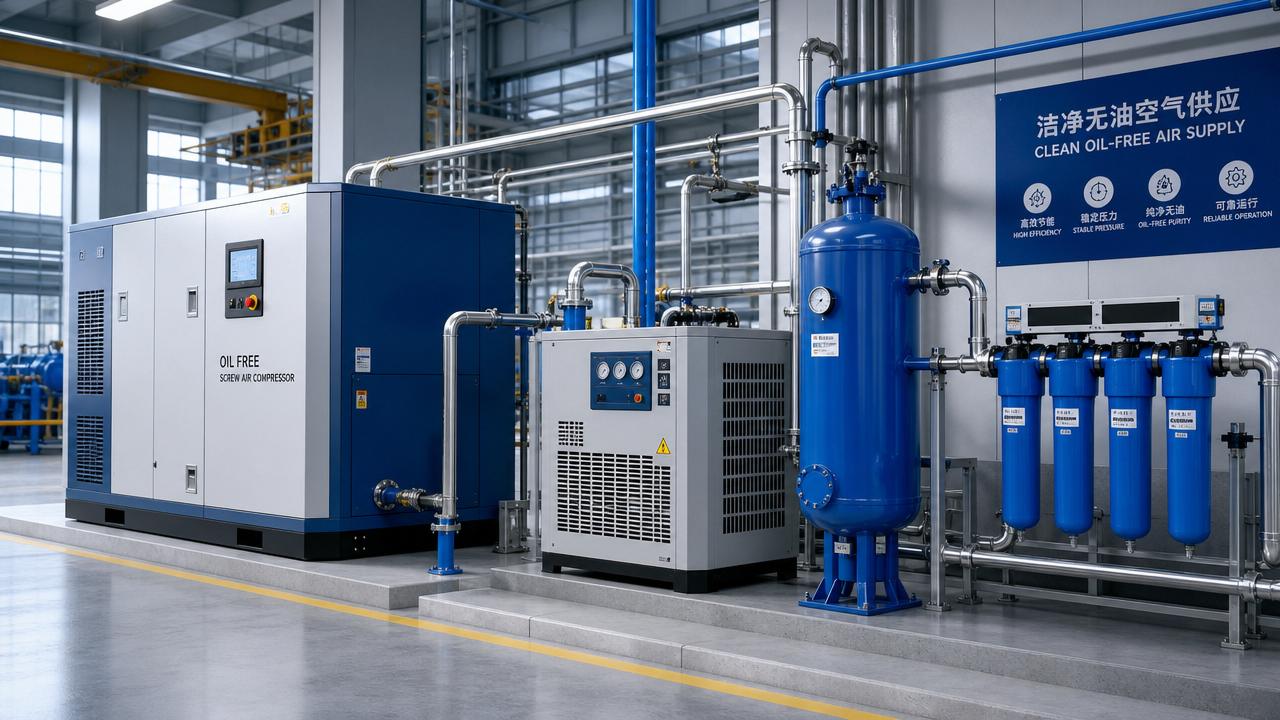
IEC 63349-2:2026 Sets New Efficiency Gate for Oil-Free Screw Compressors




On June 15, 2026, the IEC formally released IEC 63349-2:2026, creating a global energy-efficiency classification and test method for oil-free screw compressors for the first time. Because export-oriented products will now need third-party reports covering both COP and leakage rate, the update immediately matters to manufacturers, exporters, certification teams, distributors, and buyers serving regulated overseas markets. The development is drawing attention not only as a technical standards change, but also as a market-access requirement already tied to compliance pathways in several key destinations.
A New Baseline for Export Compliance
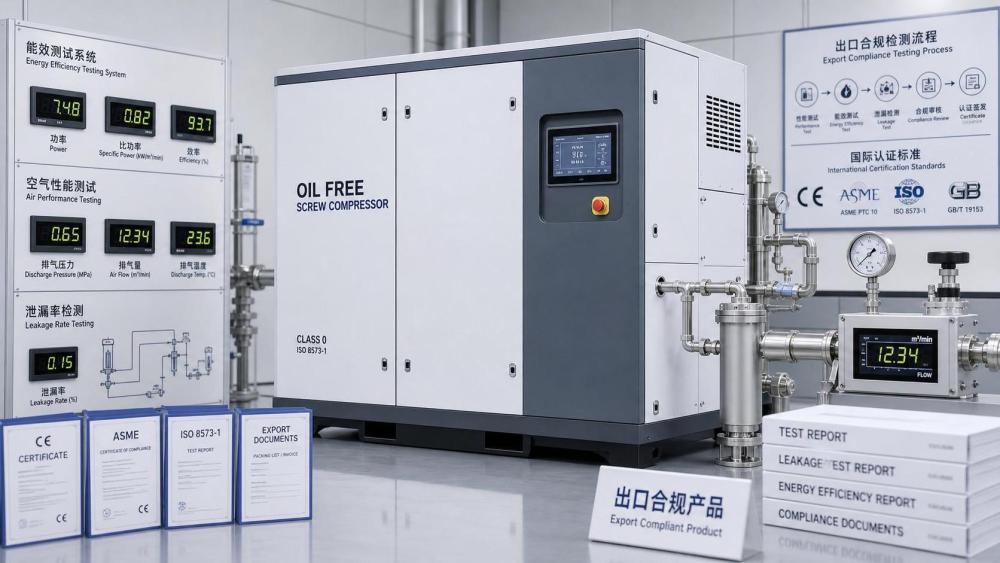
According to the information provided, IEC released IEC 63349-2:2026 on June 15, 2026. The standard establishes a globally unified energy-efficiency grading framework and testing method for oil-free screw compressors.
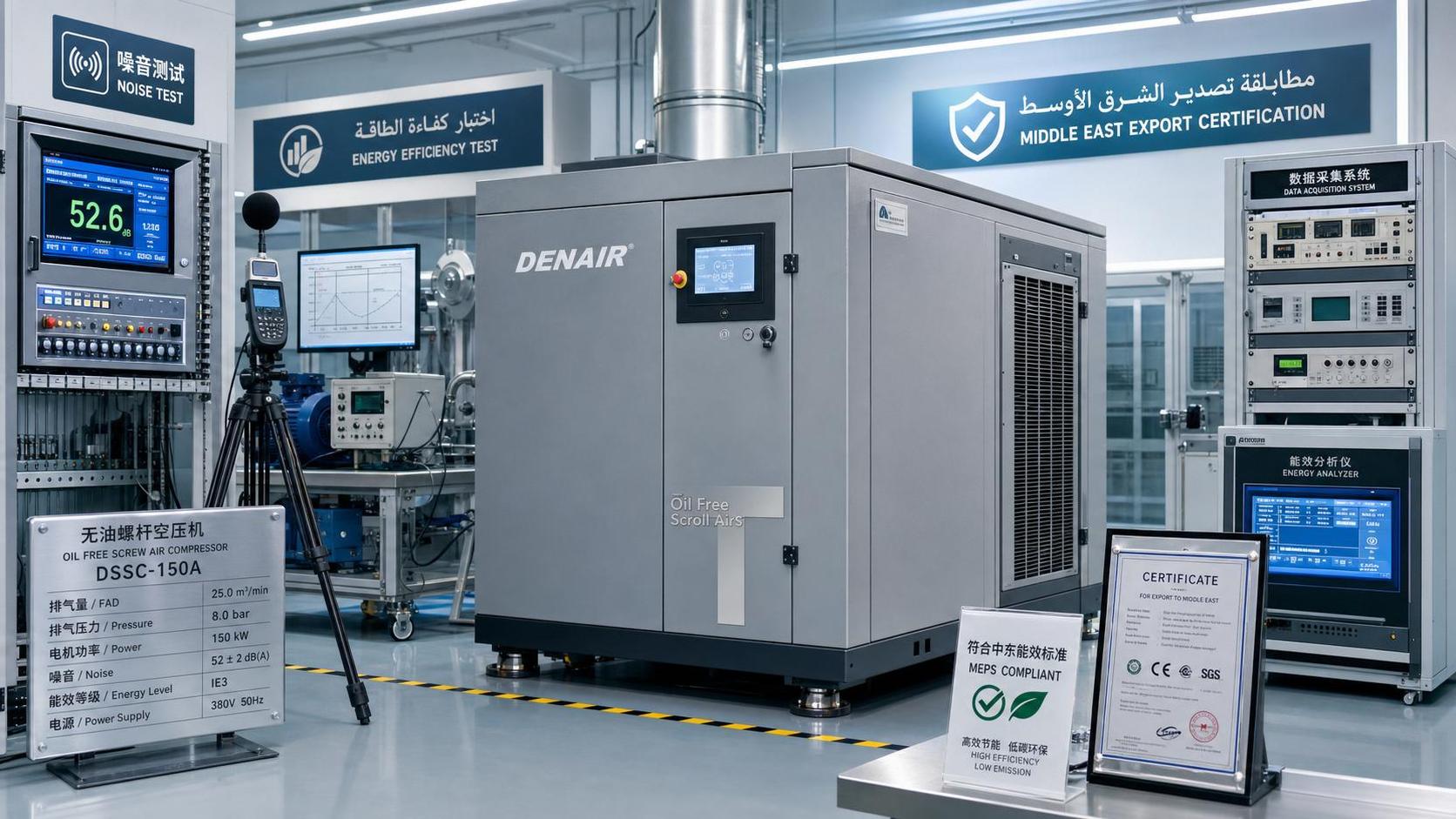
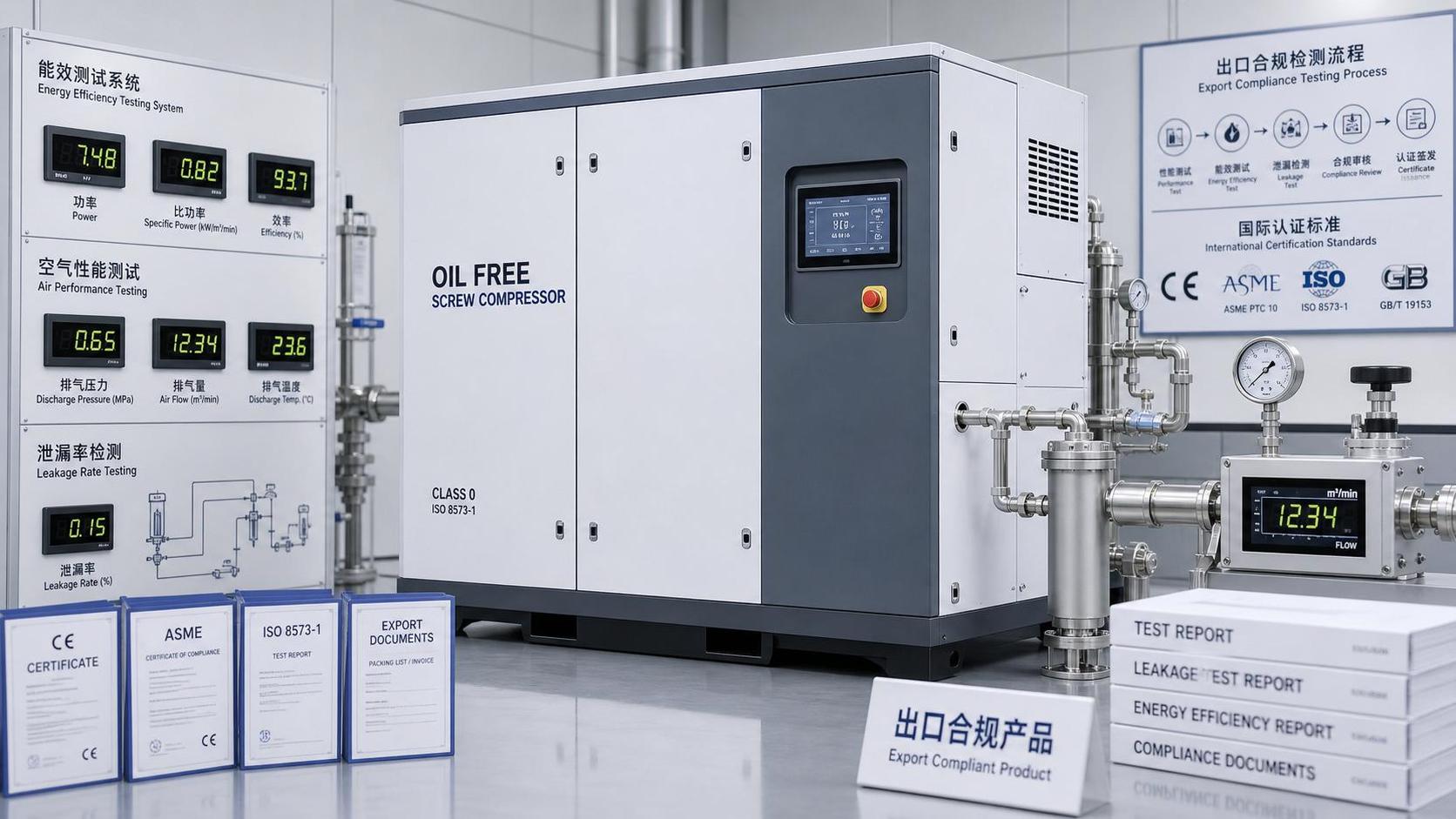
The same information states that export products must provide two third-party reports: one for COP and one for leakage rate. It also states that the standard has already been adopted by EU CE, US AHRI, and Saudi Arabia's SABER platform as a mandatory basis for market access.
In China, certification scheduling at leading manufacturers has reportedly been pushed back to Q4 2026. This indicates that certification capacity and project timing are already becoming part of the operating environment around the new standard.
Where the Pressure Will Be Felt First
Export manufacturers face a documentation and timing challenge
From an industry perspective, companies producing oil-free screw compressors for overseas markets are likely to be the first directly affected. The impact is likely to appear in product testing, certification planning, export documentation, and delivery scheduling, because access to certain markets is now linked to third-party COP and leakage-rate reporting.
Trading and channel businesses need to recheck market-entry assumptions
For traders, distributors, and channel operators handling cross-border sales, the key issue is whether existing product lines still match the latest entry conditions in destination markets. What deserves closer attention is not only product performance itself, but also whether the supporting compliance file is complete enough for CE-, AHRI-, or SABER-related submission processes referenced in the provided information.
Procurement and end-user projects may see qualification filters tighten
Buyers and end-use project teams may also be affected where imported or export-bound equipment is involved. Analysis shows that procurement review could shift more attention toward third-party test reports, supplier certification status, and delivery certainty, especially where project timelines depend on formal acceptance in regulated markets.
Certification and supply-chain support functions become more exposed
Service providers involved in testing coordination, compliance preparation, logistics, and delivery support may see pressure concentrate in scheduling and handoff points. The mention that certification queues for major Chinese manufacturers have extended to Q4 2026 suggests that lead time management may become a practical issue across the wider supply chain.
What Companies Should Watch Now
Track how the rule is applied in target markets
Companies should closely monitor how IEC 63349-2:2026 is referenced in actual access procedures tied to EU CE, US AHRI, and Saudi SABER. The policy signal is already clear in the provided information, but day-to-day execution often depends on how documentation, test acceptance, and submission requirements are handled in each market.
Review which export models need immediate certification planning
Businesses should identify which oil-free screw compressor models are tied to export orders or active market expansion plans and then map those products against the new reporting requirement. This is especially relevant where order intake, production release, and delivery commitments depend on certification timing.
Prepare for longer lead times in testing and approval
The reported extension of certification schedules at leading Chinese manufacturers to Q4 2026 points to a practical planning issue. Companies may need to revisit internal timelines for testing slots, third-party report readiness, shipment planning, and customer communication rather than treating certification as a final-stage formality.
Align supplier files and customer communication early
For companies working through multi-party supply chains, attention should go to supplier qualifications, report completeness, and consistency in external communication. Where customers expect confirmed compliance before shipment or project award, incomplete paperwork may become as significant as product readiness itself.
Why This Looks Bigger Than a Routine Standards Update
Observably, this development is more than a narrow technical revision because the standard is already connected to mandatory market-access mechanisms in multiple jurisdictions named in the provided information. That gives the release immediate commercial relevance, not just future reference value.
At the same time, it is more appropriate to understand this as both a present compliance change and a longer-term signal. The confirmed facts show that the rule has already moved into admission frameworks, while the full operational impact on order cycles, certification bottlenecks, and supplier selection still deserves continued observation.
Analysis shows that the most important distinction for industry participants is between a published standard and practical execution capacity. The standard is in force as a reference point, but scheduling delays and documentation readiness may determine how quickly its effects are felt in real transactions.
How the Industry May Need to Read This Moment
The current significance of IEC 63349-2:2026 lies in the combination of unified testing criteria and mandatory compliance linkage for export markets referenced in the provided information. For industry participants, the issue is not simply whether a new standard exists, but whether products, documents, and certification timelines are already aligned with it.
A neutral reading is that this is not just a short-lived headline, nor is it a fully settled market outcome. It is better understood as a clear compliance signal with immediate operational implications and a wider impact that still needs to be tracked through certification schedules, trade execution, and customer qualification practices.
About the Basis of This Article
This article is generated from the user-provided news title, event date, and event summary concerning IEC 63349-2:2026. Typical source types relevant to this kind of development may include official announcements, standard-setting organization documents, industry association updates, company compliance notices, and reporting from authoritative trade media.
A specific official source link was not provided in the input, so further verification remains necessary. Continued attention should focus on any subsequent official wording, implementation details in destination markets, and updates related to certification scheduling and report acceptance.
Related News
- When oil free vacuum pumps make sense for European cleanroom projectsAuthor :Pneumatic Power Engineer

- When do pure air compression systems need ISO 8573-1 Class 0?Author :Pneumatic Power Engineer

- How do compressed air systems for electronics prevent contamination?Author :Pneumatic Power Engineer

- When does an oil-free process vacuum pump justify its higher cost?Author :Pneumatic Power Engineer

- Does ISO 9001 certification apply to compressed air quality?Author :Pneumatic Power Engineer

- How to Specify Clean Compressed Air Systems in Southeast Asia for Food and Pharma PlantsAuthor :Pneumatic Power Engineer

- How to Compare Oil Free Vacuum Pumps for Clean Process RequirementsAuthor :Pneumatic Power Engineer

- How to Evaluate a Clean Compressed Air Systems Supplier for ISO 8573-1 ComplianceAuthor :Pneumatic Power Engineer

- How to Choose the Right Oil-Free Vacuum PumpAuthor :Pneumatic Power Engineer

- VDI 2083 Update Makes Class 0 Proof MandatoryAuthor :Pneumatic Power Engineer

- When to Use Oil Free Vacuum Pumps for High Purity LinesAuthor :Pneumatic Power Engineer

- Compressed Air Solutions: When Oil-Free Systems Lower Total Operating CostAuthor :Pneumatic Power Engineer

- ATMOsphere Europe 2026 Adds Oil-free Systems ZoneAuthor :Pneumatic Power Engineer

- Oil-Free Compressors: Key Selection Criteria for Clean Air SystemsAuthor :Pneumatic Power Engineer

- How to Compare Oil Free Centrifugal Compressors for Stable Plant Air SupplyAuthor :Pneumatic Power Engineer

- Compressed Air Class 0 vs Oil-Free: What Really MattersAuthor :Pneumatic Power Engineer

- Oil-Free Compression Class 0: What the Standard Really Means in ProductionAuthor :Pneumatic Power Engineer

- Air Compression Cost Comparison: Oil-Free vs Screw Systems in Daily OperationAuthor :Pneumatic Power Engineer

- Saudi SASO Tightens IEC 63349-2 for Oil-Free CompressorsAuthor :Pneumatic Power Engineer

- Saudi SASO Tightens Oil-Free Compressor Efficiency RulesAuthor :Pneumatic Power Engineer

- Pure Air Compression Systems for Clean Production LinesAuthor :Pneumatic Power Engineer

- IEC 63349-2:2026 makes energy certification mandatoryAuthor :Pneumatic Power Engineer

- IEC 63349-2:2026 Sets New Entry Rules for Oil-Free Screw CompressorsAuthor :Pneumatic Power Engineer

- IEC 63349-2:2026 Takes Effect for Oil-Free Screw CompressorsAuthor :Pneumatic Power Engineer

- IEC 63349-2:2026 Sets New Efficiency Gate for Oil-Free Screw CompressorsAuthor :Pneumatic Power Engineer

- IEC 63349-2:2026 Takes Effect for Oil-Free Screw CompressorsAuthor :Pneumatic Power Engineer

- SABIC Methanol Force Majeure Extended, Tightening R134a/R407C FeedstocksAuthor :Pneumatic Power Engineer

- How to Evaluate Pneumatic Power Systems for Stable OutputAuthor :Pneumatic Power Engineer

- Oil-Free Compression vs Lubricated Systems: Key Trade-OffsAuthor :Pneumatic Power Engineer
![]()
- Oil-Free Compression: 2026 Cost and Compliance Trade-OffsAuthor :Pneumatic Power Engineer

- Oil-Free Compression: Cost and Contamination RisksAuthor :Pneumatic Power Engineer
![]()
- Euro PMI Drop Delays Oil-Free Systems OrdersAuthor :Pneumatic Power Engineer

- Germany/France May PMI Decline; Oil-free Systems EU Projects DelayedAuthor :Pneumatic Power Engineer
![]()
- Compression Technology Options for Cleaner Oil-Free Air SupplyAuthor :Pneumatic Power Engineer

- TUV Rheinland Enforces Full-Chain Class 0 Certification for Oil-Free SystemsAuthor :Pneumatic Power Engineer

- Sustainable Manufacturing and Oil-Free Systems: Where Reliability Improves MostAuthor :Pneumatic Power Engineer