Oil-Free Compression: 2026 Cost and Compliance Trade-Offs




As procurement teams plan for 2026, oil-free compression is no longer just a technical preference—it is a strategic decision shaped by total cost, compliance risk, and long-term operational value. From stricter environmental standards to rising expectations for clean, reliable air systems, buyers must balance upfront investment with lifecycle efficiency, certification demands, and supply security.
For industrial buyers, the question is not simply whether oil-free compression costs more at purchase. The real issue is how that premium compares with lower contamination risk, reduced downstream filtration burden, audit readiness, and energy performance over 5 to 10 years.
This matters across pharmaceuticals, semiconductors, food processing, electronics, specialty manufacturing, and any facility where compressed air comes into contact with products, packaging, instruments, or clean production environments. In 2026, procurement decisions will be judged not only on price, but also on compliance resilience.
Why oil-free compression is becoming a procurement priority in 2026
Oil-free compression has moved from a niche specification to a mainstream sourcing topic because regulation, customer quality demands, and plant efficiency goals are converging. In many industries, compressed air is now treated as a controlled utility rather than a basic mechanical input.
Procurement teams are seeing 4 clear pressures at once: tighter product purity expectations, greater scrutiny of operating costs, more frequent supplier qualification audits, and longer-term exposure to carbon and energy reporting. Each of these pressures changes how buyers compare compressor technologies.
The compliance angle is widening beyond air purity
Historically, buyers focused on whether compressed air met process cleanliness requirements. In 2026, the scope is broader. Procurement teams must also review documentation quality, maintenance traceability, condensate handling, noise limits, energy use, and the compatibility of the system with site environmental targets.
For regulated manufacturing, an oil contamination event can trigger line stoppages lasting 4 to 24 hours, product isolation, retesting, and supplier review. That is why oil-free compression often enters sourcing discussions even when the initial capital cost is 15% to 35% higher than oil-injected alternatives.
Typical buyer concerns in cross-functional review
- Whether process air must meet a documented purity target at multiple use points
- How often filters, dryers, and separators require service within a 12-month cycle
- What the energy penalty looks like at part load between 40% and 80%
- How quickly spare parts can be delivered in 7 days, 14 days, or longer
- Whether supplier documentation supports internal audits and customer inspections
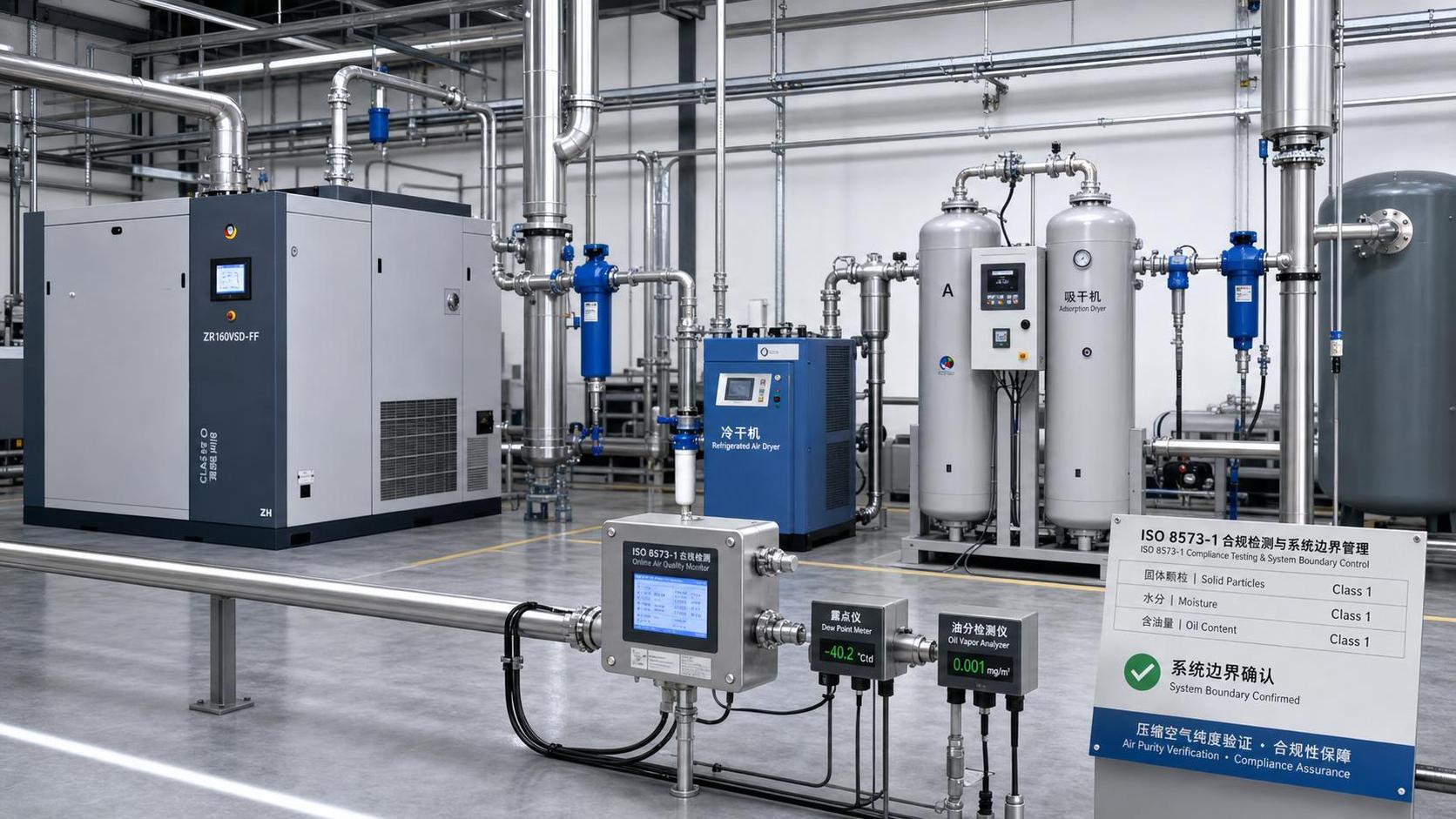
The table below outlines where procurement teams typically see the biggest cost and compliance trade-offs when evaluating oil-free compression against conventional oil-lubricated systems.
The key takeaway is that oil-free compression shifts spending from reactive risk control toward planned asset quality. For plants with high-value output, even one avoided contamination incident may justify a significant portion of the capital premium.
Industries where the trade-off is most visible
The strongest business case appears where compressed air directly affects product integrity, inspection outcomes, or process yield. In such settings, downtime costs often exceed equipment price differences within 12 to 24 months.
- Pharmaceutical packaging lines with validated clean utilities
- Semiconductor facilities requiring stable and ultra-clean process support
- Food and beverage plants with direct or indirect product contact zones
- Precision electronics and instrumentation assembly areas
- Laboratories and specialty gas handling environments
Understanding the 2026 cost structure beyond purchase price
A sound sourcing decision requires total cost of ownership analysis, not a line-item comparison of compressor quotations. In most industrial sites, energy can represent 65% to 80% of life-cycle cost over a 7-year operating window, while maintenance, downtime, and air treatment add further variance.
That means procurement should ask a different question: what is the cost of one cubic meter of compliant compressed air delivered to the process, under real load conditions, over time? This is where oil-free compression must be evaluated with plant-specific logic.
Five cost layers that should appear in every RFQ review
- Capital expenditure for compressor, dryer, filtration, controls, and installation
- Energy consumption at full load and part load across 6,000 to 8,000 operating hours annually
- Consumables and scheduled service intervals, often every 2,000 to 8,000 hours
- Downtime exposure tied to contamination, component failure, or delayed spare parts
- Compliance administration, including documentation, testing, and audit support
Where buyers often underestimate cost
Two areas are frequently undervalued. First is the cost of downstream treatment complexity. Second is the operational burden of monitoring oil carryover and replacing filters more aggressively when the process environment is sensitive. These costs may be small monthly, but material over 36 to 60 months.
Another overlooked factor is load profile mismatch. A compressor selected at nominal demand may operate inefficiently if actual use swings between 45% and 95% during different shifts. Variable speed control, heat recovery options, and system sequencing should therefore be reviewed early in the sourcing process.
The following comparison helps procurement teams frame a more realistic cost review when assessing oil-free compression projects for 2026 budgets.
This comparison shows why the cheapest quote is not always the lowest-cost option. Oil-free compression tends to reward disciplined buyers who connect utility design, audit requirements, and production economics in one evaluation model.
Compliance trade-offs procurement teams cannot ignore
Compliance in compressed air purchasing is no longer limited to checking a specification sheet. Buyers need evidence trails, maintenance logic, and supplier support that can withstand internal quality review and external customer scrutiny.
For oil-free compression, the practical advantage is often not the label itself, but the reduction of ambiguity. In sectors with repeated audits, clearer air quality strategy can shorten approval cycles by 1 to 3 review rounds and reduce technical objections during vendor onboarding.
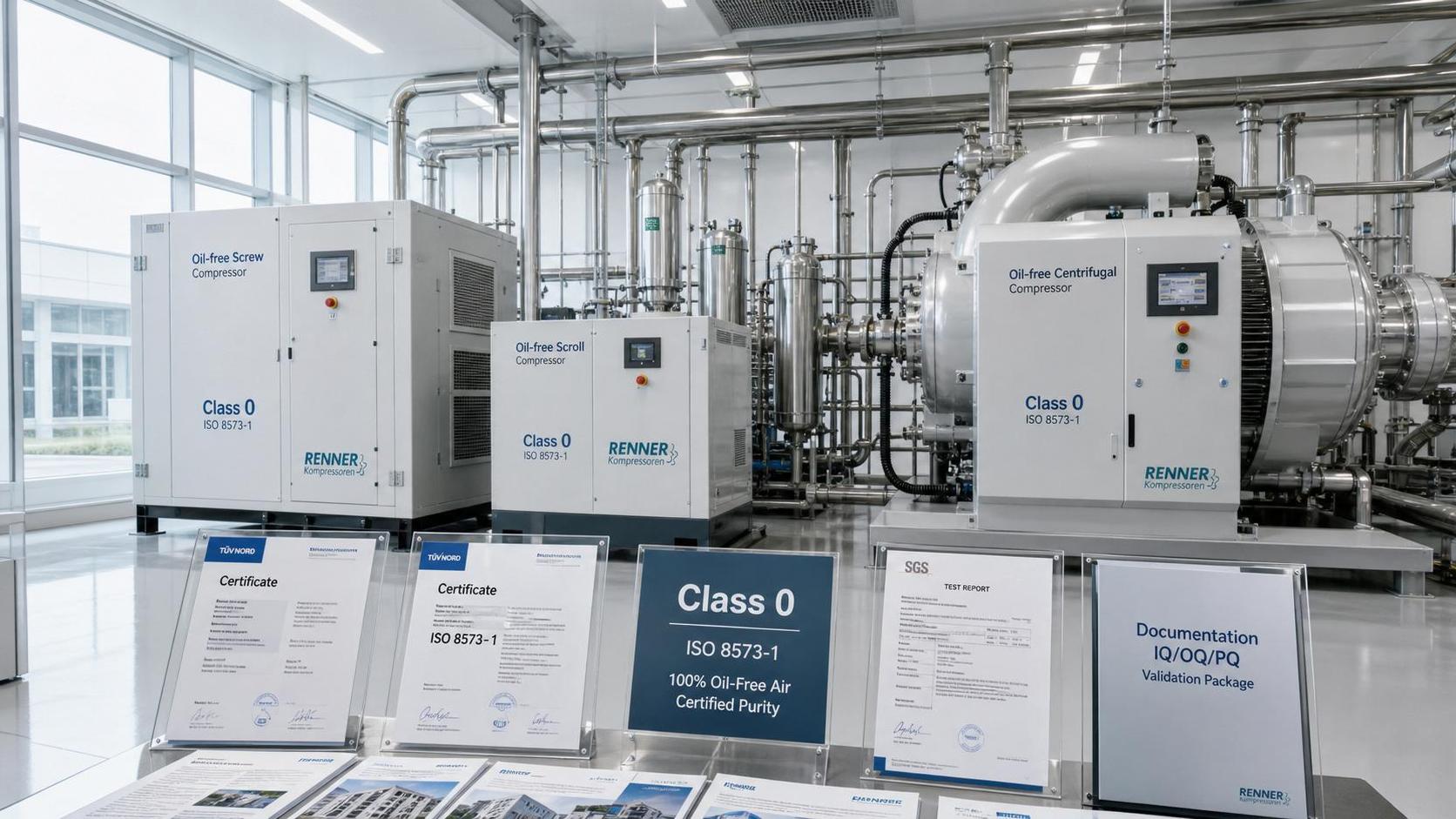
What documentation should be requested before award
- Performance curves covering full load and partial load conditions
- Recommended maintenance schedule for the first 12, 24, and 36 months
- Air treatment configuration and pressure dew point assumptions
- Spare parts list with standard replacement timing and local availability
- Commissioning scope, operator training plan, and acceptance checkpoints
- Warranty terms, exclusions, and response times for critical failures
Three common compliance mistakes
The first mistake is assuming that compressor selection alone guarantees process cleanliness. The second is overlooking the full compressed air chain, including dryers, drains, piping, and point-of-use filters. The third is failing to document service discipline after installation.
In practice, procurement should align with engineering, quality, and operations around 3 acceptance layers: equipment performance, delivered air condition, and documentation completeness. If any one layer is weak, the compliance value of oil-free compression can be diluted.
How to evaluate suppliers and system designs for long-term value
Supplier selection in 2026 should be based on system competence, not just unit supply. A credible vendor for oil-free compression should be able to discuss pressure stability, dew point strategy, heat recovery, control integration, service intervals, and spare parts planning in one coherent proposal.
Procurement teams can reduce post-award surprises by using a weighted scorecard. A common approach is to assign 30% to technical fit, 25% to life-cycle cost, 20% to compliance support, 15% to delivery and service capability, and 10% to commercial terms.
A practical 6-point sourcing checklist
- Validate real demand in Nm³/min across all shifts, not only nameplate assumptions
- Check pressure requirement at end use, including losses in dryers and filters
- Model annual energy cost using site tariff bands and expected run hours
- Review service response coverage within 24, 48, and 72 hours
- Confirm critical spare parts availability and replenishment lead times
- Require a commissioning and training plan before purchase order release
Questions worth asking during technical-commercial negotiation
Ask suppliers how the proposed oil-free compression package performs at part load, what energy assumptions were used, and which components drive maintenance cost after year 2. Also ask what happens if demand grows by 20% in the next 18 months.
A strong answer should include system flexibility, modular expansion logic, and clear service commitments rather than generic claims. This is especially important for multi-site buyers trying to standardize compressed air assets across regions with different power prices and regulatory expectations.
Implementation, maintenance, and risk control after purchase
The value of oil-free compression is protected or lost during implementation. Even the right equipment can underperform if installation quality, piping design, controls setup, or maintenance discipline are weak. Procurement should therefore stay involved beyond order placement.
A realistic rollout usually includes 5 stages: site validation, design confirmation, equipment delivery, commissioning, and performance verification. Depending on plant complexity, this process may take 6 to 12 weeks from final approval to stable operation.
Post-purchase controls that reduce risk
- Baseline energy and pressure readings within the first 30 days
- Documented preventive maintenance calendar for 12 months ahead
- Operator training on alarms, drains, and routine inspection points
- Quarterly review of filter condition, dew point, and pressure drop
- Annual audit of actual air demand versus installed capacity
When oil-free compression may not be the best fit
Not every application needs oil-free compression. For general utility air with no product contact, low purity sensitivity, and limited compliance exposure, a well-managed lubricated system may remain commercially reasonable. The decision should follow process risk, not market fashion.
However, if the plant serves export markets, premium customer standards, or sensitive production zones, buyers should carefully calculate hidden risk cost before excluding oil-free solutions from the tender list. In many cases, the payback is strategic rather than immediate.
FAQ for procurement teams
Is oil-free compression always more energy efficient?
Not always. Efficiency depends on machine type, control method, operating pressure, and load profile. Buyers should compare kW per delivered flow under actual site conditions rather than relying on headline claims.
Should compliance concerns override budget constraints?
Where contamination or audit failure can affect product release, compliance usually deserves higher weight. A lower purchase price can become costly if it increases inspection burden or production risk over the next 3 to 5 years.
What is the most important procurement document?
A detailed technical-commercial requirement sheet is the most important starting point. It should define flow, pressure, duty cycle, air quality expectations, service response, documentation needs, and acceptance criteria before quotation review begins.
For 2026 planning, oil-free compression should be treated as a strategic sourcing category tied to reliability, audit readiness, and long-term operating economics. The right decision depends on process sensitivity, energy profile, maintenance capability, and the real cost of downtime or contamination.
GTC-Matrix helps procurement teams and industrial decision-makers evaluate these trade-offs with clearer market intelligence, technical context, and application-focused analysis across compressed air and thermal systems. If you are comparing solutions, preparing a tender, or refining a compliance-driven utility strategy, contact us now to get a tailored assessment and explore more practical oil-free compression solutions.
Ready when you are. Send us a message to get started.
Related News
- How to verify food-grade purity in compressed air systemsAuthor :Pneumatic Power Engineer

- What determines the price of pure air compression systems?Author :Pneumatic Power Engineer

- How to size oil-free compressors for instrumentation air demandAuthor :Pneumatic Power Engineer

- How Class 0 oil-free compressors protect product quality in food productionAuthor :Pneumatic Power Engineer

- How to verify compressed air cleanroom standards before installationAuthor :Pneumatic Power Engineer

- When oil free vacuum pumps make sense for European cleanroom projectsAuthor :Pneumatic Power Engineer

- When do pure air compression systems need ISO 8573-1 Class 0?Author :Pneumatic Power Engineer

- How do compressed air systems for electronics prevent contamination?Author :Pneumatic Power Engineer

- When does an oil-free process vacuum pump justify its higher cost?Author :Pneumatic Power Engineer

- Does ISO 9001 certification apply to compressed air quality?Author :Pneumatic Power Engineer

- How to Specify Clean Compressed Air Systems in Southeast Asia for Food and Pharma PlantsAuthor :Pneumatic Power Engineer

- How to Compare Oil Free Vacuum Pumps for Clean Process RequirementsAuthor :Pneumatic Power Engineer

- How to Evaluate a Clean Compressed Air Systems Supplier for ISO 8573-1 ComplianceAuthor :Pneumatic Power Engineer

- How to Choose the Right Oil-Free Vacuum PumpAuthor :Pneumatic Power Engineer

- VDI 2083 Update Makes Class 0 Proof MandatoryAuthor :Pneumatic Power Engineer

- When to Use Oil Free Vacuum Pumps for High Purity LinesAuthor :Pneumatic Power Engineer

- Compressed Air Solutions: When Oil-Free Systems Lower Total Operating CostAuthor :Pneumatic Power Engineer

- ATMOsphere Europe 2026 Adds Oil-free Systems ZoneAuthor :Pneumatic Power Engineer

- Oil-Free Compressors: Key Selection Criteria for Clean Air SystemsAuthor :Pneumatic Power Engineer

- How to Compare Oil Free Centrifugal Compressors for Stable Plant Air SupplyAuthor :Pneumatic Power Engineer

- Compressed Air Class 0 vs Oil-Free: What Really MattersAuthor :Pneumatic Power Engineer

- Oil-Free Compression Class 0: What the Standard Really Means in ProductionAuthor :Pneumatic Power Engineer

- Air Compression Cost Comparison: Oil-Free vs Screw Systems in Daily OperationAuthor :Pneumatic Power Engineer

- Saudi SASO Tightens IEC 63349-2 for Oil-Free CompressorsAuthor :Pneumatic Power Engineer

- Saudi SASO Tightens Oil-Free Compressor Efficiency RulesAuthor :Pneumatic Power Engineer

- Pure Air Compression Systems for Clean Production LinesAuthor :Pneumatic Power Engineer

- IEC 63349-2:2026 makes energy certification mandatoryAuthor :Pneumatic Power Engineer

- IEC 63349-2:2026 Sets New Entry Rules for Oil-Free Screw CompressorsAuthor :Pneumatic Power Engineer

- IEC 63349-2:2026 Takes Effect for Oil-Free Screw CompressorsAuthor :Pneumatic Power Engineer

- IEC 63349-2:2026 Sets New Efficiency Gate for Oil-Free Screw CompressorsAuthor :Pneumatic Power Engineer

- IEC 63349-2:2026 Takes Effect for Oil-Free Screw CompressorsAuthor :Pneumatic Power Engineer

- SABIC Methanol Force Majeure Extended, Tightening R134a/R407C FeedstocksAuthor :Pneumatic Power Engineer

- How to Evaluate Pneumatic Power Systems for Stable OutputAuthor :Pneumatic Power Engineer

- Oil-Free Compression vs Lubricated Systems: Key Trade-OffsAuthor :Pneumatic Power Engineer
![]()
- Oil-Free Compression: 2026 Cost and Compliance Trade-OffsAuthor :Pneumatic Power Engineer

- Oil-Free Compression: Cost and Contamination RisksAuthor :Pneumatic Power Engineer
![]()