How to Compare Oil Free Centrifugal Compressors for Stable Plant Air Supply




Selecting among oil free centrifugal compressors is not a simple matter of matching flow and discharge pressure. Stable plant air supply depends on how the machine behaves across load shifts, utility price changes, purity requirements, and maintenance realities. In sectors where compressed air supports product quality, process continuity, or sensitive instruments, comparison needs to move from catalog data to operating truth.
That shift matters even more now. Energy costs remain volatile, purity standards are tighter, and many plants are trying to cut carbon intensity without exposing production to air risk. In that context, oil free centrifugal compressors sit at the intersection of thermodynamic efficiency, reliability engineering, and business resilience.
Why comparison has become more demanding
Compressed air has long been treated as a utility. In practice, it behaves more like production infrastructure. A short pressure dip can upset packaging, pneumatic conveying, fermentation control, semiconductor tools, or valve sequencing.
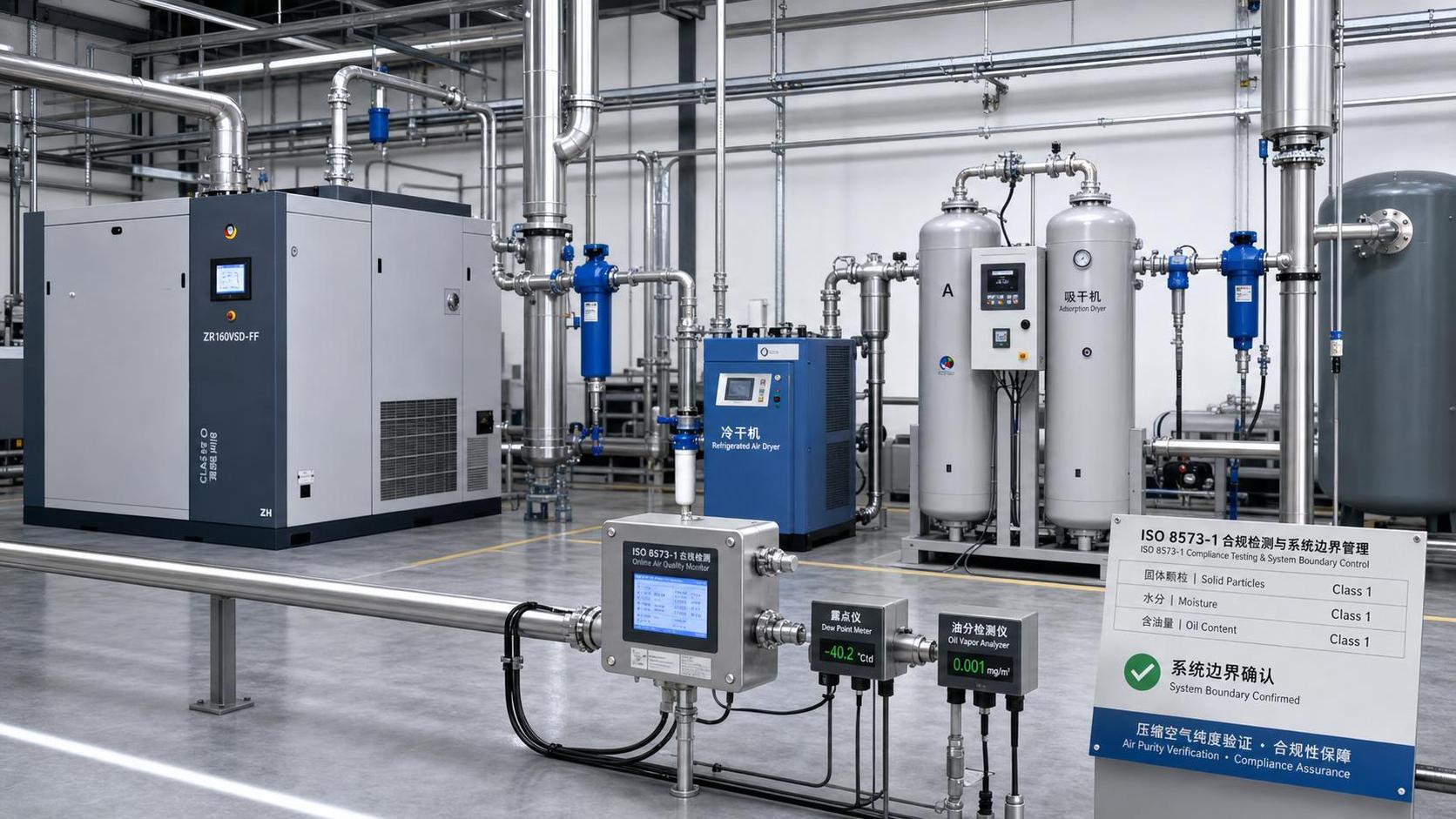
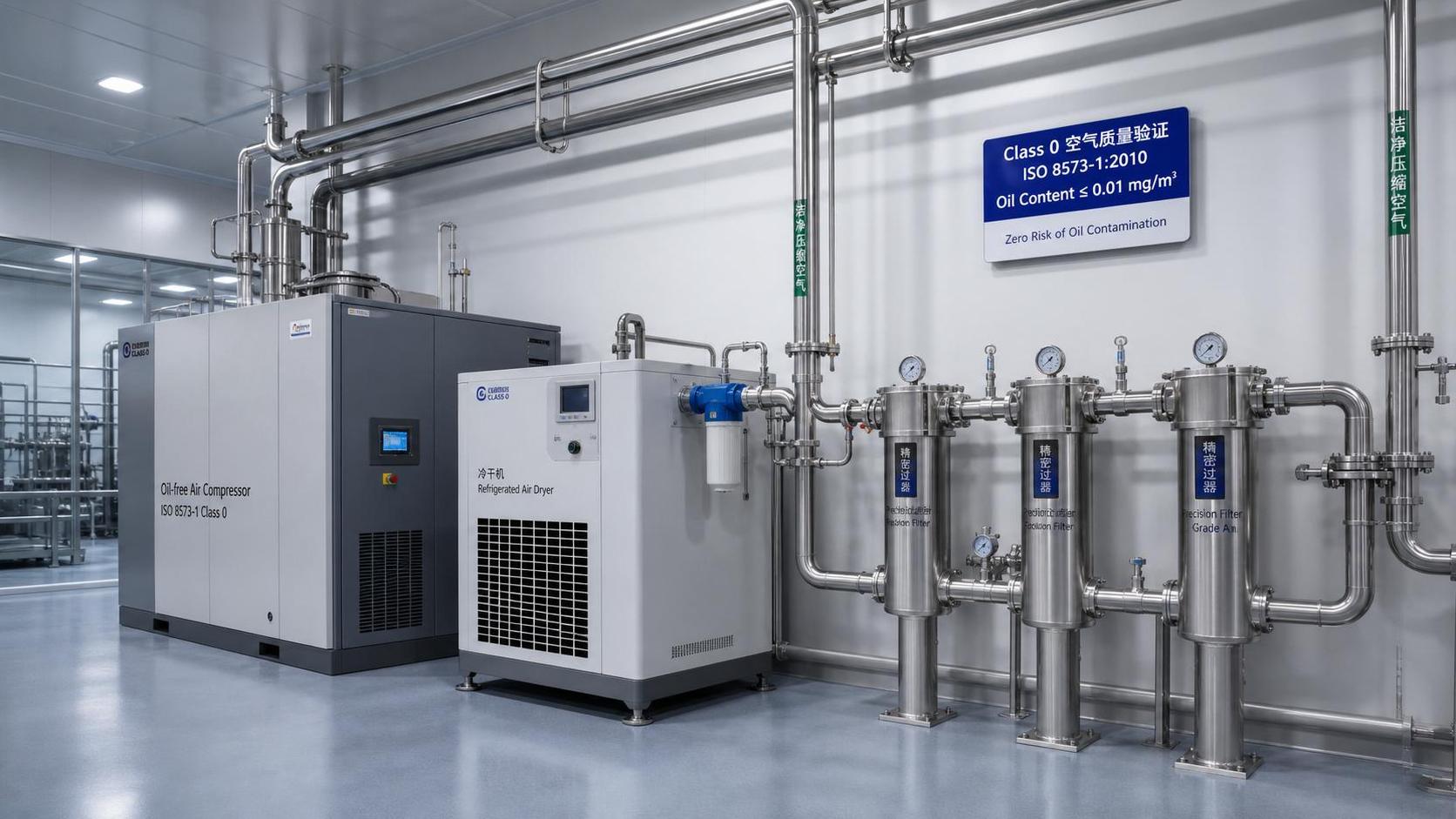
Oil free centrifugal compressors are often selected for large, continuous demand profiles. They are especially relevant where ISO 8573 air quality expectations are strict, and where the risk of hydrocarbon contamination carries process or compliance consequences.
The broader market also changed the way systems should be evaluated. GTC-Matrix regularly tracks how refrigerant policy, electricity pricing, decarbonization pressure, and efficiency trends influence compression decisions across cooling and thermal systems.
That wider view matters because the compressor does not operate alone. It interacts with cooling water, heat rejection, control architecture, plant expansion plans, and the economics of uptime.
What defines oil free centrifugal compressors in practice
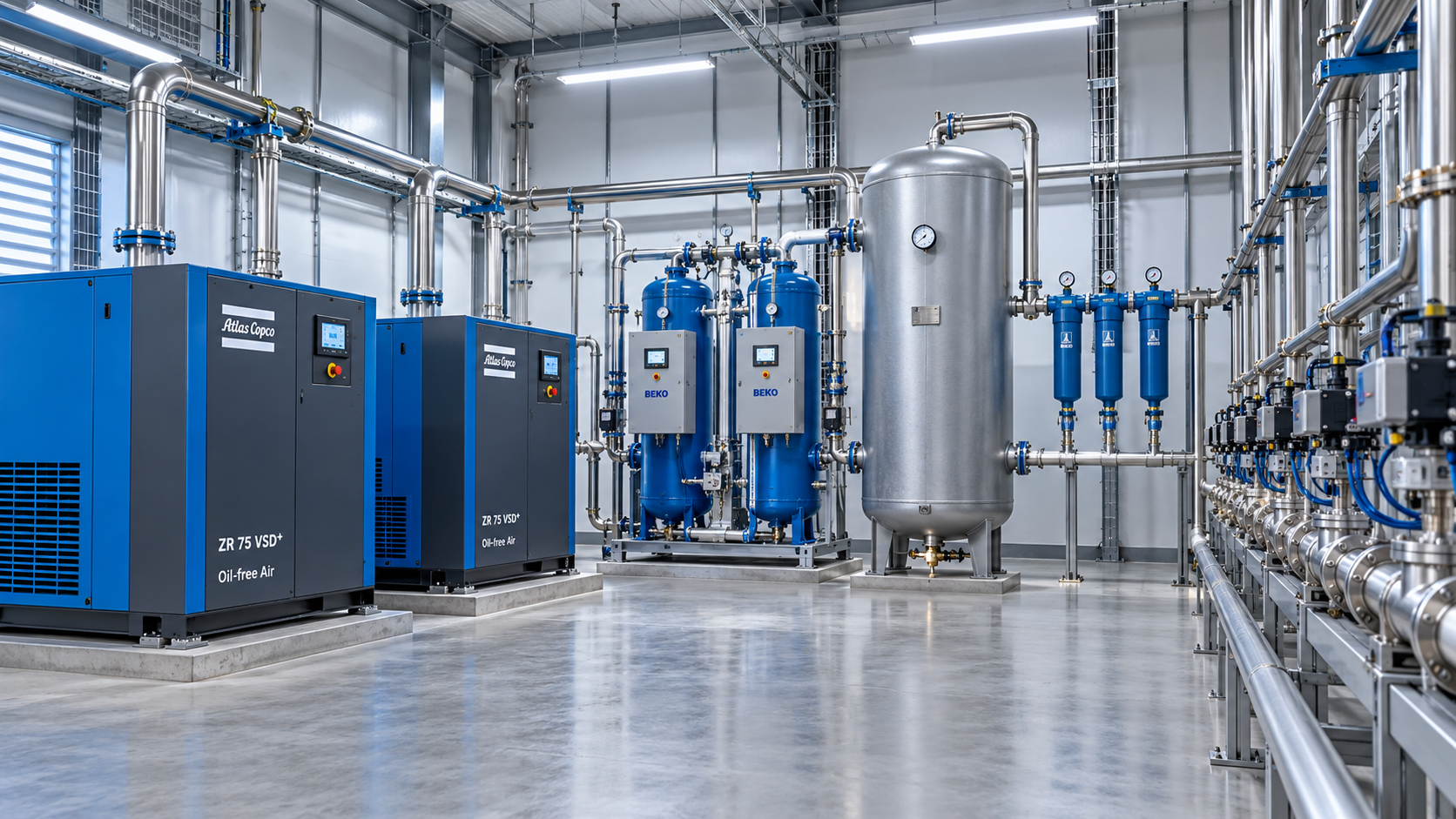
At a basic level, oil free centrifugal compressors use dynamic compression rather than positive displacement. Air is accelerated by an impeller, converted from velocity to pressure, and delivered through a multistage arrangement when higher pressure is needed.
The oil-free aspect refers to the compression chamber. It means the air path avoids oil contact, reducing contamination risk in processes where air purity is part of product integrity.
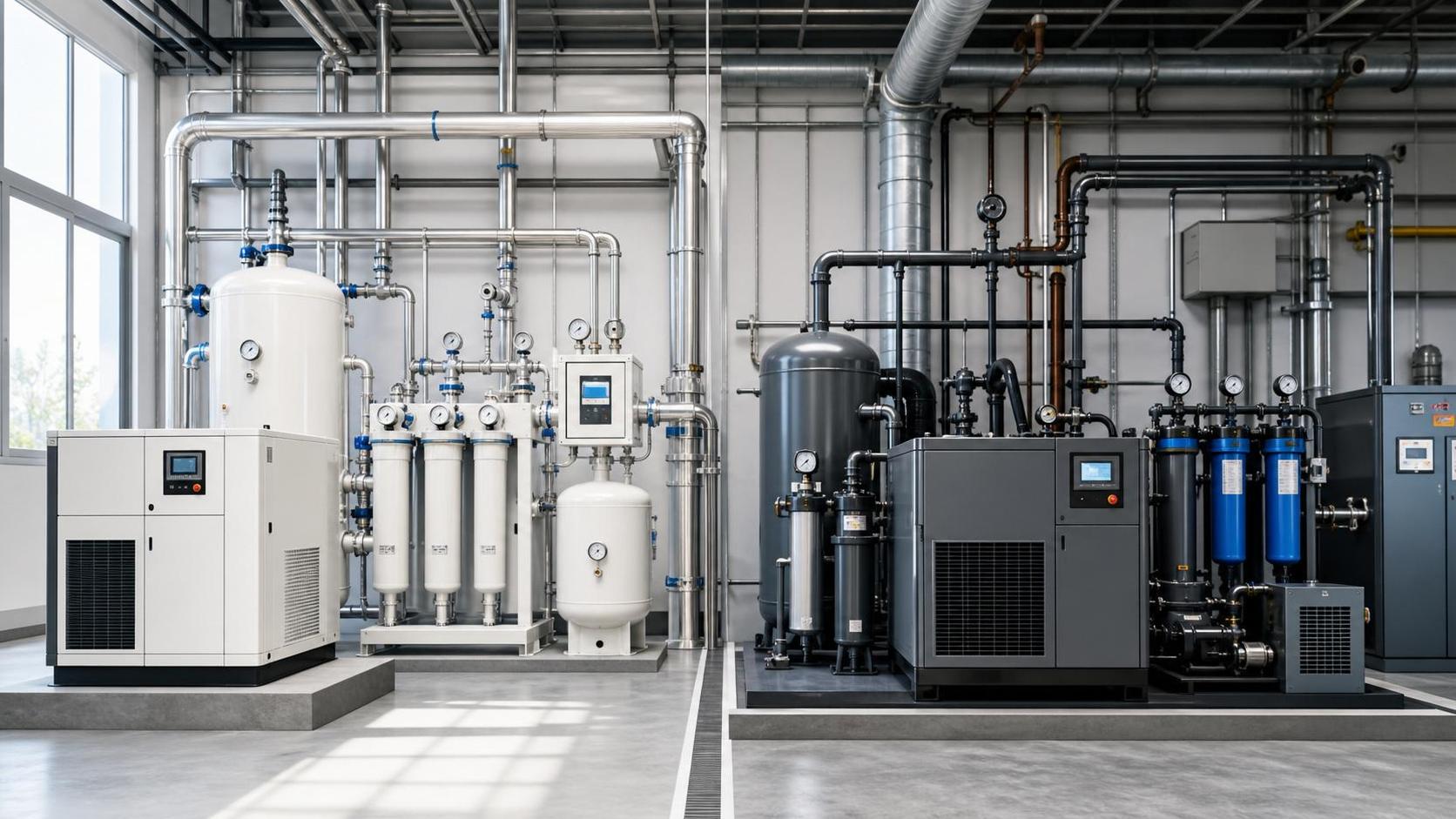
That does not make every machine equally suitable. Two units with similar nameplate capacity can differ sharply in part-load efficiency, surge control behavior, heat exchanger design, package integration, and serviceability.
For that reason, comparing oil free centrifugal compressors should begin with system behavior, not brochure claims. The key question is how consistently the unit supports real plant demand.
The criteria that actually separate competing systems
A useful comparison framework combines performance, operability, and total cost. Looking at only one dimension usually leads to a distorted choice.
Air purity and process risk
Start with the required purity class and downstream sensitivity. In food, pharmaceuticals, electronics, and precision assembly, contamination risk carries more weight than nominal efficiency gains.
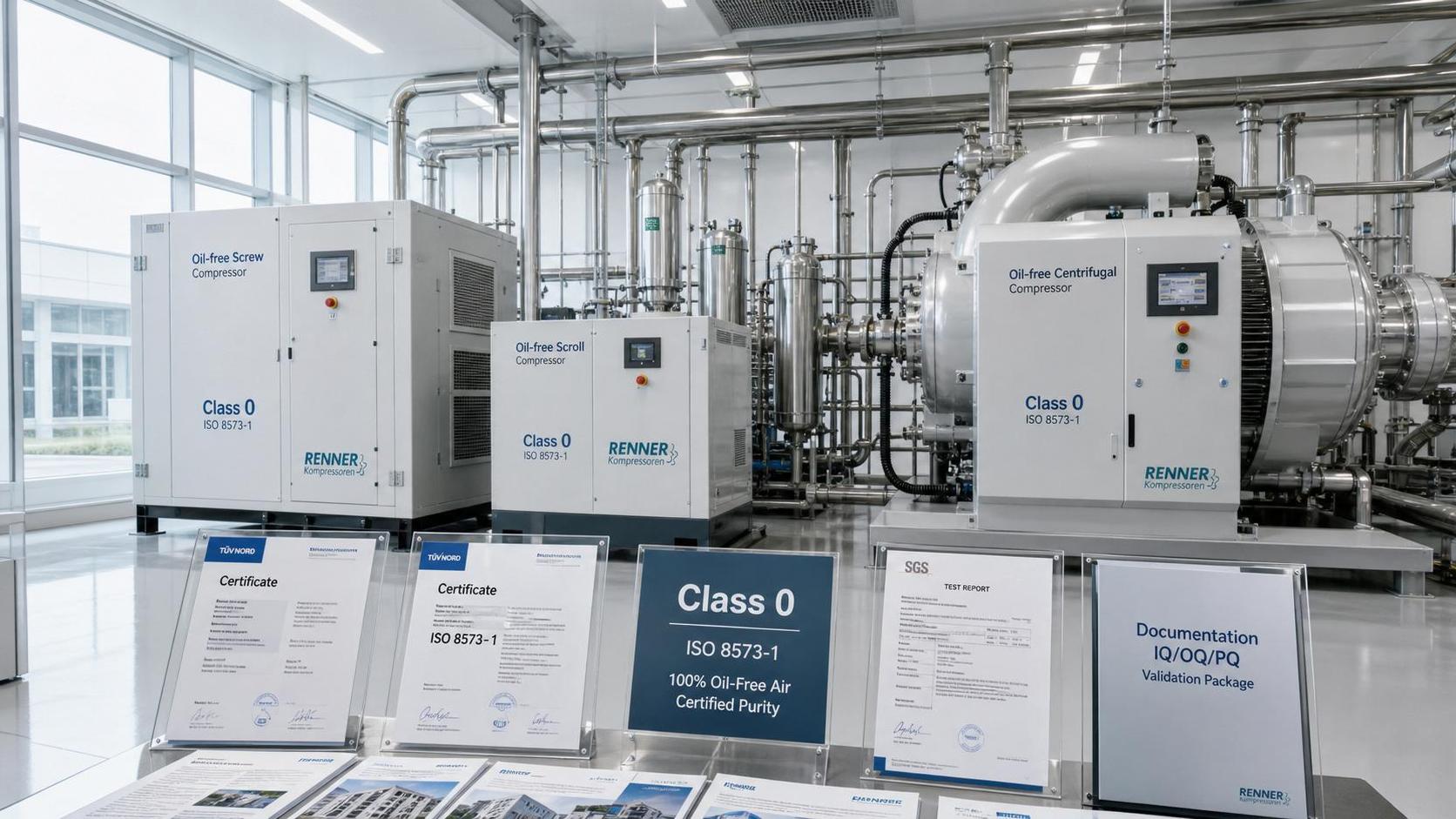
Check the manufacturer’s oil-free certification basis, seal design, filtration arrangement, and any operational conditions that could affect delivered air quality.
Specific power at real operating points
Full-load specific power is only a starting point. Many plants operate below peak demand for long periods. The more useful question is how efficiently the unit performs at 60, 70, and 80 percent load.
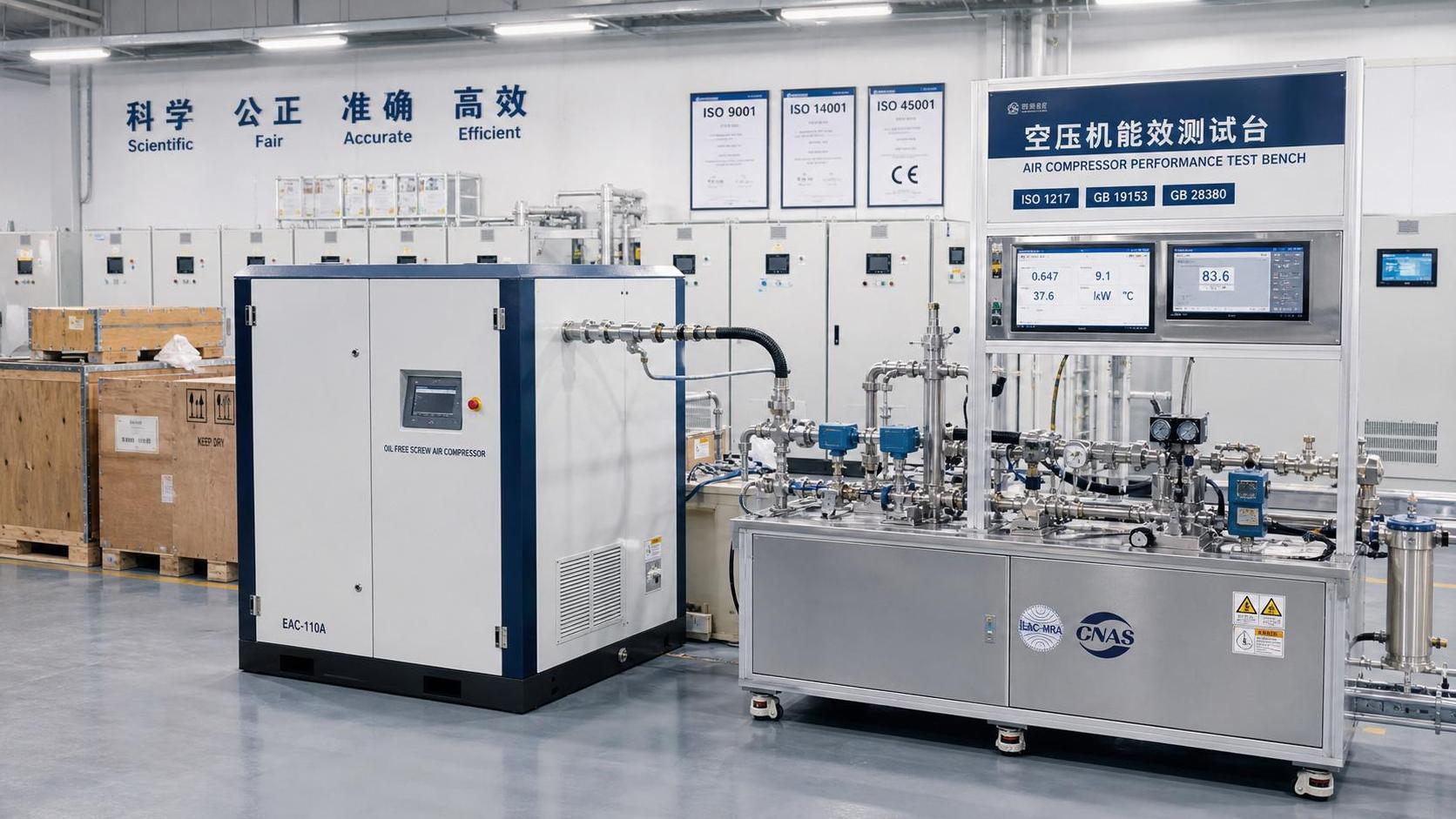
Ask for performance maps, not just a single rating point. Verify whether the data reflects site inlet conditions, cooling conditions, and guaranteed tolerances.
Turndown and surge margin
Oil free centrifugal compressors can be very efficient in stable baseload service. Their weakness appears when demand fluctuates outside the comfortable operating envelope.
A narrow turndown range increases blow-off losses, control instability, and pressure excursions. Surge avoidance strategy, inlet guide vane logic, and variable-speed configuration deserve close attention.
Controls and system integration
A technically strong machine can still underperform if the controls are weak. Review sequence logic, remote monitoring capability, alarm hierarchy, data granularity, and compatibility with the plant automation platform.
Plants with several compressor types should also examine how the centrifugal unit will coordinate with trim machines, storage, and demand events.
Reliability and maintainability
Bearing arrangement, gear design, intercooler accessibility, vibration monitoring, and spare parts strategy all shape uptime. Reliable supply is not only about mean time between failure.
It is also about restart time, fault diagnosis speed, and service support depth in the region where the plant operates.
A practical benchmark table for side-by-side review
When proposals look similar, a structured matrix helps expose the real differences.
Where operating conditions change the answer
The best oil free centrifugal compressors for one site may be the wrong fit for another. Site context changes the ranking.
In continuous-process plants, baseload efficiency and redundancy planning often dominate. In batch operations, flexibility and stable response to rapid demand shifts can matter more.
Ambient temperature, elevation, humidity, and cooling water availability also alter compressor performance. A proposal that looks strong under standard conditions may lose ground after site correction.
This is why thermodynamic context should stay attached to every comparison. GTC-Matrix emphasizes that energy systems should be read as connected assets, not isolated equipment lines.
Typical scenarios to test
- Night shift load reduction with minimum pressure limits
- Seasonal ambient rise affecting cooling performance
- One compressor offline during maintenance
- Demand spikes from packaging, conveying, or purge events
- Future expansion that changes the baseload and trim balance
Common comparison errors to avoid
Several mistakes appear repeatedly in compressed air projects, especially when decisions move too quickly from quotation to selection.
- Using peak demand as the only sizing basis
- Accepting vendor data without load-profile matching
- Ignoring cooling system power and water conditions
- Comparing purchase price without lifecycle modeling
- Underestimating controls integration and response quality
- Treating all oil free centrifugal compressors as operationally similar
Usually, the most expensive error is not paying more upfront. It is choosing a unit that creates hidden energy waste or unstable pressure for the next decade.
How to turn comparison into a reliable decision
A disciplined review process makes oil free centrifugal compressors easier to assess. Begin with a measured demand profile, not an estimate. Then translate that profile into realistic operating cases.
Request guaranteed performance at those cases, including inlet conditions, cooling assumptions, and control limits. Require a clear description of surge protection, unloaded behavior, and energy draw outside ideal conditions.
Next, build a lifecycle model that includes power cost, expected maintenance, water or heat rejection impact, planned redundancy, and downtime sensitivity. This often changes the ranking more than the initial quotation does.
Finally, compare the suppliers’ technical depth. The strongest proposal usually explains not only machine performance, but also how the package will behave inside the plant’s wider thermal and power environment.
That is also where a market intelligence perspective becomes useful. Tracking technology evolution, operating benchmarks, and sector demand patterns can sharpen the decision beyond a standard equipment bid review.
For the next step, define the site load profile, identify purity and pressure risk points, and compare oil free centrifugal compressors against those realities. A sound decision starts when the evaluation framework reflects the plant, not just the product sheet.
Ready when you are. Send us a message to get started.
Related News
- How to verify food-grade purity in compressed air systemsAuthor :Pneumatic Power Engineer

- What determines the price of pure air compression systems?Author :Pneumatic Power Engineer

- How to size oil-free compressors for instrumentation air demandAuthor :Pneumatic Power Engineer

- How Class 0 oil-free compressors protect product quality in food productionAuthor :Pneumatic Power Engineer

- How to verify compressed air cleanroom standards before installationAuthor :Pneumatic Power Engineer

- When oil free vacuum pumps make sense for European cleanroom projectsAuthor :Pneumatic Power Engineer

- When do pure air compression systems need ISO 8573-1 Class 0?Author :Pneumatic Power Engineer

- How do compressed air systems for electronics prevent contamination?Author :Pneumatic Power Engineer

- When does an oil-free process vacuum pump justify its higher cost?Author :Pneumatic Power Engineer

- Does ISO 9001 certification apply to compressed air quality?Author :Pneumatic Power Engineer

- How to Specify Clean Compressed Air Systems in Southeast Asia for Food and Pharma PlantsAuthor :Pneumatic Power Engineer

- How to Compare Oil Free Vacuum Pumps for Clean Process RequirementsAuthor :Pneumatic Power Engineer

- How to Evaluate a Clean Compressed Air Systems Supplier for ISO 8573-1 ComplianceAuthor :Pneumatic Power Engineer

- How to Choose the Right Oil-Free Vacuum PumpAuthor :Pneumatic Power Engineer

- VDI 2083 Update Makes Class 0 Proof MandatoryAuthor :Pneumatic Power Engineer

- When to Use Oil Free Vacuum Pumps for High Purity LinesAuthor :Pneumatic Power Engineer

- Compressed Air Solutions: When Oil-Free Systems Lower Total Operating CostAuthor :Pneumatic Power Engineer

- ATMOsphere Europe 2026 Adds Oil-free Systems ZoneAuthor :Pneumatic Power Engineer

- Oil-Free Compressors: Key Selection Criteria for Clean Air SystemsAuthor :Pneumatic Power Engineer

- How to Compare Oil Free Centrifugal Compressors for Stable Plant Air SupplyAuthor :Pneumatic Power Engineer

- Compressed Air Class 0 vs Oil-Free: What Really MattersAuthor :Pneumatic Power Engineer

- Oil-Free Compression Class 0: What the Standard Really Means in ProductionAuthor :Pneumatic Power Engineer

- Air Compression Cost Comparison: Oil-Free vs Screw Systems in Daily OperationAuthor :Pneumatic Power Engineer

- Saudi SASO Tightens IEC 63349-2 for Oil-Free CompressorsAuthor :Pneumatic Power Engineer

- Saudi SASO Tightens Oil-Free Compressor Efficiency RulesAuthor :Pneumatic Power Engineer

- Pure Air Compression Systems for Clean Production LinesAuthor :Pneumatic Power Engineer

- IEC 63349-2:2026 makes energy certification mandatoryAuthor :Pneumatic Power Engineer

- IEC 63349-2:2026 Sets New Entry Rules for Oil-Free Screw CompressorsAuthor :Pneumatic Power Engineer

- IEC 63349-2:2026 Takes Effect for Oil-Free Screw CompressorsAuthor :Pneumatic Power Engineer

- IEC 63349-2:2026 Sets New Efficiency Gate for Oil-Free Screw CompressorsAuthor :Pneumatic Power Engineer

- IEC 63349-2:2026 Takes Effect for Oil-Free Screw CompressorsAuthor :Pneumatic Power Engineer

- SABIC Methanol Force Majeure Extended, Tightening R134a/R407C FeedstocksAuthor :Pneumatic Power Engineer

- How to Evaluate Pneumatic Power Systems for Stable OutputAuthor :Pneumatic Power Engineer

- Oil-Free Compression vs Lubricated Systems: Key Trade-OffsAuthor :Pneumatic Power Engineer
![]()
- Oil-Free Compression: 2026 Cost and Compliance Trade-OffsAuthor :Pneumatic Power Engineer

- Oil-Free Compression: Cost and Contamination RisksAuthor :Pneumatic Power Engineer
![]()