How do compressed air systems for electronics prevent contamination?




How Do Compressed Air Systems for Electronics Prevent Contamination?
In electronics manufacturing, compressed air is often treated as a utility until it becomes the source of a defect. A trace of compressor oil on a precision component, a burst of water from a poorly drained line, or particles released by ageing pipework can affect coating adhesion, contaminate optical surfaces, interfere with automated assembly, or introduce failures that are difficult to trace back to their origin. For quality and safety teams, the issue is not simply whether air is available at the required pressure. It is whether that air remains fit for its intended use from the compressor room to the final point of use.
Compressed air systems for electronics prevent contamination through a layered approach: reducing contamination at the source, removing what cannot be avoided, preventing recontamination in distribution, and verifying air quality where the production process actually uses it. The strongest systems are designed around process risk, not around a generic promise of “clean air.”
Why Electronics Plants Have a Narrow Margin for Error
Compressed air may power pick-and-place equipment, pneumatic actuators, solder-paste dispensers, cleaning stations, laser-support mechanisms, test fixtures, packaging machines, and dry-air blow-off points. The level of acceptable contamination differs across these uses. Air driving a remote cylinder may tolerate a different quality level from air that contacts a printed circuit assembly, semiconductor wafer, lens, connector, or enclosure interior.
The four contamination categories are familiar but closely connected: solid particles, water, oil, and microorganisms. Ambient air enters the compressor carrying dust, humidity, and airborne contaminants. Compression concentrates those contaminants. Heat generated during compression raises the air’s moisture-carrying capacity, but when the air later cools in a receiver or pipeline, condensate forms. If this liquid is not controlled, it can carry dissolved oil, particles, corrosion products, and biological material downstream.
This is why a dry air specification alone is not a complete quality strategy. A refrigerated dryer may remove much of the water burden, for example, yet it does not automatically address oil vapour, fine aerosols, pipe corrosion, or contamination introduced at an open connection. The process must be examined as a chain.
Start With the Point of Use, Not the Compressor Catalogue
A practical design begins by mapping every compressed-air application and separating direct-contact from non-contact uses. Direct-contact points generally deserve the strictest assessment because airborne residue can reach a product surface or process chamber. Non-contact equipment still matters: a leak, backflow event, or failed filter can turn an apparently isolated pneumatic circuit into a contamination pathway.
ISO 8573-1 is widely used as a framework for defining compressed-air purity classes for particles, water, and oil. It can support a common language between production, engineering, quality, and external suppliers. However, assigning a class is only useful when it is linked to the actual process requirement. A facility should confirm which contaminants matter, the measurement point, operating pressure, air demand profile, and whether the requirement applies continuously or only during critical operations. Equipment manufacturers and customer quality agreements may impose additional conditions.
One frequent mistake is specifying the same air quality everywhere. That can create unnecessary energy use and maintenance cost. Another is doing the opposite: applying a nominally high-quality central supply, then assuming every end point receives identical air. Pressure drop, wet legs, unfiltered branch lines, and poorly maintained quick couplings can undo central treatment.
Control Contamination at the Generation Stage
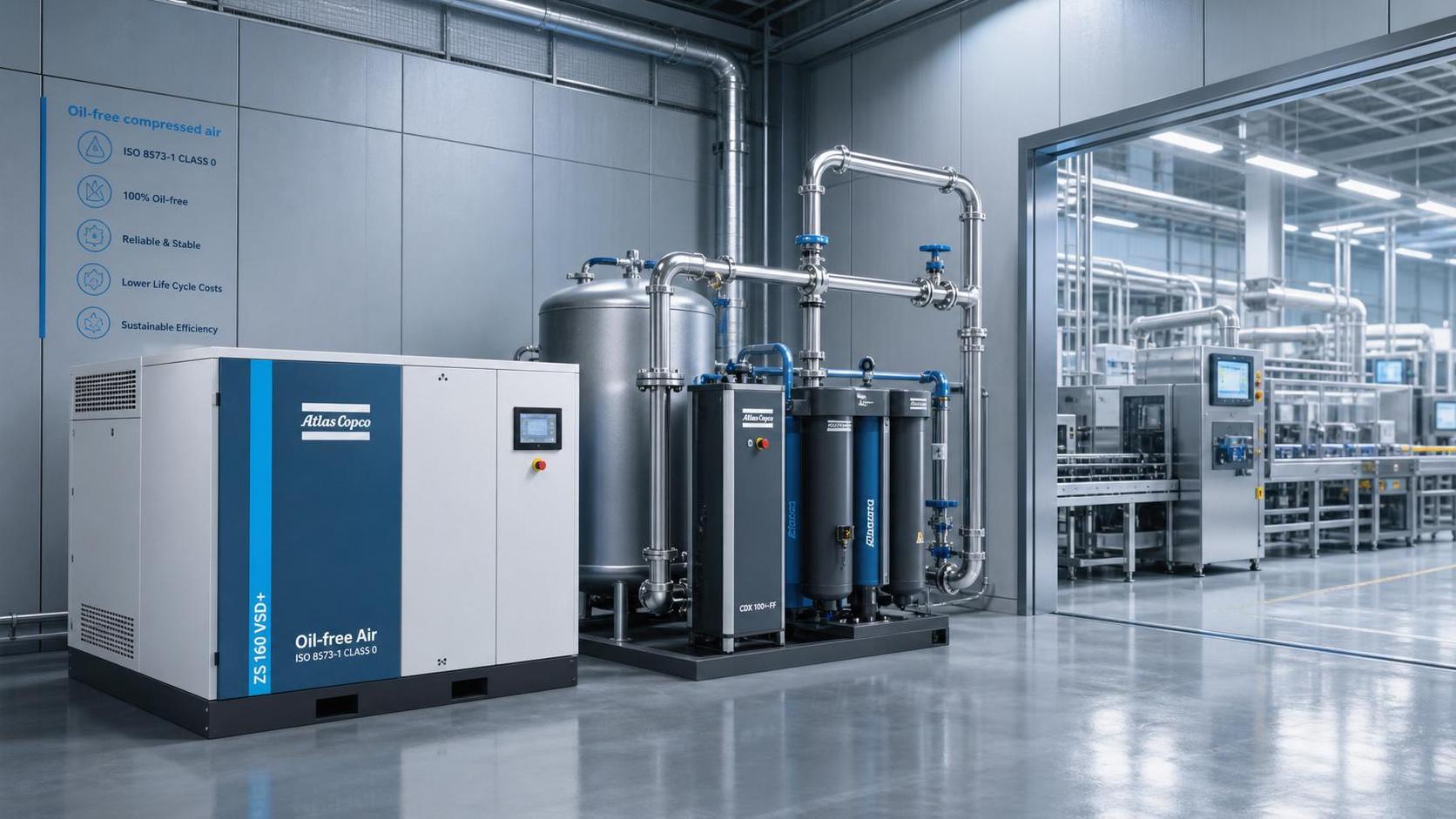
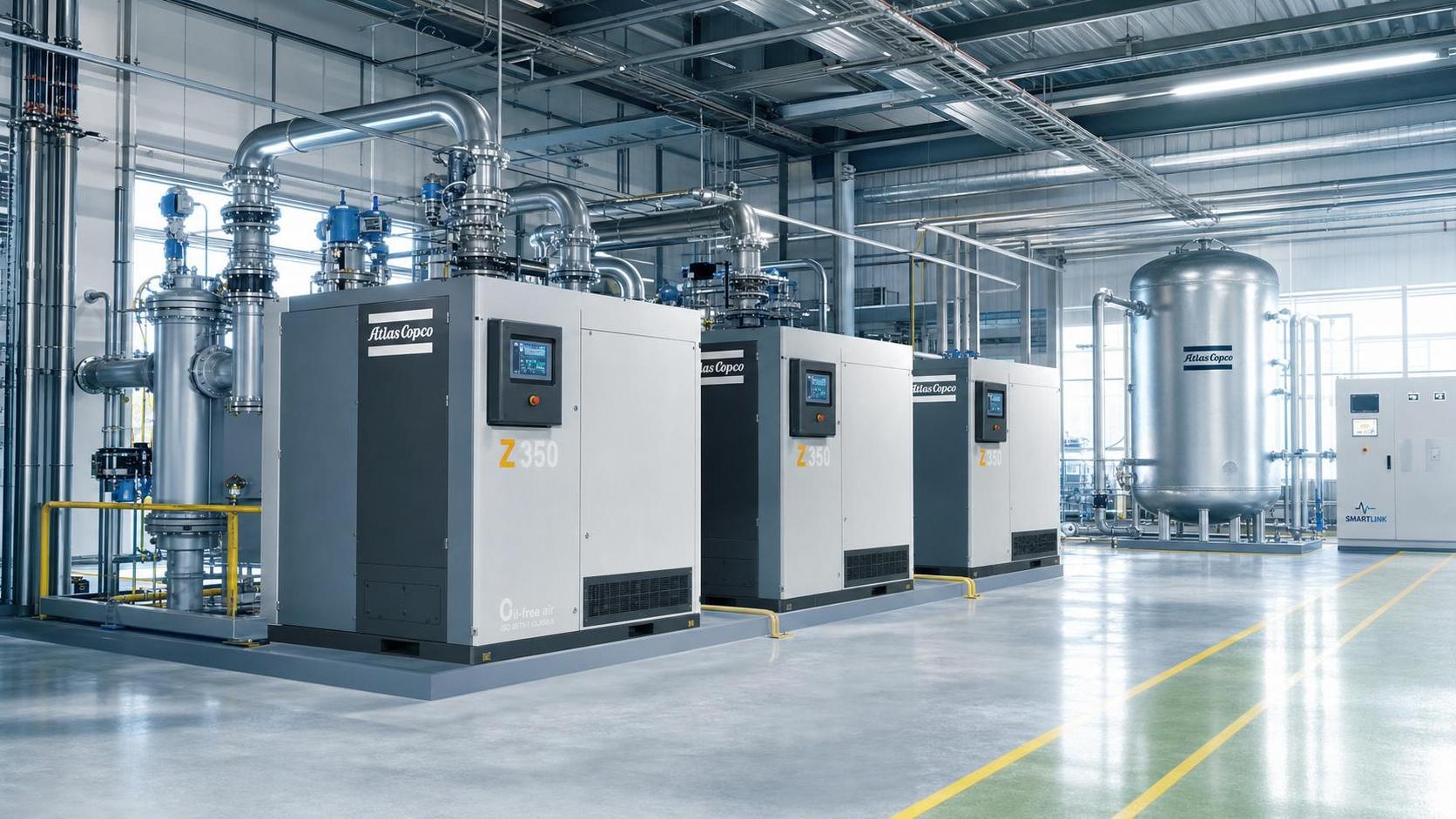
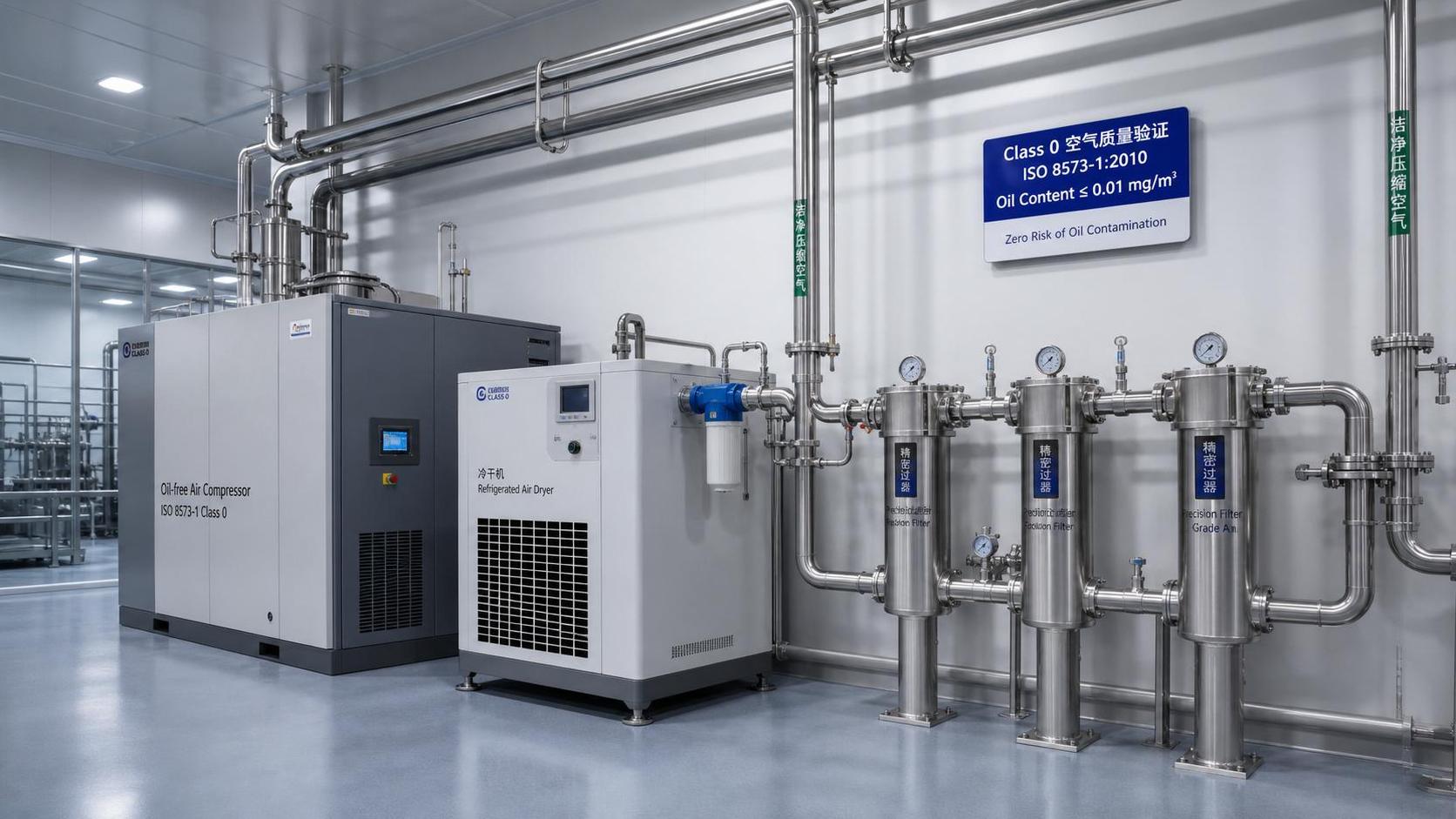
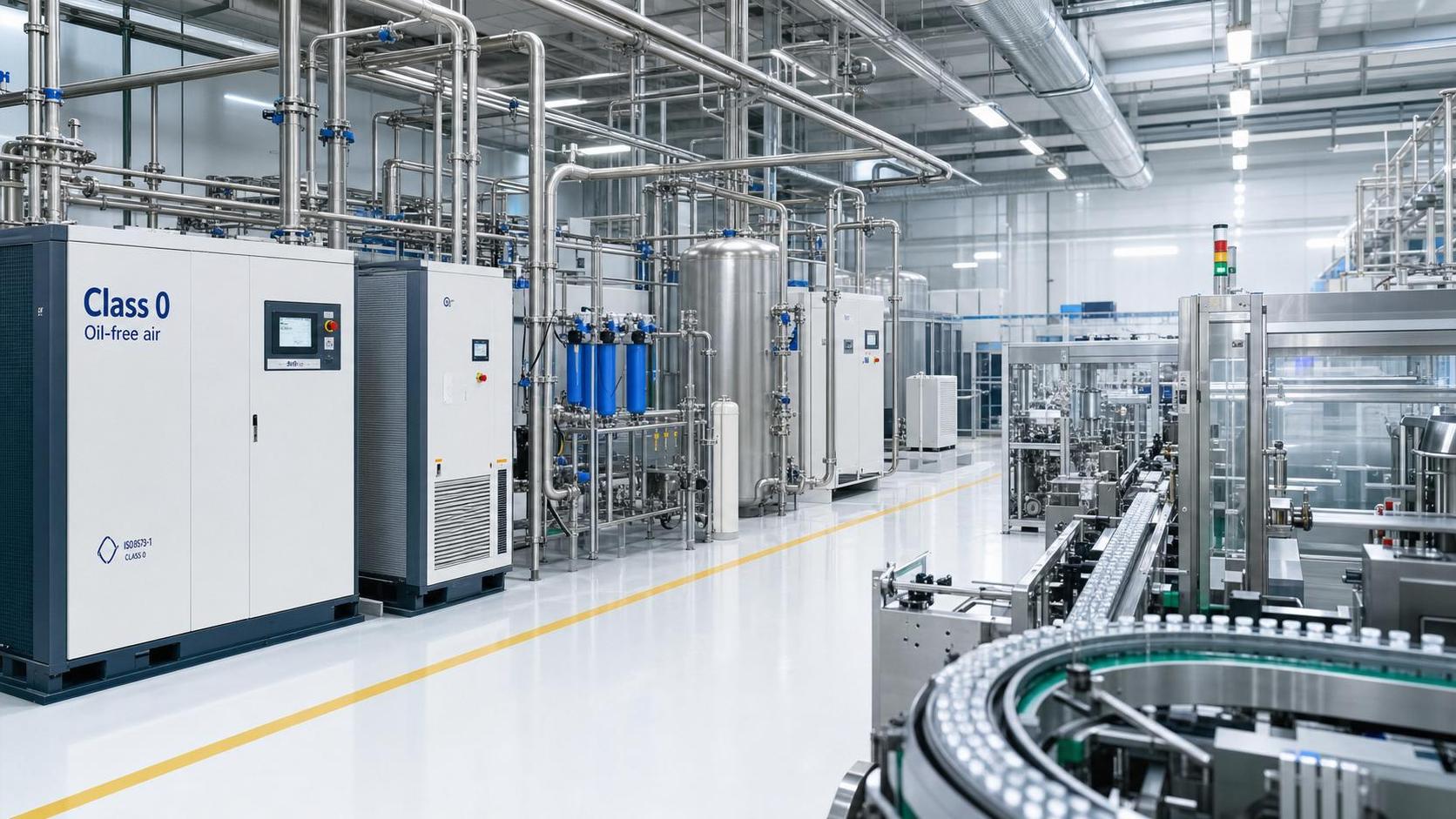
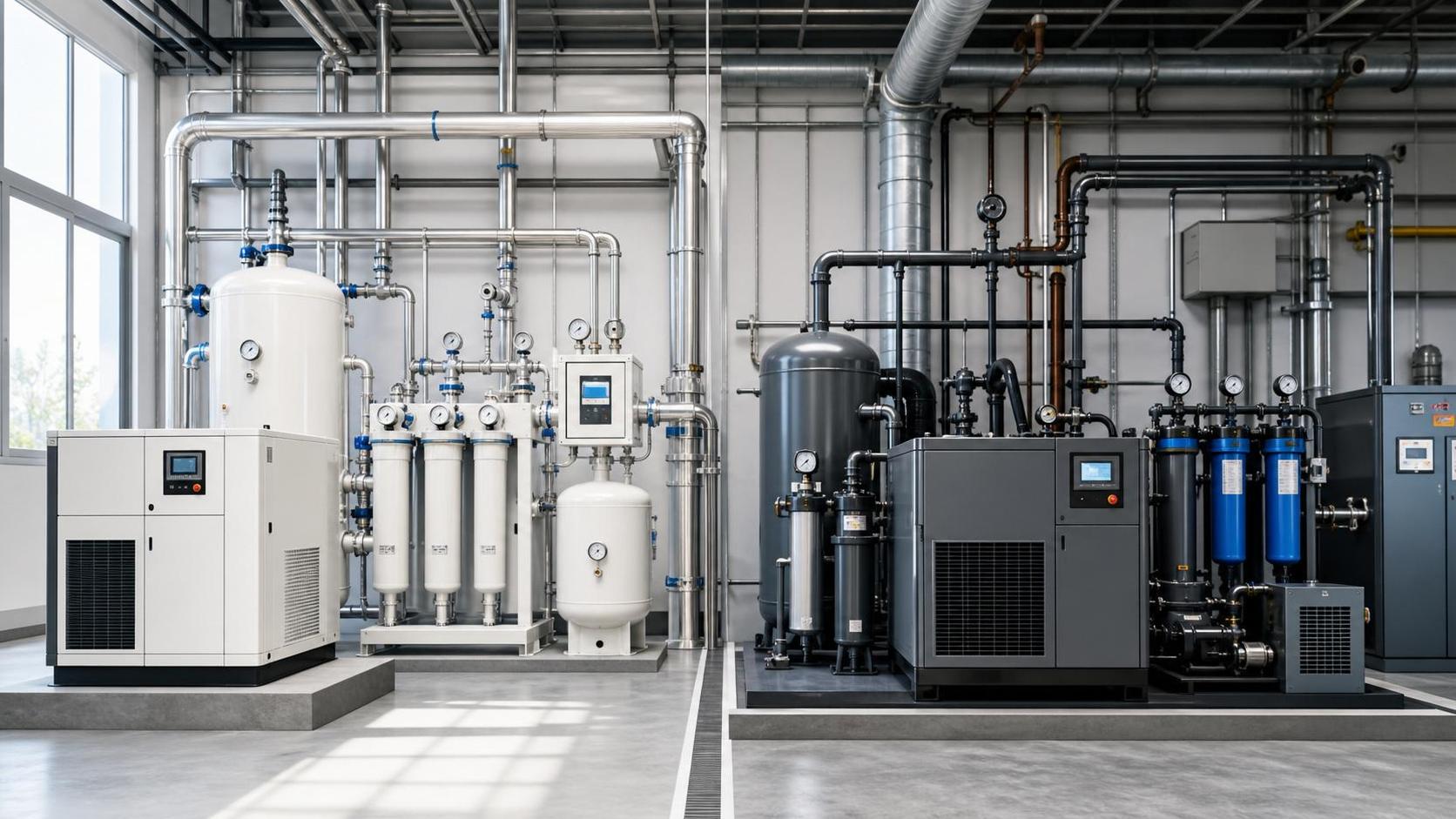
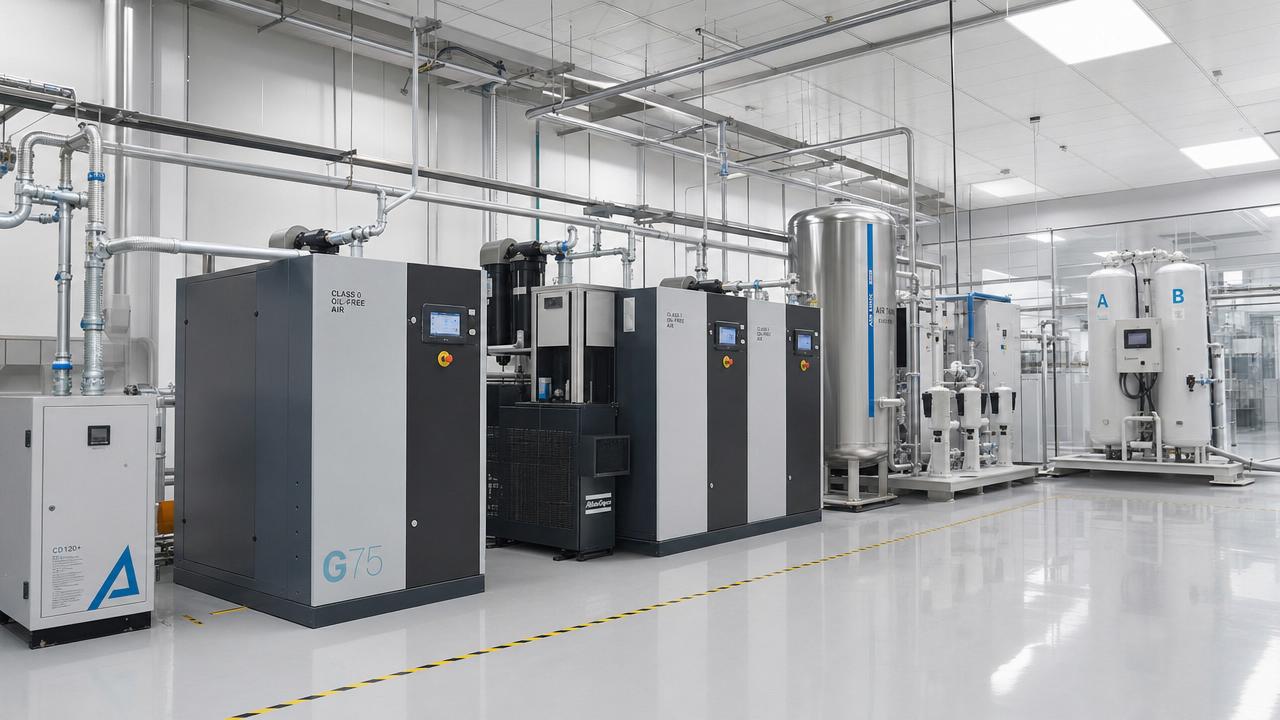
The compressor technology choice sets the baseline risk. Oil-injected compressors can be reliable and efficient in many industrial duties, but electronics applications with sensitive air-contact processes require a carefully engineered downstream treatment train. Oil-free compression reduces the risk of lubricant entering the compressed air stream from the compression chamber, although it does not eliminate contamination from ambient intake air, condensate, distribution materials, or maintenance practices.
Air intake location deserves more attention than it usually receives. A compressor drawing air near vehicle traffic, cooling towers, solvent exhausts, roof construction, or process vents begins with a more difficult contamination load. The intake should be evaluated for dust, humidity, corrosive gases, hydrocarbons, and seasonal changes. In some facilities, the most consequential improvement is not a larger filter but a better air-intake location and a disciplined inspection routine.
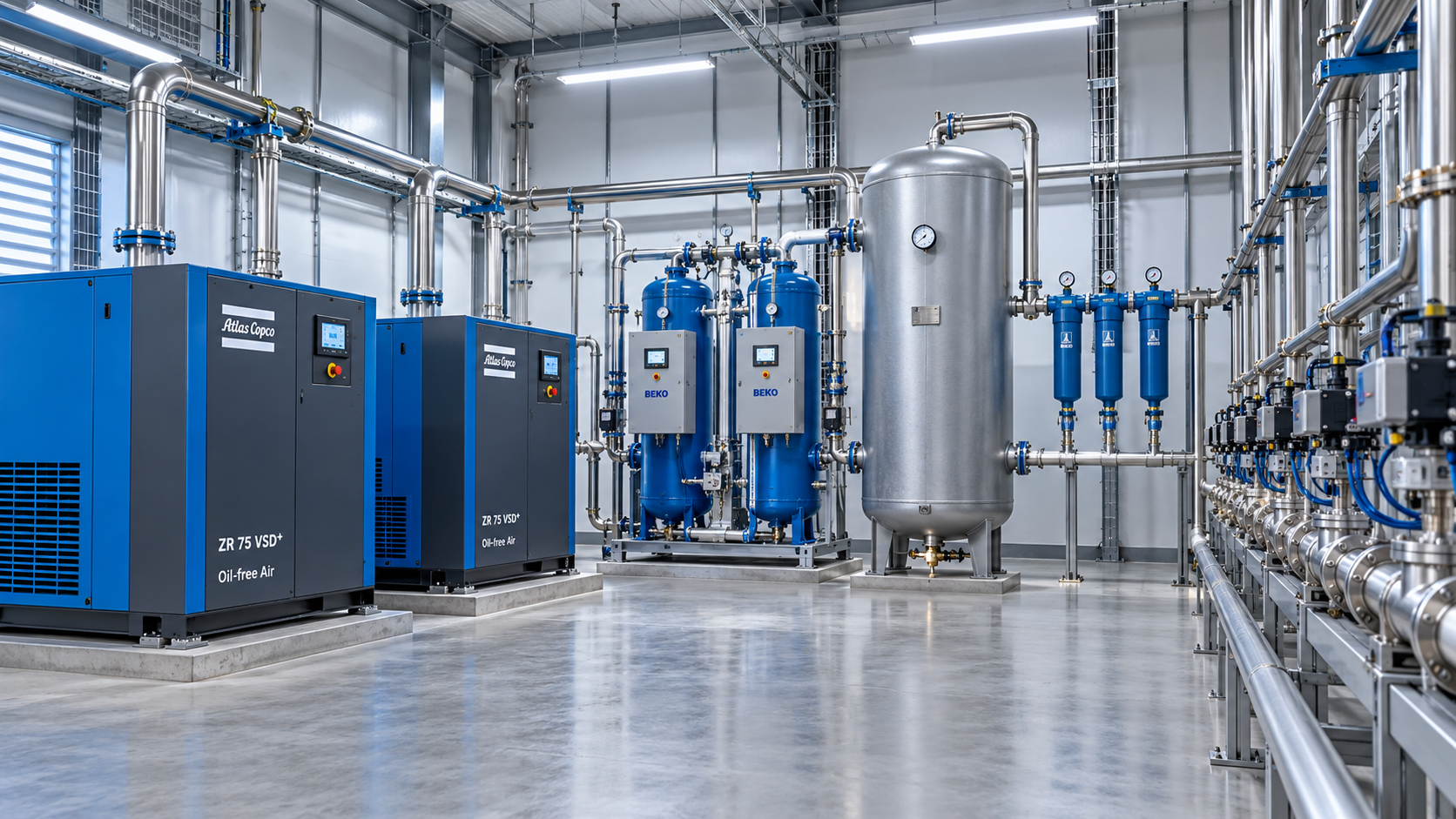
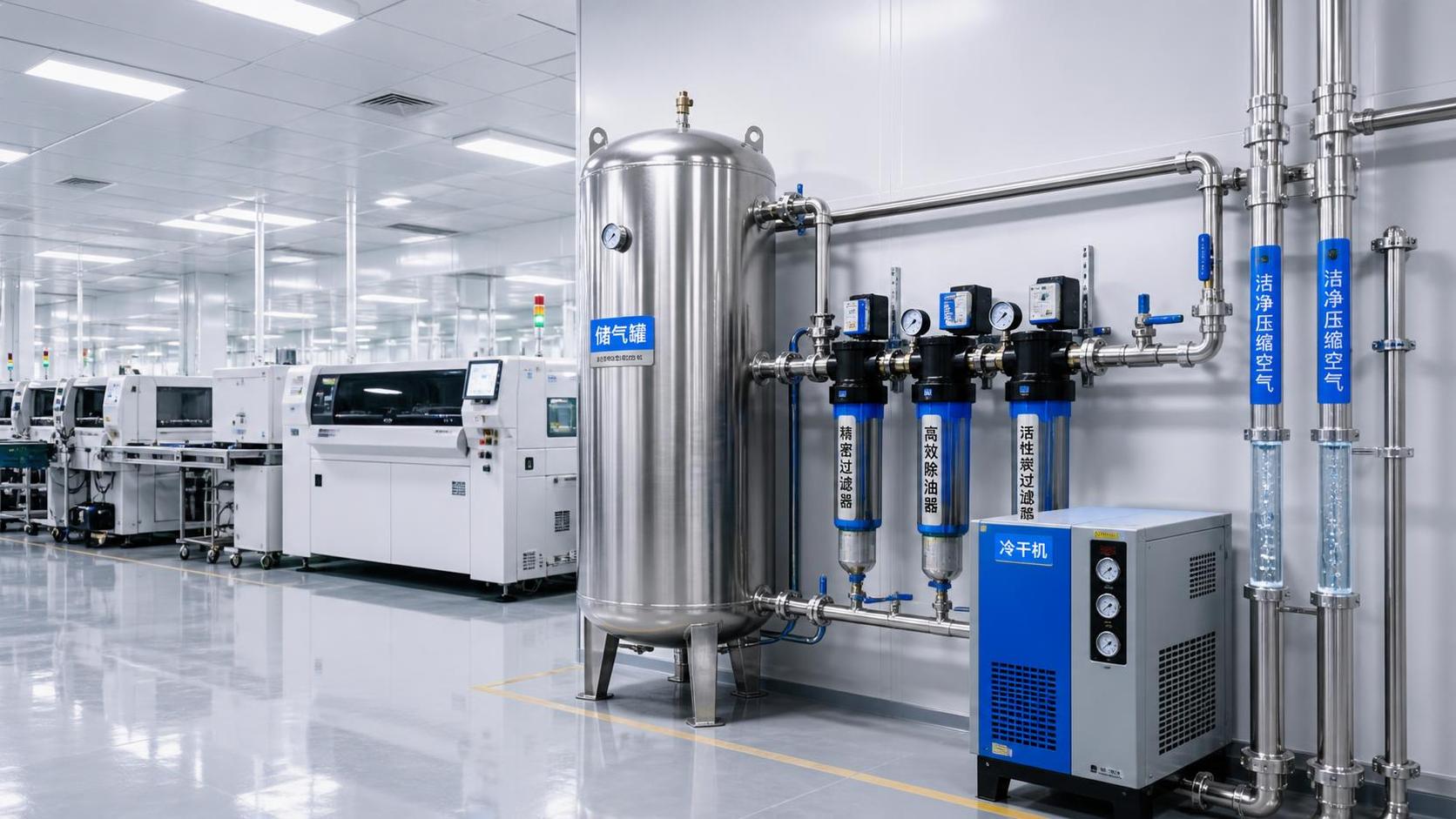
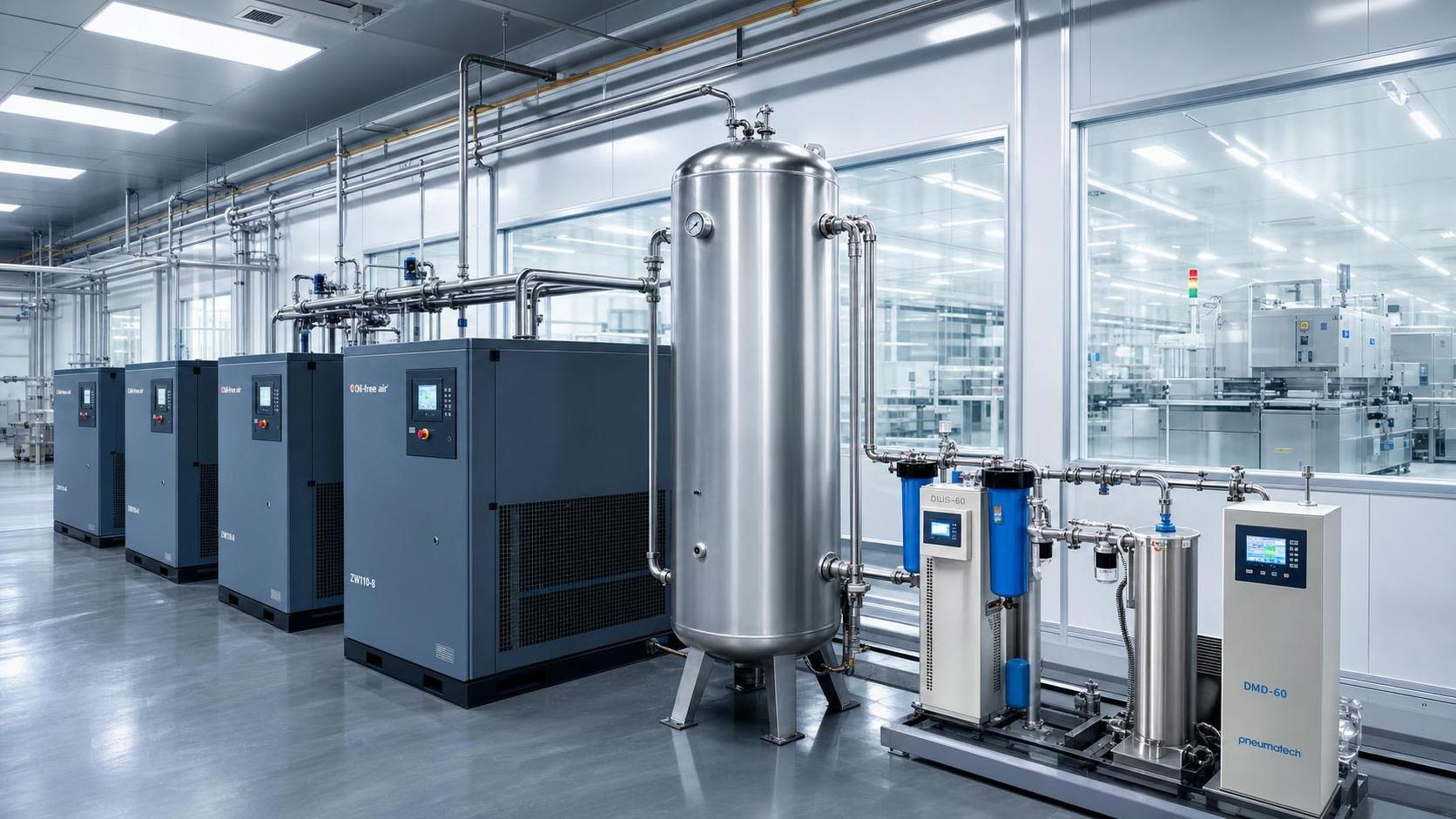
After compression, an aftercooler and moisture separator reduce temperature and remove bulk liquid water. Properly sized receivers can also help stabilize pressure and provide time for condensation to separate. These devices are not substitutes for a dryer, but they reduce the load on it. Automated condensate drains should be selected and maintained so that collected liquid is discharged reliably without continuously wasting compressed air. Where oil may be present, condensate handling also needs to align with site environmental procedures rather than being treated as ordinary wastewater.
Drying Is About Dew Point Stability, Not Just “No Visible Water”
Water contamination is often invisible until it condenses. The relevant question is whether the pressure dew point remains safely below the lowest temperature the air will encounter in storage, piping, or at the equipment. If compressed air cools below its dew point in a line, liquid water can form even though the dryer appeared to perform normally at the compressor room.
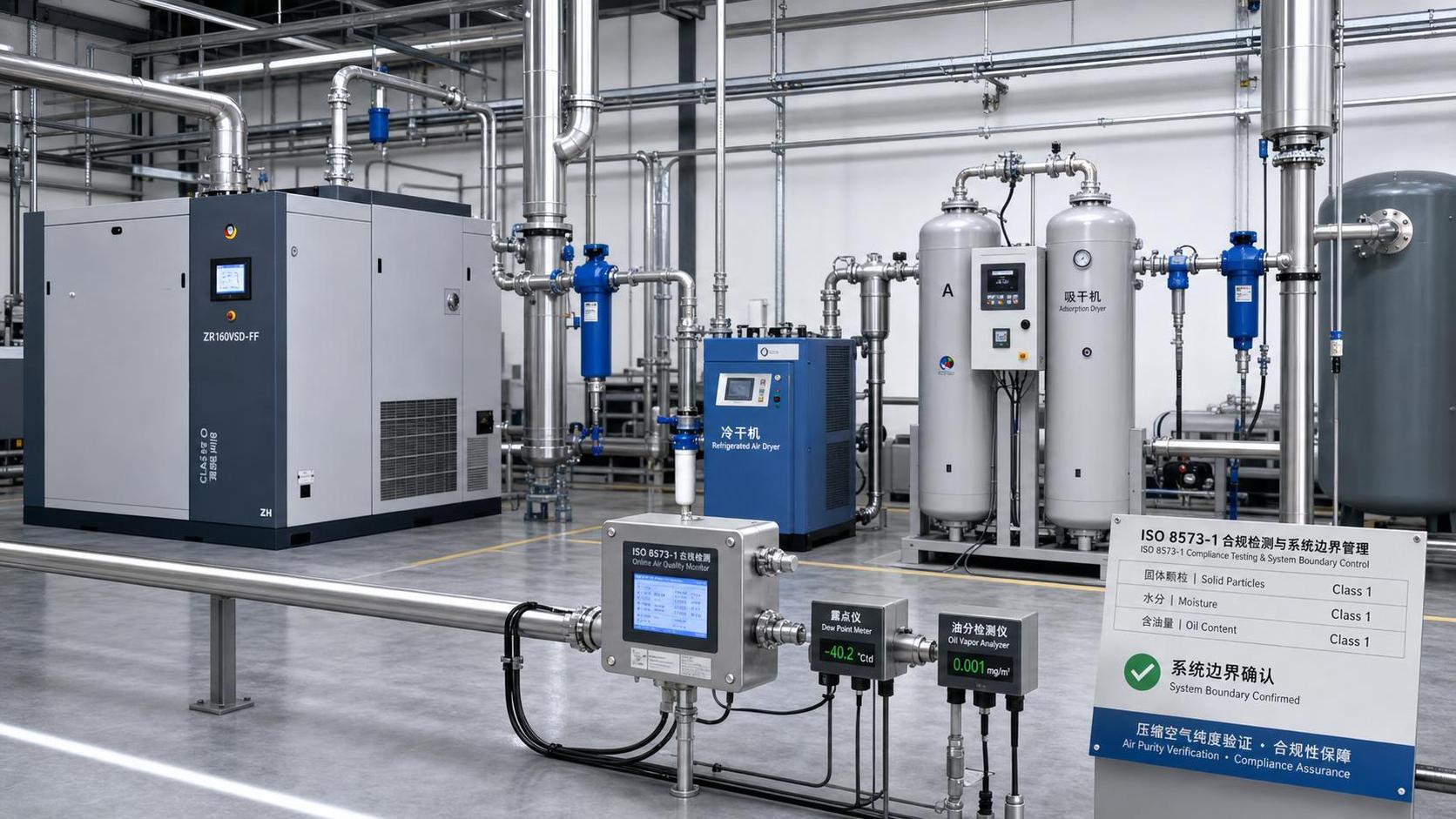
Refrigerated dryers are commonly used where moderate dryness is sufficient and the compressed-air network operates in a relatively controlled environment. Desiccant dryers are typically considered when a lower pressure dew point is needed, such as for highly sensitive processes, cold areas, or long distribution routes with greater condensation risk. The appropriate choice depends on required air purity, ambient conditions, demand variation, regeneration method, and the energy consequences of maintaining the target dew point.
Dryer performance should be monitored under real load conditions. A unit can appear acceptable during low-demand periods yet struggle during peak production, high ambient humidity, or a change in compressor sequencing. Alarm limits, trend review, and scheduled verification help identify drift before moisture reaches the production floor.
Use Filtration as a Train, Not a Single Barrier
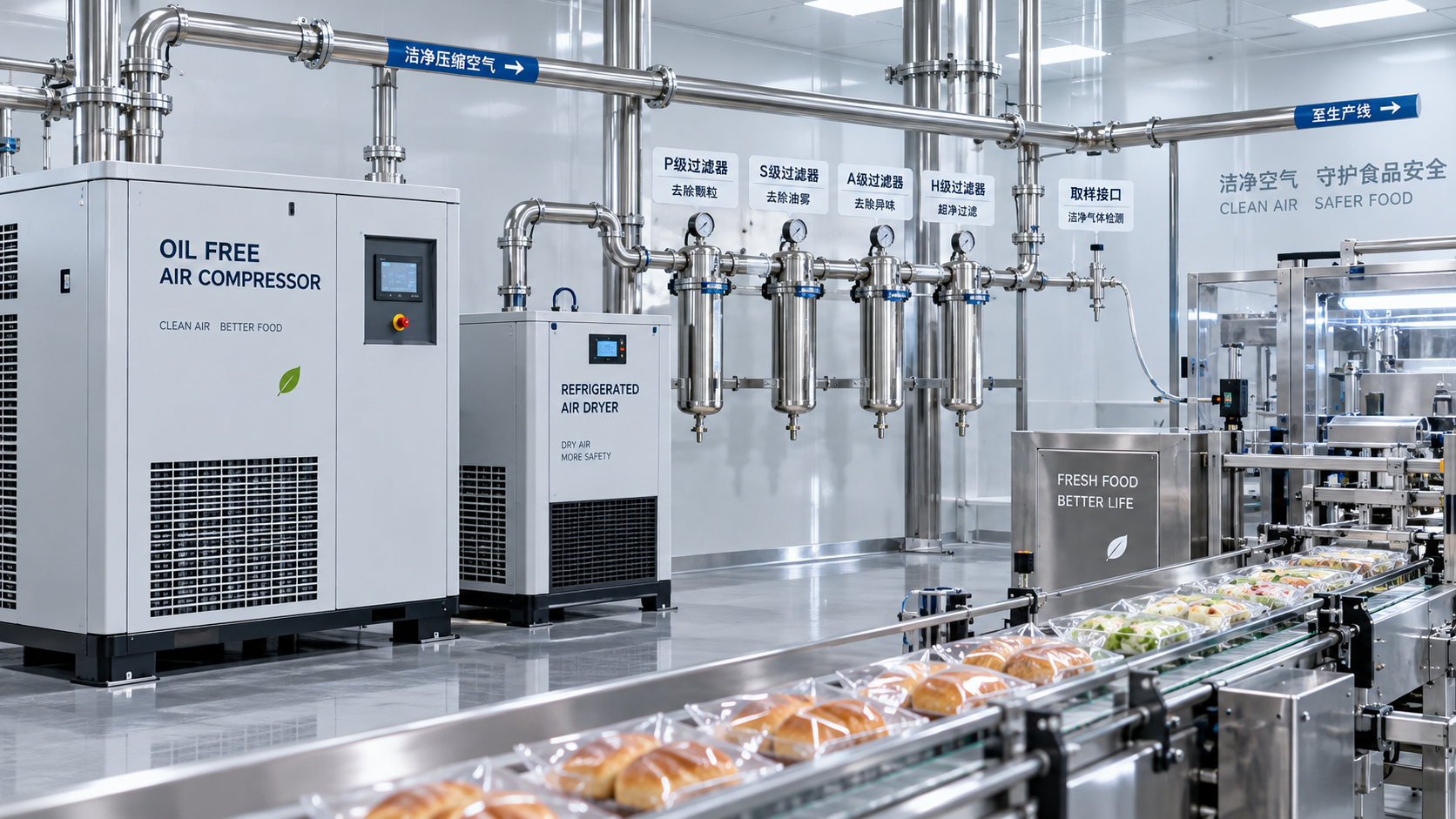
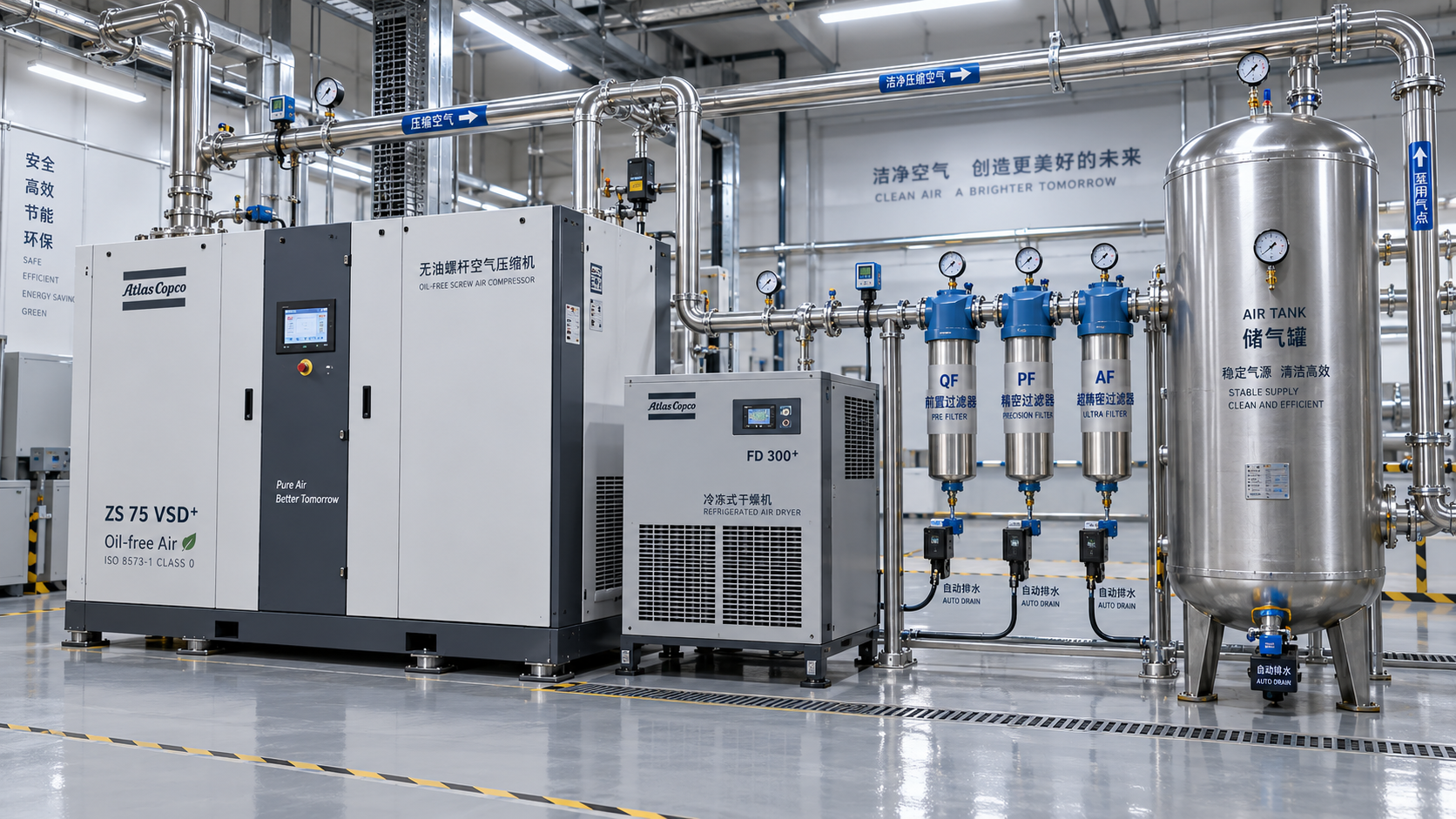
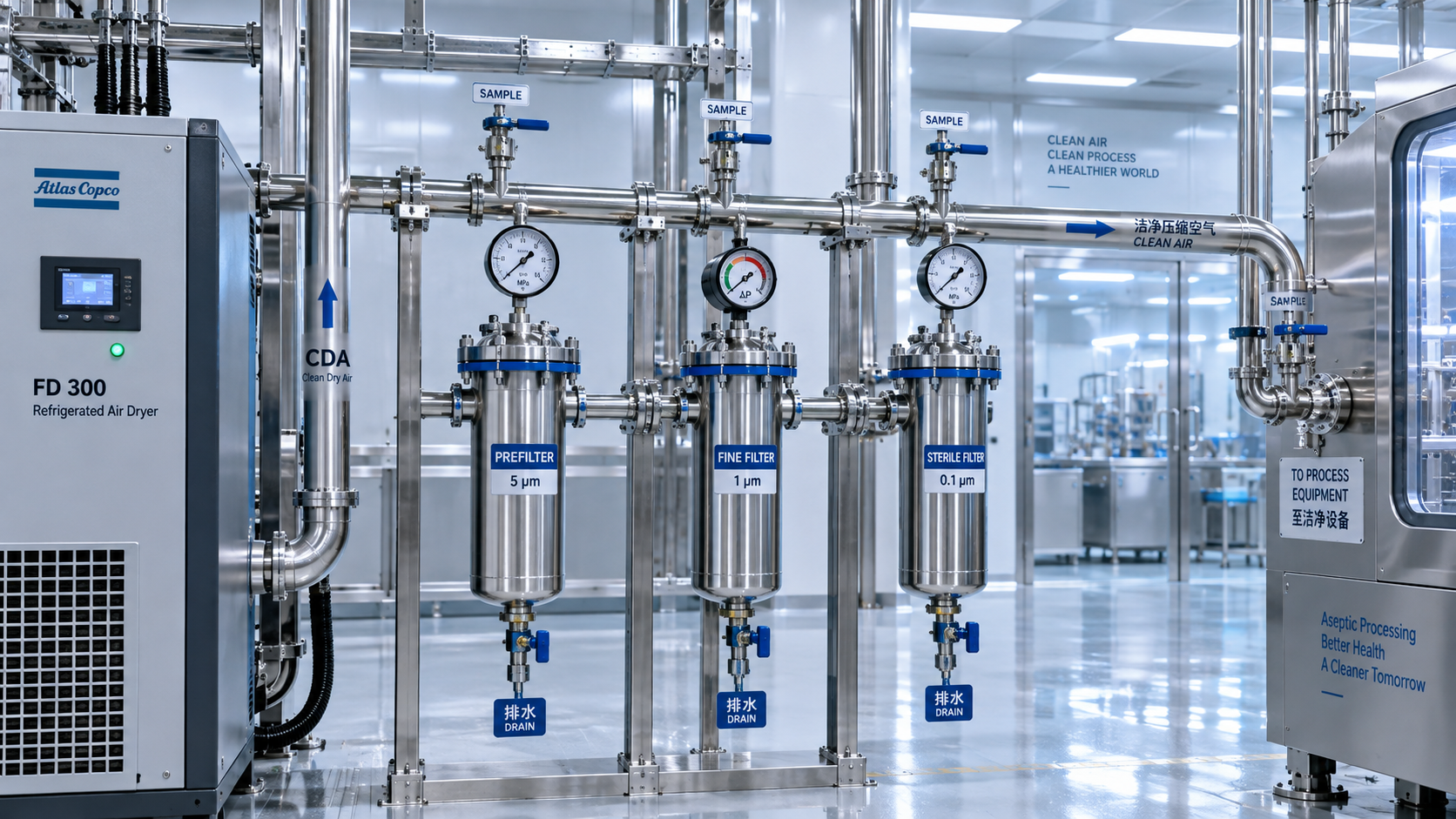
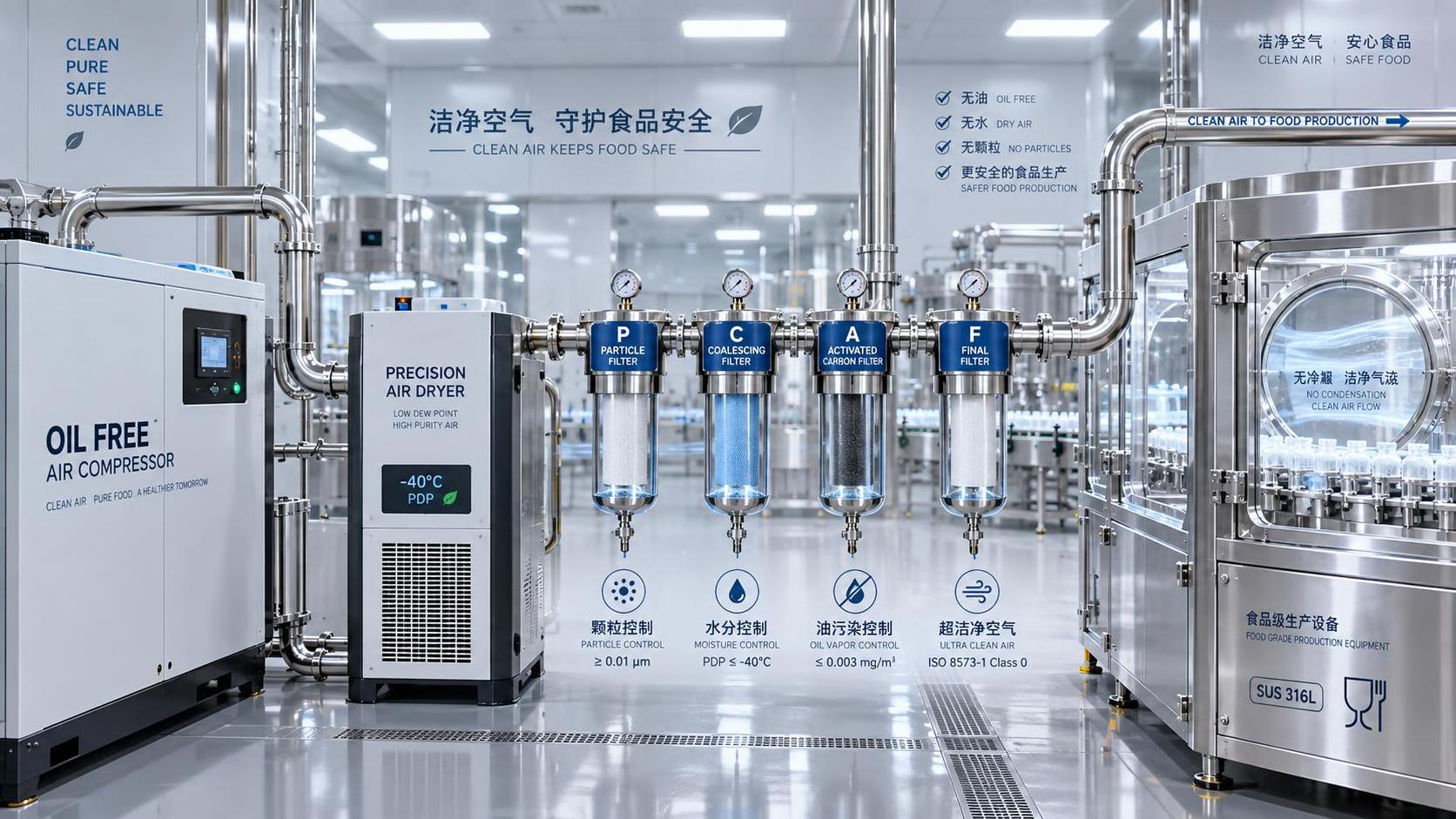
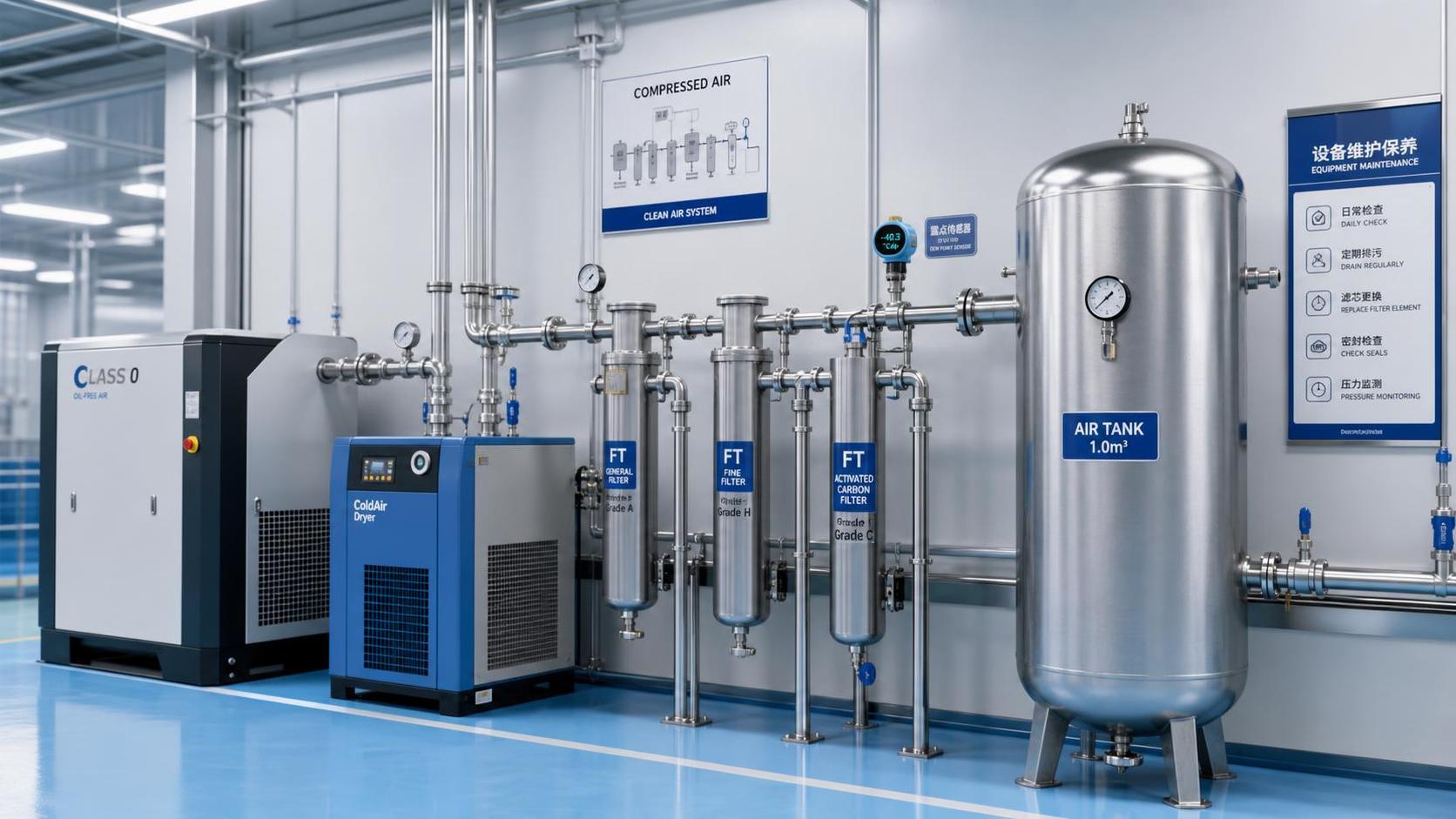
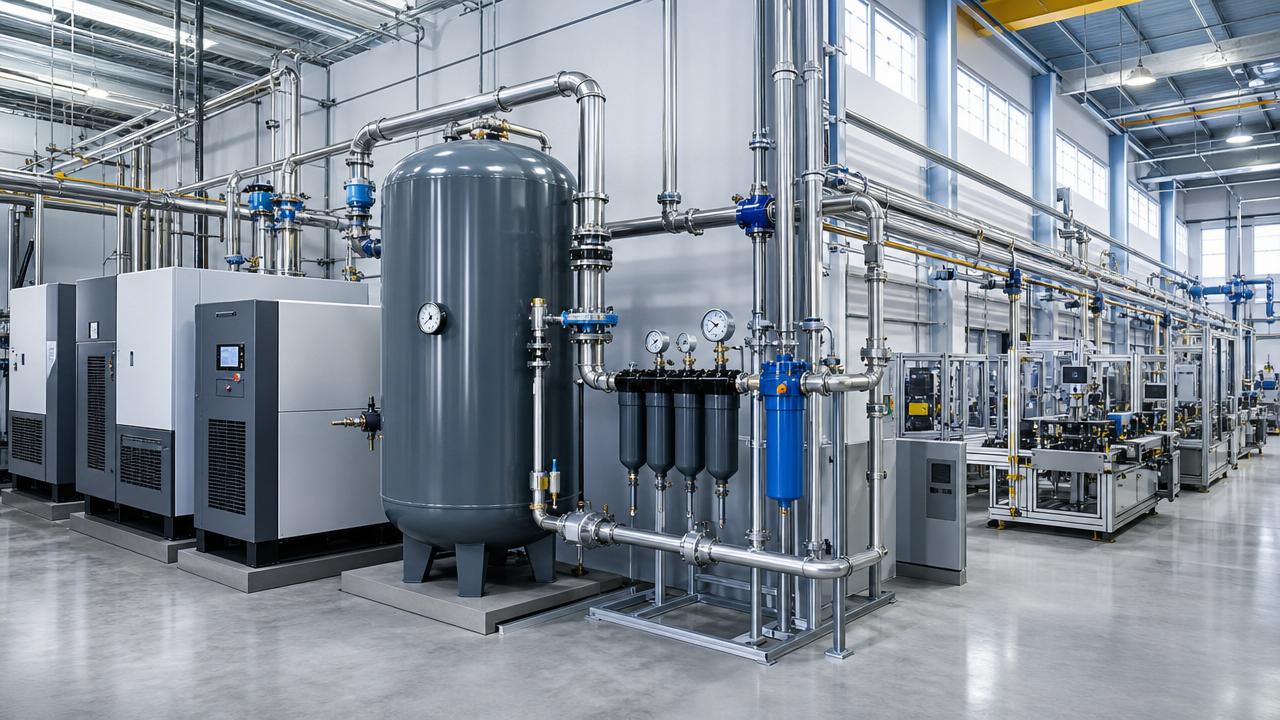
Filters work best when each stage has a clear duty. A bulk separator or pre-filter protects downstream equipment from liquid and larger debris. Coalescing filters capture fine liquid aerosols and particles. Activated-carbon filtration may be used where oil vapour or odour is a relevant risk. At critical endpoints, a final point-of-use filter can provide a last protective barrier against debris generated within the piping network.
Filter selection should never be based solely on a nominal micron rating. Quality teams should ask what contaminant the element is designed to remove, at what flow and pressure, and whether the performance statement concerns liquid aerosols, solid particles, or vapour. A particulate filter does not remove oil vapour. A coalescing filter can lose effectiveness if overwhelmed with liquid water. Activated carbon has a finite service life and may need protection from oil aerosols and excess moisture.
Differential-pressure monitoring is useful, but it is only part of the picture. A low pressure drop does not prove that an adsorbent medium still has adequate vapour-removal capacity. Conversely, an overloaded filter raises pressure drop, which can tempt operators to increase compressor discharge pressure. That response consumes more energy and may mask a maintenance problem rather than solving it.
The Distribution Network Can Recontaminate Clean Air
A clean compressor room does not guarantee clean air at the tool. Distribution piping must prevent corrosion, condensate accumulation, and ingress from the surrounding environment. Materials should be chosen for the required cleanliness and compatibility with the plant environment. Older carbon-steel pipework can release rust and scale; poorly assembled plastic or flexible lines can shed debris or develop hidden restrictions. The right material is a project-specific decision, but the consequence of pipe-generated particles should be explicitly assessed.
Pipe layout matters as much as material. Main headers should be arranged to promote drainage, low points should have managed drains, and branch connections should avoid drawing accumulated condensate directly into the air stream. Where critical process air is needed, a dedicated dry-air branch with local filtration is often easier to control than relying on a general factory loop. Dead legs should be minimized because stagnant sections can collect moisture and debris.
Open hoses, quick-connect fittings, and temporary maintenance connections are weak points. They are frequently overlooked during audits because they are small and familiar. Yet a hose stored on the floor or a coupling left uncapped can introduce dirt directly downstream of the final filter. Controlled connection practices, capped outlets, and clearly identified critical-air lines make a measurable difference to everyday discipline.
Verification Must Occur Where Air Meets the Process
A supplier test certificate at installation is valuable, but it is not permanent proof of air quality. Filters age, dryers cycle, valves fail, and production demand changes. Verification plans should define sampling locations, test methods, responsibilities, acceptance criteria, and the response when results fall outside specification. For critical applications, the point of use is normally more meaningful than a sample taken immediately after the treatment skid.
The following checks are commonly worth including in a risk-based program:
- Pressure dew point monitoring and periodic confirmation at representative endpoints.
- Inspection of filter housings, element-change records, differential pressure, and correct flow direction.
- Condensate drain function testing, especially after shutdowns or low-load periods.
- Particle and oil testing where process requirements identify them as critical quality attributes.
- Review of piping modifications, temporary hoses, and maintenance work before returning a line to service.
Microbial control requires particular care where air can contact products, sensitive surfaces, or controlled environments. Dry air is less hospitable to microbial growth than wet air, but dryness is not a sterilization claim. If microbiological quality is relevant, the appropriate controls, sampling approach, and validation expectations should be defined with the facility’s quality system and applicable process requirements.
Contamination Control Also Has an Energy Dimension
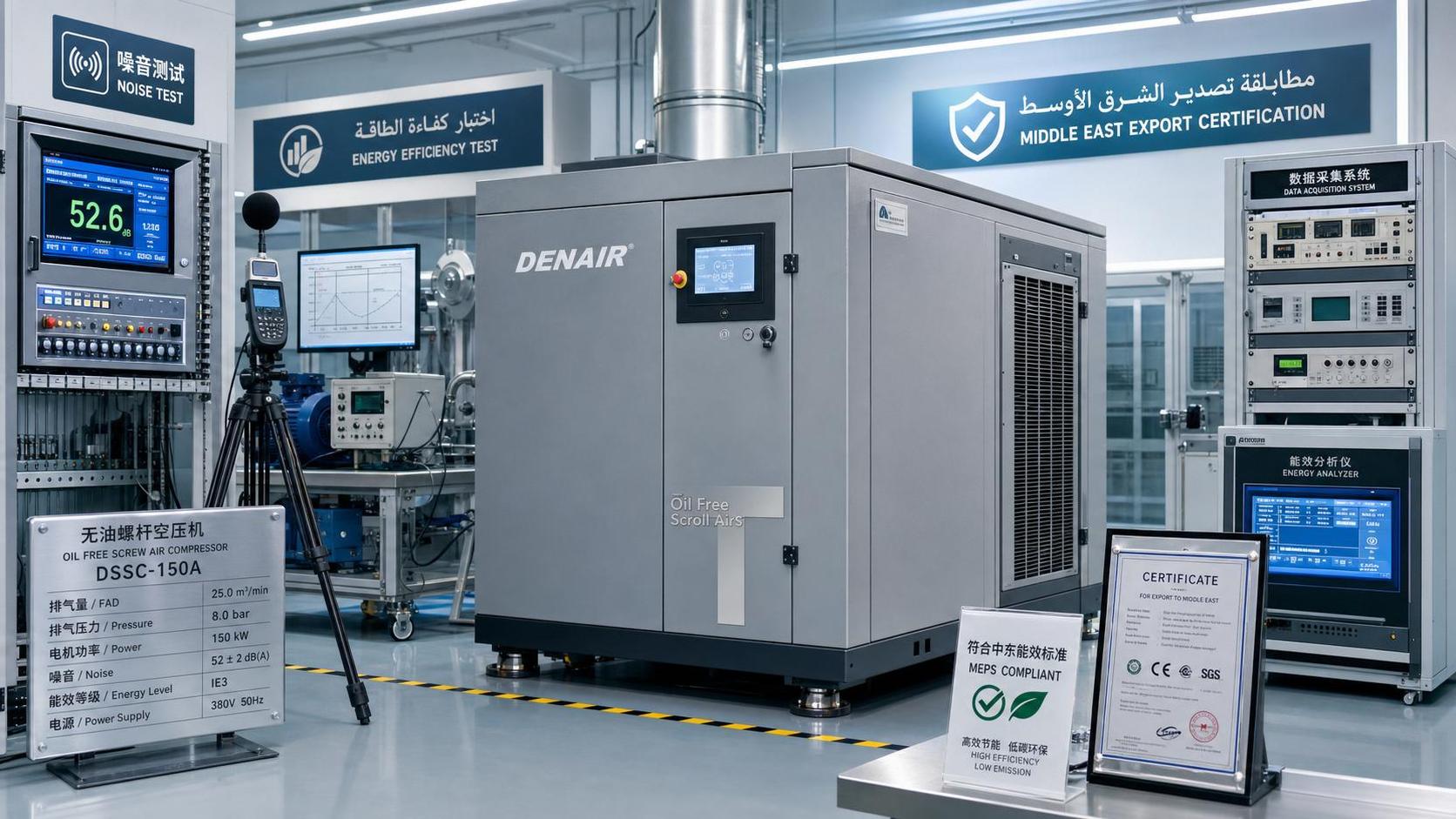
Over-treating every cubic metre of air can be expensive. Desiccant regeneration, pressure losses across filters, excessive operating pressure, and uncontrolled leakage all add to compressor energy demand. The better answer is not to relax cleanliness requirements; it is to separate critical from general loads, reduce avoidable pressure drop, repair leaks, and monitor the actual relationship between flow, pressure, dew point, and production demand.
This systems view is central to the work followed by the Global Thermal & Compression Matrix (GTC-Matrix). Its intelligence coverage links thermodynamic decisions with operational consequences across compressed air, industrial cooling, vacuum, and heat exchange. In electronics production, air purity cannot be separated from energy efficiency, maintenance planning, refrigerant choices for supporting cooling systems, or the increasing expectation for traceable manufacturing controls.
The most reliable compressed air systems for electronics are not defined by one compressor type, one premium filter, or a single test report. They are defined by a documented contamination-risk assessment and a maintained chain of controls. Before approving a system, confirm the air-quality requirement at each critical use point, the expected dew point under worst operating conditions, the function of every treatment stage, the piping condition, and the evidence that will demonstrate continued performance. That is the difference between clean air by design and clean air by assumption.
Ready when you are. Send us a message to get started.
Related News
- How to verify food-grade purity in compressed air systemsAuthor :Pneumatic Power Engineer

- What determines the price of pure air compression systems?Author :Pneumatic Power Engineer

- How to size oil-free compressors for instrumentation air demandAuthor :Pneumatic Power Engineer

- How Class 0 oil-free compressors protect product quality in food productionAuthor :Pneumatic Power Engineer

- How to verify compressed air cleanroom standards before installationAuthor :Pneumatic Power Engineer

- When oil free vacuum pumps make sense for European cleanroom projectsAuthor :Pneumatic Power Engineer

- When do pure air compression systems need ISO 8573-1 Class 0?Author :Pneumatic Power Engineer

- How do compressed air systems for electronics prevent contamination?Author :Pneumatic Power Engineer

- When does an oil-free process vacuum pump justify its higher cost?Author :Pneumatic Power Engineer

- Does ISO 9001 certification apply to compressed air quality?Author :Pneumatic Power Engineer

- How to Specify Clean Compressed Air Systems in Southeast Asia for Food and Pharma PlantsAuthor :Pneumatic Power Engineer

- How to Compare Oil Free Vacuum Pumps for Clean Process RequirementsAuthor :Pneumatic Power Engineer

- How to Evaluate a Clean Compressed Air Systems Supplier for ISO 8573-1 ComplianceAuthor :Pneumatic Power Engineer

- How to Choose the Right Oil-Free Vacuum PumpAuthor :Pneumatic Power Engineer

- VDI 2083 Update Makes Class 0 Proof MandatoryAuthor :Pneumatic Power Engineer

- When to Use Oil Free Vacuum Pumps for High Purity LinesAuthor :Pneumatic Power Engineer

- Compressed Air Solutions: When Oil-Free Systems Lower Total Operating CostAuthor :Pneumatic Power Engineer

- ATMOsphere Europe 2026 Adds Oil-free Systems ZoneAuthor :Pneumatic Power Engineer

- Oil-Free Compressors: Key Selection Criteria for Clean Air SystemsAuthor :Pneumatic Power Engineer

- How to Compare Oil Free Centrifugal Compressors for Stable Plant Air SupplyAuthor :Pneumatic Power Engineer

- Compressed Air Class 0 vs Oil-Free: What Really MattersAuthor :Pneumatic Power Engineer

- Oil-Free Compression Class 0: What the Standard Really Means in ProductionAuthor :Pneumatic Power Engineer

- Air Compression Cost Comparison: Oil-Free vs Screw Systems in Daily OperationAuthor :Pneumatic Power Engineer

- Saudi SASO Tightens IEC 63349-2 for Oil-Free CompressorsAuthor :Pneumatic Power Engineer

- Saudi SASO Tightens Oil-Free Compressor Efficiency RulesAuthor :Pneumatic Power Engineer

- Pure Air Compression Systems for Clean Production LinesAuthor :Pneumatic Power Engineer

- IEC 63349-2:2026 makes energy certification mandatoryAuthor :Pneumatic Power Engineer

- IEC 63349-2:2026 Sets New Entry Rules for Oil-Free Screw CompressorsAuthor :Pneumatic Power Engineer

- IEC 63349-2:2026 Takes Effect for Oil-Free Screw CompressorsAuthor :Pneumatic Power Engineer

- IEC 63349-2:2026 Sets New Efficiency Gate for Oil-Free Screw CompressorsAuthor :Pneumatic Power Engineer

- IEC 63349-2:2026 Takes Effect for Oil-Free Screw CompressorsAuthor :Pneumatic Power Engineer

- SABIC Methanol Force Majeure Extended, Tightening R134a/R407C FeedstocksAuthor :Pneumatic Power Engineer

- How to Evaluate Pneumatic Power Systems for Stable OutputAuthor :Pneumatic Power Engineer

- Oil-Free Compression vs Lubricated Systems: Key Trade-OffsAuthor :Pneumatic Power Engineer
![]()
- Oil-Free Compression: 2026 Cost and Compliance Trade-OffsAuthor :Pneumatic Power Engineer

- Oil-Free Compression: Cost and Contamination RisksAuthor :Pneumatic Power Engineer
![]()