



Air Compression Cost Comparison: Oil-Free vs Screw Systems in Daily Operation




Why does daily air compression cost deserve a closer look?
Air compression spending often hides inside utility bills and routine service budgets. Yet in many facilities, it influences margin more than expected.
The real issue is not only electricity. Daily operation also includes filter replacement, lubricant management, downtime exposure, and compressed air quality risk.
That is why an oil-free versus screw comparison matters. The choice affects operating stability, contamination control, and the speed of payback.
In practical terms, air compression cost should be read as a lifecycle question. Power draw is the visible part, but service frequency and process impact often decide the larger bill.
GTC-Matrix regularly tracks these operating patterns across industrial cooling, compressed air, vacuum, and heat exchange sectors. That wider market view is useful when energy prices and purity standards keep moving.
When people compare oil-free and screw systems, what are they actually comparing?
The wording can be confusing because many buyers use “screw” to mean oil-injected rotary screw systems. In everyday procurement, that is usually the comparison being made.
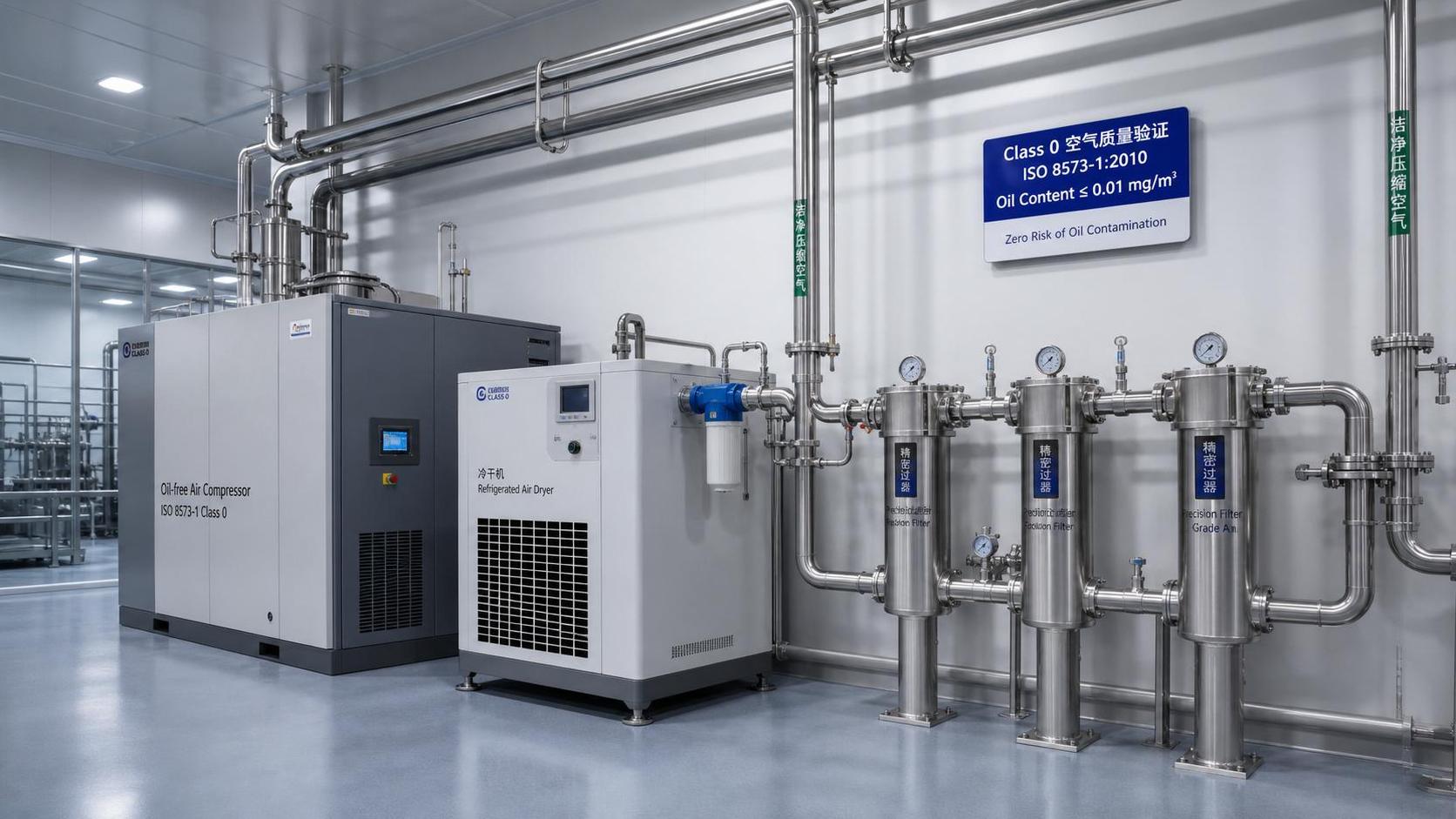
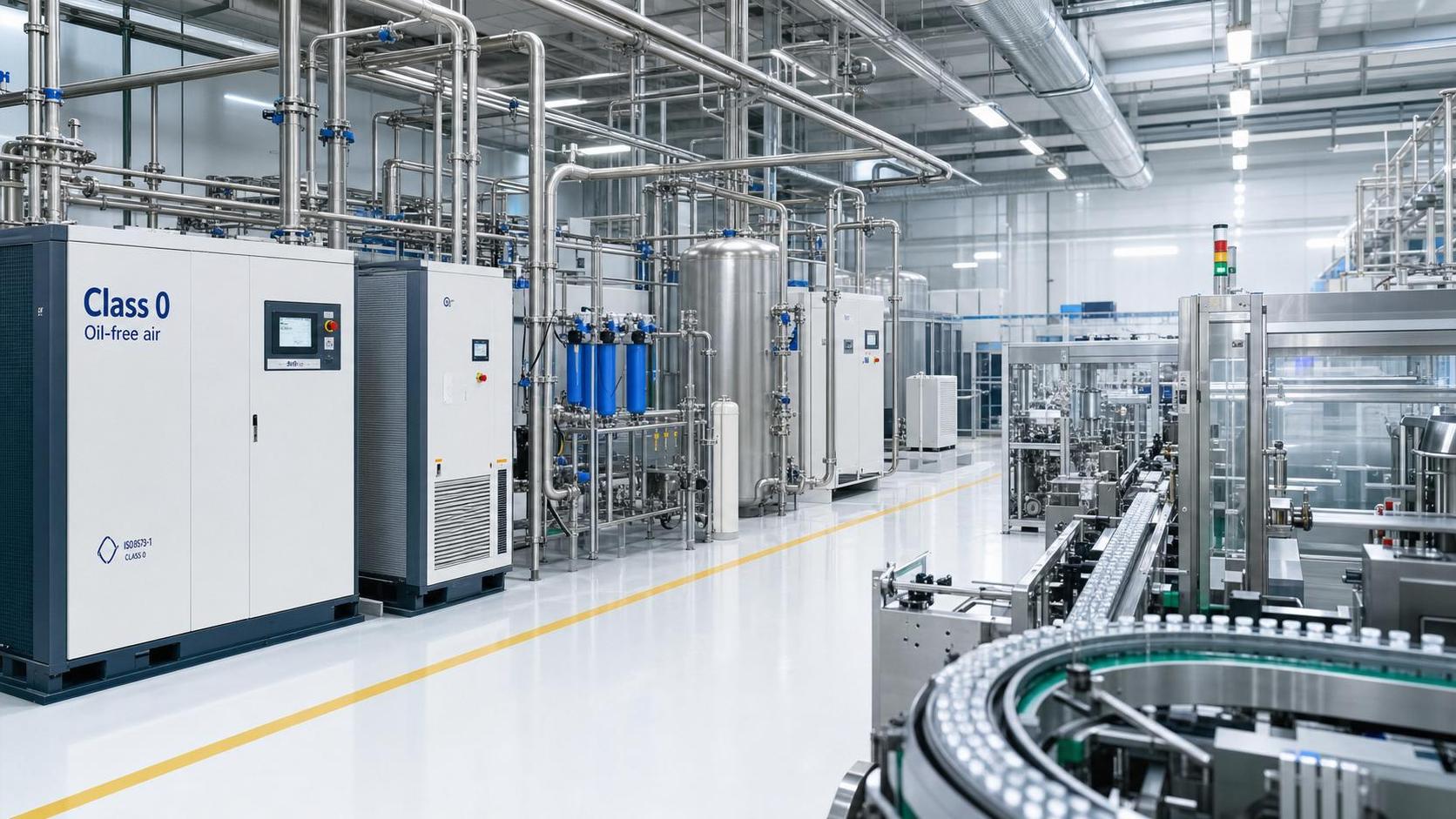
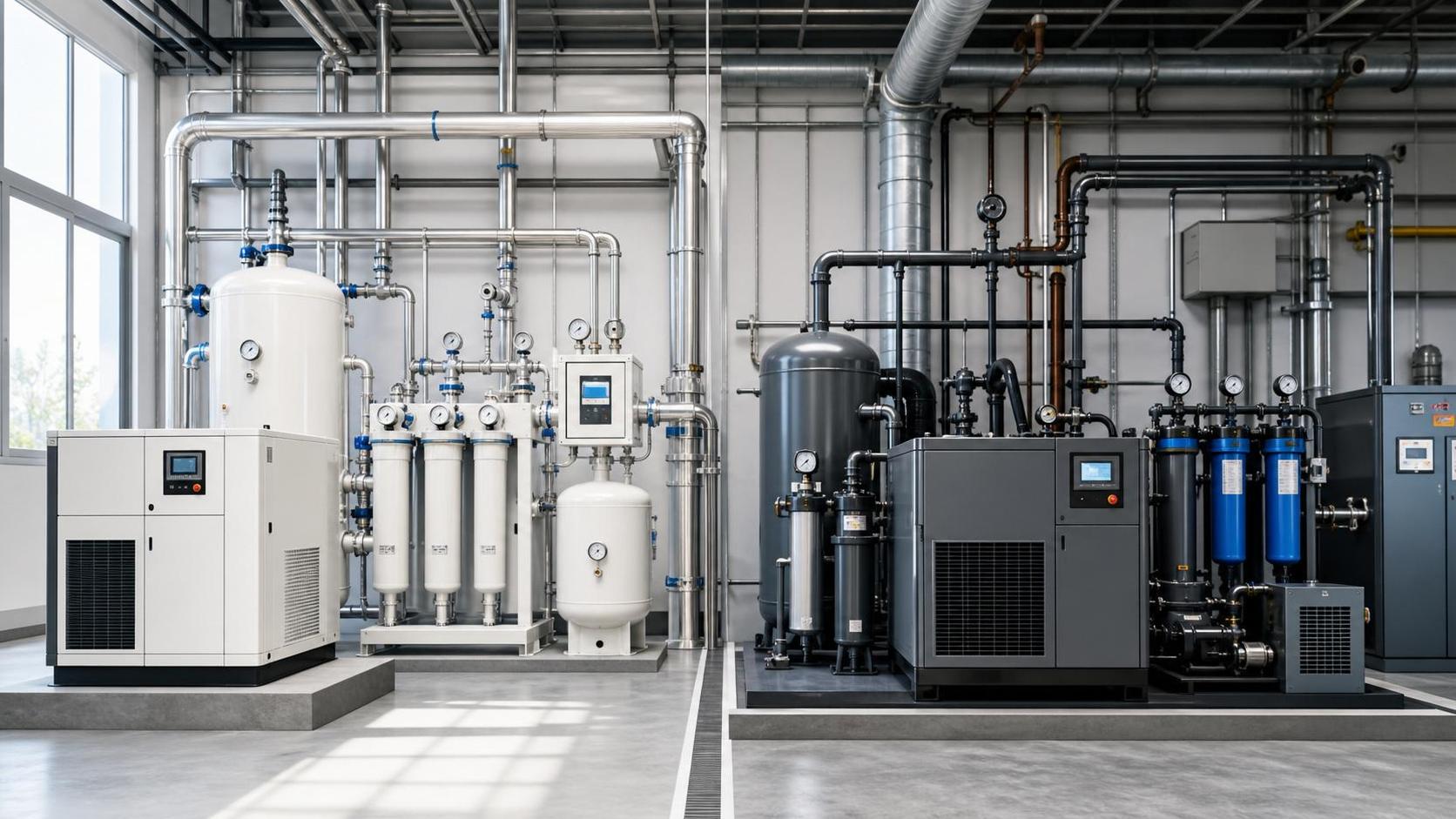
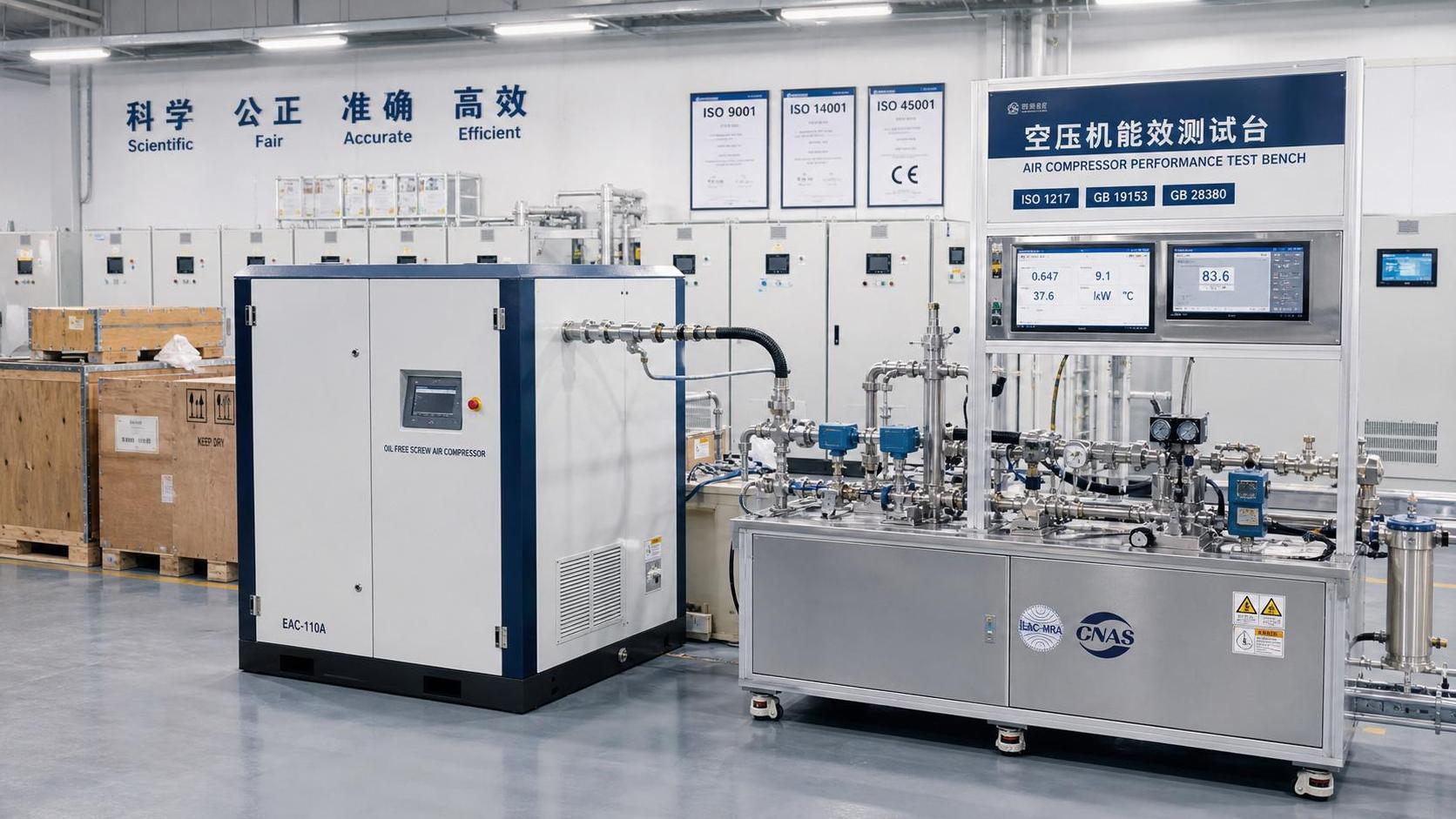
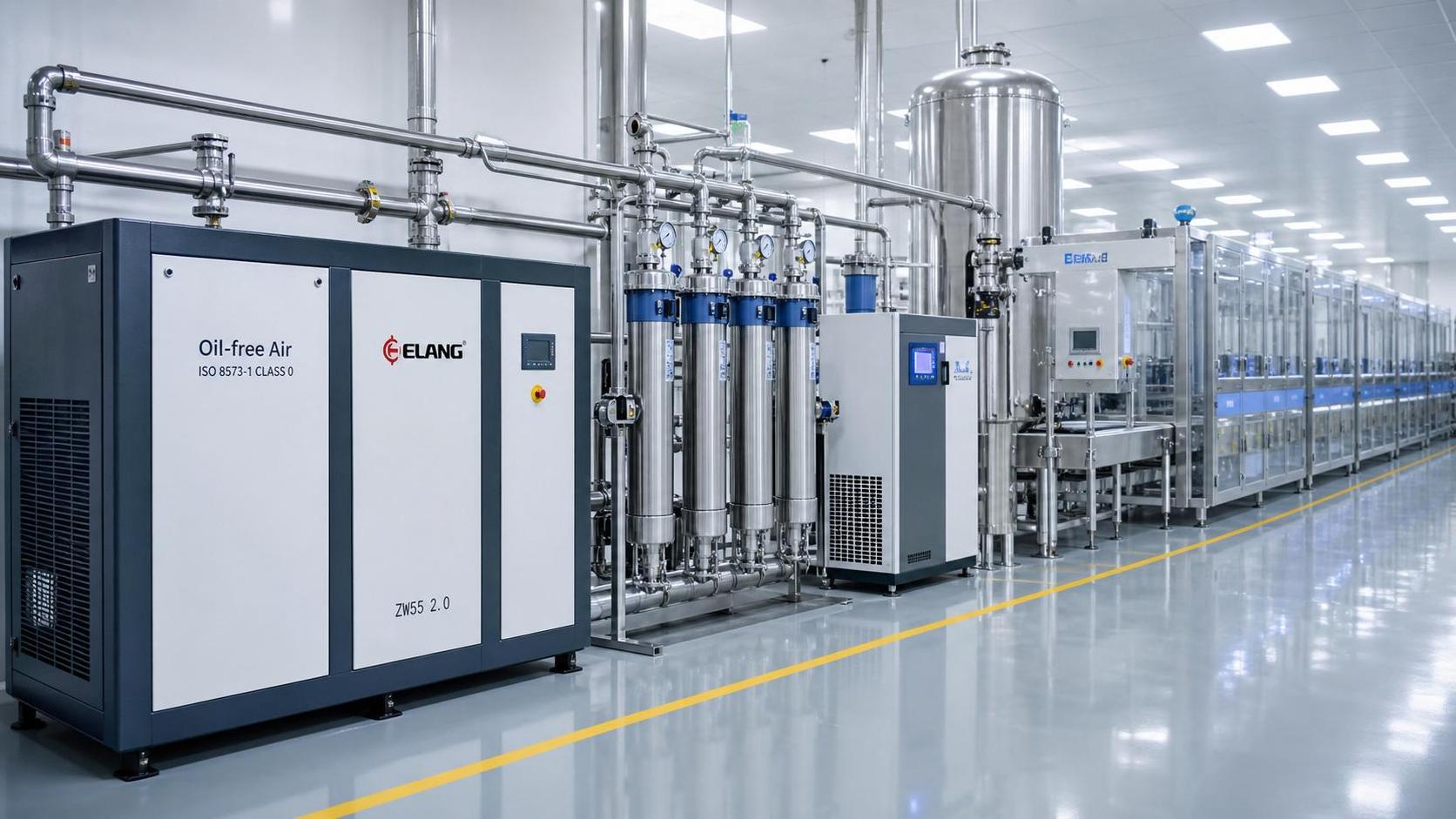
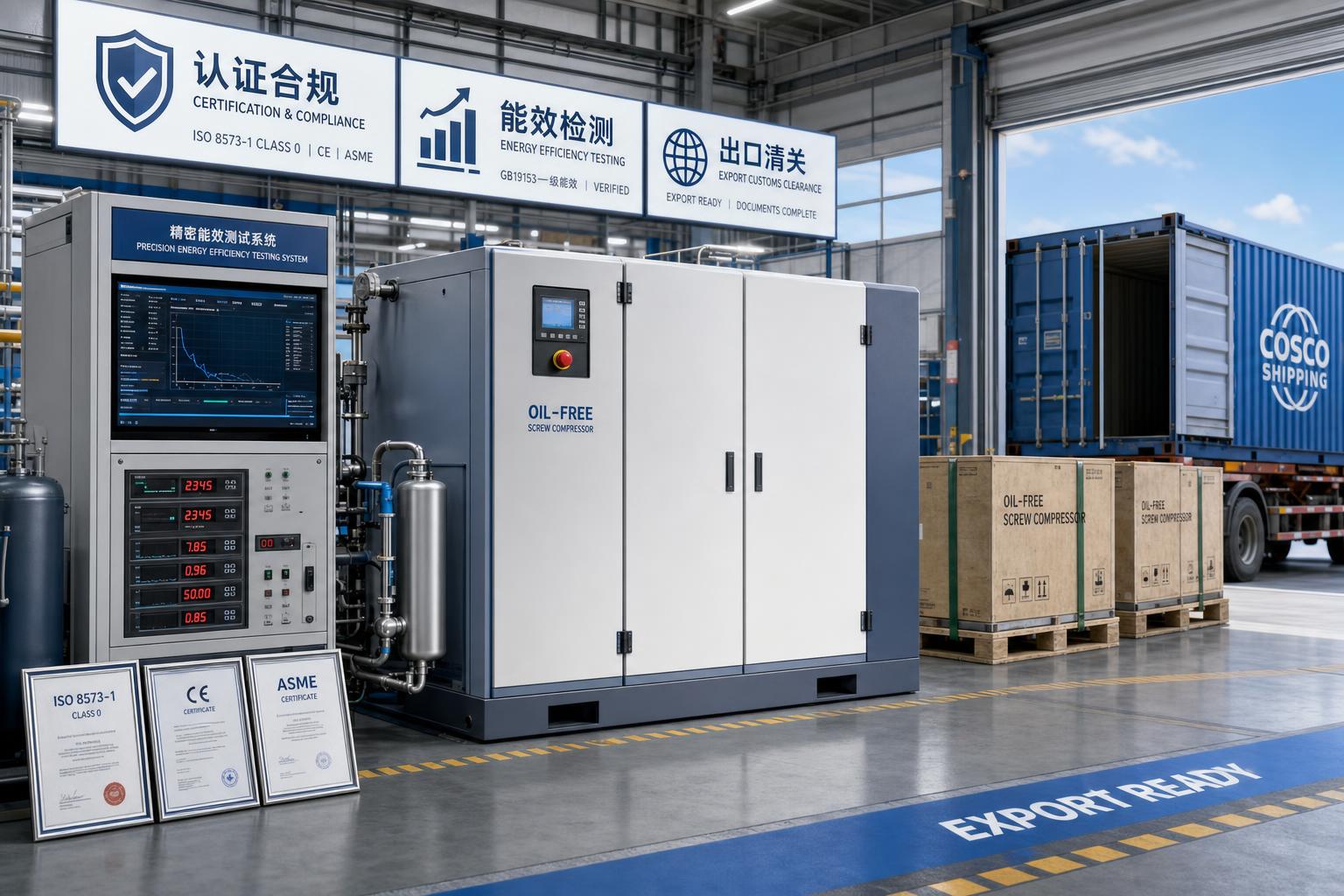
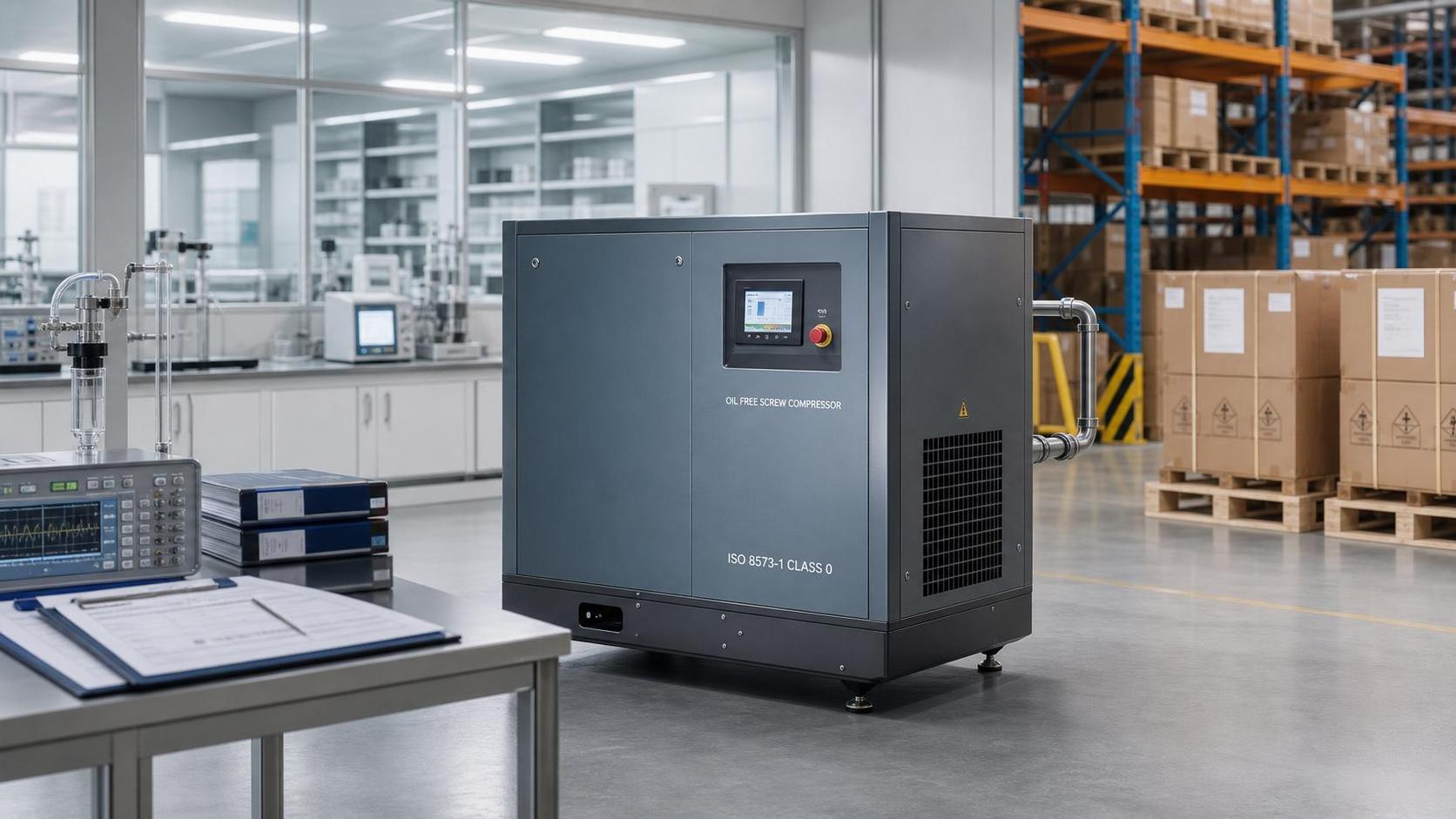
Oil-free compressors deliver compressed air without oil contact in the compression chamber. They are chosen where product purity or regulatory compliance carries direct financial consequences.
Oil-injected screw systems, by contrast, use lubricant for sealing, cooling, and efficiency support. They are common because they balance capacity, proven design, and moderate purchase price.
So the daily air compression decision is rarely about technology labels alone. It is about whether lower initial cost outweighs higher contamination controls and maintenance dependencies.
A more useful comparison is shown below.
This table does not settle the choice by itself. It simply shows where daily air compression cost starts to separate into different risk categories.
Which system usually costs less to run day by day?
There is no universal winner. The lower daily air compression cost depends on load profile, purity demand, utility rates, and the cost of unplanned interruption.
In a general plant using compressed air for tools, packaging, or non-contact automation, an oil-injected screw system often looks cheaper in routine operation.
That happens because the machine price is lower, service networks are broad, and replacement parts are familiar. For many sites, this keeps budgeting predictable.
However, the picture changes when air purity failures carry process loss. In food, pharmaceuticals, electronics, and precision coating, one contamination event can erase years of savings.
In those cases, oil-free air compression may produce the lower operating cost overall, even when energy or capital figures seem less attractive at first glance.
A practical way to judge the gap is to separate daily cost into four buckets:
- Electricity consumption at real duty cycle, not nameplate assumptions.
- Scheduled maintenance, including oil, separators, filters, and labor.
- Quality assurance costs, such as downstream filtration and testing.
- Interruption cost when air quality or reliability affects production.
When these are modeled together, the cheapest air compression setup is often different from the cheapest compressor quote.
Where do hidden costs usually show up after installation?
The most common mistake is focusing only on kilowatts and purchase price. Daily air compression cost usually drifts upward through smaller items that seem harmless on their own.
Leakage is one example. A well-priced compressor cannot fix a poorly managed distribution network. If leakage is high, both oil-free and screw systems become expensive assets.
Another hidden area is part-load operation. Compressors running far below design load waste energy quickly, especially when controls are not matched to actual demand swings.
Service quality also matters. An oil-injected screw unit with inconsistent separator replacement can increase carryover risk. An oil-free machine with poor service planning may face costly downtime.
In actual reviews, the following warning signs deserve attention:
- Compressed air demand was estimated, not measured.
- Energy models assume full-load efficiency all day.
- Filtration costs are listed, but disposal and labor are missing.
- Downtime cost is described as negligible without evidence.
- Future purity requirements are ignored during equipment selection.
This is where intelligence-led evaluation becomes useful. GTC-Matrix follows technology shifts, energy pricing, and regulatory pressure, helping operators interpret whether today’s air compression cost assumptions will still hold three years later.
How can a buyer tell whether oil-free air compression is worth the premium?
The premium is justified when the cost of contamination is greater than the cost difference between systems. That sounds simple, but it requires disciplined calculation.
Start with the process. Does compressed air contact product, packaging interior, clean surfaces, instruments, or pneumatic controls in sensitive environments?
If the answer is yes, the financial case for oil-free air compression becomes stronger. The value sits in avoided loss, lower audit exposure, and simpler downstream risk control.
If compressed air is mainly a utility source for workshop tools or rough handling, a screw system may remain the more economical choice.
A useful decision screen is this:
The stronger the left-side answers become, the more likely oil-free air compression delivers better long-term economics.
What numbers should be checked before approving an air compression budget?
The most useful review combines technical and financial data. A quote without operating assumptions is not enough for a reliable decision.
Before approval, confirm these items in writing:
- Measured air demand by shift, including peak and minimum load.
- Specific power at expected duty points, not only rated conditions.
- Annual maintenance schedule with parts, labor, and downtime assumptions.
- Required compressed air purity class and consequences of failure.
- Expected service life, overhaul intervals, and residual value logic.
- Energy price sensitivity if tariffs rise or operating hours expand.
Where possible, compare scenarios over five to ten years. That time frame usually reveals the true cost pattern between oil-free and screw alternatives.
It also helps to benchmark assumptions against sector intelligence. GTC-Matrix emphasizes this broader view because refrigeration policy, electricity pricing, and clean-process demand increasingly shape compressor economics together.
So which air compression route makes more financial sense?
If the application is general utility air, contamination consequences are low, and service simplicity matters most, a screw system often remains the practical choice.
If purity risk can damage product, trigger rework, or complicate audits, oil-free air compression usually justifies its premium through avoided exposure.
The important point is that daily air compression cost should never be judged from equipment price alone. Routine energy use, maintenance rhythm, and process risk belong in the same model.
A solid next step is to map actual air demand, assign a real cost to contamination or downtime, and compare both systems under the same operating assumptions.
That approach turns air compression from a generic utility purchase into a disciplined capital decision with clearer long-term value.
Related News
- How to verify compressed air cleanroom standards before installationAuthor :Pneumatic Power Engineer

- When oil free vacuum pumps make sense for European cleanroom projectsAuthor :Pneumatic Power Engineer

- When do pure air compression systems need ISO 8573-1 Class 0?Author :Pneumatic Power Engineer

- How do compressed air systems for electronics prevent contamination?Author :Pneumatic Power Engineer

- When does an oil-free process vacuum pump justify its higher cost?Author :Pneumatic Power Engineer

- Does ISO 9001 certification apply to compressed air quality?Author :Pneumatic Power Engineer

- How to Specify Clean Compressed Air Systems in Southeast Asia for Food and Pharma PlantsAuthor :Pneumatic Power Engineer

- How to Compare Oil Free Vacuum Pumps for Clean Process RequirementsAuthor :Pneumatic Power Engineer

- How to Evaluate a Clean Compressed Air Systems Supplier for ISO 8573-1 ComplianceAuthor :Pneumatic Power Engineer

- How to Choose the Right Oil-Free Vacuum PumpAuthor :Pneumatic Power Engineer

- VDI 2083 Update Makes Class 0 Proof MandatoryAuthor :Pneumatic Power Engineer

- When to Use Oil Free Vacuum Pumps for High Purity LinesAuthor :Pneumatic Power Engineer

- Compressed Air Solutions: When Oil-Free Systems Lower Total Operating CostAuthor :Pneumatic Power Engineer

- ATMOsphere Europe 2026 Adds Oil-free Systems ZoneAuthor :Pneumatic Power Engineer

- Oil-Free Compressors: Key Selection Criteria for Clean Air SystemsAuthor :Pneumatic Power Engineer

- How to Compare Oil Free Centrifugal Compressors for Stable Plant Air SupplyAuthor :Pneumatic Power Engineer

- Compressed Air Class 0 vs Oil-Free: What Really MattersAuthor :Pneumatic Power Engineer

- Oil-Free Compression Class 0: What the Standard Really Means in ProductionAuthor :Pneumatic Power Engineer

- Air Compression Cost Comparison: Oil-Free vs Screw Systems in Daily OperationAuthor :Pneumatic Power Engineer

- Saudi SASO Tightens IEC 63349-2 for Oil-Free CompressorsAuthor :Pneumatic Power Engineer

- Saudi SASO Tightens Oil-Free Compressor Efficiency RulesAuthor :Pneumatic Power Engineer

- Pure Air Compression Systems for Clean Production LinesAuthor :Pneumatic Power Engineer

- IEC 63349-2:2026 makes energy certification mandatoryAuthor :Pneumatic Power Engineer

- IEC 63349-2:2026 Sets New Entry Rules for Oil-Free Screw CompressorsAuthor :Pneumatic Power Engineer

- IEC 63349-2:2026 Takes Effect for Oil-Free Screw CompressorsAuthor :Pneumatic Power Engineer

- IEC 63349-2:2026 Sets New Efficiency Gate for Oil-Free Screw CompressorsAuthor :Pneumatic Power Engineer

- IEC 63349-2:2026 Takes Effect for Oil-Free Screw CompressorsAuthor :Pneumatic Power Engineer

- SABIC Methanol Force Majeure Extended, Tightening R134a/R407C FeedstocksAuthor :Pneumatic Power Engineer

- How to Evaluate Pneumatic Power Systems for Stable OutputAuthor :Pneumatic Power Engineer

- Oil-Free Compression vs Lubricated Systems: Key Trade-OffsAuthor :Pneumatic Power Engineer
![]()
- Oil-Free Compression: 2026 Cost and Compliance Trade-OffsAuthor :Pneumatic Power Engineer

- Oil-Free Compression: Cost and Contamination RisksAuthor :Pneumatic Power Engineer
![]()
- Euro PMI Drop Delays Oil-Free Systems OrdersAuthor :Pneumatic Power Engineer

- Germany/France May PMI Decline; Oil-free Systems EU Projects DelayedAuthor :Pneumatic Power Engineer
![]()
- Compression Technology Options for Cleaner Oil-Free Air SupplyAuthor :Pneumatic Power Engineer

- TUV Rheinland Enforces Full-Chain Class 0 Certification for Oil-Free SystemsAuthor :Pneumatic Power Engineer