Oil-Free Compressors: Key Selection Criteria for Clean Air Systems




Oil-Free Compressors: Key Selection Criteria for Clean Air Systems
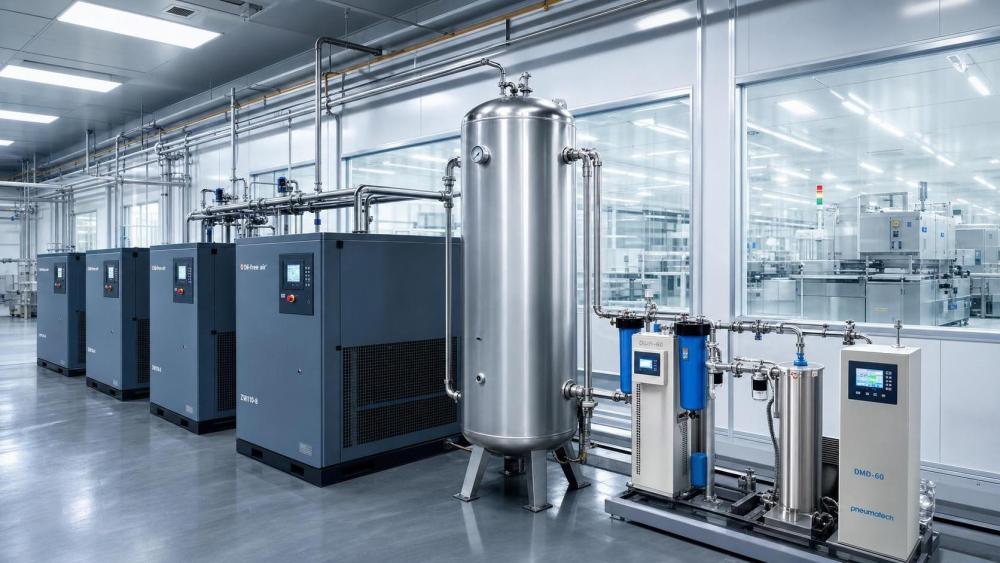
For clean air systems, oil-free compressors are rarely a simple equipment purchase. They shape air quality, energy use, maintenance planning, and process continuity.
That matters even more in regulated production. A weak selection decision can create contamination risk, unstable output, and avoidable lifecycle cost.
In practice, the best oil-free compressors are not always the most advanced on paper. They are the models that match process load, purity targets, and site conditions.
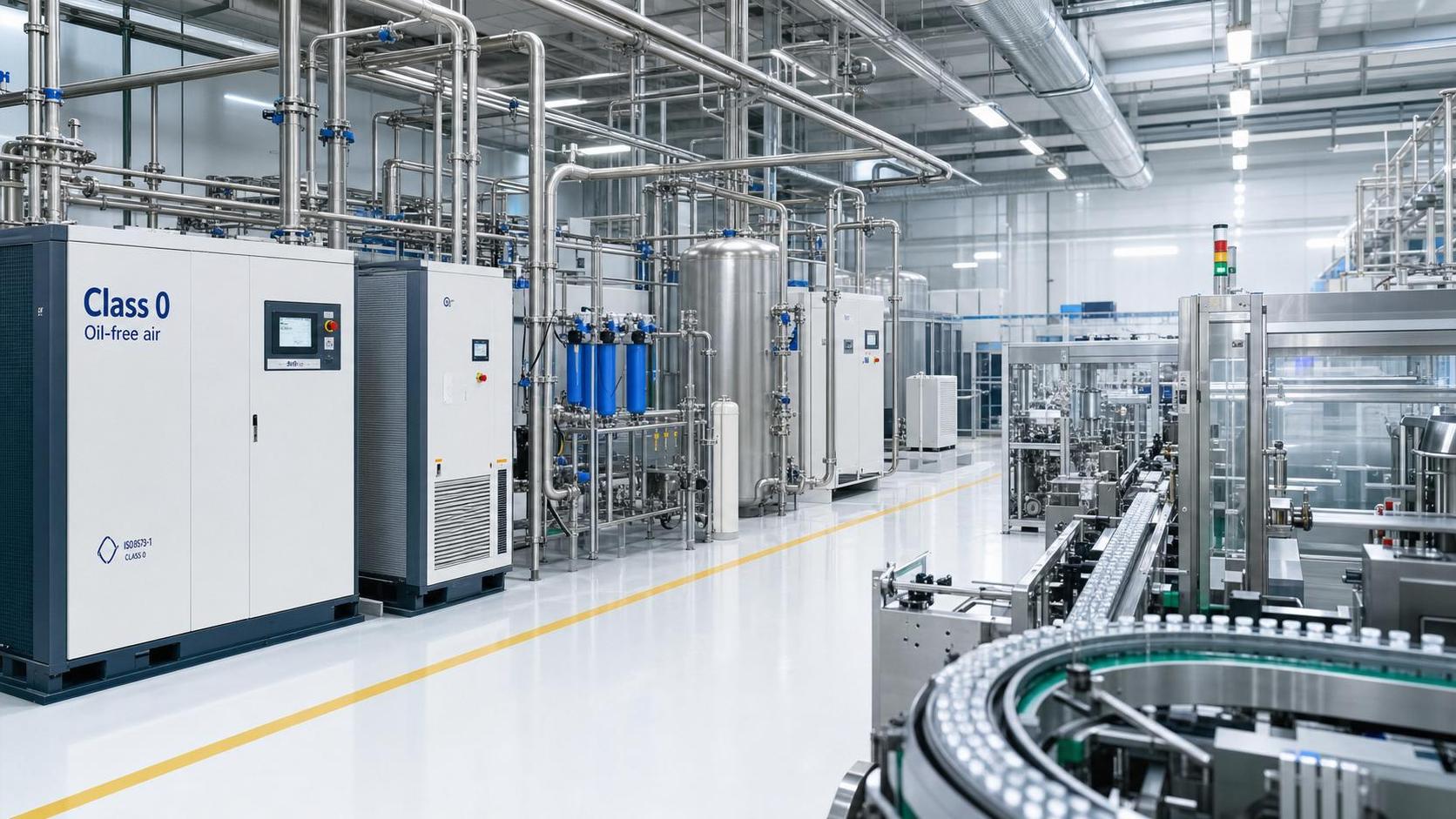
From pharmaceuticals to electronics and food lines, selection usually starts with one question. How clean must the compressed air remain through every operating hour?
This is where technical evaluation becomes more than comparing brochures. It requires linking compressor technology with risk control, uptime expectations, and real energy performance.
The criteria below provide a practical framework for comparing oil-free compressors with greater precision and stronger decision confidence.
Start with the Air Purity Requirement
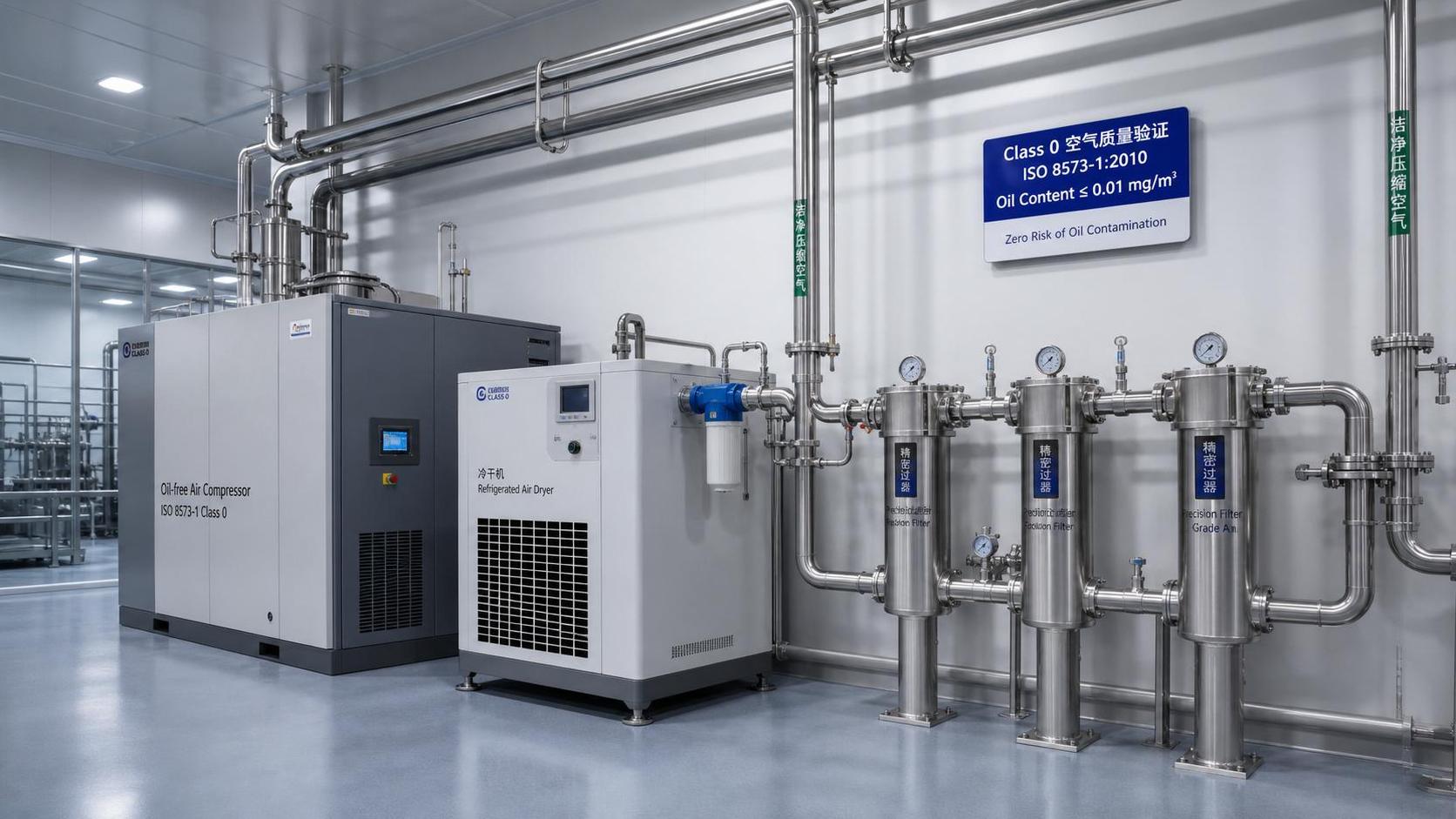
The first filter is air purity, not machine size. Clean air systems must define the acceptable contamination limit before technology selection begins.
Many buyers focus on compressor output pressure first. Yet for oil-free compressors, purity classification often decides the shortlist much earlier.
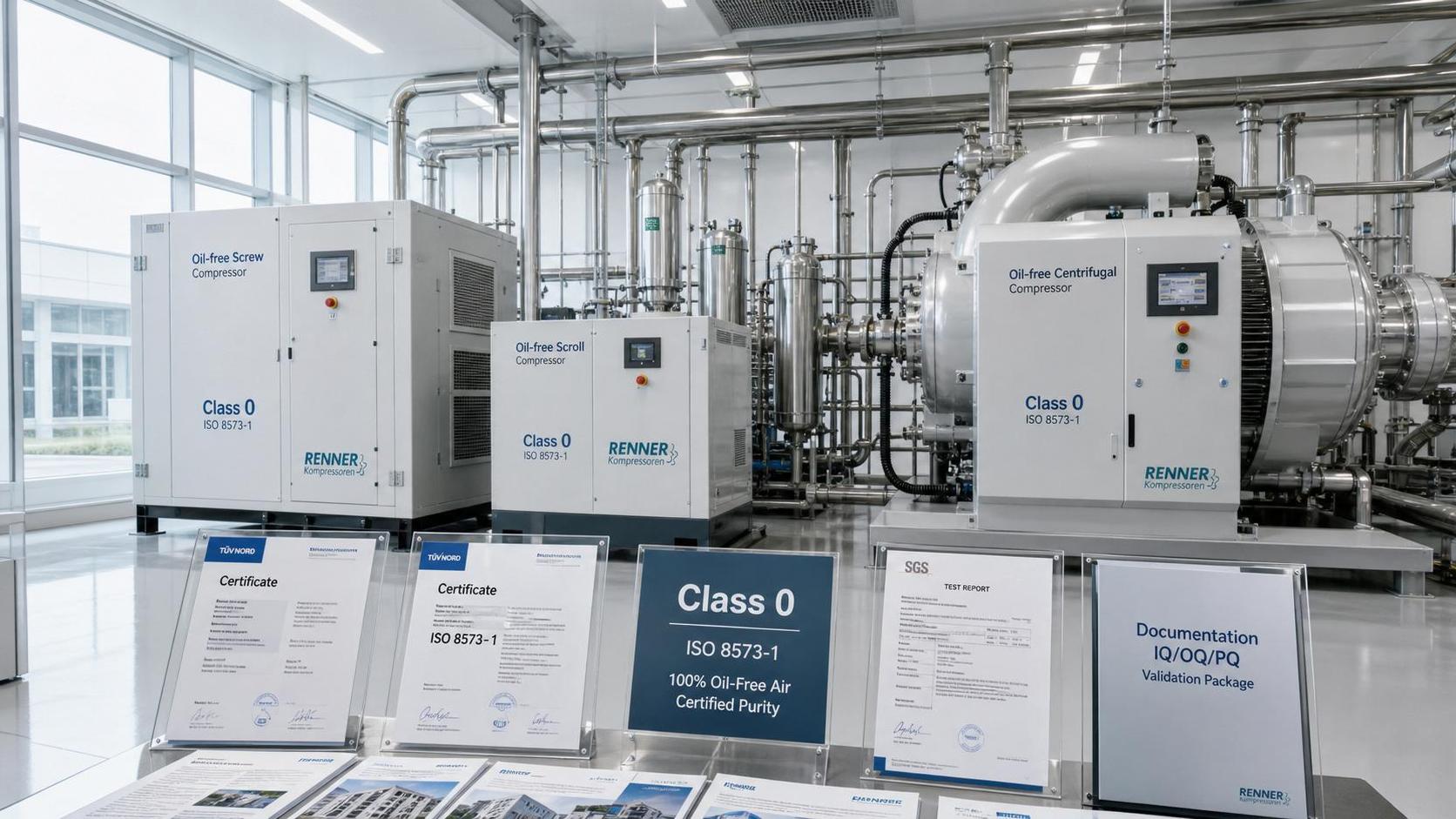
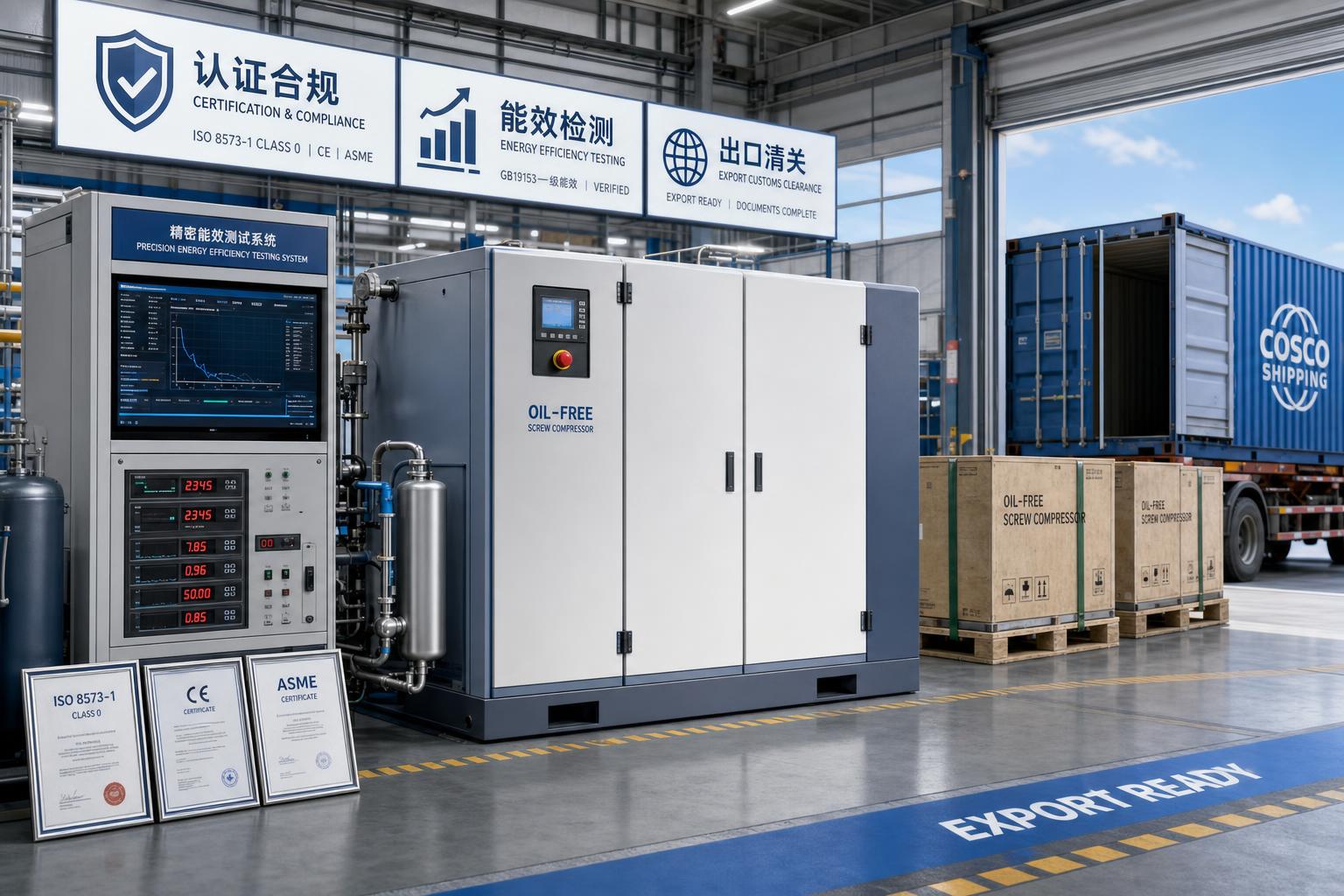
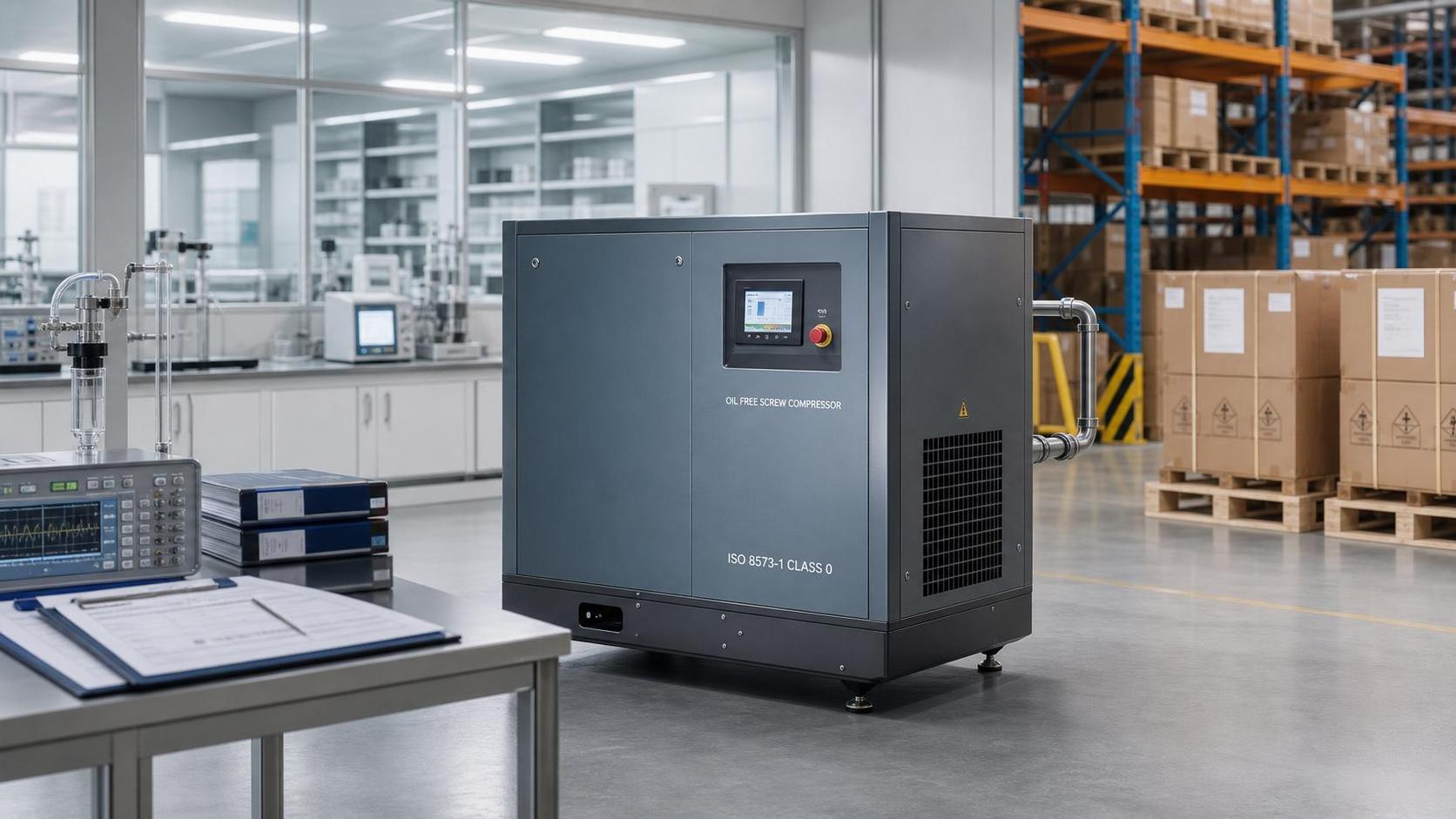
ISO 8573 and Class 0 expectations are common reference points. However, application risk should always be checked beyond the label alone.
For example, pharmaceutical filling lines, semiconductor dry rooms, and sensitive packaging systems face very different exposure consequences. The same purity claim may carry different operational risk.
At this stage, define:
- Required oil content limit at point of use
- Acceptable particle and moisture range
- Process sensitivity to trace contamination
- Validation and documentation needs
This early definition keeps oil-free compressors aligned with actual compliance and product quality needs, not just a general clean air assumption.
Compare Compressor Technologies by Application Fit
Not all oil-free compressors perform the same way under changing load or ambient conditions. Technology fit is usually the next decisive layer.
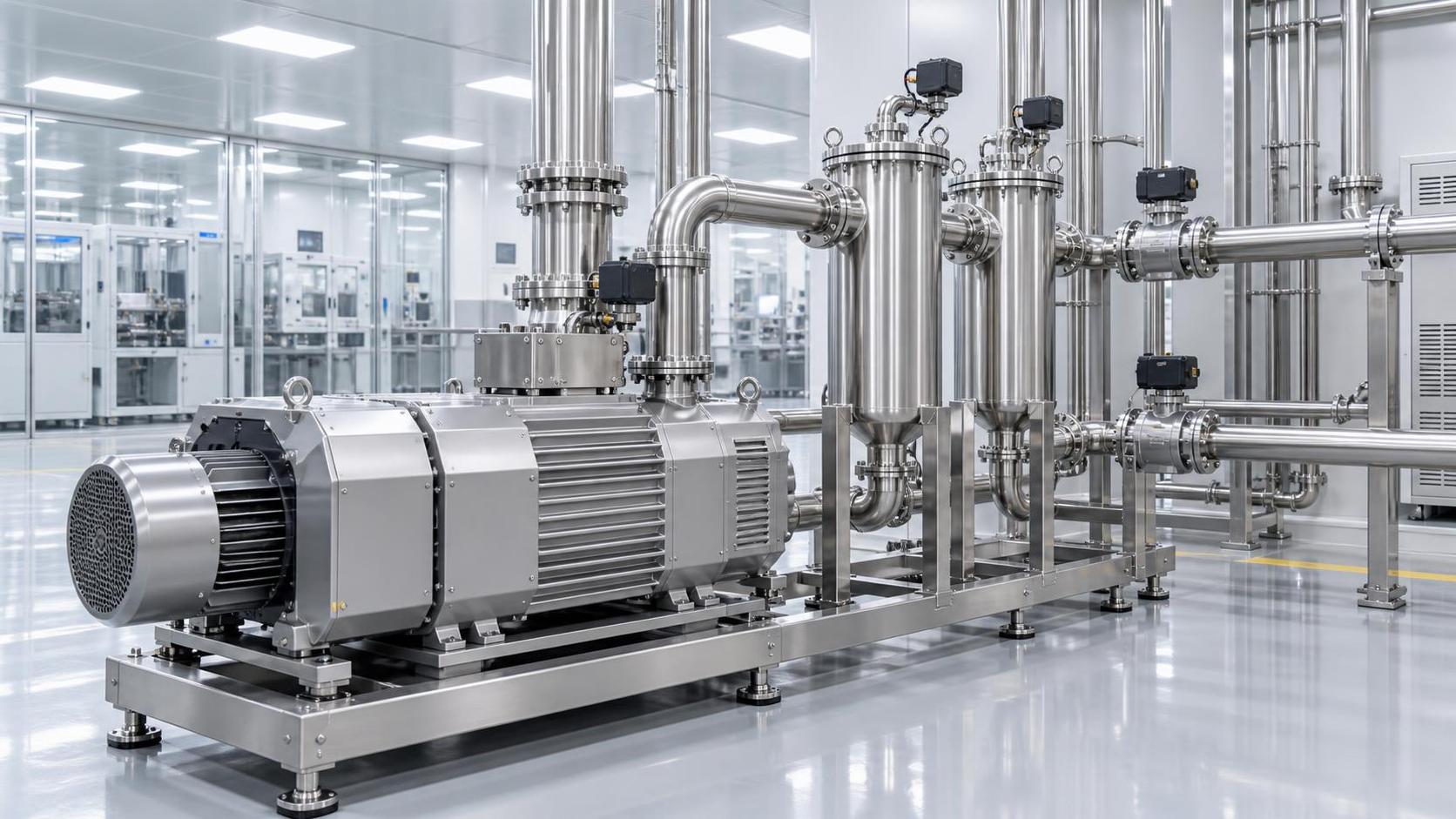
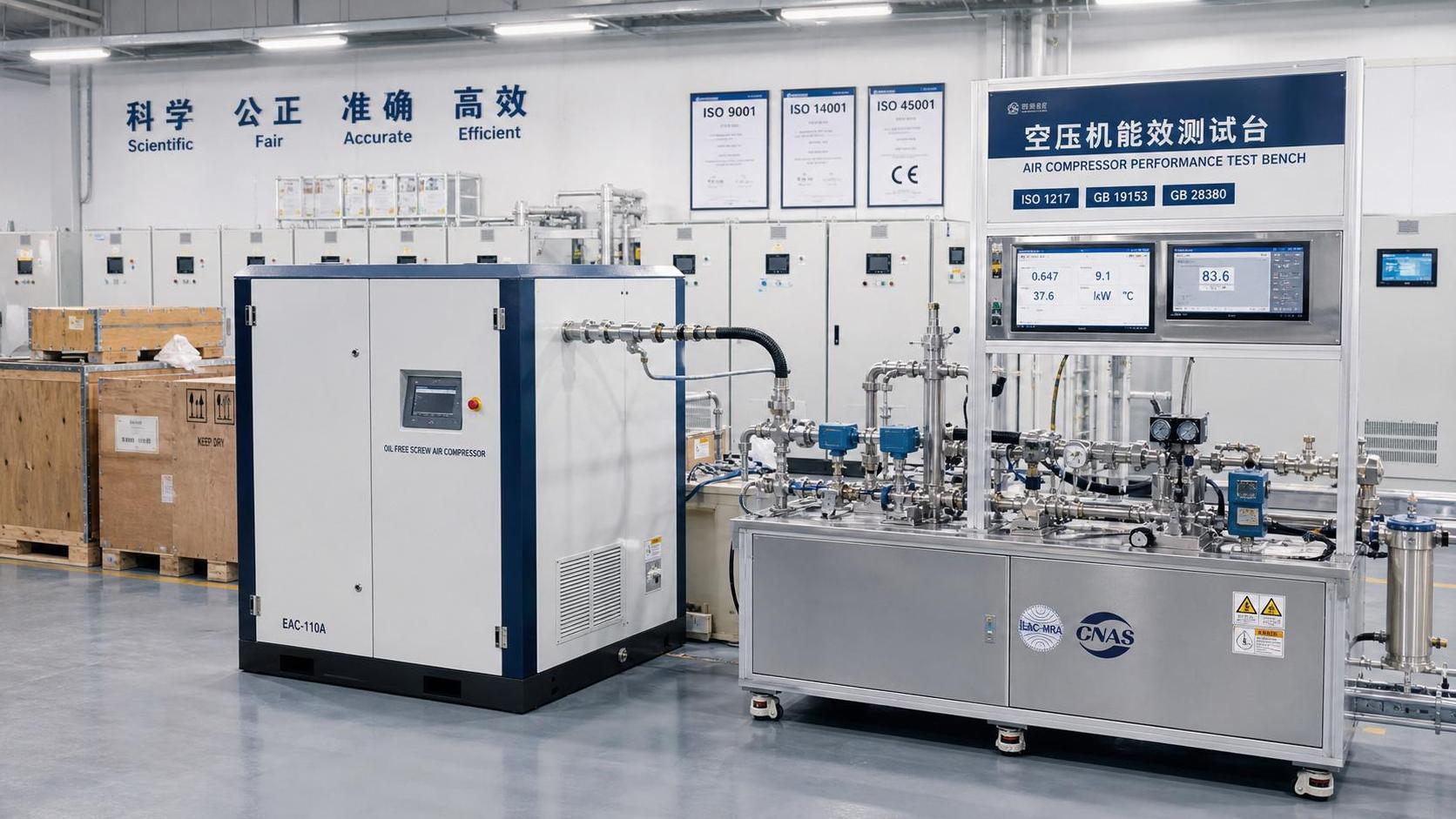
Oil-free screw compressors are often selected for continuous industrial demand. They offer solid flow stability and broad plant compatibility.
Oil-free centrifugal compressors tend to suit large, steady loads. Their efficiency can be attractive, but part-load behavior must be studied carefully.
Oil-free scroll compressors are common in lower-capacity, quiet, and highly clean applications. They can work well in laboratories, medical support systems, and precision zones.
A practical comparison should review:
- Base load versus variable load performance
- Turn-down capability and control stability
- Noise and vibration impact
- Cooling method and site suitability
- Expected maintenance interval
This is also where recent market changes are worth noting. More projects now prioritize flexible oil-free compressors that protect efficiency during partial-load operation.
Evaluate Energy Efficiency Across the Real Duty Cycle
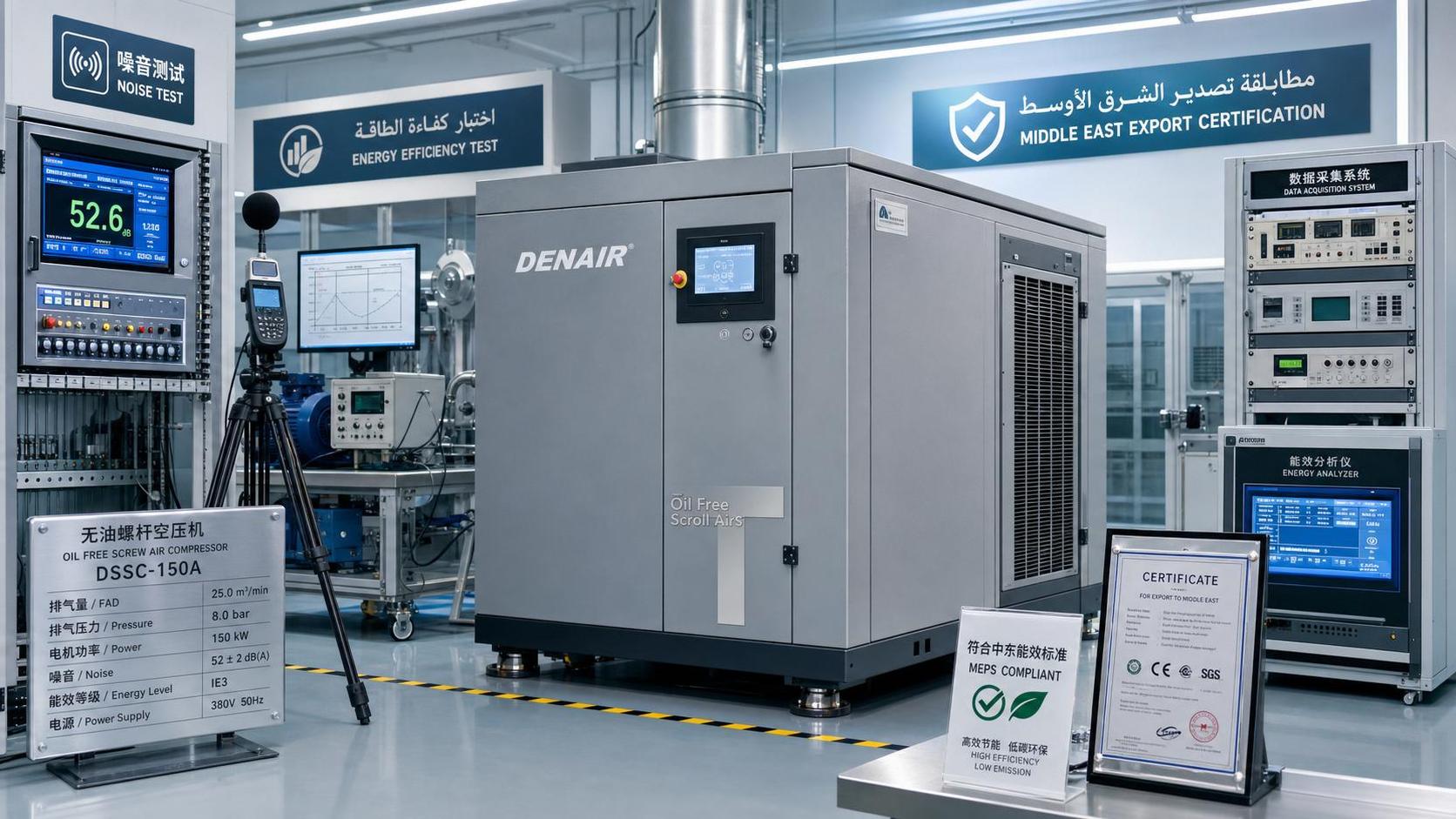
Energy efficiency is often discussed broadly, but compressor efficiency should be measured against the real operating profile. Rated data alone can mislead selection.
Many clean air systems run uneven demand patterns. Shift changes, batch processes, idle windows, and seasonal cooling loads all affect compressor behavior.
That means oil-free compressors should be reviewed using specific power across expected load bands, not only at full capacity.
Variable speed drive options may improve performance in some cases. In others, a poorly matched control strategy can reduce the expected savings.
Useful evaluation inputs include:
- Annual operating hours
- Average and peak flow demand
- Unload and standby energy penalty
- Heat recovery potential
- Compressed air leakage baseline
In many facilities, the bigger gain comes from system matching rather than headline machine efficiency. Oil-free compressors perform best when controls, storage, and downstream demand are considered together.
Look Beyond Purchase Price to Lifecycle Cost
A low upfront quote can distort the decision. For oil-free compressors, lifecycle cost usually determines the stronger long-term business case.
Electricity remains the largest cost driver in most installations. Still, service intervals, spare parts, downtime exposure, and air treatment costs can shift the economics.
This is especially true in high-value production. One contamination event or one unplanned shutdown can outweigh a small capital saving very quickly.
A useful lifecycle review should cover:
When compared this way, oil-free compressors often justify a higher purchase price through lower process risk and stronger operational stability.
Check Reliability, Redundancy, and Maintenance Access
Reliability is not a vague quality claim. In clean air systems, it is a measurable requirement tied to uptime, product yield, and maintenance planning.
Oil-free compressors should be reviewed for mean time between service events, critical wear points, and response time for spare part supply.
More importantly, the system should not depend on a single machine where shutdown consequences are severe. Redundancy strategy belongs inside the selection process.
In actual operations, maintainability is often underestimated. Tight service access, long lead components, or specialist-only repair needs can weaken a technically strong choice.
Before approval, confirm:
- N+1 or backup arrangement requirements
- Remote monitoring and alarm visibility
- Local service capability
- Typical spare parts availability
- Ease of planned shutdown maintenance
A reliable oil-free compressor package is not only durable. It is also recoverable, serviceable, and manageable under real plant pressure.
Review System Integration and Downstream Treatment
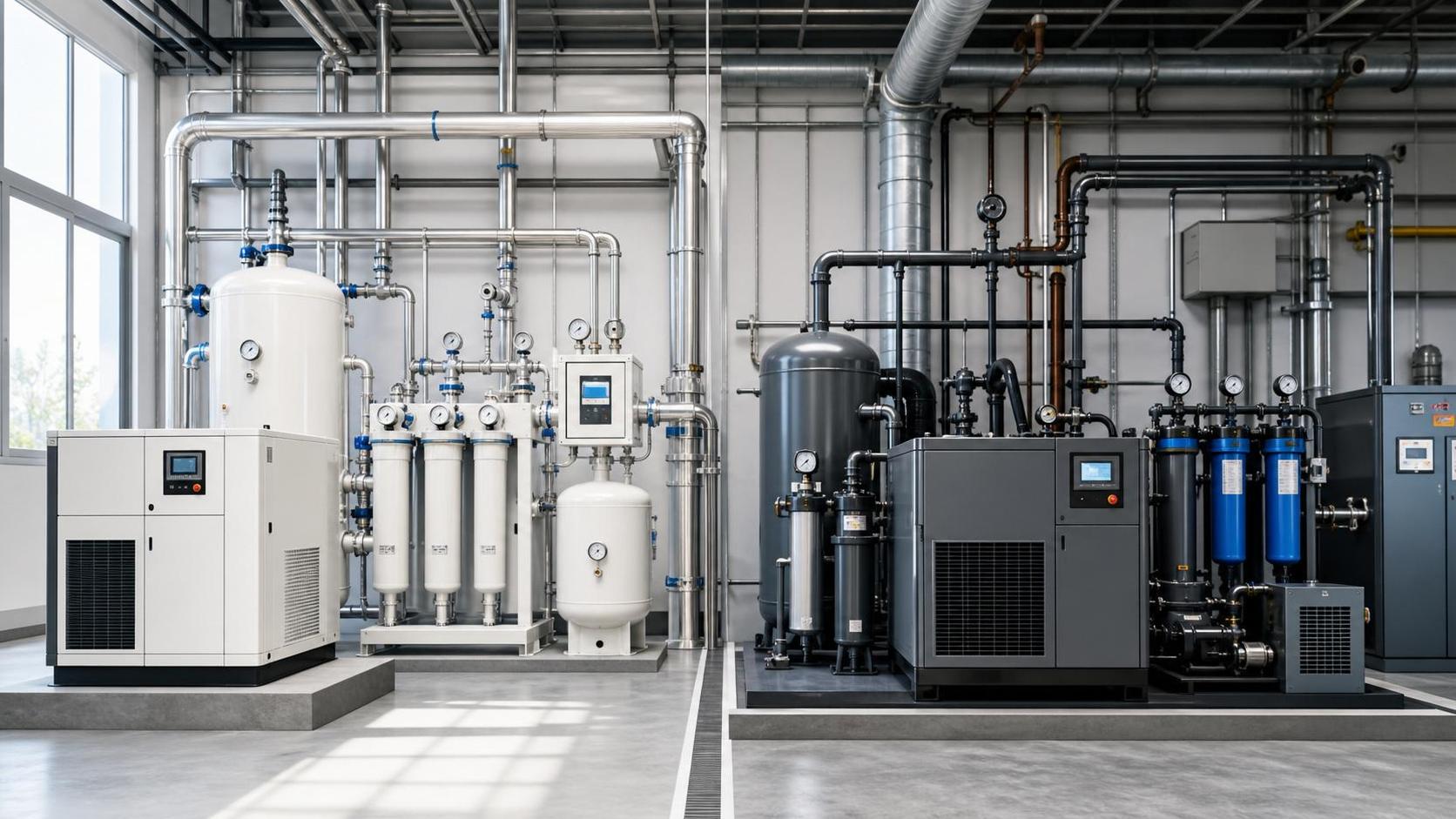
Even high-quality oil-free compressors can underperform inside a poorly designed air system. Integration is often where expected benefits are lost.
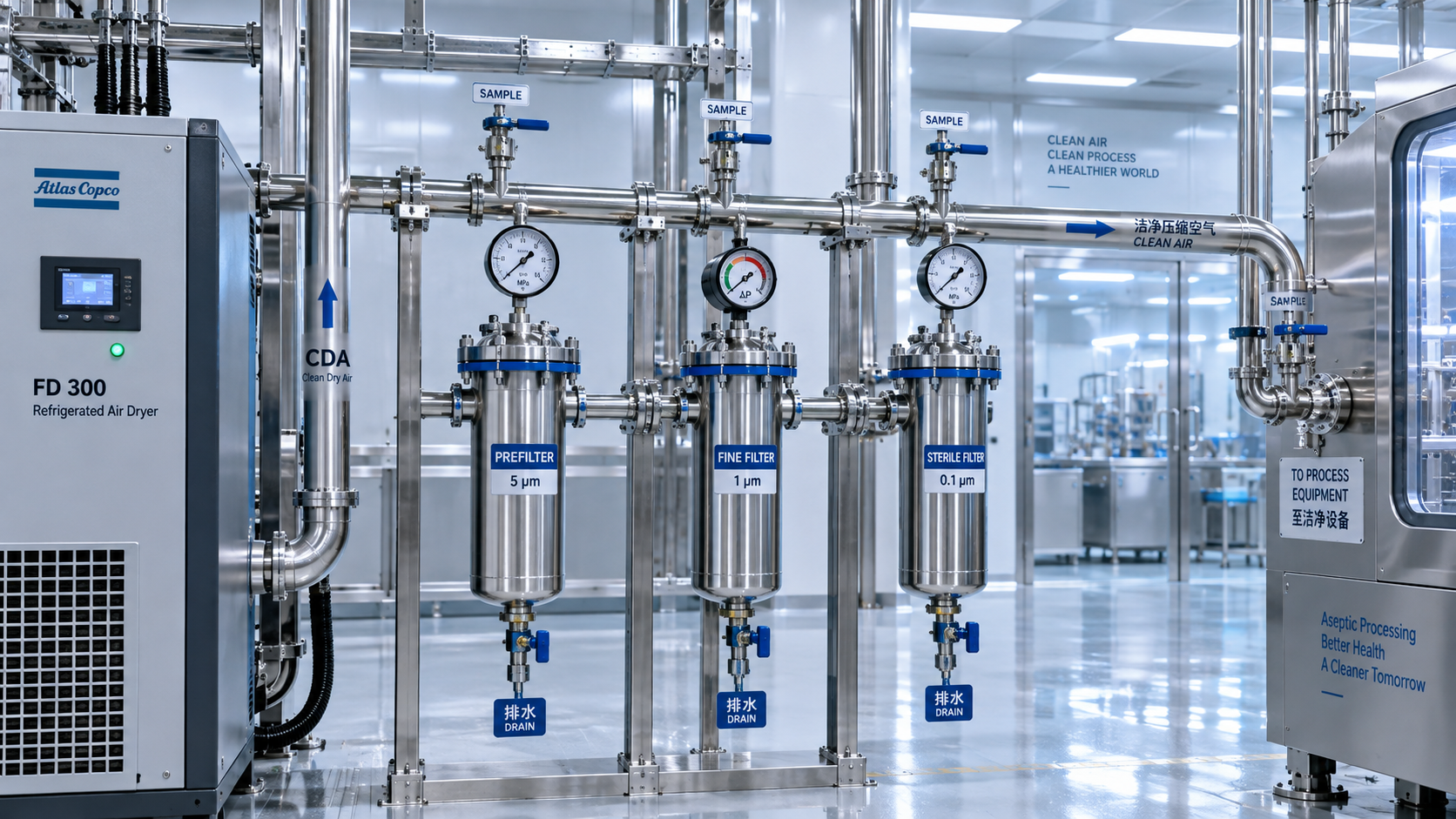
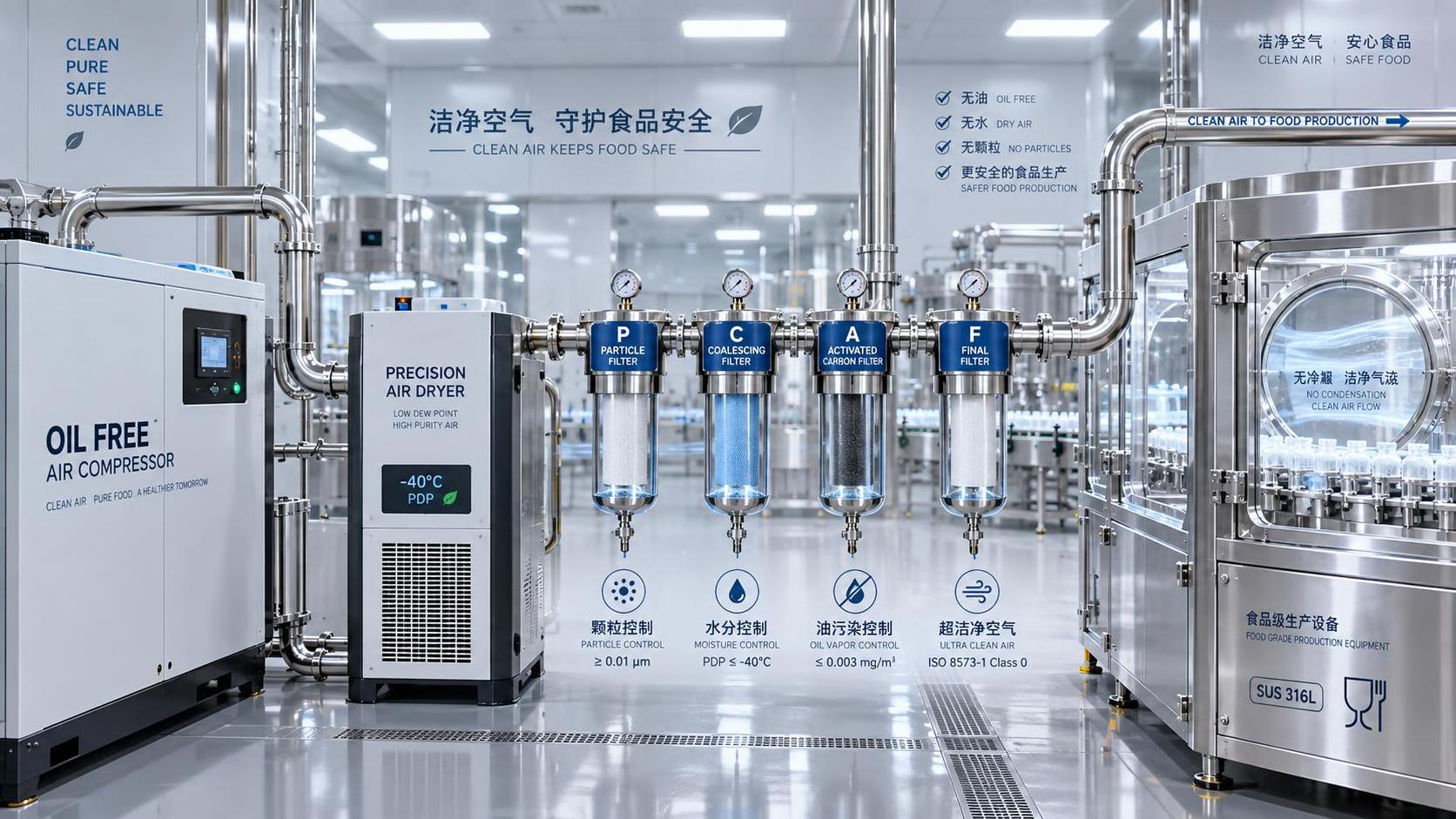
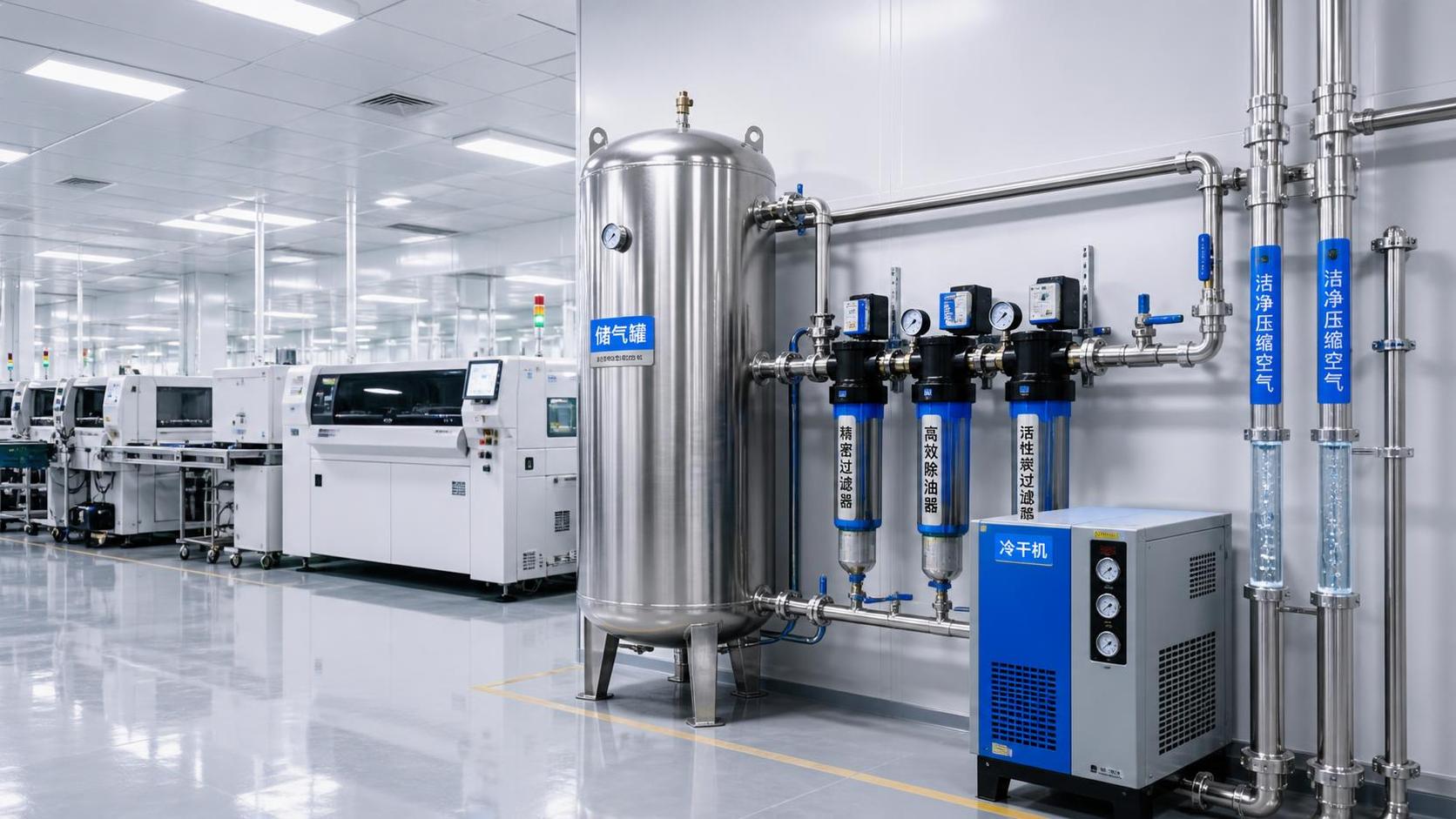
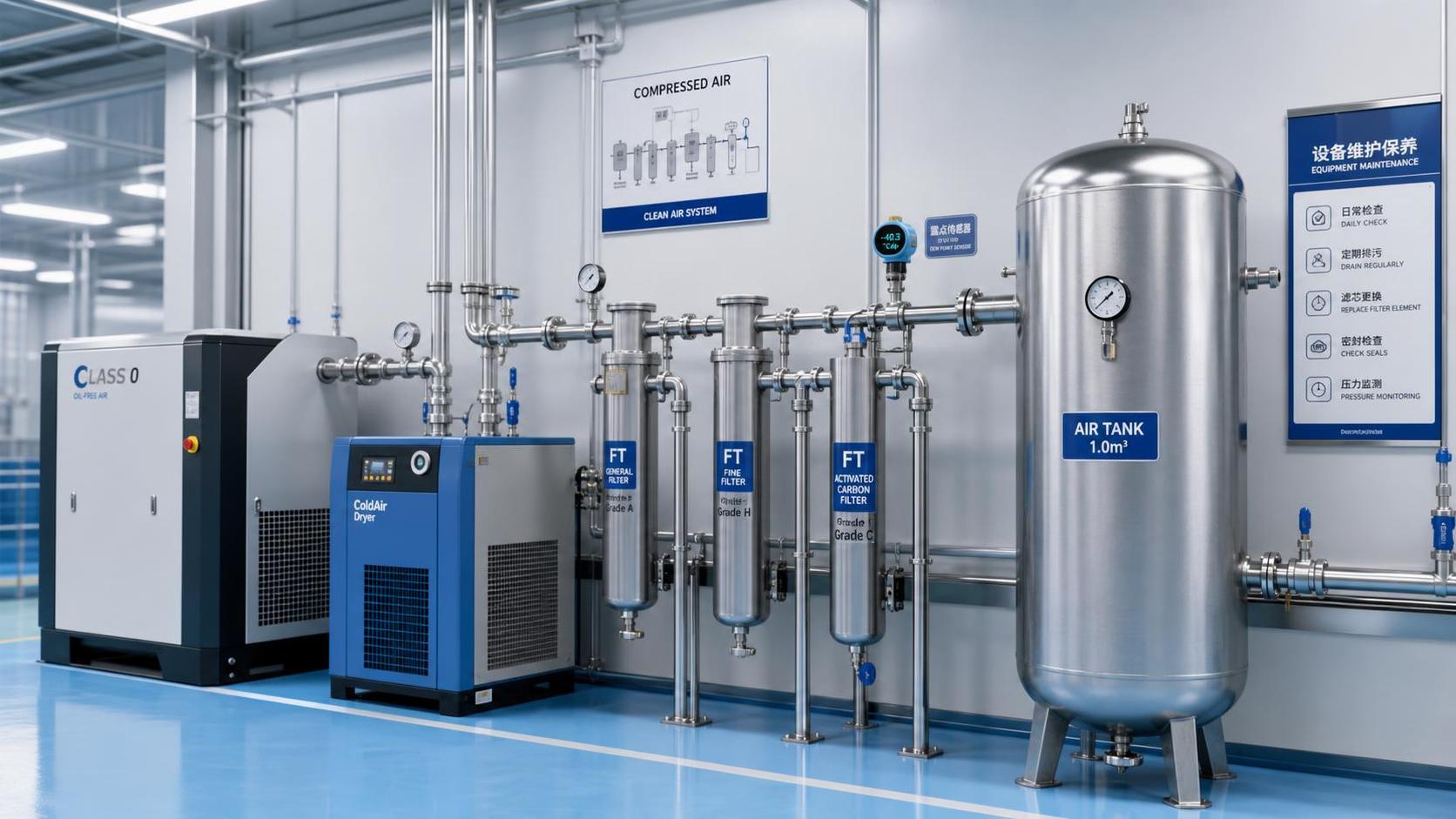
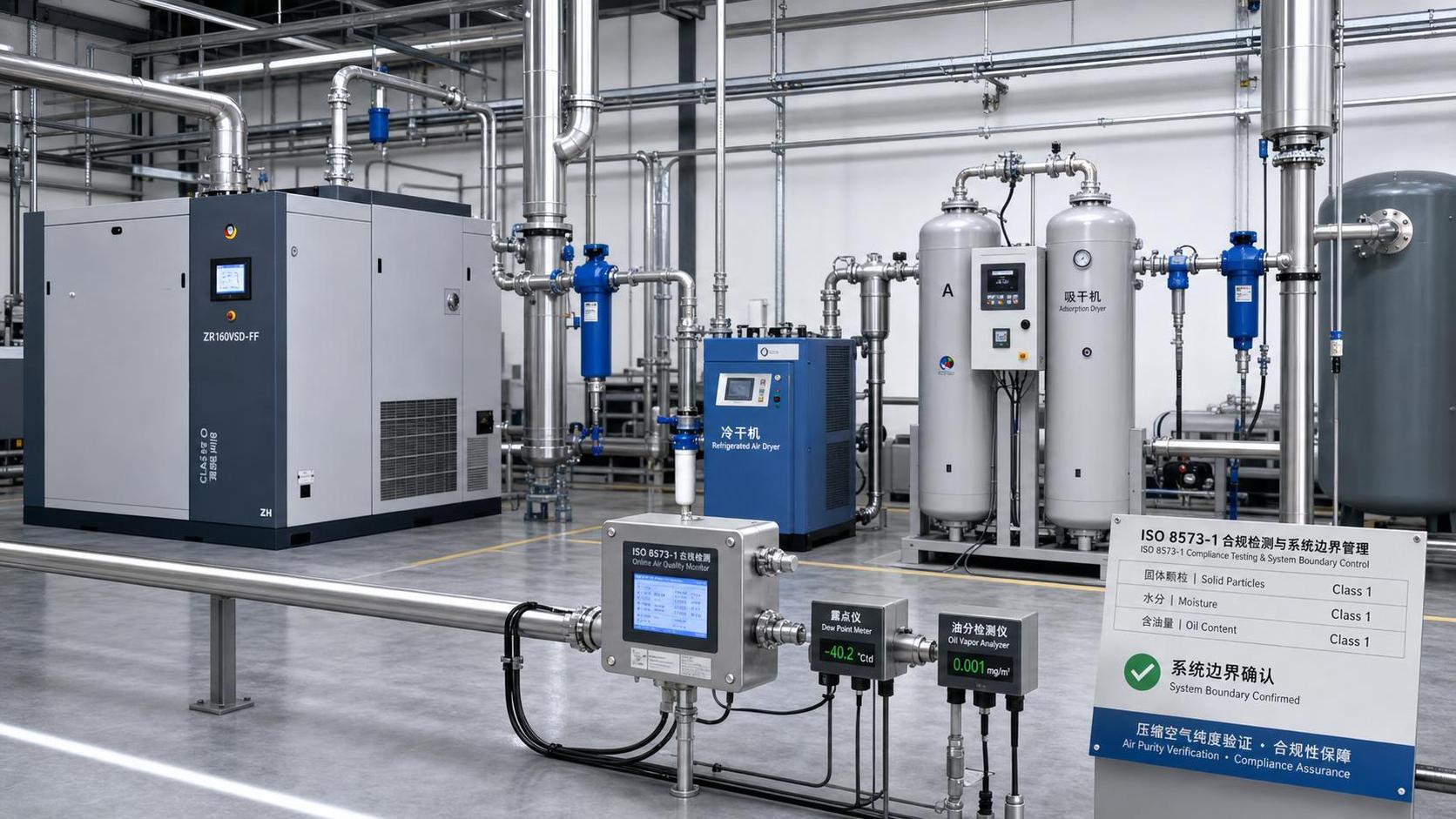
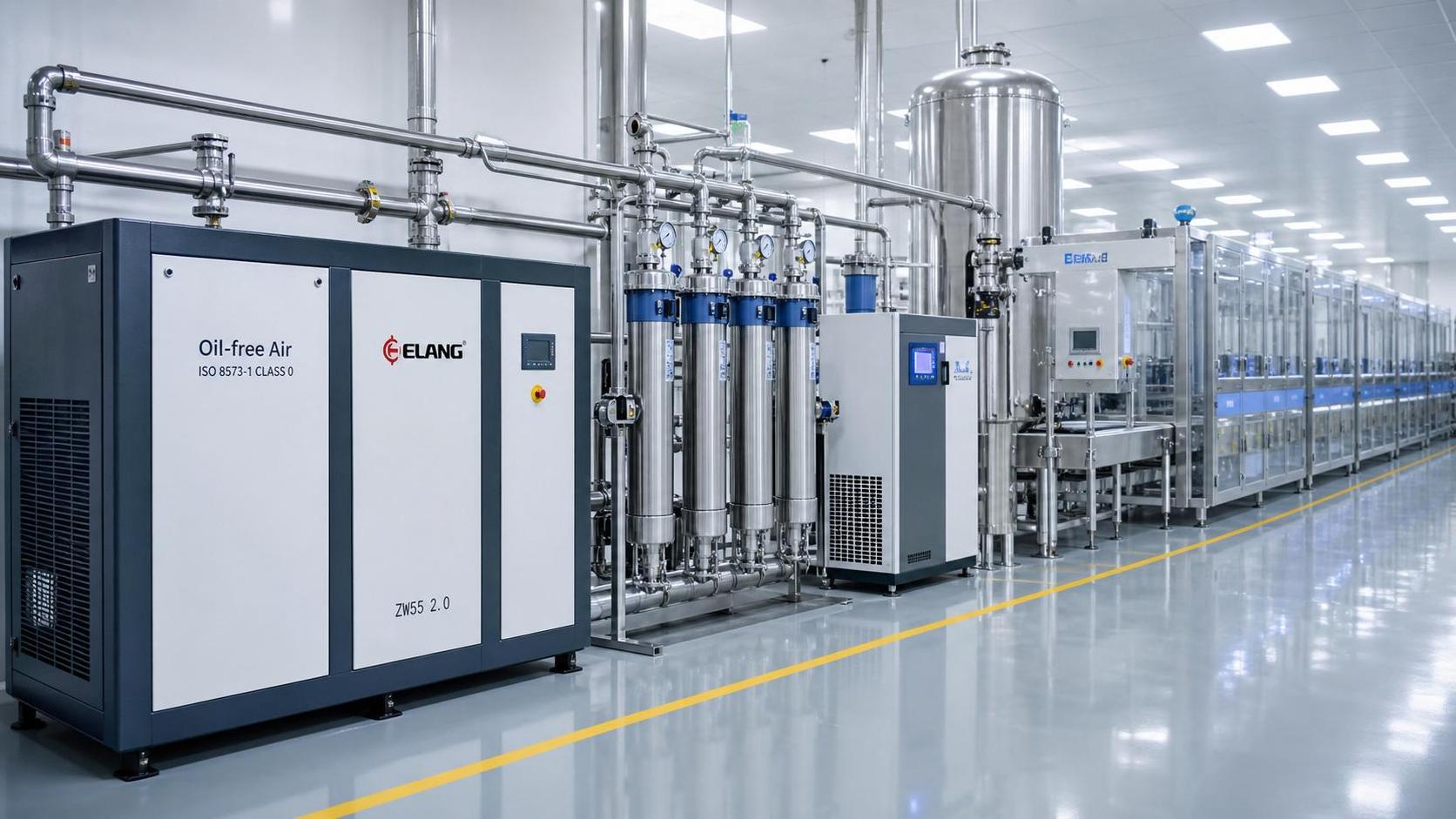
Dryers, filters, receivers, piping design, and controls all influence delivered air quality and pressure stability. That also affects usable efficiency.
This becomes more visible in clean manufacturing, where dew point control and pressure fluctuation can directly impact process repeatability.
Selection should therefore include the full compressed air train, not only the compressor package. The point of use is the real measure of performance.
Key integration questions include:
- Is pressure drop acceptable across treatment stages?
- Can dew point remain stable in peak humidity periods?
- Does the control system coordinate multiple oil-free compressors efficiently?
- Are monitoring points installed where compliance is actually verified?
This broader view usually prevents overbuying compressor capacity while missing the downstream causes of quality drift or energy waste.
Build a Practical Selection Framework
A strong decision process turns scattered technical data into a comparable model. That is often the most useful step when evaluating oil-free compressors.
Start by assigning weighted criteria. Purity, energy, reliability, integration, and lifecycle cost should each reflect actual plant priorities.
Then request vendor data under the same operating assumptions. Without common boundaries, side-by-side comparison becomes weak very quickly.
A practical workflow looks like this:
- Define air purity and compliance thresholds
- Map demand profile and load variation
- Shortlist suitable oil-free compressor technologies
- Compare annual energy and lifecycle cost
- Test reliability, service, and integration risk
- Score options using weighted decision criteria
The clearer signal in today’s market is this. Clean air systems are being judged less by nominal specification and more by verified operating value.
That also means oil-free compressors should be selected as part of a performance strategy, not as isolated hardware.
For decision-makers, the most defensible choice usually combines clean air assurance, efficient load response, workable maintenance, and credible lifecycle economics.
When these factors are assessed together, oil-free compressors become easier to compare and far easier to justify in long-term clean air investments.
Ready when you are. Send us a message to get started.
Related News
- How to verify food-grade purity in compressed air systemsAuthor :Pneumatic Power Engineer

- What determines the price of pure air compression systems?Author :Pneumatic Power Engineer

- How to size oil-free compressors for instrumentation air demandAuthor :Pneumatic Power Engineer

- How Class 0 oil-free compressors protect product quality in food productionAuthor :Pneumatic Power Engineer

- How to verify compressed air cleanroom standards before installationAuthor :Pneumatic Power Engineer

- When oil free vacuum pumps make sense for European cleanroom projectsAuthor :Pneumatic Power Engineer

- When do pure air compression systems need ISO 8573-1 Class 0?Author :Pneumatic Power Engineer

- How do compressed air systems for electronics prevent contamination?Author :Pneumatic Power Engineer

- When does an oil-free process vacuum pump justify its higher cost?Author :Pneumatic Power Engineer

- Does ISO 9001 certification apply to compressed air quality?Author :Pneumatic Power Engineer

- How to Specify Clean Compressed Air Systems in Southeast Asia for Food and Pharma PlantsAuthor :Pneumatic Power Engineer

- How to Compare Oil Free Vacuum Pumps for Clean Process RequirementsAuthor :Pneumatic Power Engineer

- How to Evaluate a Clean Compressed Air Systems Supplier for ISO 8573-1 ComplianceAuthor :Pneumatic Power Engineer

- How to Choose the Right Oil-Free Vacuum PumpAuthor :Pneumatic Power Engineer

- VDI 2083 Update Makes Class 0 Proof MandatoryAuthor :Pneumatic Power Engineer

- When to Use Oil Free Vacuum Pumps for High Purity LinesAuthor :Pneumatic Power Engineer

- Compressed Air Solutions: When Oil-Free Systems Lower Total Operating CostAuthor :Pneumatic Power Engineer

- ATMOsphere Europe 2026 Adds Oil-free Systems ZoneAuthor :Pneumatic Power Engineer

- Oil-Free Compressors: Key Selection Criteria for Clean Air SystemsAuthor :Pneumatic Power Engineer

- How to Compare Oil Free Centrifugal Compressors for Stable Plant Air SupplyAuthor :Pneumatic Power Engineer

- Compressed Air Class 0 vs Oil-Free: What Really MattersAuthor :Pneumatic Power Engineer

- Oil-Free Compression Class 0: What the Standard Really Means in ProductionAuthor :Pneumatic Power Engineer

- Air Compression Cost Comparison: Oil-Free vs Screw Systems in Daily OperationAuthor :Pneumatic Power Engineer

- Saudi SASO Tightens IEC 63349-2 for Oil-Free CompressorsAuthor :Pneumatic Power Engineer

- Saudi SASO Tightens Oil-Free Compressor Efficiency RulesAuthor :Pneumatic Power Engineer

- Pure Air Compression Systems for Clean Production LinesAuthor :Pneumatic Power Engineer

- IEC 63349-2:2026 makes energy certification mandatoryAuthor :Pneumatic Power Engineer

- IEC 63349-2:2026 Sets New Entry Rules for Oil-Free Screw CompressorsAuthor :Pneumatic Power Engineer

- IEC 63349-2:2026 Takes Effect for Oil-Free Screw CompressorsAuthor :Pneumatic Power Engineer

- IEC 63349-2:2026 Sets New Efficiency Gate for Oil-Free Screw CompressorsAuthor :Pneumatic Power Engineer

- IEC 63349-2:2026 Takes Effect for Oil-Free Screw CompressorsAuthor :Pneumatic Power Engineer

- SABIC Methanol Force Majeure Extended, Tightening R134a/R407C FeedstocksAuthor :Pneumatic Power Engineer

- How to Evaluate Pneumatic Power Systems for Stable OutputAuthor :Pneumatic Power Engineer

- Oil-Free Compression vs Lubricated Systems: Key Trade-OffsAuthor :Pneumatic Power Engineer
![]()
- Oil-Free Compression: 2026 Cost and Compliance Trade-OffsAuthor :Pneumatic Power Engineer

- Oil-Free Compression: Cost and Contamination RisksAuthor :Pneumatic Power Engineer
![]()