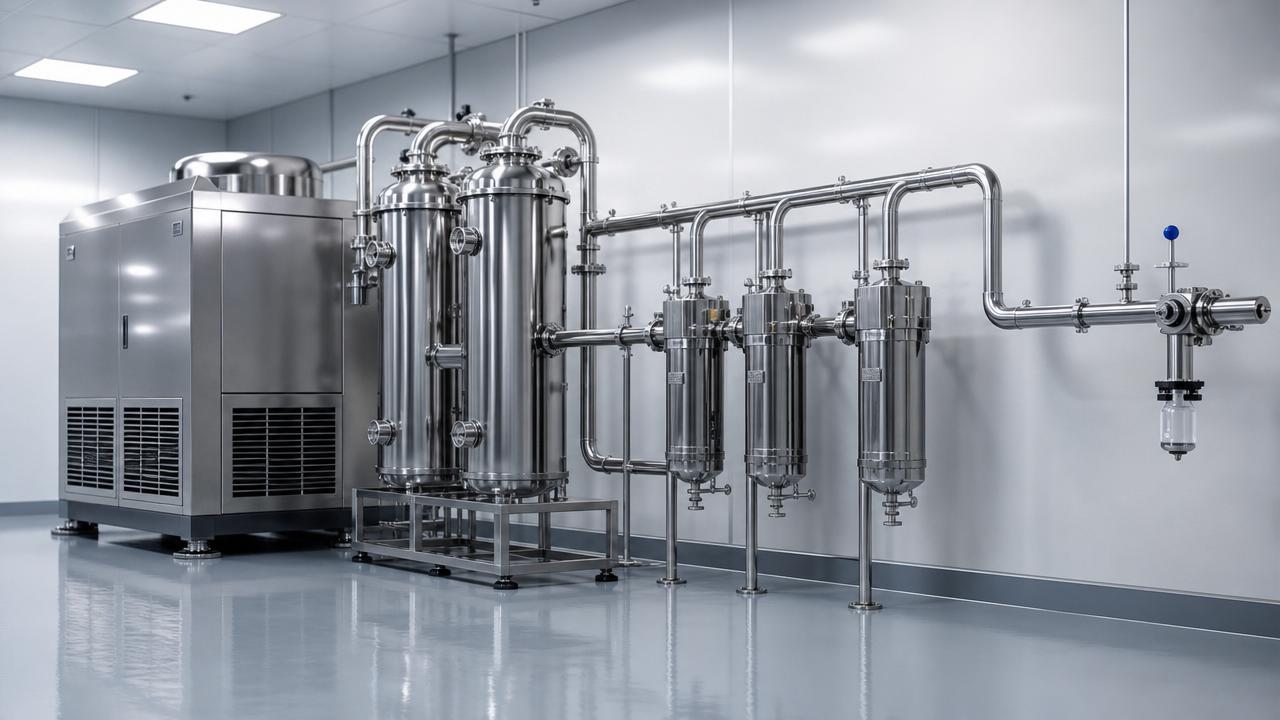




Pure Air Compression Systems for Clean Production Lines




Pure Air Compression Systems for Clean Production Lines
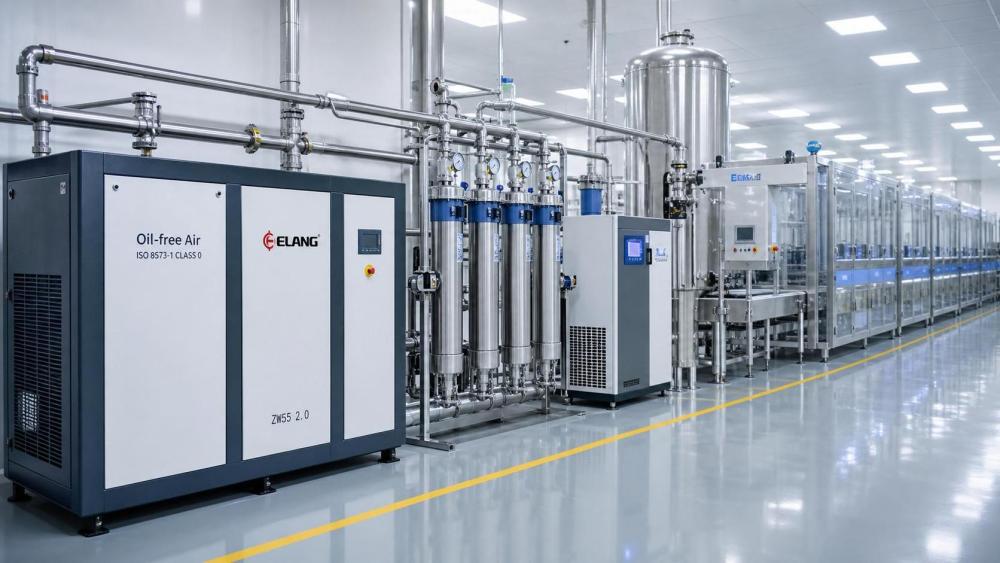
For quality control and safety teams, pure air compression systems are no longer optional support equipment.
They protect product purity, stabilize critical processes, and reduce hidden compliance exposure.
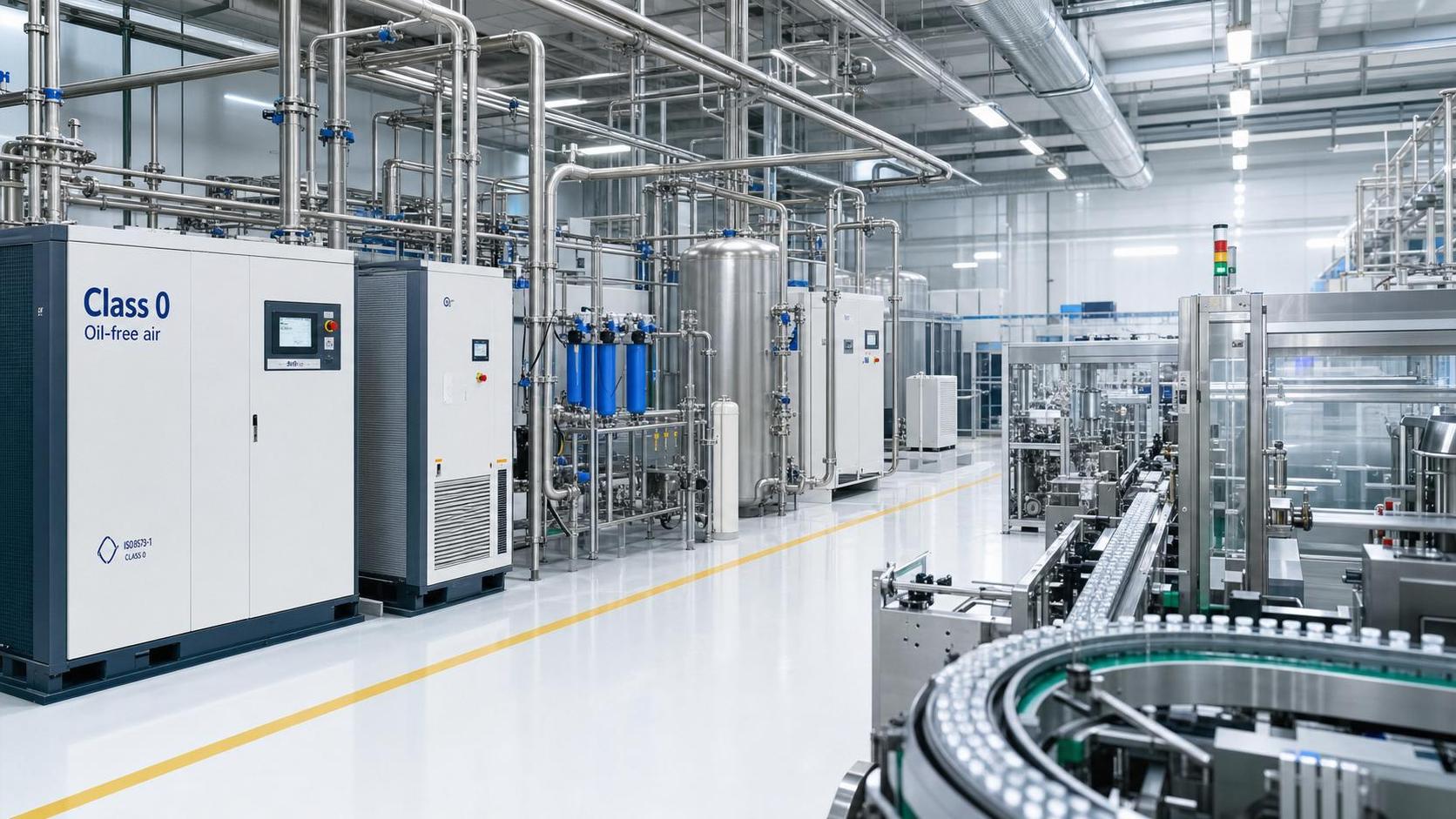
In food, pharma, electronics, and precision assembly, compressed air often touches products, packaging, or sensitive tools.
That means air quality directly shapes batch consistency, reject rates, and audit outcomes.
From recent industry shifts, the clearer signal is this: cleaner production demands cleaner utilities.
Pure air compression systems answer that need by controlling oil, particles, moisture, and process instability at the source.
This also aligns with the intelligence focus of GTC-Matrix.
The platform tracks how energy efficiency, oil-free compression, and clean utility design are reshaping global production standards.
Why Pure Air Compression Systems Matter More Than Ever
A standard compressed air setup can introduce several risks before anyone notices a visible failure.
Oil aerosols may affect product surfaces.
Moisture can trigger corrosion, microbial growth, or instrument drift.
Particles may contaminate filling lines, valves, sensors, and clean work zones.
In actual operations, these failures rarely stay isolated.
They often show up as recurring deviations, difficult root-cause investigations, and rising maintenance costs.
Pure air compression systems reduce those risks by creating a controlled air environment from intake to point of use.
This is especially important where compressed air is classified as a critical utility.
- Food plants use clean air for conveying, sorting, sealing, and direct product contact tasks.
- Pharma sites depend on stable air purity for packaging, dosing, and cleanroom support.
- Electronics lines need dry, oil-free air to protect fine surfaces and precision equipment.
- Medical device production requires consistent air quality for traceability and validation.
When product value is high, the cost of poor air quality rises sharply.
A small contamination event can quickly become a recall, shutdown, or customer complaint issue.
What Defines a Reliable Clean Air Solution
Not every clean air setup is truly reliable.
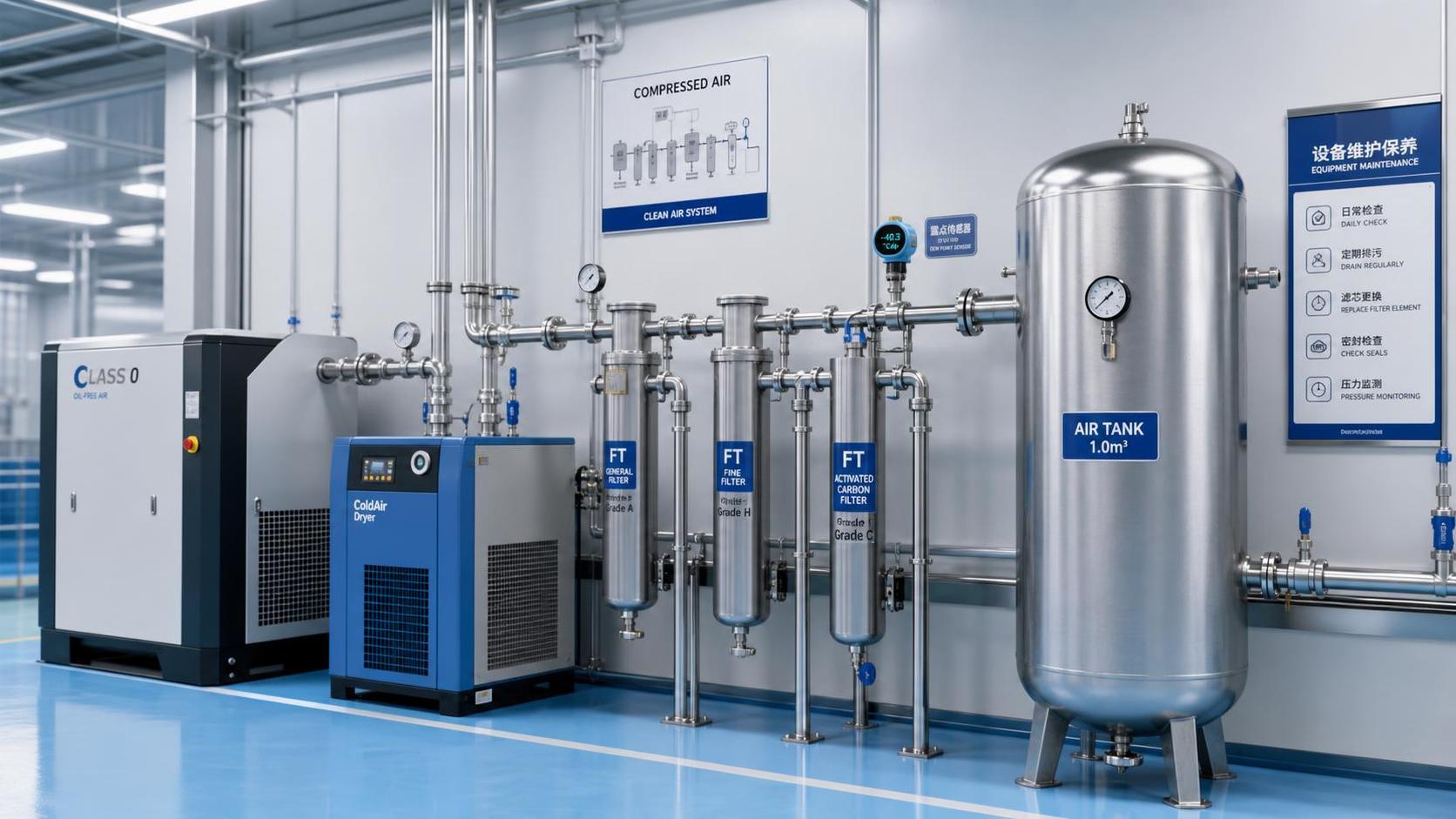
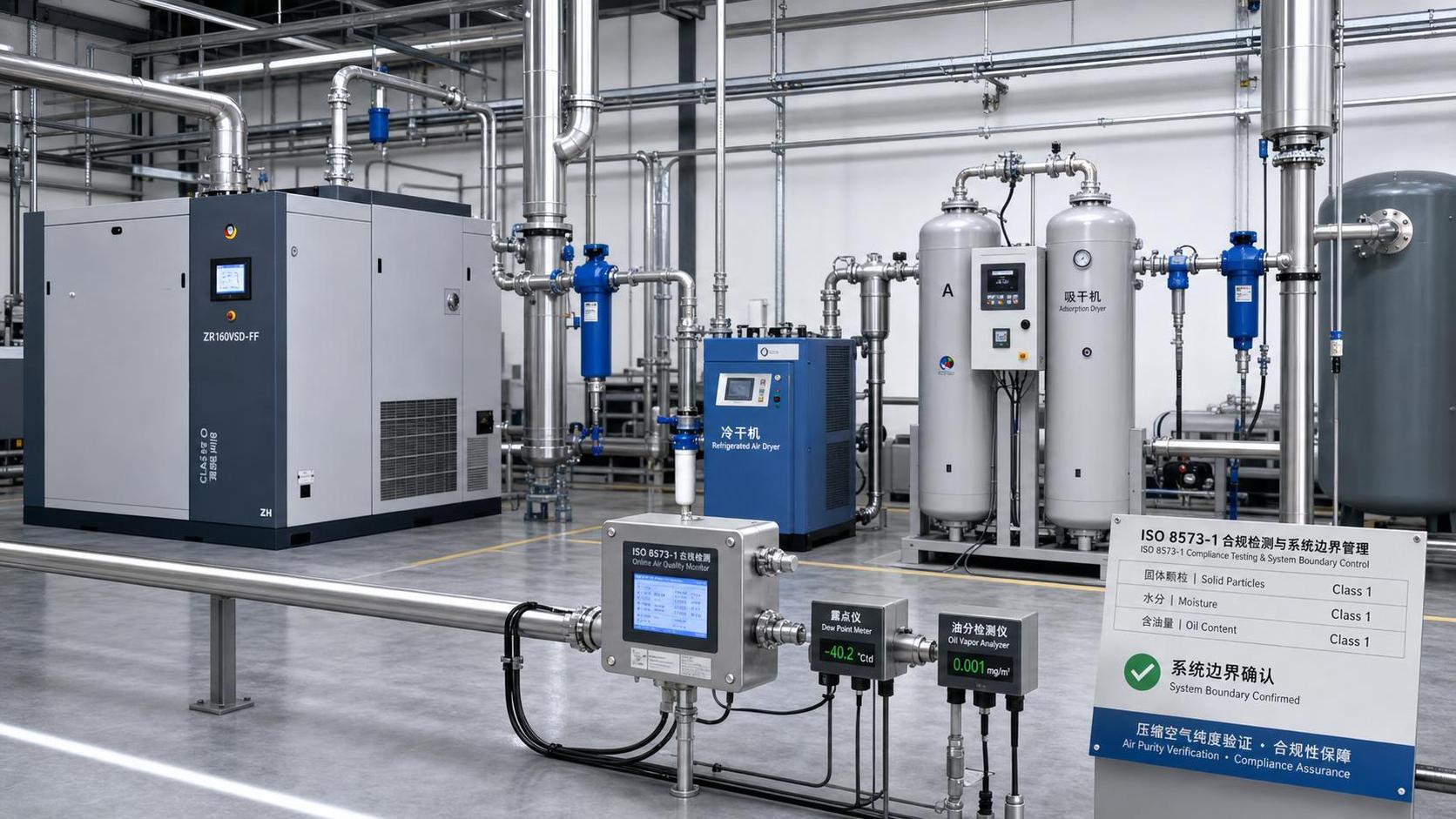
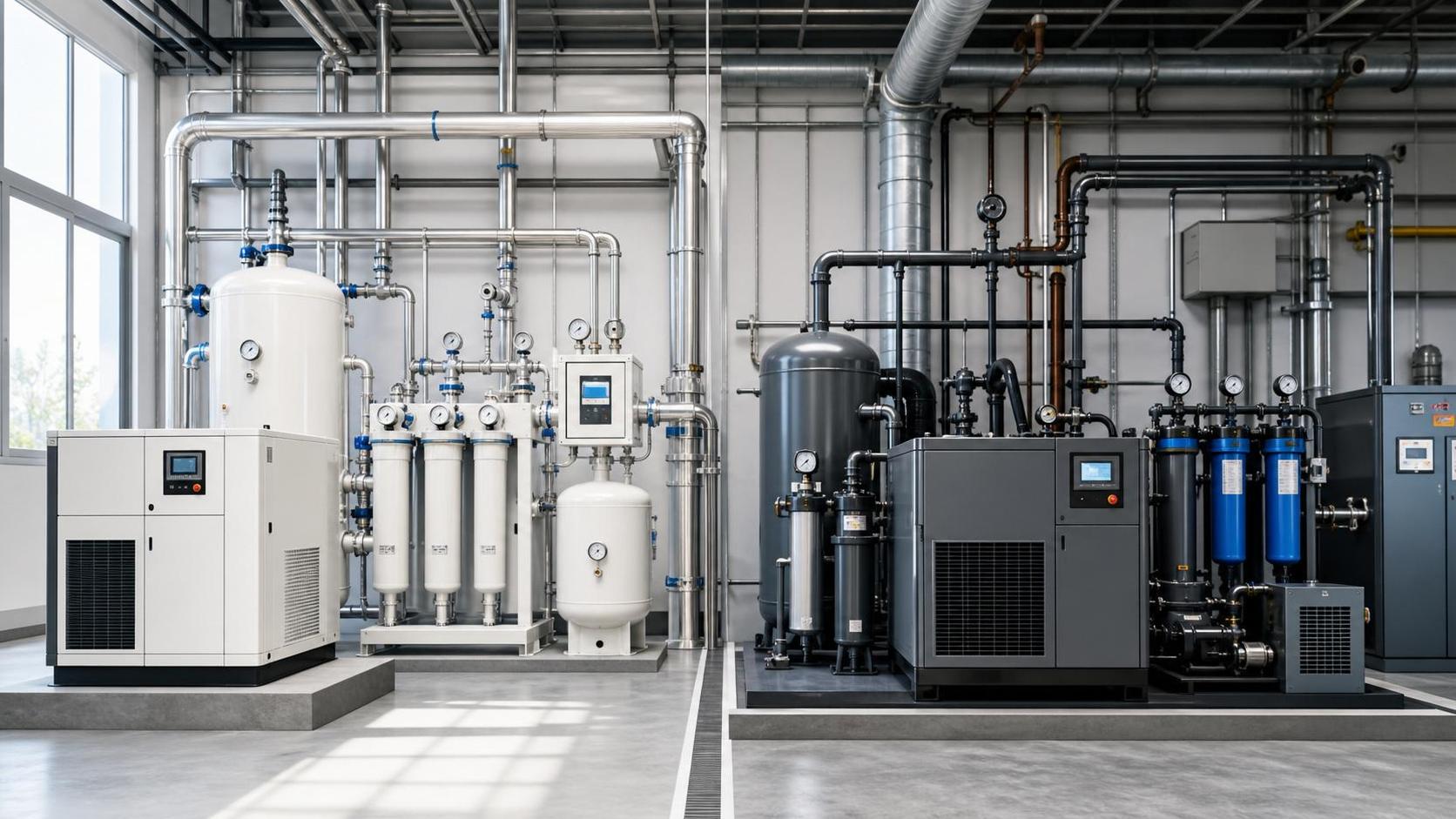
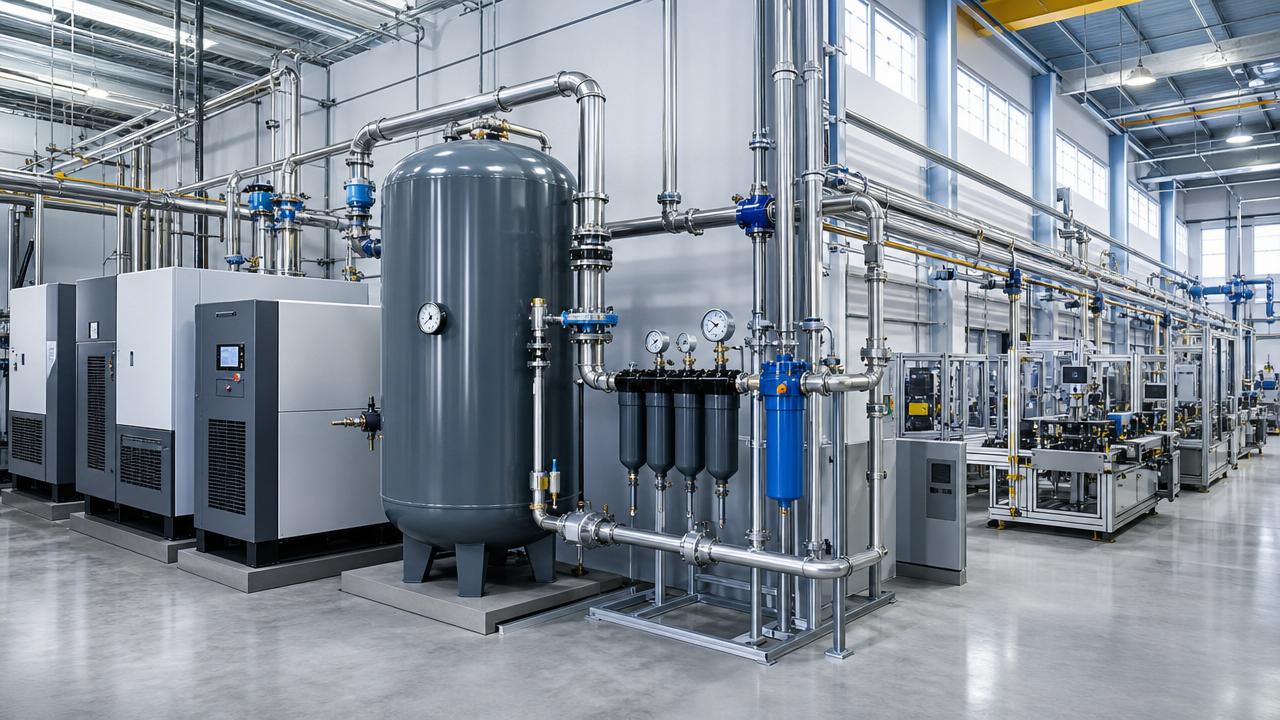
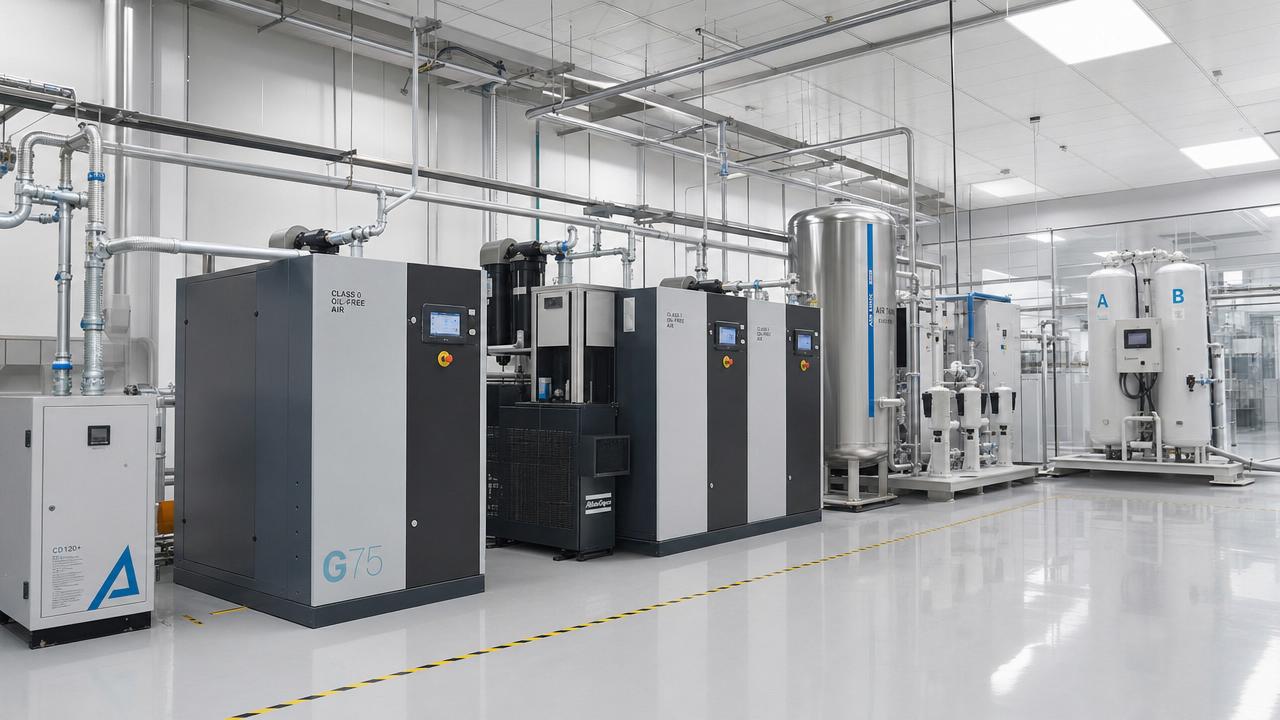
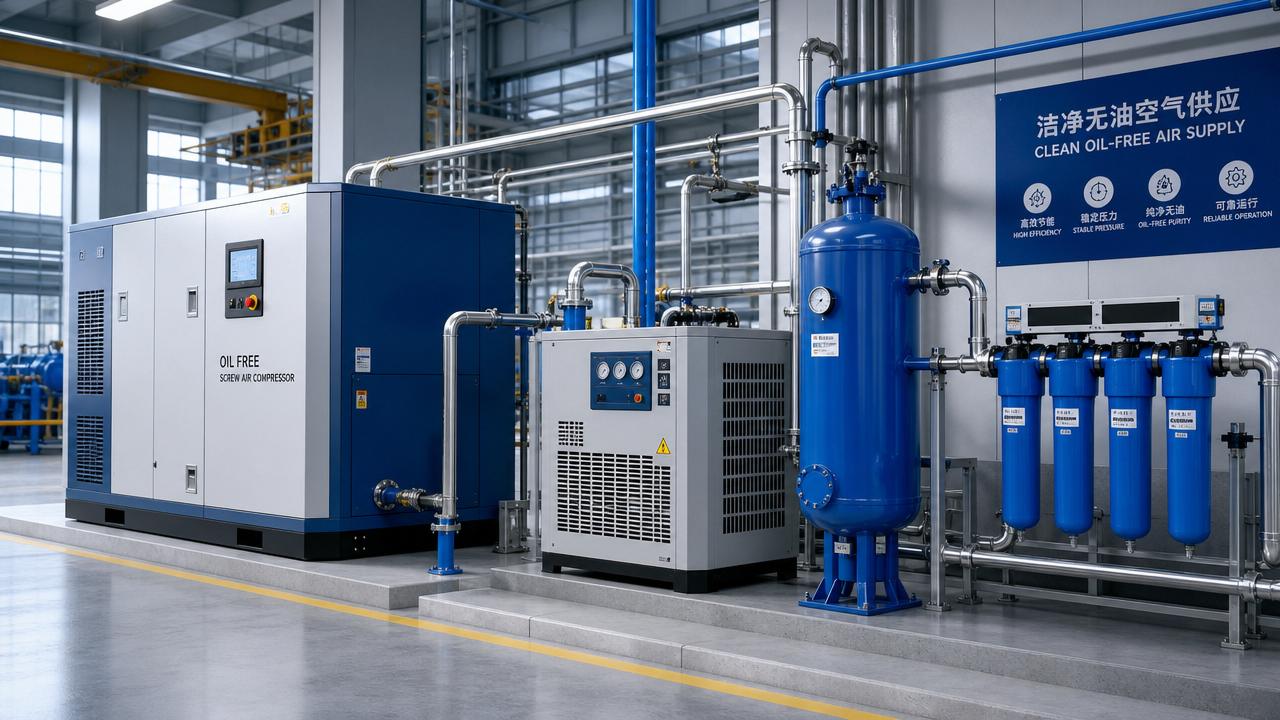
Strong pure air compression systems combine equipment selection, air treatment design, and monitoring discipline.
The first decision is often compressor technology.
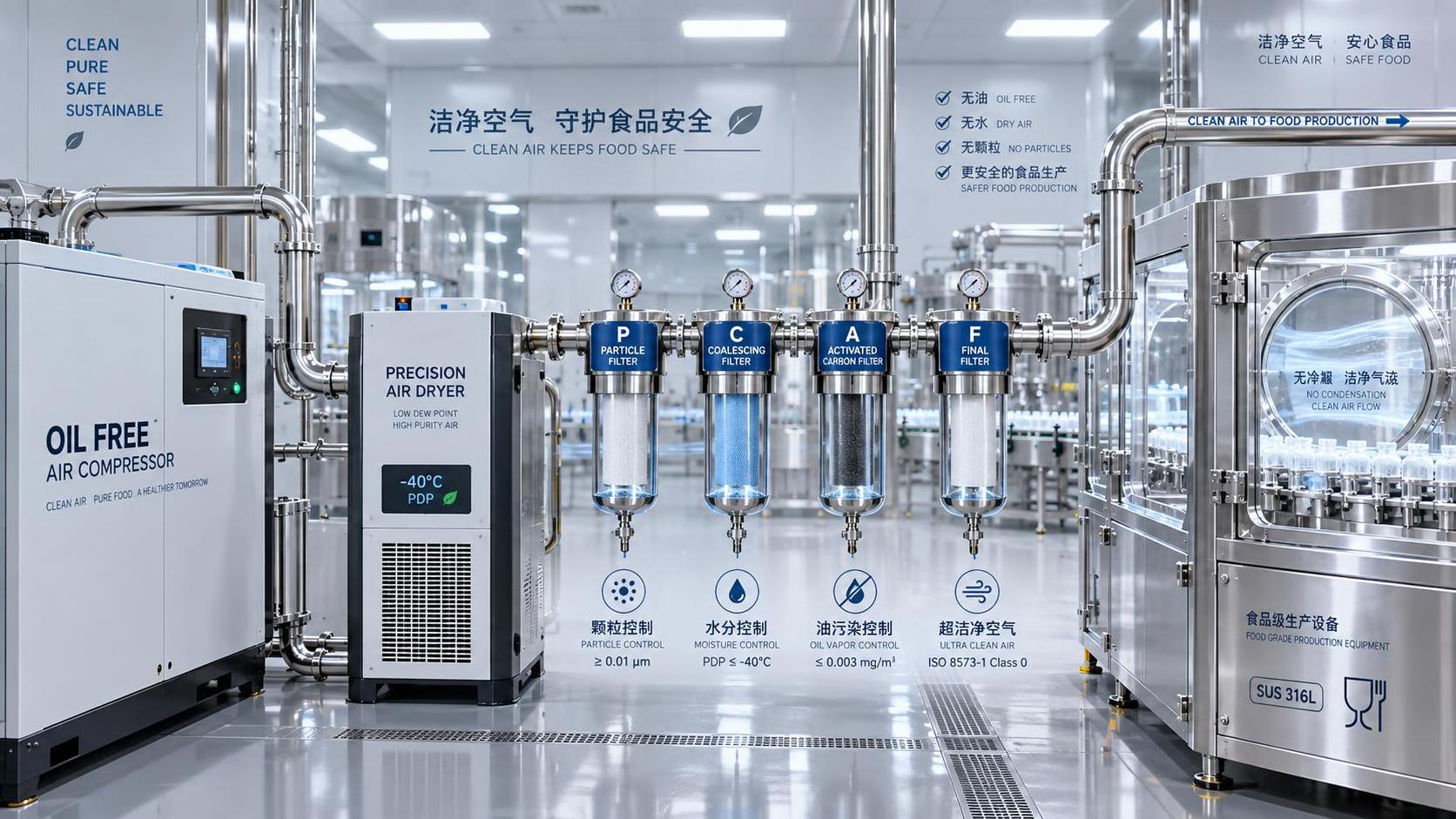
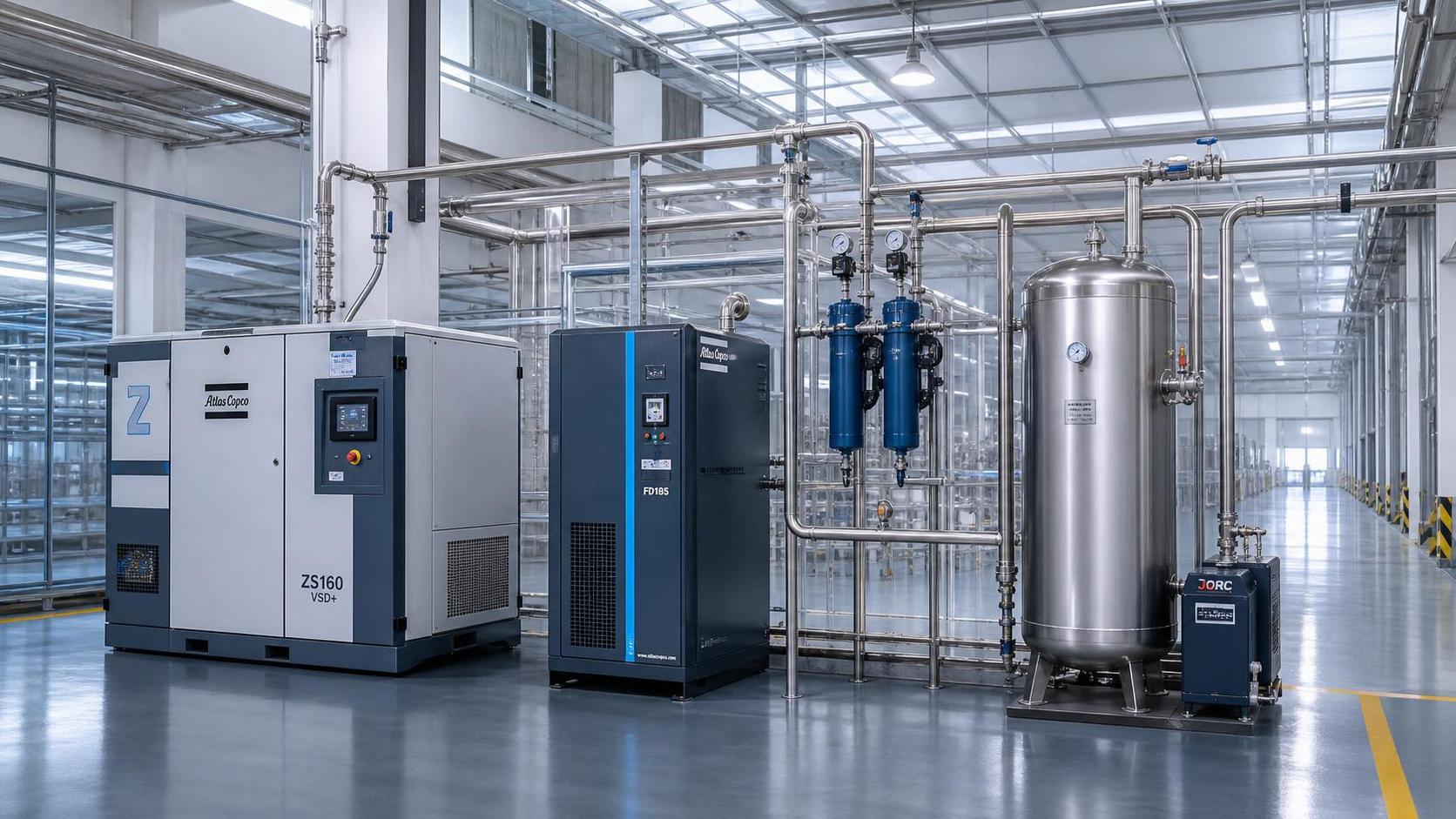
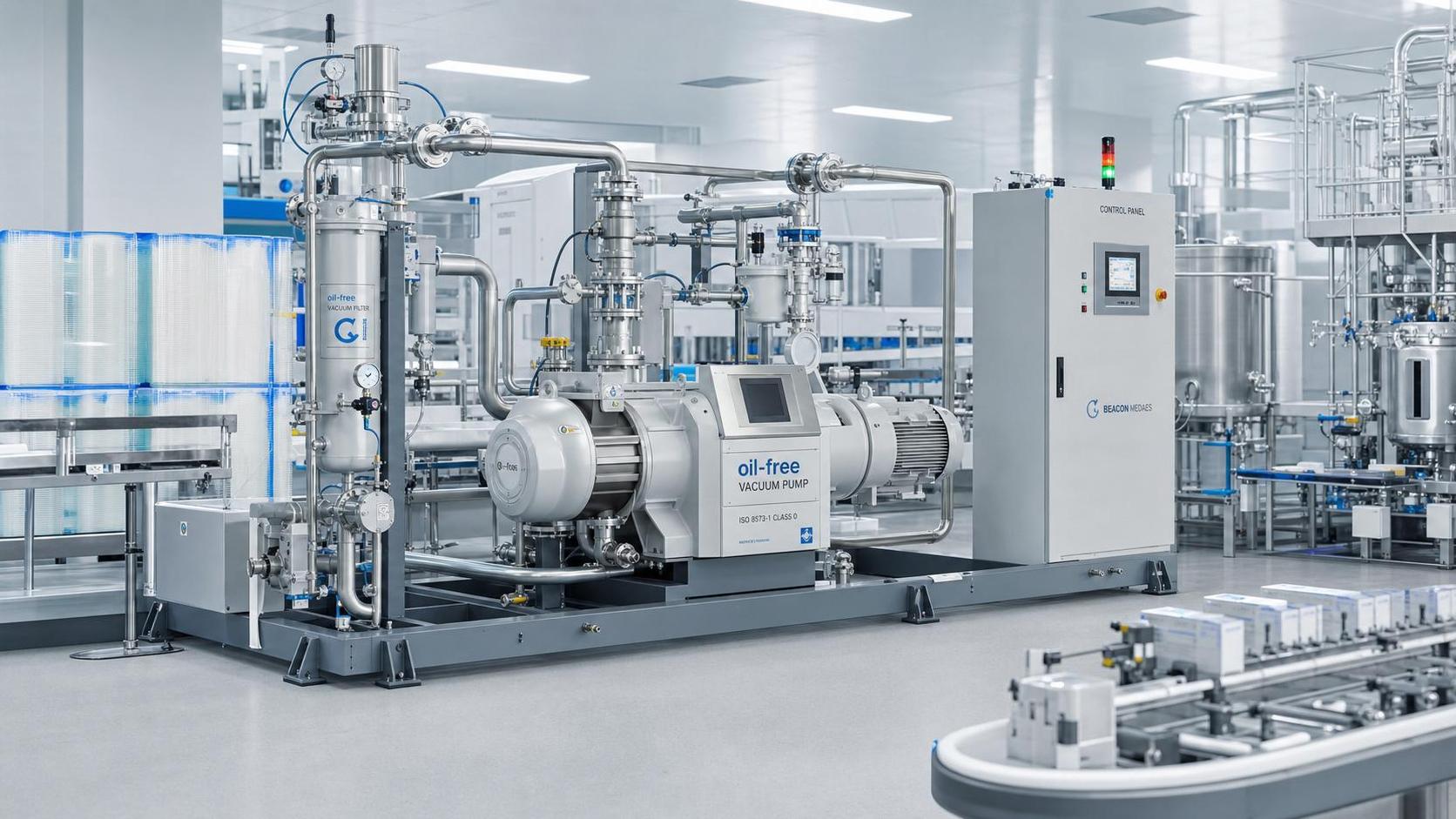
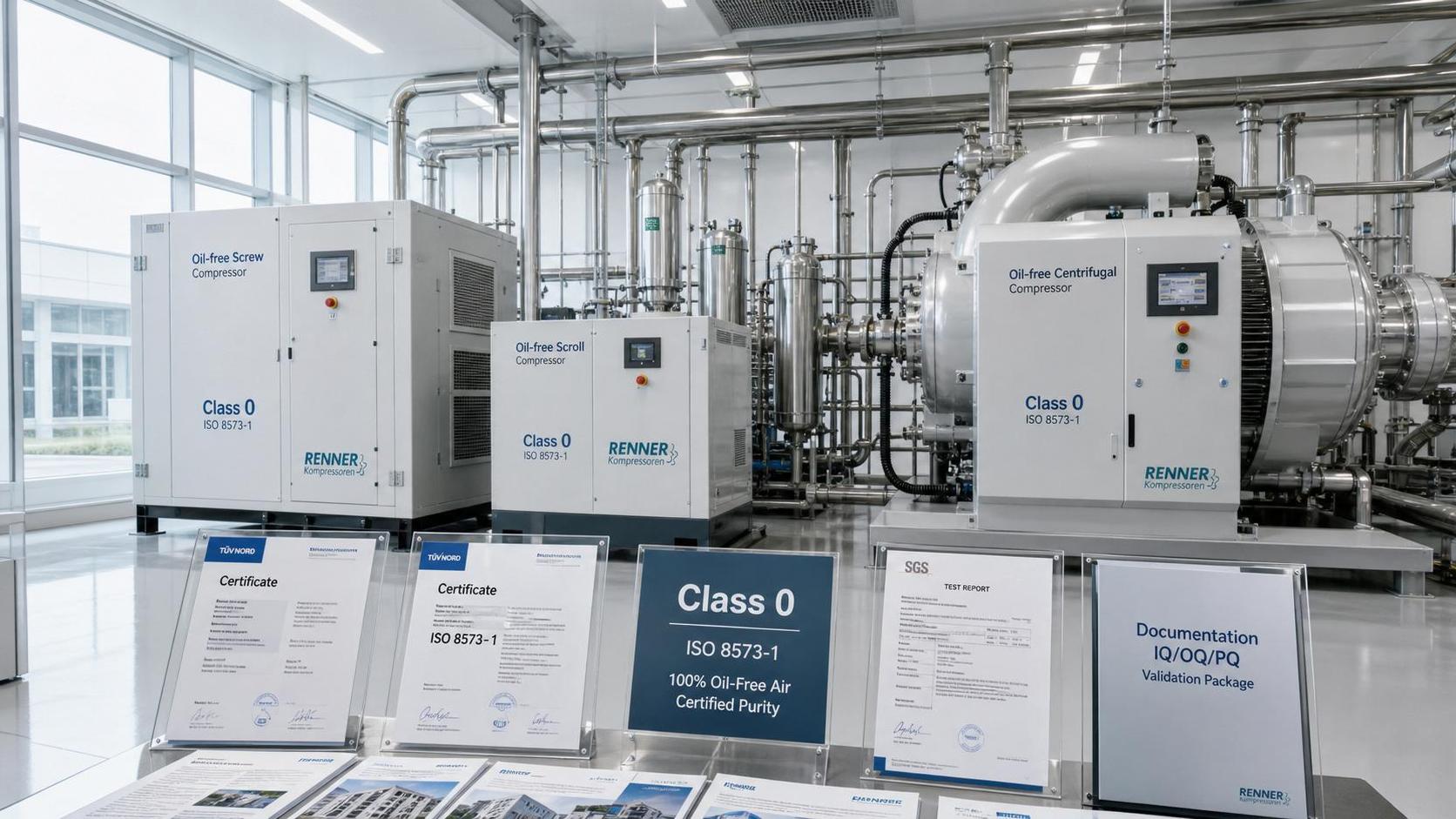
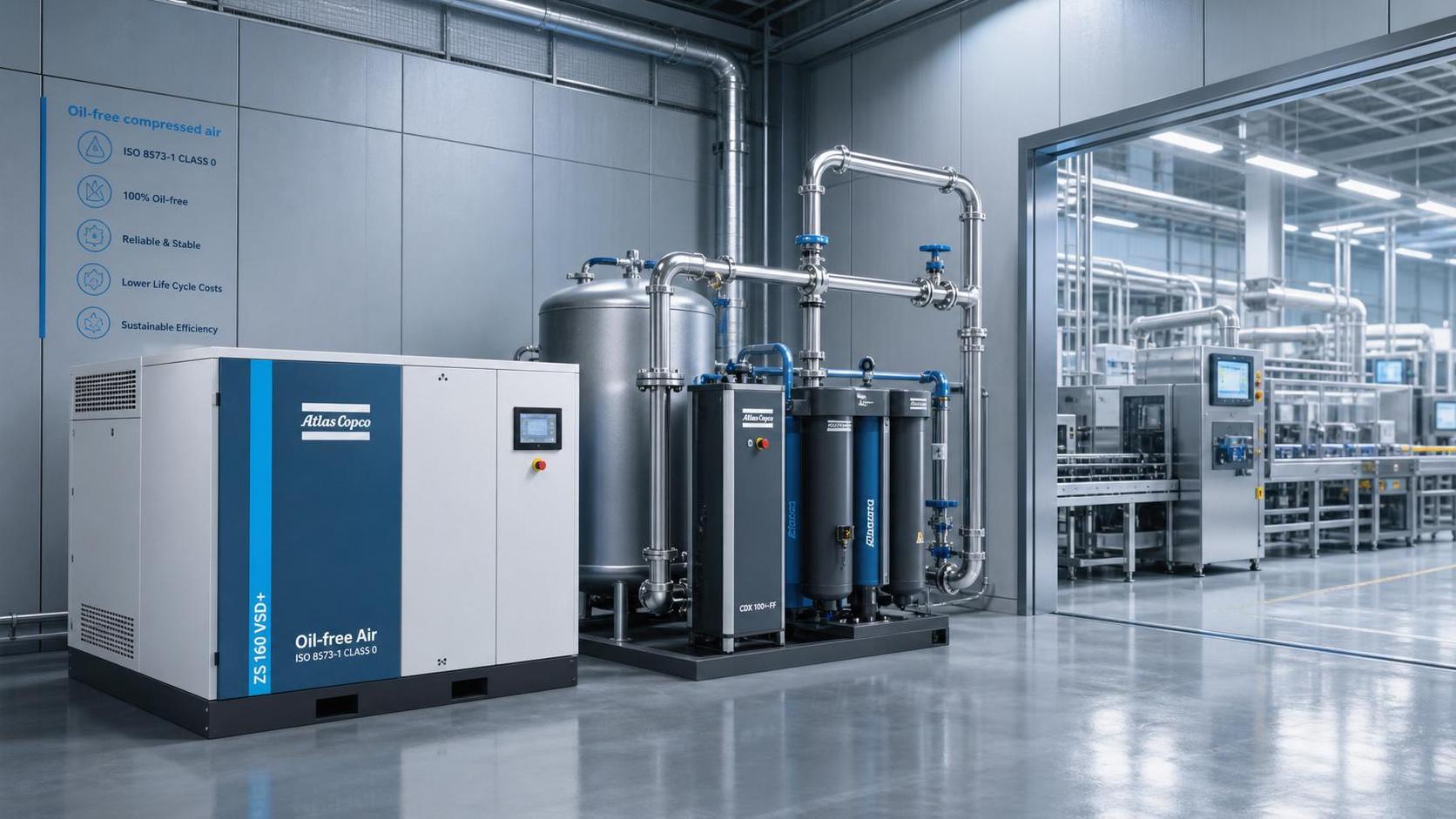
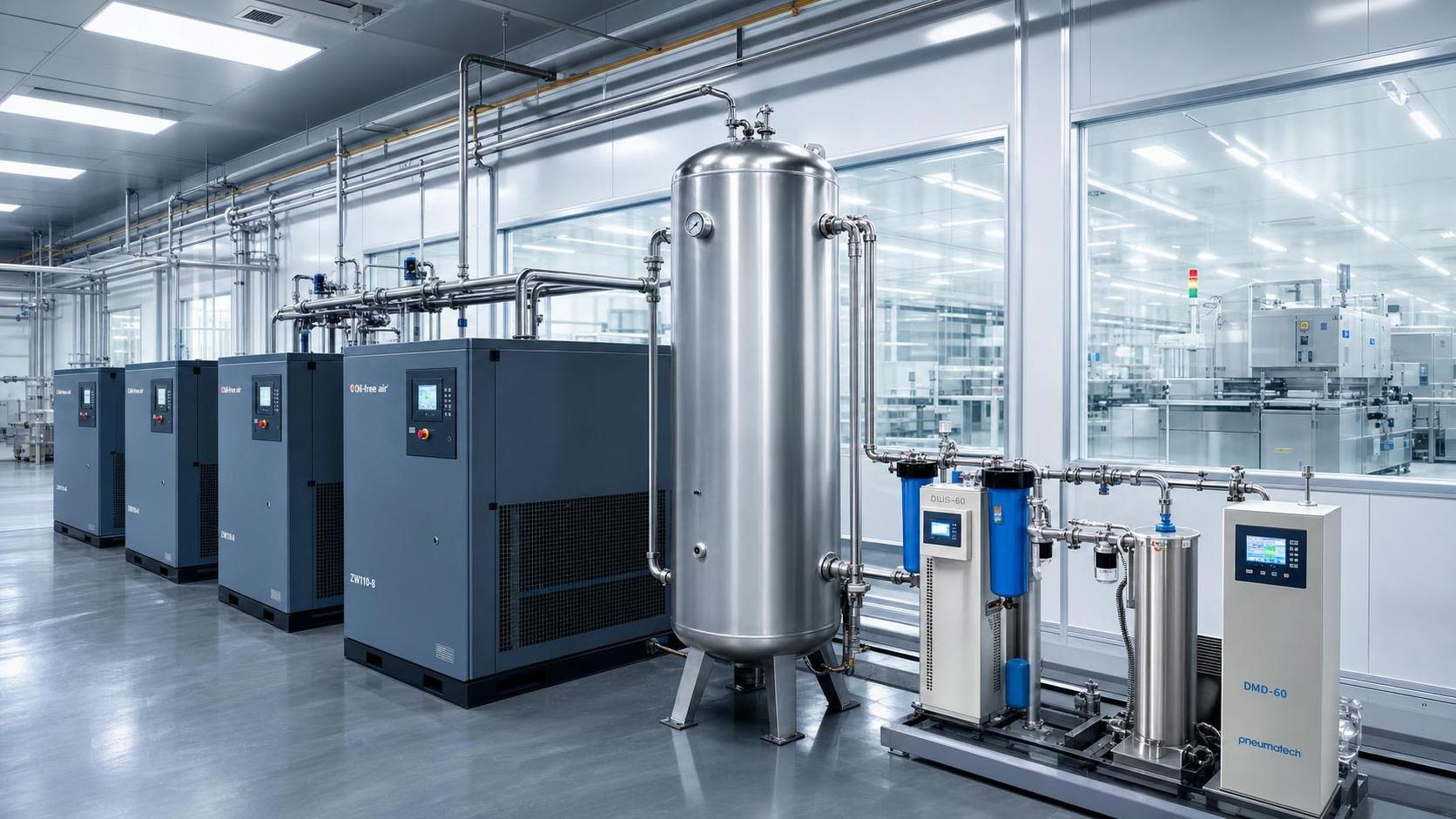
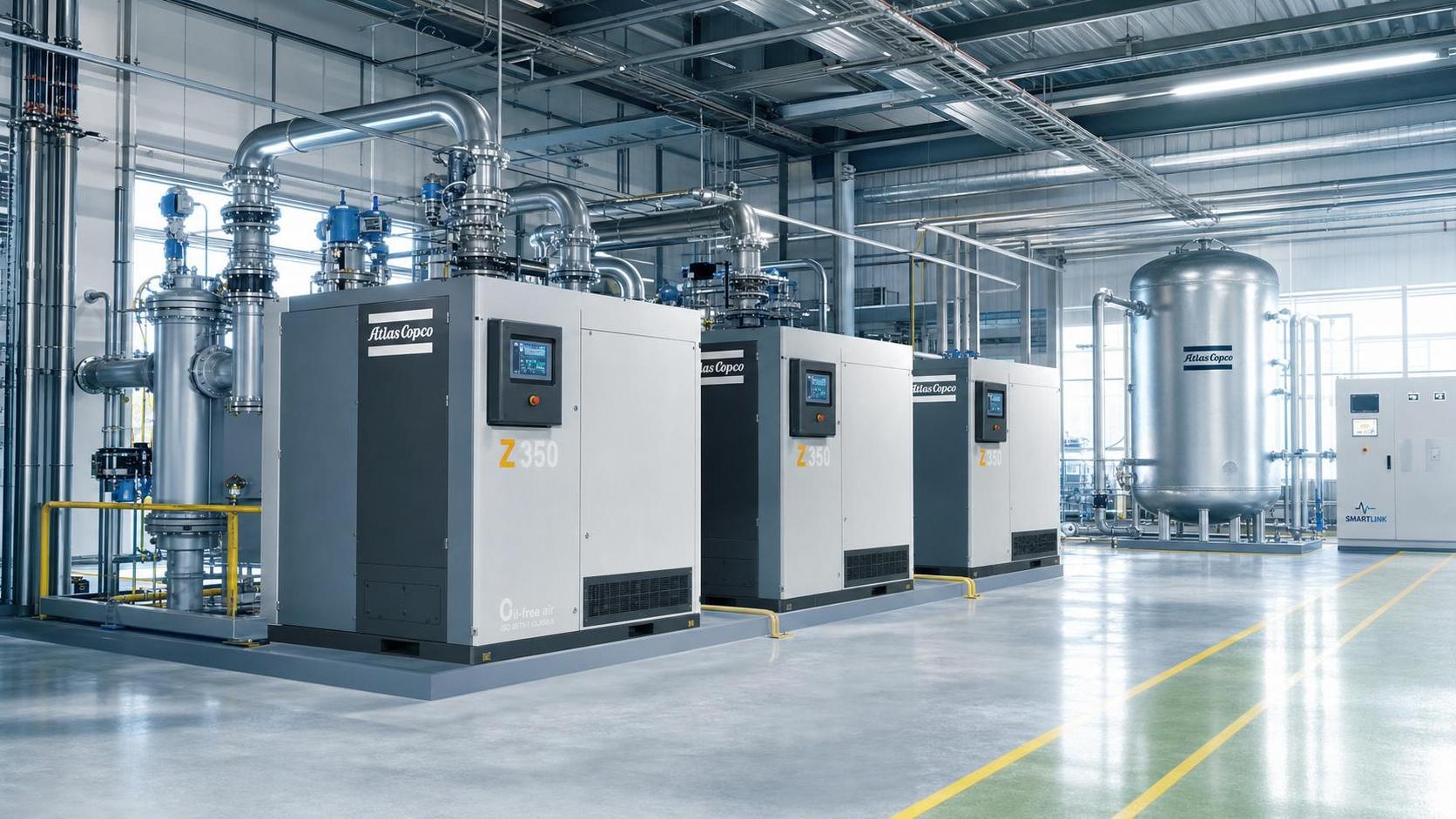
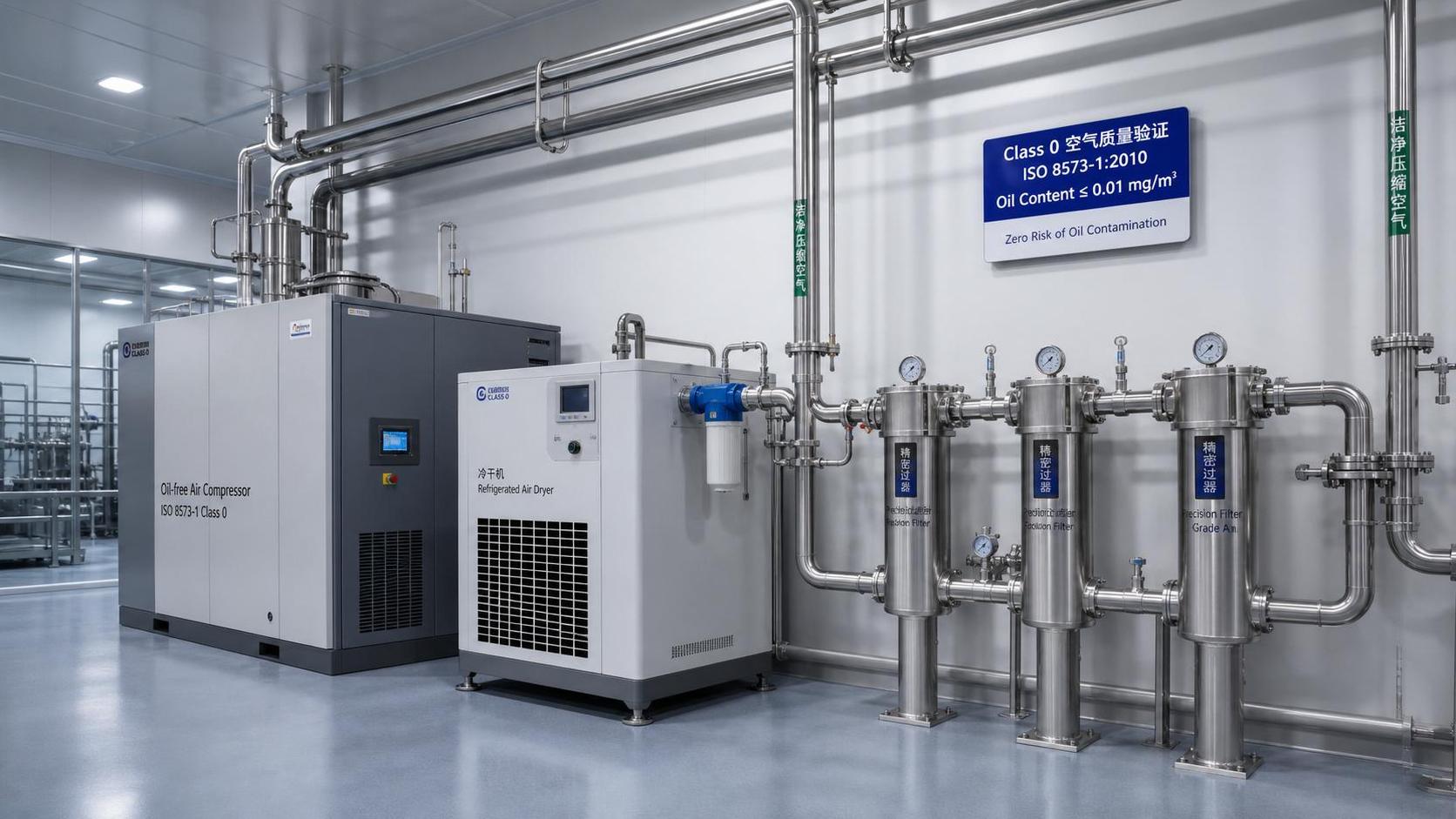
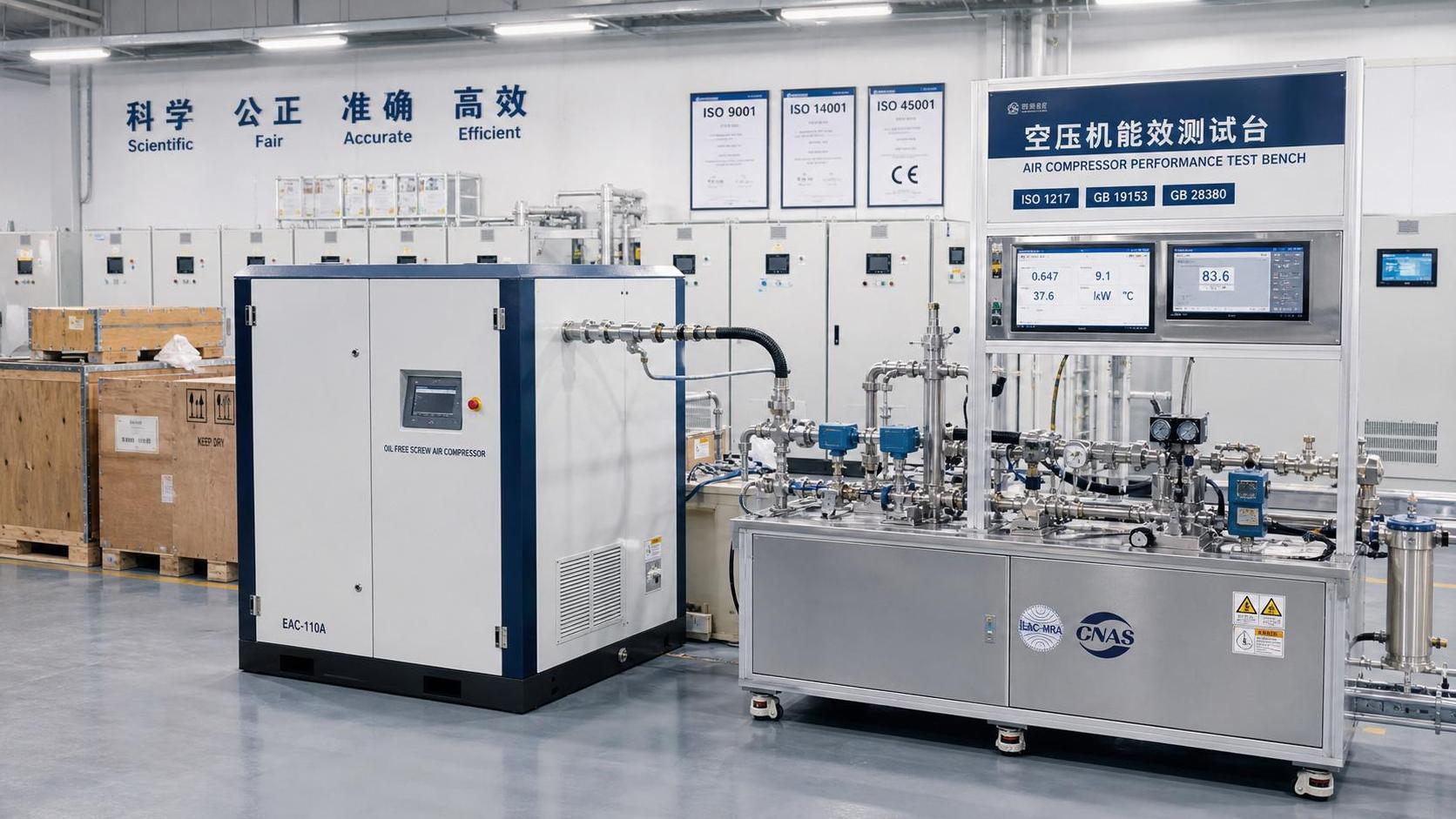
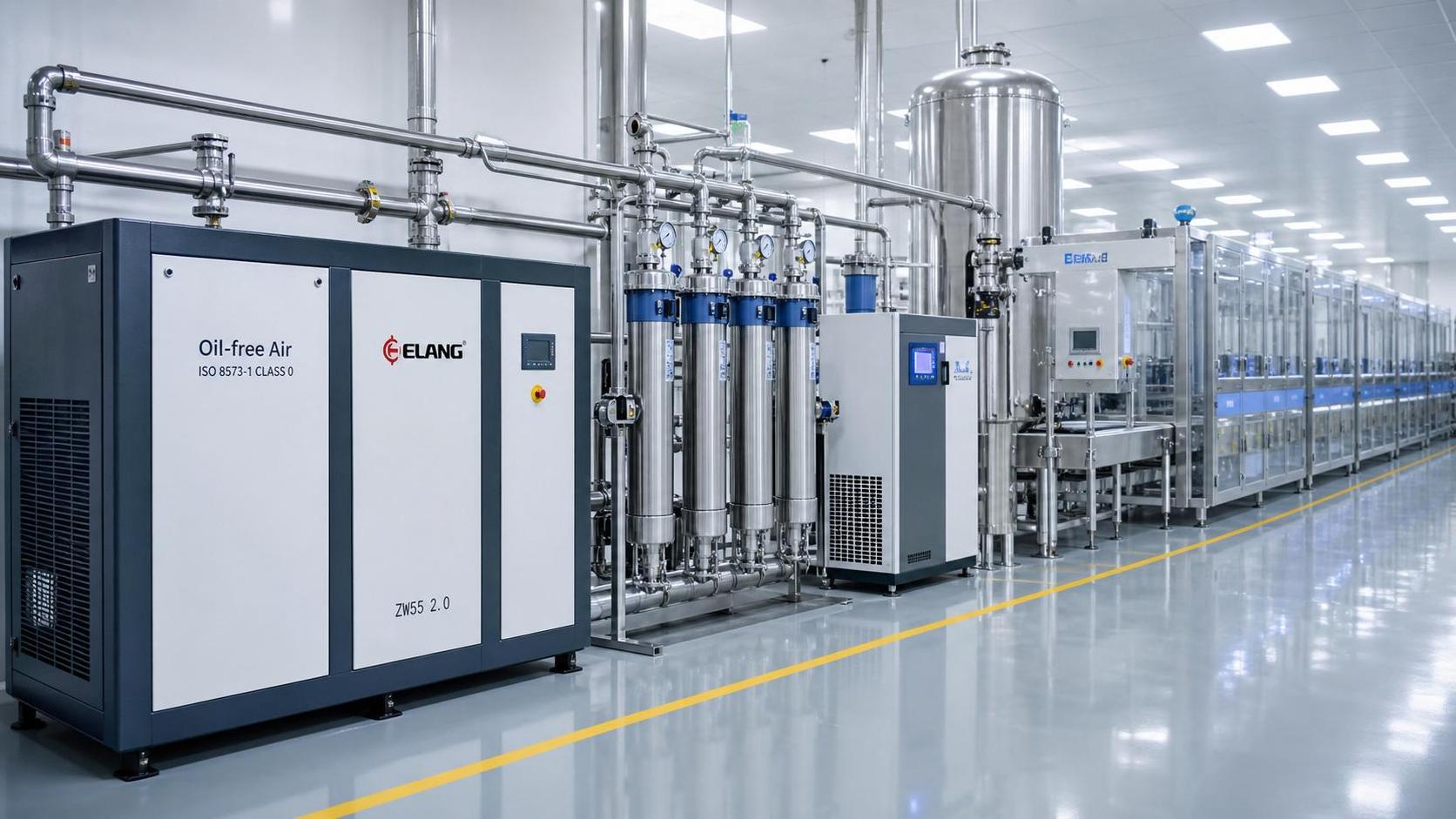
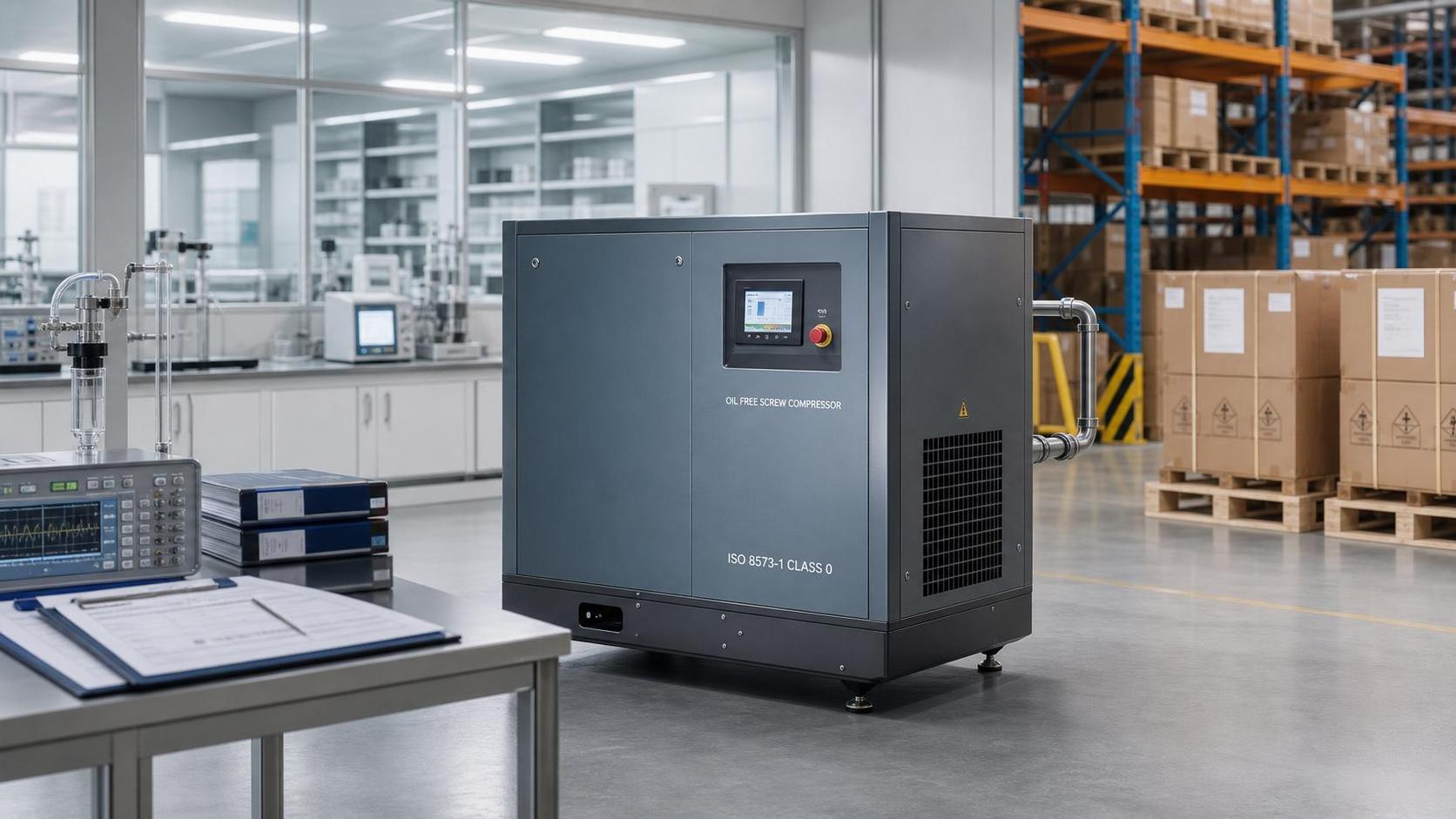
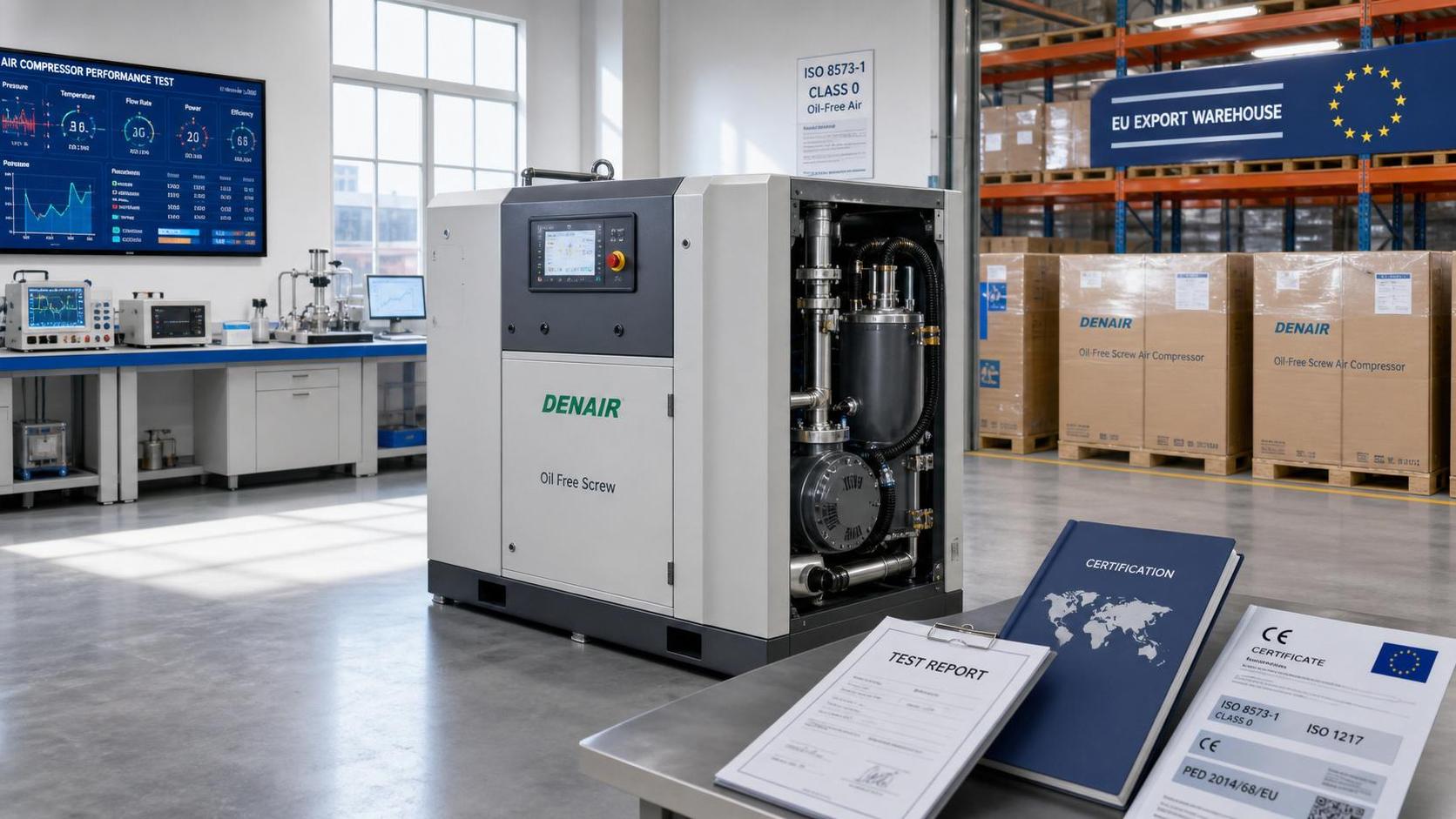
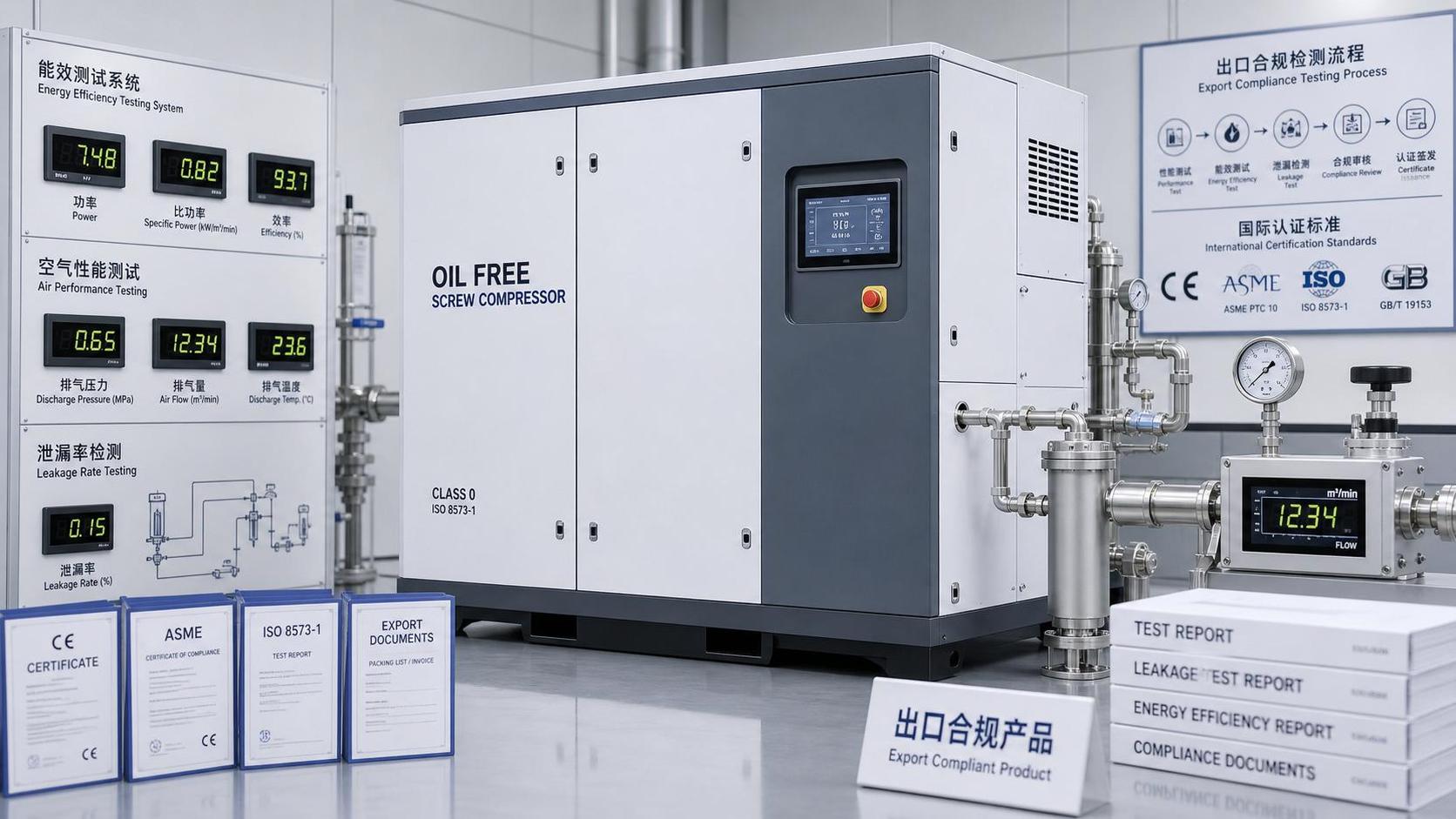
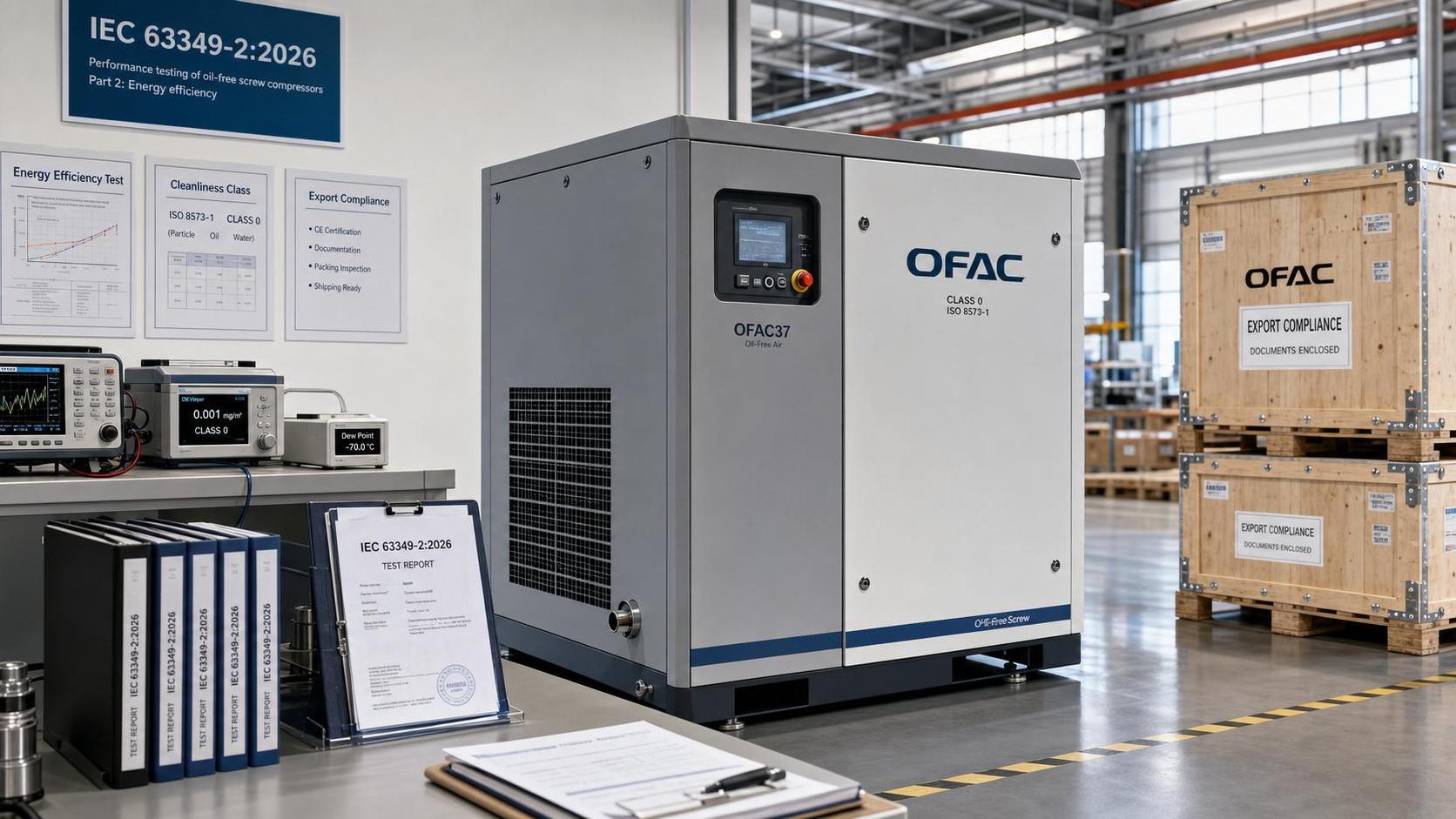
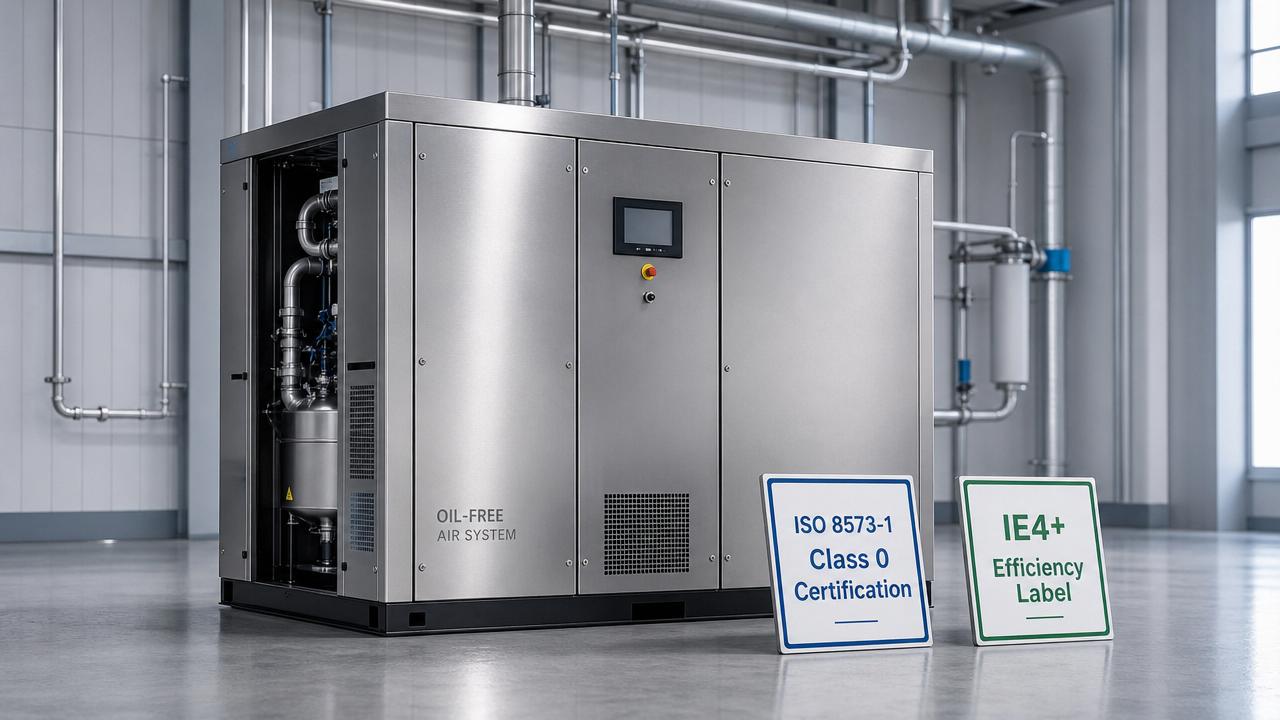
Oil-free compressors are widely preferred for clean production lines because they reduce contamination risk at the source.
That said, the compressor alone does not guarantee air purity.
Air treatment stages matter just as much.
Core elements to evaluate
- Intake filtration that limits dust, hydrocarbons, and ambient contaminants.
- Compression stages designed for stable pressure and low thermal stress.
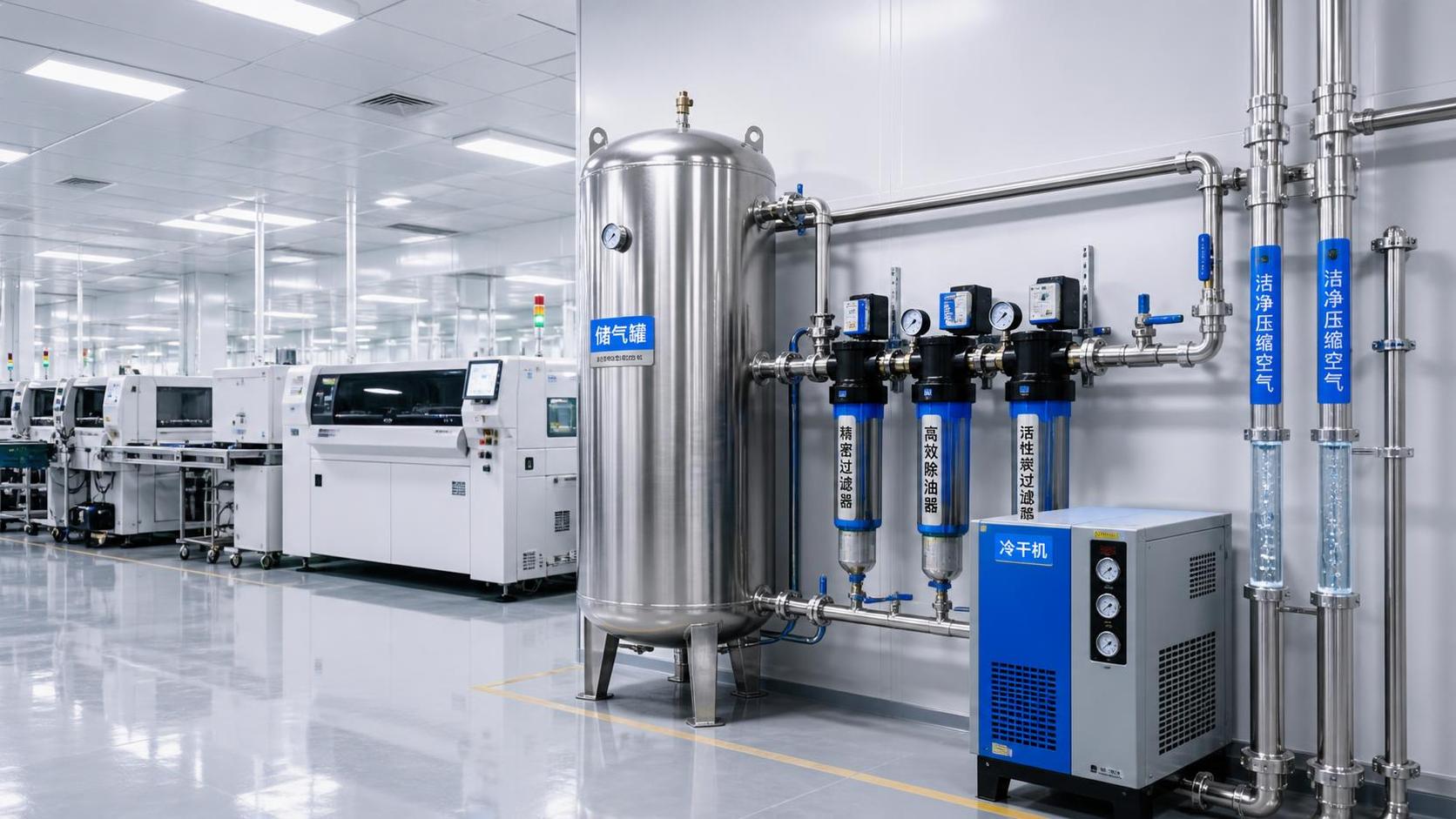
- Dryers sized for dew point targets and real plant humidity conditions.
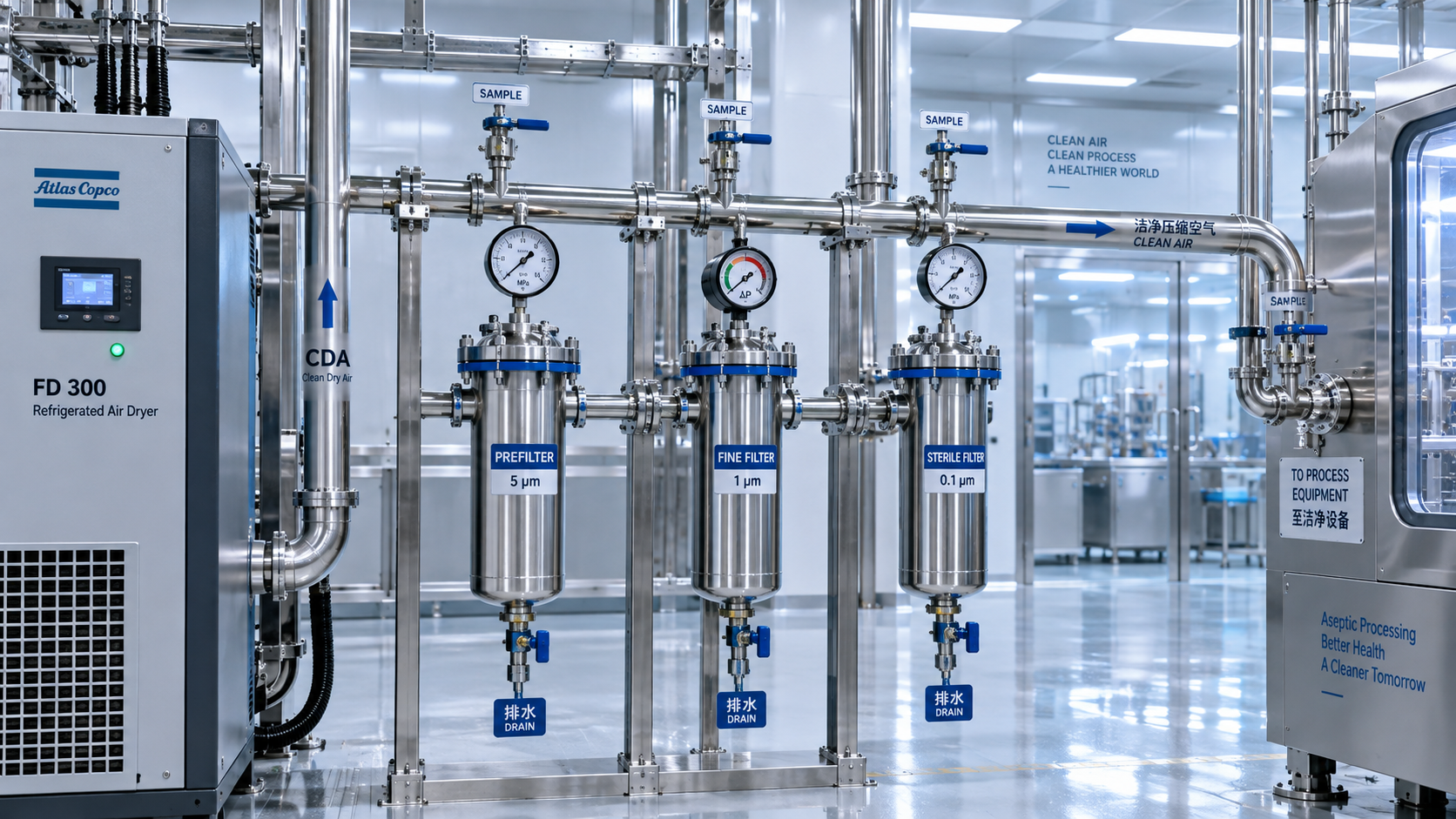
- High-efficiency filters for particles, oil vapor, and aerosols.
- Condensate management that prevents secondary contamination.
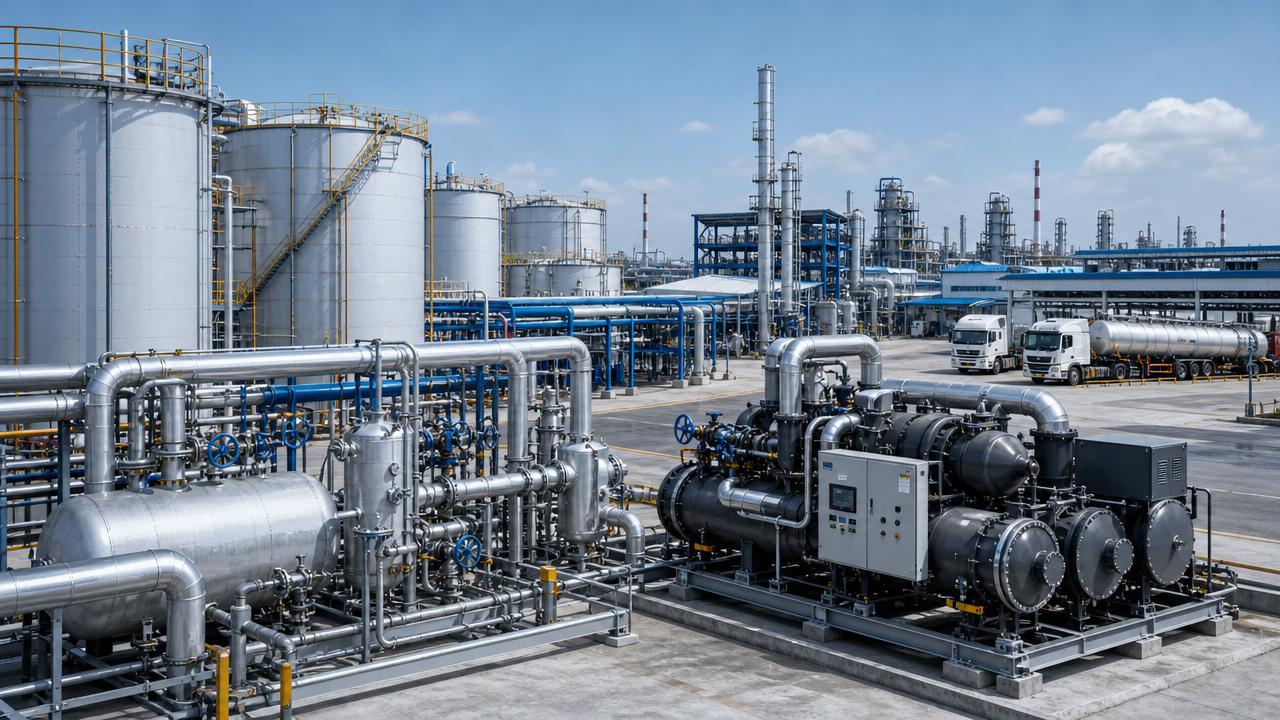
- Distribution piping that avoids corrosion, dead legs, and pressure drops.
- Point-of-use polishing where process sensitivity is highest.
In many plants, performance problems begin in the network rather than the compressor room.
Poor piping layout, wet storage tanks, and overloaded filters can undermine otherwise capable pure air compression systems.
How to Match Pure Air Compression Systems to Production Risk
The best solution depends on where compressed air interacts with operations.
A practical risk-based review helps avoid both underdesign and unnecessary overspending.
Start with these questions
- Does the air contact the product directly or indirectly?
- What contamination types would create the highest business impact?
- Which zones require validated cleanliness or documented traceability?
- How sensitive are tools, actuators, and sensors to moisture or oil carryover?
- What happens to output if pressure fluctuates during peak demand?
These answers help define the right purity level, redundancy strategy, and monitoring depth.
For example, a beverage filling line may prioritize microbial and moisture control.
A semiconductor support process may focus more heavily on particles, dew point stability, and ultra-clean delivery.
This is where application-specific design matters more than broad product claims.
Key Operational Benefits Beyond Cleanliness
Clean air is the headline benefit, but it is not the only one.
Well-designed pure air compression systems also improve uptime, energy use, and maintenance planning.
From a safety perspective, stable systems reduce the chance of emergency interventions and unplanned equipment stress.
From a quality perspective, they support repeatable conditions across shifts, batches, and sites.
Common business gains
- Lower reject rates caused by hidden contamination or unstable actuation.
- Longer service life for valves, cylinders, tools, and sensors.
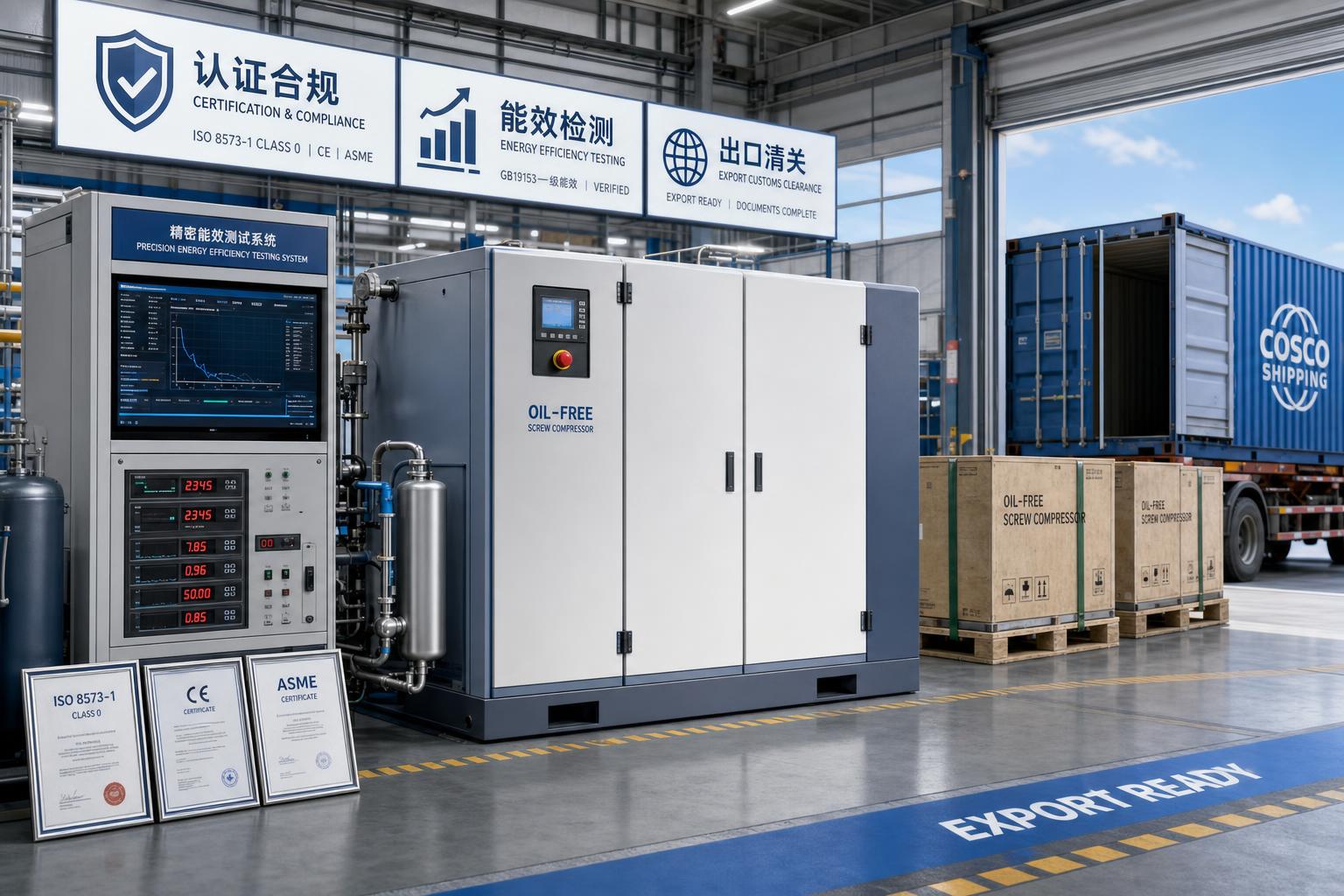
- Better audit readiness through documented air quality control.
- Reduced downtime linked to wet lines, fouled filters, or pressure swings.
- Improved energy efficiency when leaks, oversizing, and thermal losses are addressed.
This broader value is often underestimated during procurement.
A lower upfront price can hide higher lifecycle costs if the air system causes product waste or maintenance disruption.
GTC-Matrix frequently highlights this shift in buyer behavior.
More industrial teams now evaluate compressed air through total risk, energy efficiency, and process reliability rather than equipment price alone.
Implementation Checklist for Better Results
A successful upgrade usually starts with a clear baseline.
Before selecting equipment, review how the current air system behaves under real production loads.
Recommended action steps
- Map every process where compressed air affects product quality or safety outcomes.
- Measure current pressure stability, dew point, particle load, and oil content.
- Identify peak-demand periods that may overload dryers, filters, or receivers.
- Separate critical zones from general utility zones where possible.
- Choose pure air compression systems based on application risk, not generic marketing labels.
- Add monitoring points for trend analysis, alarms, and preventive maintenance.
- Review pipe materials, drain performance, and leak rates across the network.
- Document verification routines for audits, quality reviews, and cross-site consistency.
In practice, the strongest results come from combining engineering changes with operational discipline.
Even advanced pure air compression systems need proper filter replacement, drain inspection, and alarm response procedures.
A Smarter Path for Clean Production
Pure air compression systems have become a strategic part of clean manufacturing performance.
They support contamination control, safer operations, stronger compliance, and more predictable output.
As production standards tighten, the gap widens between basic compressed air supply and truly managed clean air systems.
That is why better decisions now start with better intelligence.
GTC-Matrix connects thermodynamic insight, compression trends, and industrial demand signals to help businesses evaluate that path with clarity.
If a clean production line depends on air quality, now is the right time to review whether the current system truly matches the process risk.
A focused audit, a smarter design, and a better pure air compression system can prevent bigger problems before they reach the line.
Related News
- How to verify compressed air cleanroom standards before installationAuthor :Pneumatic Power Engineer

- When oil free vacuum pumps make sense for European cleanroom projectsAuthor :Pneumatic Power Engineer

- When do pure air compression systems need ISO 8573-1 Class 0?Author :Pneumatic Power Engineer

- How do compressed air systems for electronics prevent contamination?Author :Pneumatic Power Engineer

- When does an oil-free process vacuum pump justify its higher cost?Author :Pneumatic Power Engineer

- Does ISO 9001 certification apply to compressed air quality?Author :Pneumatic Power Engineer

- How to Specify Clean Compressed Air Systems in Southeast Asia for Food and Pharma PlantsAuthor :Pneumatic Power Engineer

- How to Compare Oil Free Vacuum Pumps for Clean Process RequirementsAuthor :Pneumatic Power Engineer

- How to Evaluate a Clean Compressed Air Systems Supplier for ISO 8573-1 ComplianceAuthor :Pneumatic Power Engineer

- How to Choose the Right Oil-Free Vacuum PumpAuthor :Pneumatic Power Engineer

- VDI 2083 Update Makes Class 0 Proof MandatoryAuthor :Pneumatic Power Engineer

- When to Use Oil Free Vacuum Pumps for High Purity LinesAuthor :Pneumatic Power Engineer

- Compressed Air Solutions: When Oil-Free Systems Lower Total Operating CostAuthor :Pneumatic Power Engineer

- ATMOsphere Europe 2026 Adds Oil-free Systems ZoneAuthor :Pneumatic Power Engineer

- Oil-Free Compressors: Key Selection Criteria for Clean Air SystemsAuthor :Pneumatic Power Engineer

- How to Compare Oil Free Centrifugal Compressors for Stable Plant Air SupplyAuthor :Pneumatic Power Engineer

- Compressed Air Class 0 vs Oil-Free: What Really MattersAuthor :Pneumatic Power Engineer

- Oil-Free Compression Class 0: What the Standard Really Means in ProductionAuthor :Pneumatic Power Engineer

- Air Compression Cost Comparison: Oil-Free vs Screw Systems in Daily OperationAuthor :Pneumatic Power Engineer

- Saudi SASO Tightens IEC 63349-2 for Oil-Free CompressorsAuthor :Pneumatic Power Engineer

- Saudi SASO Tightens Oil-Free Compressor Efficiency RulesAuthor :Pneumatic Power Engineer

- Pure Air Compression Systems for Clean Production LinesAuthor :Pneumatic Power Engineer

- IEC 63349-2:2026 makes energy certification mandatoryAuthor :Pneumatic Power Engineer

- IEC 63349-2:2026 Sets New Entry Rules for Oil-Free Screw CompressorsAuthor :Pneumatic Power Engineer

- IEC 63349-2:2026 Takes Effect for Oil-Free Screw CompressorsAuthor :Pneumatic Power Engineer

- IEC 63349-2:2026 Sets New Efficiency Gate for Oil-Free Screw CompressorsAuthor :Pneumatic Power Engineer

- IEC 63349-2:2026 Takes Effect for Oil-Free Screw CompressorsAuthor :Pneumatic Power Engineer

- SABIC Methanol Force Majeure Extended, Tightening R134a/R407C FeedstocksAuthor :Pneumatic Power Engineer

- How to Evaluate Pneumatic Power Systems for Stable OutputAuthor :Pneumatic Power Engineer

- Oil-Free Compression vs Lubricated Systems: Key Trade-OffsAuthor :Pneumatic Power Engineer
![]()
- Oil-Free Compression: 2026 Cost and Compliance Trade-OffsAuthor :Pneumatic Power Engineer

- Oil-Free Compression: Cost and Contamination RisksAuthor :Pneumatic Power Engineer
![]()
- Euro PMI Drop Delays Oil-Free Systems OrdersAuthor :Pneumatic Power Engineer

- Germany/France May PMI Decline; Oil-free Systems EU Projects DelayedAuthor :Pneumatic Power Engineer
![]()
- Compression Technology Options for Cleaner Oil-Free Air SupplyAuthor :Pneumatic Power Engineer

- TUV Rheinland Enforces Full-Chain Class 0 Certification for Oil-Free SystemsAuthor :Pneumatic Power Engineer