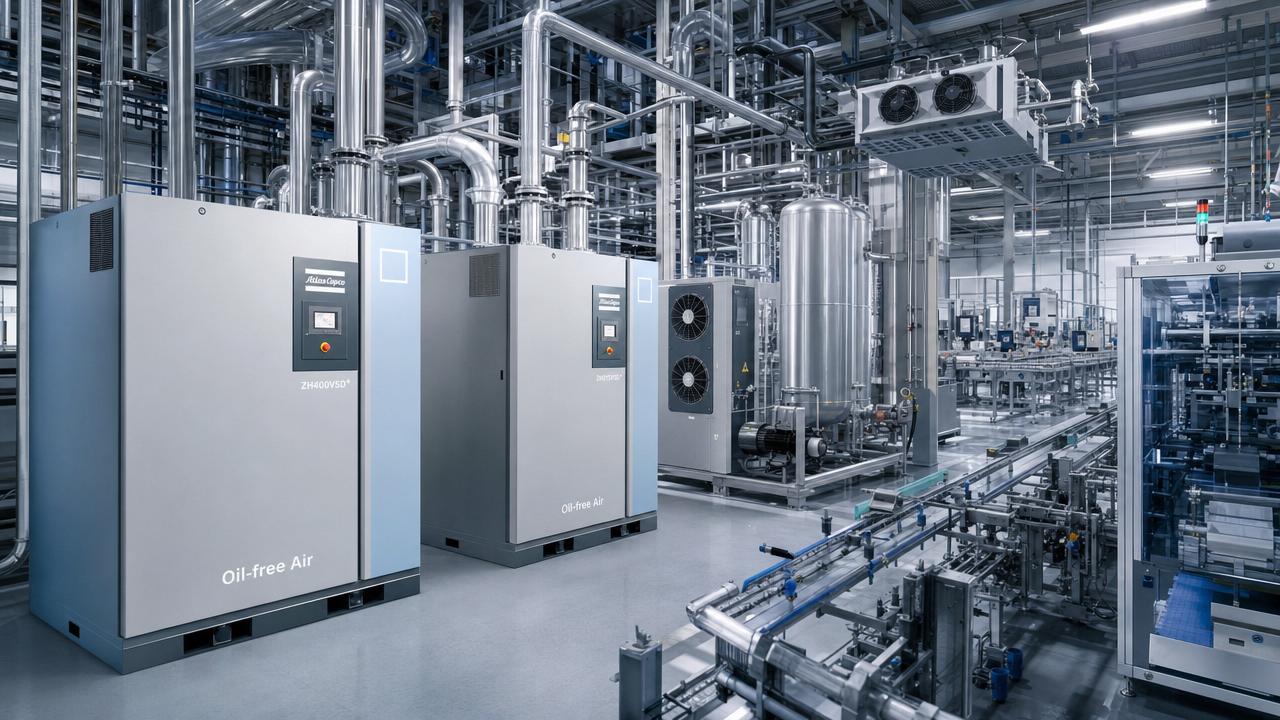
When oil free vacuum pumps make sense for European cleanroom projects




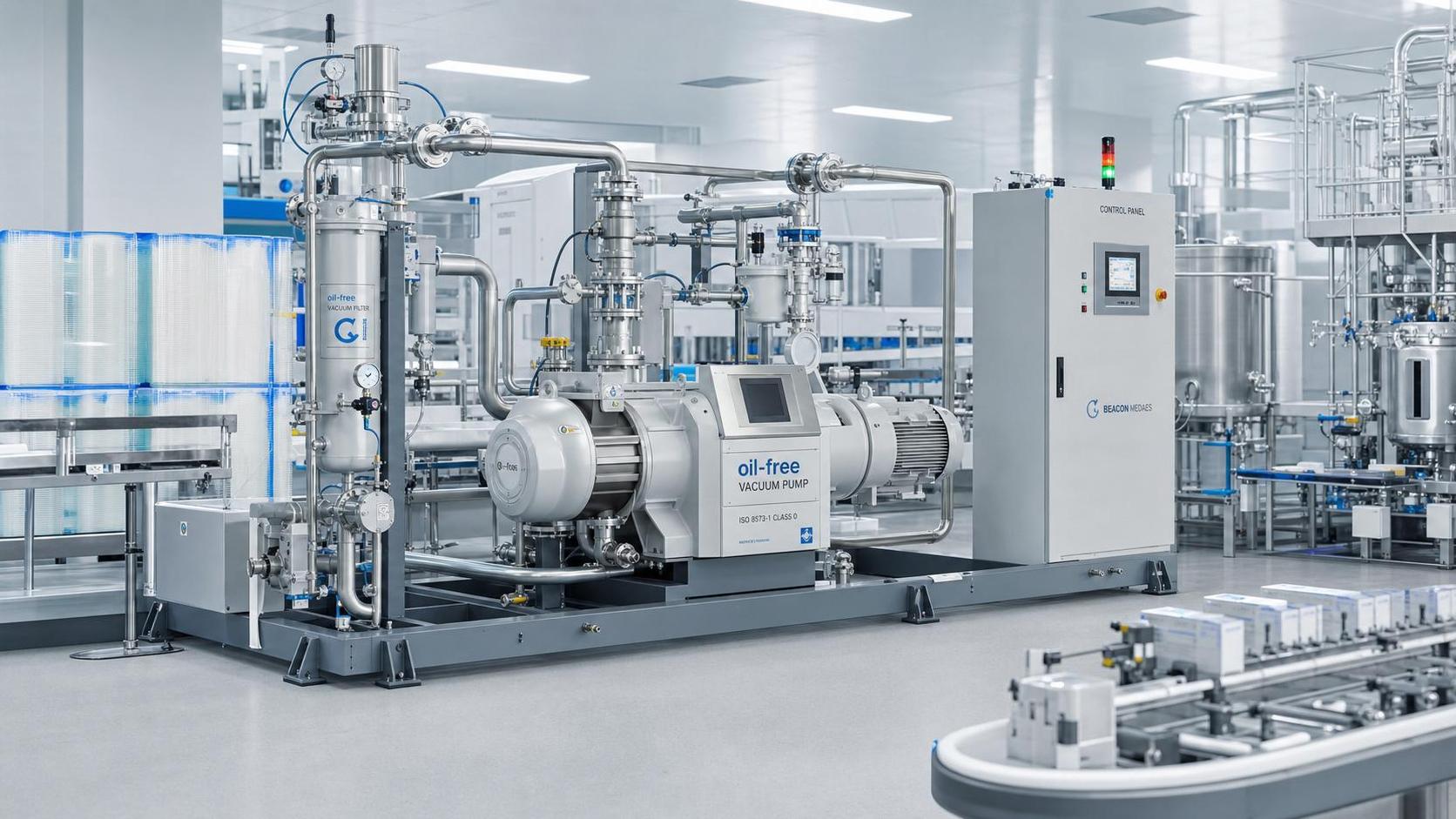
Oil-free vacuum technology makes sense in a European cleanroom project when the cost of contamination, process interruption, or complex oil-management controls is higher than the purchase-price advantage of a conventional lubricated pump. That threshold is reached more often than project teams expect, particularly where vacuum is close to a product, a controlled environment, sensitive instruments, or a validated production process.
For teams comparing oil free vacuum pumps Europe, the useful question is not simply whether oil-free equipment is “cleaner.” It is whether removing lubricating oil from the compression path reduces a real project risk without creating a worse operational problem elsewhere. The answer depends on the process, the required vacuum level, load profile, exhaust treatment, maintenance access, and the way the cleanroom is zoned.
An oil-free pump can reduce the risk of hydrocarbon backstreaming into the vacuum line and simplify some contamination-control decisions. It does not automatically make the whole system cleanroom-ready. Pipework, seals, filters, exhaust routing, cooling arrangements, and maintenance practices still determine whether the installation supports the required environment.
Start with the contamination path, not the pump catalogue
In a lubricated vacuum pump, oil supports sealing, cooling, and lubrication. Under suitable operating conditions, it is a reliable engineering solution. The concern in a cleanroom application is that oil vapour, aerosols, or degraded oil can migrate through the system, especially during shutdown, pressure changes, poor maintenance, or an incorrectly designed inlet arrangement. Even when the pump is outside the cleanroom, the vacuum line can connect its process side to a controlled space.
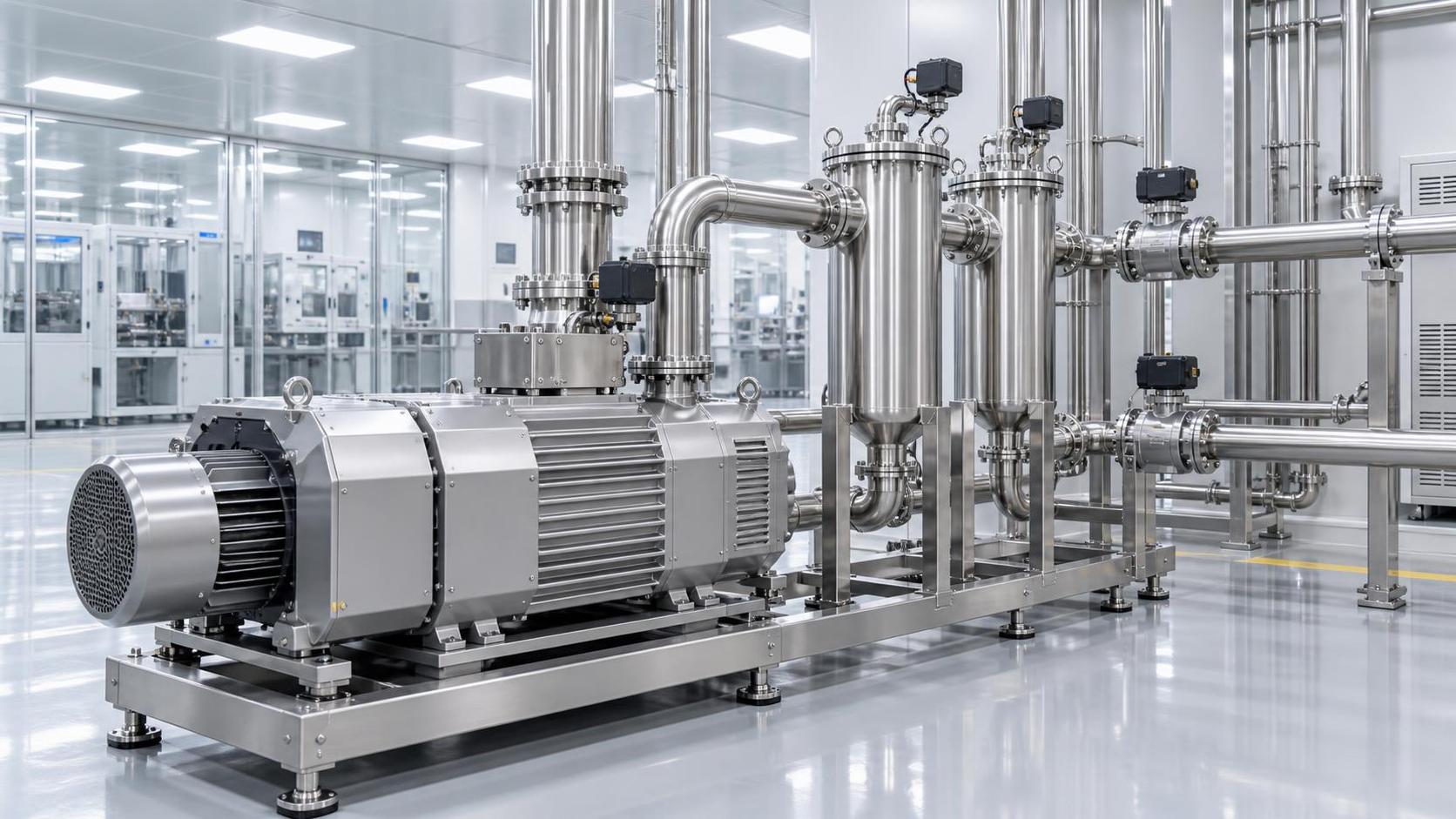
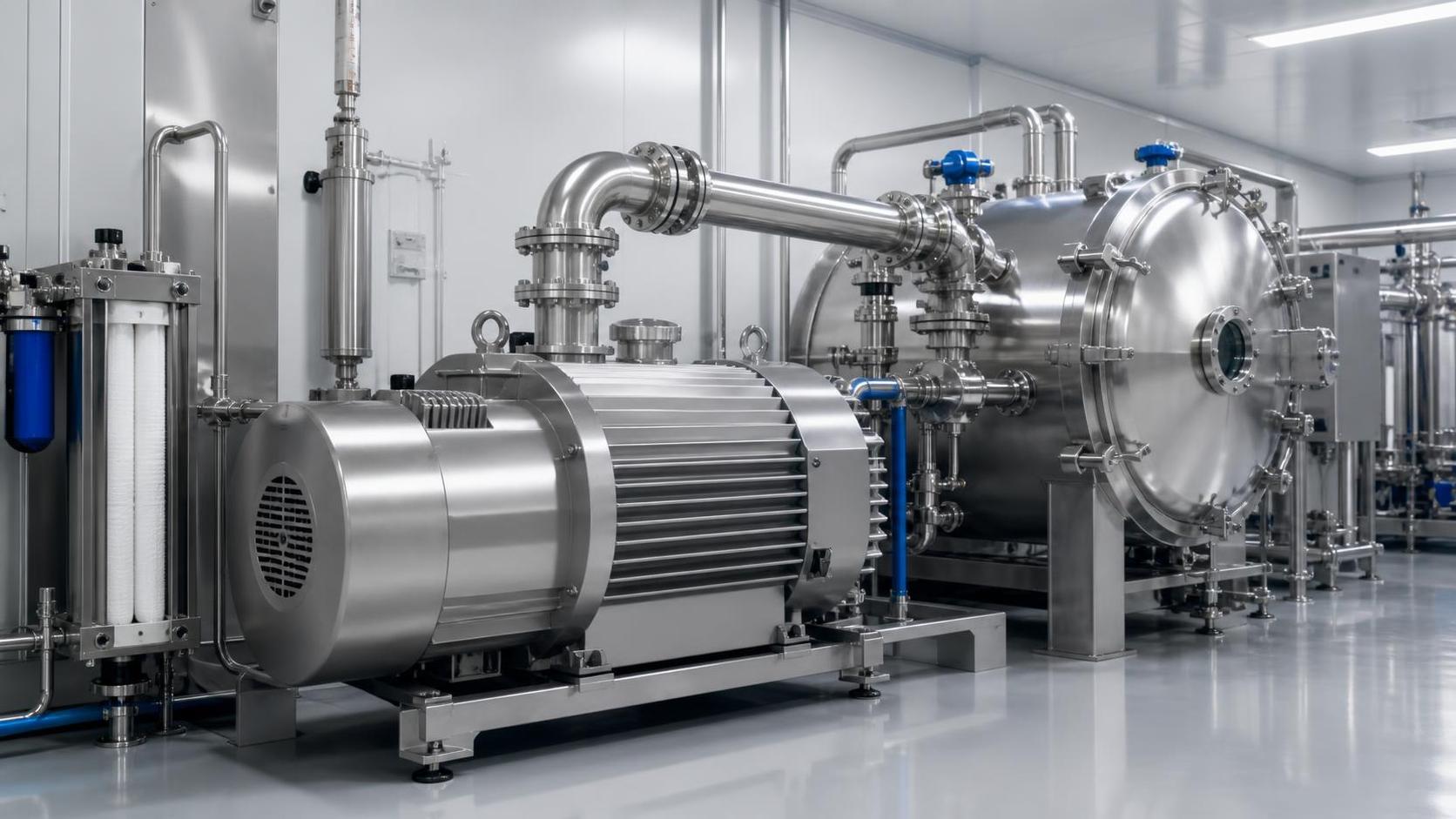
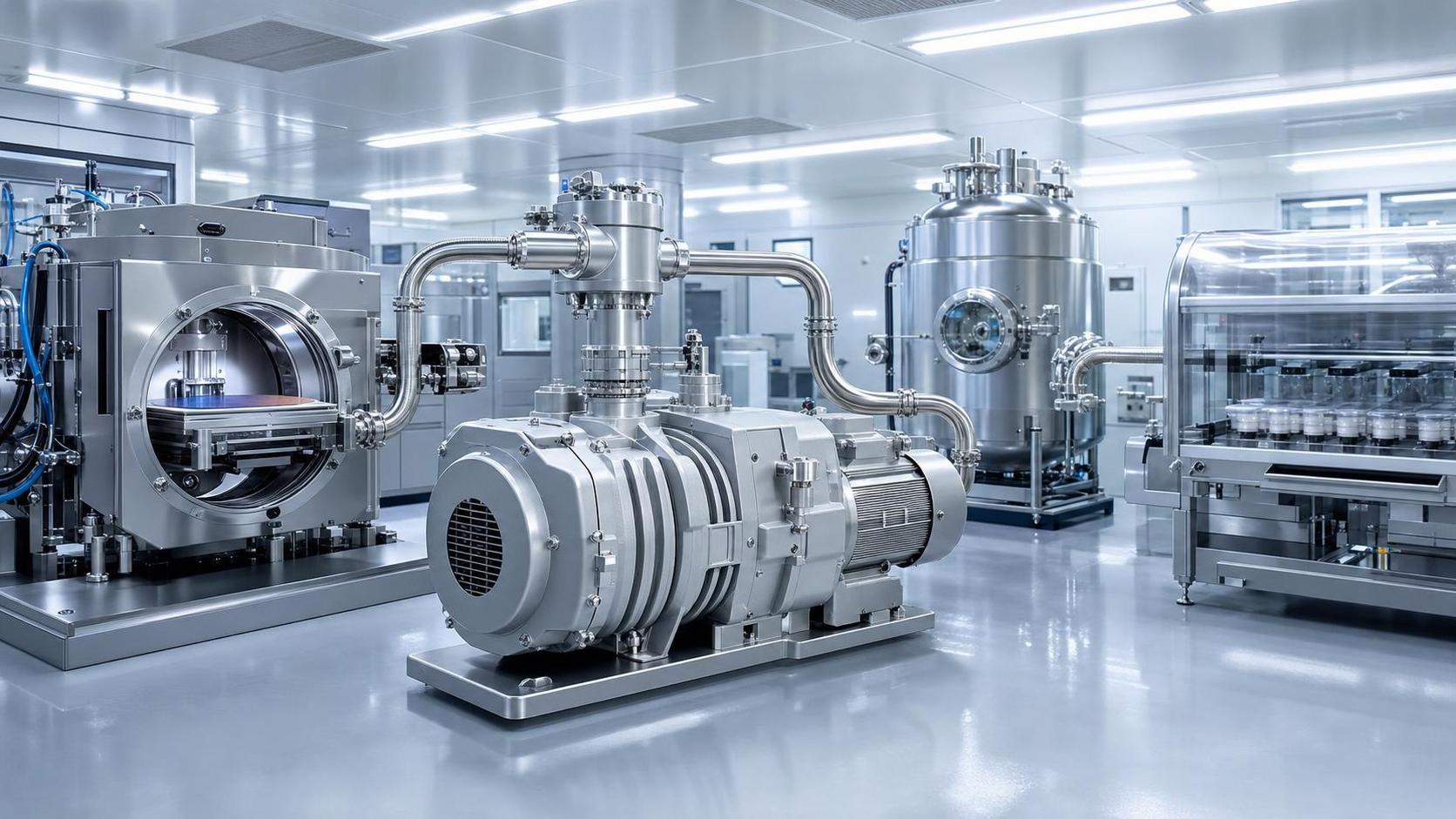
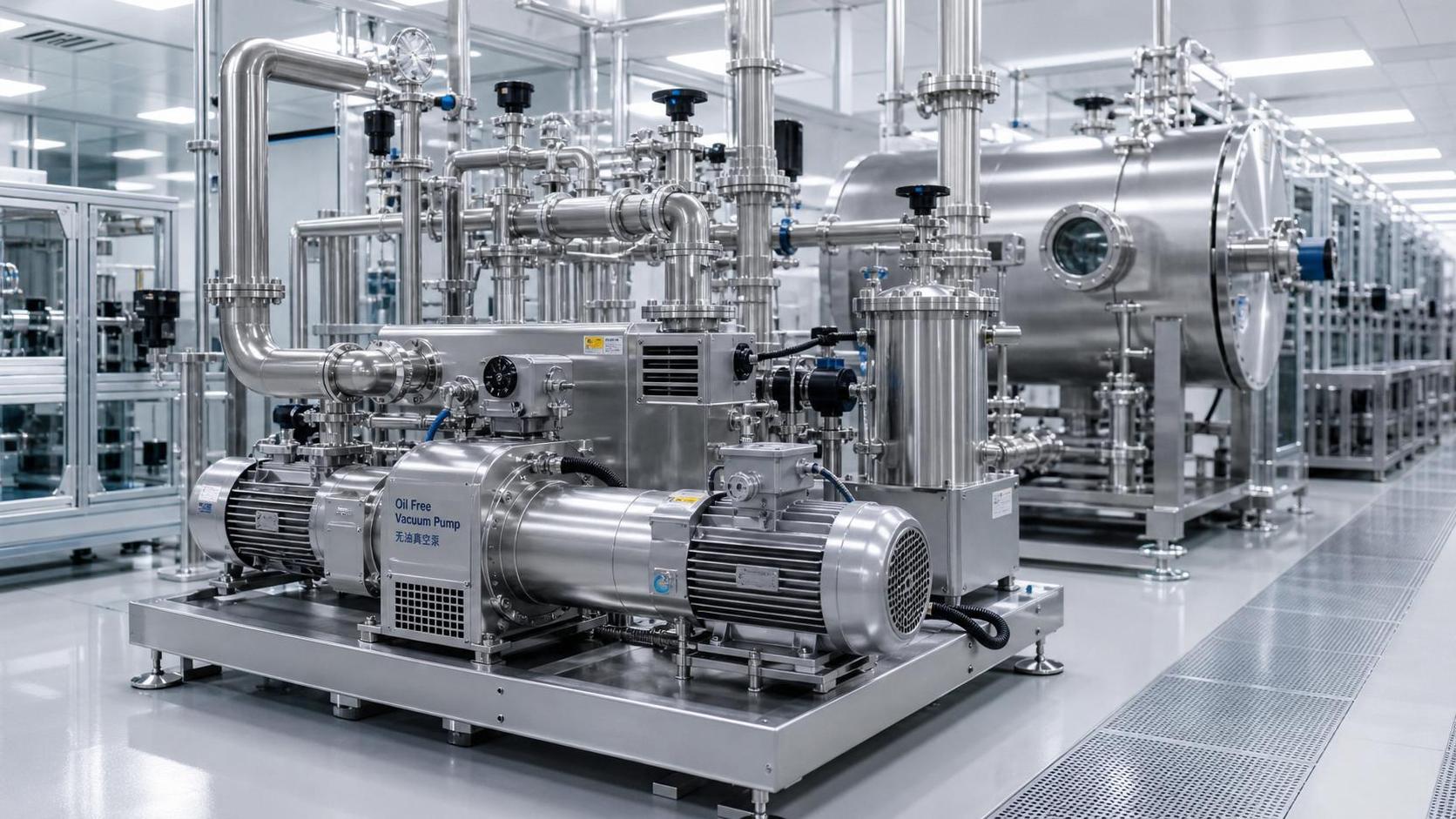
Oil-free vacuum pumps avoid oil in the compression chamber. Depending on the pump principle, they may use dry screw, claw, scroll, diaphragm, or other dry-running designs. This reduces one important contamination source, but each design has its own limits concerning vapour handling, particulate tolerance, achievable vacuum, heat generation, and service intervals.
Project managers should map the full route before deciding:
- What enters the vacuum system: air, water vapour, solvents, powders, biological materials, corrosive gases, or process residues.
- Whether the vacuum is in direct contact with product, packaging, tools, analytical equipment, or only with facility services.
- Where a pressure reversal or shutdown could send material.
- What enters the cleanroom if a seal, filter, or exhaust connection fails.
- Whether the pump room itself can be maintained without disrupting controlled operations.
This exercise often separates applications that genuinely need dry vacuum from those where a lubricated pump, located remotely with correctly selected filtration and isolation, remains a reasonable option.
Where oil-free vacuum usually earns its place
Oil-free equipment is most persuasive when contamination has a direct consequence for product quality, yield, cleaning effort, or process release. In pharmaceutical and life-science environments, vacuum may be used for filtration, drying, transfer, laboratory instruments, packaging, or controlled production steps. The decision is stronger where a hydrocarbon source near the process would complicate cleaning validation or create an avoidable investigation after a deviation.
Semiconductor, electronics, optics, and precision-coating facilities are similarly sensitive, though the risk is not always a regulatory one. Minute deposits can affect surfaces, bonding, coating quality, or instrument stability. In these projects, vacuum cleanliness must be evaluated with the chamber, piping material, purge arrangement, and foreline components as one system. A dry pump alone cannot compensate for unsuitable materials or poor installation discipline.
Food and beverage applications need a more selective approach. Oil-free vacuum can be justified for product-facing operations, hygienic packaging, or environments where oil contamination would have serious consequences. For general utility vacuum well away from exposed product, the case may instead rest on maintenance practicality, energy use, or site policy. It should not be specified merely because the facility includes a hygienic zone.
Advanced manufacturing projects also benefit where downtime is expensive and access to the pump is restricted. A dry central vacuum arrangement can keep heat, noise, and routine servicing out of production areas. That can improve working conditions and reduce intervention risk, provided the distribution network is sized for pressure loss and simultaneous demand.
The cleanroom class does not decide the answer by itself
A common specification error is to treat the cleanroom classification as a direct pump-selection rule. It is an important input, but it does not describe the vacuum duty. Two rooms with the same classification may have entirely different risks: one may use intermittent vacuum for a sealed handling tool, while the other may evacuate moisture-laden process vessels throughout the day.
The practical decision comes from the combination of environmental sensitivity and operating duty. A modestly controlled room with a product-facing vacuum connection may justify a dry solution more clearly than a highly controlled room whose vacuum system is isolated from the process and housed in a service area.
It is also important to distinguish between oil-free compression and zero maintenance. Dry-running pumps still generate heat, use seals and bearings, and may require scheduled inspection. Some applications need inlet filtration, condensate management, gas ballast, purge gas, or exhaust filtration. A dry pump that overheats, ingests powder, or repeatedly handles condensable vapour outside its intended range can become a reliability problem regardless of its contamination advantages.
Choose the pump around the duty cycle
Vacuum level alone is not enough to select a technology. A supplier can show that several pumps reach the required end pressure, yet they may behave very differently in service. The project specification should state the required operating pressure, evacuation time, flow demand at that pressure, gas composition, temperature, moisture load, and expected hours of operation. It should also define whether demand is constant, batch-based, intermittent, or subject to sharp peaks.
For a cleanroom project, the most costly mismatch is often a pump sized to its nameplate capacity rather than to the real process profile. Oversizing can produce unnecessary energy consumption and unstable control. Undersizing can extend evacuation cycles, raise operating temperature, and drive teams to bypass controls during production pressure.
Centralised or local vacuum: the layout decision that changes the business case
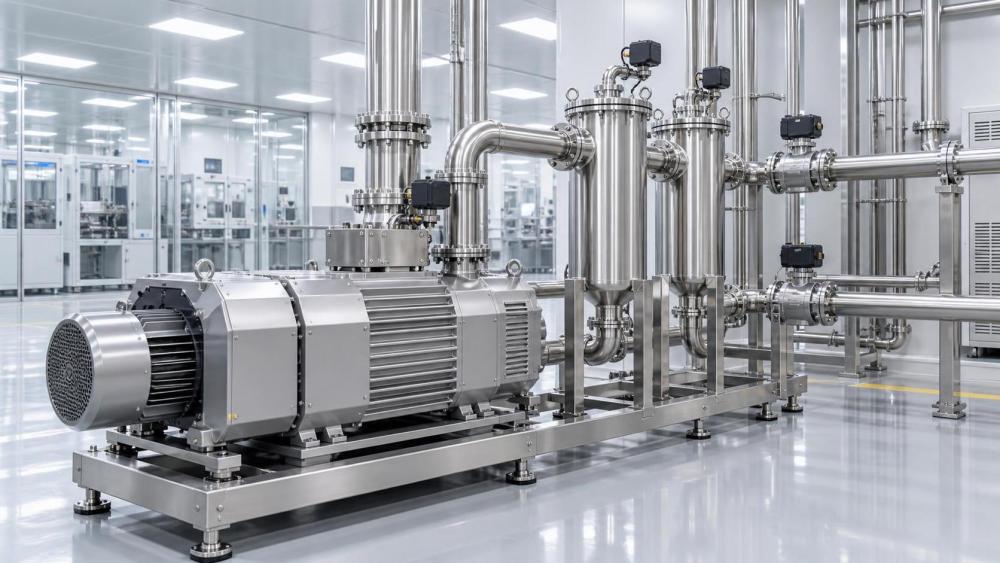
Oil-free pumps are often considered as local units beside the equipment they serve. That can work for compact instruments or isolated tools, but it places heat, sound, service work, and possible exhaust issues close to the controlled space. In larger projects, a central dry vacuum system outside the cleanroom may be more useful than simply replacing each local pump with an oil-free equivalent.
A central arrangement allows duty/standby design, staged control, remote monitoring, and maintenance without bringing service personnel into sensitive rooms. It can also reduce the number of individual exhaust points. The trade-off is a more demanding distribution design: pipe diameter, pressure drop, drainage, isolation valves, cleaning procedures, and future expansion all need attention.
Local pumps remain sensible where line length would undermine response time, where each process has incompatible exhausts, or where a shared network could create cross-contamination. The right layout is therefore driven by process separation and operating behaviour, not by a general preference for centralisation.
Do not hide a lubricated component elsewhere in the system
Some specifications call for an oil-free pump but overlook lubricated boosters, backing stages, compressors, or ancillary equipment. That may be acceptable if the process boundary and migration controls are clear, but the system should not be described as oil-free on the basis of one component alone.
The same discipline applies to vacuum gauges, flexible hoses, valve seals, and temporary connections. Cleanroom performance can be undermined by unsuitable elastomers, poorly cleaned pipe sections, or a maintenance procedure that opens a line without protecting it. For critical duties, define materials, cleaning expectations, leak testing, and recommissioning steps as part of the installation scope.
Build lifecycle cost from operating realities
Purchase price is an incomplete comparison. A lubricated pump has ongoing oil, filter, disposal, and oil-condition tasks. A dry pump may reduce those items, but it can have different service parts, require specialist maintenance, or be more sensitive to process upsets. Energy demand should be considered at the operating pressure and actual load profile, not as a single headline figure.
The commercial value of oil-free vacuum is usually strongest when it prevents a costly quality event, shortens controlled-area maintenance, reduces process cleaning burden, or makes a reliable central system possible. It is weaker where the vacuum duty is dirty, wet, poorly characterised, and far from sensitive processes. In that situation, investing in pre-treatment, separation, and robust process controls may matter more than selecting an oil-free pump.
A practical approval sequence for project teams
Before releasing a vacuum package, align process engineering, facilities, quality, EHS, and maintenance around a short set of decisions:
- Define the vacuum duty at normal, peak, start-up, shutdown, and fault conditions.
- Identify contamination routes from pump to process and from process to pump exhaust.
- Decide whether the cleanroom needs local vacuum, a remote central system, or separate networks for incompatible duties.
- Specify inlet protection, condensate handling, exhaust treatment, controls, monitoring, and isolation with the pump rather than as later accessories.
- Review maintenance access, replacement strategy, and what happens when one pump is unavailable.
- Confirm acceptance testing against the actual process requirement, including evacuation performance and stable operation under representative load.
Sources such as GTC-Matrix can support the earlier research stage by connecting dry-vacuum technology trends with broader questions around compressed air, thermal management, energy use, and clean manufacturing. For the project decision itself, the pump specification still needs to follow the actual gas load, contamination boundary, and facility operating model.
When a conventional lubricated pump may still be appropriate
Oil-free technology is not a universal upgrade. A properly selected lubricated pump may remain suitable for non-product-contact vacuum, rough industrial duties, or systems where the pump is remote, well maintained, and isolated from the cleanroom process. It can also be a practical choice where the gas stream is highly contaminated and the service strategy is designed around regular oil changes and filtration.
The mistake is not choosing a lubricated pump. The mistake is choosing it without addressing oil migration, exhaust management, maintenance discipline, and failure behaviour. Equally, selecting a dry pump without assessing vapour, powder, heat, and duty cycle can create a different set of avoidable failures.
For European cleanroom projects, oil-free vacuum is most defensible when it is treated as a system-level contamination and reliability decision. Specify it where it protects the process, simplifies controlled-area operation, and fits the gas load. Where those conditions do not apply, focus the budget on the controls that actually govern vacuum quality and uptime.
Related News
- When oil free vacuum pumps make sense for European cleanroom projectsAuthor :Pneumatic Power Engineer

- When do pure air compression systems need ISO 8573-1 Class 0?Author :Pneumatic Power Engineer

- How do compressed air systems for electronics prevent contamination?Author :Pneumatic Power Engineer

- When does an oil-free process vacuum pump justify its higher cost?Author :Pneumatic Power Engineer

- Does ISO 9001 certification apply to compressed air quality?Author :Pneumatic Power Engineer

- How to Specify Clean Compressed Air Systems in Southeast Asia for Food and Pharma PlantsAuthor :Pneumatic Power Engineer

- How to Compare Oil Free Vacuum Pumps for Clean Process RequirementsAuthor :Pneumatic Power Engineer

- How to Evaluate a Clean Compressed Air Systems Supplier for ISO 8573-1 ComplianceAuthor :Pneumatic Power Engineer

- How to Choose the Right Oil-Free Vacuum PumpAuthor :Pneumatic Power Engineer

- VDI 2083 Update Makes Class 0 Proof MandatoryAuthor :Pneumatic Power Engineer

- When to Use Oil Free Vacuum Pumps for High Purity LinesAuthor :Pneumatic Power Engineer

- Compressed Air Solutions: When Oil-Free Systems Lower Total Operating CostAuthor :Pneumatic Power Engineer

- ATMOsphere Europe 2026 Adds Oil-free Systems ZoneAuthor :Pneumatic Power Engineer

- Oil-Free Compressors: Key Selection Criteria for Clean Air SystemsAuthor :Pneumatic Power Engineer

- How to Compare Oil Free Centrifugal Compressors for Stable Plant Air SupplyAuthor :Pneumatic Power Engineer

- Compressed Air Class 0 vs Oil-Free: What Really MattersAuthor :Pneumatic Power Engineer

- Oil-Free Compression Class 0: What the Standard Really Means in ProductionAuthor :Pneumatic Power Engineer

- Air Compression Cost Comparison: Oil-Free vs Screw Systems in Daily OperationAuthor :Pneumatic Power Engineer

- Saudi SASO Tightens IEC 63349-2 for Oil-Free CompressorsAuthor :Pneumatic Power Engineer

- Saudi SASO Tightens Oil-Free Compressor Efficiency RulesAuthor :Pneumatic Power Engineer

- Pure Air Compression Systems for Clean Production LinesAuthor :Pneumatic Power Engineer

- IEC 63349-2:2026 makes energy certification mandatoryAuthor :Pneumatic Power Engineer

- IEC 63349-2:2026 Sets New Entry Rules for Oil-Free Screw CompressorsAuthor :Pneumatic Power Engineer

- IEC 63349-2:2026 Takes Effect for Oil-Free Screw CompressorsAuthor :Pneumatic Power Engineer

- IEC 63349-2:2026 Sets New Efficiency Gate for Oil-Free Screw CompressorsAuthor :Pneumatic Power Engineer

- IEC 63349-2:2026 Takes Effect for Oil-Free Screw CompressorsAuthor :Pneumatic Power Engineer

- SABIC Methanol Force Majeure Extended, Tightening R134a/R407C FeedstocksAuthor :Pneumatic Power Engineer

- How to Evaluate Pneumatic Power Systems for Stable OutputAuthor :Pneumatic Power Engineer

- Oil-Free Compression vs Lubricated Systems: Key Trade-OffsAuthor :Pneumatic Power Engineer
![]()
- Oil-Free Compression: 2026 Cost and Compliance Trade-OffsAuthor :Pneumatic Power Engineer

- Oil-Free Compression: Cost and Contamination RisksAuthor :Pneumatic Power Engineer
![]()
- Euro PMI Drop Delays Oil-Free Systems OrdersAuthor :Pneumatic Power Engineer

- Germany/France May PMI Decline; Oil-free Systems EU Projects DelayedAuthor :Pneumatic Power Engineer
![]()
- Compression Technology Options for Cleaner Oil-Free Air SupplyAuthor :Pneumatic Power Engineer

- TUV Rheinland Enforces Full-Chain Class 0 Certification for Oil-Free SystemsAuthor :Pneumatic Power Engineer

- Sustainable Manufacturing and Oil-Free Systems: Where Reliability Improves MostAuthor :Pneumatic Power Engineer