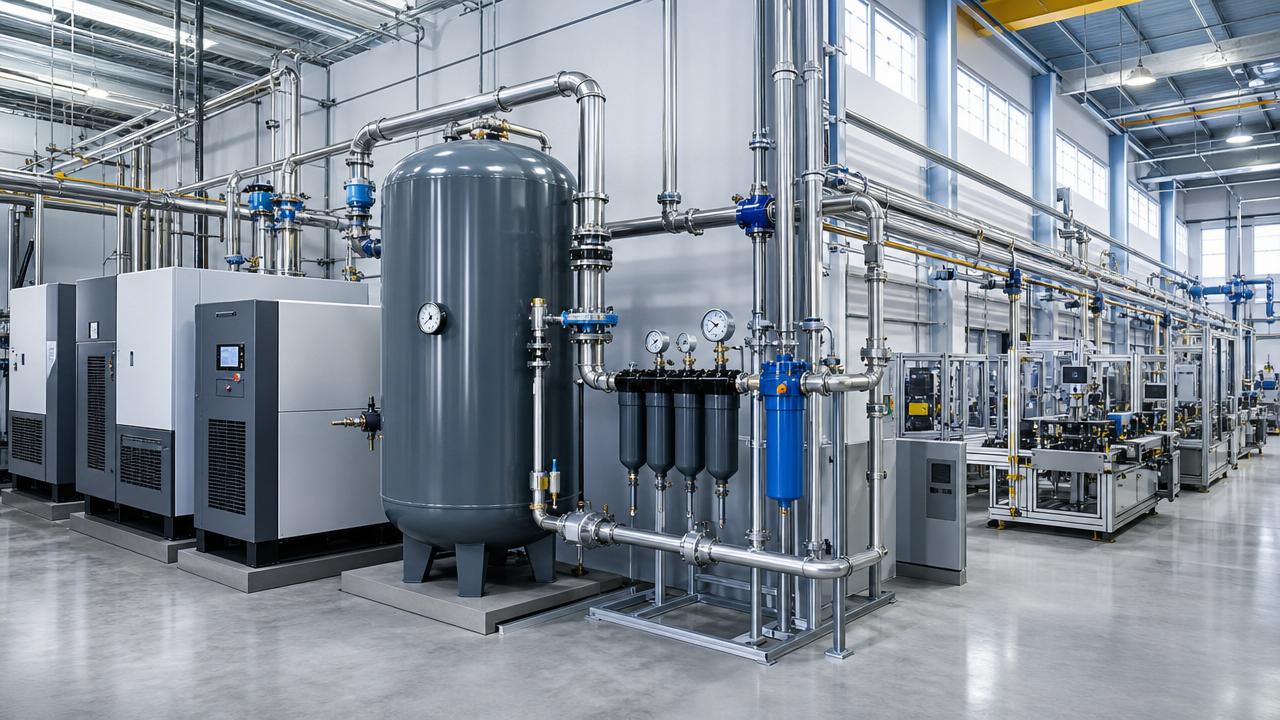
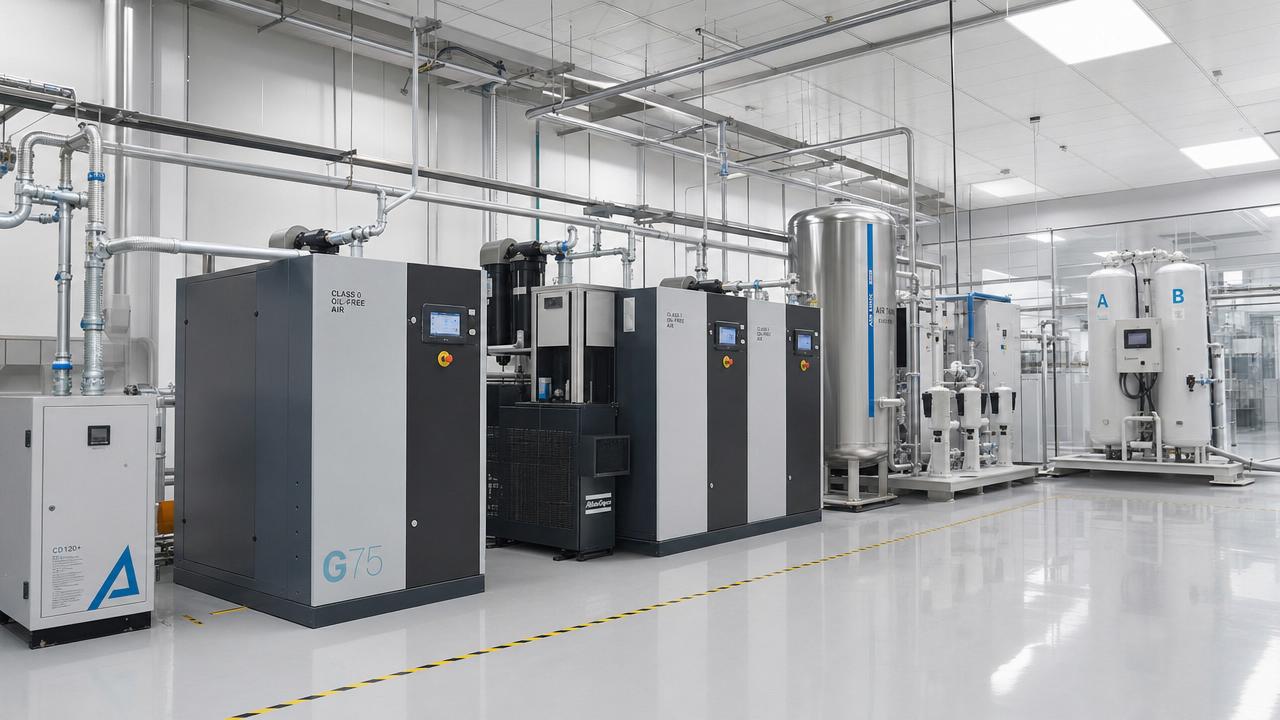
When do pure air compression systems need ISO 8573-1 Class 0?




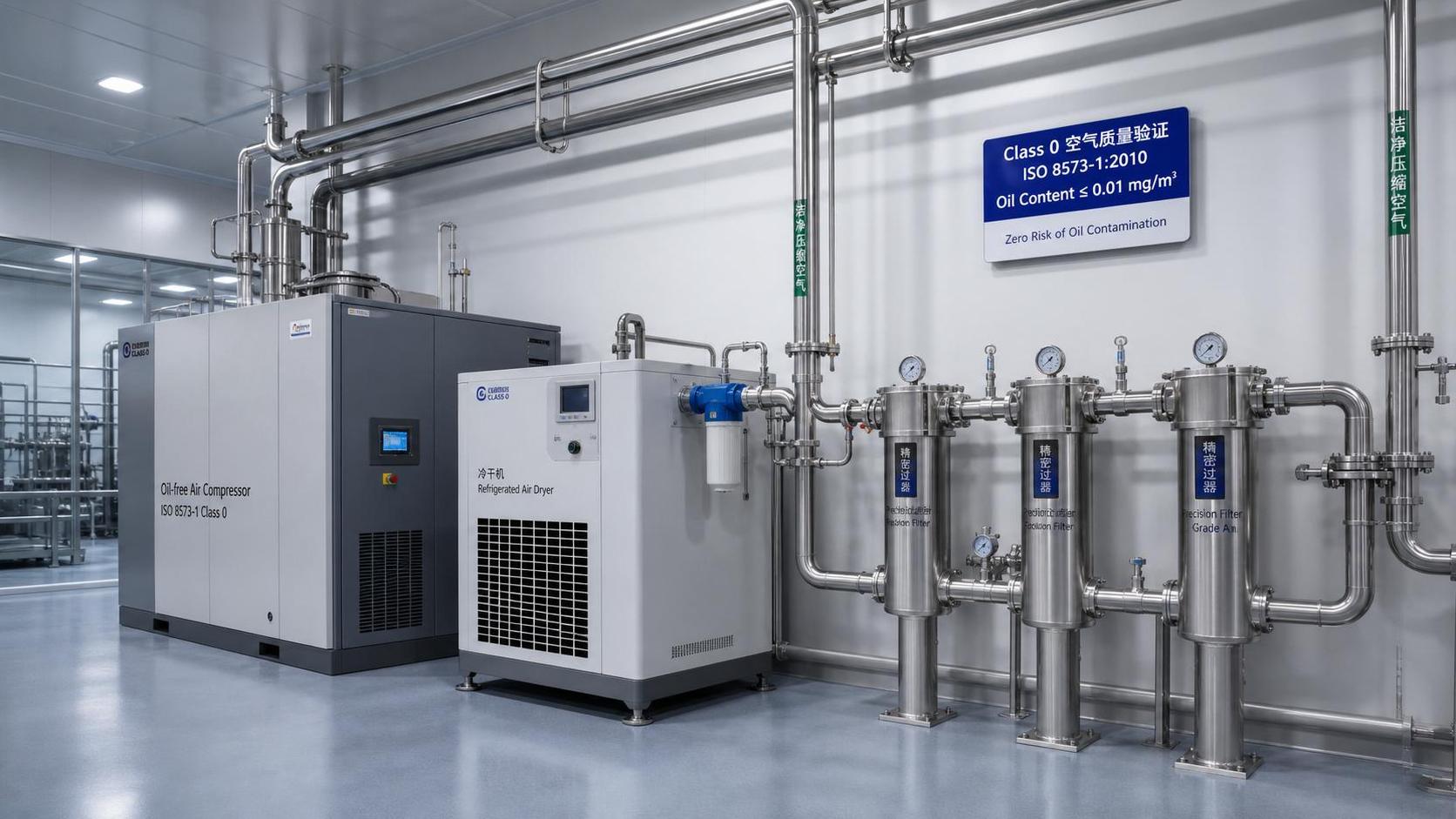
Pure air compression systems need ISO 8573-1 Class 0 when any credible amount of compressed-air contamination could enter a product, contact a critical surface, alter a sensitive process, or invalidate a release requirement. The trigger is not simply that an application is “clean.” It is the combination of exposure pathway, allowable contamination level, and the consequence of a failure.
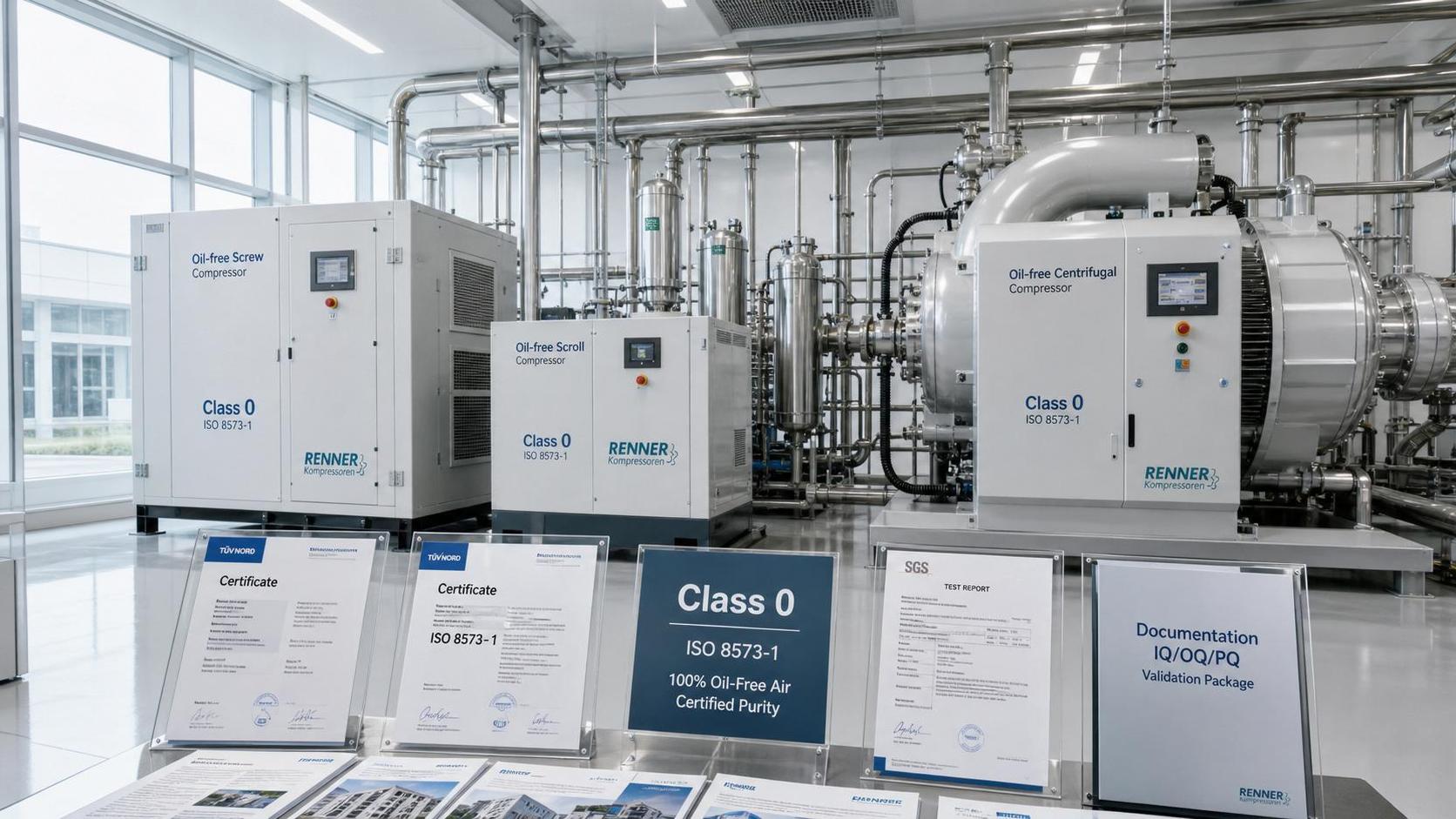
Class 0 is often described as the highest compressed-air purity class, but that shorthand needs care. Under ISO 8573-1, Class 0 does not represent one universal numerical limit that applies to every installation. It indicates a purity level specified by the equipment manufacturer or agreed for the application that is more stringent than Class 1 for the relevant contaminant category. The specification must therefore state the required particle, water, and oil limits clearly, together with the test method, sampling location, operating pressure, and duty condition.
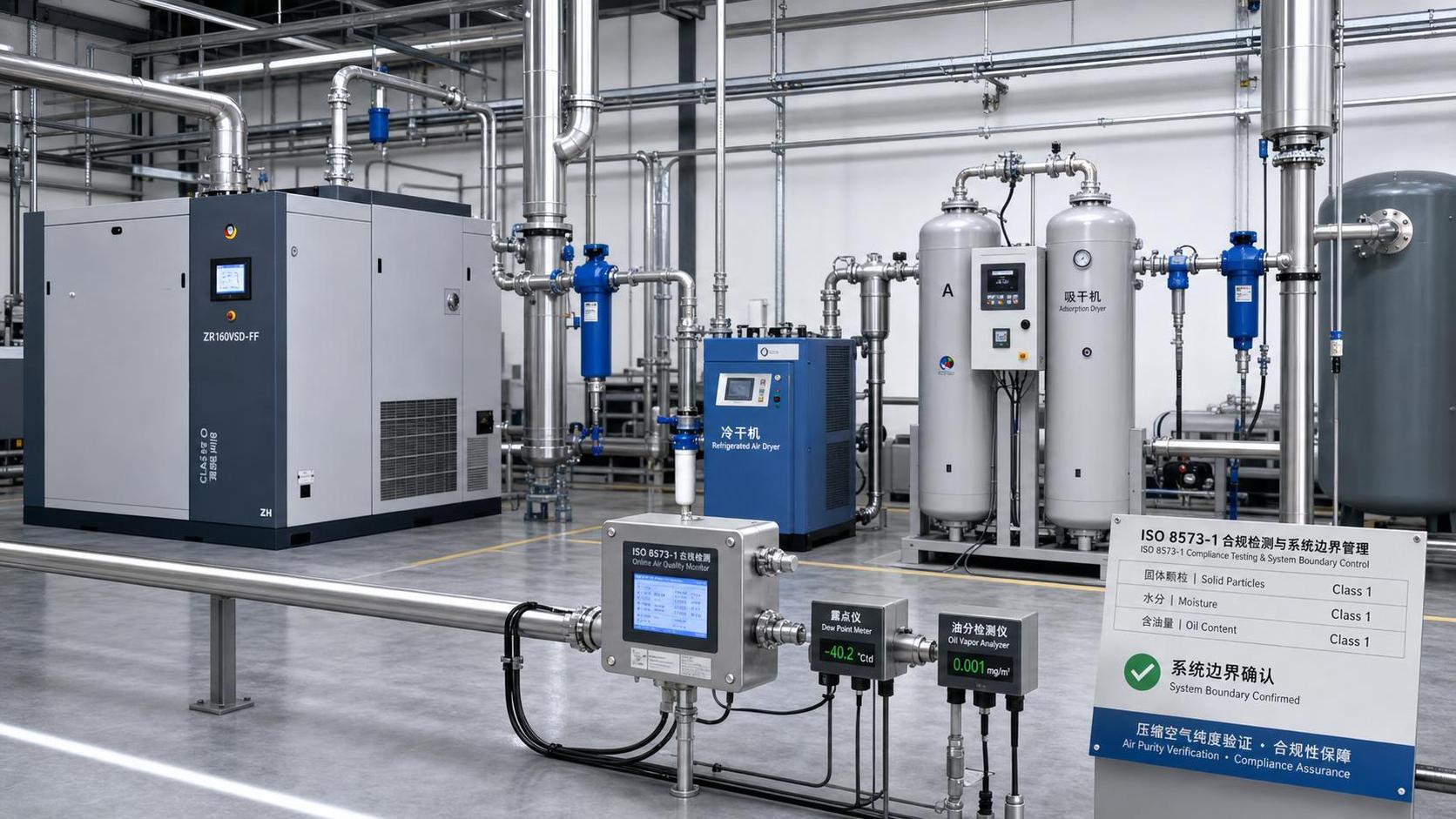
A compressor advertised as Class 0 is not, by itself, proof that air delivered at every point of use meets a Class 0 requirement. Intake conditions, pipework, dryers, filters, storage vessels, flexible hoses, drains, maintenance practices, and process connections can all change air quality after compression. The relevant question is always whether the air at the actual use point meets the documented purity requirement.
Where Class 0 becomes justified
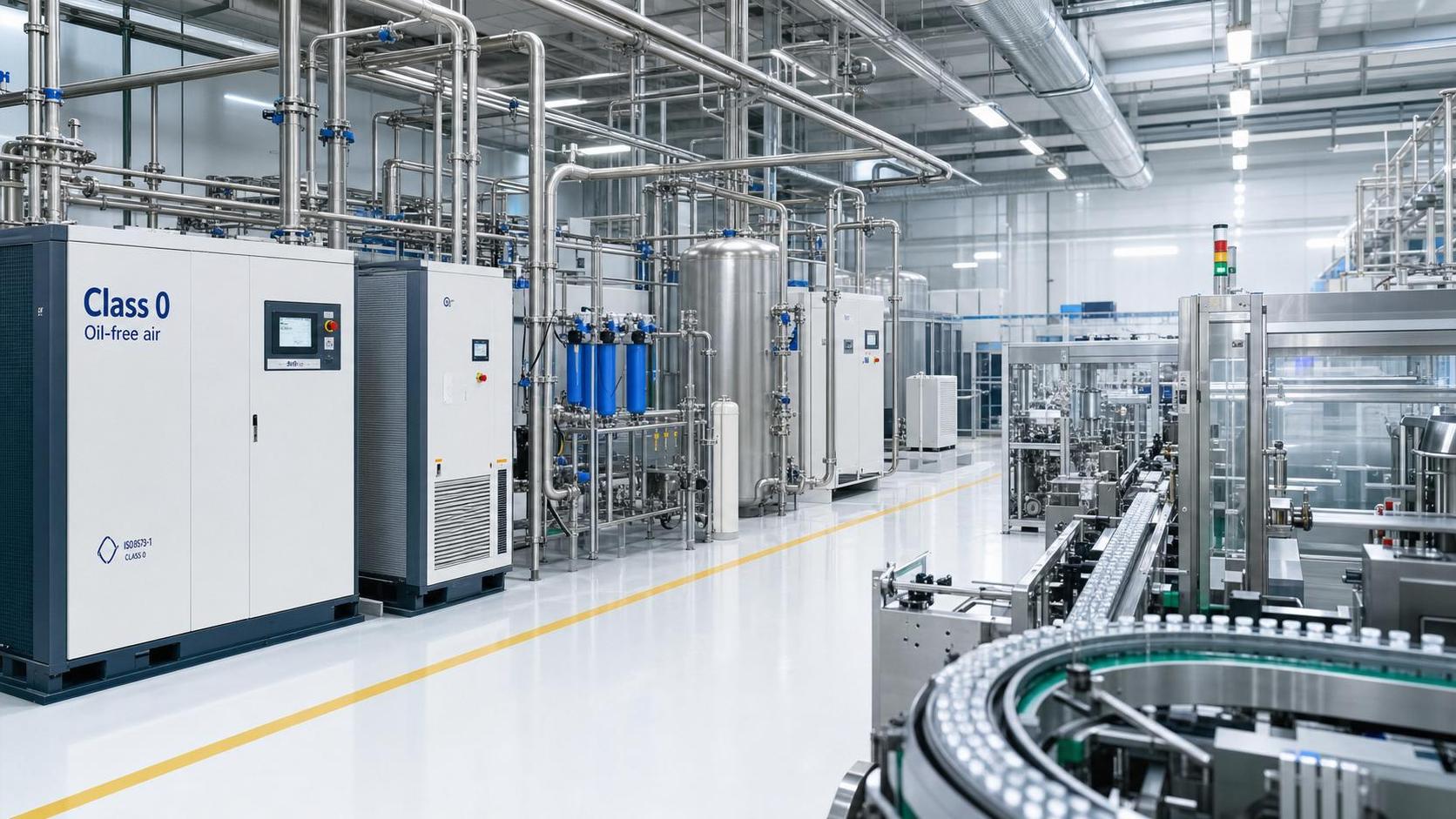
Class 0 is appropriate where oil aerosol, oil vapour, particles, or moisture could become part of a regulated, sterile, high-purity, or highly sensitive process. Direct contact creates the strongest case. If compressed air touches a product, an inner package, a medical component, a food-contact surface, or a process stream, contamination control cannot be treated as a general housekeeping matter.
Pharmaceutical and biotechnology production often require a tightly controlled compressed-air specification where air supports product transfer, vessel blanketing, fermentation, drying, packaging, or aseptic equipment. The applicable requirement may be established by a validated process rather than by the compressor selection alone. A low oil level is not sufficient if water supports microbial growth downstream, particles affect fill quality, or an unverified air path bypasses a final filter.
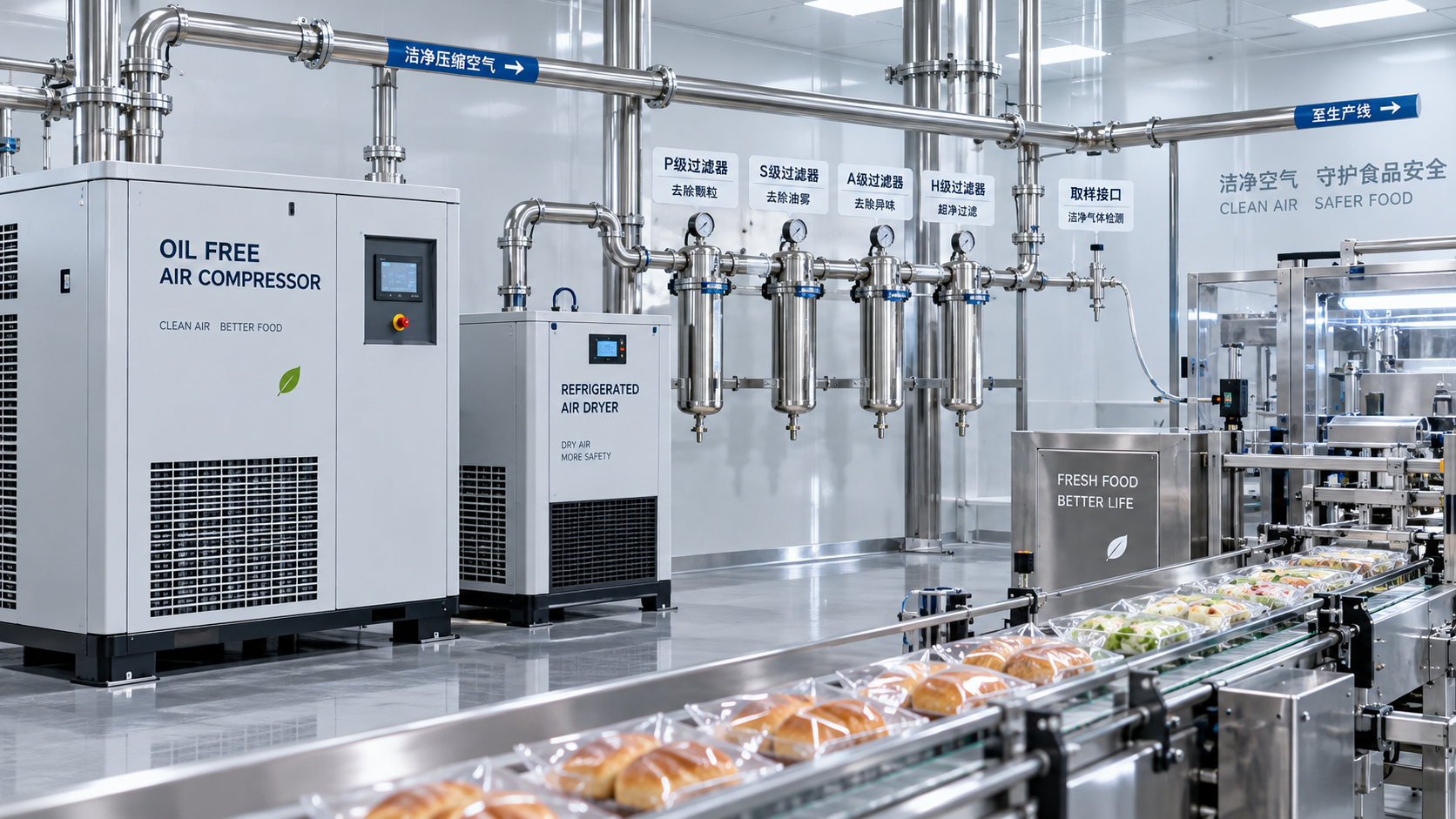
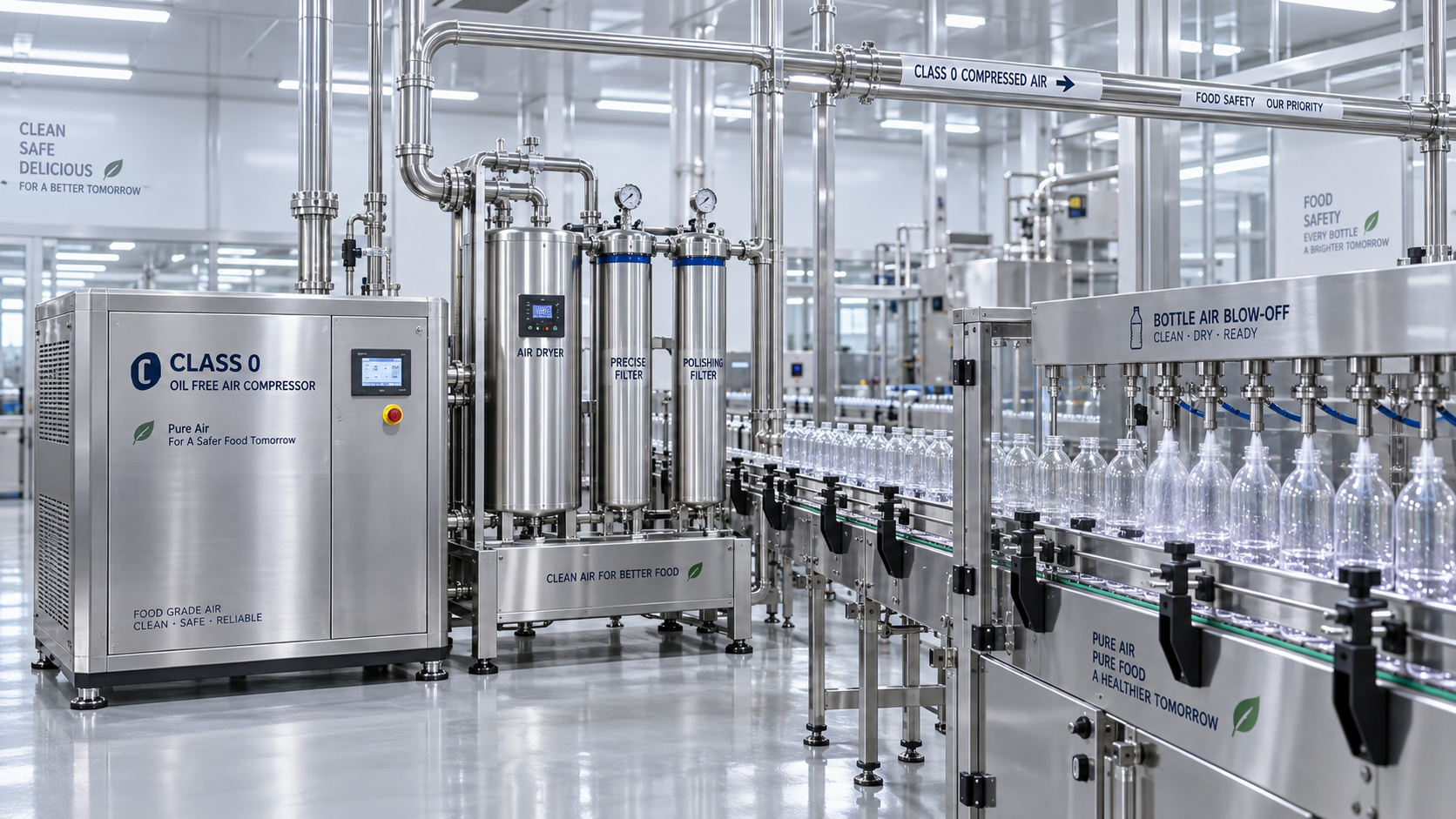
Food and beverage applications can also warrant Class 0 where air has direct contact with ingredients, containers, packaging interiors, or product-contact equipment. Pneumatic conveying of dry powders is a common example. Oil carryover may be difficult to detect in a bulk ingredient, and a short contamination event can affect a much larger batch once material has moved through a transfer line. Air used only to actuate a remote valve has a different exposure profile, provided leakage cannot reach the product zone.
Electronics, optical assembly, battery production, and precision coating processes may require Class 0 when contamination produces functional defects rather than obvious safety concerns. Oil vapour can condense on sensitive surfaces. Fine particles may affect bonding, coating adhesion, optical clarity, or cleanroom conditions. Moisture can cause corrosion, affect hygroscopic materials, or introduce variability into processes that depend on controlled humidity.
Class 0 is also defensible where compressed air serves instrument circuits or analytical equipment whose reliability depends on stable, contaminant-free gas. In these situations, a fault may appear as drifting readings, sticking pneumatic elements, erratic dispensing, or unexplained process variation rather than visible residue. The purity class should be linked to the equipment maker’s documented air-quality limits and to the consequences of an undetected deviation.
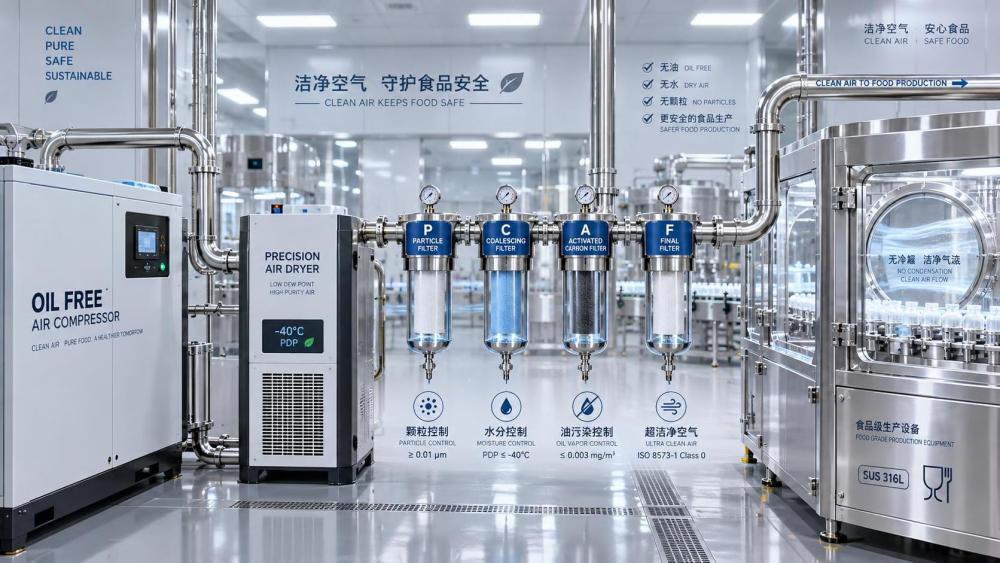
Class 0 is a system requirement, not a compressor label
Compressed air quality is commonly described across three contaminant families: solid particles, water, and total oil. These categories are separate. A system can have very low oil content yet fail its moisture target. It can have dry air but introduce corrosion particles from distribution piping. Calling the entire supply “oil-free” does not answer either issue.
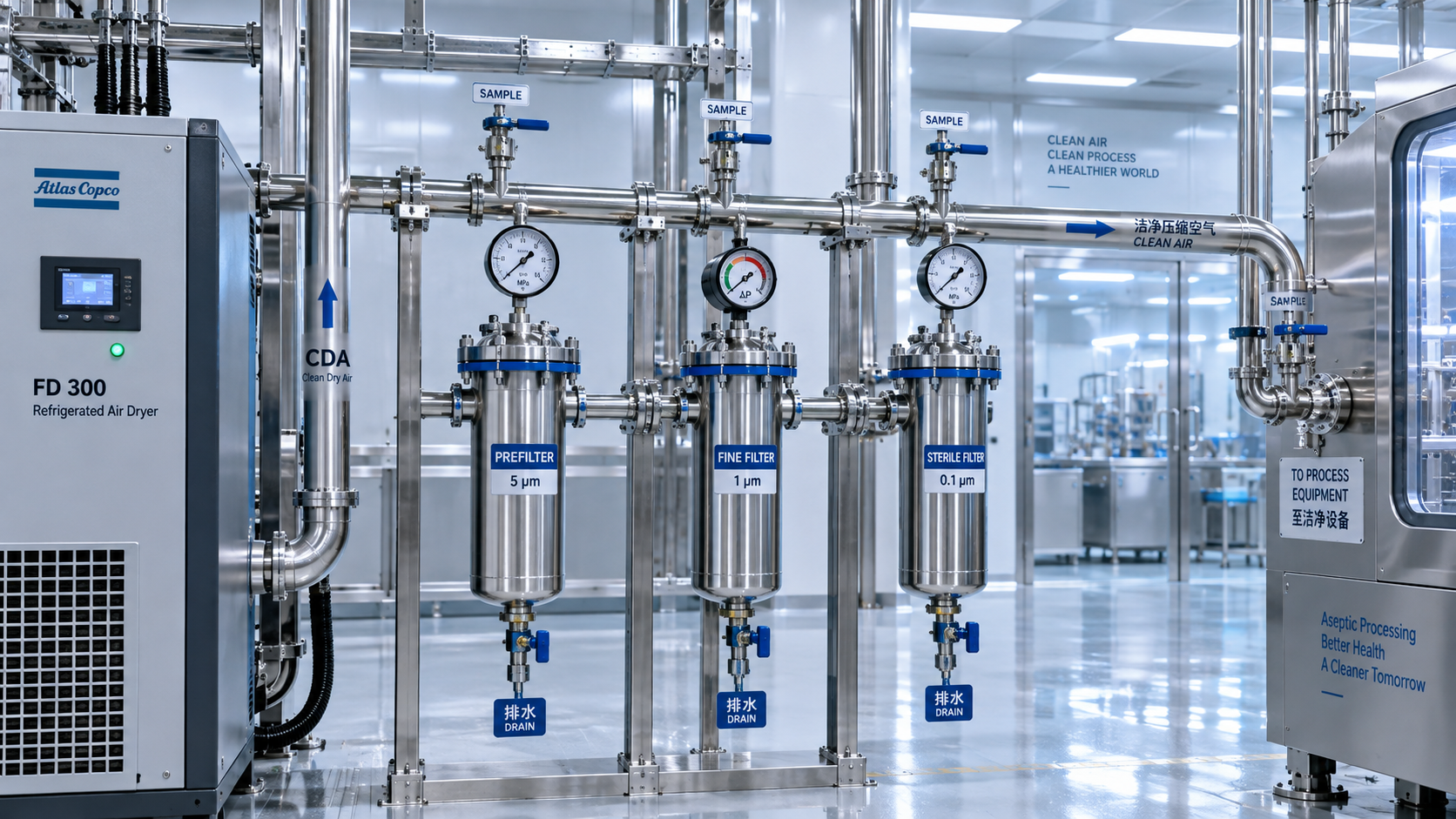
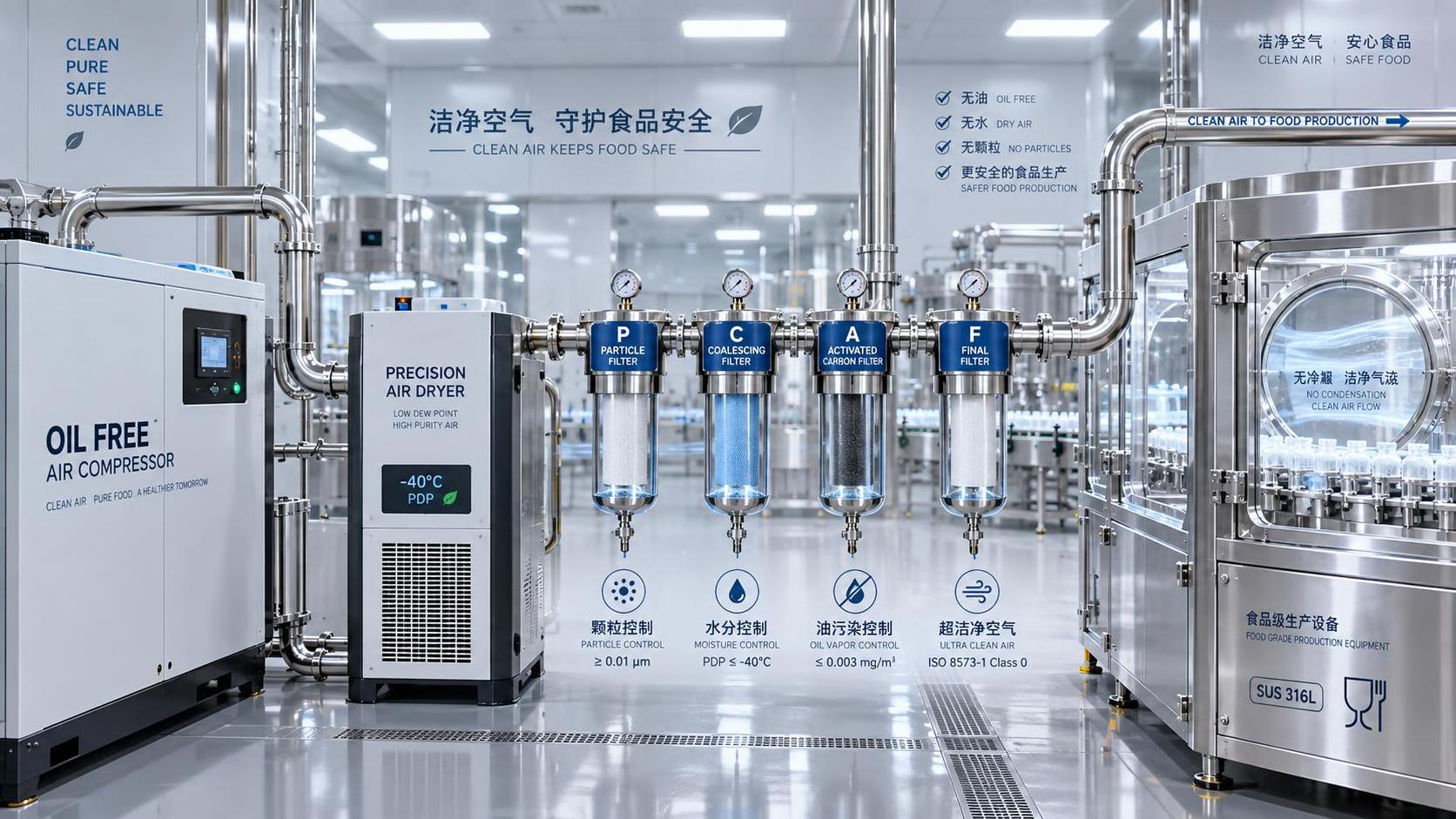
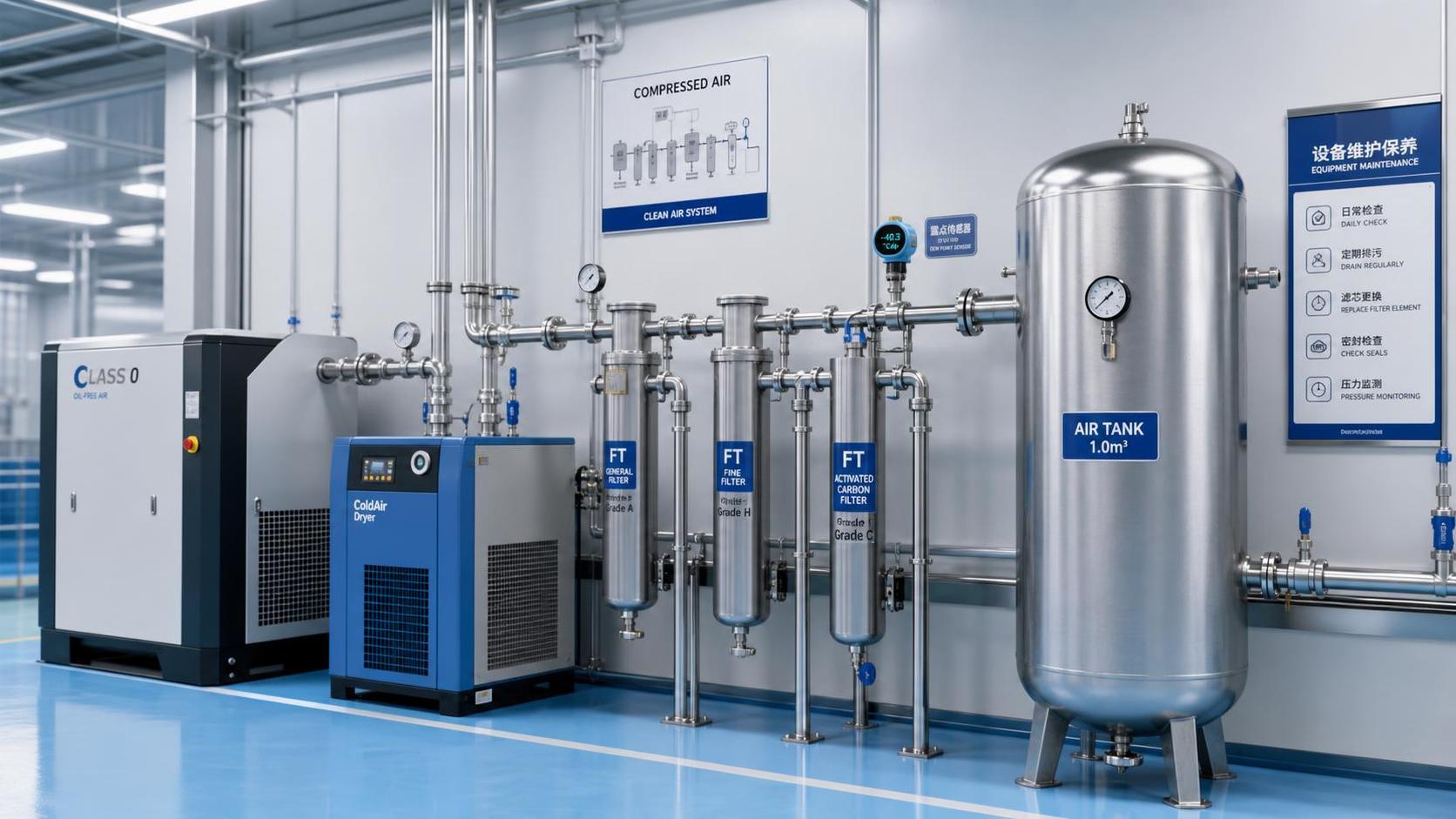
The word total oil is especially important. A coalescing filter is effective against liquid and aerosol droplets within its design range, but oil vapour behaves differently. Activated-carbon treatment may be needed where a vapour limit is specified. Carbon media also require protection from liquid water and excessive aerosol loading; otherwise capacity declines unpredictably. A filter train designed only around oil aerosol can create a false sense of compliance when vapour is the controlling contaminant.
Water requirements should be expressed in terms that match the service condition, commonly pressure dew point rather than a vague instruction such as “dry air.” A dryer that performs acceptably in a conditioned compressor room can be unsuitable when a cold distribution branch is exposed to lower ambient temperatures. Condensation forms when the local pipe-wall temperature falls below the pressure dew point. That water can then transport rust, support biological contamination, and overload downstream filters.
The decisions that separate a justified requirement from over-specification
Class 0 should be selected from a written risk assessment or process specification, not adopted solely because it appears to be the safest option. An unnecessarily strict requirement can add treatment stages, monitoring obligations, pressure loss, and maintenance burden without improving the actual control point. Conversely, an underspecified system can leave a critical process dependent on assumptions about air quality.
Start with the air-contact map. Trace the route from compressor intake to the point where air can reach the product, product-contact surface, controlled environment, or sensitive device. Include normal operation, start-up, depressurization, filter replacement, hose connection, maintenance bypasses, and fault states. The most consequential path is sometimes a temporary connection rather than the permanent header.
Then define what contamination is unacceptable and why. A product-contact application may need a limit tied to internal hygiene controls or a validated manufacturing process. A coating line may be governed by film defects. An instrument loop may be governed by repeatability and failure tolerance. These are different reasons for clean air, and they can require different limits for particles, water, and oil.
- Direct product exposure: Air used for blowing, drying, conveying, mixing, sparging, or packaging interiors has a direct contamination route. A stringent, documented purity class is commonly warranted.
- Indirect exposure with credible migration: Pneumatic equipment located close to an open product zone may still justify Class 0 when exhaust, leakage, or maintenance activity can introduce contamination.
- Isolated utility service: Air confined to a closed actuator circuit, with no product or critical-process path, may need a lower specified class. The conclusion changes if actuator exhaust enters a controlled enclosure.
- Intermittent critical use: A shared plant-air header can be unsuitable when one occasional task has a higher purity need. A dedicated treated branch or point-of-use treatment may provide clearer control than assigning the highest class to the entire plant.
Pressure and flow profile matter as much as average consumption. A filter sized for steady flow can lose separation performance or impose an excessive pressure drop during short, high-demand events. A regenerative dryer needs sufficient capacity under the highest expected moisture load, including seasonal intake humidity and compressor operating mode. Variable-speed compression, frequent unloading, and low-load operation can alter condensate patterns and dryer behavior.
Specification language that avoids ambiguity
A request for “ISO 8573-1 Class 0 air” is incomplete unless it identifies the contaminant categories and the point of measurement. A robust requirement distinguishes the desired air quality from the equipment design used to achieve it. Oil-free compression, for example, is an equipment characteristic; it does not establish downstream particle control, dew point, or ambient hydrocarbon exposure.
The specification should define the required quality at the point of use, or at a clearly identified boundary where downstream controls are assigned. It should state whether the requirement covers particles, water, total oil, or all three. Where Class 0 is used, the agreed limit below Class 1 must be written explicitly. Leaving that definition solely to a marketing description makes acceptance testing difficult.
Sampling conditions deserve the same attention. Test results depend on where the sample is taken, whether the line is flowing, the sampling duration, operating pressure, system temperature, and the condition of filters and dryers. A clean result upstream of a distribution network cannot demonstrate clean air at a remote machine. Likewise, a sample taken immediately after a newly changed filter may not represent performance near the end of its service interval.
Sampling hardware must not become a contamination source. Tubing materials, connectors, regulators, sample valves, and collection methods need to suit the analyte being measured. For oil-vapour work, inappropriate tubing or a contaminated sample assembly can distort results. For particle measurements, poorly flushed sample lines and uncontrolled ambient exposure can create misleading counts. The test plan should define stabilization, purge, handling, and chain-of-custody practices before a dispute arises.
Design choices that preserve purity after installation
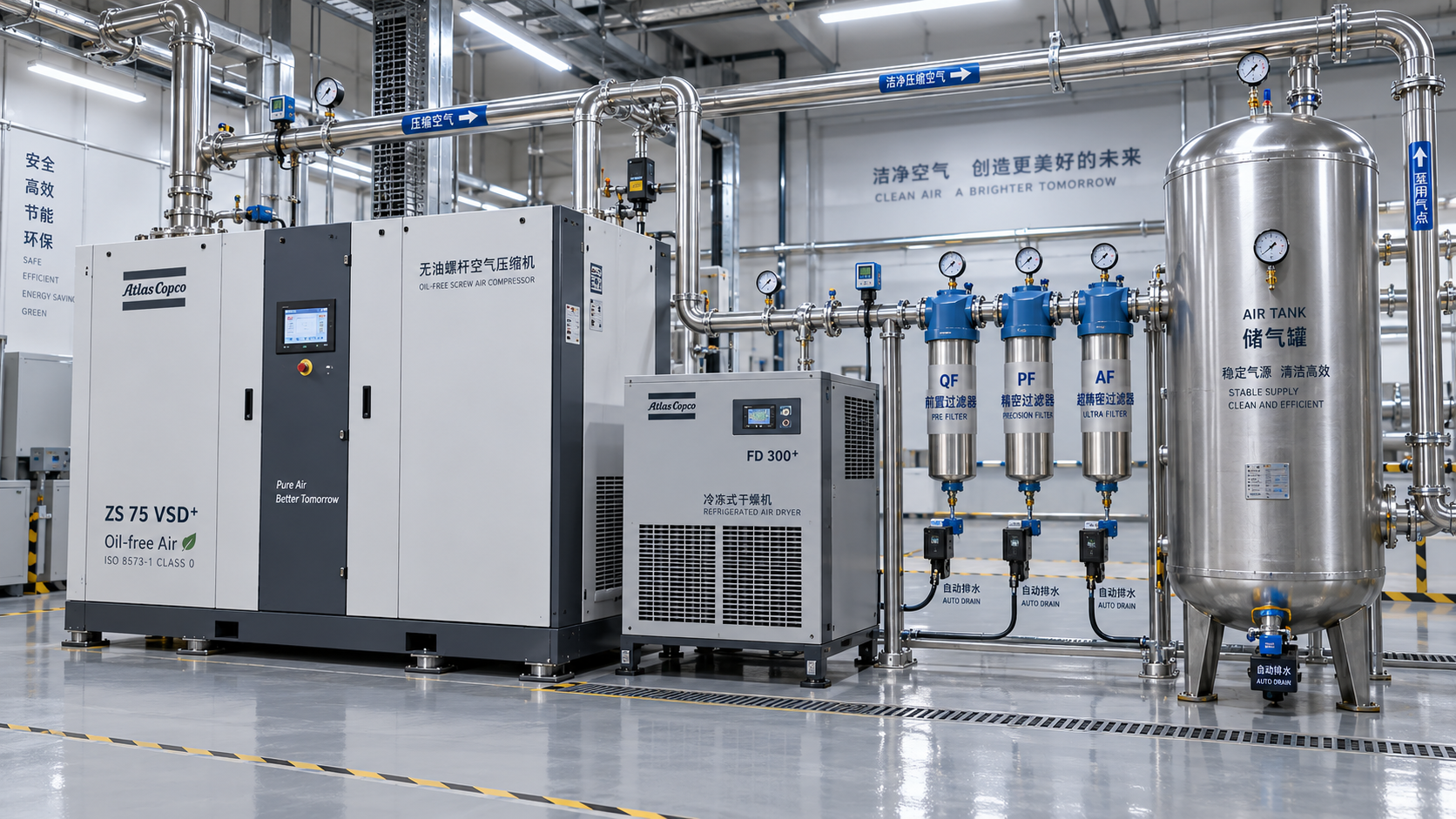
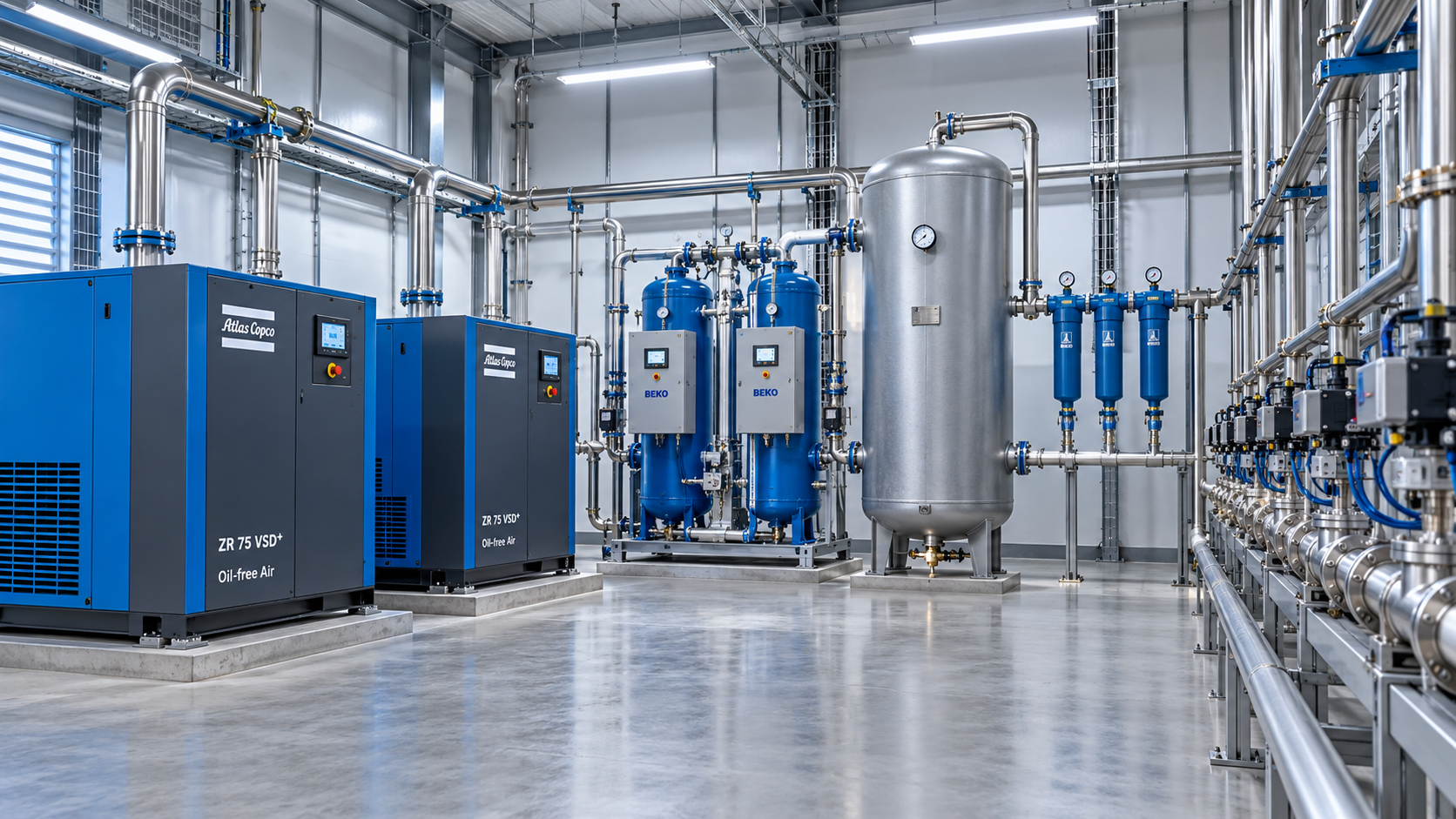
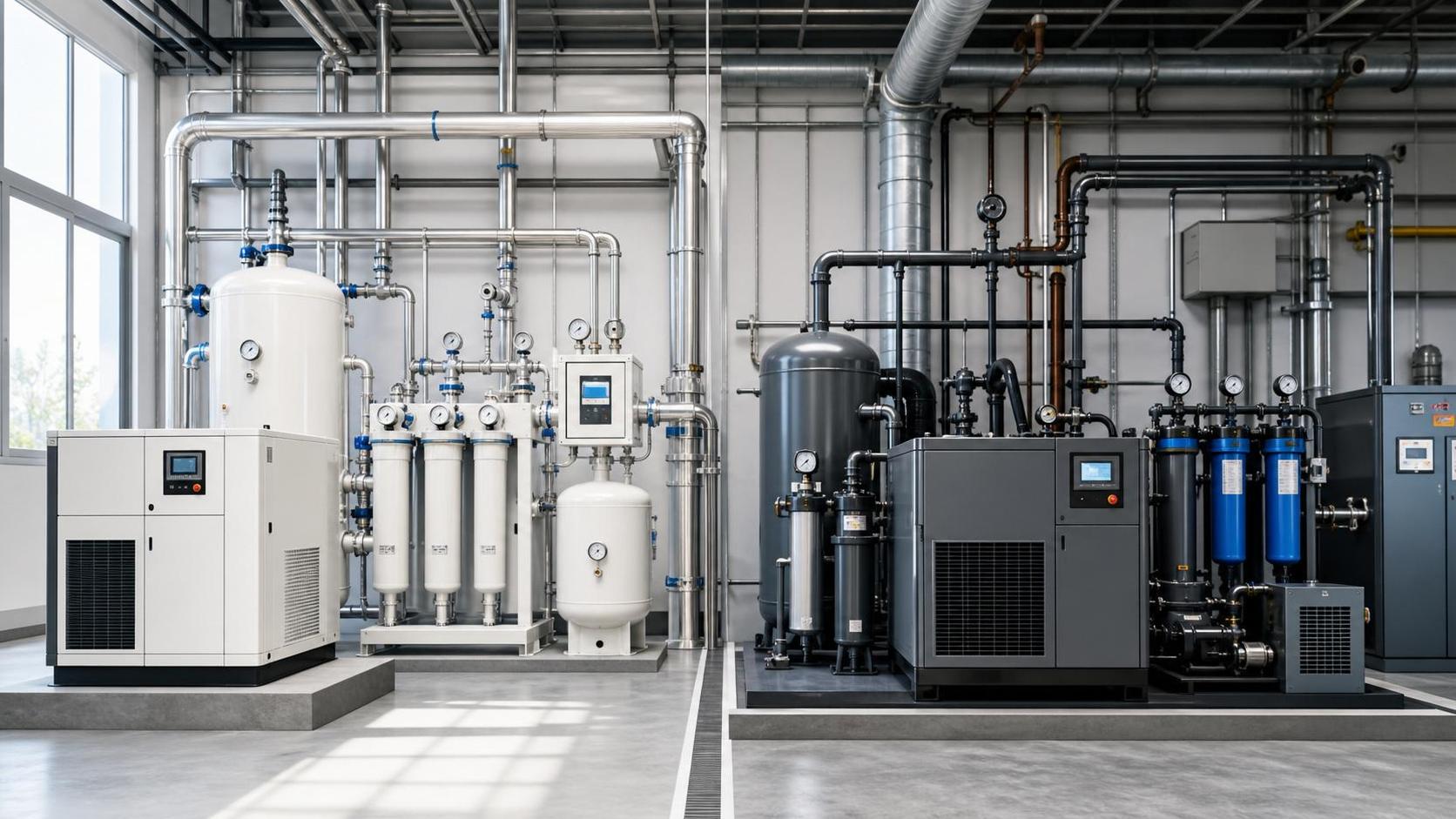
An oil-free compressor can form part of a Class 0 solution, but air treatment remains necessary. Intake air may contain dust, water vapour, hydrocarbons, or process emissions. Compression concentrates the consequences of poor intake conditions. The intake should be located away from vehicle exhaust, cooling-tower drift, solvent vents, boiler flues, loading areas, and other sources that can introduce contaminants beyond the treatment system’s intended load.
Distribution materials should be selected for cleanliness, corrosion resistance, pressure rating, and the process environment. New pipework can release installation debris, cutting residues, thread sealant fragments, and moisture unless it is cleaned, flushed, and inspected before connection to critical equipment. Dead legs and low points retain condensate. Poorly sloped lines, neglected drains, and unprotected hose ends can compromise an otherwise well-designed treatment package.
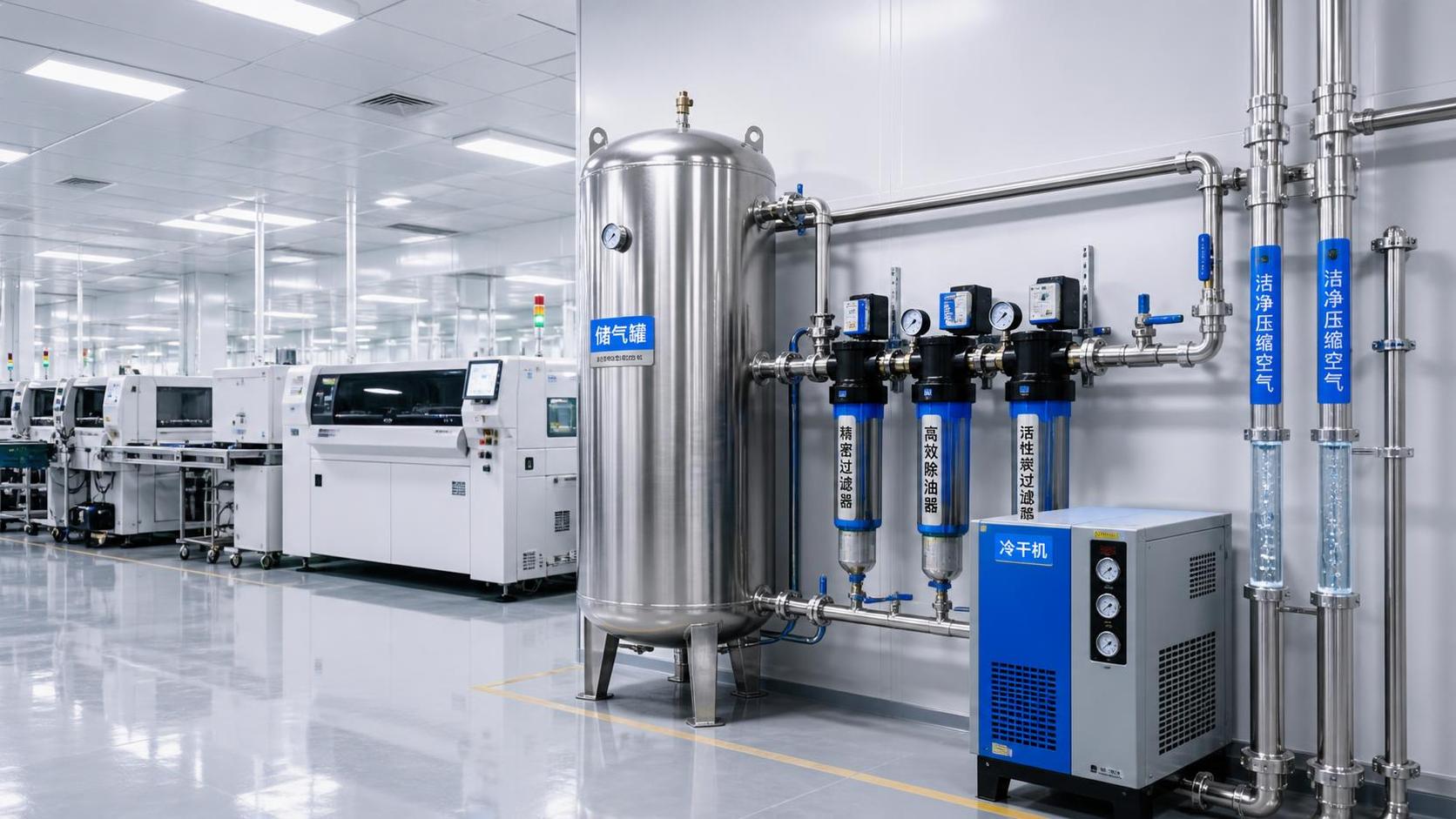
Point-of-use filtration is often needed when the last section of piping, machine internals, or the production environment presents a recontamination risk. However, adding filters indiscriminately creates maintenance-sensitive restrictions. Each filter should have a defined purpose, differential-pressure monitoring where appropriate, a replacement basis, and a documented installation orientation. A bypass left accessible around a final filter can defeat the entire control strategy.
Filter change-outs require controlled handling. An opened housing, dirty gasket seat, incorrect element grade, incompatible lubricant, or improperly seated seal can introduce contamination immediately after maintenance. The maintenance record should identify the installed element, date, pressure-drop condition, and any integrity or post-maintenance verification required by the process. Generic calendar replacement alone may miss unusual contamination loads or premature element failure.
Common misreadings of Class 0 claims
The first misreading is assuming that Class 0 means “zero contamination.” No compressed-air system should be described that way. Every system has a defined measurement limit, a test method, and conditions under which it is evaluated. The practical objective is controlled purity below an agreed threshold, maintained at the relevant use point.
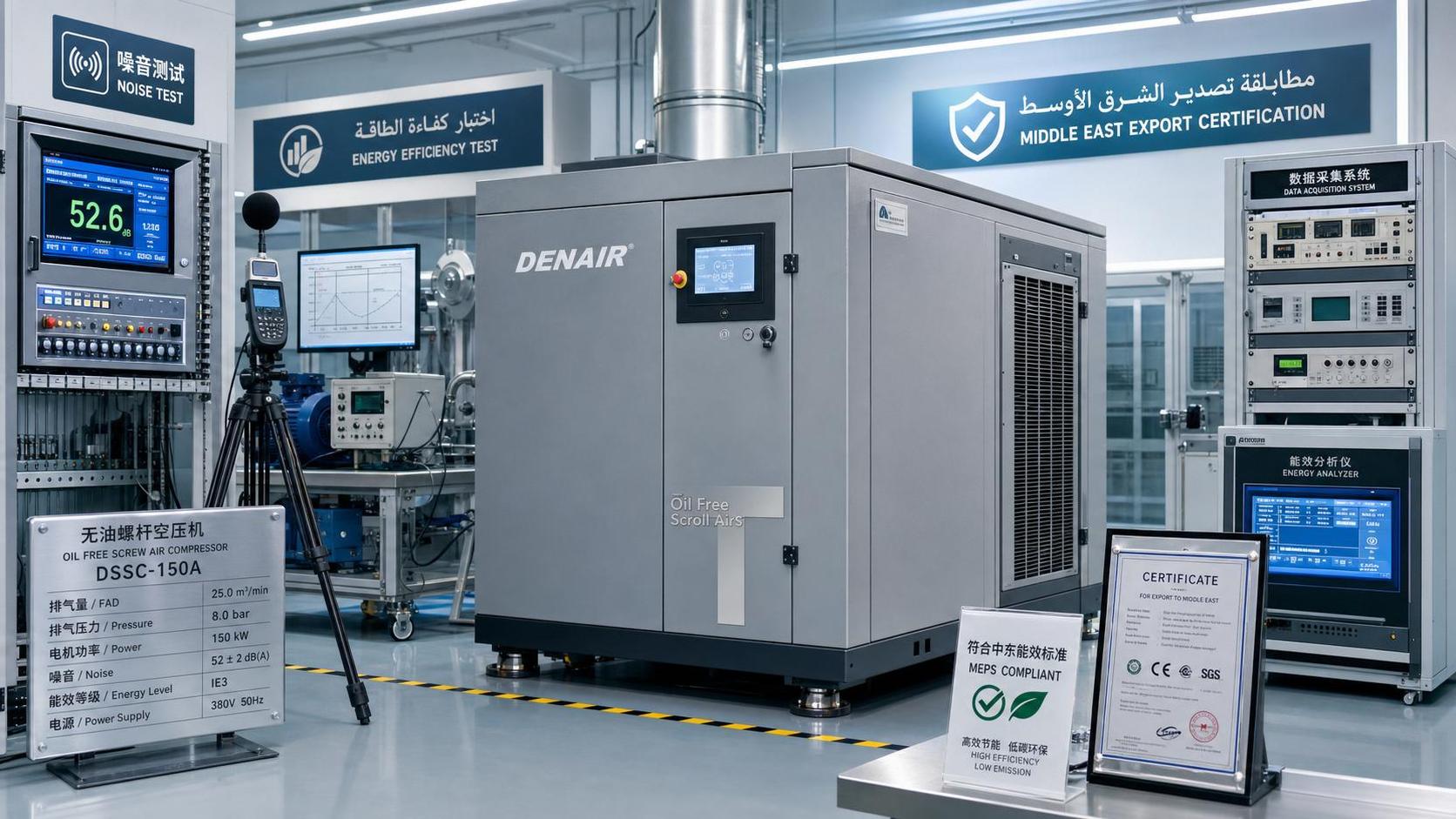
The second is treating a compressor certificate as a certificate for the complete installation. Test evidence may apply to a particular compressor configuration and specified conditions. It does not automatically include a plant’s intake location, aging dryer, distribution header, receiver, local filters, or final connection. System acceptance must account for the installed configuration.
The third is focusing only on oil because the compressor is oil-free. In direct-contact food, pharmaceutical, or sensitive manufacturing processes, water and particles can be equally consequential. A low-oil design paired with wet or corroding pipework does not satisfy a full clean-air requirement.
The fourth is installing a high-purity system but verifying it only during commissioning. Purity changes with ambient conditions, filter loading, drain performance, dryer regeneration, equipment alterations, and maintenance. The verification interval should reflect the criticality of the application and the likelihood that a change would remain hidden until it affected product or process output.
Maintaining the Class 0 basis over time
Class 0 remains meaningful only while the assumptions behind the specification remain true. Changes to intake location, compressor type, lubricant use in adjacent equipment, production layout, line extensions, process flow, or cleaning chemicals can change the contamination risk. A new branch serving a noncritical utility can also affect pressure stability and treatment loading for an existing critical branch.
Records should connect the air-quality requirement to the installed treatment train, maintenance history, test results, and response to deviations. When a result exceeds the agreed limit, the investigation needs to distinguish between a genuine air-quality failure and a sampling problem. Both require correction, but the root causes differ. A failed drain, saturated carbon bed, corroded pipe section, damaged filter element, contaminated sample train, or changed operating condition should not be treated as interchangeable explanations.
Pure air compression systems need ISO 8573-1 Class 0 when the application requires a documented purity level stricter than Class 1 and contamination at the use point carries an unacceptable consequence. The defensible route is to define the contaminant limits, map the exposure path, design the full air system around those limits, and verify performance where the air actually performs its function.
Ready when you are. Send us a message to get started.
Related News
- How to verify food-grade purity in compressed air systemsAuthor :Pneumatic Power Engineer

- What determines the price of pure air compression systems?Author :Pneumatic Power Engineer

- How to size oil-free compressors for instrumentation air demandAuthor :Pneumatic Power Engineer

- How Class 0 oil-free compressors protect product quality in food productionAuthor :Pneumatic Power Engineer

- How to verify compressed air cleanroom standards before installationAuthor :Pneumatic Power Engineer

- When oil free vacuum pumps make sense for European cleanroom projectsAuthor :Pneumatic Power Engineer

- When do pure air compression systems need ISO 8573-1 Class 0?Author :Pneumatic Power Engineer

- How do compressed air systems for electronics prevent contamination?Author :Pneumatic Power Engineer

- When does an oil-free process vacuum pump justify its higher cost?Author :Pneumatic Power Engineer

- Does ISO 9001 certification apply to compressed air quality?Author :Pneumatic Power Engineer

- How to Specify Clean Compressed Air Systems in Southeast Asia for Food and Pharma PlantsAuthor :Pneumatic Power Engineer

- How to Compare Oil Free Vacuum Pumps for Clean Process RequirementsAuthor :Pneumatic Power Engineer

- How to Evaluate a Clean Compressed Air Systems Supplier for ISO 8573-1 ComplianceAuthor :Pneumatic Power Engineer

- How to Choose the Right Oil-Free Vacuum PumpAuthor :Pneumatic Power Engineer

- VDI 2083 Update Makes Class 0 Proof MandatoryAuthor :Pneumatic Power Engineer

- When to Use Oil Free Vacuum Pumps for High Purity LinesAuthor :Pneumatic Power Engineer

- Compressed Air Solutions: When Oil-Free Systems Lower Total Operating CostAuthor :Pneumatic Power Engineer

- ATMOsphere Europe 2026 Adds Oil-free Systems ZoneAuthor :Pneumatic Power Engineer

- Oil-Free Compressors: Key Selection Criteria for Clean Air SystemsAuthor :Pneumatic Power Engineer

- How to Compare Oil Free Centrifugal Compressors for Stable Plant Air SupplyAuthor :Pneumatic Power Engineer

- Compressed Air Class 0 vs Oil-Free: What Really MattersAuthor :Pneumatic Power Engineer

- Oil-Free Compression Class 0: What the Standard Really Means in ProductionAuthor :Pneumatic Power Engineer

- Air Compression Cost Comparison: Oil-Free vs Screw Systems in Daily OperationAuthor :Pneumatic Power Engineer

- Saudi SASO Tightens IEC 63349-2 for Oil-Free CompressorsAuthor :Pneumatic Power Engineer

- Saudi SASO Tightens Oil-Free Compressor Efficiency RulesAuthor :Pneumatic Power Engineer

- Pure Air Compression Systems for Clean Production LinesAuthor :Pneumatic Power Engineer

- IEC 63349-2:2026 makes energy certification mandatoryAuthor :Pneumatic Power Engineer

- IEC 63349-2:2026 Sets New Entry Rules for Oil-Free Screw CompressorsAuthor :Pneumatic Power Engineer

- IEC 63349-2:2026 Takes Effect for Oil-Free Screw CompressorsAuthor :Pneumatic Power Engineer

- IEC 63349-2:2026 Sets New Efficiency Gate for Oil-Free Screw CompressorsAuthor :Pneumatic Power Engineer

- IEC 63349-2:2026 Takes Effect for Oil-Free Screw CompressorsAuthor :Pneumatic Power Engineer

- SABIC Methanol Force Majeure Extended, Tightening R134a/R407C FeedstocksAuthor :Pneumatic Power Engineer

- How to Evaluate Pneumatic Power Systems for Stable OutputAuthor :Pneumatic Power Engineer

- Oil-Free Compression vs Lubricated Systems: Key Trade-OffsAuthor :Pneumatic Power Engineer
![]()
- Oil-Free Compression: 2026 Cost and Compliance Trade-OffsAuthor :Pneumatic Power Engineer

- Oil-Free Compression: Cost and Contamination RisksAuthor :Pneumatic Power Engineer
![]()