When does an oil-free vacuum pump system make sense?




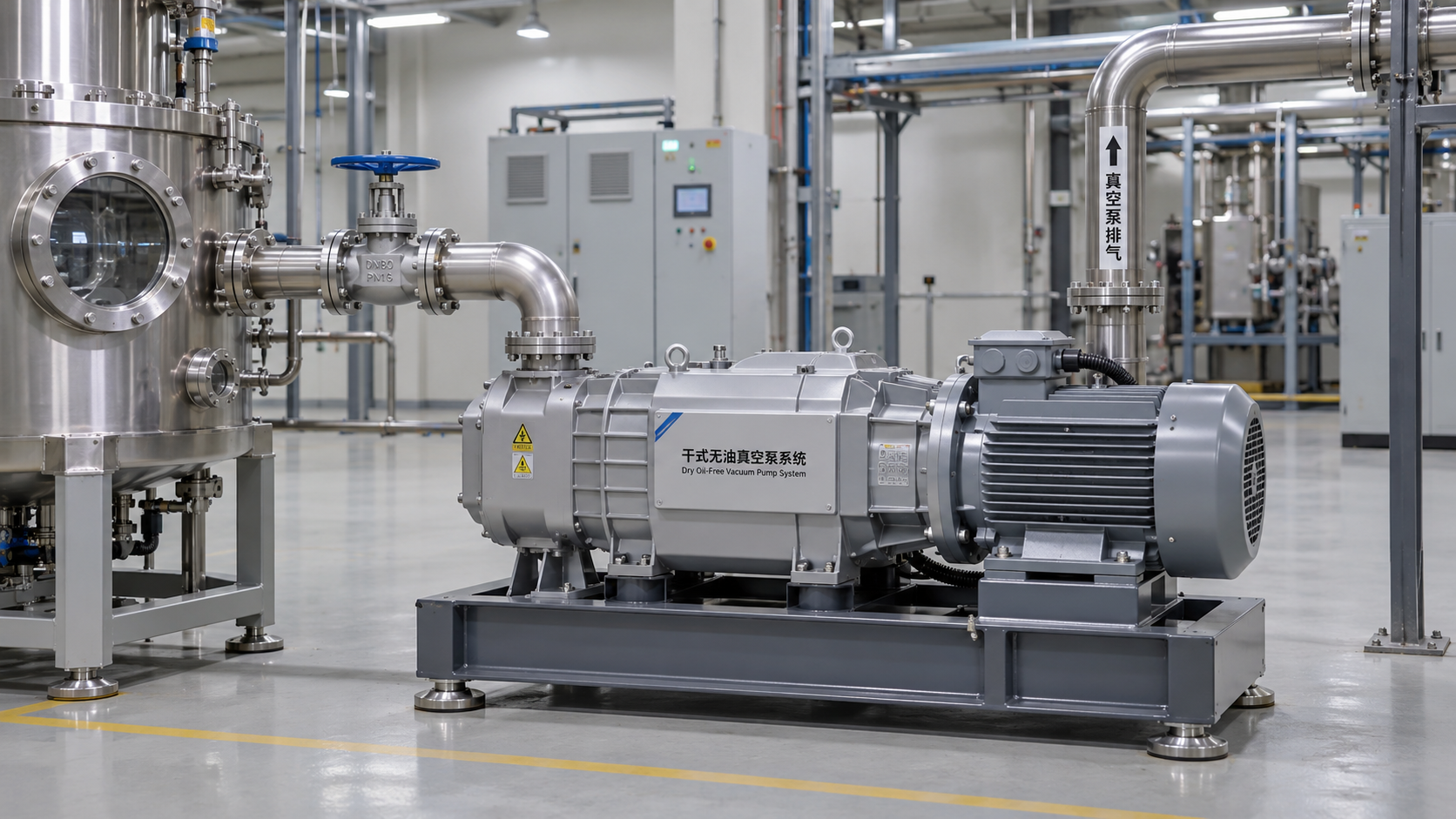
An oil-free vacuum pump system makes sense when oil contamination could compromise the process, when oil disposal and servicing create significant operating burdens, or when a dry pumping technology matches the required pressure and gas load better than an oil-sealed alternative. The decision is strongest when those benefits remain valuable after accounting for purchase cost, power demand, cooling, and maintenance.
Start with the gas path and the operating point. A pump described as oil-free keeps lubricating oil out of its compression chamber, but bearings or gearboxes may still contain lubricant. Seals, exhaust arrangements, inlet filters, and the condition of the process itself all affect the cleanliness achieved at the point of use.
Where oil-free operation changes the outcome
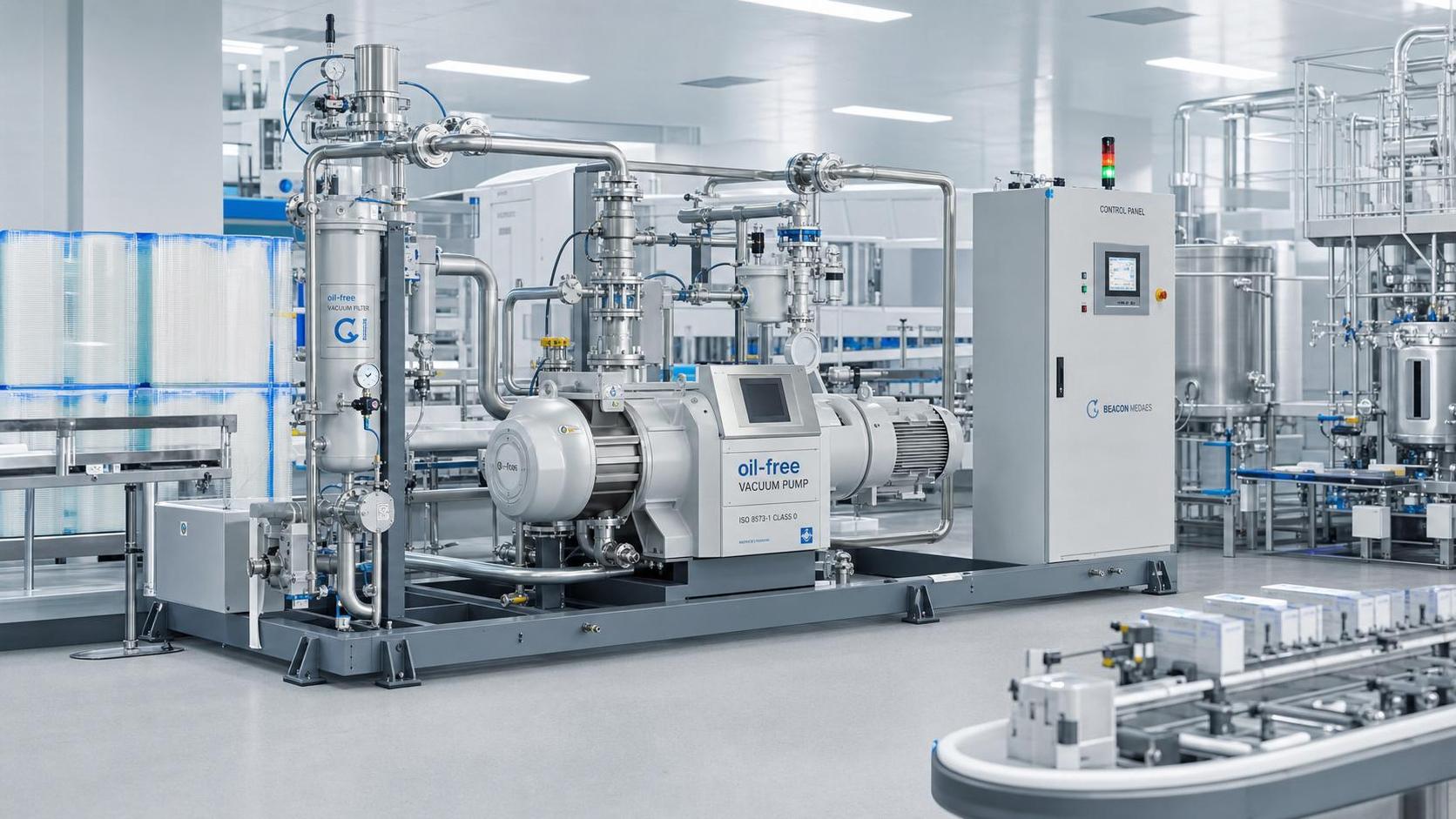
Oil-free pumping has a clear advantage when backstreaming or oil vapor could contaminate a product, chamber, or downstream measurement. Semiconductor processing, some pharmaceutical operations, and sensitive analytical applications can have such requirements. In food processing, the case is strongest where contamination of exposed product or packaging surfaces is a concern. The acceptable contamination level must be established for the specific process; an oil-free label alone does not establish product suitability.
The direction and timing of contamination matter. Backstreaming is particularly relevant when flow is low, during shutdown, or after a loss of power. An isolation valve and a suitable shutdown sequence can reduce exposure, but their selection depends on the pump and process. Oil-sealed systems can also use traps and filtration; their effectiveness, maintenance, and failure modes belong in the comparison.
Oil-free systems are also attractive when frequent oil changes, oil mist control, or disposal interrupt production. The gain is smaller when an existing oil-sealed pump already runs reliably, contamination is controlled, and servicing fits planned downtime. Replacing it solely because the alternative is oil-free may not recover the additional investment.
Oil-free does not guarantee a clean exhaust or a clean chamber. Process vapors, particles, reaction products, and material shed from seals can travel through the system. For a contamination-sensitive application, define which substances are unacceptable, where they must be controlled, and how cleanliness will be verified.
Compare technologies at the required operating pressure
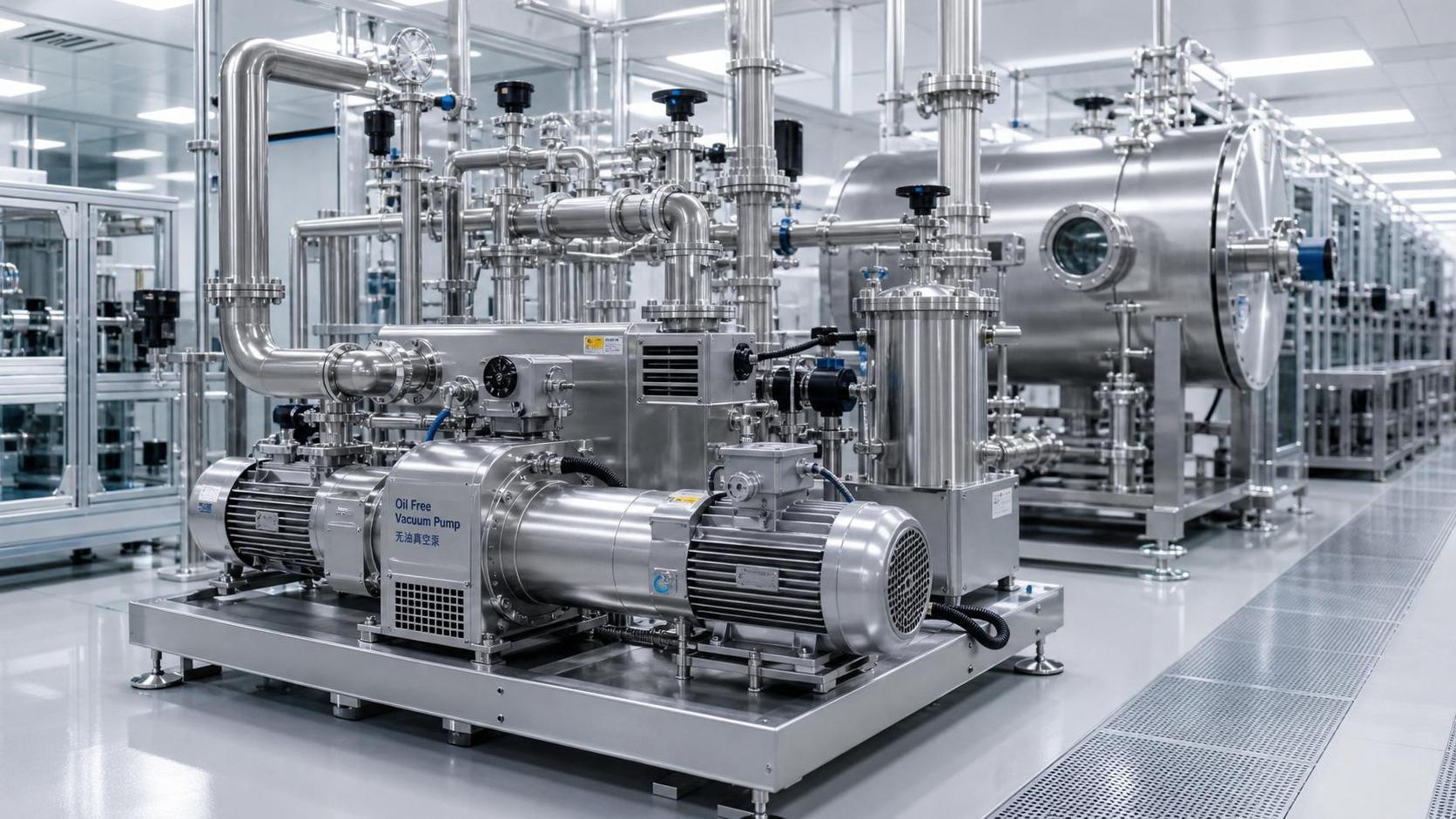
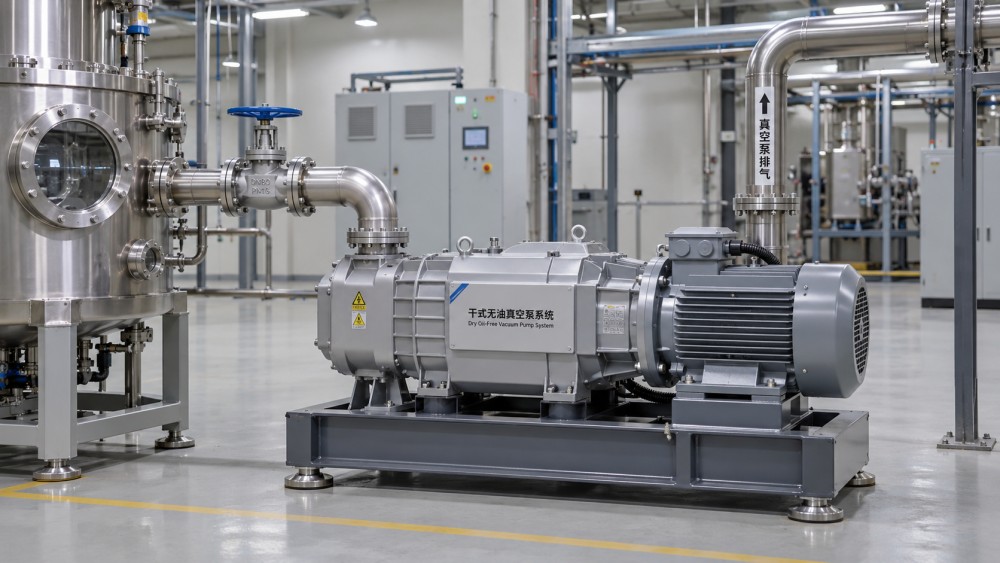
Dry screw, dry claw, dry scroll, and diaphragm pumps all avoid oil in the pumping chamber, but they serve different duties. A dry screw pump can suit demanding industrial vacuum service, including some vapor-containing processes when configured correctly. Dry claw pumps are often considered for rough-vacuum duties with relatively clean gases. Scroll and diaphragm pumps are frequently used for smaller flow requirements or clean applications. These are starting points, not interchangeable specifications: pressure range, gas compatibility, and permitted inlet conditions differ by design.
Compare pumping speed at the pressure required in the process, rather than selecting by nominal displacement or ultimate pressure alone. Ultimate pressure describes the low-pressure limit under specified conditions; it does not show how quickly a loaded chamber will pump down or whether the system will hold pressure while gas enters continuously.
The total load includes intentional process gas, leaks, outgassing from chamber surfaces, and vapor released by the product. A pump that reaches the target pressure on an empty, dry vessel can struggle once a wet batch or a continuous gas purge is introduced. Request a pumping-speed curve and performance information for the expected gas mixture, inlet temperature, and operating pressure.
For cyclic operation, compare the time allowed to evacuate the vessel with the full pressure-versus-time profile. The high-pressure portion of pumpdown and the final approach to the target pressure can be governed by different limits. A booster pump may improve capacity over part of the range, but it needs a compatible backing pump and a control sequence suited to the duty.
Vapor handling can decide the selection
Dry operation removes pump oil from the chamber, but it does not eliminate condensation. Water, solvents, and other vapors can condense as gas is compressed or as surfaces cool. Liquid accumulation can increase load, promote corrosion, dissolve deposits, or damage a pump that is not designed to handle it.
Establish the vapor composition and the maximum expected load, including startup and upset conditions. Compare those conditions with the pump’s stated vapor-handling capability at the intended operating temperature. Gas ballast, a heated pump, or a heated line may help keep vapor in the gas phase, but each changes the system’s heat or gas load. A condenser or knockout vessel upstream can remove condensable material, provided its pressure drop and collection capacity are included in the design.
Shutdown deserves the same attention as steady operation. If a vapor-laden pump cools while isolated, material left inside may condense. A suitable purge and shutdown procedure can reduce residual vapor, subject to the equipment’s compatibility and the process requirements.
Powders and deposits create a different problem. An inlet filter protects internal clearances, yet a filter that blocks quickly can restrict flow and extend pumpdown. Sticky byproducts may pass through a filter as vapor and deposit later in the pump or exhaust. Discuss the full expected operating cycle, cleaning method, and access for inspection before assuming that a dry mechanism will run unattended.
Read the system specification beyond the pump
Pipework can erase a large part of the capacity shown on a pump curve. Long, narrow lines, elbows, valves, and filters restrict flow; their effect is especially important at lower pressures. The pressure at the chamber therefore differs from the pressure at the pump inlet. Size the line for the required throughput and pressure range, and include the pressure drop of accessories when comparing packages.
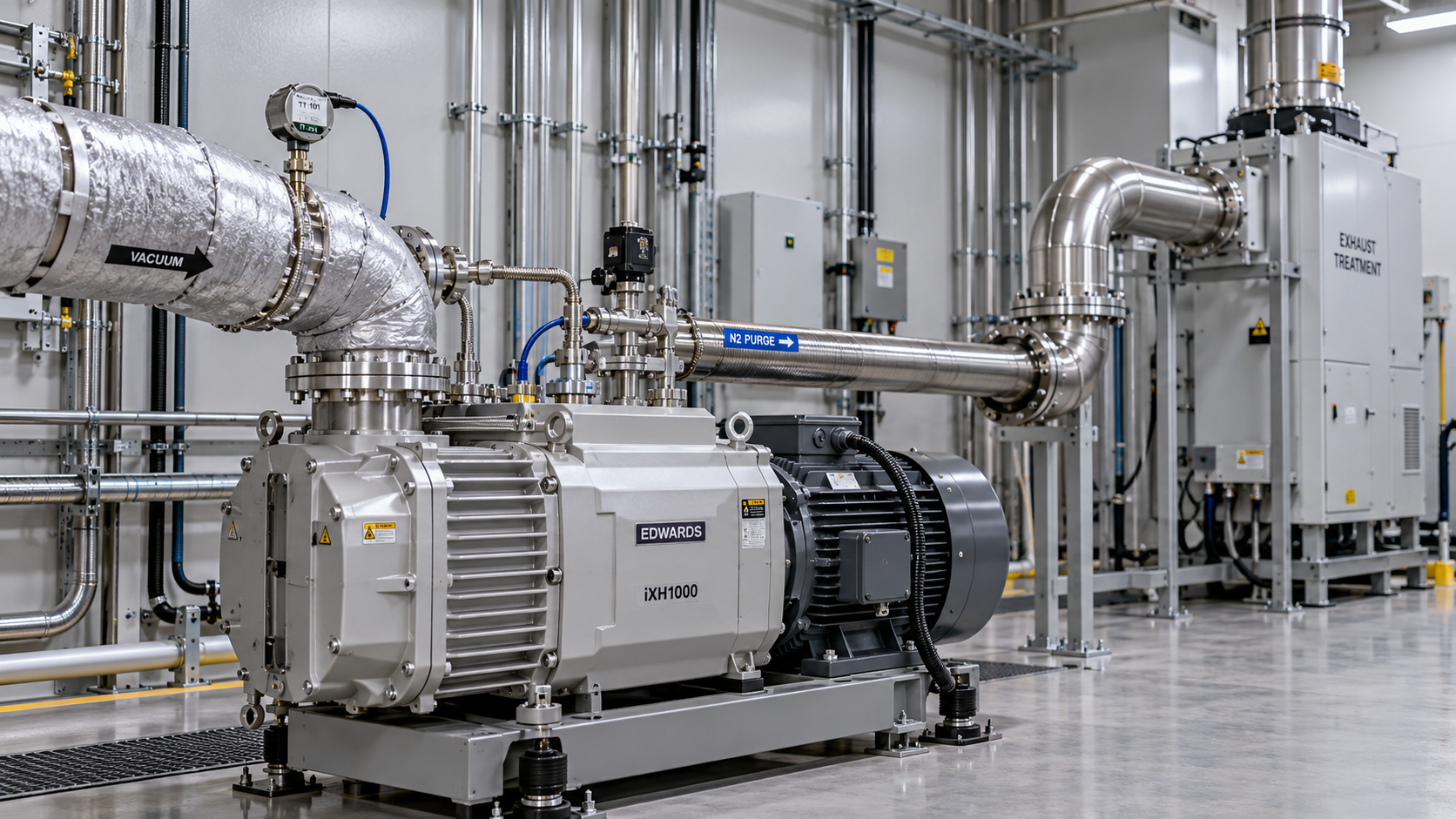
The exhaust also needs an engineered route. A dry pump can discharge hot gas, process vapor, particulates, or hazardous reaction products. Exhaust backpressure must remain within the pump’s limits, and materials in the exhaust line must suit the gas and temperature. Where flammable, toxic, corrosive, or oxygen-enriched gases are involved, compatibility must be established for the complete system, including seals, purge gas, instrumentation, and exhaust treatment.
Cooling provisions affect both installation and performance. Air-cooled equipment needs adequate ventilation; water-cooled equipment needs a suitable supply and a way to monitor flow and temperature. A pump installed in a hot enclosure or supplied with unsuitable cooling water may operate outside its intended conditions even if the process pressure appears correct.
Confirm what “oil-free” covers in the proposed package. A dry pump with an oil-lubricated gearbox has a different maintenance profile from a design with no oil reservoir. Ask where lubricants are located, how they are separated from the process gas, and what happens if a seal fails. Also identify any lubricated valves, instruments, or other connected components that could affect the required cleanliness.
Compare energy and maintenance over the actual cycle
Oil-free does not automatically mean lower energy consumption. Power varies with pump design, inlet pressure, cooling method, and control strategy. Compare electrical input at representative operating points, including pumpdown, pressure holding, standby, and restart. Add relevant auxiliary loads such as cooling equipment, purge supplies, and exhaust treatment when they differ between options.
A central vacuum system illustrates the importance of load profile. One pump running continuously at a pressure lower than the process requires can consume energy without improving production. Staging pumps or controlling speed may reduce power during variable demand, but frequent starts, minimum speed limits, and pressure stability need to be assessed against the equipment’s operating constraints.
Maintenance costs also shift rather than disappear. A dry pump avoids chamber-oil changes, while filters, seals, bearings, gear lubricant, cooling circuits, or wear components may still require service. Scroll mechanisms, for example, can need replacement of sealing elements; the interval depends on the design and duty. Contaminated or corrosive gas can shorten service intervals even when the inlet appears clean.
A useful cost comparison covers the same period and production schedule for each option. Include the installed equipment, electricity, cooling and purge utilities, planned service, consumables, waste handling, and the production impact of downtime. Treat uncertain repair costs and service intervals as scenarios rather than presenting a single estimate as a guaranteed result.
When an oil-sealed system remains the better fit
An oil-sealed pump can remain a sound choice where the process tolerates the controlled presence of oil, the gas is compatible with the lubricant, and filtration and exhaust treatment manage contamination effectively. It can also be attractive when an existing installation already meets the required pressure and cleanliness without frequent service interruptions.
Conversely, a process that contaminates pump oil rapidly can make the apparent purchase saving misleading. Frequent oil changes, unstable performance between services, and disposal of contaminated oil change the comparison. The same process may still challenge a dry pump if it produces deposits or carries corrosive condensate, so the gas-handling design must be evaluated independently.
Before final selection, put the competing systems against the same process conditions: required chamber pressure, gas composition and load, pumpdown time, operating cycle, and cleanliness limit. A trial or witnessed performance test using representative gas and cycle conditions can resolve uncertainty that a catalogue rating cannot, especially when vapors or deposits determine service life.
Ready when you are. Send us a message to get started.
Related News
- When does an oil-free vacuum pump system make sense?Author :Pneumatic Power Engineer

- How oil-free compressed air helps prevent printing defectsAuthor :Pneumatic Power Engineer

- Can oil-free vacuum pumps handle semiconductor etching gases?Author :Pneumatic Power Engineer

- AIRERA Showcases TUV Class 0-Certified Oil-Free Screw Compressor at COMVACAuthor :Pneumatic Power Engineer

- How to verify food-grade purity in compressed air systemsAuthor :Pneumatic Power Engineer

- What determines the price of pure air compression systems?Author :Pneumatic Power Engineer

- How to size oil-free compressors for instrumentation air demandAuthor :Pneumatic Power Engineer

- How Class 0 oil-free compressors protect product quality in food productionAuthor :Pneumatic Power Engineer

- How to verify compressed air cleanroom standards before installationAuthor :Pneumatic Power Engineer

- When oil free vacuum pumps make sense for European cleanroom projectsAuthor :Pneumatic Power Engineer

- When do pure air compression systems need ISO 8573-1 Class 0?Author :Pneumatic Power Engineer

- How do compressed air systems for electronics prevent contamination?Author :Pneumatic Power Engineer

- When does an oil-free process vacuum pump justify its higher cost?Author :Pneumatic Power Engineer

- Does ISO 9001 certification apply to compressed air quality?Author :Pneumatic Power Engineer

- How to Specify Clean Compressed Air Systems in Southeast Asia for Food and Pharma PlantsAuthor :Pneumatic Power Engineer

- How to Compare Oil Free Vacuum Pumps for Clean Process RequirementsAuthor :Pneumatic Power Engineer

- How to Evaluate a Clean Compressed Air Systems Supplier for ISO 8573-1 ComplianceAuthor :Pneumatic Power Engineer

- How to Choose the Right Oil-Free Vacuum PumpAuthor :Pneumatic Power Engineer

- VDI 2083 Update Makes Class 0 Proof MandatoryAuthor :Pneumatic Power Engineer

- When to Use Oil Free Vacuum Pumps for High Purity LinesAuthor :Pneumatic Power Engineer

- Compressed Air Solutions: When Oil-Free Systems Lower Total Operating CostAuthor :Pneumatic Power Engineer

- ATMOsphere Europe 2026 Adds Oil-free Systems ZoneAuthor :Pneumatic Power Engineer

- Oil-Free Compressors: Key Selection Criteria for Clean Air SystemsAuthor :Pneumatic Power Engineer

- How to Compare Oil Free Centrifugal Compressors for Stable Plant Air SupplyAuthor :Pneumatic Power Engineer

- Compressed Air Class 0 vs Oil-Free: What Really MattersAuthor :Pneumatic Power Engineer

- Oil-Free Compression Class 0: What the Standard Really Means in ProductionAuthor :Pneumatic Power Engineer

- Air Compression Cost Comparison: Oil-Free vs Screw Systems in Daily OperationAuthor :Pneumatic Power Engineer

- Saudi SASO Tightens IEC 63349-2 for Oil-Free CompressorsAuthor :Pneumatic Power Engineer

- Saudi SASO Tightens Oil-Free Compressor Efficiency RulesAuthor :Pneumatic Power Engineer

- Pure Air Compression Systems for Clean Production LinesAuthor :Pneumatic Power Engineer

- IEC 63349-2:2026 makes energy certification mandatoryAuthor :Pneumatic Power Engineer

- IEC 63349-2:2026 Sets New Entry Rules for Oil-Free Screw CompressorsAuthor :Pneumatic Power Engineer

- IEC 63349-2:2026 Takes Effect for Oil-Free Screw CompressorsAuthor :Pneumatic Power Engineer

- IEC 63349-2:2026 Sets New Efficiency Gate for Oil-Free Screw CompressorsAuthor :Pneumatic Power Engineer

- IEC 63349-2:2026 Takes Effect for Oil-Free Screw CompressorsAuthor :Pneumatic Power Engineer

- SABIC Methanol Force Majeure Extended, Tightening R134a/R407C FeedstocksAuthor :Pneumatic Power Engineer