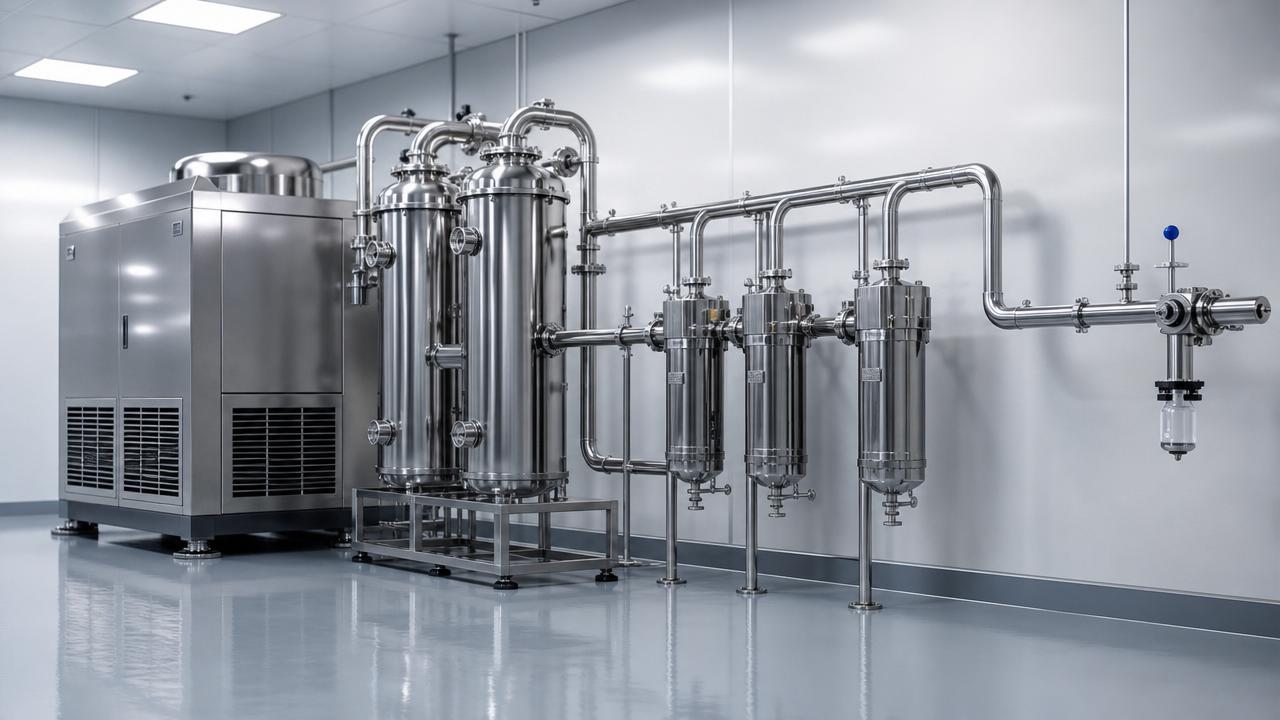
Intellectualization Trends in Oil-free Systems Maintenance




As oil-free systems become more critical to uptime, purity, and energy efficiency, intellectualization is changing maintenance from reactive repair into data-guided service. For after-sales teams, the real value is practical: faster diagnosis, fewer unplanned shutdowns, better parts planning, and clearer decisions about when to intervene and when to keep equipment running.
In oil-free compressors, blowers, vacuum units, and related thermal systems, maintenance errors are costly because contamination risk, process interruption, and energy loss can spread quickly across the customer’s production line. That is why intellectualization matters less as a buzzword and more as a working method that helps service personnel act with stronger evidence.
This article focuses on what after-sales maintenance staff actually need to know: which intellectualization trends are reshaping oil-free systems maintenance, what tools are proving useful in the field, where the limitations still are, and how technicians can use these developments to improve reliability without overcomplicating daily service routines.
Why are oil-free systems maintenance teams paying attention to intellectualization now?
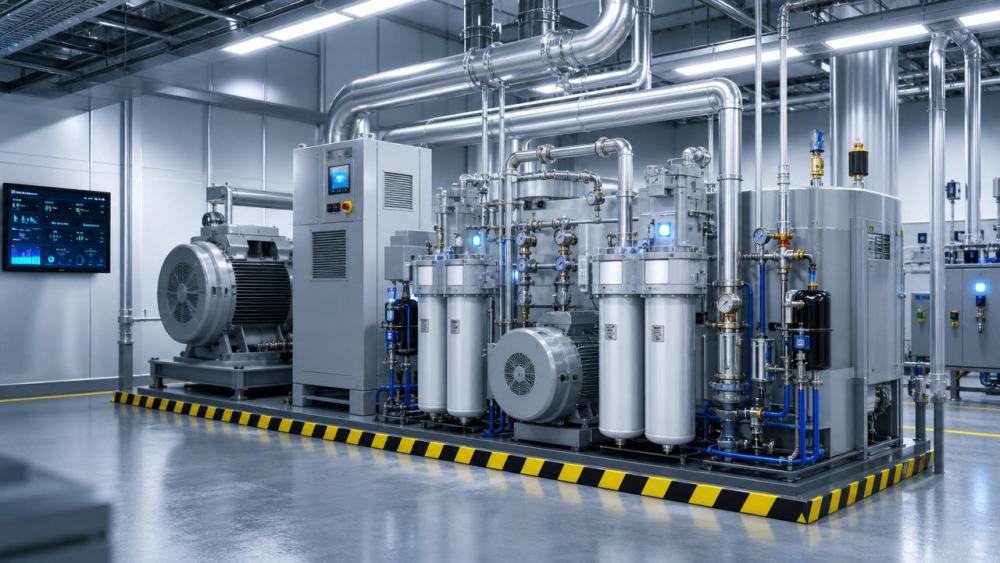
The core search intent behind intellectualization trends in oil-free systems maintenance is practical, not theoretical. Readers want to understand how digital monitoring, analytics, and smarter service workflows can solve real maintenance problems in oil-free equipment and whether these tools are worth adopting in field service operations.
For after-sales teams, the pressure is rising from several directions at once. Customers expect near-zero contamination, stable efficiency, lower energy use, and faster support response. At the same time, equipment is becoming more connected, operating conditions are more variable, and service organizations are being asked to do more with fewer experienced technicians.
Oil-free systems also create a specific maintenance challenge. Because lubrication contamination is unacceptable in many applications, service staff cannot rely on the same fault assumptions used in oil-lubricated equipment. Wear patterns, thermal behavior, vibration signatures, filtration performance, and control logic all need closer interpretation.
Intellectualization helps by turning more equipment behavior into visible data. Instead of waiting for an alarm or a breakdown, technicians can compare trends in temperature, pressure, dew point, motor current, vibration, and control response. This gives maintenance teams earlier warning and a more structured way to investigate root causes.
The most important shift is that maintenance no longer depends only on periodic inspection intervals. Time-based service still matters, but it is increasingly being combined with condition-based and predictive logic. That combination is becoming the new standard in high-value oil-free systems used in pharmaceuticals, food processing, electronics, medical gas, and precision manufacturing.
What problems do after-sales maintenance personnel care about most?
After-sales technicians usually do not ask whether intellectualization is a trend. They ask whether it can shorten fault-finding time, reduce repeat visits, prevent emergency shutdowns, and make customer communication easier. If it cannot help in these areas, it has limited field value.
The first concern is diagnosis speed. Many oil-free system failures are not catastrophic at the beginning. They appear as subtle instability: higher discharge temperature, unexpected pressure fluctuation, declining flow, unusual controller behavior, condensate issues, or a slow drift in energy consumption. These symptoms are easy to miss without trend visibility.
The second concern is reliability of judgment. Technicians need confidence that a warning signal is meaningful. False alarms create wasted visits, while missed warnings damage customer trust. Intellectualization is useful only when it improves maintenance decisions rather than flooding staff with disconnected data points.
The third concern is planning. Service teams want to know whether they can predict seal wear, bearing deterioration, cooler fouling, valve instability, filter loading, or motor stress early enough to schedule intervention. Better planning reduces rush freight, emergency overtime, and the risk of arriving on site without the right parts.
The fourth concern is customer communication. Modern maintenance teams are increasingly expected to explain why a service action is necessary. Data-backed maintenance records, alarm histories, and performance trends make it easier to justify recommendations and show that service advice is based on equipment condition, not routine upselling.
Finally, technicians care about usability. A remote dashboard or analytics module has little value if it is difficult to interpret during field work. The best intellectualization tools support technicians with clear thresholds, event history, trend comparisons, and guidance linked to likely failure modes.
Which intellectualization trends are having the biggest impact on oil-free systems maintenance?
Several trends are shaping the current direction of oil-free systems maintenance, but not all trends have equal value. The most important ones are those that strengthen maintenance judgment at the equipment, service-team, and customer-site levels.
The first major trend is sensor expansion. More oil-free systems now include continuous sensing for discharge temperature, differential pressure, vibration, power draw, humidity, and flow behavior. This allows maintenance personnel to see developing issues before they trigger hard faults or process complaints.
The second trend is remote connectivity. Secure remote access gives service teams the ability to review operating data before going on site. For after-sales personnel, this can dramatically improve first-visit effectiveness. A technician who arrives knowing the likely fault pattern is more likely to resolve the issue quickly.
The third trend is predictive analytics. In advanced installations, software can compare current behavior with historical baselines and detect abnormal drift. This is especially useful when failure does not occur suddenly but develops through gradual thermal imbalance, efficiency decline, repeated micro-stoppages, or unstable loading cycles.
The fourth trend is service digitization. Maintenance logs, spare-parts history, fault code analysis, and technician observations are increasingly integrated into digital service platforms. This creates a more complete asset picture and helps organizations move from individual technician memory to shared operational intelligence.
The fifth trend is control-system intelligence. Newer oil-free systems are not only monitored more closely; they also respond more dynamically. Adaptive controls can optimize loading, cooling, and system balance based on demand patterns. For maintenance teams, that means service now includes understanding software behavior as well as mechanical condition.
The sixth trend is lifecycle benchmarking. More end users want to compare units across sites, shifts, or production conditions. Intellectualization makes this possible by turning maintenance and performance data into a benchmark tool. That helps identify whether a problem is machine-specific, application-related, or linked to operating practices.
How does data-driven maintenance improve daily field service work?
For maintenance personnel, the value of intellectualization becomes real only when it changes day-to-day tasks. The strongest benefit is not abstract digital transformation. It is structured troubleshooting with better evidence.
Before a site visit, remote data can help technicians review runtime hours, alarm frequency, load profile changes, start-stop patterns, and trend deviations. This reduces uncertainty and allows the technician to prepare the right tools, parts, and testing sequence before arriving at the customer facility.
During diagnosis, trend data helps separate symptoms from causes. For example, rising discharge temperature may point to cooling restriction, control instability, ambient condition changes, or internal wear. Looking at related values together makes troubleshooting more precise than checking each component in isolation.
During maintenance execution, data can confirm whether an intervention actually solved the issue. If filter replacement, cooler cleaning, valve service, or sensor recalibration returns the unit to its normal trend pattern, the technician has stronger proof of repair effectiveness than a simple restart confirmation.
After the visit, digital records improve continuity. If a similar issue appears later, the next technician can see what changed, what was tested, and how the machine behaved before and after service. This reduces repeated diagnostic work and strengthens consistency across the service team.
Data-driven maintenance also helps prioritize workload. Not every warning needs emergency intervention. By assessing severity, trend acceleration, and process criticality, service teams can focus urgent support where the operational and contamination risks are highest.
Which components and failure modes benefit most from intellectualized maintenance?
Not every part of an oil-free system benefits equally from digital monitoring. The biggest gains usually come from components or operating conditions where failure develops progressively and leaves detectable signals in performance or control behavior.
Airend or compression-stage health is a major area. In oil-free compressors, changes in temperature, vibration, efficiency, and pressure response may indicate wear, alignment issues, internal leakage, or cooling imbalance. Early detection is valuable because failure at this level often carries high repair costs and significant downtime.
Bearings and drive systems also benefit from intellectualization. Vibration trends, current signatures, and thermal data can help identify stress before a bearing failure becomes severe. This supports better timing for planned intervention and reduces the chance of secondary damage.
Filters, dryers, separators, and heat exchangers are another high-value area. Progressive fouling or blockage often causes subtle pressure drop, thermal inefficiency, or moisture-control problems. With trend monitoring, technicians can detect degradation based on actual operating effect rather than replacing parts strictly by calendar intervals.
Valves and control components are increasingly important as systems become more automated. Loading instability, erratic setpoint response, repeated venting behavior, or abnormal cycling may reflect control-side problems that traditional mechanical inspection alone will not fully explain.
Sensors themselves must also be maintained intelligently. A digital maintenance strategy depends on measurement quality. If sensors drift, are poorly calibrated, or fail intermittently, the entire decision chain becomes weaker. Intellectualization therefore increases the importance of sensor verification, not just sensor installation.
What are the limits and risks of intellectualization in maintenance?
Although the intellectualization trend is strong, after-sales teams should avoid assuming that more data automatically means better maintenance. Poorly selected signals, weak interpretation rules, and fragmented software can create confusion instead of clarity.
One common risk is false confidence. A system may appear healthy because no critical alarm is active, while trend-level deviations already show deterioration. Conversely, a minor anomaly may trigger unnecessary concern if thresholds are not matched to the actual operating context.
Another risk is overdependence on remote monitoring. Digital tools are powerful, but they do not replace field judgment. Installation quality, piping condition, ambient contamination, cooling airflow restrictions, and operator behavior still require on-site observation. Intellectualization should enhance technician expertise, not replace it.
Cybersecurity and data access are also real concerns. Remote maintenance depends on secure communication, clear permissions, and customer trust. If access is unreliable or restricted, the service value of connected monitoring can be reduced significantly.
Training is another limiting factor. A technician may receive more data than before but still need support interpreting patterns correctly. Organizations that invest in connected systems without building analytic capability often underuse the technology and see disappointing maintenance results.
Finally, not every customer site is mature enough for full predictive maintenance. In some cases, a phased approach works better: first improve sensing and maintenance records, then add remote diagnostics, and only later introduce prediction models once data quality is stable.
How should after-sales teams adapt their maintenance strategy?
For most service organizations, the best response is a balanced strategy. Intellectualization should be introduced in ways that improve practical maintenance outcomes, not just increase software complexity.
First, define the most important failure modes for each oil-free system type. Focus on the issues that most affect uptime, purity, and energy efficiency. Then identify which operating signals can reveal those issues early and which thresholds or trend patterns are meaningful.
Second, standardize digital service records. Every technician should document symptoms, measurements, corrective actions, and post-service results in a consistent format. This turns daily maintenance activity into a usable knowledge base rather than isolated field experience.
Third, build pre-visit diagnostic routines. Before dispatch, review trend data, alarm history, and recent operating changes. Even a basic remote review can improve visit readiness and reduce repeat calls.
Fourth, train technicians to combine data interpretation with physical inspection. Intellectualization works best when teams understand both the digital signature and the mechanical reality of the equipment. The strongest maintenance organizations develop skill in both areas.
Fifth, communicate value clearly to customers. Show how data-backed service reduces risk, improves maintenance timing, and supports lifecycle decisions. When customers see practical outcomes, they are more likely to support connected maintenance models and planned service upgrades.
Conclusion: intellectualization is becoming a maintenance advantage, not just a technology trend
In oil-free systems maintenance, intellectualization is no longer a future concept. It is becoming a core operating advantage for after-sales teams that need to diagnose faster, plan better, and support customers with stronger reliability and purity assurance.
The most useful trend is not simply adding more sensors or dashboards. It is building a maintenance process in which data, technician judgment, and service records work together. That combination helps reduce downtime, improve repair quality, and make maintenance actions more timely and defensible.
For after-sales personnel, the key takeaway is clear: intellectualization has the greatest value when it solves field problems directly. When applied with the right priorities, it turns maintenance from reactive response into smarter lifecycle management for oil-free systems operating in demanding industrial environments.
Related News
- How to verify compressed air cleanroom standards before installationAuthor :Pneumatic Power Engineer

- When oil free vacuum pumps make sense for European cleanroom projectsAuthor :Pneumatic Power Engineer

- When do pure air compression systems need ISO 8573-1 Class 0?Author :Pneumatic Power Engineer

- How do compressed air systems for electronics prevent contamination?Author :Pneumatic Power Engineer

- When does an oil-free process vacuum pump justify its higher cost?Author :Pneumatic Power Engineer

- Does ISO 9001 certification apply to compressed air quality?Author :Pneumatic Power Engineer

- How to Specify Clean Compressed Air Systems in Southeast Asia for Food and Pharma PlantsAuthor :Pneumatic Power Engineer

- How to Compare Oil Free Vacuum Pumps for Clean Process RequirementsAuthor :Pneumatic Power Engineer

- How to Evaluate a Clean Compressed Air Systems Supplier for ISO 8573-1 ComplianceAuthor :Pneumatic Power Engineer

- How to Choose the Right Oil-Free Vacuum PumpAuthor :Pneumatic Power Engineer

- VDI 2083 Update Makes Class 0 Proof MandatoryAuthor :Pneumatic Power Engineer

- When to Use Oil Free Vacuum Pumps for High Purity LinesAuthor :Pneumatic Power Engineer

- Compressed Air Solutions: When Oil-Free Systems Lower Total Operating CostAuthor :Pneumatic Power Engineer

- ATMOsphere Europe 2026 Adds Oil-free Systems ZoneAuthor :Pneumatic Power Engineer

- Oil-Free Compressors: Key Selection Criteria for Clean Air SystemsAuthor :Pneumatic Power Engineer

- How to Compare Oil Free Centrifugal Compressors for Stable Plant Air SupplyAuthor :Pneumatic Power Engineer

- Compressed Air Class 0 vs Oil-Free: What Really MattersAuthor :Pneumatic Power Engineer

- Oil-Free Compression Class 0: What the Standard Really Means in ProductionAuthor :Pneumatic Power Engineer

- Air Compression Cost Comparison: Oil-Free vs Screw Systems in Daily OperationAuthor :Pneumatic Power Engineer

- Saudi SASO Tightens IEC 63349-2 for Oil-Free CompressorsAuthor :Pneumatic Power Engineer

- Saudi SASO Tightens Oil-Free Compressor Efficiency RulesAuthor :Pneumatic Power Engineer

- Pure Air Compression Systems for Clean Production LinesAuthor :Pneumatic Power Engineer

- IEC 63349-2:2026 makes energy certification mandatoryAuthor :Pneumatic Power Engineer

- IEC 63349-2:2026 Sets New Entry Rules for Oil-Free Screw CompressorsAuthor :Pneumatic Power Engineer

- IEC 63349-2:2026 Takes Effect for Oil-Free Screw CompressorsAuthor :Pneumatic Power Engineer

- IEC 63349-2:2026 Sets New Efficiency Gate for Oil-Free Screw CompressorsAuthor :Pneumatic Power Engineer

- IEC 63349-2:2026 Takes Effect for Oil-Free Screw CompressorsAuthor :Pneumatic Power Engineer

- SABIC Methanol Force Majeure Extended, Tightening R134a/R407C FeedstocksAuthor :Pneumatic Power Engineer

- How to Evaluate Pneumatic Power Systems for Stable OutputAuthor :Pneumatic Power Engineer

- Oil-Free Compression vs Lubricated Systems: Key Trade-OffsAuthor :Pneumatic Power Engineer
![]()
- Oil-Free Compression: 2026 Cost and Compliance Trade-OffsAuthor :Pneumatic Power Engineer

- Oil-Free Compression: Cost and Contamination RisksAuthor :Pneumatic Power Engineer
![]()
- Euro PMI Drop Delays Oil-Free Systems OrdersAuthor :Pneumatic Power Engineer

- Germany/France May PMI Decline; Oil-free Systems EU Projects DelayedAuthor :Pneumatic Power Engineer
![]()
- Compression Technology Options for Cleaner Oil-Free Air SupplyAuthor :Pneumatic Power Engineer

- TUV Rheinland Enforces Full-Chain Class 0 Certification for Oil-Free SystemsAuthor :Pneumatic Power Engineer