How does cooling capacity affect electronics cooling solution prices?




Cooling capacity has a direct influence on electronics cooling solution prices: removing more heat generally calls for larger heat exchangers, more airflow or liquid flow, and additional power-handling capability. But price does not rise in a simple proportion to the capacity shown on a quotation. The operating conditions behind that rating, the cooling method, and the equipment included in the offer can change the comparison substantially.
For procurement teams, the best-value system is the one that can remove the required heat under credible worst-case conditions without carrying unnecessary capacity for most of its working life. That requires more than comparing a cooling unit’s rated kilowatts with the electrical rating of the equipment it serves. Buyers need a defensible heat-load estimate, comparable supplier ratings, and an understanding of how a larger system affects installation and operating costs.
Why more cooling capacity usually costs more
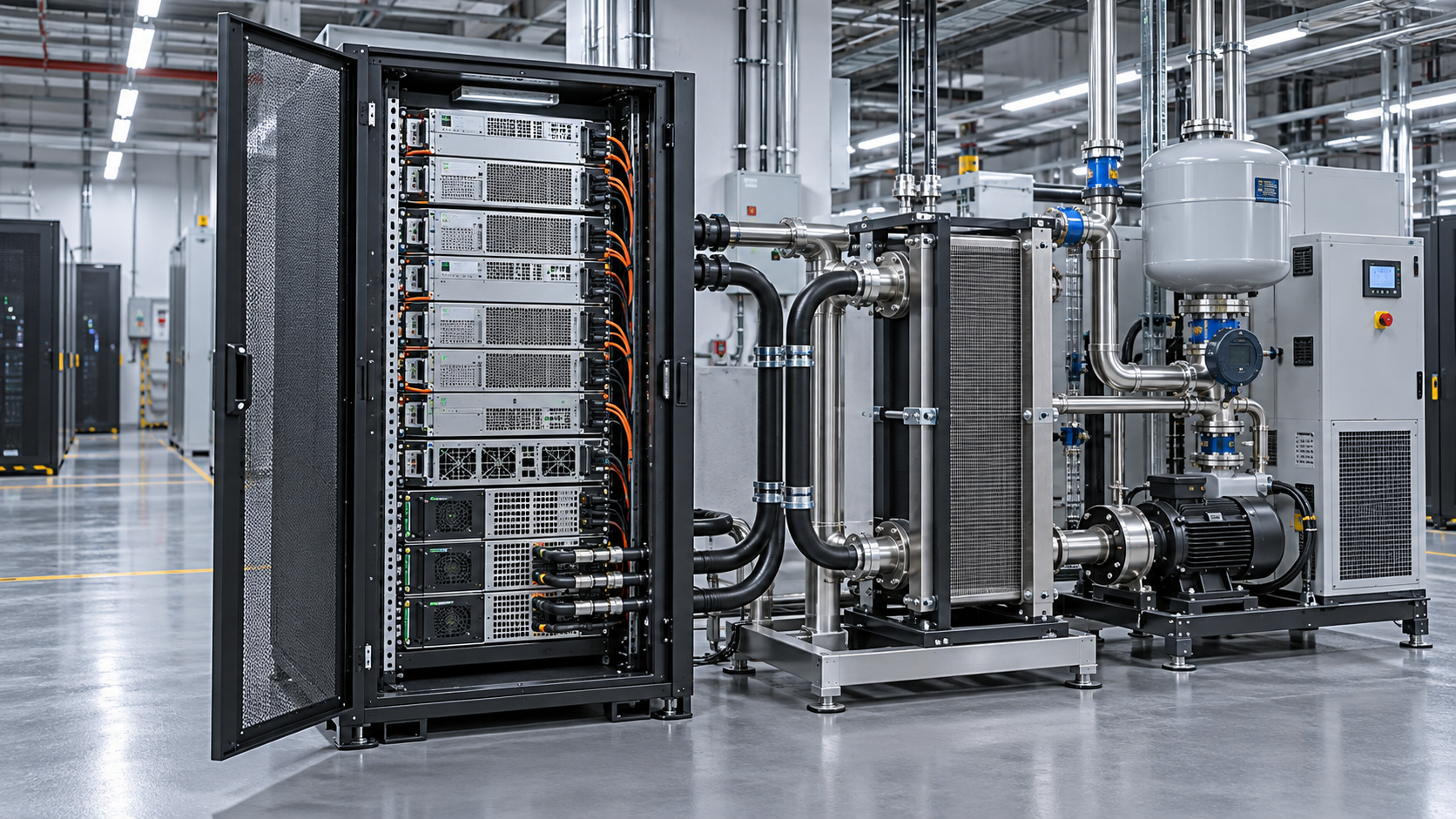
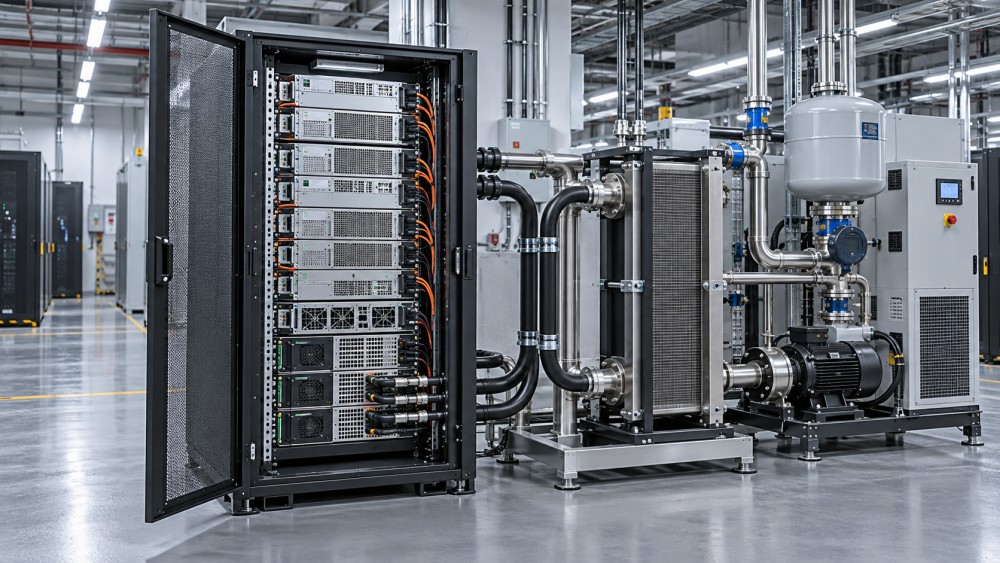
A cooling system must transfer heat from electronic components to air, liquid, or another cooling medium and then reject that heat to the surrounding environment or a facility system. As the required heat removal increases, one or more parts of that chain generally need to grow. An air-cooled design may need more heat sink surface area, stronger fans, or a larger enclosure. A liquid-cooled system may require a larger heat exchanger, pump, piping, or coolant distribution equipment.
Those changes affect material and manufacturing costs, but they can also alter the system architecture. A modest increase in required capacity might be accommodated by a larger fan within the same product family. A higher requirement could push the application toward liquid cooling, a separate chiller, or a facility-level heat rejection system. When that happens, the price difference reflects a change in equipment scope as well as capacity.
Capacity can also influence costs outside the cooling unit itself. Larger equipment may require more installation space, electrical supply capacity, structural support, ductwork, or liquid connections. These items are easy to overlook when suppliers quote different boundaries of supply. A unit with a lower equipment price may still create a higher installed cost if substantial supporting work is excluded.
Conversely, a higher-capacity model is not automatically proportionally more expensive. Suppliers may offer several sizes built around common controls, housings, or production platforms. The price step between two models depends on the design and the scope of supply, so a buyer should request separate quotations rather than extrapolating from a single price per kilowatt.
Size the requirement before comparing prices
The starting point is the heat that must be removed, expressed over the relevant operating period. For electronics inside an enclosure, electrical input is a useful reference, but it should not be treated automatically as the cooling load. Some input power may leave the equipment in another form, and heat generated outside the cooled boundary should not be included unless it enters that boundary. Additional heat can also enter from the environment through enclosure walls, openings, or connected equipment.
Define the physical boundary first: is the supplier cooling individual components, a sealed cabinet, a rack, or an entire equipment room? Then identify the heat sources inside it and the heat exchanged with the surroundings. This avoids a common pricing problem in which one supplier quotes for the electronics alone while another includes the enclosure or room load.
Peak load matters, but so does its duration. A control cabinet that runs near its highest dissipation continuously presents a different cooling duty from equipment that reaches the same peak only briefly. Ask suppliers whether the proposed system can maintain the required component, coolant, or enclosure temperature during the specified peak and how it behaves during normal operation. Where thermal storage in the equipment affects short peaks, that assumption should be explicit and validated for the application.
A practical specification should give suppliers enough information to price the same duty:
- The heat to be removed at normal and maximum operating conditions, including any known heat entering the cooled boundary.
- The maximum permitted temperature at the relevant point, such as component inlet air, enclosure air, or coolant supply.
- The temperature and condition of the available cooling medium, including the highest credible ambient or facility-water temperature.
- The expected operating schedule, load profile, and any planned increase in heat dissipation.
- Space, noise, electrical supply, redundancy, and maintenance constraints that affect the design.
These inputs do not need to be perfect before requesting an initial budget estimate. They do need to be consistent and sufficiently developed before placing an order. A quoted capacity based on an optimistic ambient temperature or an unspecified inlet condition can look inexpensive until the unit is checked against the site duty.
A capacity rating is only meaningful at stated conditions
Two systems advertised with the same nominal cooling capacity may not deliver the same heat removal in the intended installation. Capacity depends on temperatures and flow conditions throughout the heat-transfer path. For an air-cooled unit, performance can change with ambient temperature, airflow, inlet restrictions, and the temperature the equipment must maintain. For a liquid-cooled system, coolant supply temperature, flow rate, pressure drop, and the conditions on the heat-rejection side matter.
For example, a unit rated under favorable ambient conditions may deliver less useful cooling when installed in a hot plant room. Similarly, a chiller’s output at one coolant supply temperature should not be assumed at a lower setpoint. The buyer should ask each supplier to state the available capacity at the actual design conditions, not just provide a catalog maximum.
Temperature stability and the location of the temperature measurement also affect price. Maintaining a narrow coolant temperature range can require different controls and equipment from simply keeping enclosure air below a maximum. A quotation for cabinet air temperature is not directly interchangeable with one guaranteeing a component inlet temperature: heat can accumulate between those measurement points.
Request a performance schedule that shows the duty, design ambient or facility-water conditions, coolant or air temperatures, flow rates, and electrical input. Where applicable, ask for the expected pressure drop and allowable range of operating conditions. Suppliers should identify whether their figures represent a complete installed system or a particular component, such as a chiller or heat exchanger.
How much spare capacity is worth buying?
Some margin is usually justified because heat-load estimates, ambient conditions, and future operating requirements are uncertain. It can also account for performance changes associated with fouling or component aging, provided the allowance is consistent with the proposed maintenance plan. The appropriate margin depends on the quality of the load information and the consequences of a temperature excursion; it is not a universal percentage.
Start by separating documented needs from contingencies. A planned equipment expansion with an approved heat-load estimate can be included in the required duty. An unspecified possibility of future growth should be priced as an option. This lets procurement compare the immediate cost of a larger system with alternatives such as adding a second module later, reserving floor space, or providing connections for expansion.
Oversizing has a cost even when the purchase-price premium seems modest. Larger fans and pumps may consume more power, depending on their controls and operating point. Refrigeration equipment may cycle more frequently or operate inefficiently at low load, depending on its design and control range. Oversized equipment can also occupy valuable space and increase the cost of replacement parts. Ask suppliers for power input and control behavior at representative part-load conditions, not only at full capacity.
Undersizing carries a different exposure. If the system cannot reject enough heat at the highest specified ambient temperature, electronics may reduce output, shut down, or operate outside their temperature limits. A low initial price offers little protection against lost production or damaged equipment. The decision therefore rests on the cost of the margin relative to the operational consequence of falling short.
Redundancy should be treated separately from ordinary sizing margin. If continuous operation requires a standby unit, specify the cooling duty that must remain available after a failure and the conditions under which that duty applies. Two units whose combined ratings meet the load do not necessarily provide the required cooling when one is unavailable. Redundant capacity adds equipment and controls, but its value comes from availability rather than from extra cooling during normal operation.
Compare installed and operating costs on the same duty
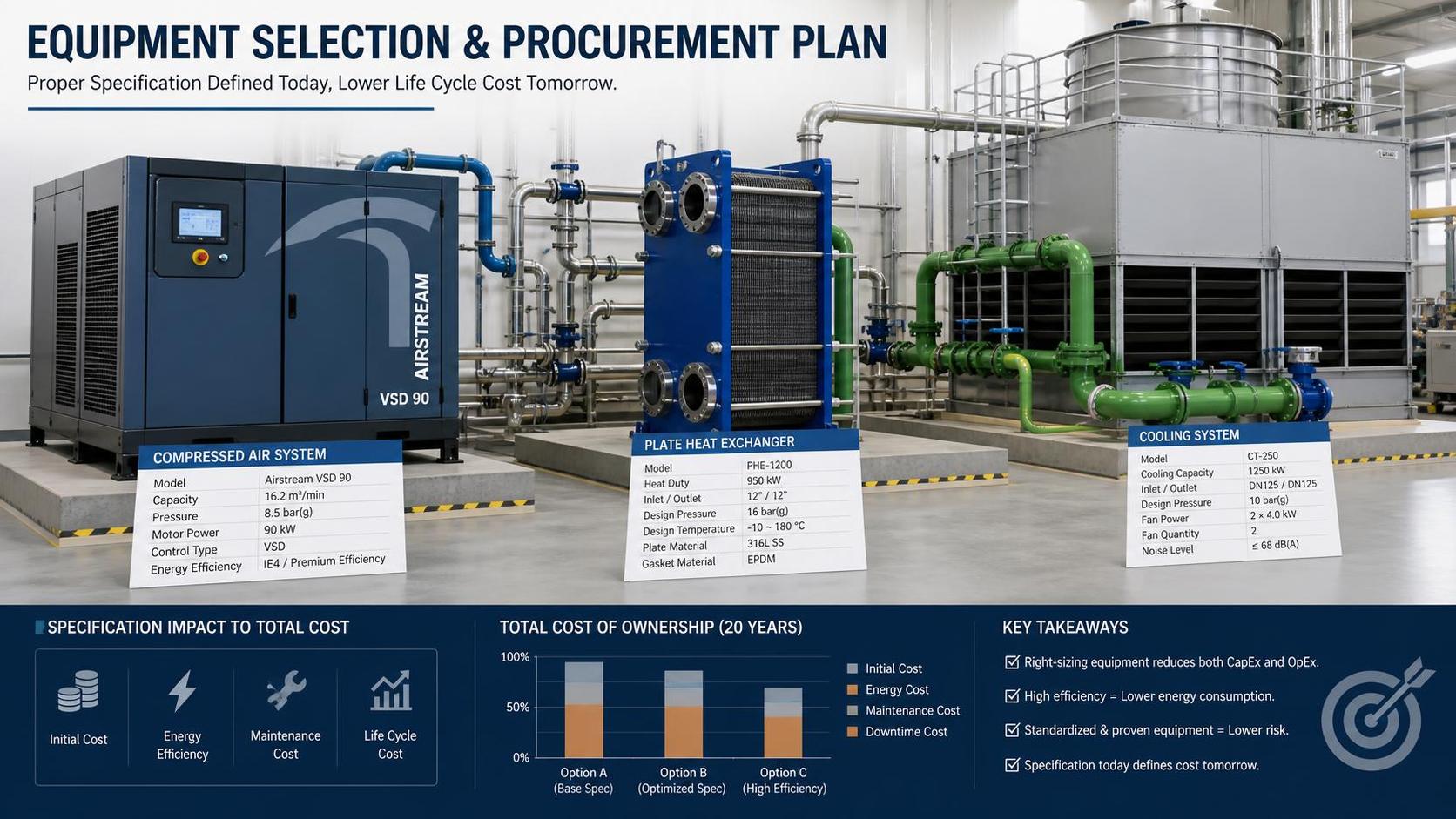
The purchase price is only one part of the cost difference between capacity options. For each credible proposal, compare the equipment price, installation scope, expected electrical consumption, and maintenance obligations over the intended evaluation period. Use the site’s own electricity price and operating schedule, and state any assumptions about future charges separately.
A simple energy comparison starts with power input at the expected operating conditions. Multiply electrical power by operating hours for each representative load condition, then apply the relevant electricity rate. Where the system has several operating modes, calculate them separately. Do not substitute cooling capacity for electrical input: the amount of heat removed and the electricity consumed are different quantities.
Include auxiliary loads within a consistent boundary. One quotation may include pumps and heat-rejection fans in its power figure, while another may report only the chiller or cooling module. Facility water, water treatment, or other utilities may also carry costs outside the supplier’s package. Equally, avoid counting shared facility loads twice when comparing alternatives that use the same infrastructure.
Maintenance requirements can change with capacity and design. Filters, fans, pumps, coolant, and heat-exchanger cleaning may require different levels of attention. Request the recommended service tasks and intervals, the expected replacement parts, and access requirements. A compact unit that is difficult to service may impose downtime or labor costs that are absent from its equipment quotation.
What to ask suppliers before awarding the order
Once the duty is defined, issue the same specification to each bidder and ask for both the selected model and the next viable capacity option. The comparison should show what each option delivers at the site’s design conditions, what it consumes at expected loads, and what is included in the price. A useful quotation also identifies exclusions, lead time, commissioning requirements, and the procedure for demonstrating performance after installation.
Pay particular attention to statements such as “suitable for up to” a given heat load. Ask what ambient temperature, inlet conditions, flow rate, and control setpoint support that claim. If a supplier proposes a different cooling architecture, compare it on the complete duty and installed scope rather than rejecting or accepting it solely because its nominal capacity differs.
The strongest purchase decision is supported by a clear chain from heat-load assumptions to guaranteed duty, equipment selection, and lifecycle cost. Where the extra capacity cannot be tied to a credible operating condition, expansion plan, or availability requirement, its price premium deserves scrutiny. Where the proposed unit only meets the load under favorable rating conditions, the apparent saving deserves the same scrutiny.
Ready when you are. Send us a message to get started.
Related News
- How does cooling capacity affect electronics cooling solution prices?Author :

- How to write measurable requirements in a procurement specificationAuthor :

- How to select industrial equipment for automation with existing PLCsAuthor :

- How electricity prices shape industrial compressed air price trendsAuthor :

- Choosing air filtration systems for heavy dust in the Middle EastAuthor :

- How much does a fully installed compressed air monitoring system cost?Author :

- What documentation supports CE marking for industrial equipment?Author :

- How local support affects vacuum system costs in Southeast AsiaAuthor :

- How worldwide industry category guides help compare market opportunitiesAuthor :

- What drives sustainable thermal systems cost over their operating life?Author :

- Which industrial solution comparison criteria prevent project delays?Author :

- How Ambient Temperature and Load Profile Affect Industrial Compressor SizingAuthor :

- What to evaluate before choosing a thermal process engineering supplierAuthor :

- How industrial utility systems affect energy costs in process plantsAuthor :

- What Data Is Needed to Assess Heat Recovery Decarbonization?Author :

- Can Waste Heat Recovery Support Carbon Neutrality Targets?Author :

- Is Compressor Heat Recovery Worth the Installation Cost?Author :

- What to verify before choosing a process separation technology supplierAuthor :

- When does process utilities engineering reduce project rework?Author :

- Where thermal efficiency optimization delivers the fastest savings in EuropeAuthor :

- What should you verify before selecting a heat transfer supplier?Author :

- What drives compressed air systems price for industrial projects?Author :

- How an industrial product knowledge comparison guide reduces sourcing riskAuthor :

- When does a procurement specification planning process reduce bid risk?Author :

- When does thermal system optimization for electronics reduce failure risk?Author :

- When high temperature process heating systems justify the higher energy costAuthor :

- How to compare sludge dewatering equipment by cake drynessAuthor :

- What to Check Before Sourcing a Gas Turbine for Distributed Power ProjectsAuthor :

- What drives industrial thermal systems price in large facility projectsAuthor :

- How to build an industrial product comparison chart that speeds up vendor selectionAuthor :

- Vacuum Technology Application Guide for Selecting the Right SystemAuthor :

- What Drives Vacuum Drying Cost in Industrial Procurement?Author :

- What Drives Compressed Air Pricing in Industrial Systems?Author :

- How Procurement Specification Planning Shapes Total Project CostAuthor :

- Compression Technology Guide: How to Compare Efficiency, Pressure Range, and Maintenance NeedsAuthor :

- How to Compare Industrial Separators by Throughput, Purity, and Maintenance LoadAuthor :