How to verify an exporter’s cooling system efficiency claims




An impressive efficiency figure can make a cooling system look like a smart investment—but how can procurement teams tell whether it will deliver savings under real operating conditions?
When assessing an energy-efficient cooling systems exporter, buyers need more than marketing claims. This guide explains how to check performance data, test conditions, certifications, and projected operating costs so you can compare suppliers with confidence and make a better-informed purchasing decision.
Start by matching each efficiency claim to a defined operating condition and a measurable electrical input. Then compare bids using the same workload, energy prices, and acceptance criteria.
What evidence should an exporter provide before you compare quotes?
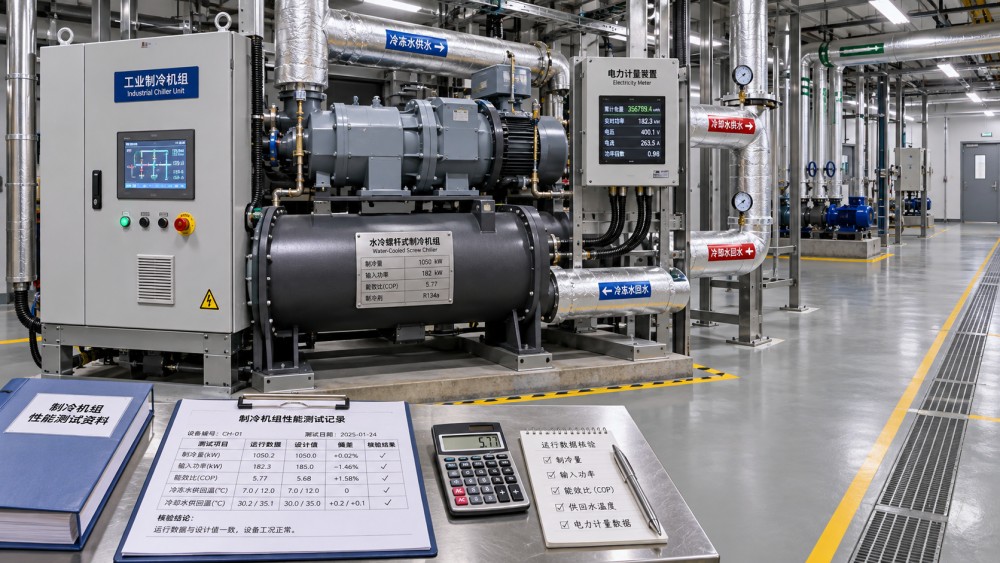
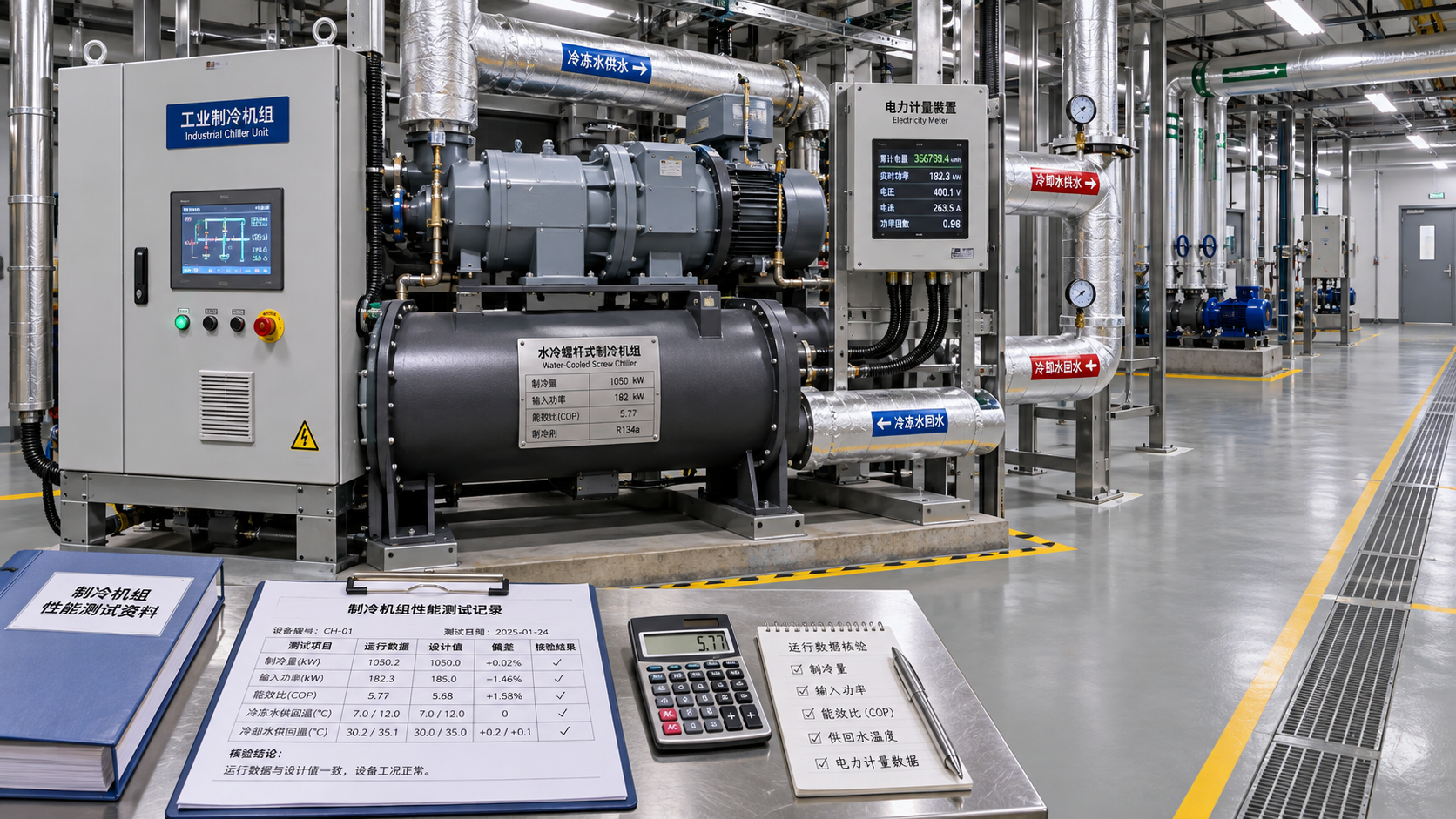
Ask every bidder for a performance schedule showing cooling capacity, electrical input, efficiency, and operating limits at your specified design conditions and representative part-load points.
The schedule should identify the exact equipment configuration, including model numbers, refrigerant, controls, and included auxiliaries. A generic brochure rarely establishes what your proposed system will achieve.
Request the underlying test report or calculation method, not just a certificate or a single headline number. Check who produced it and which equipment was tested.
Provide bidders with the same site brief: required temperatures, ambient conditions, operating hours, load profile, power supply, water availability, and any limits on space or noise.
If those inputs are uncertain, give suppliers a common range and ask them to show sensitivity. This exposes assumptions that could otherwise make one proposal look artificially efficient.
Which efficiency numbers can you actually compare?
Cooling performance is often expressed as coefficient of performance, or COP: useful cooling output divided by electrical power input. Higher COP means more cooling per unit of electricity.
For example, a system delivering 350 kilowatts of cooling while drawing 100 kilowatts has a COP of 3.5 at those stated conditions and measurement boundaries.
Some suppliers use energy efficiency ratio, or EER. Its numerical value depends on the units used, so confirm the convention before comparing it with another EER or COP.
Seasonal or integrated metrics, such as SEER or IPLV, attempt to represent performance across several conditions. Their calculation methods and intended applications differ, so check the applicable standard.
A favorable full-load COP does not guarantee the lowest annual electricity use. Many industrial systems spend substantial time below peak load, where controls and auxiliary equipment matter.
Compare figures only when cooling duty, temperatures, load points, and included electrical inputs match. Otherwise, request recalculated data or mark the offers as requiring further clarification.
Also distinguish cooling capacity from electrical input. A “350 kW chiller” usually describes cooling output, while its electricity demand must be stated separately for cost calculations.
Do the test conditions match your site?
Ask for entering and leaving fluid temperatures, ambient air or cooling-water temperature, flow rates, and the load percentage used for every published performance point.
An air-cooled unit tested in mild weather may draw considerably more power at your site’s summer design temperature. Request data at that temperature and your expected part-load conditions.
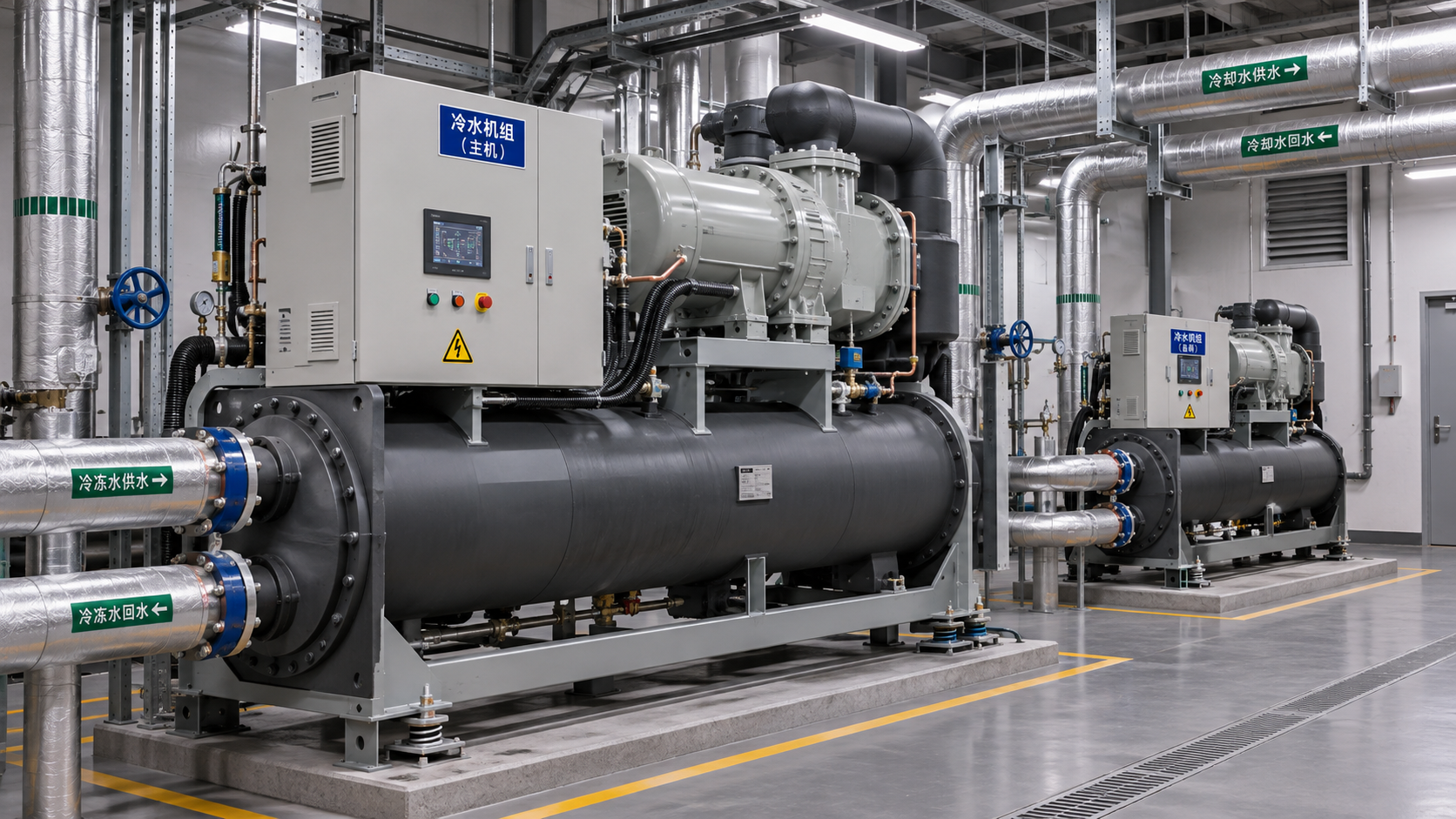
For water-cooled equipment, verify the assumed condenser-water temperatures and flow rates. An attractive chiller figure may depend on cooling-tower conditions your site cannot reliably maintain.
Check the required leaving chilled-water temperature carefully. A lower temperature can increase compressor energy use, so a comparison at different setpoints can misrepresent operating costs.
Review capacity as well as efficiency. A unit that cannot deliver the required cooling during peak conditions may force production restrictions or require expensive supplemental equipment.
Ask whether quoted performance includes fouling allowances, altitude effects, and the actual refrigerant. Where they matter, require the supplier to state corrections and supporting assumptions.
For variable workloads, provide an hourly profile if available. Otherwise, agree on a simple load distribution based on production schedules, seasonal conditions, and anticipated future demand.
What electrical loads are included in the claim?
Define the system boundary before comparing offers. A compressor-only figure, a packaged-unit figure, and a complete cooling-plant figure describe different scopes of electrical consumption.
Depending on the design, relevant loads can include condenser fans, chilled-water pumps, condenser-water pumps, cooling-tower fans, controls, crankcase heaters, and auxiliary equipment.
Ask each exporter to list included and excluded components, their rated power, and how their consumption changes with load. Record shared equipment separately where necessary.
If one quote excludes pumps and another includes them, normalize the comparison using a common pump estimate or require revised figures. Document who supplied each estimate.
Standby and off-cycle consumption also matter for intermittent operations. Request measured values or credible estimates and apply them to the hours when cooling is unavailable or unnecessary.
For a plant with several chillers, examine staging and minimum stable load. An efficient individual machine may perform poorly if the proposed controls cause frequent cycling.
How much confidence should you place in certifications and test reports?
Certification can strengthen a claim, but its value depends on its scope. Identify the certification program, the applicable standard, and the exact model and configuration covered.
Verify current listing status through the program operator when possible. Check whether the listed capacity and efficiency correspond to the conditions used in the supplier’s proposal.
Ask whether a report is from an independent laboratory, a witnessed factory test, or the manufacturer’s internal test. Each provides different evidence and may cover different configurations.
Review the report date, test method, equipment identification, instrumentation, results, and any deviations. A report for a similar model is useful background, not proof of your configuration.
Factory tests can establish equipment performance under controlled conditions. They cannot, by themselves, prove complete plant efficiency after installation, integration, and commissioning at your site.
Confirm regulatory requirements for the destination market separately, including applicable safety, refrigerant, and efficiency rules. A certification relevant in one jurisdiction may not satisfy another.
When independent verification is unavailable, assess the risk explicitly. You might require a witnessed test, stronger performance guarantees, or a documented site measurement plan.
How do you calculate the real operating cost?
Estimate annual electricity consumption across the expected load profile, using electrical input at each operating point. Add auxiliary and standby consumption according to the agreed system boundary.
For each load band, multiply total electrical input in kilowatts by annual hours in that band. Add the results to obtain estimated annual consumption in kilowatt-hours.
Consider a simplified example: at a representative operating condition, Supplier A draws 100 kW and Supplier B draws 90 kW, including equivalent auxiliary loads.
At 4,000 hours per year and an electricity price of $0.12 per kWh, B saves 40,000 kWh and approximately $4,800 annually at that operating condition.
If B costs $12,000 more to purchase and install, its simple payback is 2.5 years before maintenance, financing, degradation, demand charges, and other differences.
Actual savings require multiple load bands or an hourly model. A single operating point can be misleading when production, weather, or control settings change throughout the year.
Use your actual tariff structure where material, including time-of-use rates and demand charges. Test a reasonable range of electricity prices, annual hours, and future production levels.
Compare installed lifecycle cost, including freight, duties, installation, commissioning, maintenance, water treatment, consumables, planned replacements, and disposal. State the analysis period and discount rate used.
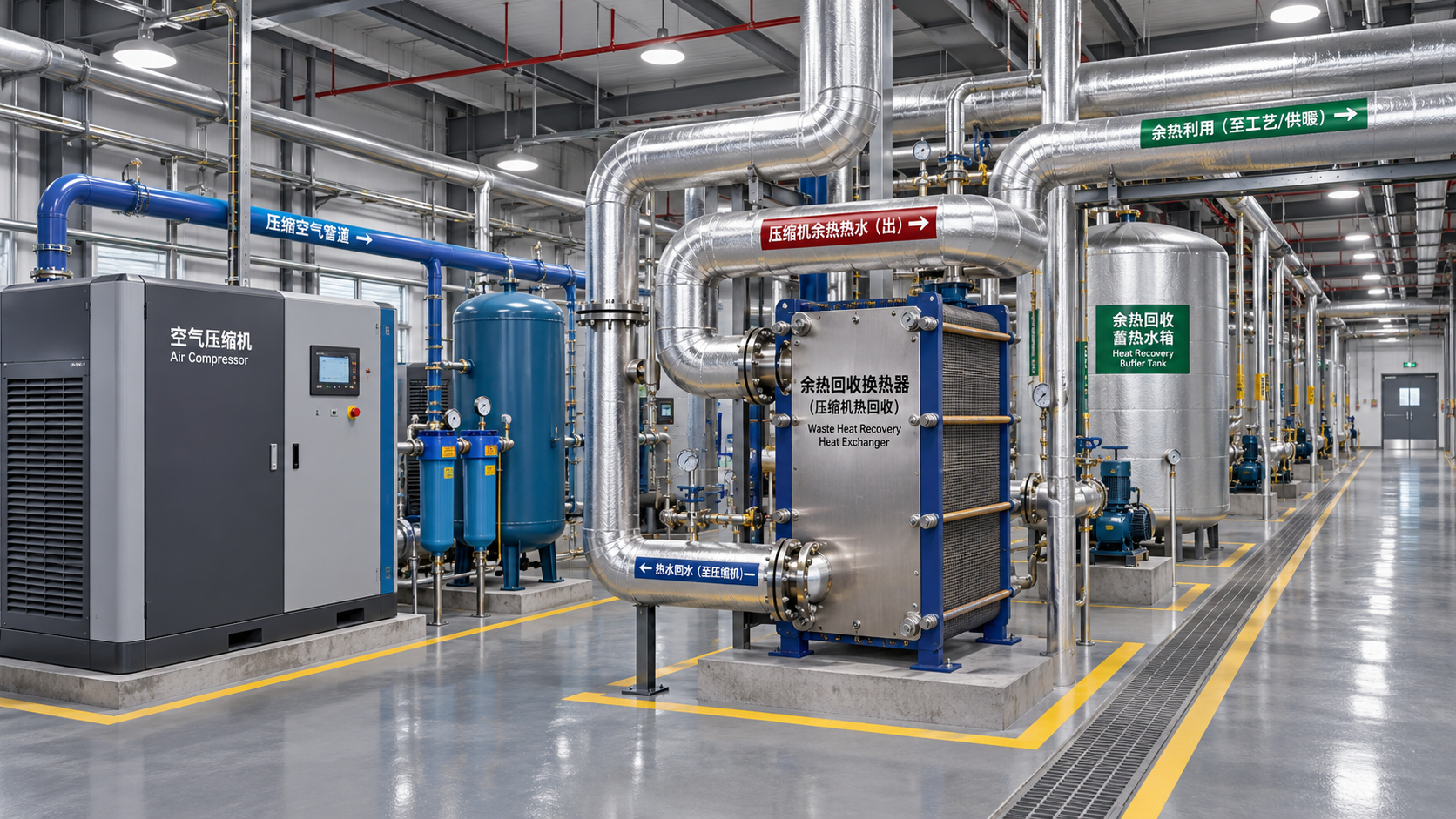
Do not count heat recovery savings unless there is a reliable use for the recovered heat. Quantify usable heat, operating hours, displaced fuel, and integration costs.
What should the contract require the supplier to prove?
Turn the winning bid’s assumptions into a performance schedule attached to the contract. Identify capacity, maximum electrical input, operating points, measurement boundaries, and permitted tolerances.
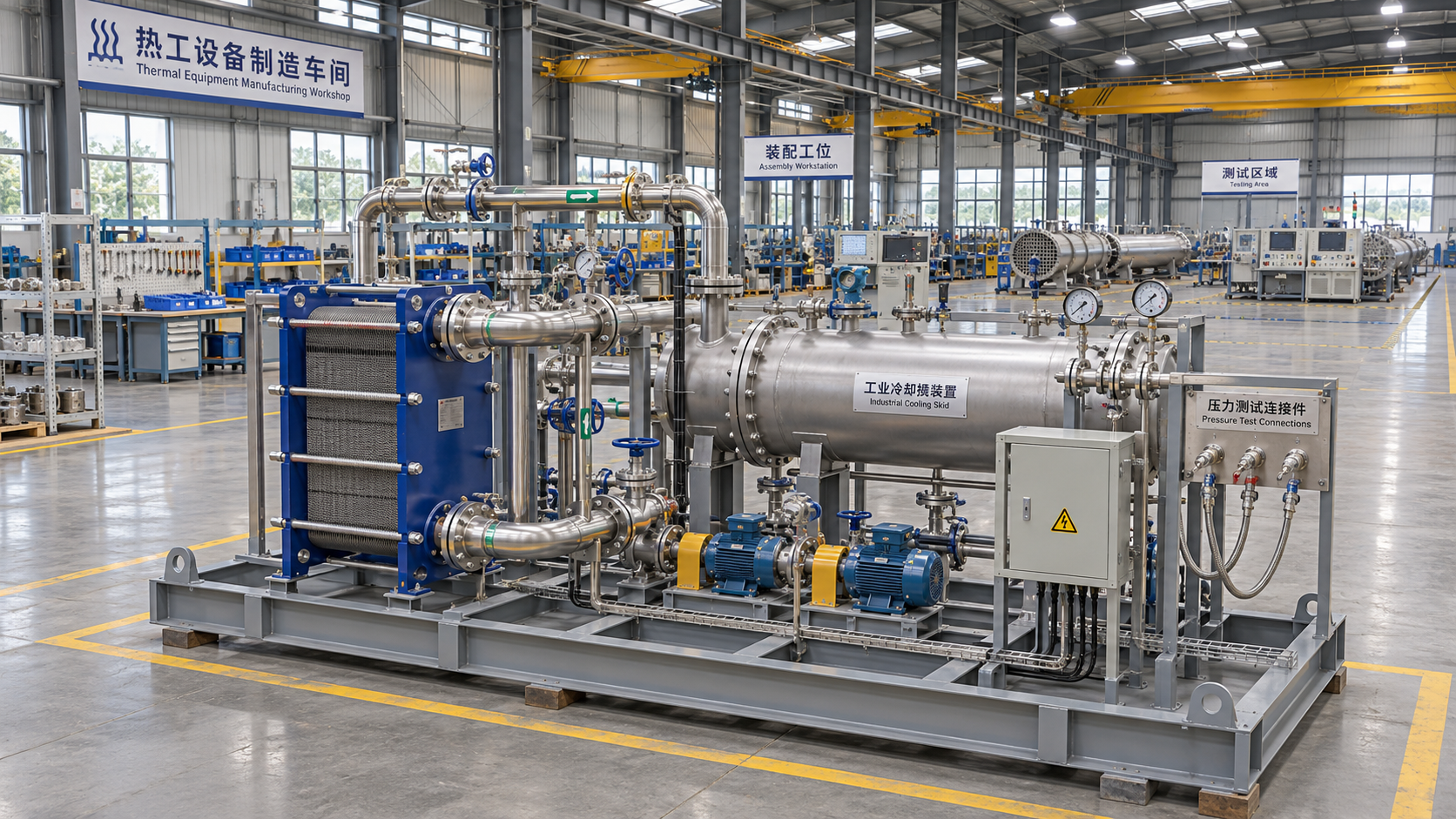
Specify whether acceptance will occur at the factory, on site, or both. A factory test can precede shipment; a site test checks the installed system under agreed conditions.
Define test instruments, calibration, measurement locations, stabilization time, sampling period, and who witnesses the test. Agree in advance how measurement uncertainty affects the acceptance decision.
Plan for conditions that may not occur during commissioning. The parties can agree on an alternative test point, a validated correction method, or a later seasonal test.
Set out corrective actions, retesting responsibilities, deadlines, and a commercial remedy if guaranteed performance is missed. Obtain legal review appropriate to the transaction and jurisdiction.
Require commissioning records, control settings, operating manuals, and training. Poor setpoints or incorrect sequencing can undermine performance even when the equipment itself meets its factory specification.
For ongoing accountability, agree on metering and reporting responsibilities. Trend cooling output and electricity consumption over time, while recording production and weather conditions that affect results.
Which warning signs deserve a closer look?
Be cautious when a proposal promises a fixed percentage saving without identifying the existing baseline, operating hours, comparison boundary, or calculation method behind that figure.
Another warning sign is a refusal to provide part-load data or disclose auxiliary loads. Either omission can prevent a meaningful comparison for facilities with variable demand.
Check claims of certification against the precise product offered. An exporter’s company certification, component approval, or unrelated model listing does not establish the proposed system’s efficiency.
Investigate unusually low prices alongside missing installation, controls, warranty, or service provisions. These exclusions can shift significant costs and performance risks to the buyer.
Finally, confirm local spare-parts availability, service response, refrigerant support, and warranty procedures. An efficient system creates less value if faults keep it out of production.
Make the final decision on comparable, enforceable evidence
Choose the offer that meets your cooling duty and demonstrates the strongest value under a shared set of site assumptions. The lowest headline power figure is only a starting point.
A capable energy-efficient cooling systems exporter should explain its calculations, identify test boundaries, substantiate certifications, and accept a practical method for verifying agreed performance.
Keep the comparison model and performance schedule with the purchase record. They give procurement, engineering, and operations a common basis for acceptance and future efficiency reviews.
Ready when you are. Send us a message to get started.
Related News
- How to prioritize projects in a decarbonization roadmapAuthor :

- How to verify an exporter’s cooling system efficiency claimsAuthor :

- How to assess a thermal systems factory's production capacityAuthor :

- How does capacity affect the price of energy conversion systems?Author :

- How to prioritize industrial decarbonization projectsAuthor :

- How does cooling capacity affect electronics cooling solution prices?Author :

- How to write measurable requirements in a procurement specificationAuthor :

- How to select industrial equipment for automation with existing PLCsAuthor :

- How electricity prices shape industrial compressed air price trendsAuthor :

- Choosing air filtration systems for heavy dust in the Middle EastAuthor :

- How much does a fully installed compressed air monitoring system cost?Author :

- What documentation supports CE marking for industrial equipment?Author :

- How local support affects vacuum system costs in Southeast AsiaAuthor :

- How worldwide industry category guides help compare market opportunitiesAuthor :

- What drives sustainable thermal systems cost over their operating life?Author :

- Which industrial solution comparison criteria prevent project delays?Author :

- How Ambient Temperature and Load Profile Affect Industrial Compressor SizingAuthor :

- What to evaluate before choosing a thermal process engineering supplierAuthor :

- How industrial utility systems affect energy costs in process plantsAuthor :

- What Data Is Needed to Assess Heat Recovery Decarbonization?Author :

- Can Waste Heat Recovery Support Carbon Neutrality Targets?Author :

- Is Compressor Heat Recovery Worth the Installation Cost?Author :

- What to verify before choosing a process separation technology supplierAuthor :

- When does process utilities engineering reduce project rework?Author :

- Where thermal efficiency optimization delivers the fastest savings in EuropeAuthor :

- What should you verify before selecting a heat transfer supplier?Author :

- What drives compressed air systems price for industrial projects?Author :

- How an industrial product knowledge comparison guide reduces sourcing riskAuthor :

- When does a procurement specification planning process reduce bid risk?Author :

- When does thermal system optimization for electronics reduce failure risk?Author :

- When high temperature process heating systems justify the higher energy costAuthor :

- How to compare sludge dewatering equipment by cake drynessAuthor :

- What to Check Before Sourcing a Gas Turbine for Distributed Power ProjectsAuthor :

- What drives industrial thermal systems price in large facility projectsAuthor :

- How to build an industrial product comparison chart that speeds up vendor selectionAuthor :

- Vacuum Technology Application Guide for Selecting the Right SystemAuthor :