SABIC Launches New Dry Cooling Tower Tender Amid Rising Middle East Air Cooler Demand




On May 30, 2026, the Saudi Industrial Development Authority (SIDA) announced that SABIC has initiated a 2026–2027 air-cooling system upgrade across its six major petrochemical sites. This development signals heightened procurement activity for industrial dry cooling towers in the Middle East — particularly relevant for manufacturers, exporters, and after-sales service providers specializing in ASME- and ISO-certified thermal management equipment.
Event Overview
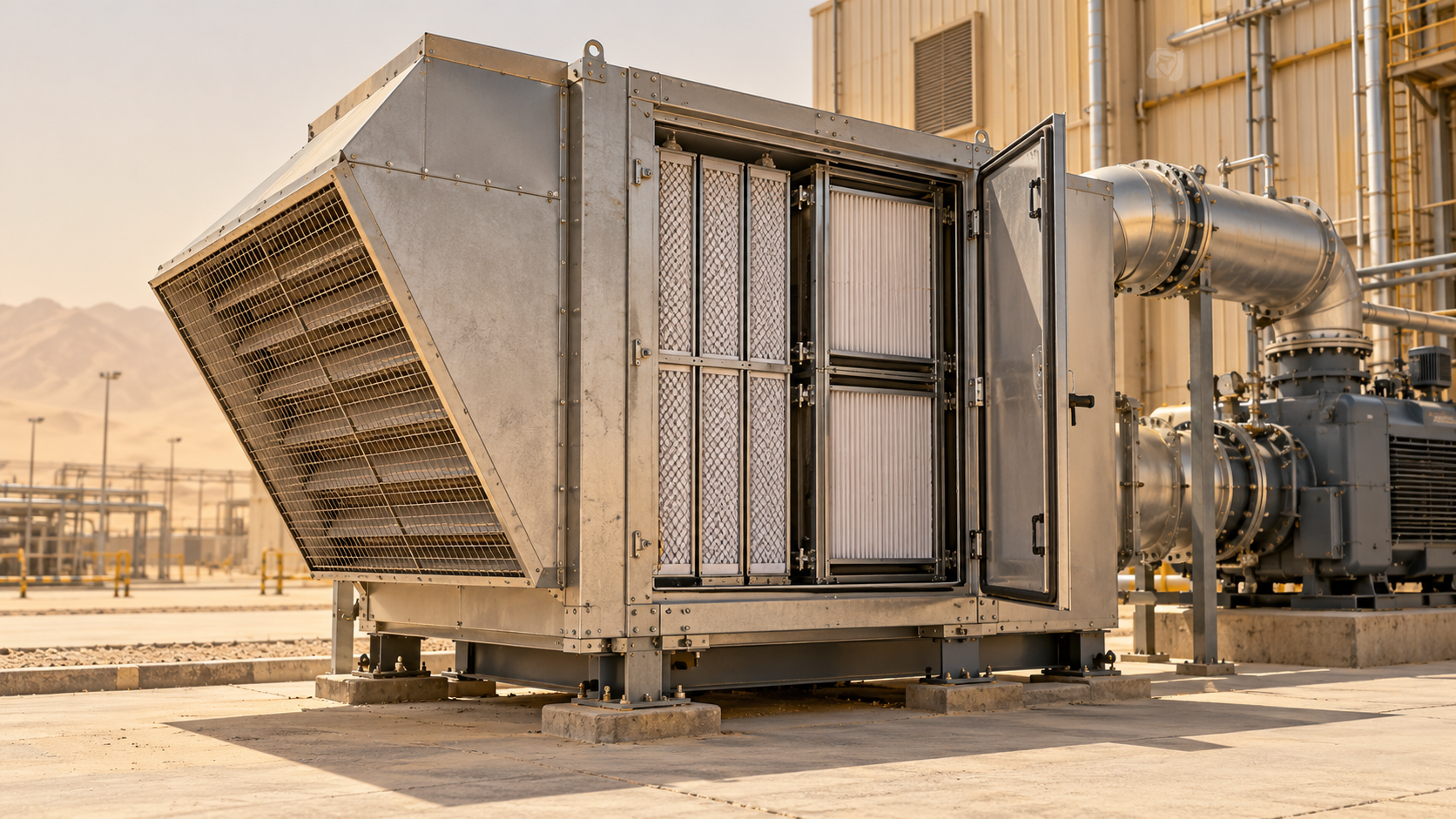
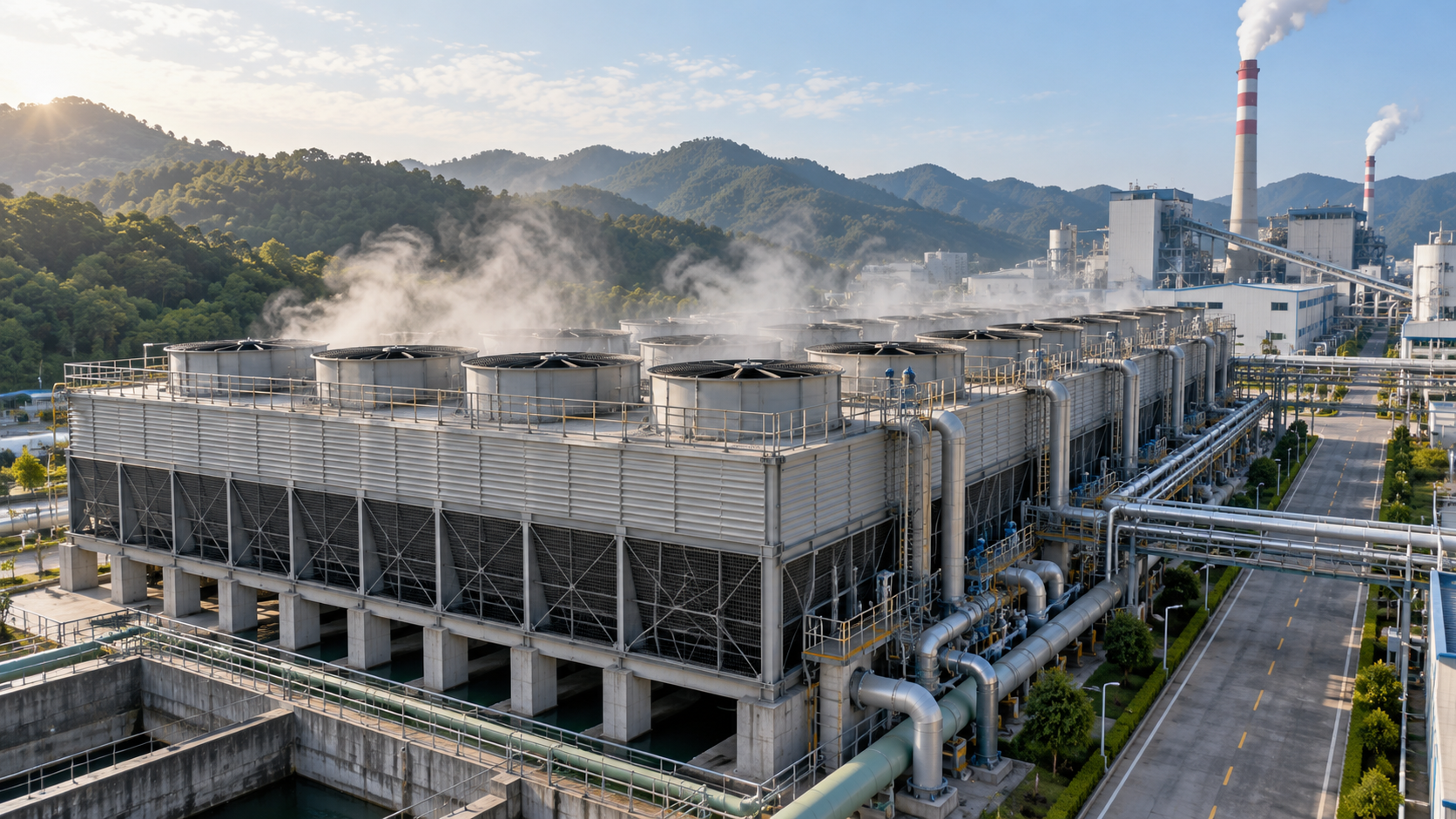
According to SIDA’s official announcement dated May 30, 2026, SABIC launched its first tender tranche under its 2026–2027 air-cooling system upgrade plan. The tender covers 128 industrial-grade dry air coolers (cooling towers). Technical specifications explicitly require compliance with ASME Section VIII and ISO 14692 corrosion resistance standards. Delivery is contractually fixed for Q4 2026. The tender is open to manufacturers based in China, South Korea, and Turkey, but mandates pre-registered local service support teams within Saudi Arabia.
Impact on Specific Industry Segments
Direct Exporters & Equipment Manufacturers
Manufacturers of dry cooling towers outside Saudi Arabia — especially those in China, South Korea, and Turkey — face both opportunity and compliance pressure. The requirement for ASME Section VIII + ISO 14692 certification directly affects product eligibility, while the local service team mandate adds operational overhead beyond hardware supply.
Supply Chain & After-Sales Service Providers
Third-party service providers supporting international equipment vendors must now align with SABIC’s localization requirement. Firms without existing Saudi-based technical or maintenance teams may be excluded from bidding consortia unless they partner with certified local entities ahead of submission deadlines.
Engineering Procurement Construction (EPC) Contractors
EPC firms engaged in SABIC’s petrochemical site upgrades will need to verify vendor compliance not only on equipment specs but also on documented local service capacity. Non-compliant suppliers could delay integration timelines, affecting overall project scheduling and contractual penalties.
What Stakeholders Should Monitor and Act On
Track official tender documentation updates via SIDA and SABIC procurement portals
The May 30 announcement is an initial notice; full technical bid packages, evaluation criteria, and subcontractor registration procedures are expected to follow. Stakeholders should monitor SIDA’s official website and SABIC’s e-procurement platform for addenda and clarifications — especially regarding scope of local service obligations (e.g., minimum staffing, response time SLAs, spare parts warehousing).
Validate ASME Section VIII and ISO 14692 certification status for specific model lines
Not all dry cooler models certified to ASME Section VIII automatically meet ISO 14692 requirements for fiberglass-reinforced polymer (FRP) components and coating systems. Exporters must confirm dual certification applies to the exact configurations offered — not just generic product family approvals.
Prepare local service team documentation in advance of bid submission
The tender requires formal备案 (registration) of local support teams. International bidders should initiate coordination with Saudi legal or commercial representatives to complete entity registration, technical staff licensing (if required), and service facility verification well before the bid deadline — as this process typically takes 4–8 weeks.
Distinguish between policy signal and immediate procurement volume
This tender covers 128 units — a defined, near-term order. While indicative of broader infrastructure modernization, it does not yet confirm multi-year volume commitments or expansion to additional SABIC sites. Stakeholders should treat this as a discrete procurement event rather than evidence of systemic market growth until further tenders are issued.
Editorial Observation / Industry Perspective
Observably, this tender functions primarily as a compliance-driven upgrade cycle rather than a greenfield expansion initiative. Analysis shows the emphasis lies on standardizing corrosion-resistant, low-water-consumption cooling infrastructure across existing assets — consistent with Saudi Vision 2030’s water sustainability goals. It is more accurately interpreted as a regulatory and operational signal than an early indicator of large-scale regional demand acceleration. Continued monitoring is warranted, particularly for whether subsequent tranches expand scope beyond the initial six sites or introduce new technical requirements (e.g., digital twin integration, remote diagnostics).
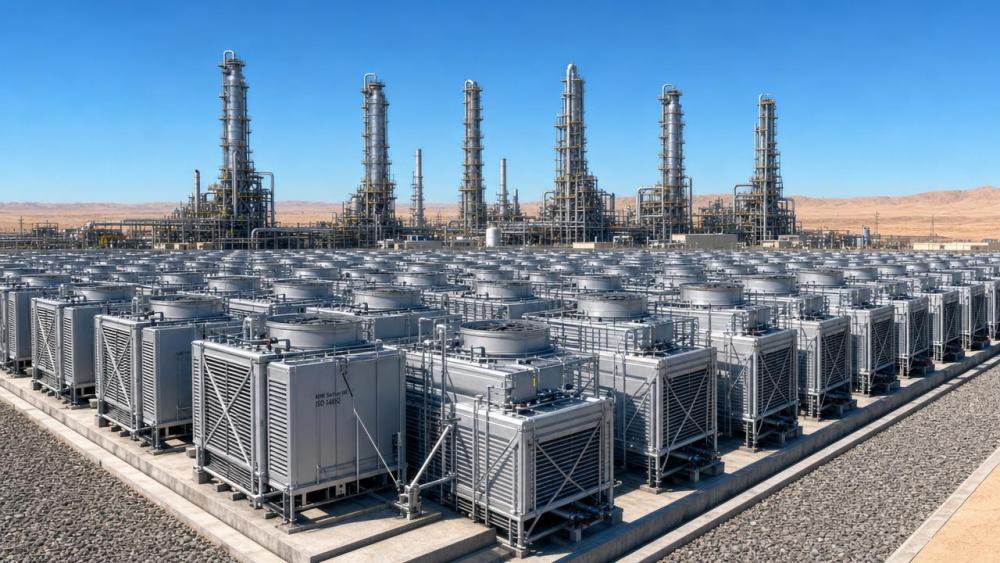
In summary, SABIC’s latest dry cooling tower tender reflects a targeted, specification-intensive procurement event rooted in asset reliability and regulatory alignment — not broad-based market expansion. For industry participants, the immediate relevance lies in compliance readiness and localized service capability, not assumptions about long-term regional demand trends. It is better understood as a benchmark for technical and operational expectations in high-stakes Middle East industrial tenders, rather than a standalone growth catalyst.
Source: Saudi Industrial Development Authority (SIDA), official announcement dated May 30, 2026.
Further developments — including detailed tender documents, bidder shortlists, and contract awards — remain pending and will require ongoing observation.
Ready when you are. Send us a message to get started.
Related News
- How corrugation angle affects heat transfer in plate heat exchangersAuthor :Thermodynamics Analyst

- R22 Prices Retreat as China's Refrigerant Market Faces Tight Quotas and Soft DemandAuthor :Cryogenic Systems Expert

- How to select industrial equipment for automation with existing PLCsAuthor :

- Carrier Plans $600 Million Manufacturing and Engineering Center in Fort WorthAuthor :

- How electricity prices shape industrial compressed air price trendsAuthor :

- Chemours Faces Investor Lawsuit Over Opteon Refrigerant Sales ForecastsAuthor :Cryogenic Systems Expert

- Choosing air filtration systems for heavy dust in the Middle EastAuthor :

- LG Expands R290 Monobloc Heat Pump Range with New 12–16 kW ModelsAuthor :Cryogenic Systems Expert

- How to size a chiller for pharmaceutical cleanroom temperature controlAuthor :Cryogenic Systems Expert

- Kentucky Regulators Approve $191 Million Cooling Tower at Mitchell Coal PlantAuthor :Thermodynamics Analyst

- How much does a fully installed compressed air monitoring system cost?Author :

- What documentation supports CE marking for industrial equipment?Author :

- When do plate heat exchangers suit Middle East seawater cooling?Author :Thermodynamics Analyst

- EU Issues Updated Guidance on Industrial Refrigeration Efficiency and F-gas AlternativesAuthor :Cryogenic Systems Expert

- How does base pressure affect film purity in vacuum deposition?Author :Vacuum Process Fellow

- Do U.S. refrigerant regulations require replacing R-410A systems?Author :Cryogenic Systems Expert

- When does variable gas flow justify a custom screw compressor system?Author :Pneumatic Power Engineer

- How local support affects vacuum system costs in Southeast AsiaAuthor :

- How worldwide industry category guides help compare market opportunitiesAuthor :

- How to verify food-grade purity in compressed air systemsAuthor :Pneumatic Power Engineer

- When high-pressure waste heat recovery boilers make economic senseAuthor :Thermal Energy Strategist

- How to size compressed air equipment for pneumatic toolsAuthor :Pneumatic Power Engineer

- How to size vacuum process equipment for the required pump-down timeAuthor :Vacuum Process Fellow

- What determines the price of pure air compression systems?Author :Pneumatic Power Engineer

- How steam generation efficiency shapes thermal power system designAuthor :Thermal Energy Strategist

- What drives sustainable thermal systems cost over their operating life?Author :

- Which vacuum specification best protects semiconductor process yield?Author :Vacuum Process Fellow

- When do smart thermal systems with sensors reduce chiller energy use?Author :Cryogenic Systems Expert

- When does gasketed plate heat exchanger technology suit your process?Author :Thermodynamics Analyst

- How to size oil-free compressors for instrumentation air demandAuthor :Pneumatic Power Engineer

- How Class 0 oil-free compressors protect product quality in food productionAuthor :Pneumatic Power Engineer

- Which industrial solution comparison criteria prevent project delays?Author :

- Chiller Optimization Checklist for Rising Energy Use and Unstable Cooling OutputAuthor :Cryogenic Systems Expert

- How to Specify a High-Precision Temperature Chiller for Tight-Tolerance ProcessesAuthor :Cryogenic Systems Expert

- Designing Energy-Efficient Industrial Cooling for Variable Process LoadsAuthor :Cryogenic Systems Expert

- Low-GWP Cooling Solutions for Process Plants: Comparing Safety, Efficiency, and CostAuthor :Cryogenic Systems Expert