How Energy Recovery Systems for Compressors Cut Power Costs




How Energy Recovery Systems for Compressors Cut Power Costs
For plants facing rising utility bills, compressed air often hides a major savings opportunity.
That is why energy recovery systems for compressors are getting more attention in capital planning.
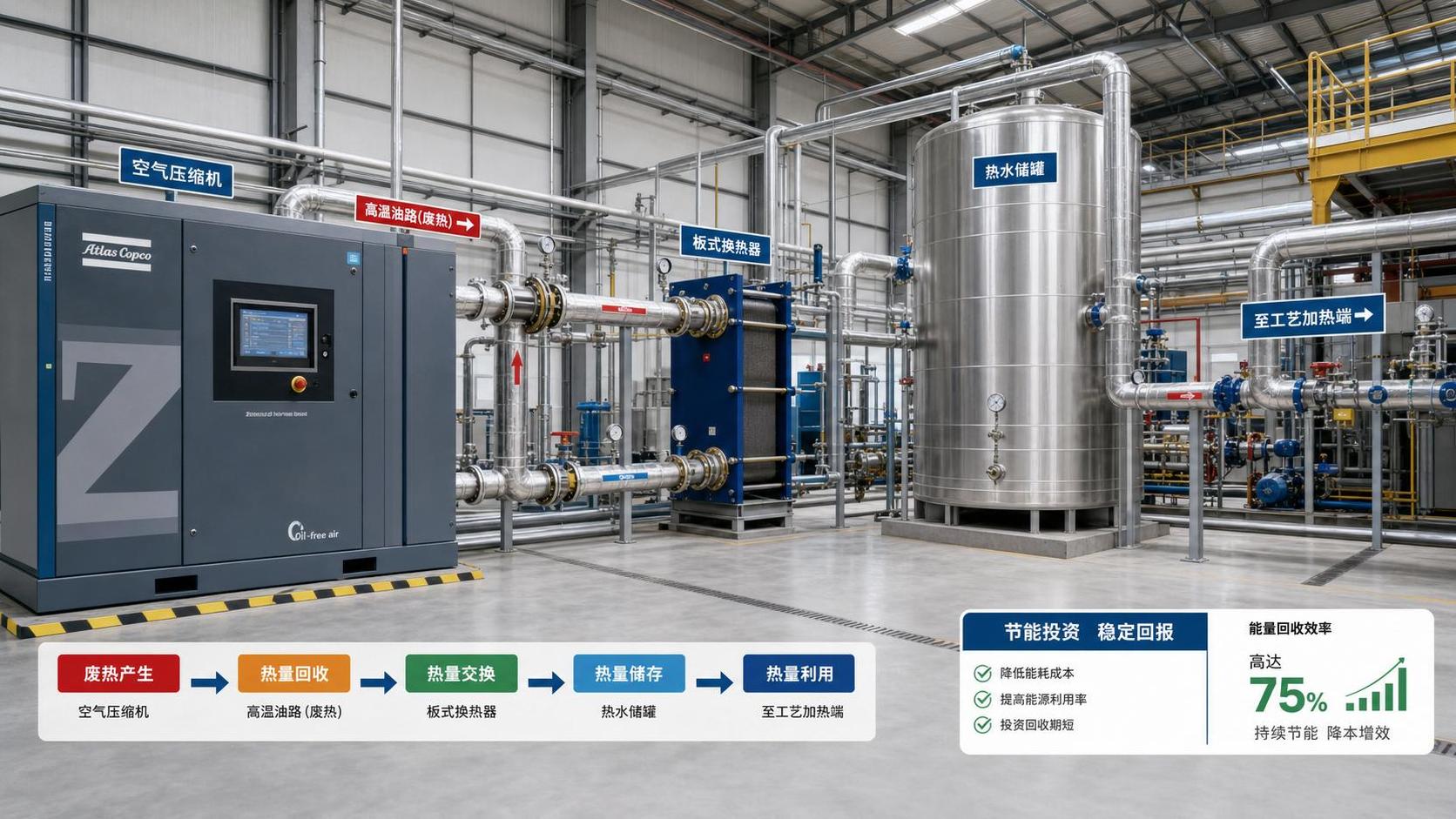
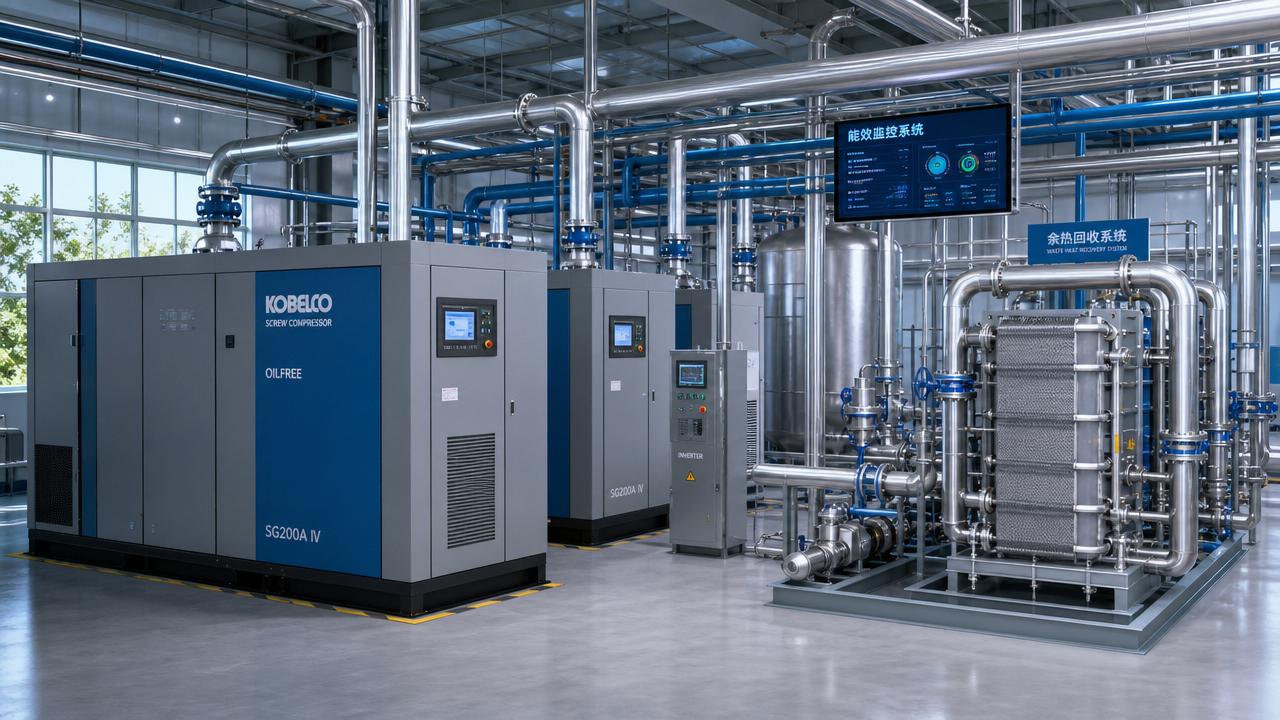
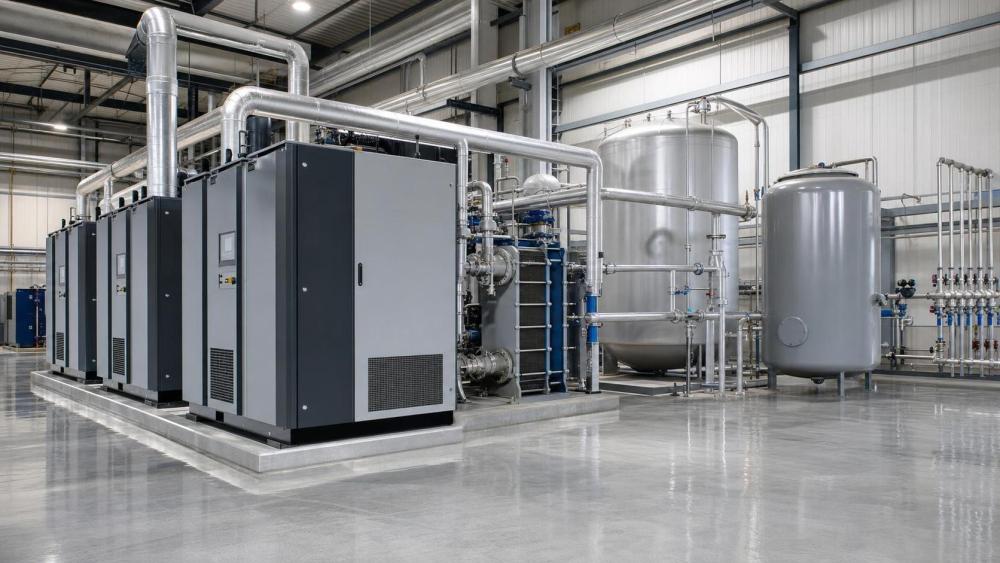
These systems capture waste heat from air compression and reuse it inside the facility.
Instead of losing thermal energy to the atmosphere, operators can redirect it to practical loads.
Typical uses include space heating, process water preheating, boiler feed support, and drying applications.
For procurement teams under pressure to lower operating costs, this matters for a simple reason.
Energy recovery systems for compressors reduce purchased energy while improving total system efficiency.
They also support carbon targets without forcing production changes or adding process risk.
From a buying perspective, the question is no longer whether waste heat exists.
The real question is how much of that heat can be recovered economically and consistently.
Why compressor heat recovery changes the cost equation
Compressed air is one of the most expensive utilities in industrial operations.
A large share of compressor input energy becomes heat during operation.
In many installations, up to 80 percent or more can be recovered under the right conditions.
That recovered value directly offsets gas, steam, or electric heating demand elsewhere.
This changes project economics because savings come from two directions at once.
First, the compressor room becomes more energy productive.
Second, the plant reduces reliance on separate thermal energy sources.
That is especially valuable where fuel prices are volatile or electricity tariffs are climbing.
In practical terms, energy recovery systems for compressors can shorten payback without changing output.
This makes them easier to justify than projects tied to uncertain production growth.
Where the savings usually appear
- Lower natural gas or steam consumption for hot water and process heating
- Reduced winter heating costs in production or warehouse spaces
- Less cooling burden in compressor rooms when heat is redirected
- Improved sustainability reporting through measurable energy reuse
- Better lifecycle economics for new compressor purchases
How energy recovery systems for compressors work in real facilities
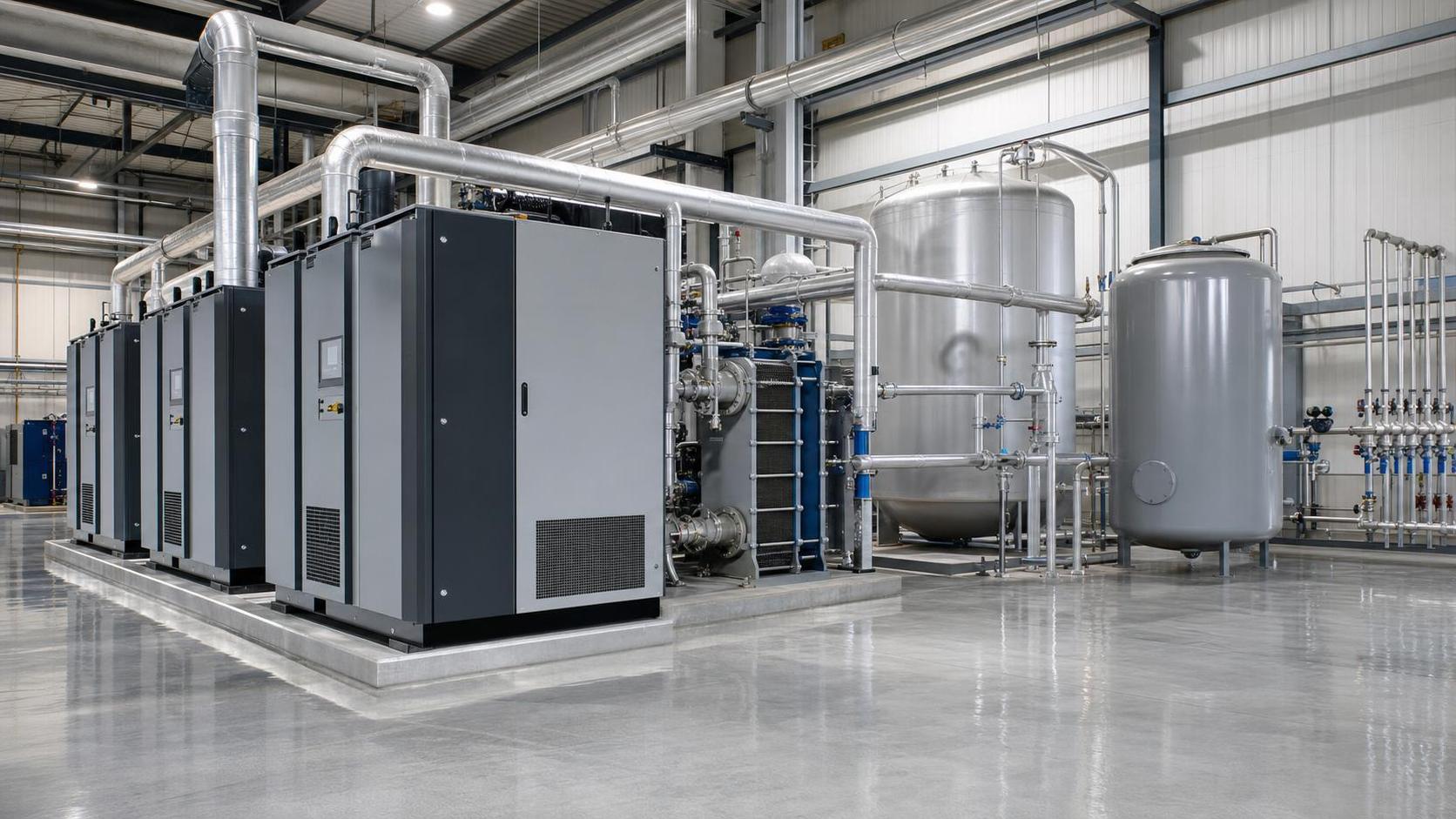
Most systems recover heat from either the cooling air stream or the oil circuit.
Air-cooled compressors can redirect hot discharge air to occupied or process areas.
Oil-injected units often use heat exchangers to transfer energy into water loops.
Water-cooled installations may offer even more structured heat capture options.
The best configuration depends on temperature level, load profile, and heat demand timing.
That timing issue is more important than many buyers expect.
Recovered heat only creates value when a facility can use it when it is available.
So the strongest projects match compressor operating hours with a stable thermal load.
Food plants, pharmaceutical sites, electronics manufacturing, and general process industries often fit well.
Facilities with year-round hot water demand usually see the clearest value.
Common recovery routes
- Warm air recovery for building heating during colder seasons
- Hot water generation for washdown, sanitation, or process support
- Preheating make-up water before boilers or other thermal equipment
- Heat integration into drying, cleaning, or low-temperature process loops
What buyers should evaluate before comparing suppliers
A good purchasing decision starts with plant data, not brochure claims.
The first step is understanding compressor load behavior across shifts and seasons.
Base load machines create more recoverable value than lightly used backup units.
Next, quantify the thermal demand that can realistically use recovered energy.
This includes required temperature, usage hours, seasonal variability, and distance from the compressor room.
Then review integration constraints such as piping, controls, maintenance access, and downtime windows.
At this stage, energy recovery systems for compressors should be judged on usable heat, not theoretical heat.
That distinction protects budgets from overestimated savings.
Key questions for technical and commercial review
- What percentage of compressor energy is recoverable at expected operating conditions?
- What outlet temperatures are guaranteed, and under which load ranges?
- How much usable heat is available annually, not just at peak conditions?
- What controls are included for seasonal bypass, safety, and load balancing?
- How will the system affect compressor warranty, service intervals, and reliability?
- What installation work falls outside the supplier scope?
- Can savings be measured through meters and reported after commissioning?
Comparing solution types and payback drivers
Not all energy recovery systems for compressors deliver the same value.
Some are simple add-ons for space heating, while others support integrated hot water recovery.
The lower-cost option is not always the stronger investment.
A cheaper system may recover less energy or only work part of the year.
A more capable system can justify higher capital if heat utilization stays high.
This is where lifecycle costing becomes more useful than purchase price alone.
Payback usually depends on six factors: run hours, power cost, heat demand, fuel offset value, installation complexity, and control quality.
Sites with continuous operation and stable hot water loads often perform best.
Risks that affect ROI and how to control them
The strongest business case can still weaken if project risks are ignored.
One common issue is mismatch between recovered heat and actual site demand.
Another is poor control logic that causes bypassing during useful operating periods.
In some plants, long pipe runs also reduce delivered value through thermal losses.
Maintenance teams may resist solutions that add service complexity without clear visibility.
That is why procurement should ask for performance measurement from the start.
Metered outcomes create confidence after handover and improve future investment decisions.
Practical risk controls
- Validate annual heat demand before final equipment selection
- Require duty profiles for each compressor in the recovery scope
- Ask for delivered heat estimates, not generic recovery percentages
- Include controls, metering, and commissioning in the purchase scope
- Review maintenance access and spare part availability early
- Link supplier acceptance to documented performance testing
A practical buying framework for energy recovery systems for compressors
In real purchasing cycles, the best decisions are structured and data-led.
Start by screening compressors with long annual operating hours and stable base load.
Then map nearby heat sinks that can absorb recovered energy consistently.
Use this data to create a shortlist of technically suitable recovery paths.
After that, compare supplier proposals using the same assumptions and reporting format.
This avoids distorted comparisons between optimistic and conservative estimates.
- Gather compressor power, run hours, control mode, and load profile data.
- Identify heat users by temperature requirement and annual operating schedule.
- Estimate usable recovered energy and corresponding fuel or power offset.
- Request proposals with clear scope, controls, metering, and guarantees.
- Review payback, maintenance impact, and integration downtime together.
- Approve projects that show robust savings under realistic operating conditions.
For many industrial sites, energy recovery systems for compressors are no longer optional efficiency upgrades.
They are becoming a disciplined way to cut power costs and improve energy resilience.
When evaluated against real heat demand and lifecycle value, the returns are often compelling.
The strongest next step is a site-specific audit that turns waste heat into a measurable procurement advantage.
Ready when you are. Send us a message to get started.
Related News
- When does variable gas flow justify a custom screw compressor system?Author :Pneumatic Power Engineer

- How to size compressed air equipment for pneumatic toolsAuthor :Pneumatic Power Engineer

- How Should Energy Management Systems Handle Compressor Load Changes?Author :Pneumatic Power Engineer

- Which Maintenance Issues Reduce Air Compressor Efficiency?Author :Pneumatic Power Engineer

- How Much Energy Can Variable-Speed Screw Compressors Save?Author :Pneumatic Power Engineer

- Industrial Compressor Selection: Matching Flow, Pressure, and Duty CycleAuthor :Pneumatic Power Engineer

- China Expands Cross-Border RMB and FX Cash Pooling NationwideAuthor :Pneumatic Power Engineer

- How to Size Air Compressor Systems for Pneumatics by Flow and Pressure DemandAuthor :Pneumatic Power Engineer

- How Energy Recovery Systems for Compressors Cut Power CostsAuthor :Pneumatic Power Engineer

- How to Evaluate Screw Compressors in Industrial Refrigeration EquipmentAuthor :Pneumatic Power Engineer

- India Makes BIS Certification Mandatory for Screw CompressorsAuthor :Pneumatic Power Engineer

- China Tightens Export Filing for Screw CompressorsAuthor :Pneumatic Power Engineer

- SABIC Sets IoT Interface Rule for Screw CompressorsAuthor :Pneumatic Power Engineer

- Industrial Heat Recovery Systems for Compressors: When Do Energy Savings Pay Back?Author :Pneumatic Power Engineer

- EU Tightens REACH Limit for Screw Compressor LubricantsAuthor :Pneumatic Power Engineer

- EU Opens China Screw Compressor Review With Carbon RuleAuthor :Pneumatic Power Engineer

- DOE Mandates AHRI 1000-2026 for Screw CompressorsAuthor :Pneumatic Power Engineer

- VDMA Filing Signals EU Risk for Chinese Oil Screw CompressorsAuthor :Pneumatic Power Engineer
![]()
- Screw vs Piston Air Compressors for Stable Plant OutputAuthor :Pneumatic Power Engineer

- Saudi SASO Tightens Refrigerant Limits in IEC 60335-2-40:2026Author :Pneumatic Power Engineer

- IIR Warns of 18-Week Lead Times for Screw CompressorsAuthor :Pneumatic Power Engineer

- Welded Compressed Air Manifold Selection Guide for Pressure Stability and LeaksAuthor :Pneumatic Power Engineer

- India BIS Rule Adds IS 16830 Requirement for Imported Screw CompressorsAuthor :Pneumatic Power Engineer

- What to Check Before Choosing a Compressed Air FactoryAuthor :Pneumatic Power Engineer

- China Tightens Export Checks on Screw CompressorsAuthor :Pneumatic Power Engineer

- Screw Compressor Lead Times Reach 22 WeeksAuthor :Pneumatic Power Engineer

- Vietnam Requires QR Labels on Imported Screw CompressorsAuthor :Pneumatic Power Engineer

- Compressed Air Technologies Filtration: How to Reduce Pressure Drop and Energy LossAuthor :Pneumatic Power Engineer

- STSPIN830 Lead Time Tops 32 Weeks in Screw CompressorsAuthor :Pneumatic Power Engineer

- IGBT Shortage Extends Screw Compressor Lead TimesAuthor :Pneumatic Power Engineer

- Compressed Air Systems: 7 Hidden Costs That Raise Total Operating ExpenseAuthor :Pneumatic Power Engineer

- Compressed Air Efficiency: 7 Hidden Losses That Raise Operating CostsAuthor :Pneumatic Power Engineer

- How to Compare Screw vs Oil-Free Air Compression SystemsAuthor :Pneumatic Power Engineer

- Compressed Air Leaks: What They Really Cost in Daily OperationsAuthor :Pneumatic Power Engineer

- DOE Moves Up R449A Chiller Deadline to March 2027Author :Pneumatic Power Engineer

- How Compression Technology Cuts Energy Use in Modern PlantsAuthor :Pneumatic Power Engineer