How Smart Thermal Systems Improve Industrial Cooling Efficiency




How Smart Thermal Systems Improve Industrial Cooling Efficiency
The term smart thermal systems for industrial cooling is often used too loosely. In practice, it does not mean simply adding sensors to a chiller or connecting a cooling skid to a dashboard. A system becomes “smart” when measurement, control logic, and heat-transfer hardware are coordinated closely enough to change how cooling capacity is produced, distributed, and protected under variable load. That distinction matters, because many industrial facilities already have automation, yet still lose efficiency through unstable supply temperatures, poor part-load performance, excessive pump energy, or heat exchangers that no longer match the process they serve.
For technical evaluation, the more useful question is not whether a cooling system is digital, but whether it can continuously align thermal output with process demand. In a plant environment, demand rarely stays fixed. Ambient temperature shifts, production batches change, machine utilization rises and falls, and fouling gradually alters heat-transfer behavior. Conventional systems are usually designed around peak conditions and then operated with conservative margins. That keeps the process safe, but it often locks the facility into avoidable energy use and wider temperature deviations than the production line actually needs.
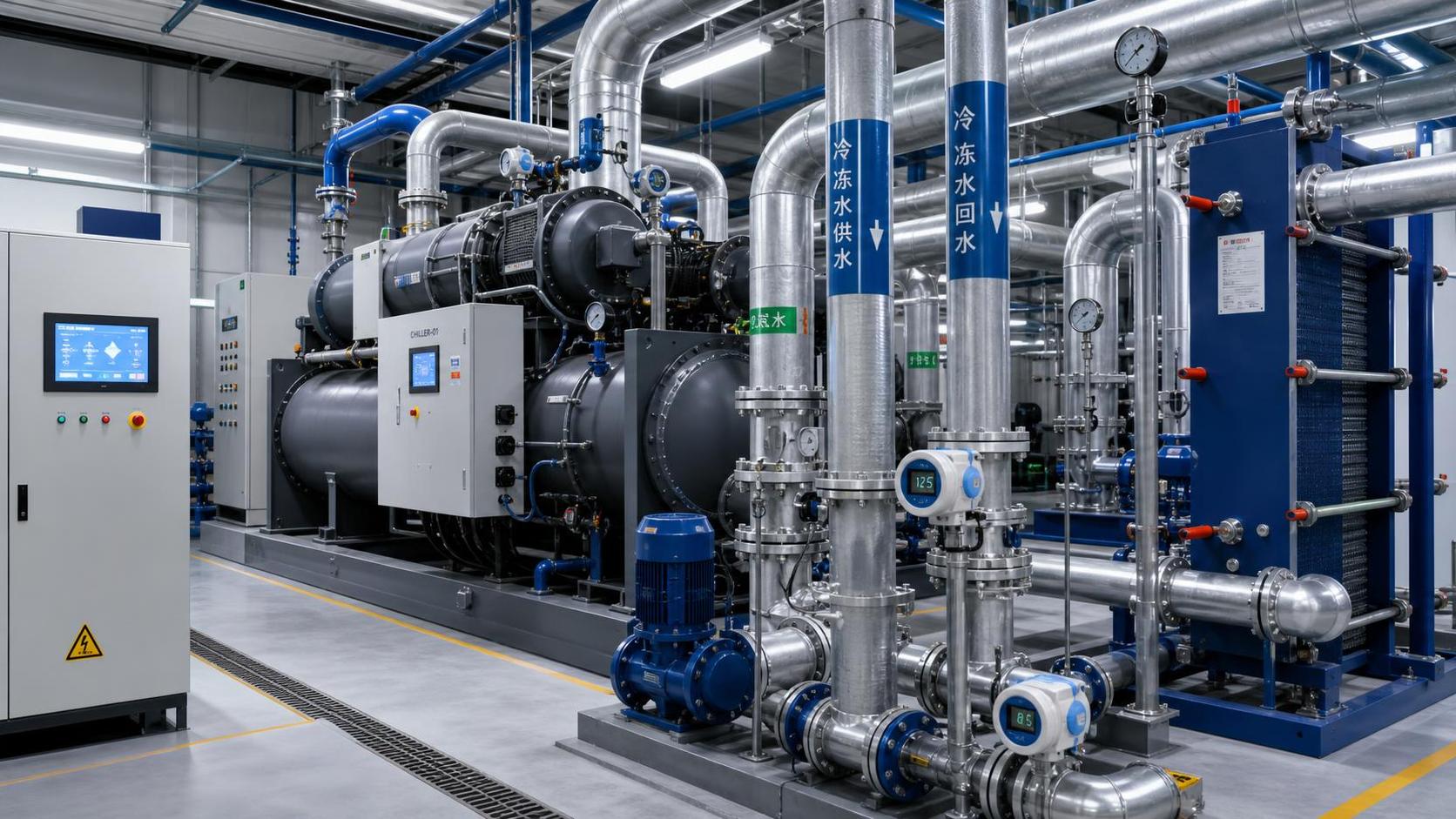
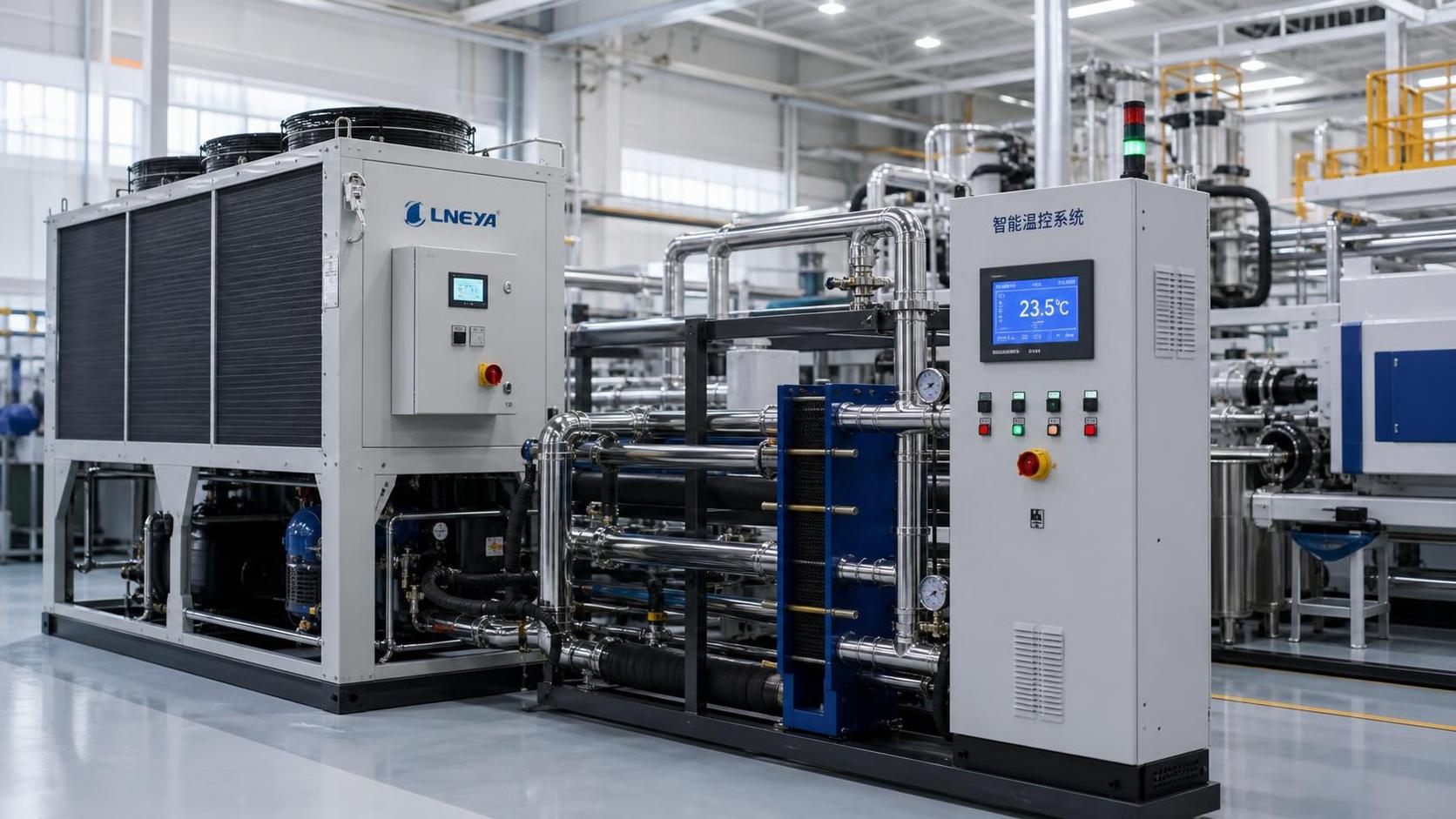
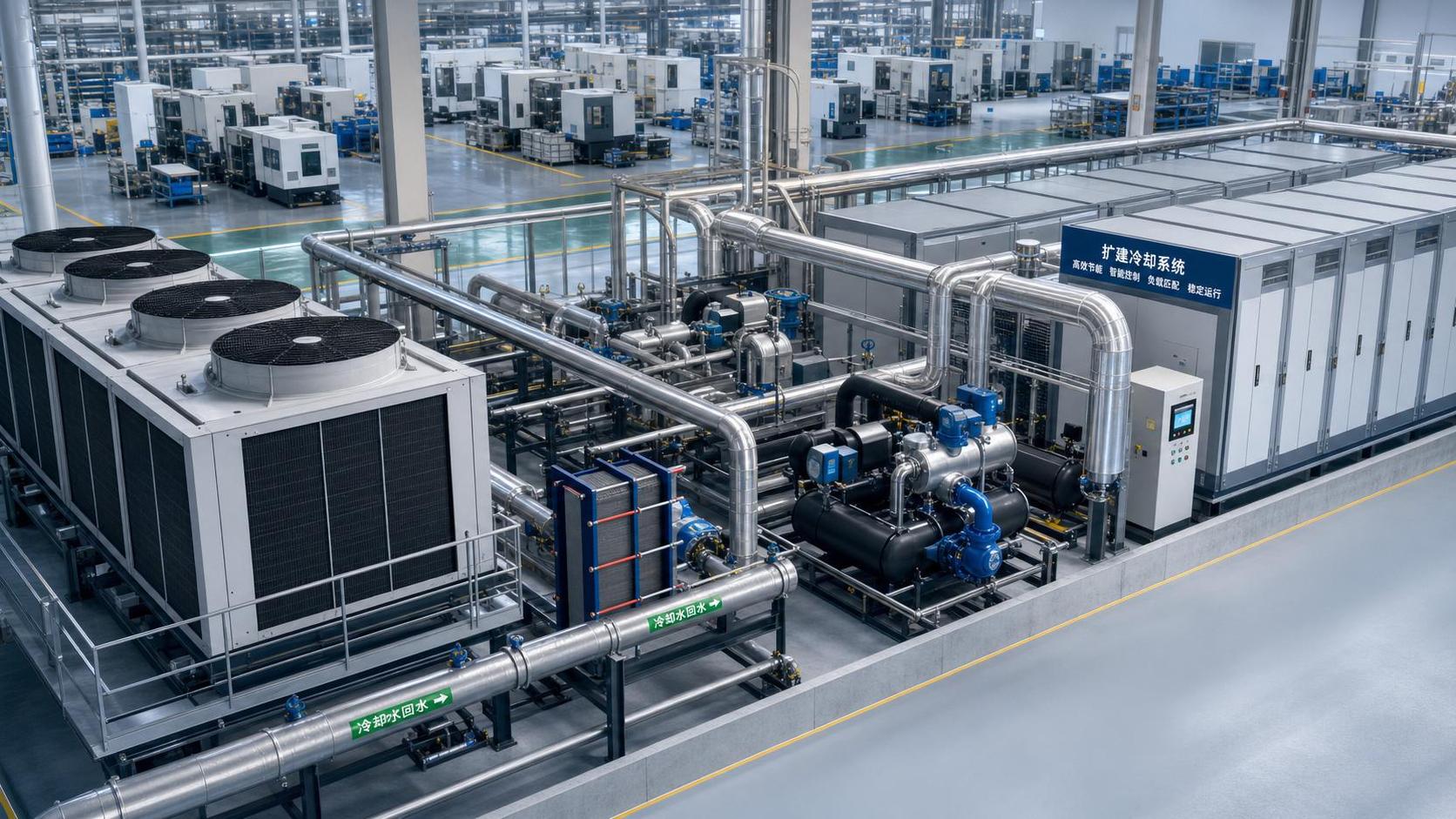
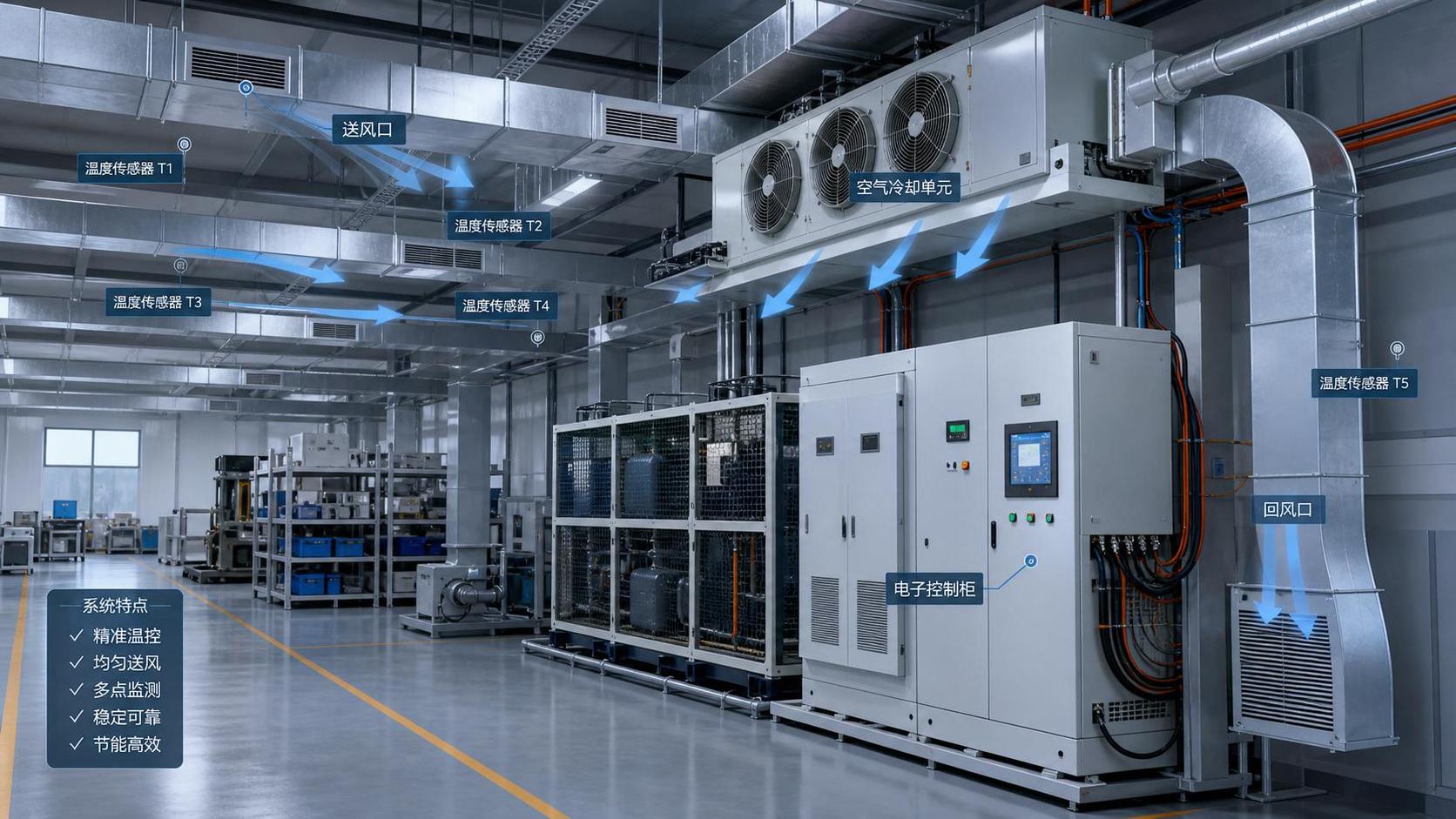
A smart thermal architecture addresses that gap by combining three layers: real-time sensing, adaptive control, and efficient thermal equipment selection. The sensing layer tracks variables that actually describe system behavior, such as leaving water temperature, return temperature, approach temperature across heat exchangers, pressure differential, compressor loading, flow stability, and in some cases power quality and ambient conditions. The control layer converts those signals into operational decisions: staging compressors, resetting temperature setpoints, modulating pumps and fans with variable-speed drives, or routing load between free cooling, mechanical cooling, and heat recovery paths. The equipment layer is just as important. Good controls cannot compensate for a condenser, evaporator, dry cooler, or plate heat exchanger that is fundamentally mismatched to the duty profile.
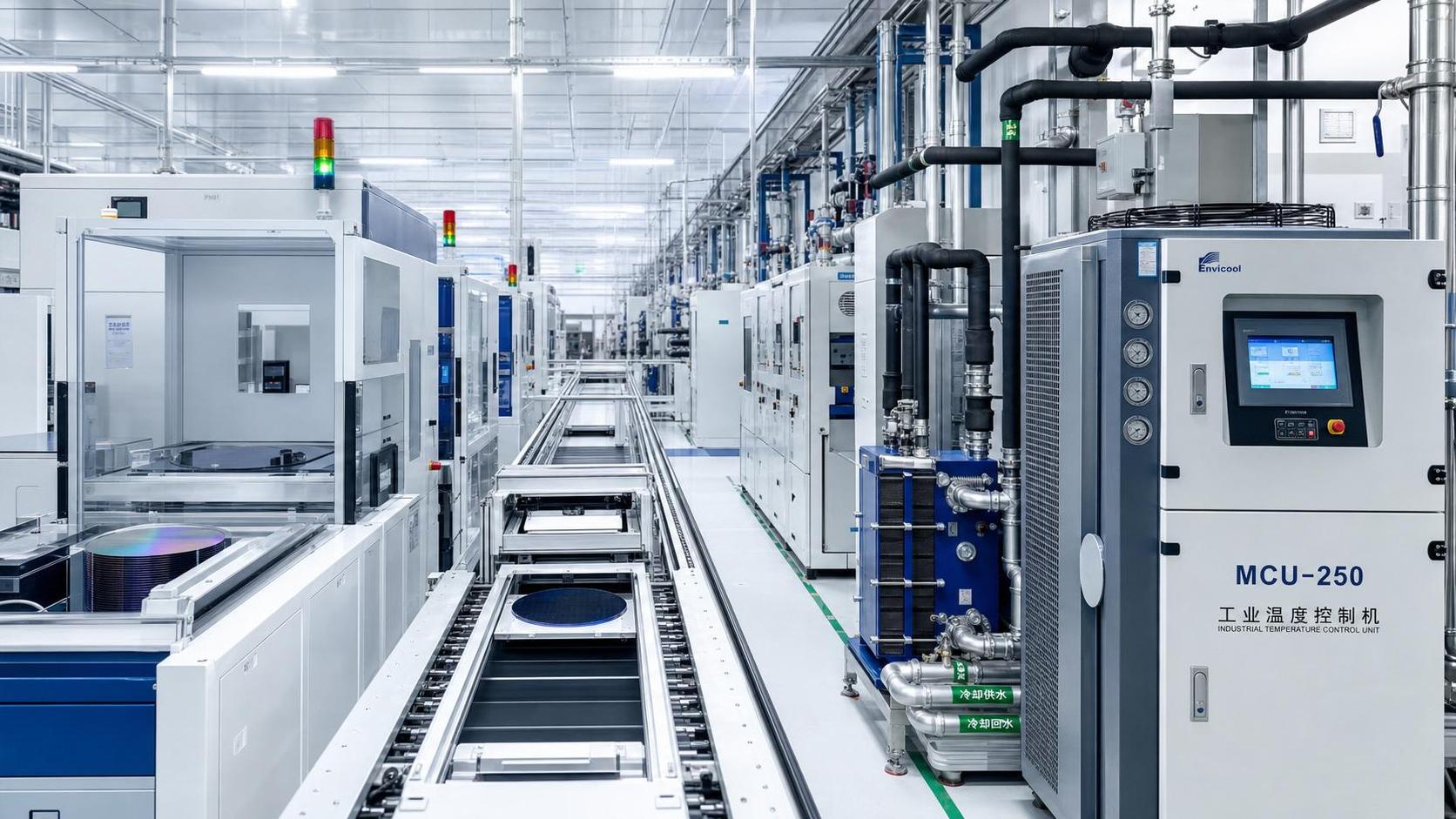
That is why the conversation belongs as much to thermodynamics as to software. Industrial cooling efficiency is not only about reducing kilowatt-hours at the chiller. It is about moving heat with fewer conversion losses across the full thermal chain. A well-designed system may reduce compression work, lower parasitic pumping power, stabilize process temperatures, and recover waste heat that would otherwise be rejected to atmosphere. In sectors with high thermal sensitivity, such as pharmaceuticals, semiconductor support utilities, food processing, or precision manufacturing, the value of that stability can outweigh the direct utility savings.
What “smart” usually changes on the plant floor
The most immediate change is that cooling is managed as a dynamic system rather than a fixed asset. Instead of holding one rigid setpoint all year, the control sequence may allow setpoint reset when process tolerance permits. Instead of running pumps at full speed and throttling with valves, it may control flow based on differential pressure or actual thermal demand. Instead of treating all alarms equally, it can distinguish between a sensor anomaly, early-stage fouling, inadequate flow, and a genuine risk to production.
This is where many evaluations go wrong. Buyers sometimes focus on interface features, cloud access, or the number of connected points. Those are secondary. The real measure is whether the system improves decisions that affect coefficient of performance, approach temperature, cycling frequency, and process uptime. A visually polished monitoring platform with weak control logic may add visibility without improving the thermal outcome. By contrast, a less elaborate interface paired with disciplined sequencing, reliable instrumentation, and sound heat exchanger design can produce a much larger operational gain.
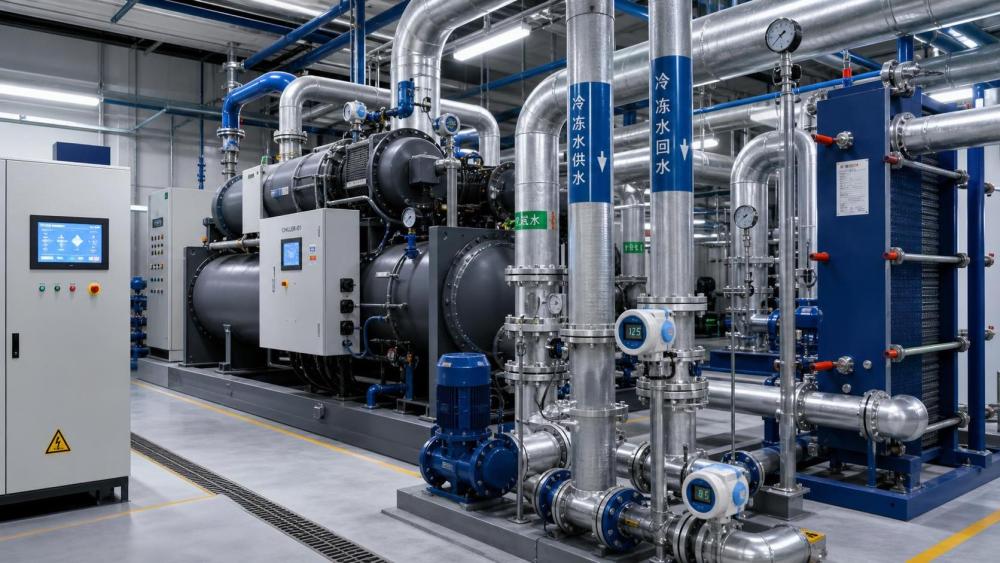
There is also a practical maintenance dimension. Smart thermal systems can reveal gradual performance drift that operators often miss during normal production. A rising condenser approach may indicate scaling or airflow restriction. A larger-than-expected temperature difference combined with unstable flow may point to valve behavior, pump wear, or partial blockage. Repeated compressor starts under moderate load may expose poor staging logic rather than equipment shortage. These are not abstract analytics. They change when maintenance is scheduled, how spare capacity is judged, and whether a plant responds with cleaning, balancing, control tuning, or capital replacement.
Where efficiency gains actually come from
In industrial cooling, “efficiency” is often discussed as if it were one number. It is not. A technical evaluator normally needs to separate at least four different effects.
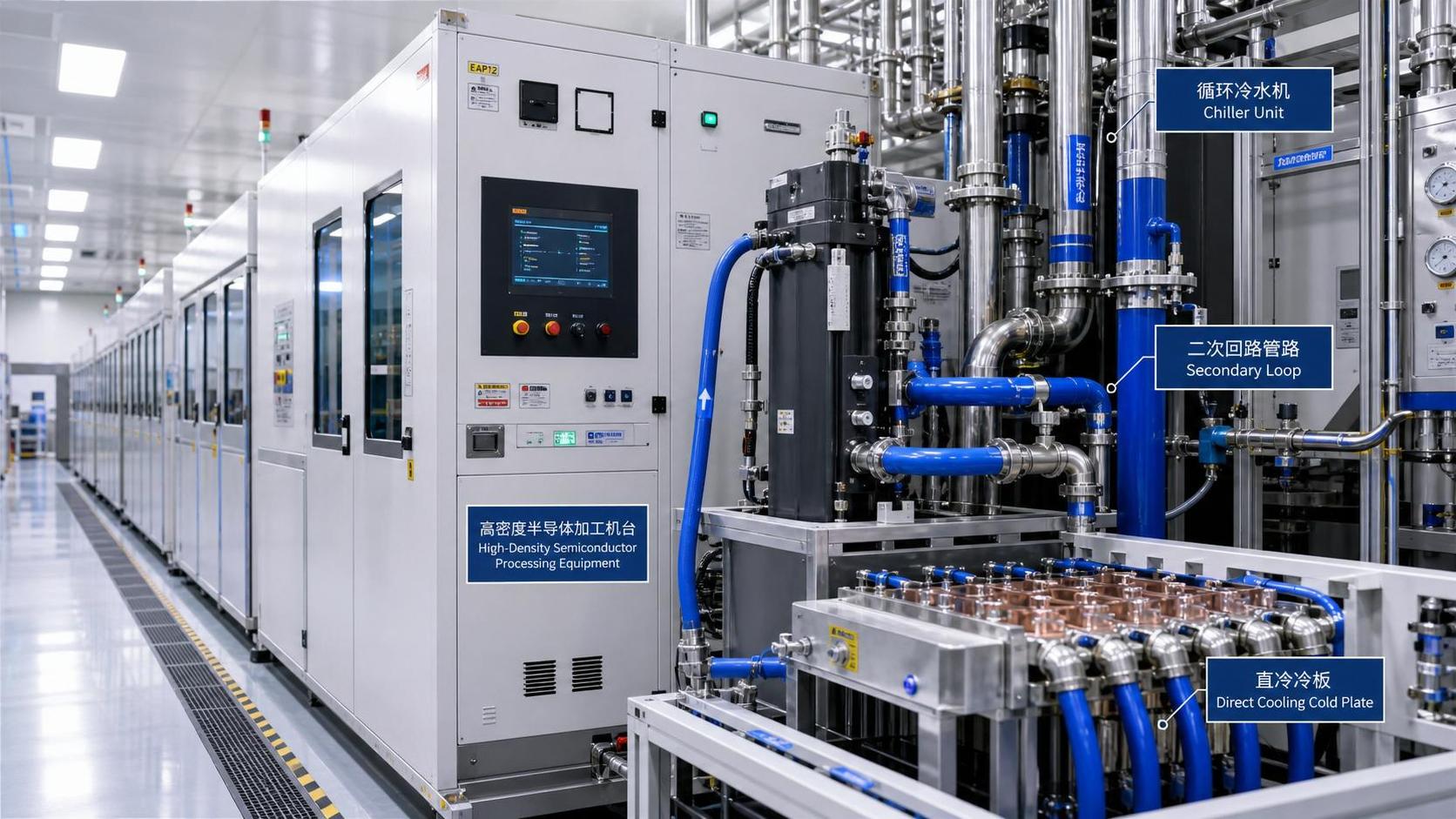
Notice that not all of these gains appear directly on an energy bill. If a cooling system prevents a temperature-sensitive process from drifting out of specification, the business effect may show up as yield protection or reduced downtime rather than pure utility savings. That is especially relevant in facilities where chilled water or process cooling supports compressed air drying, vacuum systems, reactors, fermentation lines, cleanroom infrastructure, or high-precision machine tools. In those cases, cooling is a utility, but it behaves like a production asset.
Another point often overlooked: smart control does not always mean colder operation. In many systems, running colder than necessary increases compressor lift and power draw. Better systems identify the highest temperature that still protects the process, then hold it consistently. That sounds simple, but it depends on having trustworthy sensors, stable hydraulics, and a control sequence that does not hunt under changing load. Without those basics, operators tend to force lower setpoints as a safety cushion, and efficiency erodes quietly over time.
The heat exchanger question is bigger than it looks
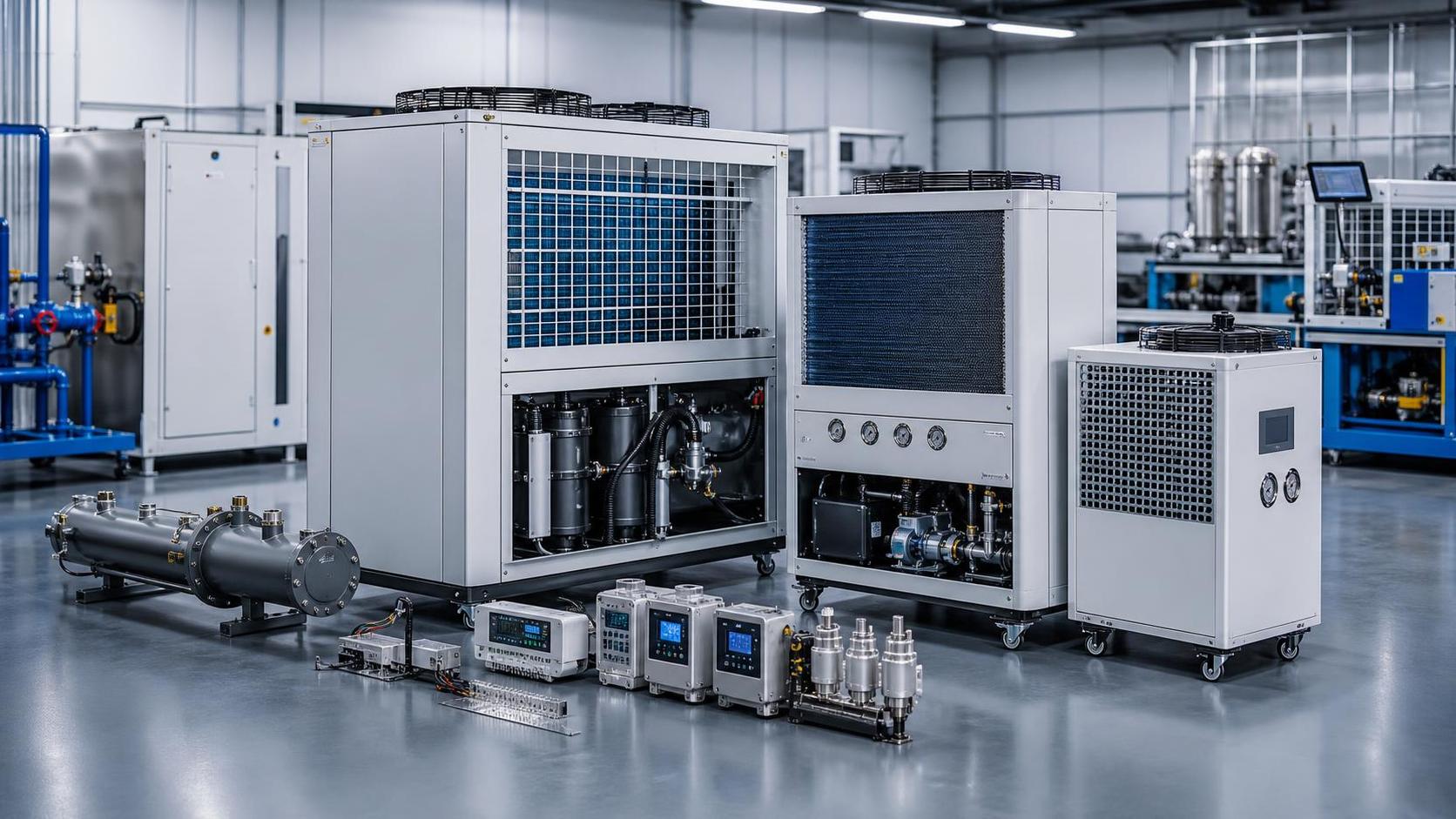
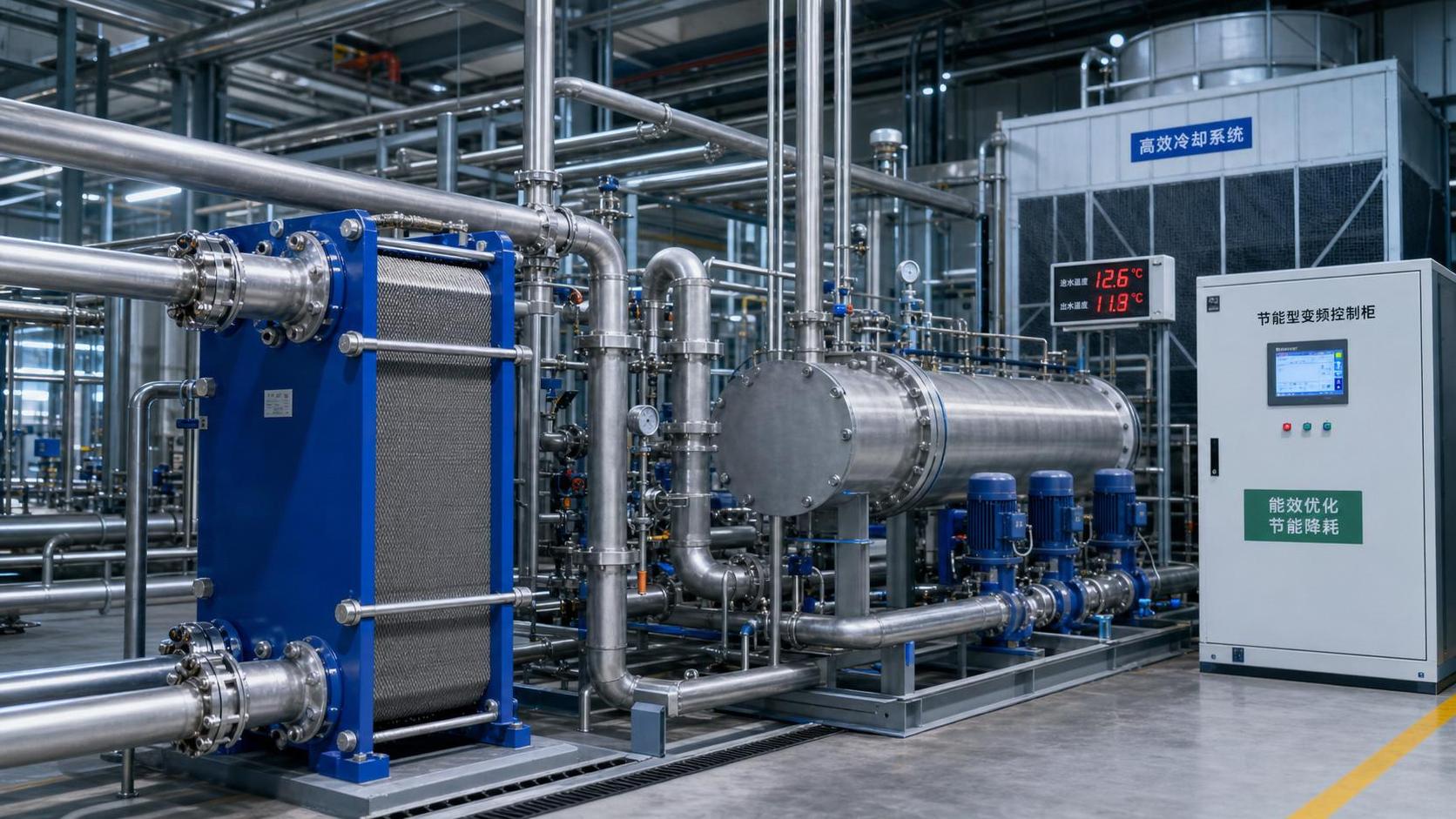
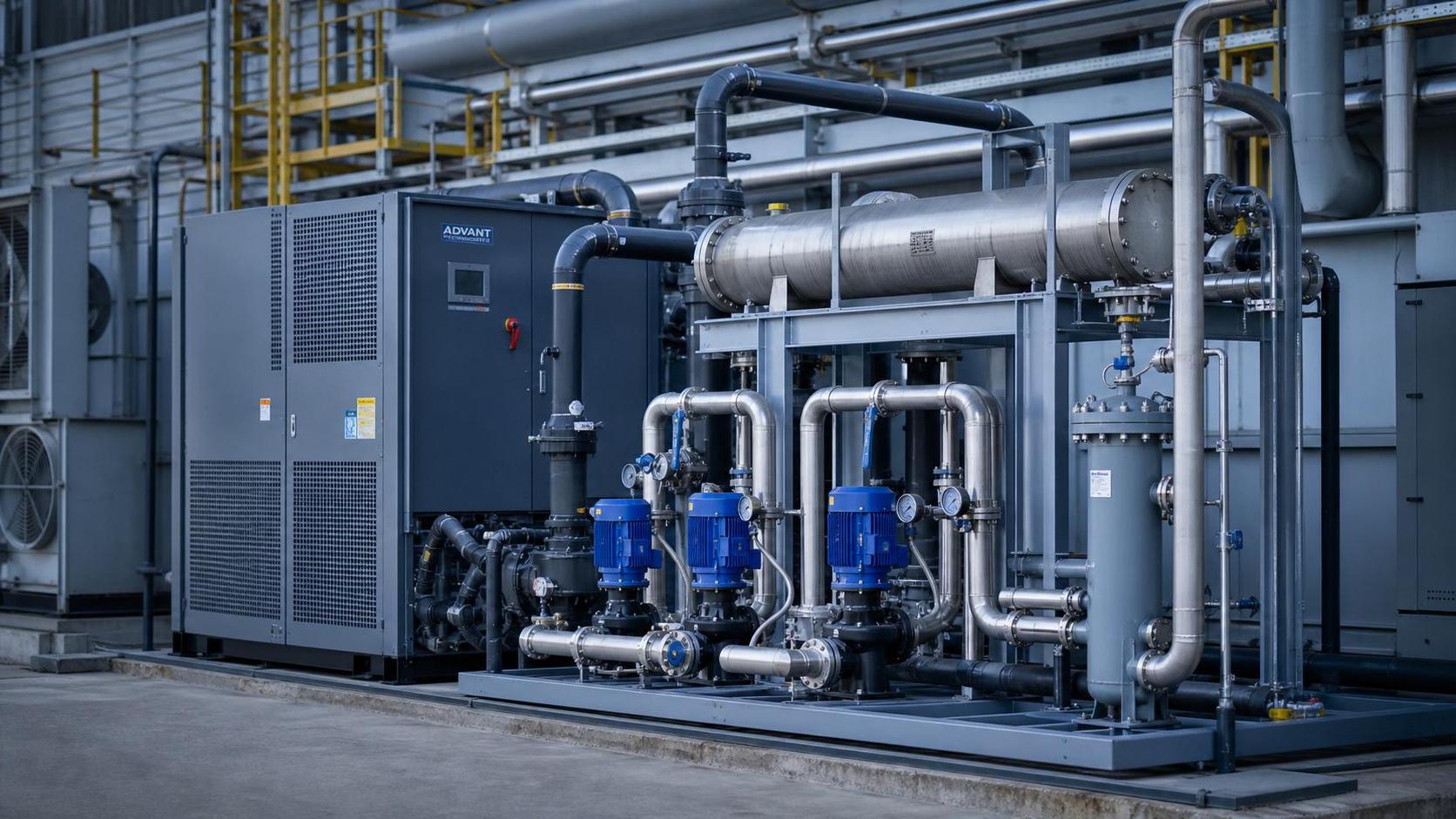
Any serious discussion of smart thermal systems should include heat exchange design. Industrial cooling is full of projects where software receives most of the attention, while the heat-transfer surfaces decide the real performance ceiling. Plate heat exchangers, shell-and-tube units, air-cooled condensers, dry coolers, and microchannel technologies all have different strengths, especially around fouling behavior, footprint, refrigerant charge, pressure drop, and cleaning strategy.
For example, a system intended for precise temperature control in a relatively clean loop may benefit from compact, fast-response heat exchange. A harsher water quality environment may require a more conservative selection that tolerates fouling and supports easier service access. Smart controls can detect declining performance, but they cannot erase the consequences of a poor material or geometry choice. Technical evaluators should therefore treat thermal intelligence and exchanger selection as one design problem, not two separate procurement packages.
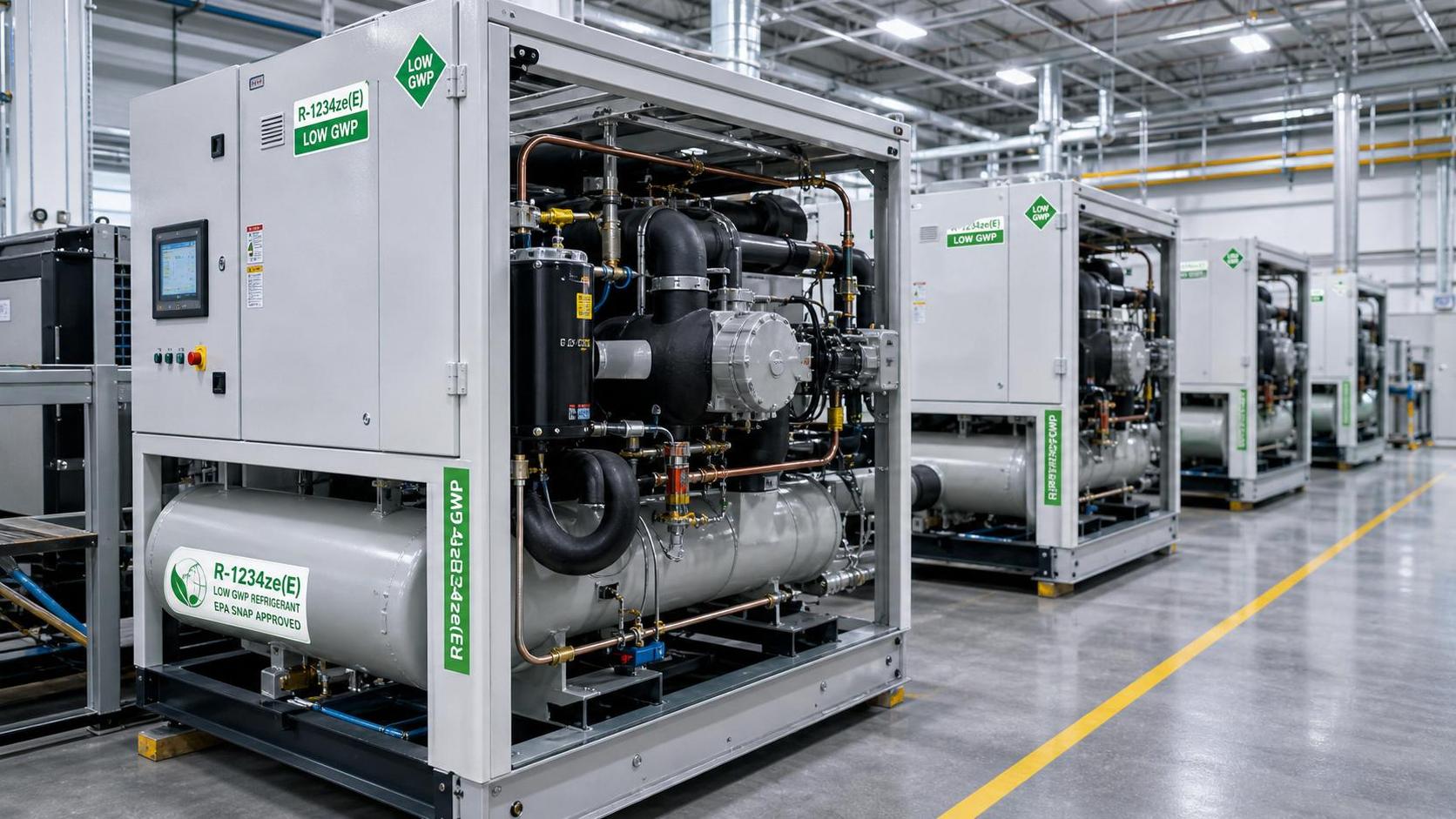
This is also where decarbonization claims need careful reading. Lower-GWP refrigerants, free cooling strategies, and waste-heat recovery can improve the environmental profile of an installation, but only if the full operating envelope has been understood. A refrigerant change may alter pressure levels, temperature glide, or service practices. A free cooling concept may perform well in one climate and deliver limited benefit in another. Waste heat may be technically recoverable yet operationally hard to use unless there is a coincident demand. Smart thermal systems help by making those tradeoffs visible in operation rather than only in design calculations.
Common misunderstandings during technical evaluation
One common misunderstanding is to equate smart systems with full autonomy. Most industrial operators do not want a cooling system that behaves unpredictably in the name of optimization. They want bounded intelligence: clear control priorities, known fallback modes, stable alarms, and manual override where process risk demands it. The best systems are not “self-running” in a vague sense. They are transparent enough that engineering teams can understand why setpoints changed, why a machine was staged in or out, and what conditions triggered protective action.
Another mistake is evaluating only peak design performance. Industrial facilities spend much of the year at partial load, transitional load, or uneven load across multiple circuits. A system that looks impressive at full capacity can perform poorly when the line is operating at 45% to 70% of design. This is particularly relevant where compressed air, vacuum, and process cooling interact, because utility demand may shift independently across departments. The smart system should therefore be judged on seasonal behavior, controllability, and resilience to variability, not just rated conditions.
A third misunderstanding concerns data quality. More data is not automatically better data. If temperature sensors are badly located, if flow is inferred rather than measured where it matters, or if timestamps are not synchronized across equipment, the control layer can make poor decisions very quickly. In other words, digitalization can magnify instrumentation errors. Experienced evaluators usually spend more time on sensor architecture, calibration practice, and control sequence documentation than on the dashboard itself.
What to look for when comparing solutions
When comparing smart thermal systems for industrial cooling, the strongest proposals usually answer a few grounded questions. What process temperature band must actually be maintained? Which loads are critical and which are flexible? How is part-load efficiency characterized? What happens when a sensor fails, a heat exchanger fouls, or ambient conditions exceed the design norm? Can the controls coordinate cooling with adjacent utilities such as compressed air, vacuum, or heat recovery loops? Those questions sound basic, but they expose whether the solution has been engineered around the real plant or around a generic control package.
It is also sensible to ask how performance will be verified after commissioning. In technical terms, “smart” should remain observable. Trend data, alarm rationalization, setpoint history, and energy baselines should make it possible to see whether the promised logic is operating as intended. Otherwise the system may drift back into manual operation, fixed conservative settings, or overridden sequences that erase much of the original value.
The most reliable interpretation is straightforward: a smart thermal system is not a decorative layer on top of industrial cooling. It is a disciplined way of making thermodynamic equipment respond to real operating conditions with less waste and tighter control. For technical evaluators, the task is to verify that intelligence is expressed in measurable thermal behavior, not just in connectivity claims. Once that standard is applied, the difference between a merely connected cooling system and a genuinely efficient one becomes much easier to see.
Related News
- How Smart Thermal Systems Improve Industrial Cooling EfficiencyAuthor :Cryogenic Systems Expert

- How to Choose Process Cooling Equipment for Stable Temperature ControlAuthor :Cryogenic Systems Expert

- EU Finalizes 2026 HFC Quota Cut for R-134a ChillersAuthor :Cryogenic Systems Expert

- EU Tightens HFC-134a Quotas for Industrial ChillersAuthor :Cryogenic Systems Expert

- REACH SVHC Update Pressures HFC-134a Chiller Supply ChainsAuthor :Cryogenic Systems Expert

- EU PFAS Coolant Ban Reshapes Chiller ExportsAuthor :Cryogenic Systems Expert

- EU REACH Restricts PFAS Cooling Media ImportsAuthor :Cryogenic Systems Expert

- EU Ecodesign Rule Takes Effect for Industrial ChillersAuthor :Cryogenic Systems Expert

- EU REACH Rule Takes Effect for PFAS in Industrial Cooling ExportsAuthor :Cryogenic Systems Expert

- Industrial Cooling for Plastic Processing: How to Size for Stable Cycle TimesAuthor :Cryogenic Systems Expert

- EU F-Gas Update Bars R404A/R507 in Commercial CoolingAuthor :Cryogenic Systems Expert

- DOE Raises Chiller Efficiency Standard From October 2026Author :Cryogenic Systems Expert

- India Mandates BIS Energy Certification for Industrial ChillersAuthor :Cryogenic Systems Expert

- Energy-Efficient Heat Exchange for Process Cooling: Cost vs PaybackAuthor :Cryogenic Systems Expert

- EPA R-134a Import Ban Takes Effect on July 13, 2026Author :Cryogenic Systems Expert

- India BIS Rule Takes Effect for Industrial ChillersAuthor :Cryogenic Systems Expert

- EPA Cuts R134a Import Quotas 20% From July 10Author :Cryogenic Systems Expert

- How to Compare Energy-Efficient Cooling Systems for Factory Expansion ProjectsAuthor :Cryogenic Systems Expert

- Chiller Price Index Rises 11.3% in Q2Author :Cryogenic Systems Expert

- Saudi SASO Tightens Chiller Import Compliance From July 10Author :Cryogenic Systems Expert

- Dubai Opens Fast-Track Chiller TendersAuthor :Cryogenic Systems Expert

- Japan Raises Chiller COP Floor to 6.2 From Sept. 1Author :Cryogenic Systems Expert
![]()
- Compact Thermal Management in Smart Devices: Common Failure RisksAuthor :Cryogenic Systems Expert

- Thermal Management for Batteries: Cooling Methods ComparedAuthor :Cryogenic Systems Expert

- How Compact Thermal Design Extends Smart Device UptimeAuthor :Cryogenic Systems Expert

- Shanghai-Rotterdam Reefer Rates Jump 37% in a WeekAuthor :Cryogenic Systems Expert

- Process Cooling Equipment Low Maintenance: What Cuts Downtime Over 5 Years?Author :Cryogenic Systems Expert

- Semiconductor Cooling Solutions: Which Design Works Best for High-Density Tools?Author :Cryogenic Systems Expert

- Semiconductor Thermal Management Systems: Preventing Yield Loss from Heat DriftAuthor :Cryogenic Systems Expert

- EPA Clears R-1234ze(E) for Industrial ChillersAuthor :Cryogenic Systems Expert
 for Industrial Chillers")
- DOE Raises Chiller IEER Floor to 12.8 From Oct. 2026Author :Cryogenic Systems Expert

- Singapore Refrigeration Show Adds Green Compliance HubAuthor :Cryogenic Systems Expert

- How Food Industry Temperature Control Systems Reduce Product LossAuthor :Cryogenic Systems Expert

- EU REACH Adds 12 SVHCs, Raising Chiller Compliance RiskAuthor :Cryogenic Systems Expert

- Precision Temperature Control Air Cooling: Key Setup Mistakes That Reduce StabilityAuthor :Cryogenic Systems Expert

- India BEE Eyes APF Labels for Imported ChillersAuthor :Cryogenic Systems Expert