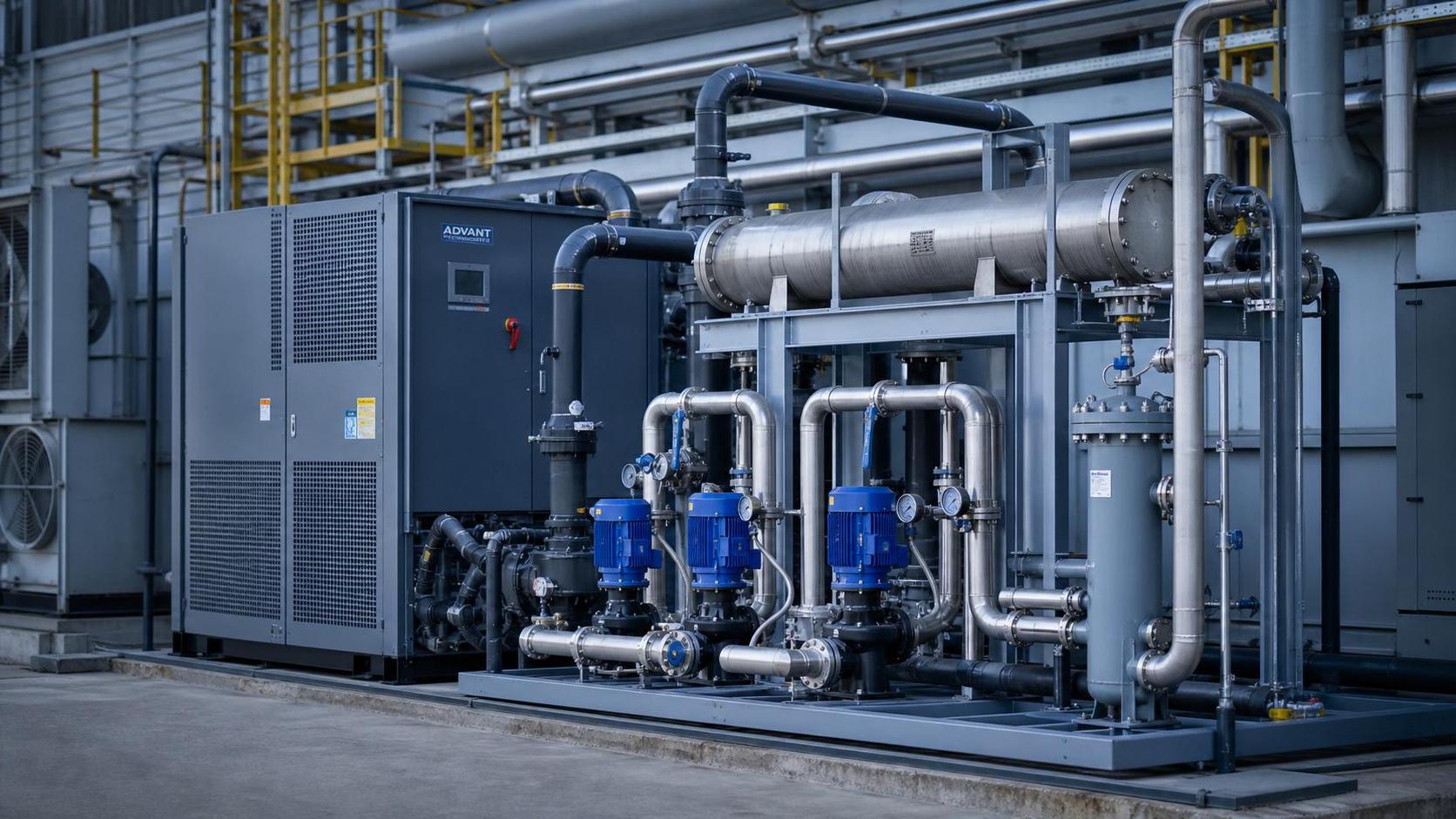
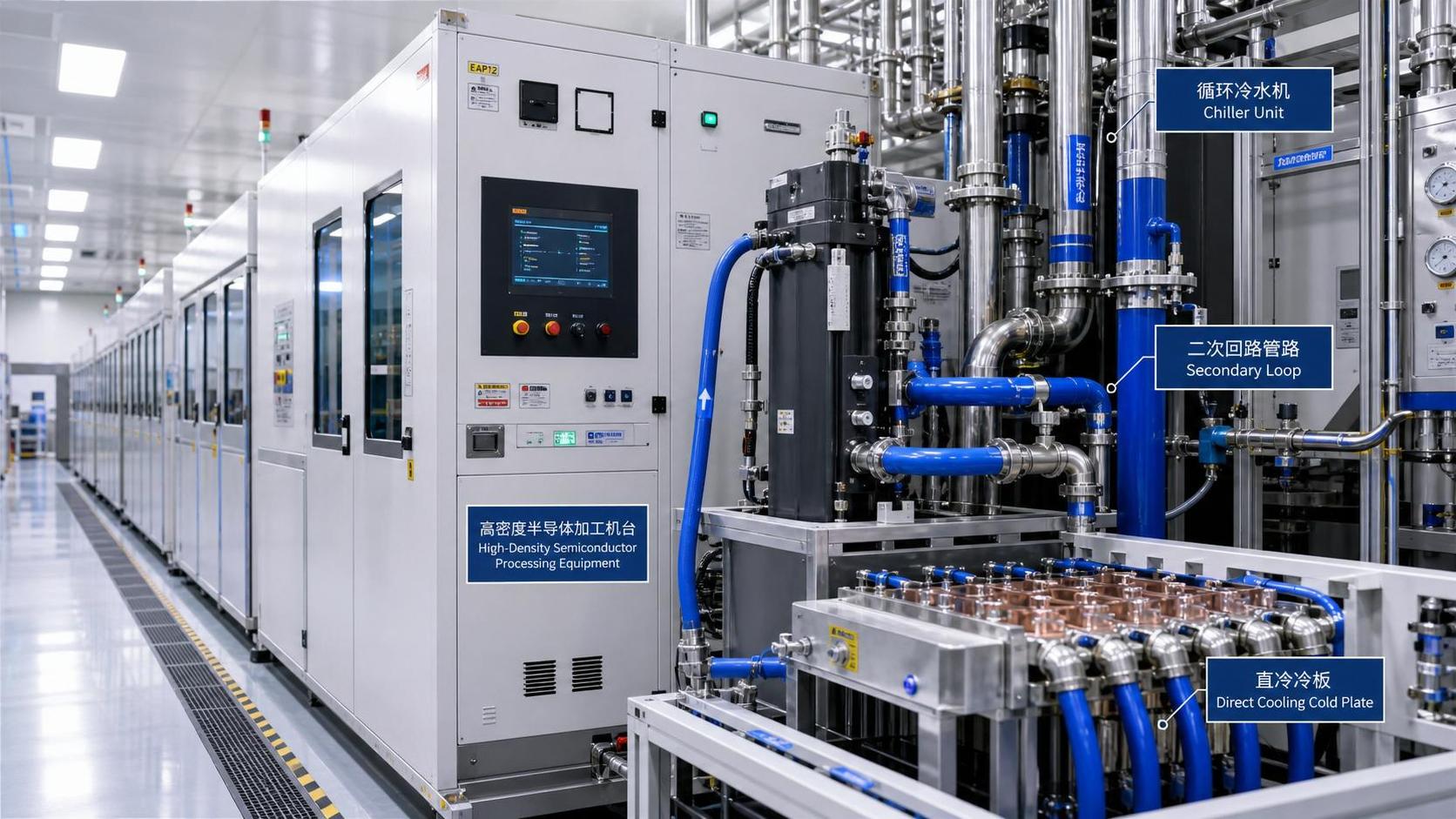
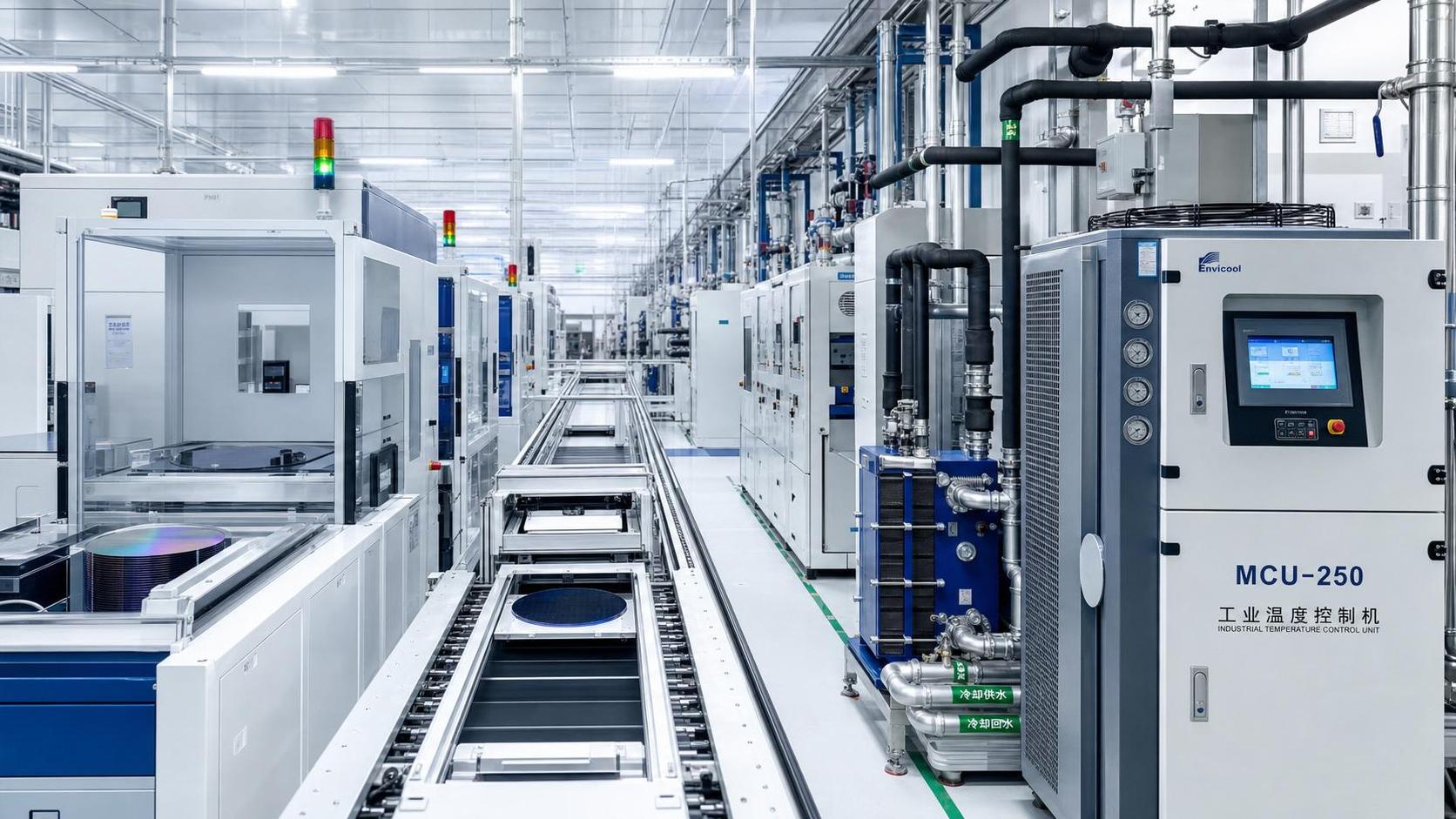
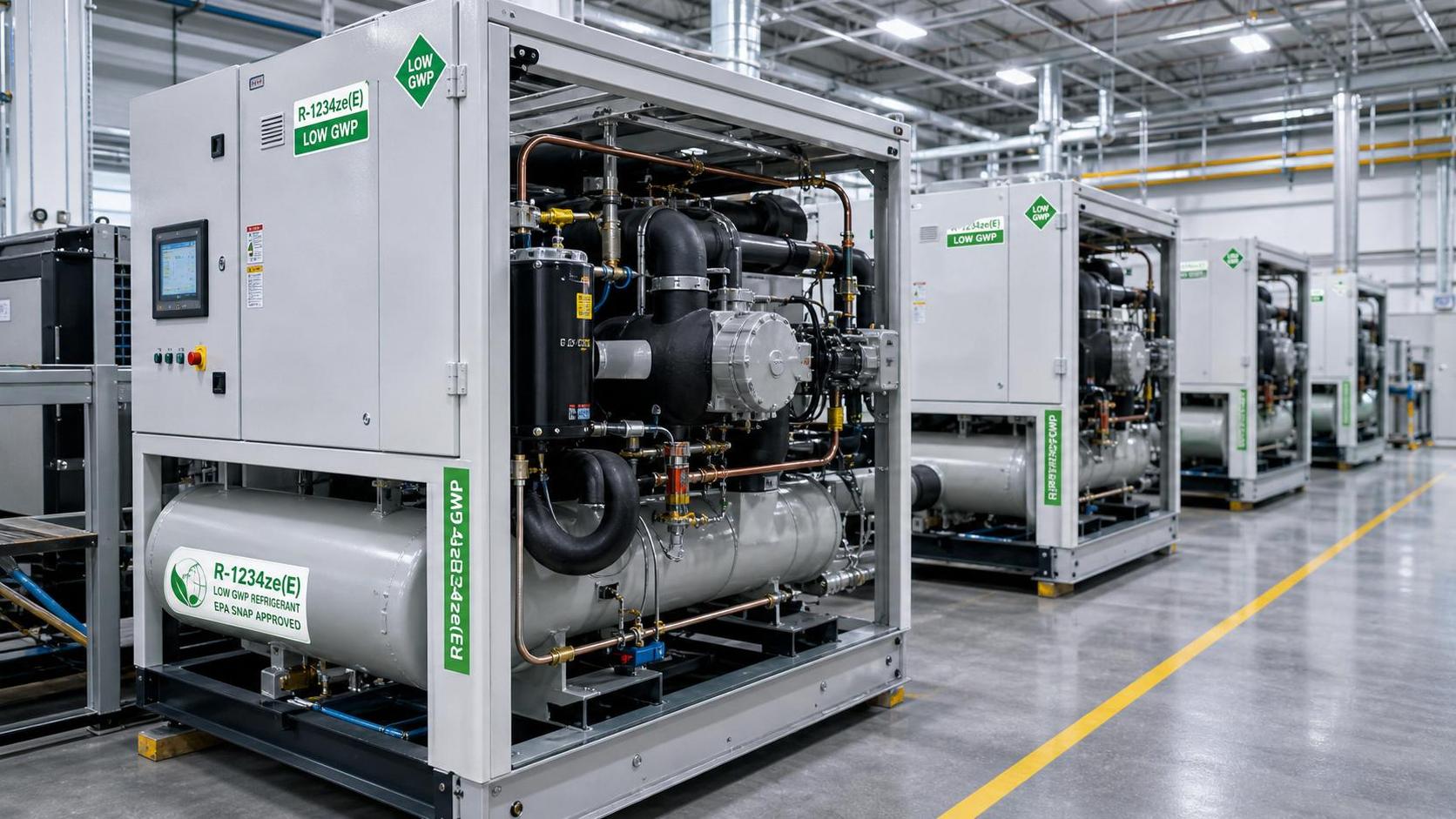
How to Choose Process Cooling Equipment for Stable Temperature Control




How to Choose Process Cooling Equipment for Stable Temperature Control
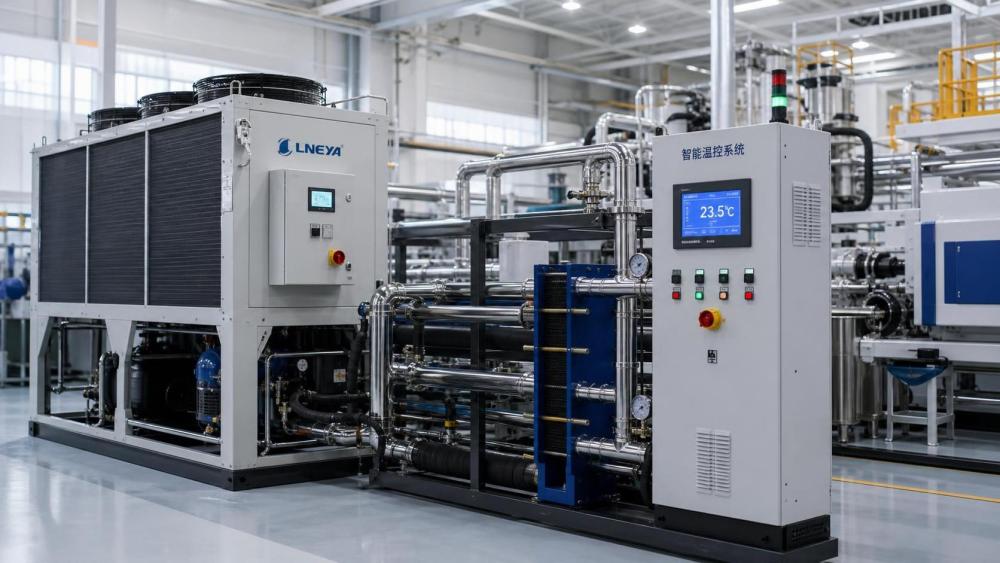
Choosing the right process cooling equipment is critical for stable temperature control, product quality, and system efficiency.
In real industrial settings, cooling decisions affect throughput, uptime, energy cost, and maintenance pressure.
That is why process cooling equipment should be evaluated as part of the process, not as a stand-alone utility asset.
For technical decision-making, cooling capacity is only the starting point.
A better selection depends on load profile, control accuracy, ambient conditions, fluid quality, and lifecycle economics.
The strongest projects usually begin with one question: what temperature stability does the process truly require?
Once that target is clear, the rest of the process cooling equipment evaluation becomes much more disciplined.
Start with the Actual Process Requirement
Many sizing errors happen because buyers use peak numbers without checking how the process behaves across a normal shift.
Process cooling equipment should match the real thermal load, including startup spikes, steady operation, and part-load periods.
Begin with four basics: heat load, required supply temperature, return temperature, and allowable temperature variation.
This step sounds simple, but it changes equipment choice more than most specification sheets suggest.
A plastics line, a food plant, and a semiconductor support system may all need cooling.
Still, their tolerance bands, cleanliness expectations, and downtime costs are completely different.
- Define the process heat source and whether it is constant, cyclical, or highly variable.
- Confirm the temperature band the process can accept before quality starts to drift.
- Measure load by production stage, not only by equipment nameplate.
- Check future expansion so the selected process cooling equipment does not become undersized too soon.
From a practical view, stable temperature control starts with load clarity, not with brand comparison.
Match Equipment Type to Cooling Duty
Not all process cooling equipment works the same way, even when rated capacity looks similar.
The selection should reflect process duty, installation limits, and the level of control needed.
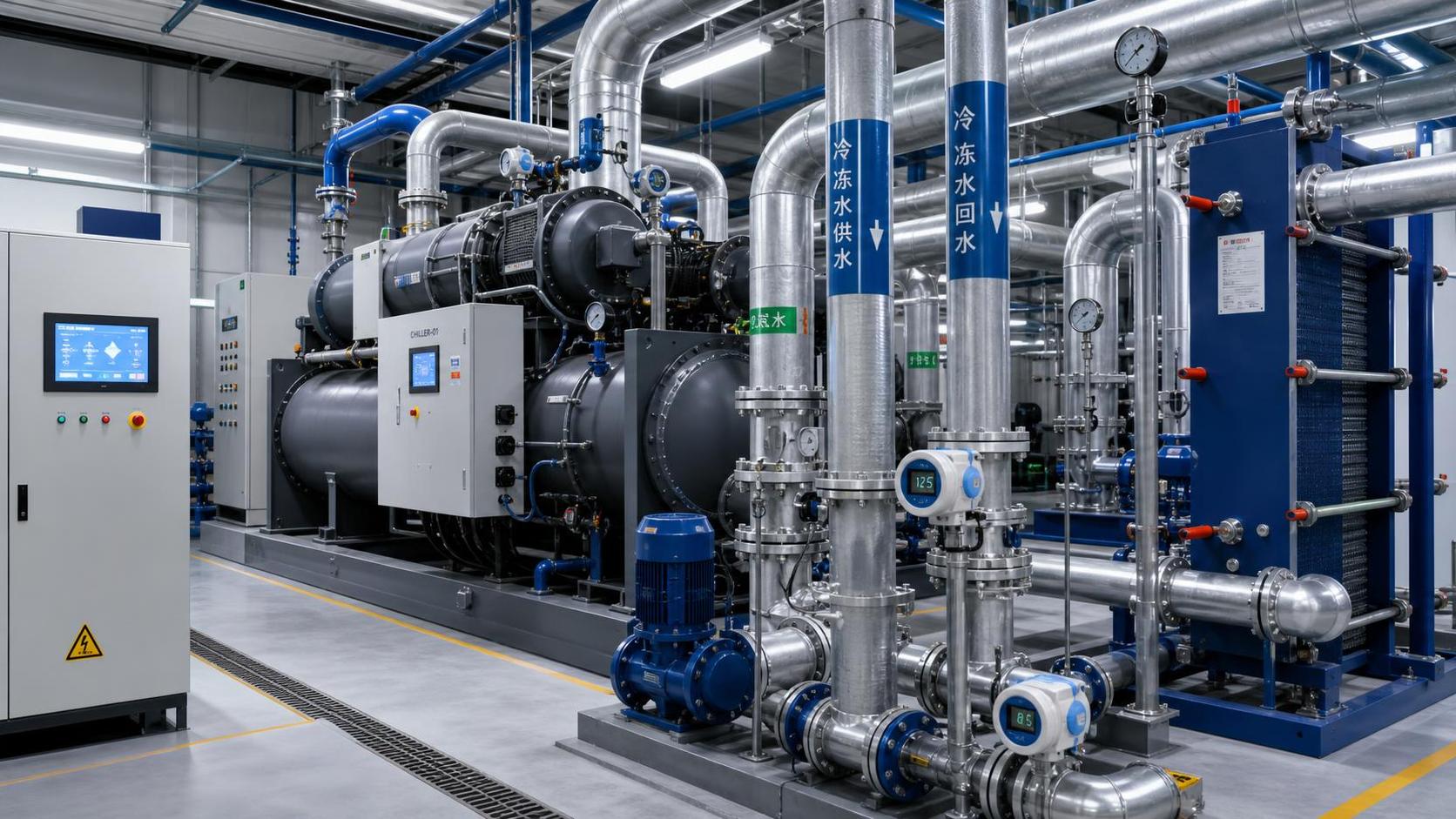
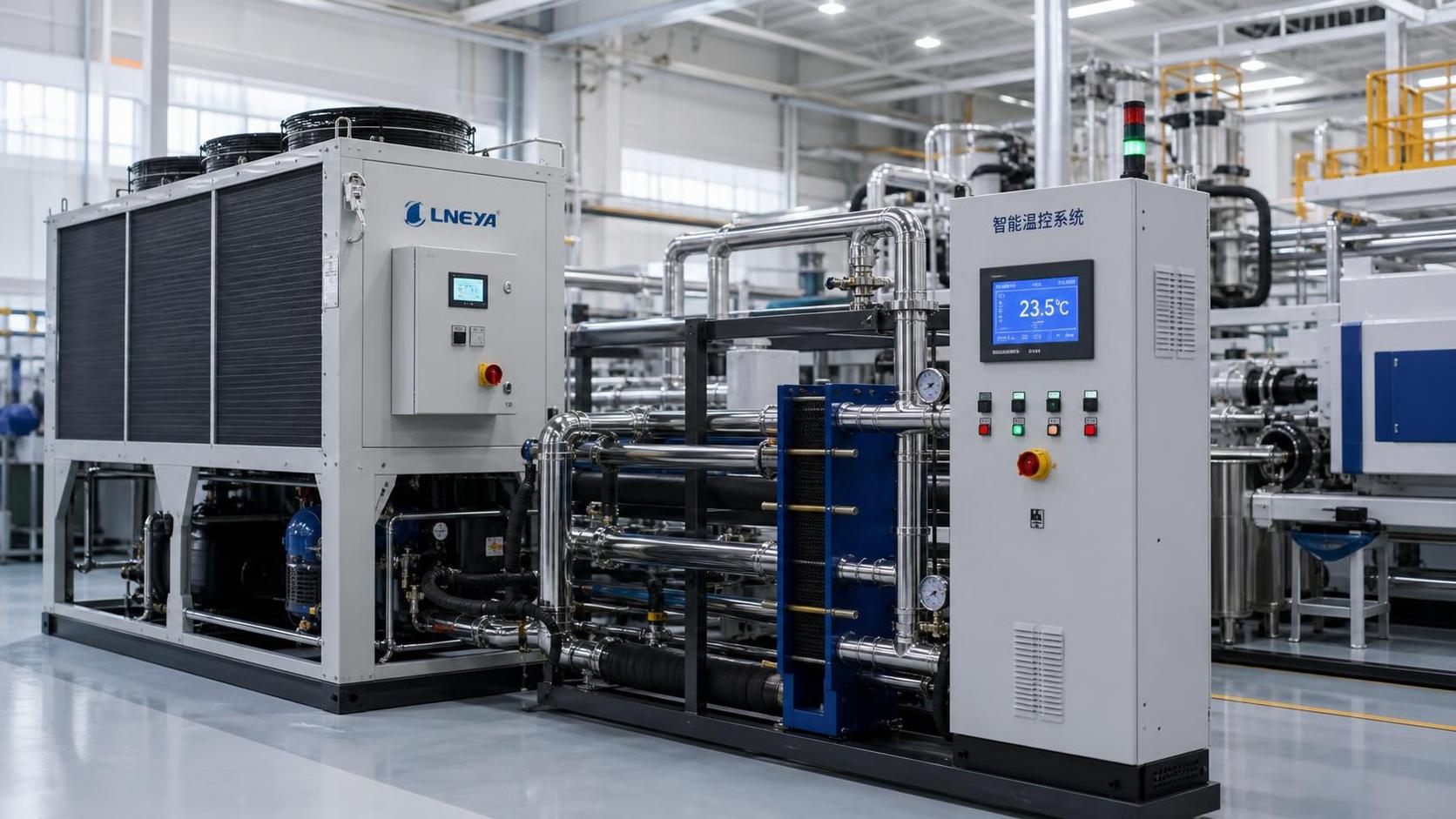
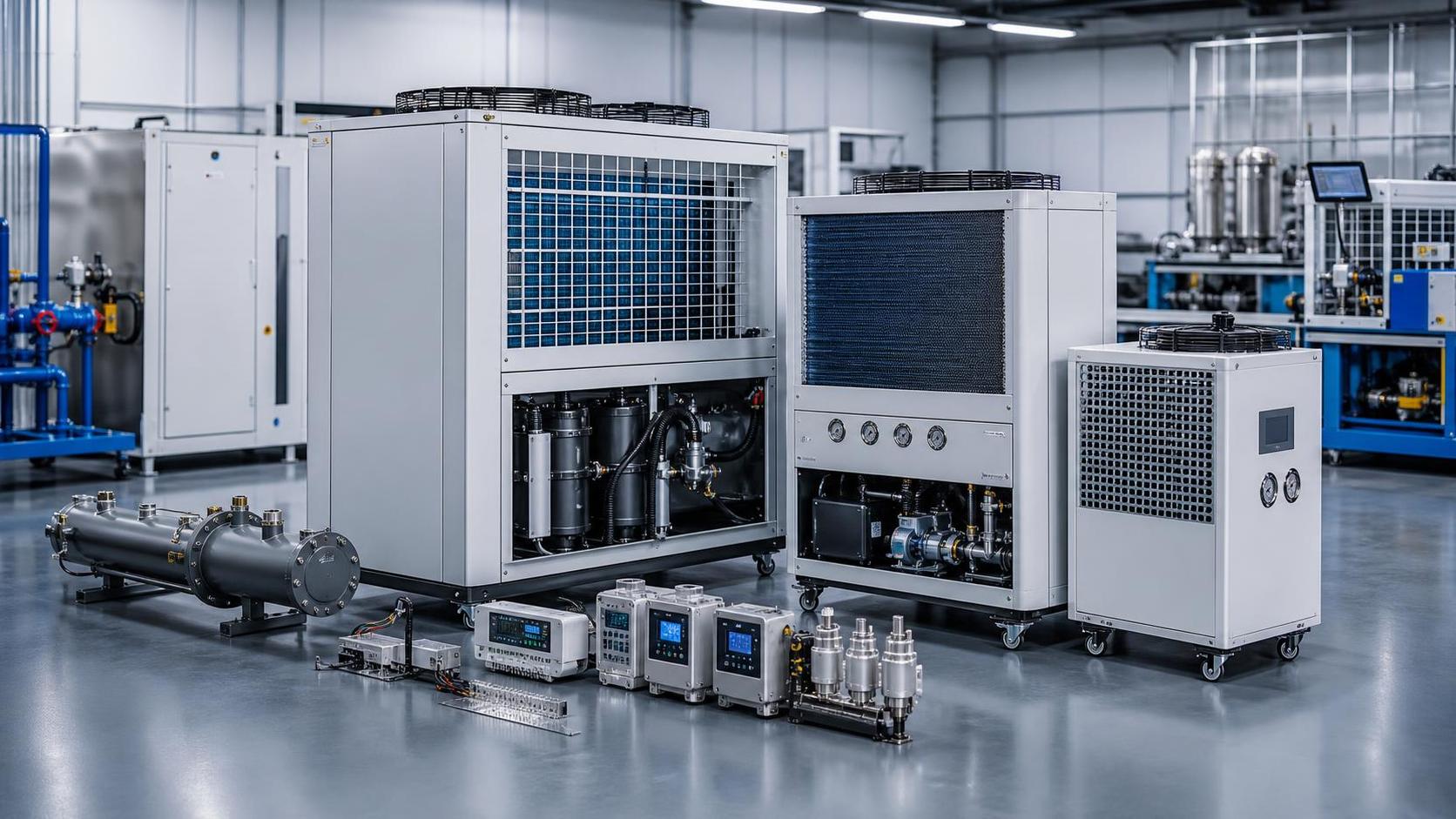
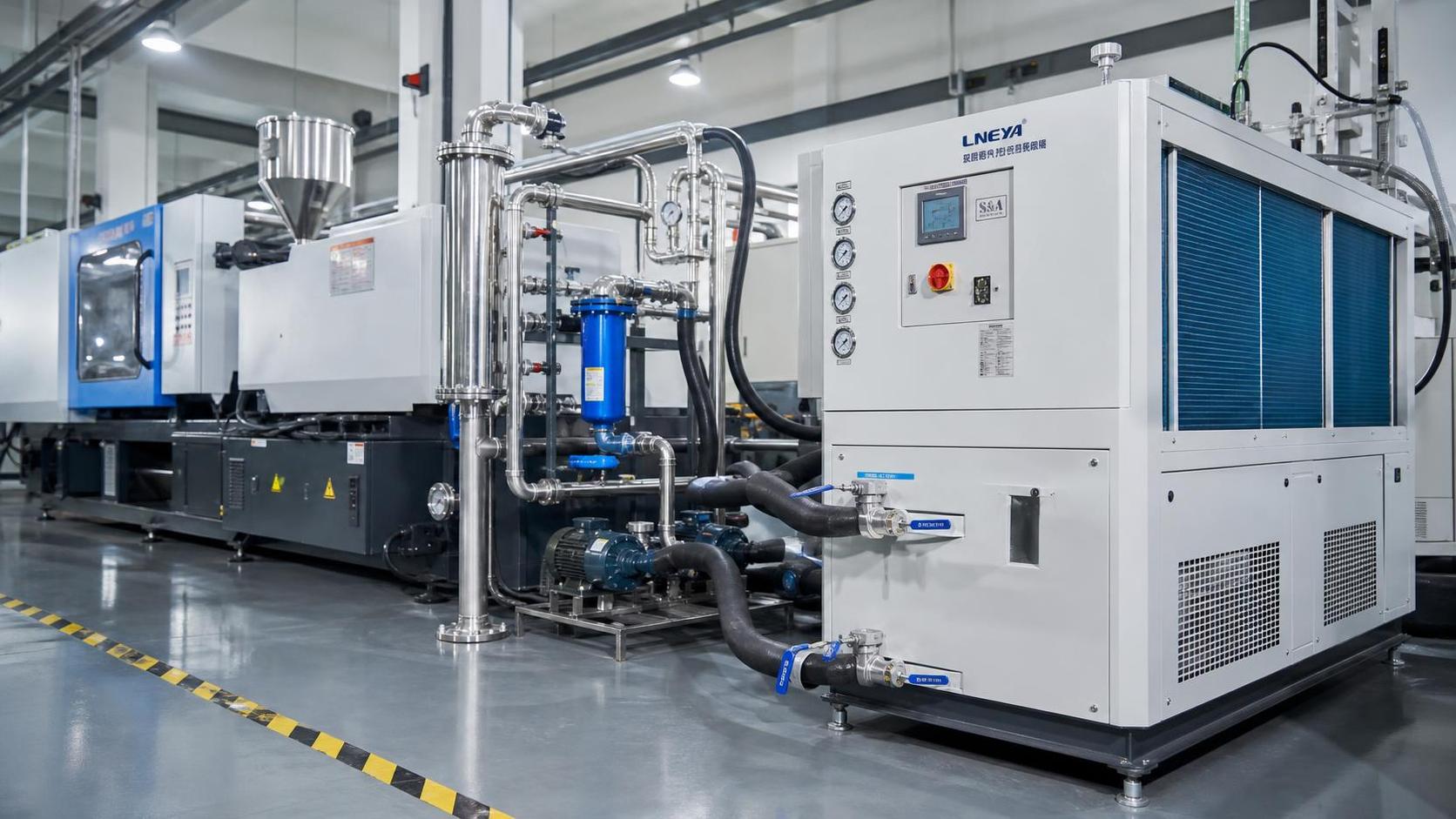
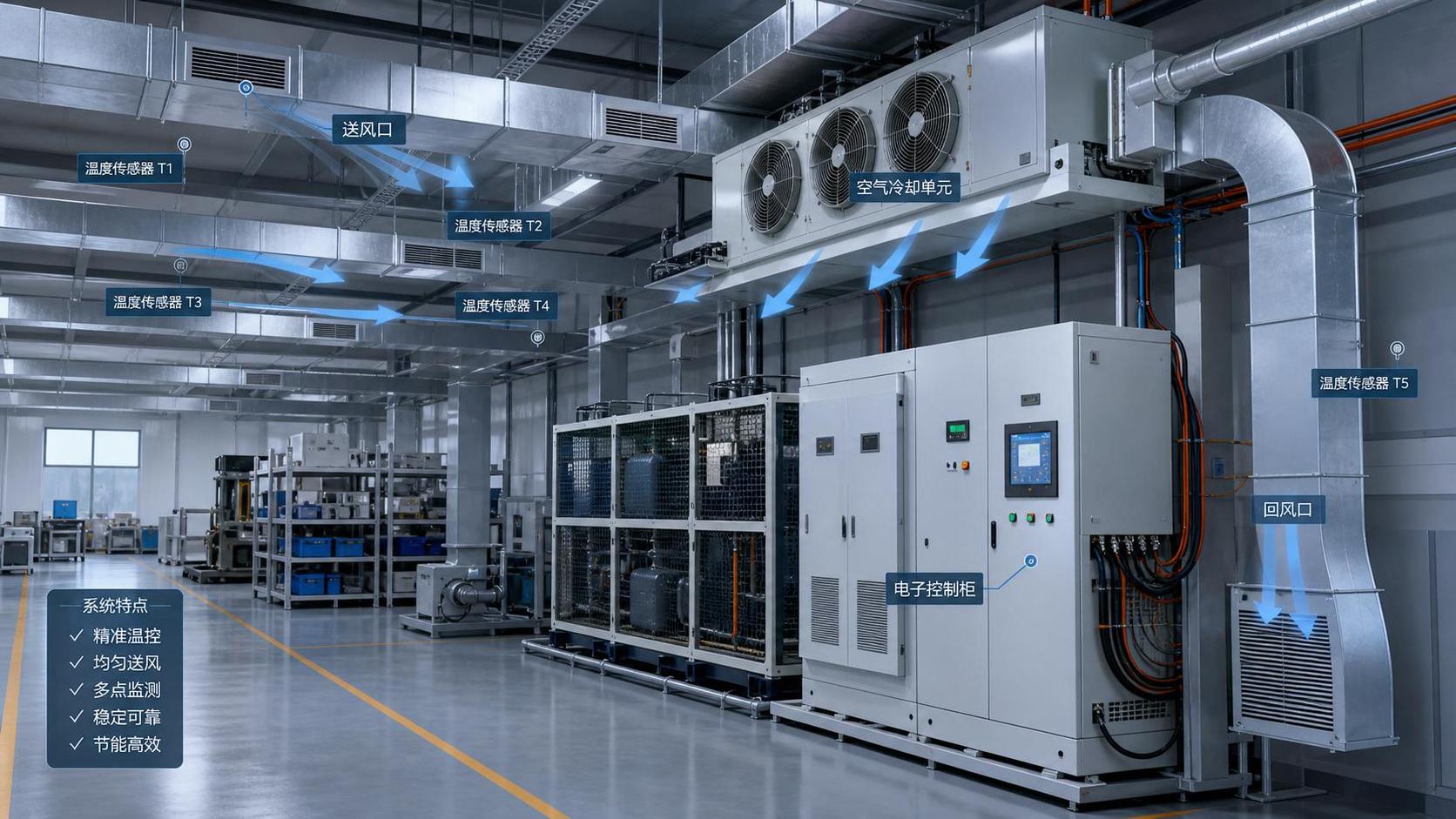
In many industrial plants, the shortlist usually includes air-cooled chillers, water-cooled chillers, cooling towers, and closed-loop systems.
Air-cooled units are simpler to install and useful where water supply is limited.
Water-cooled systems often deliver better efficiency for larger, continuous loads.
Closed-loop process cooling equipment is often preferred where contamination control and stable fluid quality matter.
That is especially true in pharmaceutical, electronics, precision machining, and high-value food applications.
The best process cooling equipment is the one that fits the thermal job without forcing operating compromises.
Focus on Temperature Stability, Not Just Capacity
A unit can have enough cooling power and still perform poorly if control accuracy is weak.
This is where many process cooling equipment comparisons become too superficial.
Stable temperature control depends on sensors, control logic, compressor staging, pump performance, and thermal inertia.
If the process needs tight tolerance, pay close attention to leaving fluid stability and response under variable load.
A broader point matters here.
Good process cooling equipment should prevent overshoot, short cycling, and temperature drift during load transitions.
- Check stated temperature control accuracy under real operating conditions.
- Ask whether the unit uses variable-speed compressors or fans for smoother adjustment.
- Review buffer tank sizing and flow stability.
- Confirm alarm logic for high temperature, low flow, and sensor deviation.
For applications with strict product quality requirements, stability usually creates more value than excess nominal tonnage.
Evaluate Energy Performance Across the Whole Operating Window
Energy use is now central to process cooling equipment selection, not a secondary issue.
Rising power costs and tighter carbon targets have changed the economics of industrial cooling.
In recent market shifts, buyers increasingly compare seasonal and part-load efficiency instead of full-load ratings alone.
That makes sense because most process cooling equipment rarely runs at one fixed condition all year.
A slightly higher purchase cost can be justified if the annual operating profile supports a meaningful energy reduction.
This is especially important in operations running around the clock.
- Map expected annual load distribution.
- Compare performance at peak, average, and low-load conditions.
- Include pumps, fans, and auxiliaries in the energy model.
- Estimate cost over five to ten years, not only at purchase.
This broader view often separates attractive quotes from genuinely efficient process cooling equipment.
Do Not Ignore Site Conditions and Utility Constraints
A technically strong unit can still underperform when site conditions are poorly understood.
Process cooling equipment should always be assessed against the plant environment.
Ambient temperature, ventilation, dust, water quality, available footprint, and electrical supply all affect practical performance.
In actual projects, these factors are often behind disappointing temperature control results.
For example, high ambient conditions can reduce effective capacity in air-cooled systems.
Poor water quality can increase fouling risk in water-cooled process cooling equipment.
Limited service access can turn routine maintenance into avoidable downtime.
- Verify design performance at local summer conditions.
- Review water chemistry and filtration strategy.
- Check noise limits and installation clearances.
- Confirm power quality, backup needs, and control integration points.
The more demanding the environment, the more carefully process cooling equipment should be adapted to the site.
Look at Reliability, Serviceability, and Risk Control
When production loss is expensive, reliability is a core selection criterion.
That means process cooling equipment should be reviewed for component quality, redundancy strategy, and service access.
The clearer signal in today’s market is that uptime value is rising faster than simple acquisition savings.
For critical lines, a lower-priced system without backup logic may cost much more over time.
Review how the supplier handles spare parts, fault diagnostics, preventive maintenance, and remote monitoring support.
This also helps reduce uncertainty during commissioning and future expansion.
Reliable process cooling equipment protects production quality as much as it protects the utility system.
Build a Practical Evaluation Framework Before Final Selection
A structured comparison helps avoid decisions driven by headline capacity or short-term price pressure.
The most effective process cooling equipment reviews usually score technical fit, operating cost, reliability, and service support together.
That creates a more balanced decision, especially when several options appear similar on paper.
A practical framework can include these checkpoints:
- Confirm process temperature target and allowable deviation.
- Validate load profile and future capacity allowance.
- Compare process cooling equipment type against site constraints.
- Evaluate control stability and part-load efficiency.
- Review maintenance access, redundancy, and supplier response capability.
- Calculate lifecycle cost, including utilities and downtime risk.
For organizations tracking global manufacturing shifts, this evaluation logic is increasingly aligned with energy efficiency and operational resilience goals.
That perspective also reflects the wider industrial intelligence focus seen across GTC-Matrix, where thermal performance and production competitiveness are closely connected.
In the end, the right process cooling equipment is the system that keeps temperature stable, supports process quality, and remains efficient under real operating pressure.
Use the selection process to test assumptions early, compare risk honestly, and choose a solution built for long-term industrial performance.
Related News
- How Smart Thermal Systems Improve Industrial Cooling EfficiencyAuthor :Cryogenic Systems Expert

- How to Choose Process Cooling Equipment for Stable Temperature ControlAuthor :Cryogenic Systems Expert

- EU Finalizes 2026 HFC Quota Cut for R-134a ChillersAuthor :Cryogenic Systems Expert

- EU Tightens HFC-134a Quotas for Industrial ChillersAuthor :Cryogenic Systems Expert

- REACH SVHC Update Pressures HFC-134a Chiller Supply ChainsAuthor :Cryogenic Systems Expert

- EU PFAS Coolant Ban Reshapes Chiller ExportsAuthor :Cryogenic Systems Expert

- EU REACH Restricts PFAS Cooling Media ImportsAuthor :Cryogenic Systems Expert

- EU Ecodesign Rule Takes Effect for Industrial ChillersAuthor :Cryogenic Systems Expert

- EU REACH Rule Takes Effect for PFAS in Industrial Cooling ExportsAuthor :Cryogenic Systems Expert

- Industrial Cooling for Plastic Processing: How to Size for Stable Cycle TimesAuthor :Cryogenic Systems Expert

- EU F-Gas Update Bars R404A/R507 in Commercial CoolingAuthor :Cryogenic Systems Expert

- DOE Raises Chiller Efficiency Standard From October 2026Author :Cryogenic Systems Expert

- India Mandates BIS Energy Certification for Industrial ChillersAuthor :Cryogenic Systems Expert

- Energy-Efficient Heat Exchange for Process Cooling: Cost vs PaybackAuthor :Cryogenic Systems Expert

- EPA R-134a Import Ban Takes Effect on July 13, 2026Author :Cryogenic Systems Expert

- India BIS Rule Takes Effect for Industrial ChillersAuthor :Cryogenic Systems Expert

- EPA Cuts R134a Import Quotas 20% From July 10Author :Cryogenic Systems Expert

- How to Compare Energy-Efficient Cooling Systems for Factory Expansion ProjectsAuthor :Cryogenic Systems Expert

- Chiller Price Index Rises 11.3% in Q2Author :Cryogenic Systems Expert

- Saudi SASO Tightens Chiller Import Compliance From July 10Author :Cryogenic Systems Expert

- Dubai Opens Fast-Track Chiller TendersAuthor :Cryogenic Systems Expert

- Japan Raises Chiller COP Floor to 6.2 From Sept. 1Author :Cryogenic Systems Expert
![]()
- Compact Thermal Management in Smart Devices: Common Failure RisksAuthor :Cryogenic Systems Expert

- Thermal Management for Batteries: Cooling Methods ComparedAuthor :Cryogenic Systems Expert

- How Compact Thermal Design Extends Smart Device UptimeAuthor :Cryogenic Systems Expert

- Shanghai-Rotterdam Reefer Rates Jump 37% in a WeekAuthor :Cryogenic Systems Expert

- Process Cooling Equipment Low Maintenance: What Cuts Downtime Over 5 Years?Author :Cryogenic Systems Expert

- Semiconductor Cooling Solutions: Which Design Works Best for High-Density Tools?Author :Cryogenic Systems Expert

- Semiconductor Thermal Management Systems: Preventing Yield Loss from Heat DriftAuthor :Cryogenic Systems Expert

- EPA Clears R-1234ze(E) for Industrial ChillersAuthor :Cryogenic Systems Expert
 for Industrial Chillers")
- DOE Raises Chiller IEER Floor to 12.8 From Oct. 2026Author :Cryogenic Systems Expert

- Singapore Refrigeration Show Adds Green Compliance HubAuthor :Cryogenic Systems Expert

- How Food Industry Temperature Control Systems Reduce Product LossAuthor :Cryogenic Systems Expert

- EU REACH Adds 12 SVHCs, Raising Chiller Compliance RiskAuthor :Cryogenic Systems Expert

- Precision Temperature Control Air Cooling: Key Setup Mistakes That Reduce StabilityAuthor :Cryogenic Systems Expert

- India BEE Eyes APF Labels for Imported ChillersAuthor :Cryogenic Systems Expert