



How to Compare Environmentally Friendly Refrigerants by GWP, Safety, and Cost




How to Compare Environmentally Friendly Refrigerants by GWP, Safety, and Cost
For sustainable cooling decisions, refrigerant comparison starts with three filters: GWP, safety, and total cost. Those factors shape compliance, equipment design, service planning, and long-term operating risk.
That is why selecting an environmentally friendly refrigerants manufacturer is rarely a price-only exercise. The better decision usually comes from balancing regulation, system fit, and lifecycle economics.
In practice, buyers often compare options such as HFOs, hydrocarbons, CO2, ammonia, and lower-GWP blends. Each option brings a different mix of climate impact, handling requirements, and capital implications.
This guide breaks the evaluation into clear steps. It also shows what to ask an environmentally friendly refrigerants manufacturer before approving supply.
Start with GWP, but Do Not Stop There
Global Warming Potential measures how strongly a refrigerant traps heat compared with CO2. Lower GWP usually means lower regulatory pressure and better alignment with decarbonization targets.
However, low GWP alone does not make a refrigerant the right choice. A technically poor match can increase leakage, energy use, downtime, or service complexity.
When reviewing suppliers, ask for the exact GWP basis being used. Some documents cite AR4 values, while others use newer references, and that difference can affect policy interpretation.
A serious environmentally friendly refrigerants manufacturer should also explain phase-down exposure, quota trends, and the likely stability of the product over the next several years.
Questions to ask on GWP
- What is the verified GWP value and reference standard?
- Is the refrigerant exposed to current or expected quota restrictions?
- Does the blend have glide or fractionation concerns?
- How does the option compare with local environmental compliance targets?
Evaluate Safety by Application, Not by Label Alone
Safety classifications matter because they influence equipment layout, storage, transport, ventilation, and technician training. The same refrigerant can be manageable in one setting and difficult in another.
ASHRAE 34 designations provide a useful starting point. They indicate toxicity and flammability, including A1, A2L, A3, and B2L categories.
Still, procurement decisions should go beyond the code letter. Room size, charge limit, ignition control, occupancy profile, and maintenance routines all change the real safety picture.
An environmentally friendly refrigerants manufacturer should provide SDS documents, handling guidance, packaging details, and transport compliance information without delay.
Typical safety trade-offs
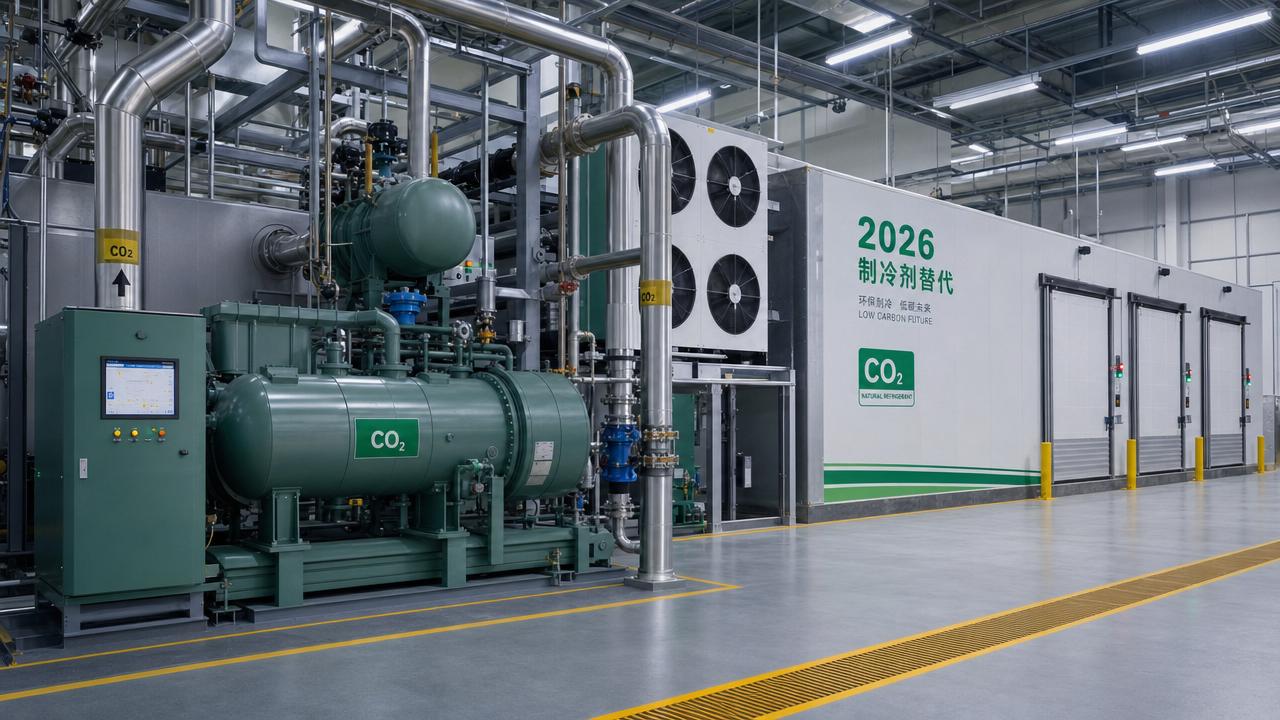
- CO2: Very low GWP, but high operating pressure requires specific system design and trained service teams.
- Hydrocarbons: Low GWP and efficient, but flammability limits charge size and application range.
- Ammonia: Strong efficiency profile, but toxicity demands tighter safety management and site controls.
- HFO or blends: Lower GWP than legacy HFCs, though some options still carry mild flammability concerns.
This is where application detail becomes decisive. Cold rooms, food processing lines, pharmaceutical storage, and commercial HVAC rarely follow the same risk logic.
Compare Total Cost Across the Full Lifecycle
Upfront refrigerant price is only one part of the equation. A cheaper cylinder can become the expensive choice if it raises energy use, retrofit scope, or future compliance cost.
A useful cost review should include product cost, system modification cost, labor, downtime, leak risk, energy performance, and end-of-life recovery requirements.
This is especially important when switching from high-GWP legacy refrigerants. The lowest quoted replacement option may not deliver the lowest five-year ownership cost.
A reliable environmentally friendly refrigerants manufacturer should support cost modeling with technical data, charging guidance, and realistic availability assumptions.
Cost categories to review
- Refrigerant purchase price and expected market volatility.
- Equipment compatibility and retrofit component needs.
- Compressor oil changes, seals, valves, and control updates.
- Service training and additional safety infrastructure.
- Energy consumption across real operating loads.
- Leakage rate, refill frequency, and product recovery cost.
Use a Practical Comparison Table Before Supplier Shortlisting
A side-by-side table helps prevent single-factor decisions. It also makes internal approval easier because technical and commercial teams can review the same framework.
This format is also useful when comparing more than one environmentally friendly refrigerants manufacturer. It keeps commercial discussions grounded in measurable criteria.
Assess Supplier Strength Beyond Product Specifications
Not every supplier offering low-GWP products brings the same level of technical support. Product quality matters, but traceability, documentation, and response speed matter just as much.
A capable environmentally friendly refrigerants manufacturer should be able to discuss purity standards, moisture control, cylinder management, and application suitability in plain terms.
This becomes more important in industries where temperature stability and contamination control affect product quality. Pharmaceutical, semiconductor, and food applications usually demand tighter evidence.
From a sourcing perspective, a weaker supplier can create hidden risk even when the chemical spec looks acceptable on paper.
Supplier checkpoints
- Can the supplier provide batch traceability and quality certificates?
- Are packaging sizes suitable for the intended maintenance workflow?
- Is technical support available for retrofit and charge optimization questions?
- Does the supplier understand regional compliance and shipping restrictions?
- Can the manufacturer support stable supply under seasonal demand swings?
Watch the Common Mistakes in Refrigerant Selection
One common mistake is treating replacement refrigerants as simple drop-in options. Even when marketing language sounds easy, real systems often need validation, tuning, or component updates.
Another mistake is using generic energy claims. Efficiency results depend heavily on evaporating temperature, condensing temperature, load variation, and control strategy.
Some buyers also underestimate future regulation. A refrigerant that looks compliant today may become commercially difficult if quota pressure tightens supply and price.
That is why the better environmentally friendly refrigerants manufacturer will discuss transition risk openly, rather than focusing only on immediate quotation advantages.
Build a Decision Process That Holds Up Over Time
A strong refrigerant decision usually follows a simple order. First, confirm application requirements. Next, screen by GWP and safety. Then compare total cost and supplier capability.
That process helps reduce rushed decisions driven by short-term price pressure. It also makes stakeholder alignment easier across engineering, operations, compliance, and sourcing teams.
For organizations reviewing multiple supply options, GTC-Matrix continues to track the policy, technology, and market signals shaping low-GWP refrigerant adoption across industrial cooling systems.
When comparing any environmentally friendly refrigerants manufacturer, look for evidence, not slogans. The best supplier fit is the one that supports compliant performance, manageable risk, and durable cost control.
Related News
- EPA Freezes R-410A Quotas, Fast-Tracks R-32Author :Cryogenic Systems Expert

- Low GWP Refrigerants HFO Blends: Key Stability and Safety FactorsAuthor :Cryogenic Systems Expert

- R-32 Price Spike Reshapes Chiller ProcurementAuthor :Cryogenic Systems Expert

- How to Compare Environmentally Friendly Refrigerants by GWP, Safety, and CostAuthor :Cryogenic Systems Expert

- R-454B Export Quota Cut 18% as Lead Times DoubleAuthor :Cryogenic Systems Expert

- Japan Cuts R32 and R290 Import Quotas From July 10Author :Cryogenic Systems Expert

- EPA Cuts R-134a Import Quotas 42% From July 2026Author :Cryogenic Systems Expert
![]()
- Low GWP Refrigerants HFO Blends: Performance and Compliance in 2026Author :Cryogenic Systems Expert

- R-513A Jumps 23% as China Tightens Export QuotasAuthor :Cryogenic Systems Expert

- Environmentally Friendly Refrigerants in 2026: Compliance Risks and Upgrade PrioritiesAuthor :Cryogenic Systems Expert

- Pharmaceutical Temperature Control Systems: Common Compliance RisksAuthor :Cryogenic Systems Expert

- China Tightens Q3 R32 Export QuotasAuthor :Cryogenic Systems Expert

- California EPR Deadline Nears for Refrigeration MakersAuthor :Cryogenic Systems Expert

- Resource Circularity Trends Reshaping Refrigerants and Cooling SystemsAuthor :Cryogenic Systems Expert

- HFCs Filing Rules Enter Full EnforcementAuthor :Cryogenic Systems Expert

- How Environmentally Friendly Refrigerants Affect Chiller ComplianceAuthor :Cryogenic Systems Expert

- EU REACH Tightens Refrigerant Impurity Limits for R134a ExportsAuthor :Cryogenic Systems Expert

- China Seeks Feedback on 2027 Refrigerant QuotasAuthor :Cryogenic Systems Expert

- EU to Ban High-GWP ACs in 2029 as R410A Exits HomesAuthor :Cryogenic Systems Expert

- US, UK Delay HFC Phaseout, Extending R32/R134a Export WindowAuthor :Cryogenic Systems Expert

- EU HFC Cut Tightens by 2029 as Gen-3 Output Falls 10%Author :Cryogenic Systems Expert

- Kuwait Bans HCFC AC Imports as Shift to R32/R290 Speeds UpAuthor :Cryogenic Systems Expert

- Saudi SASO Rules Tighten AC Imports in DecemberAuthor :Cryogenic Systems Expert

- Environmentally Friendly Refrigerants: Compliance, Safety, and Retrofit RisksAuthor :Cryogenic Systems Expert

- SABIC Force Majeure Keeps Chiller Refrigerant Supply TightAuthor :Cryogenic Systems Expert

- SABIC Force Majeure Tightens Refrigerant FeedstocksAuthor :Cryogenic Systems Expert

- UL 60335-2-89 Tightens R290 Leak Test RulesAuthor :Cryogenic Systems Expert
![]()
- UL 60335-2-89 Adds R290 Vacuum Leak TestAuthor :Cryogenic Systems Expert

- Global Refrigerant Price Index Falls 8.3% MoM in MayAuthor :Cryogenic Systems Expert
![]()
- PSA Jurong Island Launches Mandatory Cold-Chain Traceability for RefrigerantsAuthor :Cryogenic Systems Expert
![]()
- 2026 Refrigerants Shift: What Changes for Cold StorageAuthor :Cryogenic Systems Expert

- Shanghai Pudong Pilots E-Labels for Imported CosmeticsAuthor :Cryogenic Systems Expert

- 2026 Refrigerant Shift: Safer Options With Lower Compliance RiskAuthor :Cryogenic Systems Expert

- Vitafoods Europe Highlights Clinical Herb Data, Cold Chain Demand SurgesAuthor :Cryogenic Systems Expert
![]()
- U.S. Treasury Yield Surge Stabilizes Silver, Eases Refrigerants Export PricingAuthor :Cryogenic Systems Expert

- France Allocates €710M to Support War-Impacted Firms on Cold Chain ComplianceAuthor :Cryogenic Systems Expert