India Makes BIS Certification Mandatory for Screw Compressors




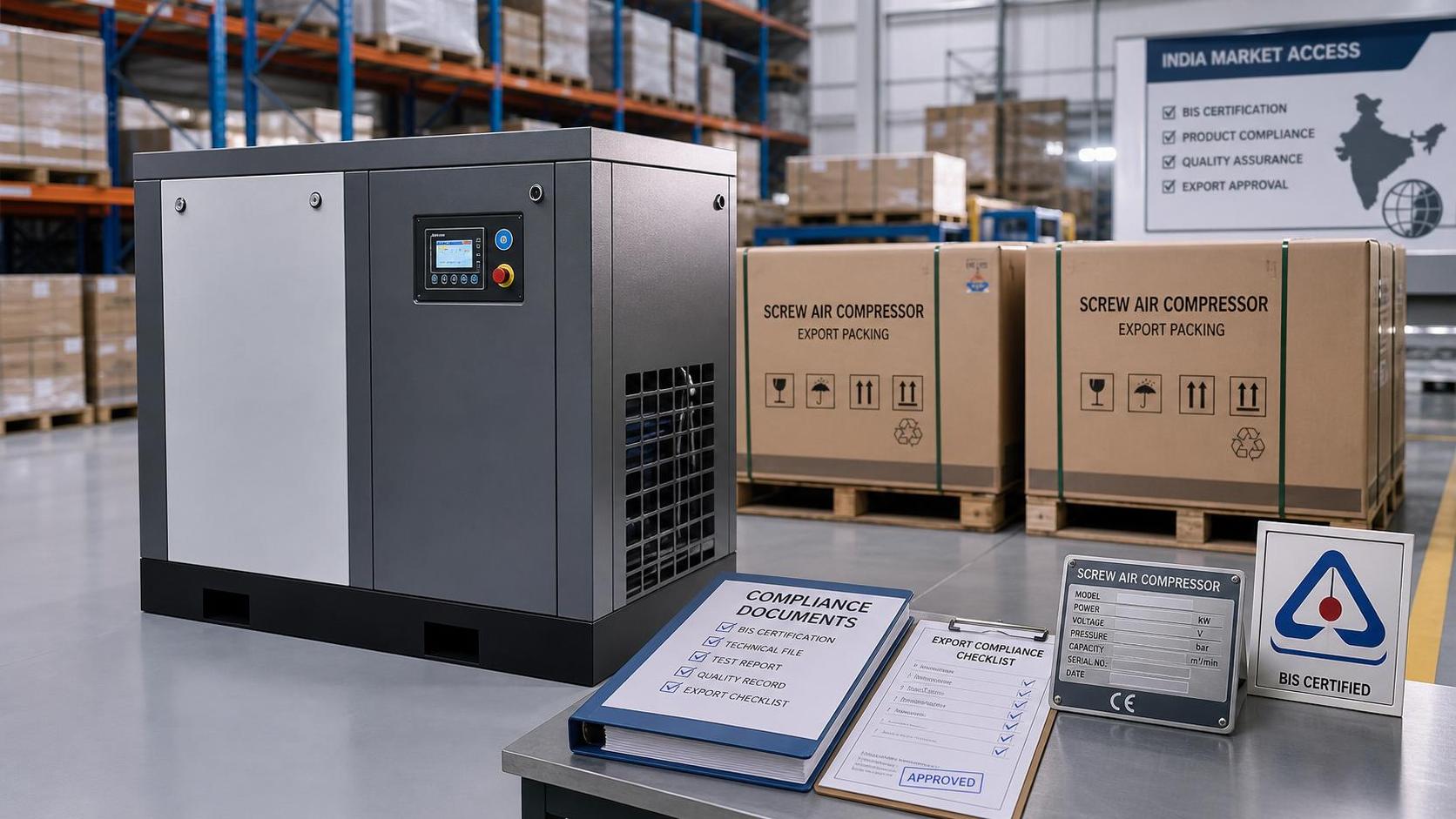
On July 15, 2026, India’s Bureau of Indian Standards (BIS) signaled a direct regulatory change for the screw compressor market by bringing screw compressors with a rated power of 1 kW or above into the mandatory BIS certification scope under IS 15718:2025. From September 1, 2026, products covered by this rule will need a valid BIS license for both import and domestic sale in India. For exporters, manufacturers, distributors, and procurement teams connected to this product category, the issue is not only regulatory classification but also how compliance timing may affect shipment planning, market access, and sales continuity.
What the New BIS Requirement Clearly Covers
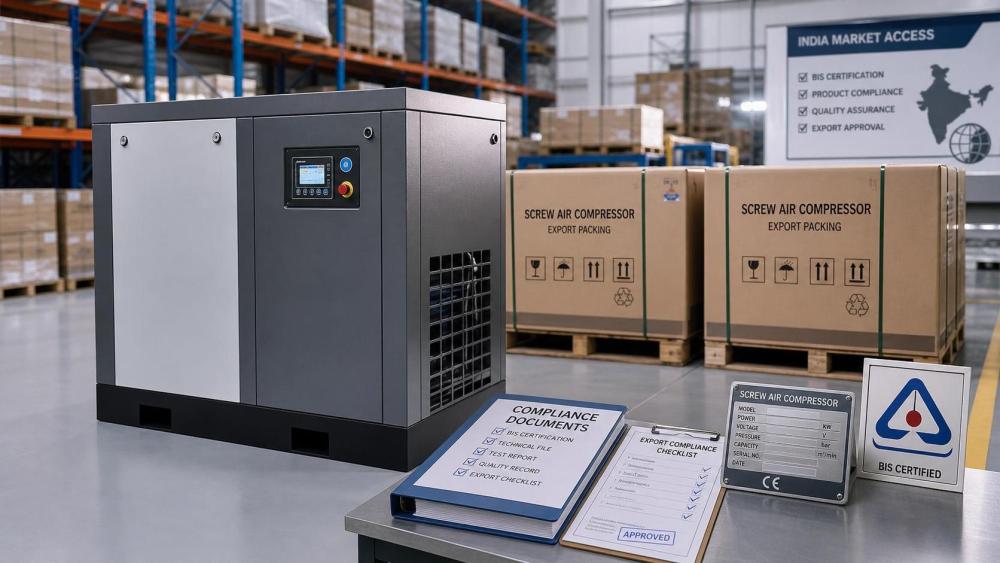
The confirmed facts are limited but material. According to the event summary provided, BIS issued notification S.O. 3124(E) on July 15, 2026. The notification formally adds screw compressors with a rated power of at least 1 kW to the list of products subject to mandatory BIS certification, with the applicable standard identified as IS 15718:2025.
The same summary states that, starting on September 1, 2026, all covered products sold in India or imported into India must hold a valid BIS license. It also states that this change directly affects the compliance path, delivery cycle, and certification cost for Chinese screw compressor exporters, and that products without certification may be refused entry by customs or removed from sale.
Where the Operational Pressure May Appear First
Export shipments now face a compliance gate before market entry
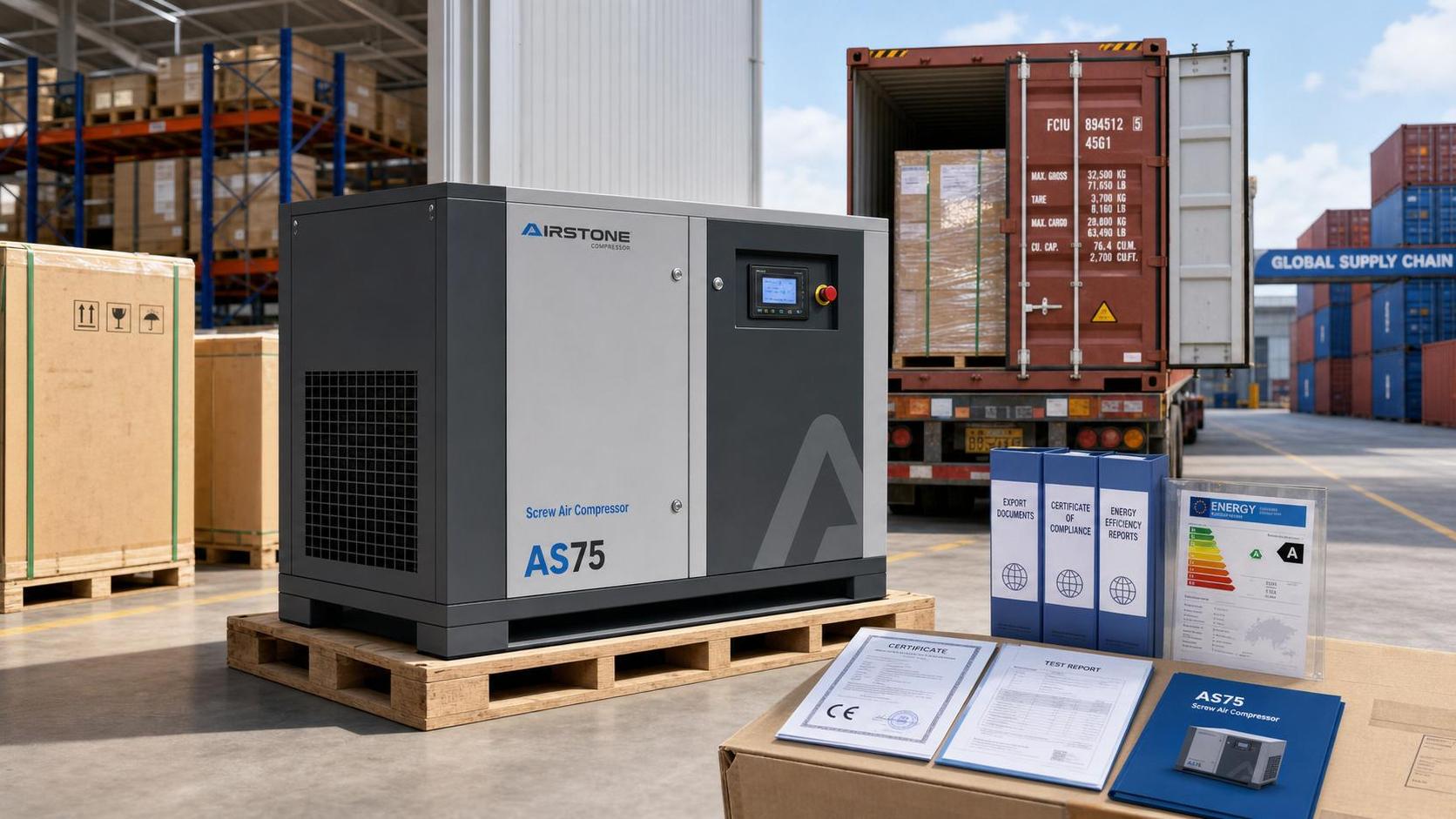
From an industry perspective, exporters of covered screw compressors are likely to be affected first because BIS licensing becomes a market-access condition rather than a voluntary commercial advantage. The practical pressure point is whether products intended for India can move through customs and remain saleable after the effective date. What deserves closer attention is the alignment between shipment timing, product scope, and certification status, because an uncertified product may no longer be treated as commercially deployable in that market.
Manufacturing and order scheduling may need tighter coordination
Manufacturers serving India may also face changes in production and dispatch planning. Analysis shows that once certification becomes mandatory, compliance status can affect when a product is ready for shipment, how orders are released, and whether delivery commitments remain realistic. For businesses handling India-bound models, technical documentation, product specification matching, and certification-related file readiness become more closely tied to factory scheduling and outbound delivery.
Distributors and procurement teams may need to revise qualification checks
For distributors, importers, and buyers, the rule changes the baseline for supplier qualification. Observably, the question is no longer only price, lead time, or technical fit, but whether the offered product can legally enter or stay in the market after September 1, 2026. Procurement and channel decisions may therefore need closer review of BIS license status, product coverage under the stated standard, and whether supporting compliance documents are available before order confirmation or listing.
Compliance and testing service participants may see more front-end review work
Certification-related service providers and testing support organizations may also feel the effect through a likely increase in document review, standard interpretation, and application preparation work. This should be understood as an operational implication rather than a confirmed market outcome. The event summary does not provide execution detail, but it clearly indicates that certification has become a required condition for market access in the covered scope.
What Companies Should Review Now
Check whether products fall within the stated scope
Analysis shows that the first practical step is confirming whether a company’s screw compressor products fall within the defined threshold of rated power at or above 1 kW and whether they are intended for import into India or sale in that market. Scope confirmation matters because the rule described in the summary applies to both imported and locally sold products within that category.
Re-examine compliance documents and technical files
What deserves closer attention is whether existing technical files, test-related materials, product descriptions, and model documentation are organized in a way that supports BIS licensing under IS 15718:2025. The provided information does not specify filing detail or procedural steps, so this should not be treated as a completed execution framework. Still, companies with active India business would be prudent to review document readiness against the new mandatory requirement.
Reassess delivery timelines and contract assumptions
Observably, this rule has implications for delivery planning because certification status can become a precondition for import clearance and legal sale. Exporters, traders, and buyers should therefore pay attention to whether current shipment schedules, inventory commitments, and contract dates assume uninterrupted market access after the effective date. The summary explicitly points to possible effects on delivery cycles and certification costs, which makes timeline review a near-term commercial issue rather than only a legal one.
Watch for execution language and downstream market documents
It is more appropriate to understand this as a confirmed compliance direction with execution details that still require close monitoring. Companies should watch for how the requirement is reflected in customs handling, procurement specifications, distributor qualification checks, tender documents, and after-sales product traceability expectations. The current input does not provide those downstream details, so they remain areas for ongoing verification rather than fixed conclusions.
Why This Looks Like an Execution Signal, Not Just a Policy Note
Analysis shows that this development is best read as an implemented market-entry requirement rather than a general policy discussion, because the event summary provides a named notification, a covered product category, an applicable standard, and a clear effective date. At the same time, it would be premature to treat all enforcement practices as fully visible already. Observably, the rule itself is clear enough to affect business planning now, while the exact execution rhythm across customs, channel screening, and procurement documents still merits continued attention.
How the Market May Need to Read This Change
In practical terms, this update signals that BIS certification is becoming a mandatory commercial condition for screw compressors within the stated scope in India from September 1, 2026. The immediate significance lies in compliance sequencing: certification status may now shape whether products can be shipped, cleared, listed, and delivered as planned. It is more appropriate to understand this development as a rule already moving into execution, while recognizing that companies still need to monitor how official interpretation and market-side implementation develop in practice.
Basis of This Article and What Still Needs Verification
This article is based on the user-provided news title, event date, and event summary. For developments of this kind, commonly relevant source types may include official notifications, regulator releases, customs or trade authority information, industry association updates, standard-setting documents, and reporting by established trade media. A specific official source link was not provided in the input, so the exact source document path still needs ongoing verification.
Further observation is still needed on detailed implementation language, certification execution standards, customs handling practice, tender and procurement document changes, market feedback, and how affected companies adjust compliance and delivery arrangements after the rule takes effect.
Ready when you are. Send us a message to get started.
Related News
- When does variable gas flow justify a custom screw compressor system?Author :Pneumatic Power Engineer

- How to size compressed air equipment for pneumatic toolsAuthor :Pneumatic Power Engineer

- How Should Energy Management Systems Handle Compressor Load Changes?Author :Pneumatic Power Engineer

- Which Maintenance Issues Reduce Air Compressor Efficiency?Author :Pneumatic Power Engineer

- How Much Energy Can Variable-Speed Screw Compressors Save?Author :Pneumatic Power Engineer

- Industrial Compressor Selection: Matching Flow, Pressure, and Duty CycleAuthor :Pneumatic Power Engineer

- China Expands Cross-Border RMB and FX Cash Pooling NationwideAuthor :Pneumatic Power Engineer

- How to Size Air Compressor Systems for Pneumatics by Flow and Pressure DemandAuthor :Pneumatic Power Engineer

- How Energy Recovery Systems for Compressors Cut Power CostsAuthor :Pneumatic Power Engineer

- How to Evaluate Screw Compressors in Industrial Refrigeration EquipmentAuthor :Pneumatic Power Engineer

- India Makes BIS Certification Mandatory for Screw CompressorsAuthor :Pneumatic Power Engineer

- China Tightens Export Filing for Screw CompressorsAuthor :Pneumatic Power Engineer

- SABIC Sets IoT Interface Rule for Screw CompressorsAuthor :Pneumatic Power Engineer

- Industrial Heat Recovery Systems for Compressors: When Do Energy Savings Pay Back?Author :Pneumatic Power Engineer

- EU Tightens REACH Limit for Screw Compressor LubricantsAuthor :Pneumatic Power Engineer

- EU Opens China Screw Compressor Review With Carbon RuleAuthor :Pneumatic Power Engineer

- DOE Mandates AHRI 1000-2026 for Screw CompressorsAuthor :Pneumatic Power Engineer

- VDMA Filing Signals EU Risk for Chinese Oil Screw CompressorsAuthor :Pneumatic Power Engineer
![]()
- Screw vs Piston Air Compressors for Stable Plant OutputAuthor :Pneumatic Power Engineer

- Saudi SASO Tightens Refrigerant Limits in IEC 60335-2-40:2026Author :Pneumatic Power Engineer

- IIR Warns of 18-Week Lead Times for Screw CompressorsAuthor :Pneumatic Power Engineer

- Welded Compressed Air Manifold Selection Guide for Pressure Stability and LeaksAuthor :Pneumatic Power Engineer

- India BIS Rule Adds IS 16830 Requirement for Imported Screw CompressorsAuthor :Pneumatic Power Engineer

- What to Check Before Choosing a Compressed Air FactoryAuthor :Pneumatic Power Engineer

- China Tightens Export Checks on Screw CompressorsAuthor :Pneumatic Power Engineer

- Screw Compressor Lead Times Reach 22 WeeksAuthor :Pneumatic Power Engineer

- Vietnam Requires QR Labels on Imported Screw CompressorsAuthor :Pneumatic Power Engineer

- Compressed Air Technologies Filtration: How to Reduce Pressure Drop and Energy LossAuthor :Pneumatic Power Engineer

- STSPIN830 Lead Time Tops 32 Weeks in Screw CompressorsAuthor :Pneumatic Power Engineer

- IGBT Shortage Extends Screw Compressor Lead TimesAuthor :Pneumatic Power Engineer

- Compressed Air Systems: 7 Hidden Costs That Raise Total Operating ExpenseAuthor :Pneumatic Power Engineer

- Compressed Air Efficiency: 7 Hidden Losses That Raise Operating CostsAuthor :Pneumatic Power Engineer

- How to Compare Screw vs Oil-Free Air Compression SystemsAuthor :Pneumatic Power Engineer

- Compressed Air Leaks: What They Really Cost in Daily OperationsAuthor :Pneumatic Power Engineer

- DOE Moves Up R449A Chiller Deadline to March 2027Author :Pneumatic Power Engineer

- How Compression Technology Cuts Energy Use in Modern PlantsAuthor :Pneumatic Power Engineer