EU PFAS Coolant Ban Reshapes Chiller Exports




On July 19, 2026, a revised restriction under REACH Annex XVII takes mandatory effect in the European Union, limiting imports of PFAS-containing industrial coolants used in equipment such as water chillers and industrial chillers. The change directly matters to exporters of industrial water chillers, condensing units, and related heat-exchange systems because it affects refrigerant selection, export compliance, certification readiness, and delivery planning for the EU market.
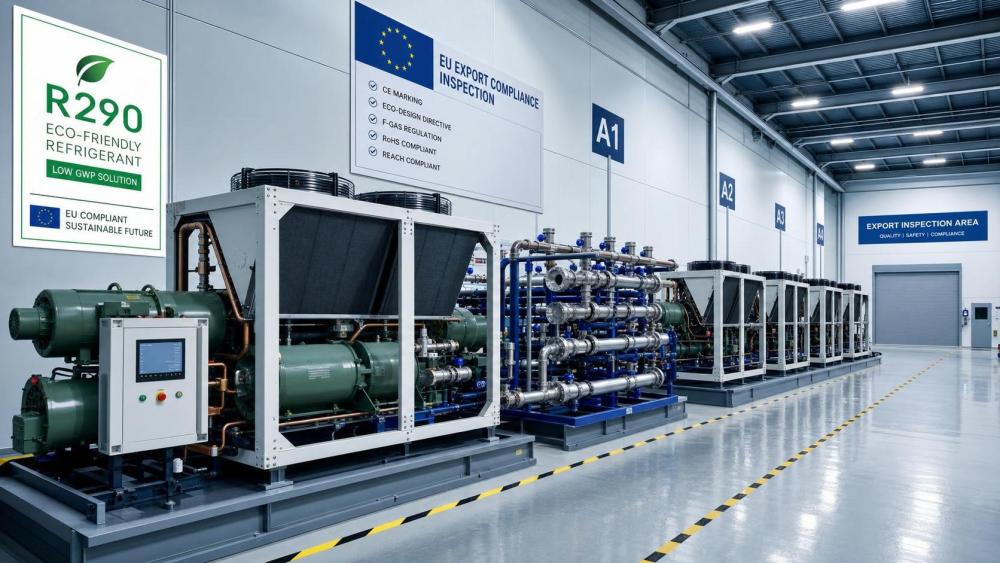
What the EU measure now requires
According to the provided event summary, the European Commission has formally announced that the REACH Annex XVII amendment becomes enforceable on July 19, 2026. The measure comprehensively restricts imports of industrial coolants containing per- and polyfluoroalkyl substances (PFAS).
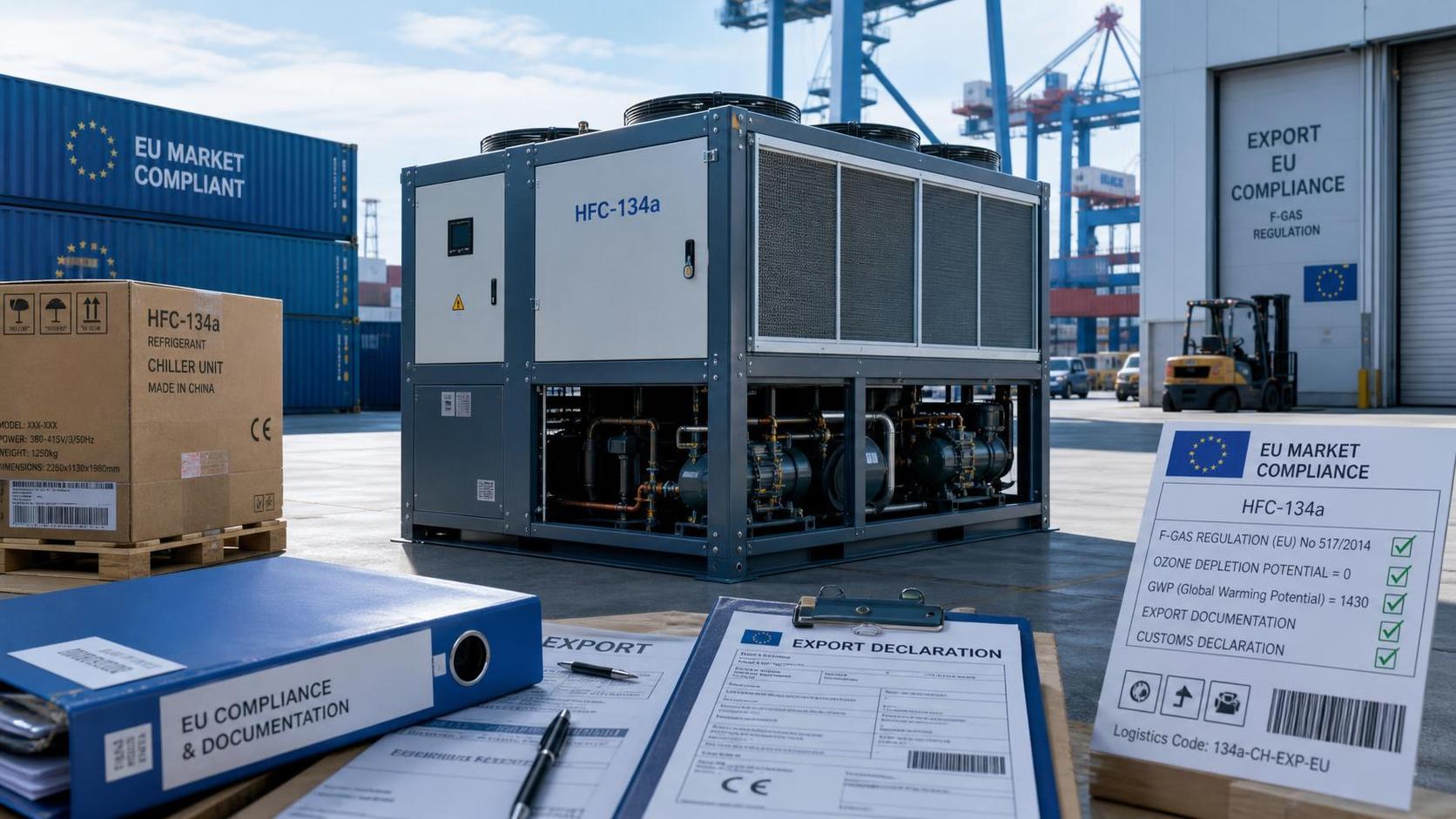
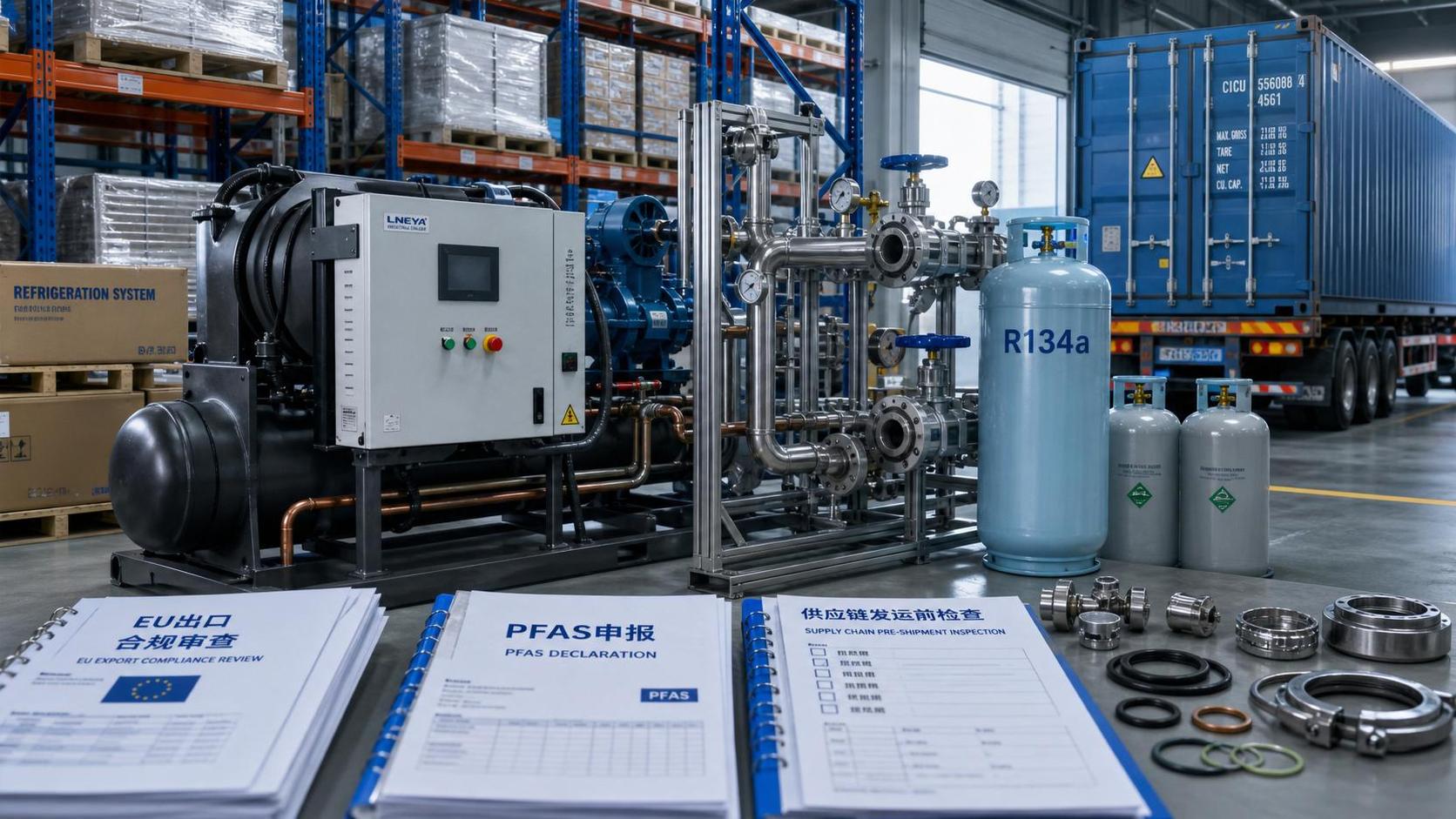
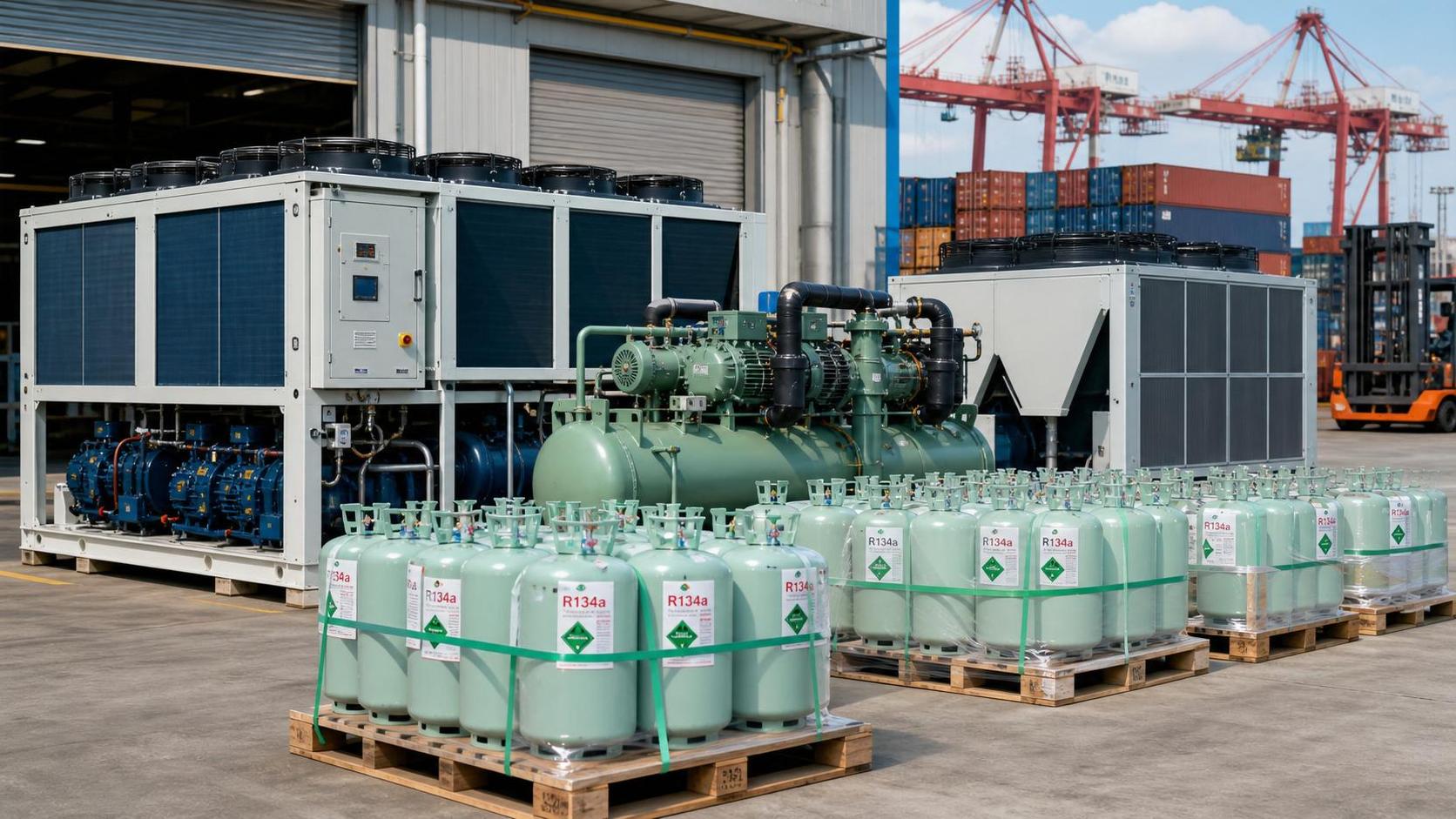
The restriction covers the application of mainstream HFC refrigerants including R-134a, R-404A, and R-410A in water chiller units and industrial chillers. The same summary states that the change directly affects the EU export compliance route for China-made industrial water chillers, condensing units, and supporting heat-transfer systems.
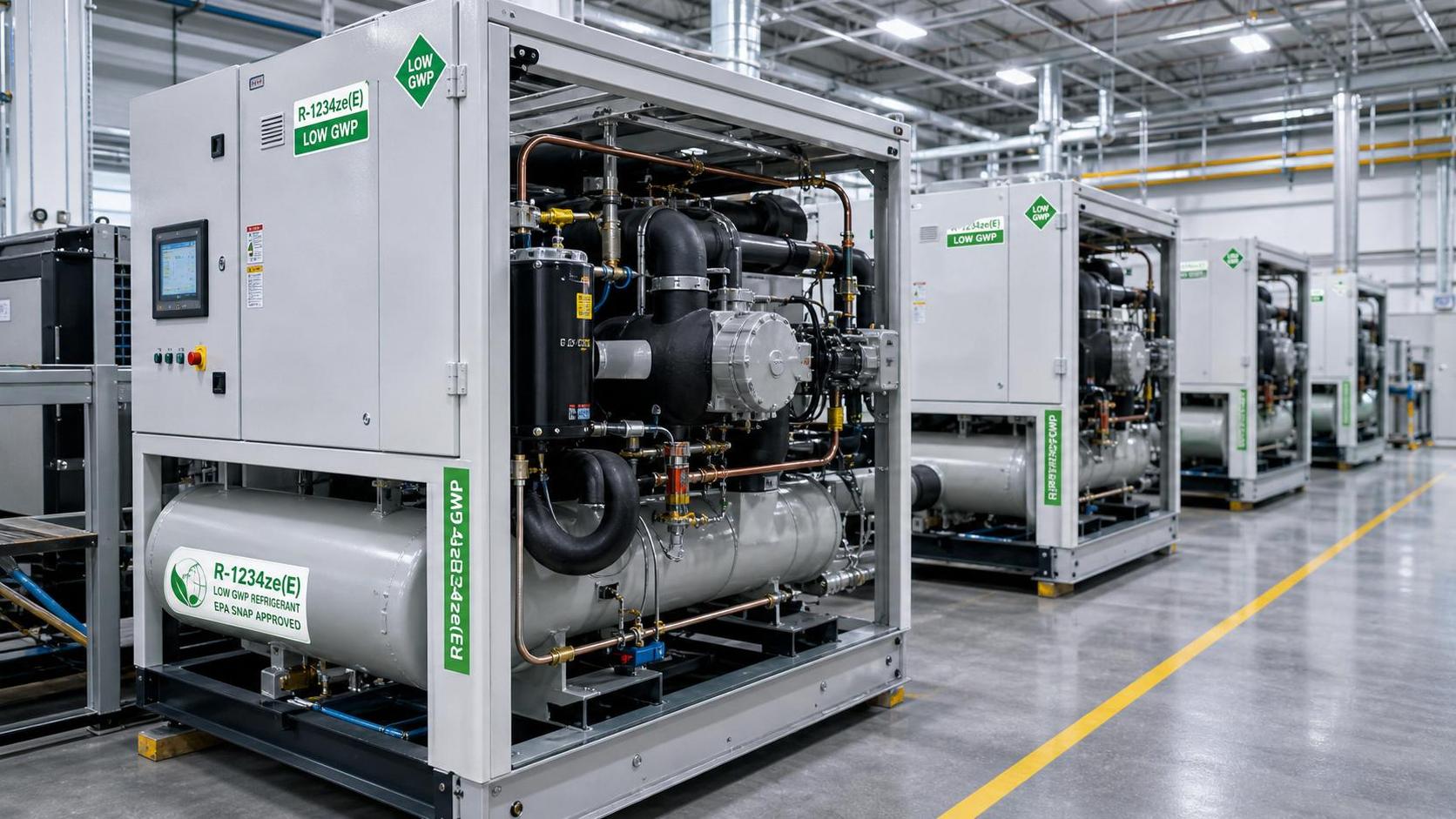
The confirmed compliance direction in the provided information is that manufacturers are required to offer alternative refrigerant solutions, such as R-1234ze, R-515B, or natural refrigerant systems based on CO₂ or NH₃, and complete EN 378-1:2025+A1:2026 certification.
Where the pressure will appear across the supply chain
Export-facing equipment makers will face immediate specification changes
From an industry perspective, manufacturers selling into the EU may be affected first because the restriction is tied directly to the refrigerants used in exported equipment. The impact is likely to appear in product configuration, technical documentation, quotation alignment, and model selection for projects that still reference R-134a, R-404A, or R-410A.
What deserves closer attention is the link between refrigerant substitution and certification status. A technical switch without matching compliance documents may create problems at order confirmation or shipment release stages.
Procurement and project buyers may need to revisit approved equipment lists
Buyers, EPC teams, and procurement functions may be affected where tender documents or approved vendor lists still assume refrigerant configurations covered by the restriction. The practical issue is not only equipment availability, but also whether the selected alternative refrigerant solution aligns with certification requirements and project submission materials.
Analysis shows that this may influence procurement timing, specification review, and supplier qualification checks, especially for orders intended for the EU market.
Certification and testing-related service providers may see a shift in workload
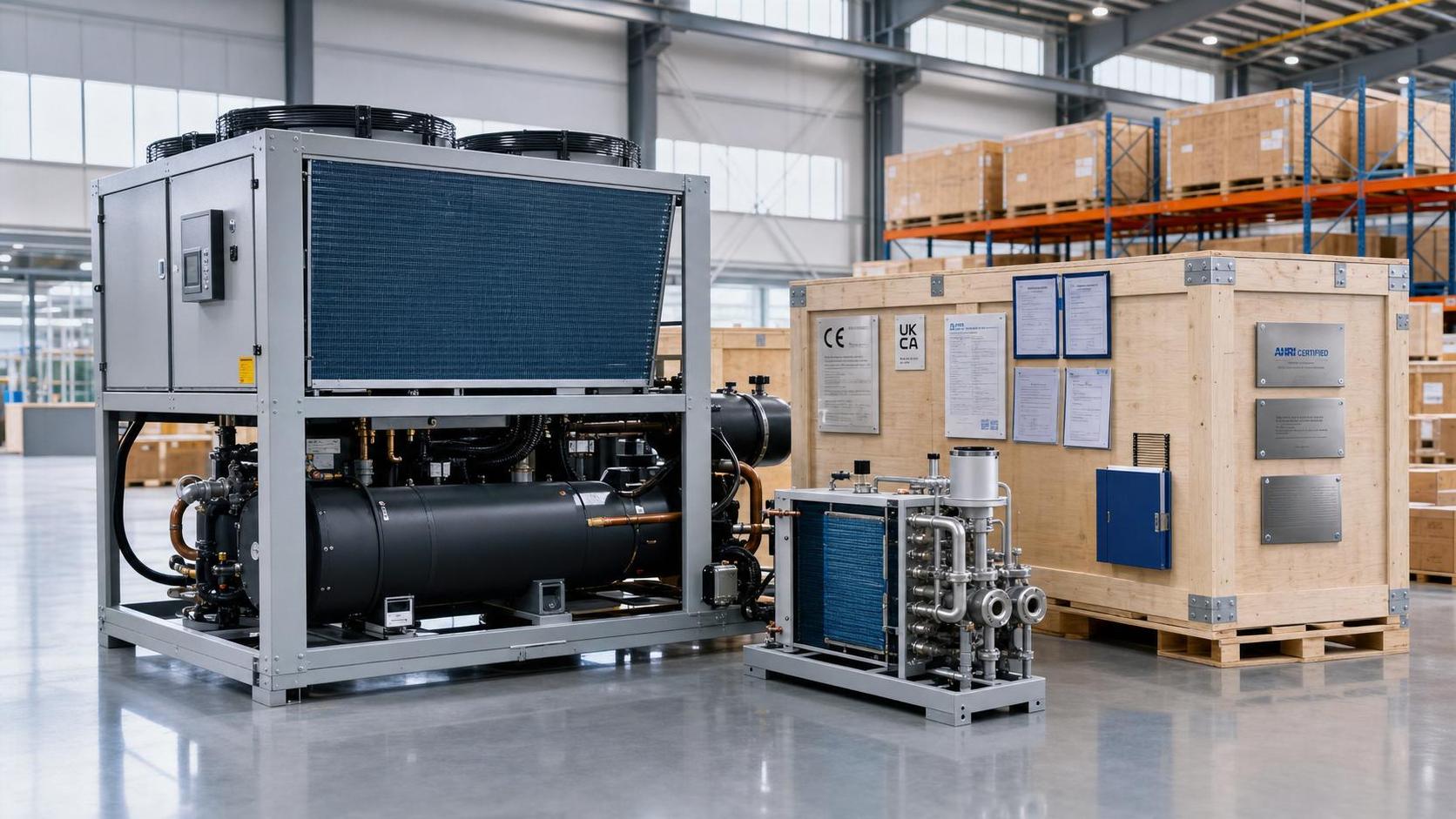
The provided information explicitly links market access to EN 378-1:2025+A1:2026 certification. For certification-related companies and testing service participants, the likely impact is concentrated in technical file review, conformity preparation, and coordination around revised refrigerant solutions.
Observably, any party involved in compliance review will need to pay close attention to whether supporting documents fully reflect the refrigerant transition rather than relying on legacy product files.
After-sales and delivery teams may need tighter traceability
For delivery, service, and documentation teams, the rule change may affect how equipment configuration, refrigerant identity, and compliance records are tracked through shipment and post-delivery support. Where equipment families are offered in multiple refrigerant versions, traceability and document consistency may become a more visible operational issue.
What companies should review now
Check whether EU-bound models still depend on restricted refrigerants
Companies should first identify whether any EU-destined industrial chillers, condensing units, or related systems still use R-134a, R-404A, or R-410A in the applications described in the provided event summary. This is a practical screening step for sales pipelines, current orders, and near-term shipment plans.
Match refrigerant substitution with certification readiness
The provided information does not support treating refrigerant replacement as a standalone engineering update. The stated requirement to complete EN 378-1:2025+A1:2026 certification means businesses should review whether technical files, compliance statements, testing materials, and model documentation are aligned with the alternative refrigerant route being offered.
Review tender, quotation, and contract documentation
Analysis shows that companies should pay attention to commercial documents as well as product design. Tender specifications, quotations, order confirmations, and technical appendices may still reference refrigerants now associated with compliance risk in EU-bound business. Where this language remains unchanged, the risk may surface later in delivery or acceptance stages.
Keep watching for execution language and market interpretation
Because the provided information confirms the rule change and its compliance direction, but does not include more detailed enforcement language, companies should continue monitoring how the requirement is reflected in official wording, certification practice, procurement documents, and customer acceptance standards. It is more appropriate to understand this as an implemented compliance change that still requires close observation in execution.
Why this matters beyond a single refrigerant switch
Observably, this development is not just about replacing one coolant with another. It points to a change in the compliance basis for EU-bound industrial cooling equipment. Analysis shows that the commercial impact may come from how quickly manufacturers can connect refrigerant substitution, certification, and export documentation into one consistent delivery path.
It is more appropriate to understand this as a live market-access signal rather than a theoretical policy discussion. At the same time, the exact operational effect on tenders, approvals, and customer requirements still needs to be followed through actual implementation feedback.
How the market should read this stage
The immediate significance of this event is that EU-facing chiller exports can no longer treat refrigerant choice as a routine engineering detail where PFAS-containing industrial coolants are involved under the announced restriction. For affected businesses, the issue now sits across compliance review, supplier coordination, certification timing, and shipment readiness.
From an industry perspective, this is best read as a rule change that has already landed, combined with an execution phase that still requires careful monitoring. That makes early document review and technical alignment more relevant than broad market speculation.
Basis of this article and what still needs verification
This article is based on the user-provided news title, event date, and event summary. For developments of this type, relevant source categories typically include official regulatory announcements, releases from supervisory authorities, customs or trade administration information, industry association updates, standards organization documents, and reporting by authoritative media.
No specific official source link was provided in the input, so the exact source document link still needs to be verified on an ongoing basis. Further observation is also needed regarding detailed policy interpretation, certification execution practice, changes in tender documentation, industry feedback, and how companies implement the transition in actual export business.
Related News
- How Smart Thermal Systems Improve Industrial Cooling EfficiencyAuthor :Cryogenic Systems Expert

- How to Choose Process Cooling Equipment for Stable Temperature ControlAuthor :Cryogenic Systems Expert

- EU Finalizes 2026 HFC Quota Cut for R-134a ChillersAuthor :Cryogenic Systems Expert

- EU Tightens HFC-134a Quotas for Industrial ChillersAuthor :Cryogenic Systems Expert

- REACH SVHC Update Pressures HFC-134a Chiller Supply ChainsAuthor :Cryogenic Systems Expert

- EU PFAS Coolant Ban Reshapes Chiller ExportsAuthor :Cryogenic Systems Expert

- EU REACH Restricts PFAS Cooling Media ImportsAuthor :Cryogenic Systems Expert

- EU Ecodesign Rule Takes Effect for Industrial ChillersAuthor :Cryogenic Systems Expert

- EU REACH Rule Takes Effect for PFAS in Industrial Cooling ExportsAuthor :Cryogenic Systems Expert

- Industrial Cooling for Plastic Processing: How to Size for Stable Cycle TimesAuthor :Cryogenic Systems Expert

- EU F-Gas Update Bars R404A/R507 in Commercial CoolingAuthor :Cryogenic Systems Expert

- DOE Raises Chiller Efficiency Standard From October 2026Author :Cryogenic Systems Expert

- India Mandates BIS Energy Certification for Industrial ChillersAuthor :Cryogenic Systems Expert

- Energy-Efficient Heat Exchange for Process Cooling: Cost vs PaybackAuthor :Cryogenic Systems Expert

- EPA R-134a Import Ban Takes Effect on July 13, 2026Author :Cryogenic Systems Expert

- India BIS Rule Takes Effect for Industrial ChillersAuthor :Cryogenic Systems Expert

- EPA Cuts R134a Import Quotas 20% From July 10Author :Cryogenic Systems Expert

- How to Compare Energy-Efficient Cooling Systems for Factory Expansion ProjectsAuthor :Cryogenic Systems Expert

- Chiller Price Index Rises 11.3% in Q2Author :Cryogenic Systems Expert

- Saudi SASO Tightens Chiller Import Compliance From July 10Author :Cryogenic Systems Expert

- Dubai Opens Fast-Track Chiller TendersAuthor :Cryogenic Systems Expert

- Japan Raises Chiller COP Floor to 6.2 From Sept. 1Author :Cryogenic Systems Expert
![]()
- Compact Thermal Management in Smart Devices: Common Failure RisksAuthor :Cryogenic Systems Expert

- Thermal Management for Batteries: Cooling Methods ComparedAuthor :Cryogenic Systems Expert

- How Compact Thermal Design Extends Smart Device UptimeAuthor :Cryogenic Systems Expert

- Shanghai-Rotterdam Reefer Rates Jump 37% in a WeekAuthor :Cryogenic Systems Expert

- Process Cooling Equipment Low Maintenance: What Cuts Downtime Over 5 Years?Author :Cryogenic Systems Expert

- Semiconductor Cooling Solutions: Which Design Works Best for High-Density Tools?Author :Cryogenic Systems Expert

- Semiconductor Thermal Management Systems: Preventing Yield Loss from Heat DriftAuthor :Cryogenic Systems Expert

- EPA Clears R-1234ze(E) for Industrial ChillersAuthor :Cryogenic Systems Expert
 for Industrial Chillers")
- DOE Raises Chiller IEER Floor to 12.8 From Oct. 2026Author :Cryogenic Systems Expert

- Singapore Refrigeration Show Adds Green Compliance HubAuthor :Cryogenic Systems Expert

- How Food Industry Temperature Control Systems Reduce Product LossAuthor :Cryogenic Systems Expert

- EU REACH Adds 12 SVHCs, Raising Chiller Compliance RiskAuthor :Cryogenic Systems Expert

- Precision Temperature Control Air Cooling: Key Setup Mistakes That Reduce StabilityAuthor :Cryogenic Systems Expert

- India BEE Eyes APF Labels for Imported ChillersAuthor :Cryogenic Systems Expert