



EU Finalizes 2026 HFC Quota Cut for R-134a Chillers




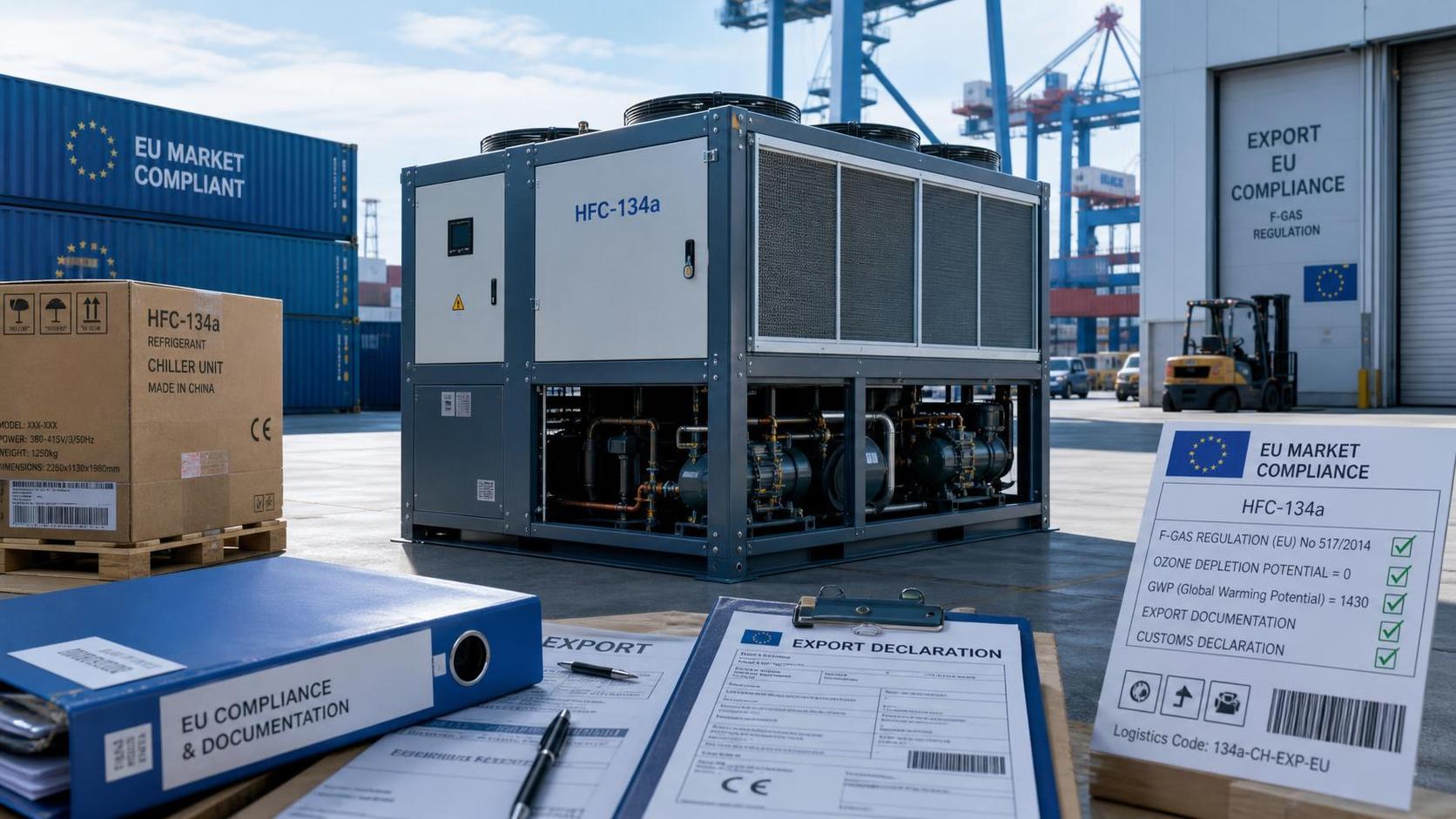
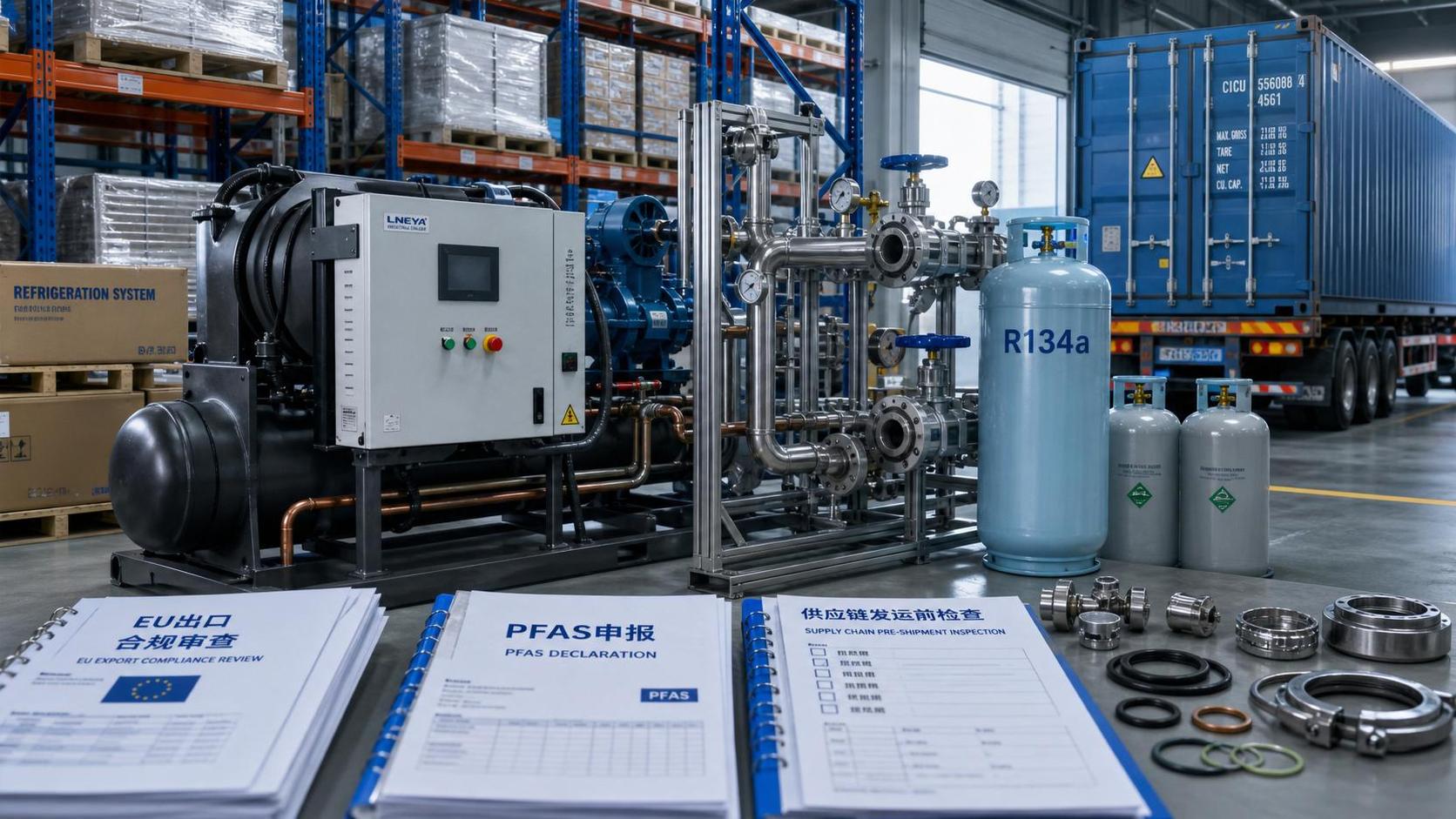
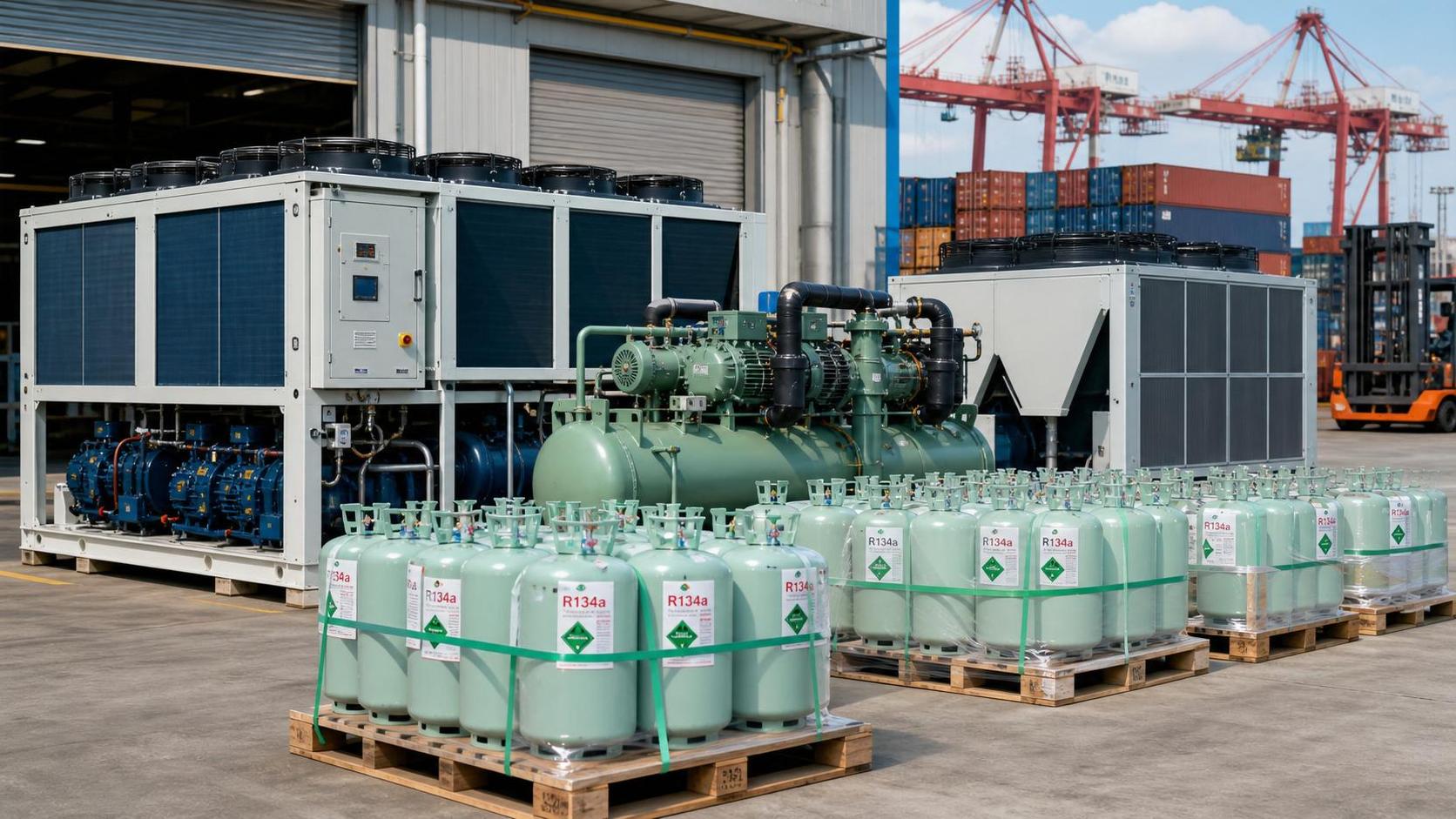
On July 23, 2026, the European Commission issued the final annual F-Gas quota allocation decision, confirming that from the third quarter of 2026, the import quota for HFC-134a used in industrial chillers will be reduced by 35% versus the same period of 2025. This is a development that deserves close attention from chiller exporters, component suppliers, importers, and compliance teams, because the quota setting is tied not only to complete equipment entering the EU market but also to compressor assemblies pre-charged with R-134a, with direct implications for delivery planning and product compliance routes.
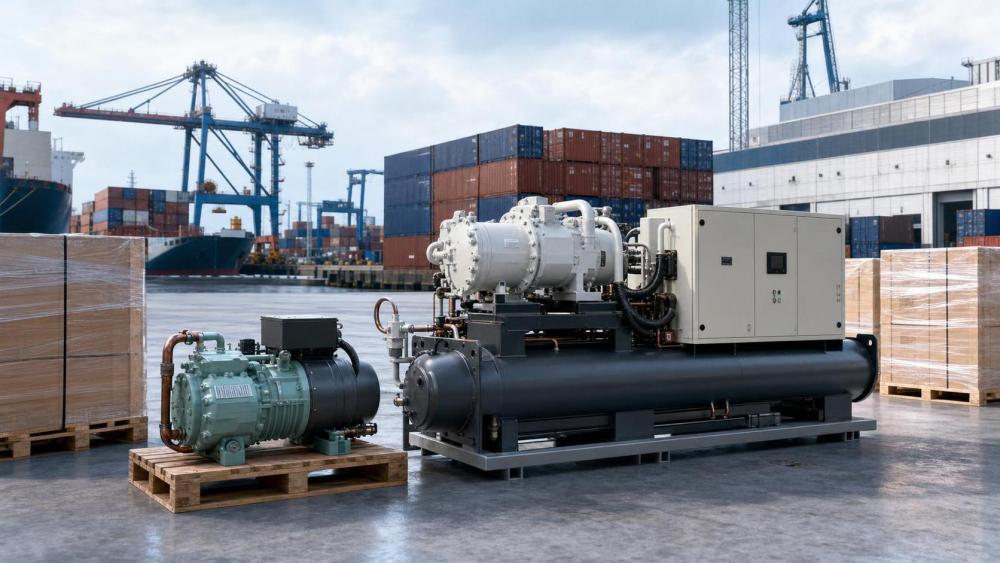
What the Commission Confirmed on July 23
The confirmed fact is that the European Commission formally released Commission Implementing Decision (EU) 2026/1482 on July 23, 2026 as the final annual quota allocation under the F-Gas framework.
According to the information provided, the decision confirms that starting in the third quarter of 2026, the import quota linked to HFC-134a for industrial chillers is 35% lower than in the corresponding period of 2025.
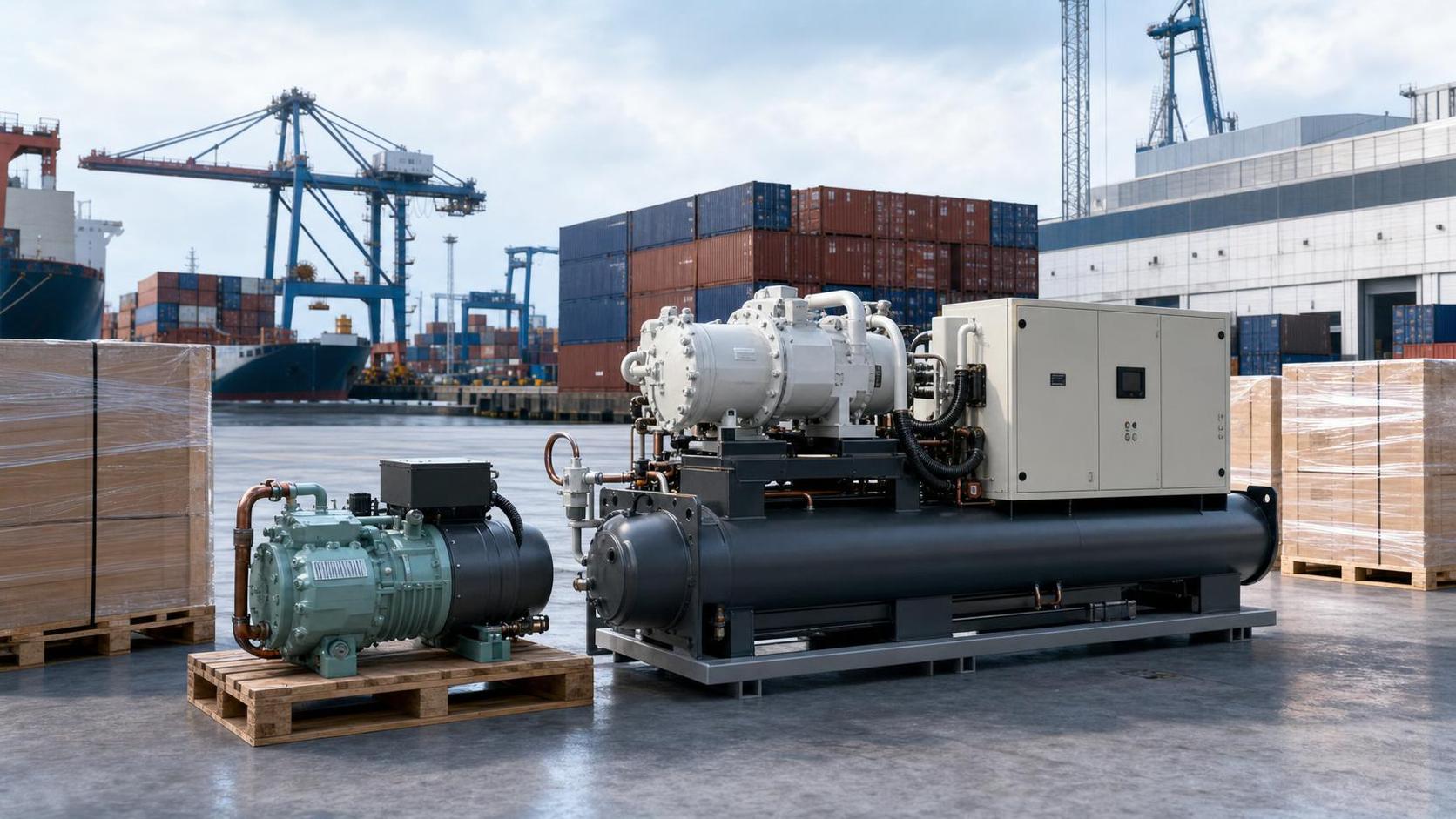
The confirmed scope of relevance also extends beyond complete industrial chiller imports. It directly relates to exports of compressor assemblies that are pre-charged with R-134a, which means the decision affects how compliant chiller products and related components can be delivered into the EU market.
Where the Pressure May Appear First in the Supply Chain
EU-bound equipment trade faces a narrower compliance window
From an industry perspective, companies shipping complete industrial chillers into the EU may feel the impact first because the quota cut is directly tied to import arrangements involving R-134a. The main business pressure is likely to appear in model selection, shipment timing, and compliance confirmation for units intended for EU delivery.
What deserves closer attention is whether existing export plans still align with the reduced quota environment from the third quarter onward. Even where product demand remains unchanged, the compliance path for bringing those systems into the EU becomes more constrained.
Pre-charged component suppliers are not outside the scope
Observably, suppliers of compressor assemblies pre-filled with R-134a may also be affected because the information provided explicitly links the quota to this category of exports. The issue is not limited to complete equipment; it also touches component configurations that carry refrigerant into the market.
The practical implication is that component-level trade documentation, shipment structure, and customer delivery arrangements may require closer review where pre-charged assemblies are involved.
Importers and channel operators may face coordination risk
For EU importers and channel participants, the likely impact is less about product specification alone and more about coordination across purchasing, customs preparation, and delivery scheduling. Analysis shows that when quota treatment is connected to both complete units and refrigerant-containing assemblies, the commercial risk can shift quickly from procurement to execution.
Companies in these roles should watch for any mismatch between contracted deliveries and the compliance route available under the final quota allocation.
What Companies Should Be Watching Now
Distinguish the confirmed rule from internal assumptions
The confirmed point is the 35% reduction from the third quarter of 2026 compared with the same period in 2025. Analysis shows that businesses should separate this confirmed regulatory outcome from internal market assumptions, especially where sales, procurement, or delivery teams may still be working from earlier planning scenarios.
Review which product forms are exposed
What deserves closer attention is the product boundary affected in practice. The information provided makes clear that the issue concerns both industrial chillers and compressor assemblies pre-charged with R-134a. Companies should therefore examine not only finished equipment programs but also component exports that may be embedded in the same delivery chain.
Check documents, scheduling, and customer communication
Observably, this development has an operational side as well as a regulatory side. Businesses involved in EU shipments should pay attention to whether supporting documents, order timing, and delivery commitments remain aligned with the new quota situation from the third quarter onward.
Customer-facing teams may also need to communicate more carefully around lead times, shipment structure, and compliance status where R-134a-charged products are part of the transaction.
Continue monitoring any follow-on clarification
Analysis shows that final quota allocation decisions often settle one key issue while leaving market participants focused on practical interpretation and implementation details. For that reason, companies should keep watching for any later official wording, clarifications, or related compliance guidance connected to the decision already issued.
Why This Looks Like More Than a Short-Term Adjustment
This section is an editorial observation rather than a statement of fact. It is more appropriate to understand this development as a concrete regulatory signal with immediate commercial consequences, not merely as a short-lived administrative update. The reason is that the confirmed quota reduction is tied directly to how products can be placed into the EU market, which affects technical route selection and supply-chain organization at the same time.
At the same time, it should not be overstated as a complete market outcome on its own. Observably, the decision creates a clearer operating constraint, but the full commercial effect will still depend on how exporters, importers, and component suppliers adjust their delivery structures and compliance handling in response.
How the Market Should Read This Development
The industry significance of this update lies in its specificity. It is not a broad or abstract policy message; it is a confirmed quota decision with direct relevance to industrial chillers using R-134a and to pre-charged compressor assemblies linked to EU delivery.
Analysis shows that the most reasonable reading at this stage is that the market is facing an immediate compliance and planning adjustment, while the broader competitive and supply-chain effects still need continued observation. In that sense, this is best understood as a confirmed near-term operating change and a longer-term signal that businesses serving the EU chiller market cannot treat refrigerant-related compliance as a secondary issue.
Basis of This Article and Ongoing Verification
This article is based on the user-provided news title, event date, and event summary concerning the European Commission's July 23, 2026 release of Commission Implementing Decision (EU) 2026/1482 and the confirmed 35% reduction in the import quota for HFC-134a used in industrial chillers from the third quarter of 2026.
For this type of industry update, commonly relevant source categories include official government or regulatory notices, company announcements, industry association information, authoritative media reporting, and standards-related documentation. A specific official source link was not provided in the input, so continued verification remains necessary.
Further attention should remain on any subsequent official clarification, implementation language, or related market communication affecting complete industrial chiller imports and exports of pre-charged compressor assemblies into the EU.
Related News
- How Smart Thermal Systems Improve Industrial Cooling EfficiencyAuthor :Cryogenic Systems Expert

- How to Choose Process Cooling Equipment for Stable Temperature ControlAuthor :Cryogenic Systems Expert

- EU Finalizes 2026 HFC Quota Cut for R-134a ChillersAuthor :Cryogenic Systems Expert

- EU Tightens HFC-134a Quotas for Industrial ChillersAuthor :Cryogenic Systems Expert

- REACH SVHC Update Pressures HFC-134a Chiller Supply ChainsAuthor :Cryogenic Systems Expert

- EU PFAS Coolant Ban Reshapes Chiller ExportsAuthor :Cryogenic Systems Expert

- EU REACH Restricts PFAS Cooling Media ImportsAuthor :Cryogenic Systems Expert

- EU Ecodesign Rule Takes Effect for Industrial ChillersAuthor :Cryogenic Systems Expert

- EU REACH Rule Takes Effect for PFAS in Industrial Cooling ExportsAuthor :Cryogenic Systems Expert

- Industrial Cooling for Plastic Processing: How to Size for Stable Cycle TimesAuthor :Cryogenic Systems Expert

- EU F-Gas Update Bars R404A/R507 in Commercial CoolingAuthor :Cryogenic Systems Expert

- DOE Raises Chiller Efficiency Standard From October 2026Author :Cryogenic Systems Expert

- India Mandates BIS Energy Certification for Industrial ChillersAuthor :Cryogenic Systems Expert

- Energy-Efficient Heat Exchange for Process Cooling: Cost vs PaybackAuthor :Cryogenic Systems Expert

- EPA R-134a Import Ban Takes Effect on July 13, 2026Author :Cryogenic Systems Expert

- India BIS Rule Takes Effect for Industrial ChillersAuthor :Cryogenic Systems Expert

- EPA Cuts R134a Import Quotas 20% From July 10Author :Cryogenic Systems Expert

- How to Compare Energy-Efficient Cooling Systems for Factory Expansion ProjectsAuthor :Cryogenic Systems Expert

- Chiller Price Index Rises 11.3% in Q2Author :Cryogenic Systems Expert

- Saudi SASO Tightens Chiller Import Compliance From July 10Author :Cryogenic Systems Expert

- Dubai Opens Fast-Track Chiller TendersAuthor :Cryogenic Systems Expert

- Japan Raises Chiller COP Floor to 6.2 From Sept. 1Author :Cryogenic Systems Expert
![]()
- Compact Thermal Management in Smart Devices: Common Failure RisksAuthor :Cryogenic Systems Expert

- Thermal Management for Batteries: Cooling Methods ComparedAuthor :Cryogenic Systems Expert

- How Compact Thermal Design Extends Smart Device UptimeAuthor :Cryogenic Systems Expert

- Shanghai-Rotterdam Reefer Rates Jump 37% in a WeekAuthor :Cryogenic Systems Expert

- Process Cooling Equipment Low Maintenance: What Cuts Downtime Over 5 Years?Author :Cryogenic Systems Expert

- Semiconductor Cooling Solutions: Which Design Works Best for High-Density Tools?Author :Cryogenic Systems Expert

- Semiconductor Thermal Management Systems: Preventing Yield Loss from Heat DriftAuthor :Cryogenic Systems Expert

- EPA Clears R-1234ze(E) for Industrial ChillersAuthor :Cryogenic Systems Expert
 for Industrial Chillers")
- DOE Raises Chiller IEER Floor to 12.8 From Oct. 2026Author :Cryogenic Systems Expert

- Singapore Refrigeration Show Adds Green Compliance HubAuthor :Cryogenic Systems Expert

- How Food Industry Temperature Control Systems Reduce Product LossAuthor :Cryogenic Systems Expert

- EU REACH Adds 12 SVHCs, Raising Chiller Compliance RiskAuthor :Cryogenic Systems Expert

- Precision Temperature Control Air Cooling: Key Setup Mistakes That Reduce StabilityAuthor :Cryogenic Systems Expert

- India BEE Eyes APF Labels for Imported ChillersAuthor :Cryogenic Systems Expert