New Maritime Code Art. 93 Effective May 1, 2026: Shipper Bears Primary Liability for Unclaimed Cargo




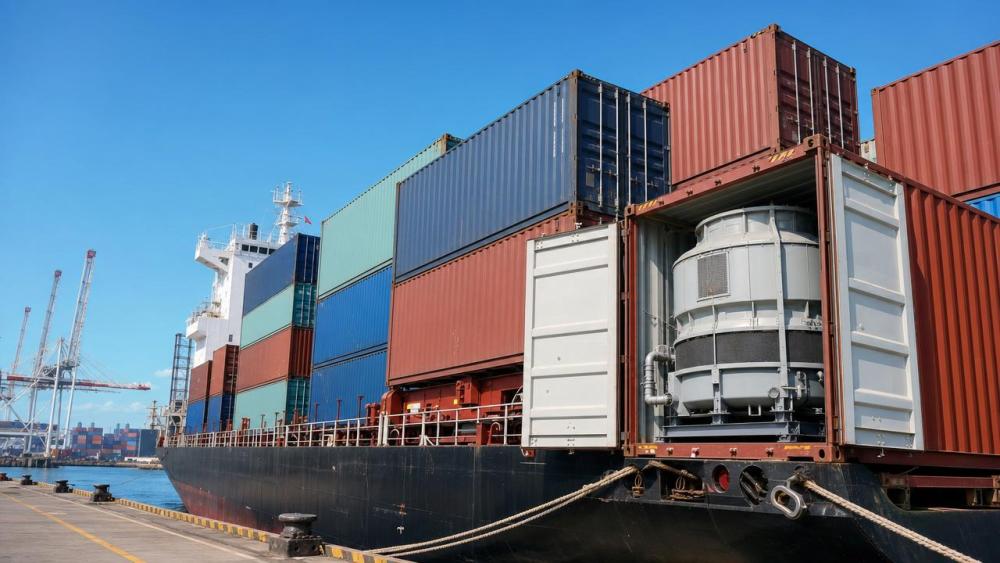
Effective May 1, 2026, Article 93 of the newly revised Maritime Code of the People’s Republic of China shifts primary liability for unclaimed cargo at discharge ports from consignees to shippers. This change directly affects exporters of high-value industrial equipment—including large cooling towers and industrial chiller units—where overseas buyers delay customs clearance or reject delivery, exposing Chinese exporters to port storage fees, return shipping costs, and cargo disposal liabilities.
Event Overview
On May 1, 2026, the revised Maritime Code of the People’s Republic of China entered into force. Article 93 explicitly assigns first-responsibility for unclaimed cargo at the port of discharge to the shipper, replacing the previous framework under which the consignee bore primary legal responsibility. The provision is publicly confirmed and effective as of the stated date; no further implementing regulations or judicial interpretations have been issued to date.
Industries Affected by This Change
Direct Export Trading Enterprises
These firms—typically manufacturers or trading companies exporting industrial equipment on FOB or CIF terms—now bear direct legal and financial exposure when overseas buyers fail to take delivery. Impact manifests in unexpected demurrage, detention, and disposal costs previously assumed to be consignee risks.
Manufacturing Exporters of High-Value Industrial Equipment
Producers of large cooling towers, industrial chillers, and similar capital goods face heightened delivery risk. These items often require complex import documentation, site-specific installation coordination, and extended customs processing abroad—factors that increase the likelihood of delayed or refused pickup. Under the new rule, such operational friction now triggers shipper liability.
Supply Chain Service Providers (e.g., Freight Forwarders, Customs Agents)
While not legally liable under Article 93, these intermediaries may face increased contractual scrutiny from shippers seeking indemnity clauses or pre-shipment risk assessments. Their role in advising on Incoterms selection, documentation completeness, and buyer credit verification becomes operationally more consequential.
What Relevant Enterprises or Practitioners Should Monitor and Do Now
Review and revise Incoterms usage in export contracts
FOB terms no longer insulate shippers from post-discharge liability under Article 93. Exporters should assess whether shifting to DAP or DPU (Delivered at Place / Delivered at Place Unloaded), with explicit allocation of unloading and import clearance obligations, better aligns with the new statutory risk allocation.
Strengthen pre-shipment due diligence on overseas buyers
Verify buyer import licensing capacity, local customs compliance history, and financial standing—particularly for markets with known delays in industrial equipment clearance (e.g., certain ASEAN, Middle Eastern, or African jurisdictions). Consider requiring advance payment milestones or bank guarantees where buyer reliability is uncertain.
Update internal logistics protocols and contingency planning
Integrate Article 93 implications into standard operating procedures for shipment follow-up: define trigger points for intervention (e.g., 7 days post-ETA without pickup confirmation), designate responsible personnel for port liaison, and pre-negotiate options for temporary warehousing or repatriation with forwarders.
Monitor official guidance and judicial application
No judicial interpretation or administrative notice has yet clarified how courts will determine “shipper liability” in borderline cases (e.g., where consignee refusal stems from latent defects or late documentation). Observably, early case law and customs authority statements will shape practical enforcement scope.
Editorial Perspective / Industry Observation
Analysis shows this amendment signals a structural recalibration—not merely procedural adjustment—in China’s maritime risk regime. It reflects growing emphasis on upstream accountability in cross-border logistics, particularly for high-value, low-turnover goods. Current implementation remains statutory only; real-world impact will depend heavily on port authority enforcement consistency and judicial interpretation over the next 12–24 months. From an industry perspective, it is more accurately understood as a regulatory signal prompting proactive risk reassessment than an immediately executable operational shift.
Concluding, Article 93 does not alter physical supply chain realities—but reassigns legal and financial exposure in a way that reshapes contractual negotiation, credit assessment, and contingency design for industrial equipment exporters. At present, it is best understood as a binding statutory baseline requiring operational adaptation, rather than a finalized risk model with settled enforcement patterns.
Source: Official text of the revised Maritime Code of the People’s Republic of China, effective May 1, 2026. No supplementary notices, judicial interpretations, or enforcement guidelines have been published as of the effective date. Ongoing monitoring of court rulings and customs administration circulars is recommended.
Ready when you are. Send us a message to get started.
Related News
- How corrugation angle affects heat transfer in plate heat exchangersAuthor :Thermodynamics Analyst

- R22 Prices Retreat as China's Refrigerant Market Faces Tight Quotas and Soft DemandAuthor :Cryogenic Systems Expert

- How to select industrial equipment for automation with existing PLCsAuthor :

- Carrier Plans $600 Million Manufacturing and Engineering Center in Fort WorthAuthor :

- How electricity prices shape industrial compressed air price trendsAuthor :

- Chemours Faces Investor Lawsuit Over Opteon Refrigerant Sales ForecastsAuthor :Cryogenic Systems Expert

- Choosing air filtration systems for heavy dust in the Middle EastAuthor :

- LG Expands R290 Monobloc Heat Pump Range with New 12–16 kW ModelsAuthor :Cryogenic Systems Expert

- How to size a chiller for pharmaceutical cleanroom temperature controlAuthor :Cryogenic Systems Expert

- Kentucky Regulators Approve $191 Million Cooling Tower at Mitchell Coal PlantAuthor :Thermodynamics Analyst

- How much does a fully installed compressed air monitoring system cost?Author :

- What documentation supports CE marking for industrial equipment?Author :

- When do plate heat exchangers suit Middle East seawater cooling?Author :Thermodynamics Analyst

- EU Issues Updated Guidance on Industrial Refrigeration Efficiency and F-gas AlternativesAuthor :Cryogenic Systems Expert

- How does base pressure affect film purity in vacuum deposition?Author :Vacuum Process Fellow

- Do U.S. refrigerant regulations require replacing R-410A systems?Author :Cryogenic Systems Expert

- When does variable gas flow justify a custom screw compressor system?Author :Pneumatic Power Engineer

- How local support affects vacuum system costs in Southeast AsiaAuthor :

- How worldwide industry category guides help compare market opportunitiesAuthor :

- How to verify food-grade purity in compressed air systemsAuthor :Pneumatic Power Engineer

- When high-pressure waste heat recovery boilers make economic senseAuthor :Thermal Energy Strategist

- How to size compressed air equipment for pneumatic toolsAuthor :Pneumatic Power Engineer

- How to size vacuum process equipment for the required pump-down timeAuthor :Vacuum Process Fellow

- What determines the price of pure air compression systems?Author :Pneumatic Power Engineer

- How steam generation efficiency shapes thermal power system designAuthor :Thermal Energy Strategist

- What drives sustainable thermal systems cost over their operating life?Author :

- Which vacuum specification best protects semiconductor process yield?Author :Vacuum Process Fellow

- When do smart thermal systems with sensors reduce chiller energy use?Author :Cryogenic Systems Expert

- When does gasketed plate heat exchanger technology suit your process?Author :Thermodynamics Analyst

- How to size oil-free compressors for instrumentation air demandAuthor :Pneumatic Power Engineer

- How Class 0 oil-free compressors protect product quality in food productionAuthor :Pneumatic Power Engineer

- Which industrial solution comparison criteria prevent project delays?Author :

- Chiller Optimization Checklist for Rising Energy Use and Unstable Cooling OutputAuthor :Cryogenic Systems Expert

- How to Specify a High-Precision Temperature Chiller for Tight-Tolerance ProcessesAuthor :Cryogenic Systems Expert

- Designing Energy-Efficient Industrial Cooling for Variable Process LoadsAuthor :Cryogenic Systems Expert

- Low-GWP Cooling Solutions for Process Plants: Comparing Safety, Efficiency, and CostAuthor :Cryogenic Systems Expert