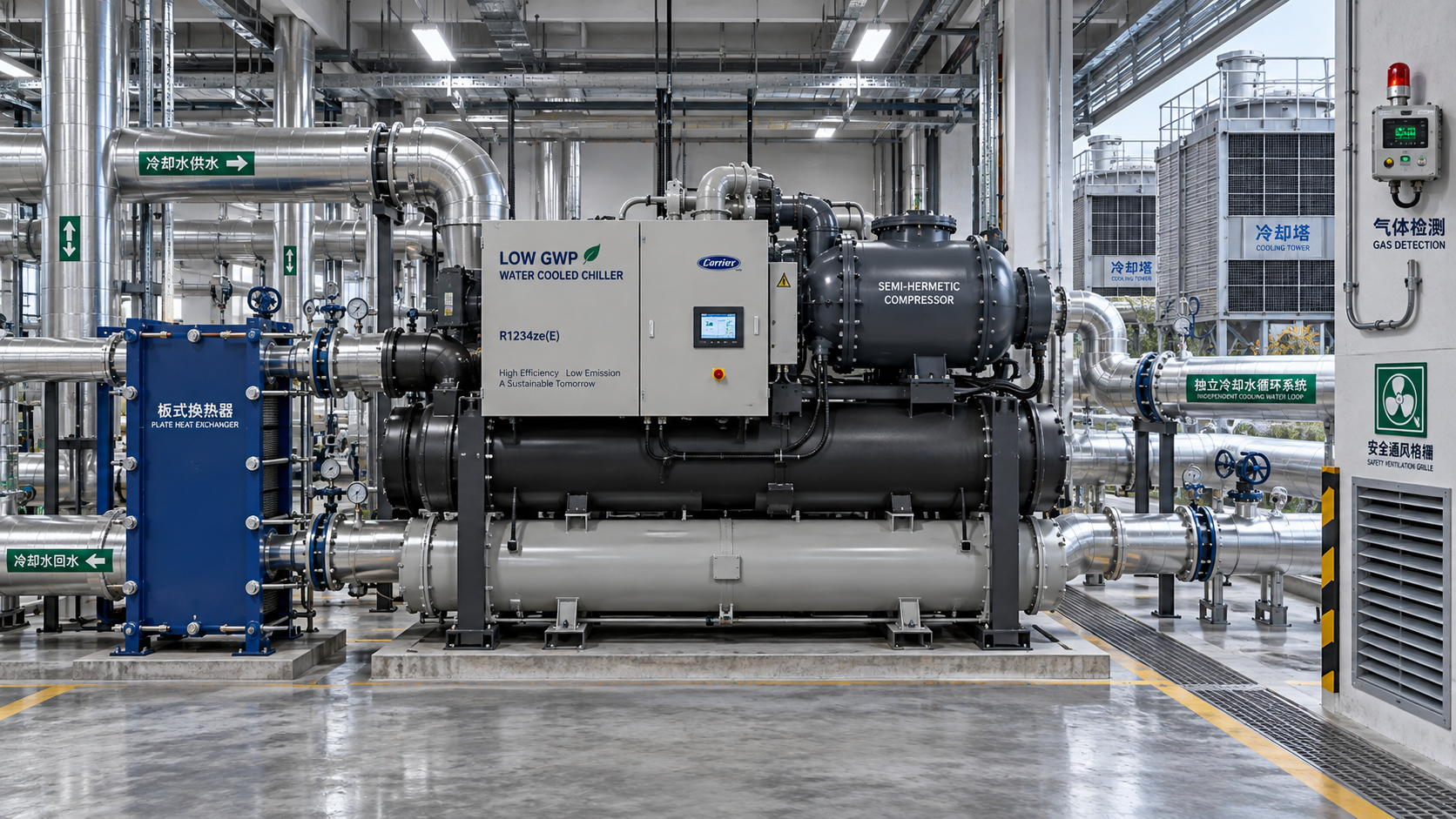
Maersk Plans Phased Red Sea Return in Q3; Far East–Europe Industrial Cooling Equipment Freight Rates May Drop 30% Weekly




On 14 May 2026, Maersk’s CEO confirmed during an investor meeting that the company is actively assessing the feasibility of resuming operations through the Red Sea and Suez Canal in Q3–Q4 2026. This potential shift carries significant implications for global maritime logistics—particularly for the transport of large industrial cooling equipment between the Far East and Europe.
Confirmed Operational Development
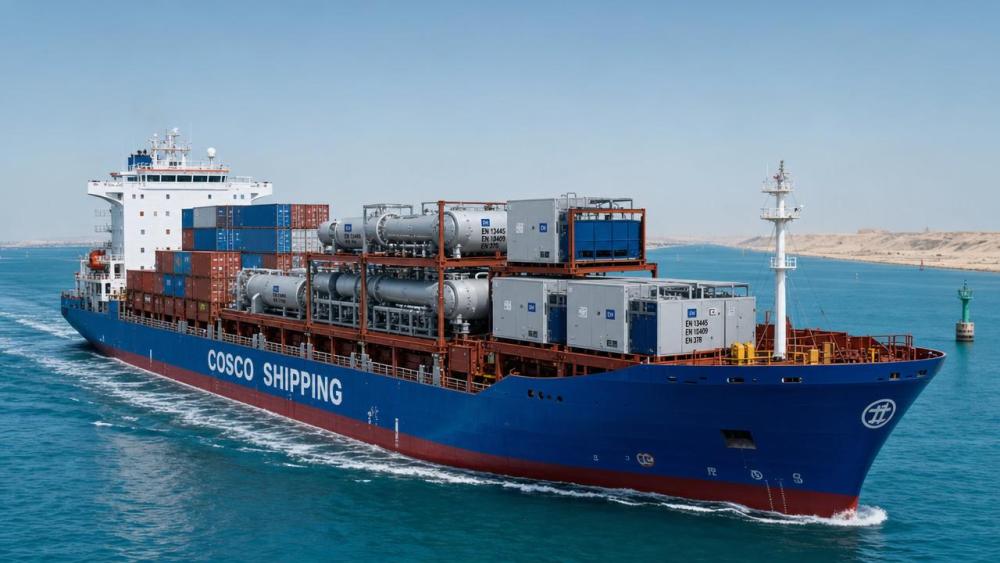
Maersk’s CEO publicly stated on 14 May 2026 that the carrier is evaluating a phased return to Red Sea and Suez Canal routes beginning in Q3 2026. Should this route restoration proceed successfully, it is estimated that 6–8% of global deep-sea container vessel capacity would be released back into active service. The announcement specifically references industrial chillers and shell-and-tube heat exchangers shipped from the Far East to Europe as key cargo categories affected. Current high-rate booked slots face emerging cost arbitrage pressure due to anticipated downward pricing momentum.
Impact Across Supply Chain Roles
Direct Exporting Companies
Exporters of industrial cooling systems may experience rapid freight cost reductions—but only for shipments scheduled post-switch. Those with existing fixed-rate contracts signed at peak rates now face margin compression or renegotiation pressure, especially where delivery windows overlap with the anticipated Q3 rate correction.
Raw Material Procurement Firms
Firms sourcing critical components (e.g., titanium tubes, ASME BPVC-compliant pressure vessels) from European suppliers must reassess landed cost models. Lower ocean freight could improve total landed cost predictability—but only if procurement cycles align with the new routing timeline and avoid exposure to transitional volatility.
Equipment Manufacturing Enterprises
Manufacturers producing large-format cooling units must revisit export scheduling, packaging specifications, and port handling coordination. A shortened effective transit time via Suez may tighten just-in-time assembly dependencies—and require updated documentation for customs clearance under revised EU import compliance frameworks.
Logistics & Freight Forwarding Providers
Forwarders specializing in oversized cargo must update capacity planning tools and revalidate vessel compatibility data for Red Sea transits—including draft restrictions, port infrastructure readiness, and ISPS Code compliance status across affected terminals.
Key Operational Considerations for Enterprises
Reassess Fixed-Rate Booking Exposure
Companies with locked-in freight contracts at elevated rates should evaluate contractual force majeure clauses, penalty structures, and options for partial cancellation or rerouting—especially for non-urgent shipments scheduled beyond Q3.
Validate Documentation Alignment with Revised Routing
Shipment documentation—including CE marking declarations, EN 13445 conformity statements, and transport-specific risk assessments—must reflect actual routing changes. Misalignment may trigger customs delays or classification disputes under EU Regulation (EU) No 952/2013.
Update Delivery Timelines and Customer Commitments
Manufacturers committing to delivery dates under prior routing assumptions should recalculate lead times using updated Suez-based ETAs and communicate adjustments proactively—particularly where contractual penalties apply to late delivery.
Review Supplier Capacity for Rapid Volume Shifts
Freight forwarders and NVOCCs should verify whether their subcontracted vessel operators have secured berthing slots, crew certifications, and insurance coverage valid for Red Sea transits—given recent updates to P&I Club advisories on regional risk premiums.
Industry Observation: Beyond Rate Volatility
Analysis shows this development reflects more than a short-term freight correction—it signals a recalibration of global trade lane resilience. From an industry perspective, what deserves closer attention is how rapidly shippers and manufacturers adapt their long-term logistics strategy: reliance on alternative corridors (e.g., Cape of Good Hope) has driven up average transit times by 7–10 days, incentivizing investment in modular design, pre-certified component kits, and digital twin-enabled shipment tracking. Observably, companies with ISO/IEC 17065-accredited certification bodies embedded in their supply chain gain faster validation cycles when route-dependent compliance requirements shift.
Strategic Takeaway
This is not merely a freight rate event—it is a catalyst for structural review of end-to-end logistics governance. Enterprises should treat the Q3 transition window not as a passive cost event, but as a defined opportunity to audit routing dependencies, harmonize technical documentation across jurisdictions, and strengthen contractual flexibility for future maritime disruptions.
Source Information and Verification Notes
This article was generated exclusively from the user-provided input: title, event date (14 May 2026), and event summary. Specific official source links were not provided in the input and should be verified continuously. Stakeholders are advised to monitor Maersk’s official operational advisories, IMO circulars on Red Sea navigation safety, EU Commission updates on customs valuation rules for routed cargo, and ongoing industry feedback from the International Cargo Handling Coordination Association (ICHCA) and the Global Cold Chain Alliance (GCCA).
Ready when you are. Send us a message to get started.
Related News
- How corrugation angle affects heat transfer in plate heat exchangersAuthor :Thermodynamics Analyst

- R22 Prices Retreat as China's Refrigerant Market Faces Tight Quotas and Soft DemandAuthor :Cryogenic Systems Expert

- How to select industrial equipment for automation with existing PLCsAuthor :

- Carrier Plans $600 Million Manufacturing and Engineering Center in Fort WorthAuthor :

- How electricity prices shape industrial compressed air price trendsAuthor :

- Chemours Faces Investor Lawsuit Over Opteon Refrigerant Sales ForecastsAuthor :Cryogenic Systems Expert

- Choosing air filtration systems for heavy dust in the Middle EastAuthor :

- LG Expands R290 Monobloc Heat Pump Range with New 12–16 kW ModelsAuthor :Cryogenic Systems Expert

- How to size a chiller for pharmaceutical cleanroom temperature controlAuthor :Cryogenic Systems Expert

- Kentucky Regulators Approve $191 Million Cooling Tower at Mitchell Coal PlantAuthor :Thermodynamics Analyst

- How much does a fully installed compressed air monitoring system cost?Author :

- What documentation supports CE marking for industrial equipment?Author :

- When do plate heat exchangers suit Middle East seawater cooling?Author :Thermodynamics Analyst

- EU Issues Updated Guidance on Industrial Refrigeration Efficiency and F-gas AlternativesAuthor :Cryogenic Systems Expert

- How does base pressure affect film purity in vacuum deposition?Author :Vacuum Process Fellow

- Do U.S. refrigerant regulations require replacing R-410A systems?Author :Cryogenic Systems Expert

- When does variable gas flow justify a custom screw compressor system?Author :Pneumatic Power Engineer

- How local support affects vacuum system costs in Southeast AsiaAuthor :

- How worldwide industry category guides help compare market opportunitiesAuthor :

- How to verify food-grade purity in compressed air systemsAuthor :Pneumatic Power Engineer

- When high-pressure waste heat recovery boilers make economic senseAuthor :Thermal Energy Strategist

- How to size compressed air equipment for pneumatic toolsAuthor :Pneumatic Power Engineer

- How to size vacuum process equipment for the required pump-down timeAuthor :Vacuum Process Fellow

- What determines the price of pure air compression systems?Author :Pneumatic Power Engineer

- How steam generation efficiency shapes thermal power system designAuthor :Thermal Energy Strategist

- What drives sustainable thermal systems cost over their operating life?Author :

- Which vacuum specification best protects semiconductor process yield?Author :Vacuum Process Fellow

- When do smart thermal systems with sensors reduce chiller energy use?Author :Cryogenic Systems Expert

- When does gasketed plate heat exchanger technology suit your process?Author :Thermodynamics Analyst

- How to size oil-free compressors for instrumentation air demandAuthor :Pneumatic Power Engineer

- How Class 0 oil-free compressors protect product quality in food productionAuthor :Pneumatic Power Engineer

- Which industrial solution comparison criteria prevent project delays?Author :

- Chiller Optimization Checklist for Rising Energy Use and Unstable Cooling OutputAuthor :Cryogenic Systems Expert

- How to Specify a High-Precision Temperature Chiller for Tight-Tolerance ProcessesAuthor :Cryogenic Systems Expert

- Designing Energy-Efficient Industrial Cooling for Variable Process LoadsAuthor :Cryogenic Systems Expert

- Low-GWP Cooling Solutions for Process Plants: Comparing Safety, Efficiency, and CostAuthor :Cryogenic Systems Expert