Heat Exchange Performance Checks Before System Upgrades




Before committing capital to pumps, chillers, compressors, or control-system upgrades, technical evaluators need a clear baseline of current heat exchange performance.
A structured pre-upgrade check reveals whether losses come from fouling, undersized surfaces, flow imbalance, degraded controls, or mismatched operating conditions.
By quantifying thermal duty, approach temperature, pressure drop, and energy impact, teams can separate necessary modernization from avoidable replacement.
What should a heat exchange baseline include before an upgrade?
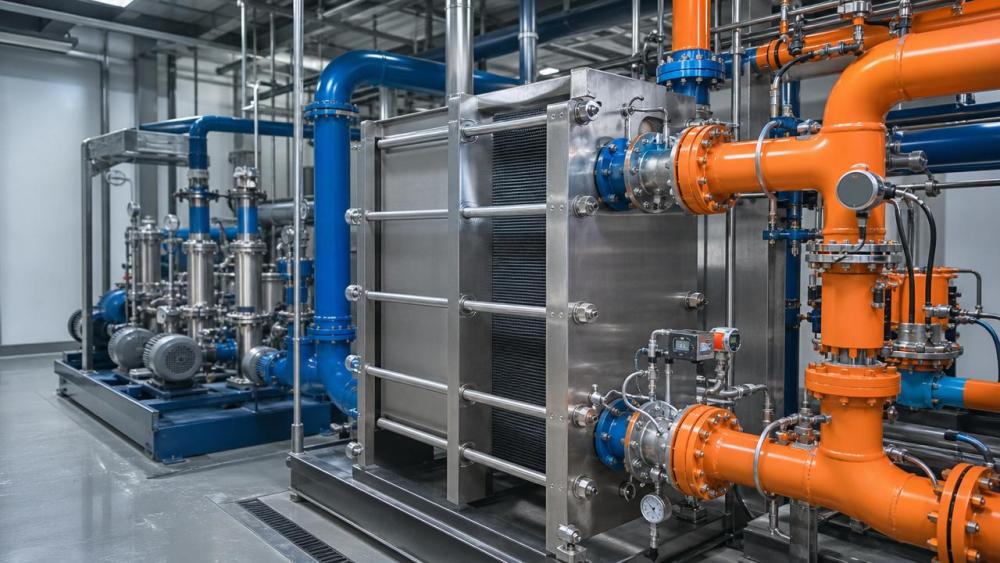
A useful baseline starts with measured data, not assumptions from original design documents.
Many industrial systems operate far from nameplate conditions after process expansion, utility changes, or production schedule variation.
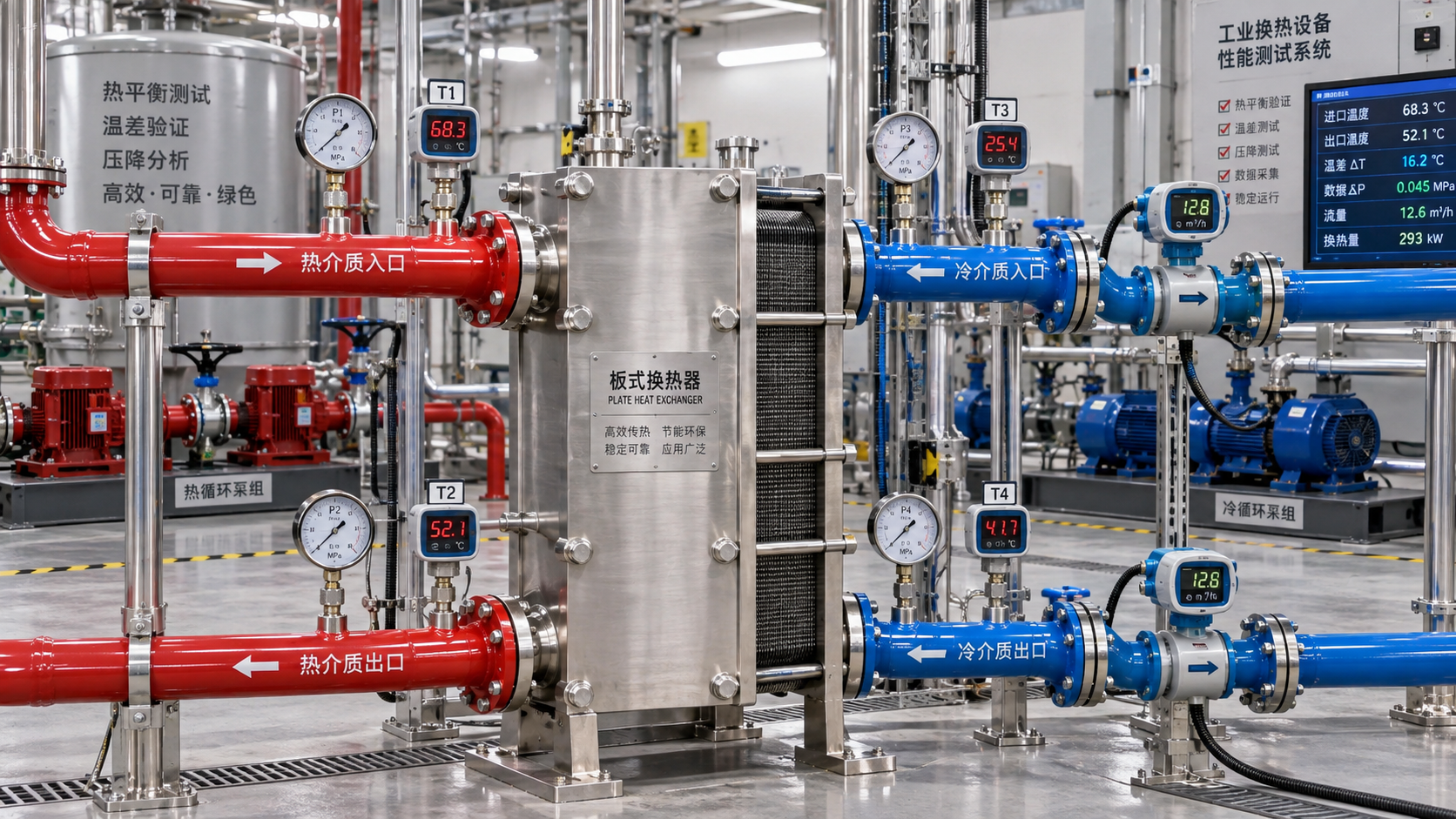
For heat exchange equipment, the first check is actual thermal duty under representative load.
Record inlet and outlet temperatures, flow rates, fluid properties, operating pressure, and production condition at the same time.
Snapshot readings can mislead when compressors cycle, chillers stage, or batch processes shift rapidly.
Trending data across stable and variable periods gives a clearer heat exchange performance profile.
The second check is approach temperature, which compares the outlet temperature of one stream with the inlet temperature of the opposite stream.
A widening approach often signals fouling, insufficient area, bypassing, air binding, or poor distribution.
The third check is pressure drop across each side of the heat exchange unit.
High pressure drop may indicate scaling, blocked passages, collapsed internals, or filters overloaded upstream.
Low pressure drop is not always good.
It can reveal bypass flow, incorrect valve position, worn pump impellers, or a flow path not using full surface area.
- Thermal duty compared with current production demand.
- Approach temperature under minimum, average, and peak load.
- Pressure drop on process and utility sides.
- Flow balance between parallel branches or multiple exchangers.
- Energy use of related pumps, compressors, fans, or chillers.
How can fouling be separated from undersized heat exchange capacity?
Fouling and undersizing can look similar because both reduce thermal performance.
The distinction matters because cleaning, filtration, or chemistry control may restore heat exchange efficiency without major replacement.
Start by comparing today’s cleanability history with original commissioning records.
If performance improved sharply after previous cleaning, fouling is a strong candidate.
If cleaning produced little change, the heat exchange surface may be insufficient for current duty.
Visual inspection also helps, especially for shell-and-tube bundles, strainers, cooling tower basins, and plate heat exchangers.
Deposits, biological growth, corrosion products, or oil films can create major thermal resistance.
However, inspection alone cannot prove capacity.
A thermal calculation using current fluid properties and measured flow is still required.
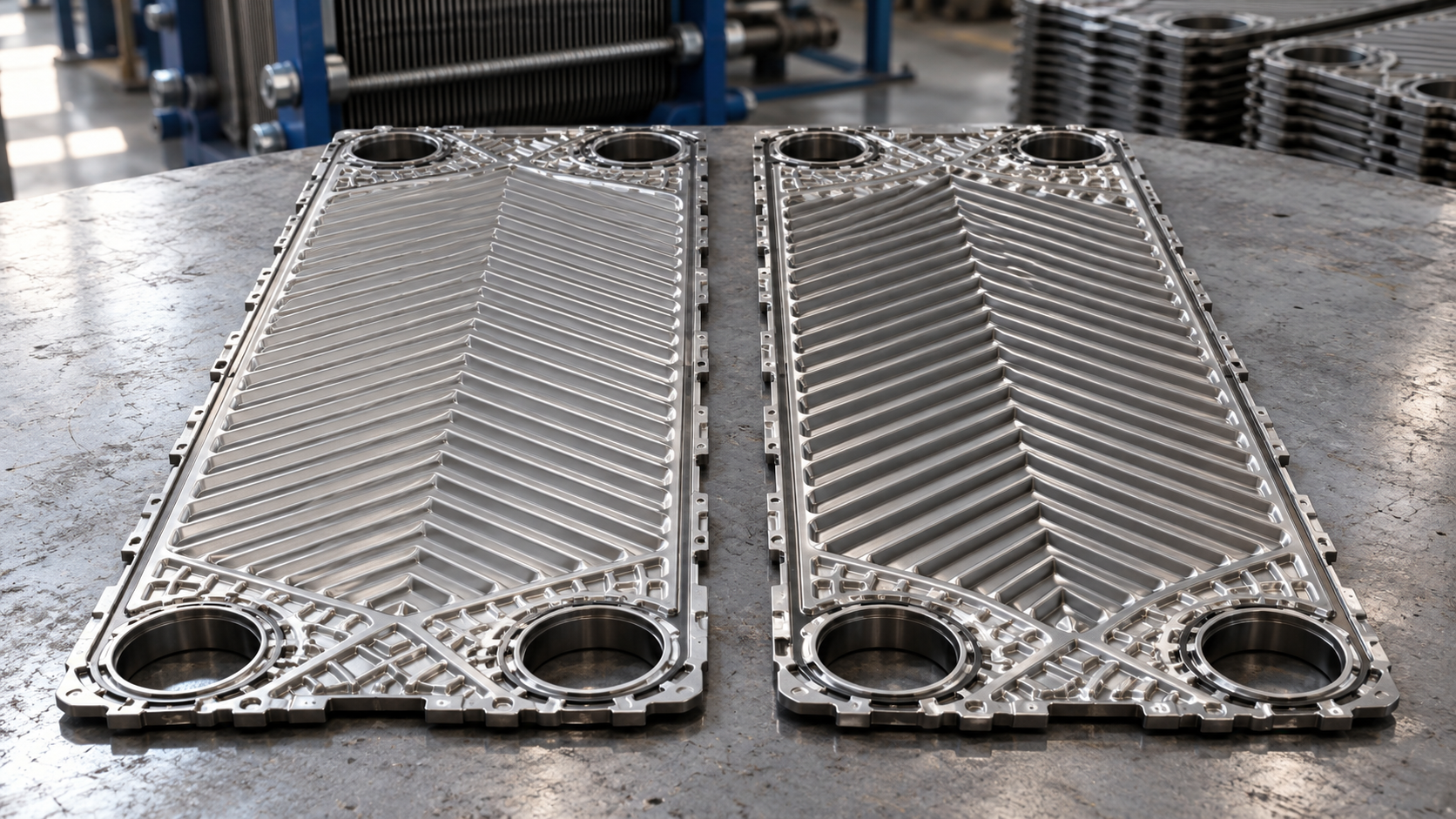
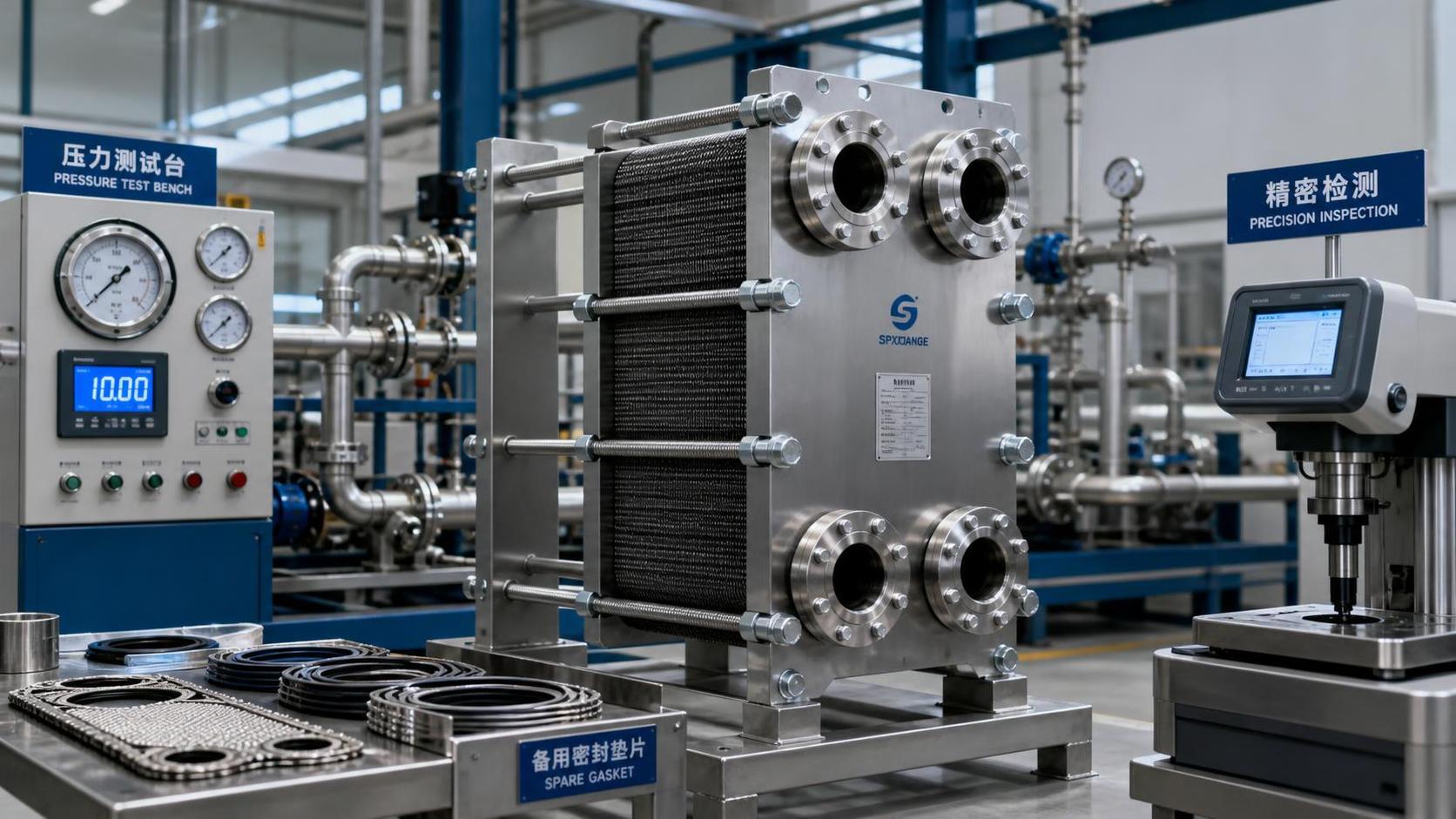
For plate units, check tightening dimension, gasket condition, and evidence of channel blockage.
For air-cooled heat exchange systems, confirm fin cleanliness, fan operation, recirculation, and ambient design assumptions.
For compressor aftercoolers, oil carryover and condensate management often distort measured cooling performance.
A practical test compares performance before and after targeted cleaning.
If heat exchange duty improves but soon declines, the root cause may be water quality or process contamination.
In that case, replacement alone may repeat the same failure pattern.
Which operating conditions distort heat exchange upgrade decisions?
Heat exchange performance is highly sensitive to real operating conditions.
A unit that seems weak during a summer peak may perform acceptably during normal ambient conditions.
Similarly, an exchanger sized for continuous production may struggle during short, high-intensity batch discharge.
Before system upgrades, identify which condition drives the complaint.
Peak load, average load, minimum load, and transient startup conditions should not be treated as one case.
Control valves can also hide or create heat exchange limitations.
A valve near fully open may show insufficient utility capacity or an undersized exchanger.
A valve hunting between positions may indicate poor tuning, sensor placement issues, or unstable flow.
In chilled-water systems, supply temperature reset strategies can change apparent exchanger capability.
In compressed-air networks, warmer inlet air raises compressor discharge temperature and increases aftercooler burden.
Vacuum processes add another complication because vapor load varies with product temperature and moisture release.
Industrial cooling towers affect many heat exchange decisions.
High wet-bulb temperature, poor fan staging, scale, or low basin level can reduce available cooling capacity.
If tower limitations are ignored, replacing downstream exchangers may not deliver expected results.
How should energy impact be calculated for heat exchange improvements?
Energy impact connects thermal findings with upgrade economics.
A heat exchange problem rarely exists alone; it affects pumps, chillers, compressors, boilers, fans, and control stability.
Begin with avoided energy, not only installed equipment efficiency.
For example, lower cooling-water temperature may reduce compressor discharge temperature or chiller lift.
Better heat exchange may allow lower pump speed, reduced fan operation, or shorter batch heating cycles.
Calculate thermal duty from mass flow, heat capacity, and temperature change.
Then translate improvement into electrical or fuel savings using equipment performance curves.
Seasonal profiles are important.
An upgrade justified only by rare peak hours may have weak lifecycle ROI.
An improvement that reduces everyday pumping power may deliver stronger value.
Pressure drop must be included in the energy model.
A more compact heat exchange design may increase turbulence and thermal transfer.
Yet excessive pressure drop can increase pump or fan energy.
The best solution balances thermal gain, hydraulic loss, maintenance access, and control flexibility.
When is modernization better than repair or cleaning?
Cleaning is attractive when fouling is the main limitation and mechanical condition remains strong.
Repair is suitable when leakage, gasket failure, tube damage, or sensor faults are isolated.
Modernization becomes stronger when process requirements have permanently changed.
Examples include higher production rate, tighter temperature tolerance, new fluids, or decarbonization targets.
A heat exchange upgrade may also be justified when maintenance frequency disrupts operations.
Repeated cleaning, unplanned shutdowns, or spare-part scarcity can outweigh the lower cost of repair.
Material compatibility is another decision factor.
Corrosive fluids, new refrigerants, or stricter hygiene requirements may require different metallurgy or construction.
For pharmaceutical, semiconductor, food, and energy systems, contamination risk can dominate pure payback calculations.
Still, modernization should be sized against verified demand.
Oversizing heat exchange equipment can cause control instability, low velocity fouling, and unnecessary capital cost.
A phased approach often works well.
First correct instrumentation, cleaning, flow distribution, and control logic.
Then evaluate whether new heat exchange surfaces, modular skids, or advanced monitoring still add value.
What risks should be avoided during pre-upgrade evaluation?
The first risk is relying on design flow without confirming actual flow.
Pump wear, valve position, air pockets, and pipe modifications can change heat exchange results dramatically.
The second risk is ignoring instrumentation accuracy.
Small temperature measurement errors can create large duty errors, especially with narrow temperature differences.
Calibrated sensors and proper sensor placement are essential before final calculations.
The third risk is evaluating only one component.
A heat exchange unit may underperform because upstream cooling supply is unstable or downstream demand is unrealistic.
System boundaries should include utility generation, distribution piping, control valves, and end-use loads.
The fourth risk is comparing alternatives without equal assumptions.
Different vendors may use different fouling factors, ambient conditions, pressure-drop limits, or safety margins.
Normalize assumptions before selecting a heat exchange upgrade path.
- Confirm instruments before trusting performance gaps.
- Measure under representative production and utility conditions.
- Separate fouling effects from true capacity limits.
- Model energy impact across seasonal operating hours.
- Compare repair, cleaning, controls, and replacement on lifecycle value.
How can heat exchange checks support a confident next step?
A disciplined check converts upgrade discussions into evidence-based decisions.
It shows whether performance loss is mechanical, thermal, hydraulic, operational, or control-related.
It also creates a common basis for comparing equipment proposals and energy-saving claims.
The practical next step is a documented heat exchange assessment plan.
Define measurement points, required accuracy, operating cases, calculation methods, and decision thresholds.
Then prioritize low-risk corrections before approving capital-intensive modernization.
GTC-Matrix frames this process within broader industrial intelligence.
Thermal systems, compressed air networks, vacuum processes, and cooling assets interact across the modern energy value chain.
Better data stitching helps link thermodynamic logic with practical compression power decisions.
Before upgrading, verify the baseline, quantify the gap, and test the simplest corrective actions.
That sequence reduces risk, improves lifecycle ROI, and keeps heat exchange decisions aligned with efficiency and reliability goals.
Ready when you are. Send us a message to get started.
Related News
- How corrugation angle affects heat transfer in plate heat exchangersAuthor :Thermodynamics Analyst

- When do plate heat exchangers suit Middle East seawater cooling?Author :Thermodynamics Analyst

- When does gasketed plate heat exchanger technology suit your process?Author :Thermodynamics Analyst

- When does heat recovery improve data center cooling efficiency?Author :Thermodynamics Analyst

- How Do I Verify Heat Transfer Calculations in a Supplier Quotation?Author :Thermodynamics Analyst

- How to evaluate a plate heat exchangers supplier before orderingAuthor :Thermodynamics Analyst

- EU Tightens Fatigue Checks for Plate Heat ExchangersAuthor :Thermodynamics Analyst

- EU PFAS Rule Adds New Export Filing for Cooling EquipmentAuthor :Thermodynamics Analyst

- EU EN 13445-4:2026 Adds Fatigue Report RequirementAuthor :Thermodynamics Analyst

- EU Updates EN 13445-4 for Plate ExchangersAuthor :Thermodynamics Analyst

- How to Compare Energy-Efficient Heat Exchange SolutionsAuthor :Thermodynamics Analyst

- Brazed Plate Exchanger Design: 7 Factors That Affect Heat TransferAuthor :Thermodynamics Analyst

- EU CBAM Pilot List Adds Plate ExchangersAuthor :Thermodynamics Analyst

- How Heat Exchange Systems Improve Temperature Control StabilityAuthor :Thermodynamics Analyst

- Japan to Require Efficiency Labels for Plate ExchangersAuthor :Thermodynamics Analyst

- EU REACH Adds PFAS Ban for Plate Heat ExchangersAuthor :Thermodynamics Analyst

- India Enforces BIS Rule for Plate Heat ExchangersAuthor :Thermodynamics Analyst

- DIN EN 13445-6:2026 Tightens Plate Exchanger CE RulesAuthor :Thermodynamics Analyst

- EU REACH Restricts PFAS Seals for Plate Heat ExchangersAuthor :Thermodynamics Analyst

- India Mandates BIS Certification for Imported Plate ExchangersAuthor :Thermodynamics Analyst

- Vietnam Requires QR Labels on Imported Plate Heat ExchangersAuthor :Thermodynamics Analyst

- EU EN 13445-4:2026 Tightens NDT Rules for Heat ExchangersAuthor :Thermodynamics Analyst

- EPA Clears R-1234ze(E) for Plate Exchanger SystemsAuthor :Thermodynamics Analyst
 for Plate Exchanger Systems")
- Heat Exchange Equipment Selection: Key Performance Checks Before You Compare ModelsAuthor :Thermodynamics Analyst

- ASHRAE 90.1-2026 Raises Plate Exchanger Efficiency ThresholdAuthor :Thermodynamics Analyst

- Heat Exchange Systems: How to Choose the Right SetupAuthor :Thermodynamics Analyst

- EPA SNAP 89 Takes Effect for Plate ExchangersAuthor :Thermodynamics Analyst

- How to Compare Heat Exchange Solutions for Lower Energy UseAuthor :Thermodynamics Analyst

- EPA SNAP 89 Expands Filing Rules for Plate Heat ExchangersAuthor :Thermodynamics Analyst

- EPA SNAP update adds filing rule for plate heat exchangersAuthor :Thermodynamics Analyst

- Industrial Heat Recovery: Where the Payback Is Fastest in 2026Author :Thermodynamics Analyst

- California EPR Deadline Nears for Cooling Equipment MakersAuthor :Thermodynamics Analyst

- Heat Exchanger Technology: Plate vs Shell and Tube for EfficiencyAuthor :Thermodynamics Analyst

- Industrial Heat Recovery Options for High-Temperature ProcessesAuthor :Thermodynamics Analyst

- Heat Transfer Problems in Process Lines: Causes and Practical FixesAuthor :Thermodynamics Analyst

- India Tightens Plate Exchanger Import Clearance RulesAuthor :Thermodynamics Analyst