R32 at RMB 63,200/t Pushes Chiller Export Costs Higher




The timing of the underlying event is not explicitly stated in the provided information, but the latest market reading points to a clear execution signal for the refrigeration and export equipment chain: with 2026 third-generation refrigerant quotas effectively capped and spot supply remaining tight, the rise in R32 prices is no longer only a raw-material issue. It is now affecting BOM calculations, export quotations, order renegotiation, and delivery planning for industrial chiller manufacturers, trading companies, procurement teams, and overseas project-facing suppliers.
What the confirmed market data shows
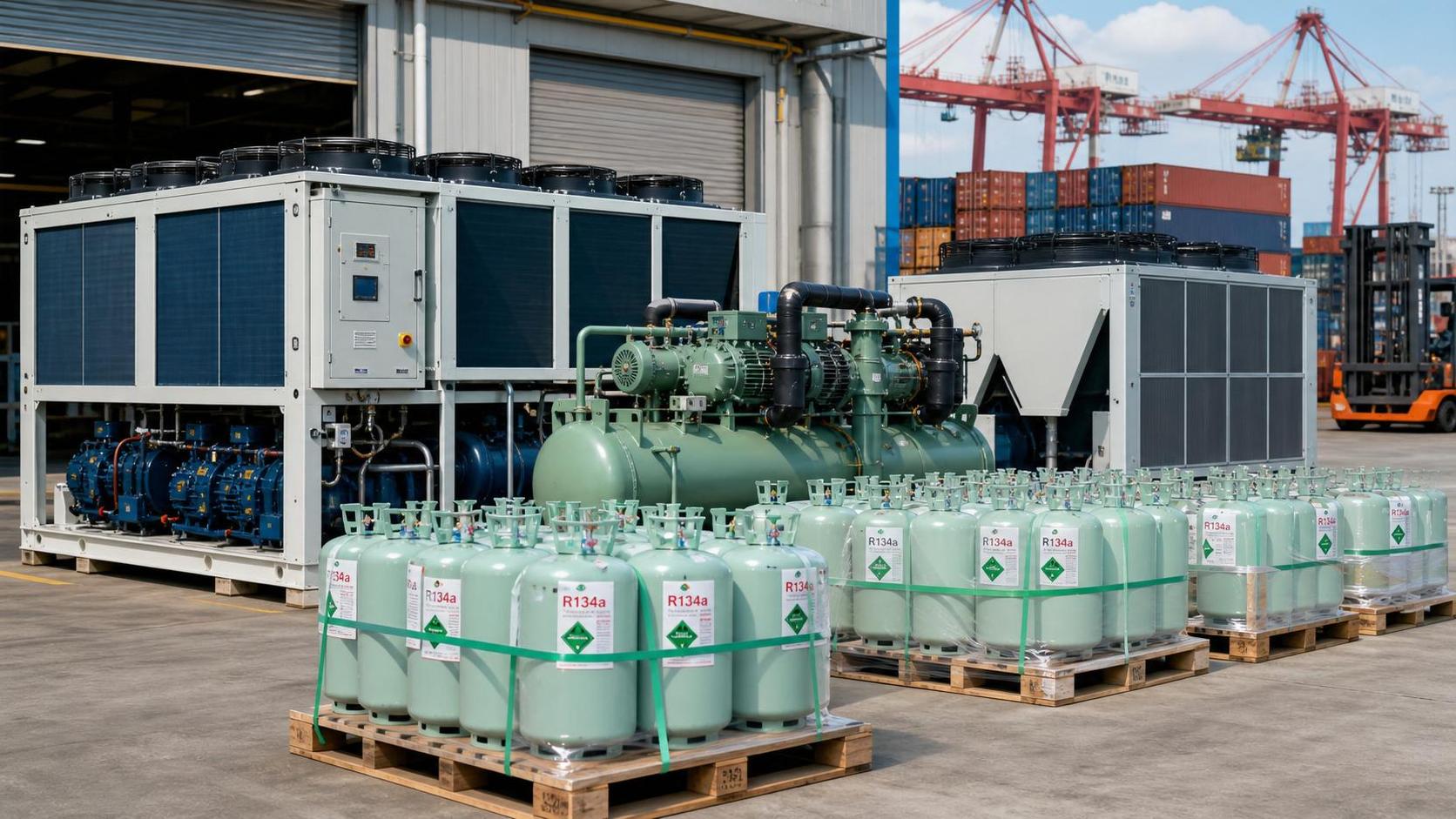
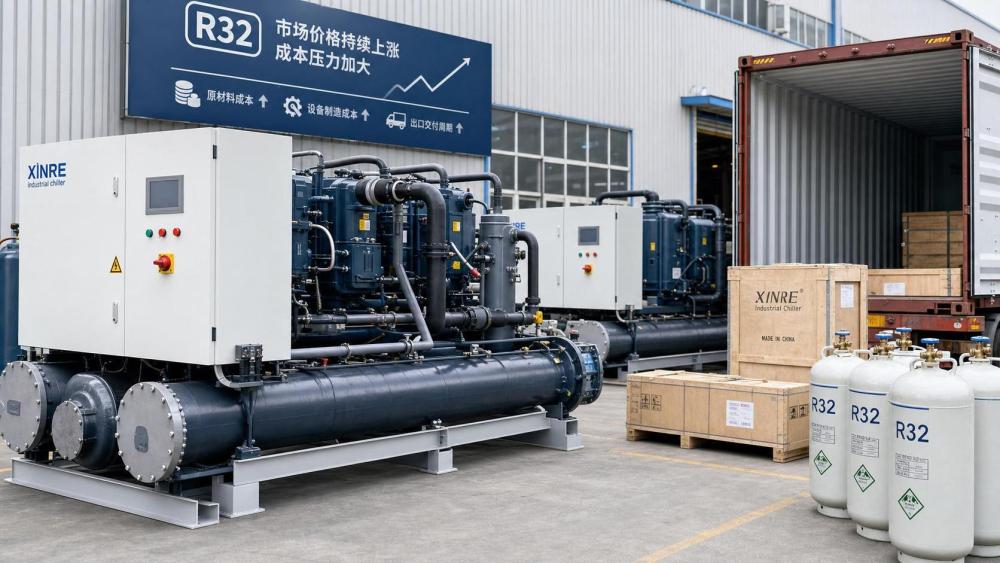
According to monitoring cited for June 19, 2026, the mainstream transaction price of R32 in East China reached RMB 63,200 per ton, up 1.2% from the previous week and at a record high. The information provided states that spot availability is tight under a locked 2026 quota framework for third-generation refrigerants, with the national quota set at 797,800 tons, up 0.7% year on year. It also states that output control by leading producers including Juhua and Dongyue has contributed to the current supply tightness.
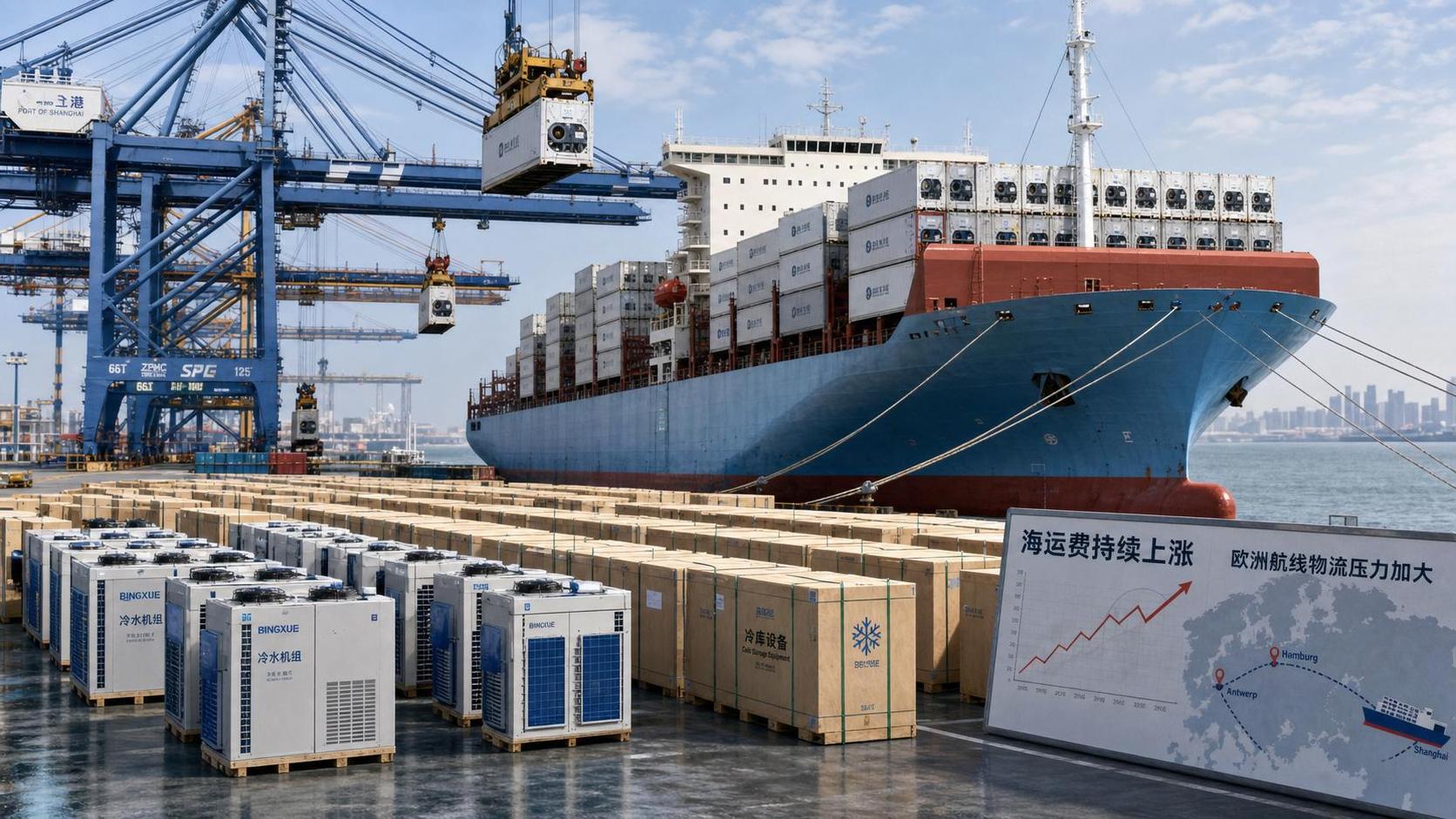
The same information further indicates that the price increase has been transmitted directly into the BOM cost of industrial chillers. Average export quotations have risen by 5% to 8%, and some European orders have already entered price renegotiation.
Where the pressure is likely to appear first
Export quotation desks are moving from price competition to contract protection
From an industry perspective, exporters of industrial chillers may feel the impact first because refrigerant cost changes are now feeding directly into quotation validity, margin protection, and customer negotiation. What deserves closer attention is whether existing offers, bid documents, and contract annexes clearly define price validity periods, adjustment triggers, and refrigerant-related cost assumptions. Where such wording is weak, commercial disputes or repricing friction may become more likely.
Procurement teams face tighter timing and supplier coordination
Analysis shows that procurement functions may be affected not only by higher input cost but also by the interaction between quota constraints and supplier output control. The practical impact is likely to fall on sourcing rhythm, purchase batch sizing, supplier confirmation, and delivery coordination. Companies that rely on fixed project milestones may need to watch more closely whether procurement documentation, supplier commitments, and internal cost approvals remain aligned with rapidly changing input prices.
Manufacturers may need closer alignment between costing, compliance, and delivery
For industrial chiller manufacturers, the issue is not limited to material inflation. Observably, once export prices are adjusted by 5% to 8%, internal processes involving technical offers, order confirmation, production release, and delivery promises may all require recalibration. Businesses serving overseas customers should pay attention to whether price changes affect technical-commercial consistency in contract files, product documentation, or customer approval flows, especially when orders are already under negotiation.
Overseas-facing service and channel partners may see downstream friction
Channel partners, project integrators, and after-sales-facing entities may also be indirectly affected if order repricing changes shipment timing or customer acceptance schedules. It is more appropriate to understand this as a supply-chain execution issue rather than only a commodity price event, because changes in export quotation levels can carry through to delivery commitments, replacement planning, and traceability of product configuration documents.
What companies should watch in the current cycle
Review how price-adjustment language is handled in trade documents
Analysis shows that companies involved in exports should closely review quotation sheets, purchase orders, contracts, and tender responses to check whether refrigerant-related cost movements can be reflected through agreed adjustment mechanisms. The provided information confirms repricing pressure, but it does not provide uniform execution rules, so businesses should avoid assuming that all counterparties will accept revised terms on the same basis.
Check whether technical files and commercial offers still match
Where BOM costs have changed, exporters and manufacturers should pay attention to consistency across technical submissions, commercial offers, and customer-facing documentation. If a project enters price renegotiation, the practical focus may include whether the same product configuration, refrigerant specification, and delivery scope remain accurately reflected in all active files and approval records.
Monitor procurement timing against supply tightness
Observably, the combination of a locked quota environment and controlled output from major producers makes procurement timing a more sensitive operational issue. Companies may need to watch whether current sourcing plans, supplier qualification records, and expected lead times remain realistic under tighter spot conditions. This is a monitoring point rather than a confirmed disruption, but it is directly connected to delivery reliability.
Keep an eye on follow-up wording, customer responses, and execution practice
The information provided confirms price pressure and renegotiation activity, but it does not establish a final market-wide execution standard. What deserves closer attention is any follow-up change in customer acceptance of revised pricing, internal approval thresholds, bid document language, and trade practice in ongoing export orders. For compliance-sensitive businesses, document retention and traceability may become more important if commercial terms are revised after initial quotation.
Why this looks like an execution signal rather than a standalone price move
Analysis shows that this development is better understood as a rule-linked market signal. The key point is not simply that R32 has become more expensive, but that a quota-constrained supply framework is now visibly shaping export pricing behavior for equipment that depends on that refrigerant. Observably, once some European orders move into price renegotiation, the issue shifts from upstream commodity volatility to downstream trade execution.
At the same time, it would be premature to treat this as a fully settled market rule across all transactions. The provided information does not define how broadly repricing will be accepted, how quickly customers will adjust, or whether procurement and delivery cycles will normalize. That is why continued observation of contract practice, customer responses, and market feedback remains necessary.
How the market should read this development now
At this stage, the more balanced reading is that the R32 increase has already moved into practical execution for parts of the industrial chiller export chain, especially in costing and quotation. It is less appropriate to read the development as a completed industry-wide outcome, and more appropriate to read it as an active transmission of quota-linked supply tightness into trade terms, procurement planning, and delivery coordination. For businesses exposed to export orders, the immediate task is not broad strategic repositioning, but disciplined monitoring of price clauses, sourcing rhythm, document consistency, and customer negotiation progress.
Basis of this article and points requiring further verification
This article is generated based on the user-provided news title, event timing, and event summary. The specific official source link was not provided in the input and therefore remains to be further verified. For this type of development, source categories that are commonly relevant include official announcements, releases from regulatory authorities, customs or trade administration information, industry association updates, standards-related documents, and reporting by authoritative media.
Further observation is still needed regarding any detailed policy interpretation, certification-related execution approach, changes in tender wording, market feedback from buyers and sellers, and how companies implement revised pricing and delivery arrangements in practice.
Related News
- How to Compare Semiconductor Cooling Solutions by Heat Load and Uptime RiskAuthor :Cryogenic Systems Expert

- EU Label Deadline Hits China Chiller ExportsAuthor :Cryogenic Systems Expert

- How Smart Thermal Systems Improve Industrial Cooling EfficiencyAuthor :Cryogenic Systems Expert

- How to Choose Process Cooling Equipment for Stable Temperature ControlAuthor :Cryogenic Systems Expert

- EU Finalizes 2026 HFC Quota Cut for R-134a ChillersAuthor :Cryogenic Systems Expert

- EU Tightens HFC-134a Quotas for Industrial ChillersAuthor :Cryogenic Systems Expert

- REACH SVHC Update Pressures HFC-134a Chiller Supply ChainsAuthor :Cryogenic Systems Expert

- EU PFAS Coolant Ban Reshapes Chiller ExportsAuthor :Cryogenic Systems Expert

- EU REACH Restricts PFAS Cooling Media ImportsAuthor :Cryogenic Systems Expert

- EU Ecodesign Rule Takes Effect for Industrial ChillersAuthor :Cryogenic Systems Expert

- EU REACH Rule Takes Effect for PFAS in Industrial Cooling ExportsAuthor :Cryogenic Systems Expert

- Industrial Cooling for Plastic Processing: How to Size for Stable Cycle TimesAuthor :Cryogenic Systems Expert

- EU F-Gas Update Bars R404A/R507 in Commercial CoolingAuthor :Cryogenic Systems Expert

- DOE Raises Chiller Efficiency Standard From October 2026Author :Cryogenic Systems Expert

- India Mandates BIS Energy Certification for Industrial ChillersAuthor :Cryogenic Systems Expert

- Energy-Efficient Heat Exchange for Process Cooling: Cost vs PaybackAuthor :Cryogenic Systems Expert

- EPA R-134a Import Ban Takes Effect on July 13, 2026Author :Cryogenic Systems Expert

- India BIS Rule Takes Effect for Industrial ChillersAuthor :Cryogenic Systems Expert

- EPA Cuts R134a Import Quotas 20% From July 10Author :Cryogenic Systems Expert

- How to Compare Energy-Efficient Cooling Systems for Factory Expansion ProjectsAuthor :Cryogenic Systems Expert

- Chiller Price Index Rises 11.3% in Q2Author :Cryogenic Systems Expert

- Saudi SASO Tightens Chiller Import Compliance From July 10Author :Cryogenic Systems Expert

- Dubai Opens Fast-Track Chiller TendersAuthor :Cryogenic Systems Expert

- Japan Raises Chiller COP Floor to 6.2 From Sept. 1Author :Cryogenic Systems Expert
![]()
- Compact Thermal Management in Smart Devices: Common Failure RisksAuthor :Cryogenic Systems Expert

- Thermal Management for Batteries: Cooling Methods ComparedAuthor :Cryogenic Systems Expert

- How Compact Thermal Design Extends Smart Device UptimeAuthor :Cryogenic Systems Expert

- Shanghai-Rotterdam Reefer Rates Jump 37% in a WeekAuthor :Cryogenic Systems Expert

- Process Cooling Equipment Low Maintenance: What Cuts Downtime Over 5 Years?Author :Cryogenic Systems Expert

- Semiconductor Cooling Solutions: Which Design Works Best for High-Density Tools?Author :Cryogenic Systems Expert

- Semiconductor Thermal Management Systems: Preventing Yield Loss from Heat DriftAuthor :Cryogenic Systems Expert

- EPA Clears R-1234ze(E) for Industrial ChillersAuthor :Cryogenic Systems Expert
 for Industrial Chillers")
- DOE Raises Chiller IEER Floor to 12.8 From Oct. 2026Author :Cryogenic Systems Expert

- Singapore Refrigeration Show Adds Green Compliance HubAuthor :Cryogenic Systems Expert

- How Food Industry Temperature Control Systems Reduce Product LossAuthor :Cryogenic Systems Expert

- EU REACH Adds 12 SVHCs, Raising Chiller Compliance RiskAuthor :Cryogenic Systems Expert