



How Food Industry Temperature Control Systems Reduce Product Loss




Why product loss often starts with small temperature drift
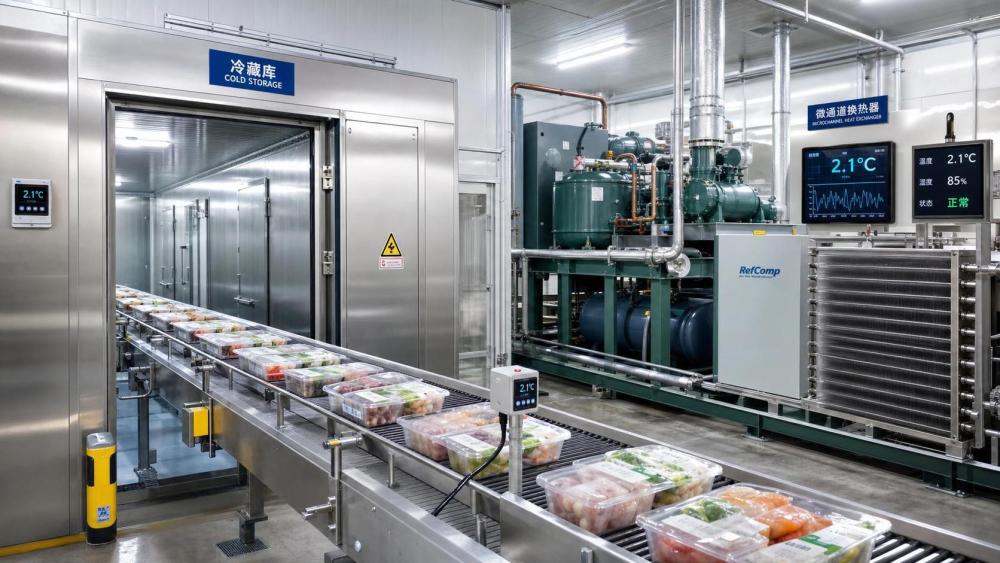
In food operations, loss rarely begins with a dramatic failure.
It usually starts with a few degrees of drift, uneven cooling, or delayed recovery after a door opens.
That is why food industry temperature control systems matter beyond basic refrigeration.
They shape shelf life, texture, microbial stability, compliance records, and the real cost of rework or disposal.
In practice, the right setup depends on where loss is happening.
A bakery cooling line, a meat processing room, and a frozen warehouse all face temperature risk, but not in the same way.
Some need tight process control during short thermal cycles.
Others need stable holding conditions over long periods with minimal energy waste.
This is where food industry temperature control systems become a strategic issue for thermal design, compressed air purity, heat exchange efficiency, and operating discipline.
Seen through the industrial lens of GTC-Matrix, temperature control is not an isolated utility.
It connects directly with compressor efficiency, refrigerant choices, microchannel heat exchanger performance, and broader energy conversion decisions.
The same keyword hides very different food conditions
The phrase food industry temperature control systems sounds uniform, but actual load profiles vary sharply.
The product itself changes the thermal logic.
High-moisture foods react differently from dry packaged goods.
Fresh proteins create hygiene pressure and fast spoilage risk.
Frozen products care more about temperature stability and defrost management than rapid pull-down alone.
The production rhythm also changes system priorities.
Batch operations create peaks, while continuous lines demand smoother control and faster response.
Facility design matters too.
A site with frequent washdowns, mixed temperature zones, or long transport paths needs a different control philosophy.
That is why comparing food industry temperature control systems by nominal capacity alone is rarely enough.
A practical way to read demand differences
This kind of comparison prevents a common mistake.
Similar temperatures do not automatically mean similar food industry temperature control systems are suitable.
Processing lines need control that reacts fast, not just cold enough
On active production lines, temperature loss often appears during transitions.
Cooked products waiting too long before chilling can lose yield, texture, and microbial safety margin.
In dairy, sauces, ready meals, and meat applications, the issue is often thermal lag rather than absolute setpoint.
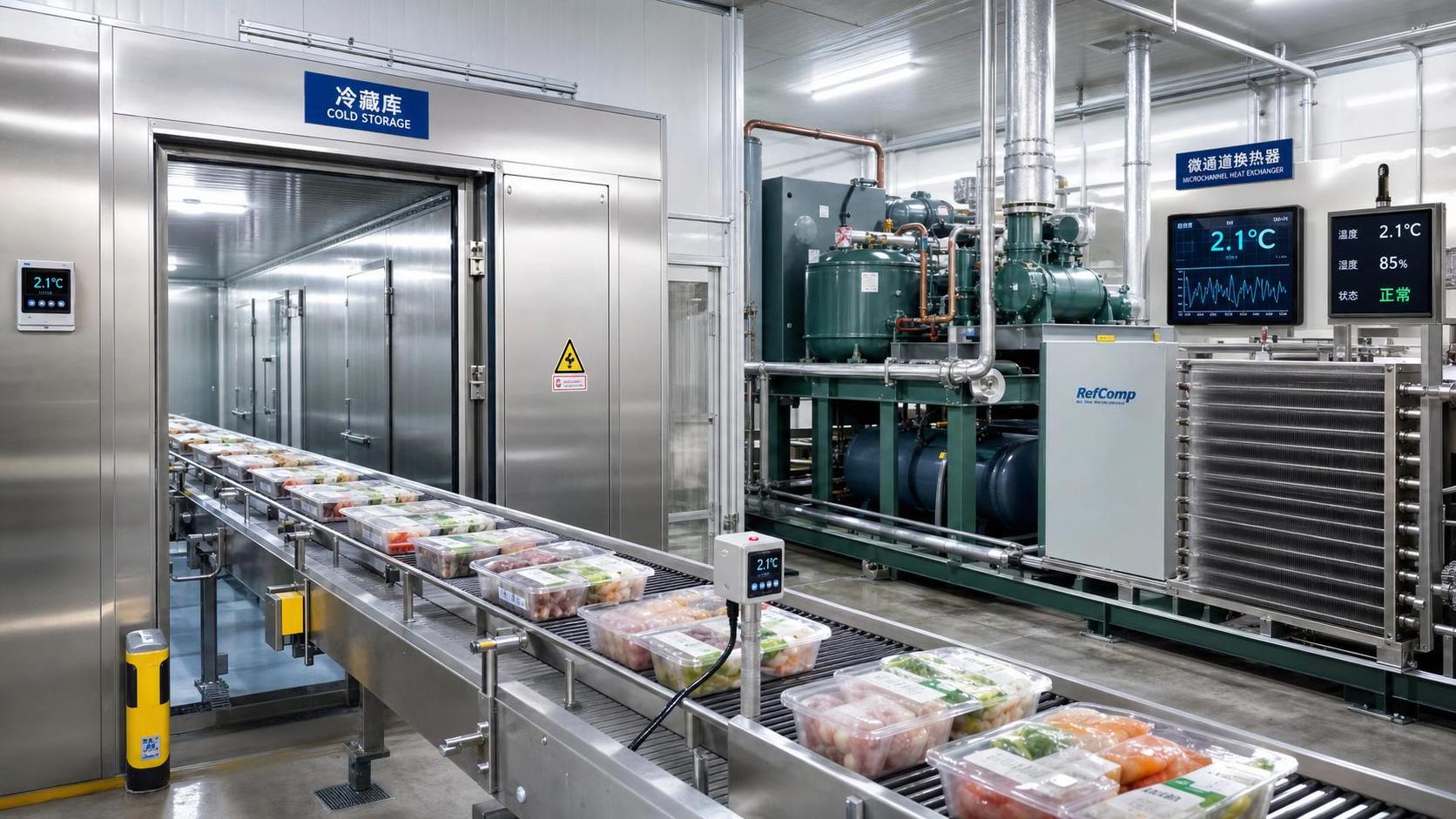
Food industry temperature control systems in these areas must recover quickly after each load change.
More important, they must cool evenly across the product mass.
A strong evaporator or chiller means little if airflow leaves warm pockets at tray centers or carton cores.
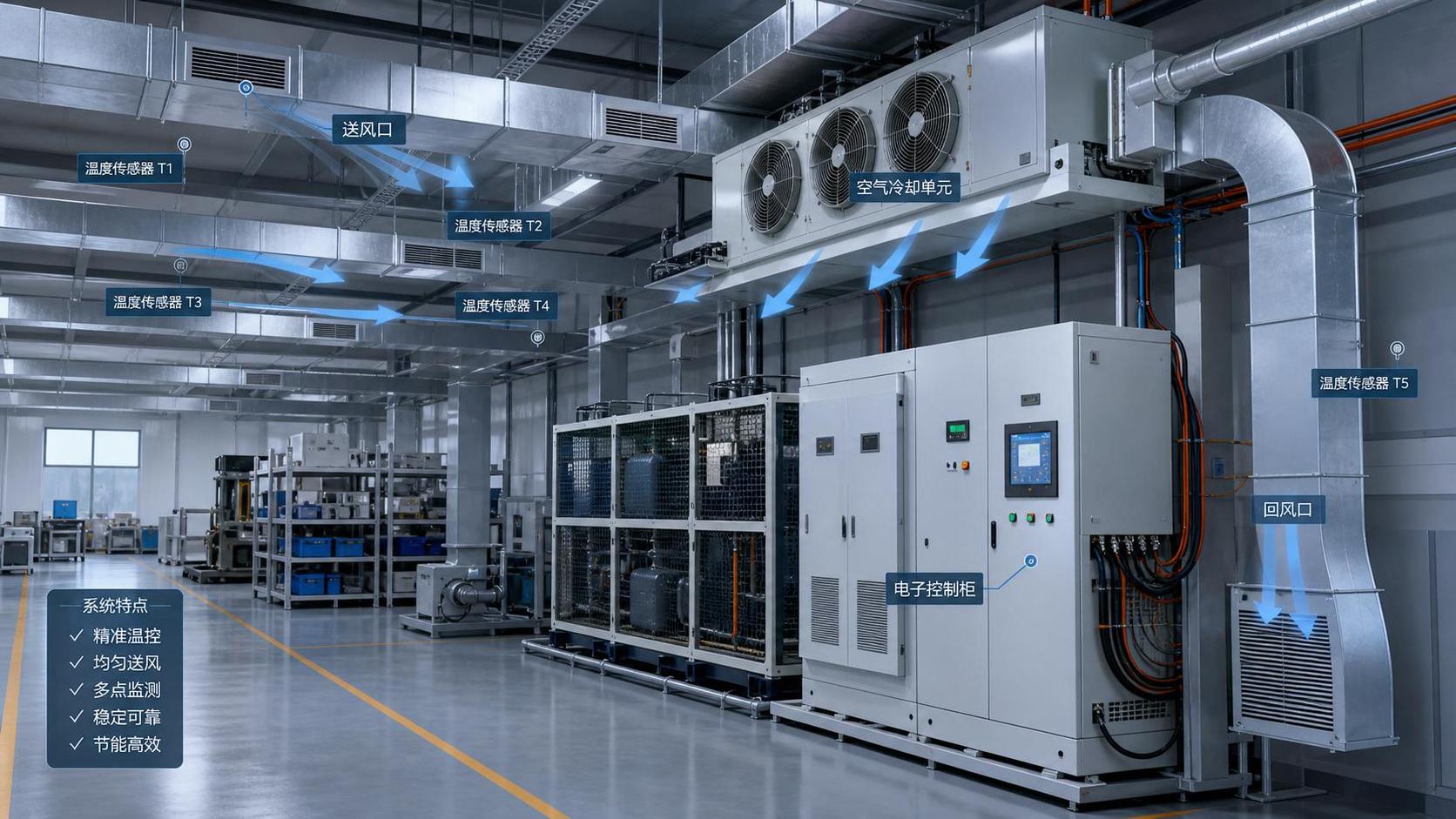
A better judgment method is to follow the full thermal path.
Check inlet temperature, dwell time, packaging effect, conveyor speed, and return-air behavior together.
Where compressed air is involved, purity and dryness matter as well.
Oil-free compression and stable utilities can support cleaner temperature-sensitive handling, especially in high-hygiene areas.
Storage and distribution fail for quieter reasons
Warehouses and transport nodes usually look more stable than production floors, but hidden loss accumulates there.
Repeated door openings, poor rack airflow, and badly timed defrost cycles can create slow product deterioration.
In these settings, food industry temperature control systems should be judged by consistency over time.
One frequent oversight is focusing only on room temperature.
Product temperature, pallet core temperature, and loading-bay exposure often tell a different story.
Frozen foods are especially sensitive to cycling.
They may not spoil immediately, yet repeated fluctuation can damage structure, appearance, and customer acceptance.
More reliable food industry temperature control systems therefore combine monitoring, zoning, and sensible heat exchange design.
As energy prices and refrigerant rules shift, system efficiency also becomes part of loss prevention.
An inefficient plant may delay maintenance, reduce safety margins, or run unstable during seasonal peaks.
Where storage and logistics usually need tighter attention
- High door traffic that causes short but repeated warm air infiltration.
- Mixed products sharing one room despite different ideal holding ranges.
- Sensor locations that read air temperature but miss product exposure.
- Transport handoffs where no continuous logging confirms cold chain integrity.
What often gets misread before system selection
The biggest errors usually happen before installation starts.
Many teams compare food industry temperature control systems by equipment rating, then discover the site behaves differently from design assumptions.
A washdown-heavy room may need stronger enclosure protection and different airflow management.
A compact processing area may struggle with condenser heat rejection or service access.
Another misread is treating present load as permanent load.
Food lines often change packaging, batch size, or product mix.
A system sized only for current output can become unstable after a routine production change.
Maintenance assumptions deserve equal attention.
Microchannel heat exchangers, oil-free compression arrangements, and advanced controls can improve efficiency, but only if cleaning, monitoring, and spare strategy are realistic.
GTC-Matrix often frames these issues correctly by linking thermal performance with energy cost movements, refrigerant policy changes, and long-term system evolution.
A better fit comes from matching controls to real operating patterns
A useful selection process begins with operating evidence, not brochure language.
Map where product loss occurs, when it happens, and which temperature events precede it.
That usually reveals whether food industry temperature control systems should prioritize rapid response, tighter zoning, better insulation, cleaner utilities, or stronger monitoring.
For implementation, a few checks make the decision more defensible.
- Verify the real thermal load across normal, peak, and cleaning periods.
- Confirm whether product temperature or room air temperature drives quality loss.
- Review airflow paths, door frequency, and zone separation before resizing equipment.
- Assess operating cost, maintenance access, and refrigerant compliance together.
- Plan data logging that supports audits, troubleshooting, and continuous improvement.
Food industry temperature control systems reduce product loss when they are fitted to the real thermal behavior of each step.
The most useful next move is to break the process into cooling, holding, and transfer points, then compare each point against actual load, control tolerance, maintenance difficulty, and risk of drift.
That approach turns temperature control from a utility expense into a measurable protection layer for yield, compliance, and margin.
Related News
- How Smart Thermal Systems Improve Industrial Cooling EfficiencyAuthor :Cryogenic Systems Expert

- How to Choose Process Cooling Equipment for Stable Temperature ControlAuthor :Cryogenic Systems Expert

- EU Finalizes 2026 HFC Quota Cut for R-134a ChillersAuthor :Cryogenic Systems Expert

- EU Tightens HFC-134a Quotas for Industrial ChillersAuthor :Cryogenic Systems Expert

- REACH SVHC Update Pressures HFC-134a Chiller Supply ChainsAuthor :Cryogenic Systems Expert

- EU PFAS Coolant Ban Reshapes Chiller ExportsAuthor :Cryogenic Systems Expert

- EU REACH Restricts PFAS Cooling Media ImportsAuthor :Cryogenic Systems Expert

- EU Ecodesign Rule Takes Effect for Industrial ChillersAuthor :Cryogenic Systems Expert

- EU REACH Rule Takes Effect for PFAS in Industrial Cooling ExportsAuthor :Cryogenic Systems Expert

- Industrial Cooling for Plastic Processing: How to Size for Stable Cycle TimesAuthor :Cryogenic Systems Expert

- EU F-Gas Update Bars R404A/R507 in Commercial CoolingAuthor :Cryogenic Systems Expert

- DOE Raises Chiller Efficiency Standard From October 2026Author :Cryogenic Systems Expert

- India Mandates BIS Energy Certification for Industrial ChillersAuthor :Cryogenic Systems Expert

- Energy-Efficient Heat Exchange for Process Cooling: Cost vs PaybackAuthor :Cryogenic Systems Expert

- EPA R-134a Import Ban Takes Effect on July 13, 2026Author :Cryogenic Systems Expert

- India BIS Rule Takes Effect for Industrial ChillersAuthor :Cryogenic Systems Expert

- EPA Cuts R134a Import Quotas 20% From July 10Author :Cryogenic Systems Expert

- How to Compare Energy-Efficient Cooling Systems for Factory Expansion ProjectsAuthor :Cryogenic Systems Expert

- Chiller Price Index Rises 11.3% in Q2Author :Cryogenic Systems Expert

- Saudi SASO Tightens Chiller Import Compliance From July 10Author :Cryogenic Systems Expert

- Dubai Opens Fast-Track Chiller TendersAuthor :Cryogenic Systems Expert

- Japan Raises Chiller COP Floor to 6.2 From Sept. 1Author :Cryogenic Systems Expert
![]()
- Compact Thermal Management in Smart Devices: Common Failure RisksAuthor :Cryogenic Systems Expert

- Thermal Management for Batteries: Cooling Methods ComparedAuthor :Cryogenic Systems Expert

- How Compact Thermal Design Extends Smart Device UptimeAuthor :Cryogenic Systems Expert

- Shanghai-Rotterdam Reefer Rates Jump 37% in a WeekAuthor :Cryogenic Systems Expert

- Process Cooling Equipment Low Maintenance: What Cuts Downtime Over 5 Years?Author :Cryogenic Systems Expert

- Semiconductor Cooling Solutions: Which Design Works Best for High-Density Tools?Author :Cryogenic Systems Expert

- Semiconductor Thermal Management Systems: Preventing Yield Loss from Heat DriftAuthor :Cryogenic Systems Expert

- EPA Clears R-1234ze(E) for Industrial ChillersAuthor :Cryogenic Systems Expert
 for Industrial Chillers")
- DOE Raises Chiller IEER Floor to 12.8 From Oct. 2026Author :Cryogenic Systems Expert

- Singapore Refrigeration Show Adds Green Compliance HubAuthor :Cryogenic Systems Expert

- How Food Industry Temperature Control Systems Reduce Product LossAuthor :Cryogenic Systems Expert

- EU REACH Adds 12 SVHCs, Raising Chiller Compliance RiskAuthor :Cryogenic Systems Expert

- Precision Temperature Control Air Cooling: Key Setup Mistakes That Reduce StabilityAuthor :Cryogenic Systems Expert

- India BEE Eyes APF Labels for Imported ChillersAuthor :Cryogenic Systems Expert