EU REACH Adds 12 SVHCs, Raising Chiller Compliance Risk




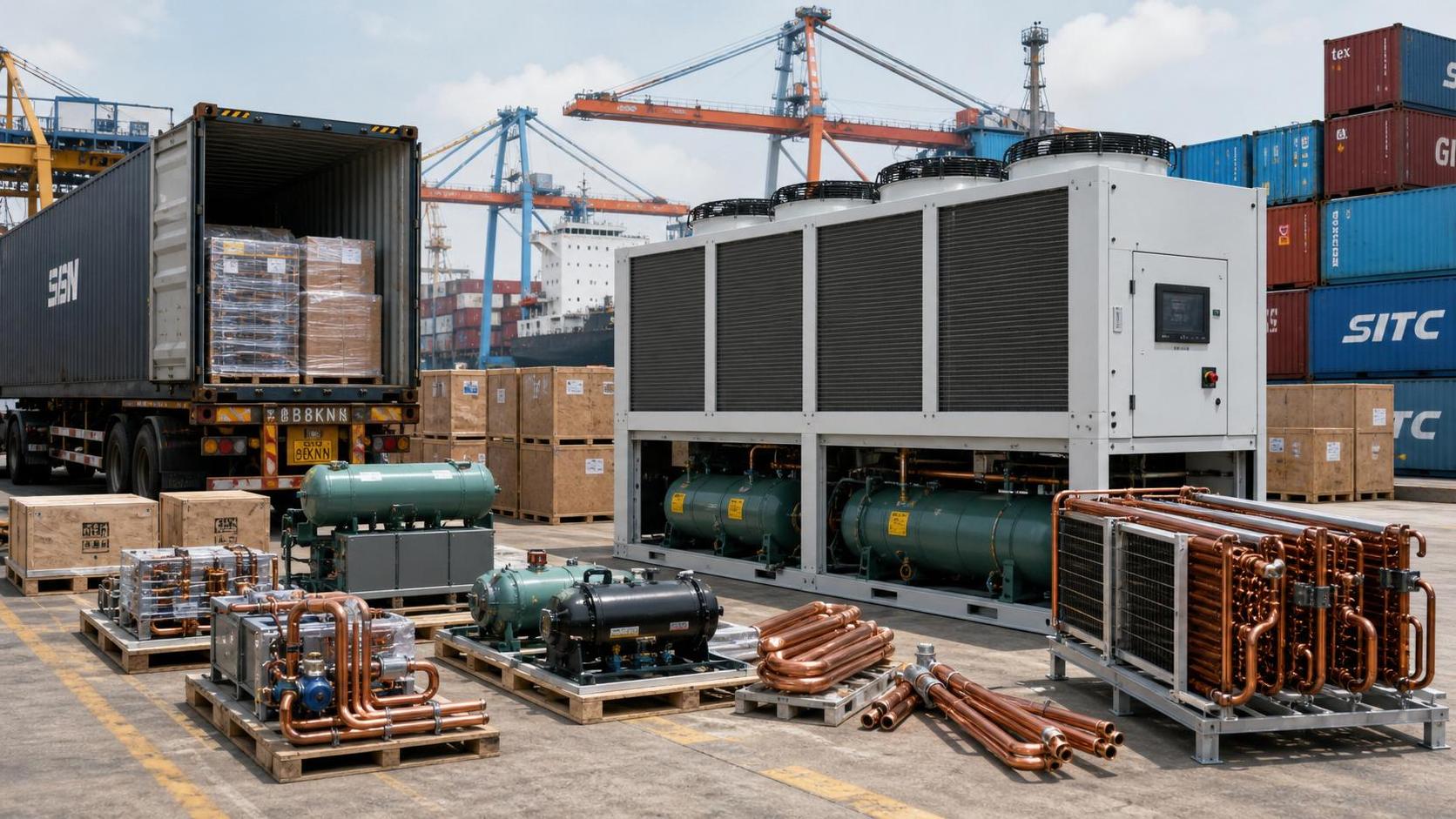
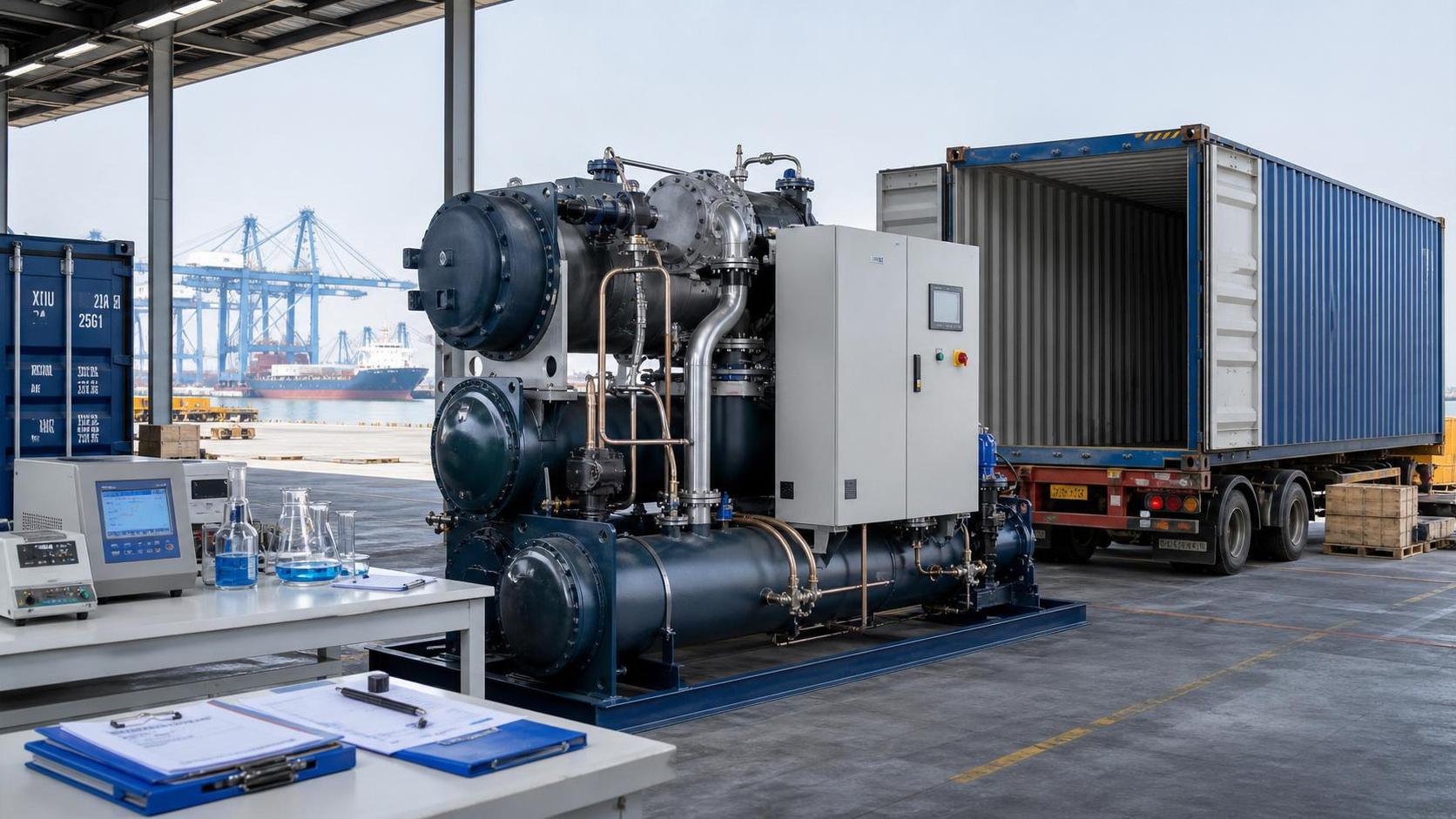
On July 1, 2026, the European Chemicals Agency (ECHA) added 12 substances to the REACH Candidate List of Substances of Very High Concern (SVHC). Among them is tris(2,3-dibromopropyl) phosphate (TDBPP), a brominated flame retardant referenced here as widely used in control circuit boards and insulation materials for industrial chiller units. Because the substance has also been identified by customs authorities in several EU countries as a high-risk import inspection item, and mandatory notification and supply-chain information transmission obligations are expected to be triggered from Q3 2026, this development deserves close attention from EU importers, distributors, and purchasing teams involved in industrial chillers and cold storage equipment.
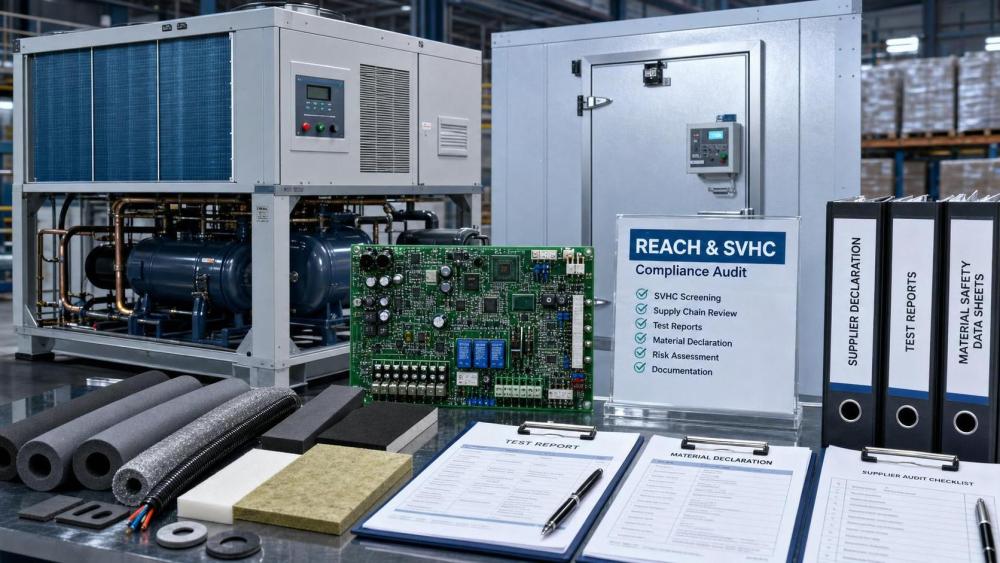
What Has Been Confirmed So Far
According to the information provided, ECHA placed 12 additional substances on the REACH SVHC Candidate List on July 1, 2026. TDBPP is one of the listed substances. The same information states that TDBPP is widely used in control circuit boards and insulation materials for industrial chillers.
It is also confirmed in the input that customs authorities in multiple EU member states have classified this substance as a high-risk import inspection focus. Based on the same summary, mandatory notification duties and supply-chain information transmission requirements are expected to apply from Q3 2026 onward. The direct compliance pressure identified in the input falls on EU importers and distributors purchasing industrial chillers and cold storage equipment containing such components.
Where the Pressure May Surface Across the Supply Chain
Import and distribution exposure is the most immediate
From an industry perspective, the most direct impact is likely to fall on EU importers and distributors because the provided information already points to customs inspections and upcoming notification and information-transfer obligations. Their exposure is not limited to border clearance. It may extend into product documentation, customer disclosures, and the ability to demonstrate what substances are present in purchased equipment or components.
Procurement teams will need clearer component-level visibility
For buyers sourcing industrial chillers or cold storage equipment, the issue is likely to move upstream into supplier communication and technical file review. Analysis shows that where TDBPP may be present in control boards or insulation materials, procurement teams may no longer be able to rely only on finished-product descriptions. What deserves closer attention is whether component and material declarations are sufficiently detailed to support future compliance communication.
Manufacturing and assembly links may face document and substitution questions
Observably, manufacturers and assemblers serving the EU market may be affected through specification management, bill-of-material review, and supporting compliance records. The confirmed facts do not establish that substitution is already required in every case, but they do indicate that listed substances and customs scrutiny are converging into a practical compliance issue. That makes product configuration records, supplier statements, and material traceability more relevant than before.
Supply-chain service providers may see higher documentation demands
Service providers involved in sourcing, trade coordination, and delivery support may also see operational impact. Analysis shows that once customs inspection risk rises and information-transfer duties are expected to take effect, shipment preparation and supporting paperwork may become more sensitive points in execution, especially for equipment categories identified in the provided information.
Practical Priorities for Companies Now
Watch how official wording is implemented in practice
What deserves closer attention is the difference between the listing event itself and how related obligations are enforced in actual transactions. Companies dealing with industrial chillers and cold storage equipment should closely monitor subsequent official wording, implementation details, and any clarifications tied to notification and supply-chain information transmission from Q3 2026.
Focus first on the components named in the current information
Analysis shows that the most practical starting point is not a broad review of every product line, but a targeted review of equipment and components linked in the provided information to TDBPP use, especially control circuit boards and insulation materials. This helps narrow the immediate compliance review to the areas most likely to affect import, distribution, and customer communication.
Check whether supplier documents can support disclosure obligations
For importers, distributors, and procurement teams, a key question is whether current supplier files, declarations, and material information are detailed enough to support future mandatory communication duties. Observably, the challenge is not only identifying whether a listed substance may be present, but also whether the documentation chain is complete enough to respond consistently to customs checks and downstream information requests.
Prepare for lead-time and communication friction in cross-border business
Analysis shows that the operational impact may appear first in order confirmation, document review, shipment release, and customer-side questions rather than only in formal legal interpretation. Companies with active EU deliveries may need to prepare internal response paths for supplier follow-up, document updates, and customer communication where equipment includes the relevant component categories.
Why This Looks Like More Than a One-Day Regulatory Update
Observably, this development is better understood as a near-term compliance signal with immediate practical consequences, rather than a distant policy discussion. The reason is straightforward: the provided information links three elements at once, namely Candidate List inclusion, customs risk designation in several EU countries, and expected Q3 2026 notification and information-transfer duties.
At the same time, it is more appropriate to understand this as an evolving regulatory and supply-chain issue than as a fully settled end state. The confirmed facts show that the compliance pressure is rising, but the exact business impact will still depend on how companies map affected components, validate supplier information, and track subsequent official implementation details.
How the Industry Should Read This Development
The immediate significance of this update is not simply that another group of SVHC substances has been listed under REACH. In this case, the information provided connects the listing directly to industrial chillers and cold storage equipment through a named substance and identified component uses. That shifts the issue from abstract regulatory monitoring into concrete import, procurement, and documentation risk.
A balanced reading is that this is already a material compliance development for EU-facing business involving the affected equipment categories, while still requiring continued verification of how obligations will be applied in practice from Q3 2026. It is more appropriate to understand the update as an actionable compliance warning and a continuing industry watchpoint, rather than as either a temporary headline or a fully quantified market outcome.
Basis of This Article and What Still Needs Verification
This article is based on the user-provided news title, event date, and event summary. The confirmed factual basis used here is limited to the stated July 1, 2026 ECHA Candidate List update, the inclusion of 12 SVHC substances, the reference to TDBPP in industrial chiller control circuit boards and insulation materials, the high-risk customs inspection status in several EU countries, the expected Q3 2026 notification and supply-chain information transmission obligations, and the direct compliance pressure on EU importers and distributors of industrial chillers and cold storage equipment.
For this type of industry update, relevant source categories would typically include official agency announcements, company disclosures, industry association updates, authoritative media reporting, and standards or compliance-related documents. No specific official source link was provided in the input, so the exact official reference still needs ongoing verification. What deserves continued attention is any follow-up clarification on implementation, enforcement scope, and practical documentation expectations for affected EU trade flows.
Related News
- How Smart Thermal Systems Improve Industrial Cooling EfficiencyAuthor :Cryogenic Systems Expert

- How to Choose Process Cooling Equipment for Stable Temperature ControlAuthor :Cryogenic Systems Expert

- EU Finalizes 2026 HFC Quota Cut for R-134a ChillersAuthor :Cryogenic Systems Expert

- EU Tightens HFC-134a Quotas for Industrial ChillersAuthor :Cryogenic Systems Expert

- REACH SVHC Update Pressures HFC-134a Chiller Supply ChainsAuthor :Cryogenic Systems Expert

- EU PFAS Coolant Ban Reshapes Chiller ExportsAuthor :Cryogenic Systems Expert

- EU REACH Restricts PFAS Cooling Media ImportsAuthor :Cryogenic Systems Expert

- EU Ecodesign Rule Takes Effect for Industrial ChillersAuthor :Cryogenic Systems Expert

- EU REACH Rule Takes Effect for PFAS in Industrial Cooling ExportsAuthor :Cryogenic Systems Expert

- Industrial Cooling for Plastic Processing: How to Size for Stable Cycle TimesAuthor :Cryogenic Systems Expert

- EU F-Gas Update Bars R404A/R507 in Commercial CoolingAuthor :Cryogenic Systems Expert

- DOE Raises Chiller Efficiency Standard From October 2026Author :Cryogenic Systems Expert

- India Mandates BIS Energy Certification for Industrial ChillersAuthor :Cryogenic Systems Expert

- Energy-Efficient Heat Exchange for Process Cooling: Cost vs PaybackAuthor :Cryogenic Systems Expert

- EPA R-134a Import Ban Takes Effect on July 13, 2026Author :Cryogenic Systems Expert

- India BIS Rule Takes Effect for Industrial ChillersAuthor :Cryogenic Systems Expert

- EPA Cuts R134a Import Quotas 20% From July 10Author :Cryogenic Systems Expert

- How to Compare Energy-Efficient Cooling Systems for Factory Expansion ProjectsAuthor :Cryogenic Systems Expert

- Chiller Price Index Rises 11.3% in Q2Author :Cryogenic Systems Expert

- Saudi SASO Tightens Chiller Import Compliance From July 10Author :Cryogenic Systems Expert

- Dubai Opens Fast-Track Chiller TendersAuthor :Cryogenic Systems Expert

- Japan Raises Chiller COP Floor to 6.2 From Sept. 1Author :Cryogenic Systems Expert
![]()
- Compact Thermal Management in Smart Devices: Common Failure RisksAuthor :Cryogenic Systems Expert

- Thermal Management for Batteries: Cooling Methods ComparedAuthor :Cryogenic Systems Expert

- How Compact Thermal Design Extends Smart Device UptimeAuthor :Cryogenic Systems Expert

- Shanghai-Rotterdam Reefer Rates Jump 37% in a WeekAuthor :Cryogenic Systems Expert

- Process Cooling Equipment Low Maintenance: What Cuts Downtime Over 5 Years?Author :Cryogenic Systems Expert

- Semiconductor Cooling Solutions: Which Design Works Best for High-Density Tools?Author :Cryogenic Systems Expert

- Semiconductor Thermal Management Systems: Preventing Yield Loss from Heat DriftAuthor :Cryogenic Systems Expert

- EPA Clears R-1234ze(E) for Industrial ChillersAuthor :Cryogenic Systems Expert
 for Industrial Chillers")
- DOE Raises Chiller IEER Floor to 12.8 From Oct. 2026Author :Cryogenic Systems Expert

- Singapore Refrigeration Show Adds Green Compliance HubAuthor :Cryogenic Systems Expert

- How Food Industry Temperature Control Systems Reduce Product LossAuthor :Cryogenic Systems Expert

- EU REACH Adds 12 SVHCs, Raising Chiller Compliance RiskAuthor :Cryogenic Systems Expert

- Precision Temperature Control Air Cooling: Key Setup Mistakes That Reduce StabilityAuthor :Cryogenic Systems Expert

- India BEE Eyes APF Labels for Imported ChillersAuthor :Cryogenic Systems Expert