Singapore Refrigeration Show Adds Green Compliance Hub




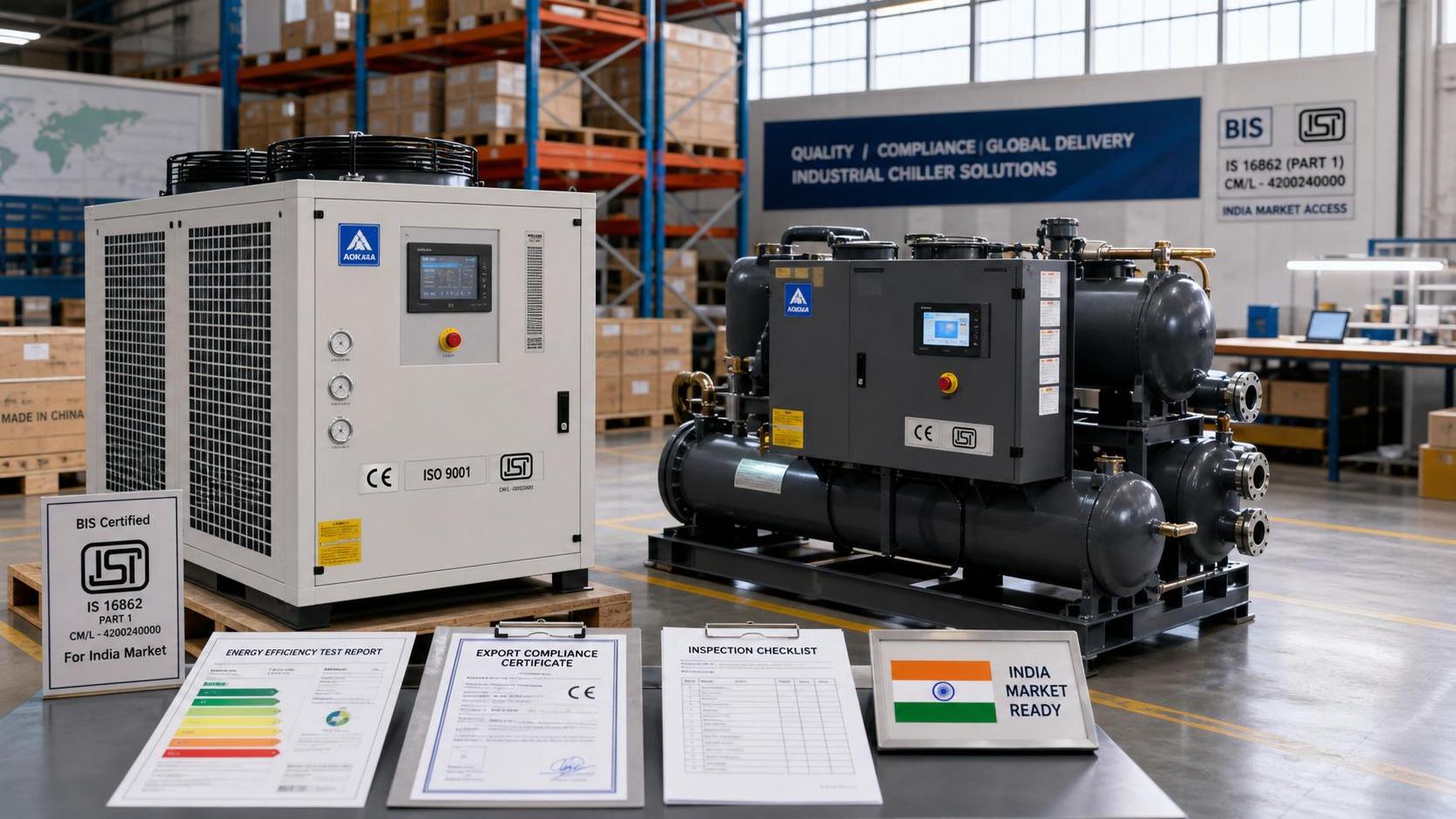
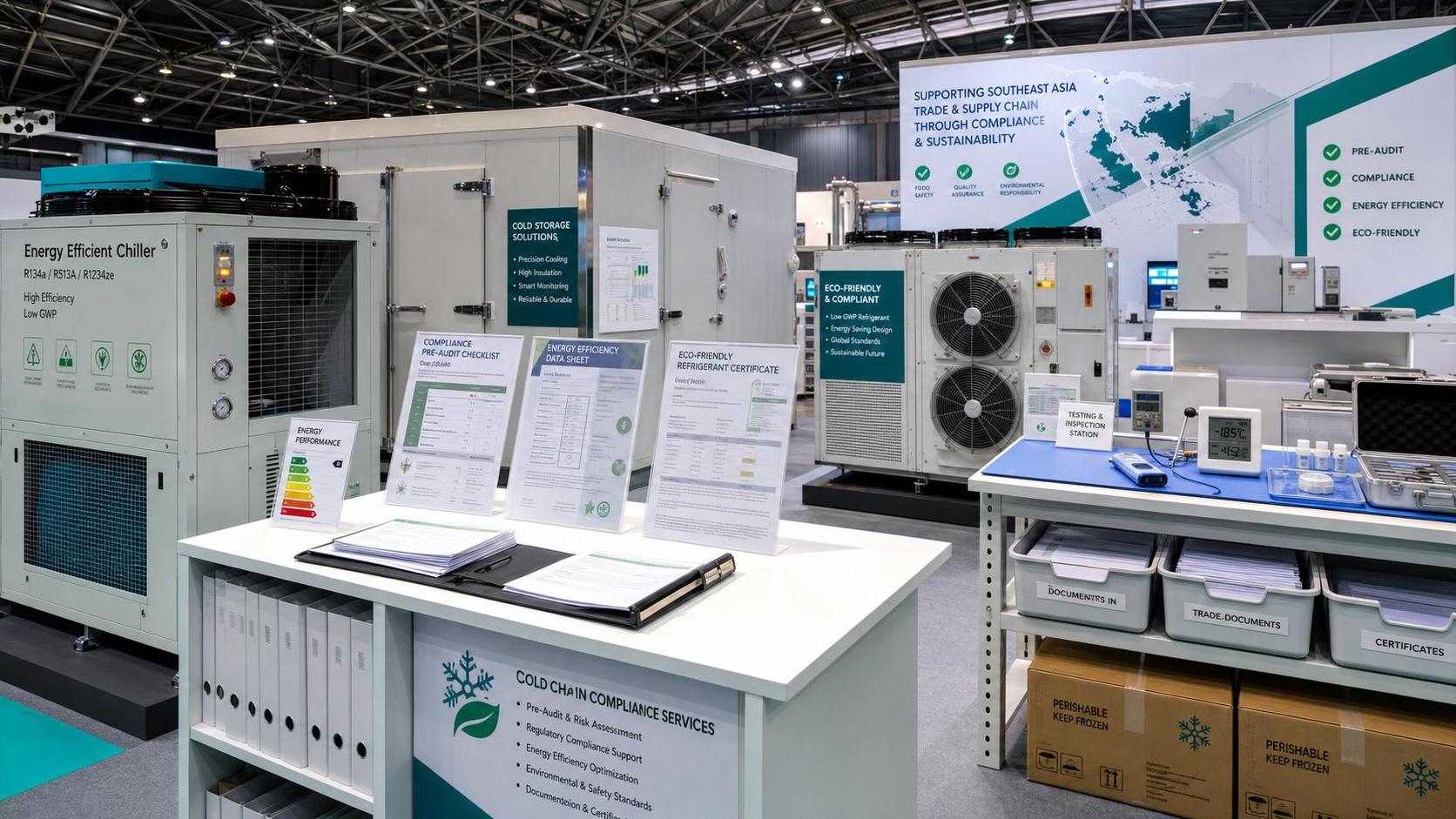
At REFRIGERATION SINGAPORE 2026, scheduled for September 16, 2026, a new compliance-focused service point signals a practical shift in how cold-chain equipment trade may be prepared for market entry in ASEAN-related business. The announced Green Cold Chain Compliance Hub brings together pre-screening around ASEAN MRA energy labels, ozone-depleting substance declarations, and carbon footprint statements for industrial chillers and cold storage equipment, making this relevant not only for importers, but also for manufacturers, procurement teams, certification functions, and delivery planning across the regional supply chain.
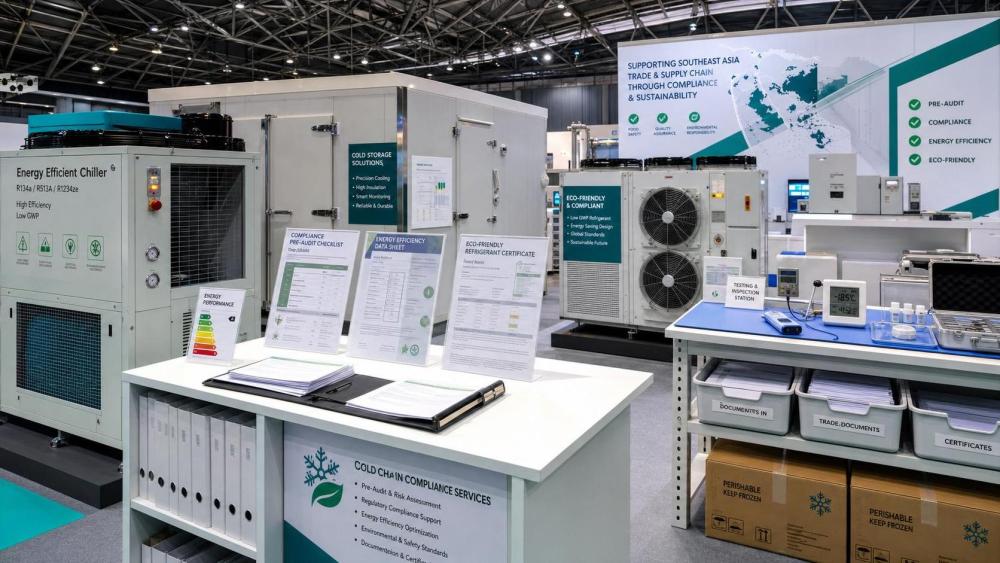
A new compliance service embedded in the exhibition
According to the provided event information, Exhibitions Asia Group announced on July 2, 2026 that REFRIGERATION SINGAPORE 2026 will be held from September 16 to 18 at Singapore Expo. For the first time, the exhibition will include a Green Cold Chain Compliance Hub.
The hub is being set up in cooperation with SGS, TUV Rheinland, and EnterpriseSG. The stated purpose is to provide ASEAN importers with a one-stop service covering pre-review for ASEAN MRA energy efficiency labeling, ozone-depleting substance declarations, and carbon footprint statements.
The scope mentioned in the provided summary covers industrial chillers and cold storage equipment. The same summary states that this arrangement can materially reduce compliance trial-and-error costs in regional sourcing.
Where the practical impact may appear first
Import-side procurement may face earlier document screening
From an industry perspective, importers and procurement teams are among the first groups likely to feel the effect of this development because the announced service is aimed directly at ASEAN importers. The practical impact may appear in supplier selection, model screening, and pre-order review of labeling, declaration, and carbon-related documentation. What deserves closer attention is whether buyers begin treating these materials less as end-stage paperwork and more as an entry requirement before purchase decisions are finalized.
Equipment manufacturers may need tighter alignment between product files and market access needs
Manufacturers of industrial chillers and cold storage equipment may be affected through technical documentation, declaration readiness, and certification coordination. Analysis shows that when a one-stop pre-screening channel is offered close to procurement activity, gaps between product specifications and compliance files can surface earlier. For suppliers, that raises the importance of keeping technical documents, declaration content, and supporting certification materials consistent before bidding, quotation, or shipment preparation.
Testing and certification work may move closer to transaction timing
Certification-related firms and testing service participants may also see a change in workflow. Observably, the hub does not itself establish a new regulation in the provided facts, but it creates a more concentrated review environment around existing compliance touchpoints named in the summary. That may affect how quickly importers request pre-checks, how suppliers prepare supporting files, and how certification work is sequenced alongside commercial negotiations and delivery planning.
Delivery and after-sales teams may need clearer traceability support
Supply chain service providers and after-sales teams may be indirectly affected because compliance questions around energy labels, ozone-related declarations, and carbon statements can influence handover packages and post-delivery file retention. Analysis shows that where procurement is becoming more documentation-sensitive, traceability and record completeness may matter more during delivery coordination and later service support, especially for equipment categories specifically referenced in the event summary.
What companies should watch in the near term
Check whether current product files match the named review topics
Companies involved with industrial chillers and cold storage equipment should review whether their existing technical and commercial files are ready for scrutiny against the three areas explicitly mentioned: ASEAN MRA energy efficiency labels, ozone-depleting substance declarations, and carbon footprint statements. This is not yet evidence of a new legal requirement beyond the provided facts, but it is a clear signal that these items are being pulled closer to the front of the transaction process.
Prepare bidding and procurement packs with compliance in mind
For procurement teams and suppliers, a practical point of attention is whether tender files, quotations, and vendor qualification packs contain the supporting materials likely to be requested during pre-review. Analysis shows that even where formal execution details are not provided, earlier visibility of documentation gaps can affect sourcing timelines, vendor comparisons, and acceptance conditions.
Monitor how official wording and execution practice evolve
What deserves closer attention is the follow-up language used by organizers, participating institutions, and market participants after the event opens. The provided information confirms the scope of the one-stop service, but it does not set out detailed execution criteria, acceptance thresholds, or downstream procedural outcomes. Companies should therefore monitor whether the practical use of the hub influences compliance expectations in procurement and import workflows.
Factor possible review steps into delivery scheduling
Exporters, importers, and logistics planners may want to account for possible pre-review coordination when setting shipment and installation milestones for the equipment categories named in the summary. Observably, the event announcement points to lower trial-and-error costs, but it should not be read as proof that all compliance timing risks have been resolved. The operational issue to watch is whether document readiness becomes a stronger determinant of delivery sequencing.
Why this looks more like an execution signal than a new rule by itself
Analysis shows that this development is better understood as an execution-oriented market signal rather than a confirmed new regulation in itself. The key change described in the provided information is the creation of a one-stop compliance support setting inside a trade exhibition, focused on pre-screening for already identified compliance areas. That matters because it can shift when and how buyers and suppliers confront regulatory and certification requirements, even if the underlying legal framework is not newly introduced in the event summary.
From an industry perspective, the significance lies in the compression of compliance review into earlier commercial stages. That can influence sourcing discipline, documentation quality, and communication between manufacturers, importers, and service partners. At the same time, it is more appropriate to understand this as a development that still requires observation, particularly around execution standards, market uptake, and whether procurement documents begin to mirror the same priorities more consistently.
How this update is best understood now
At this stage, the addition of the Green Cold Chain Compliance Hub at REFRIGERATION SINGAPORE 2026 is best read as a practical compliance facilitation signal in the regional cold-chain equipment trade. The confirmed facts point to earlier, more centralized attention to energy labeling, ozone-related declarations, and carbon footprint statement pre-review for the equipment categories named in the announcement.
A neutral reading is that the event reflects growing operational weight behind compliance readiness in procurement and import processes, while stopping short of proving a broader rule change beyond the information provided. For companies active in these product lines, the immediate takeaway is not to assume a completed regulatory shift, but to treat documentation readiness and execution monitoring as current priorities.
Basis of this article and what still needs verification
This article is based on the user-provided news title, event date, and event summary. For developments of this kind, relevant source types typically include organizer announcements, regulatory agency releases, trade or customs authority information, industry association updates, standards body documents, certification institution notices, and reporting by established trade media.
No specific official source link was provided in the input, so the underlying official publication link still needs to be verified on an ongoing basis. What also requires continued observation includes any detailed compliance guidance, certification execution language, changes in procurement or tender documentation, market feedback after the event, and how companies actually incorporate the announced one-stop review service into sourcing and delivery workflows.
Related News
- How Smart Thermal Systems Improve Industrial Cooling EfficiencyAuthor :Cryogenic Systems Expert

- How to Choose Process Cooling Equipment for Stable Temperature ControlAuthor :Cryogenic Systems Expert

- EU Finalizes 2026 HFC Quota Cut for R-134a ChillersAuthor :Cryogenic Systems Expert

- EU Tightens HFC-134a Quotas for Industrial ChillersAuthor :Cryogenic Systems Expert

- REACH SVHC Update Pressures HFC-134a Chiller Supply ChainsAuthor :Cryogenic Systems Expert

- EU PFAS Coolant Ban Reshapes Chiller ExportsAuthor :Cryogenic Systems Expert

- EU REACH Restricts PFAS Cooling Media ImportsAuthor :Cryogenic Systems Expert

- EU Ecodesign Rule Takes Effect for Industrial ChillersAuthor :Cryogenic Systems Expert

- EU REACH Rule Takes Effect for PFAS in Industrial Cooling ExportsAuthor :Cryogenic Systems Expert

- Industrial Cooling for Plastic Processing: How to Size for Stable Cycle TimesAuthor :Cryogenic Systems Expert

- EU F-Gas Update Bars R404A/R507 in Commercial CoolingAuthor :Cryogenic Systems Expert

- DOE Raises Chiller Efficiency Standard From October 2026Author :Cryogenic Systems Expert

- India Mandates BIS Energy Certification for Industrial ChillersAuthor :Cryogenic Systems Expert

- Energy-Efficient Heat Exchange for Process Cooling: Cost vs PaybackAuthor :Cryogenic Systems Expert

- EPA R-134a Import Ban Takes Effect on July 13, 2026Author :Cryogenic Systems Expert

- India BIS Rule Takes Effect for Industrial ChillersAuthor :Cryogenic Systems Expert

- EPA Cuts R134a Import Quotas 20% From July 10Author :Cryogenic Systems Expert

- How to Compare Energy-Efficient Cooling Systems for Factory Expansion ProjectsAuthor :Cryogenic Systems Expert

- Chiller Price Index Rises 11.3% in Q2Author :Cryogenic Systems Expert

- Saudi SASO Tightens Chiller Import Compliance From July 10Author :Cryogenic Systems Expert

- Dubai Opens Fast-Track Chiller TendersAuthor :Cryogenic Systems Expert

- Japan Raises Chiller COP Floor to 6.2 From Sept. 1Author :Cryogenic Systems Expert
![]()
- Compact Thermal Management in Smart Devices: Common Failure RisksAuthor :Cryogenic Systems Expert

- Thermal Management for Batteries: Cooling Methods ComparedAuthor :Cryogenic Systems Expert

- How Compact Thermal Design Extends Smart Device UptimeAuthor :Cryogenic Systems Expert

- Shanghai-Rotterdam Reefer Rates Jump 37% in a WeekAuthor :Cryogenic Systems Expert

- Process Cooling Equipment Low Maintenance: What Cuts Downtime Over 5 Years?Author :Cryogenic Systems Expert

- Semiconductor Cooling Solutions: Which Design Works Best for High-Density Tools?Author :Cryogenic Systems Expert

- Semiconductor Thermal Management Systems: Preventing Yield Loss from Heat DriftAuthor :Cryogenic Systems Expert

- EPA Clears R-1234ze(E) for Industrial ChillersAuthor :Cryogenic Systems Expert
 for Industrial Chillers")
- DOE Raises Chiller IEER Floor to 12.8 From Oct. 2026Author :Cryogenic Systems Expert

- Singapore Refrigeration Show Adds Green Compliance HubAuthor :Cryogenic Systems Expert

- How Food Industry Temperature Control Systems Reduce Product LossAuthor :Cryogenic Systems Expert

- EU REACH Adds 12 SVHCs, Raising Chiller Compliance RiskAuthor :Cryogenic Systems Expert

- Precision Temperature Control Air Cooling: Key Setup Mistakes That Reduce StabilityAuthor :Cryogenic Systems Expert

- India BEE Eyes APF Labels for Imported ChillersAuthor :Cryogenic Systems Expert