



How to Evaluate Energy Efficiency in Industrial Cooling Systems




Evaluating energy efficiency in industrial cooling systems starts with a simple shift in perspective. A chiller, condenser, pump, or compressor rarely performs as its brochure suggests once production variability, ambient conditions, and control logic enter the picture.
That is why energy efficiency has become a strategic issue across general industry. It affects operating cost, carbon targets, process stability, refrigerant compliance, and the long-term value of thermal infrastructure.
For platforms such as GTC-Matrix, this topic sits at the intersection of thermodynamic analysis, equipment intelligence, and industrial economics. The most useful evaluations connect performance data with business context, not just with equipment labels.
What energy efficiency really means in cooling assessment
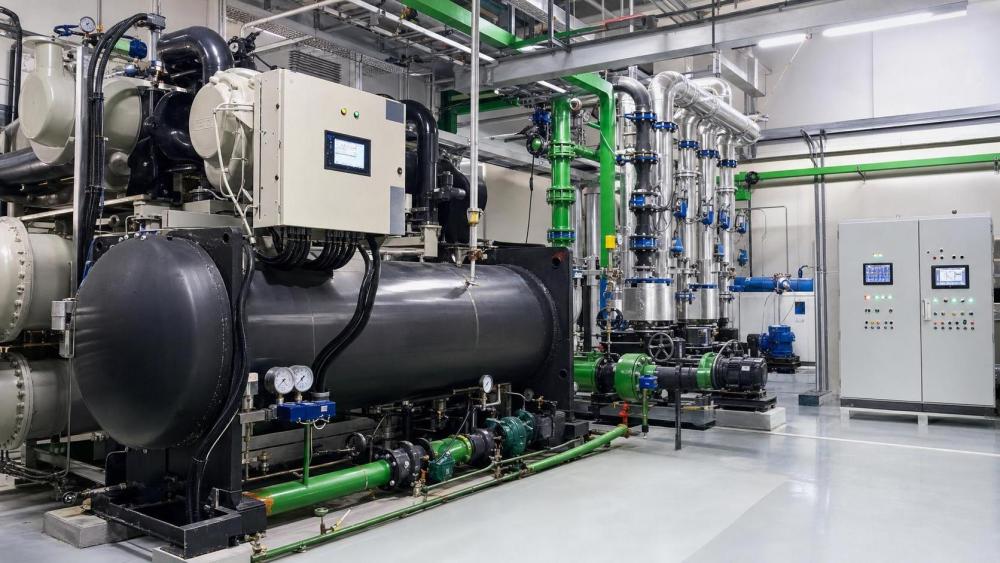
A cooling system is energy efficient when it delivers required thermal control with the lowest practical energy input under actual operating conditions. That sounds obvious, but it changes how evaluation should be done.
Nameplate capacity alone says little about real performance. A technically sound review looks at part-load behavior, seasonal variation, heat transfer quality, pressure losses, and control response.
In many facilities, the largest losses do not come from one failed component. They come from small inefficiencies stacking together across compressors, cooling towers, valves, fouled exchangers, and unstable sequencing.
This is especially relevant in sectors needing tight temperature control, including pharmaceuticals, semiconductors, food processing, chemicals, and precision manufacturing. In these environments, thermal performance and production quality are directly linked.
Why the topic matters more now
Industrial cooling no longer sits outside broader energy strategy. Electricity prices fluctuate, refrigerant policy is tightening, and decarbonization targets are moving from boardroom language into plant-level performance reviews.
At the same time, system architectures are becoming more complex. Oil-free compression, microchannel heat exchangers, hybrid cooling loops, and digital control layers can improve energy efficiency, but only if they are evaluated in context.
A high-efficiency component can still produce poor system results when it is oversized, badly integrated, or controlled against the wrong setpoint philosophy. That is one reason industry intelligence matters.
GTC-Matrix frames this well through its focus on the “Power Heart” and “Thermal Center” of modern industry. The core issue is not simply consuming less power. It is converting energy into stable thermal output with minimal waste.
The baseline: measure the system before judging it
Reliable evaluation begins with a representative operating baseline. Without that, even advanced analytics can mislead. A week of data during unusual production conditions may produce the wrong conclusion.
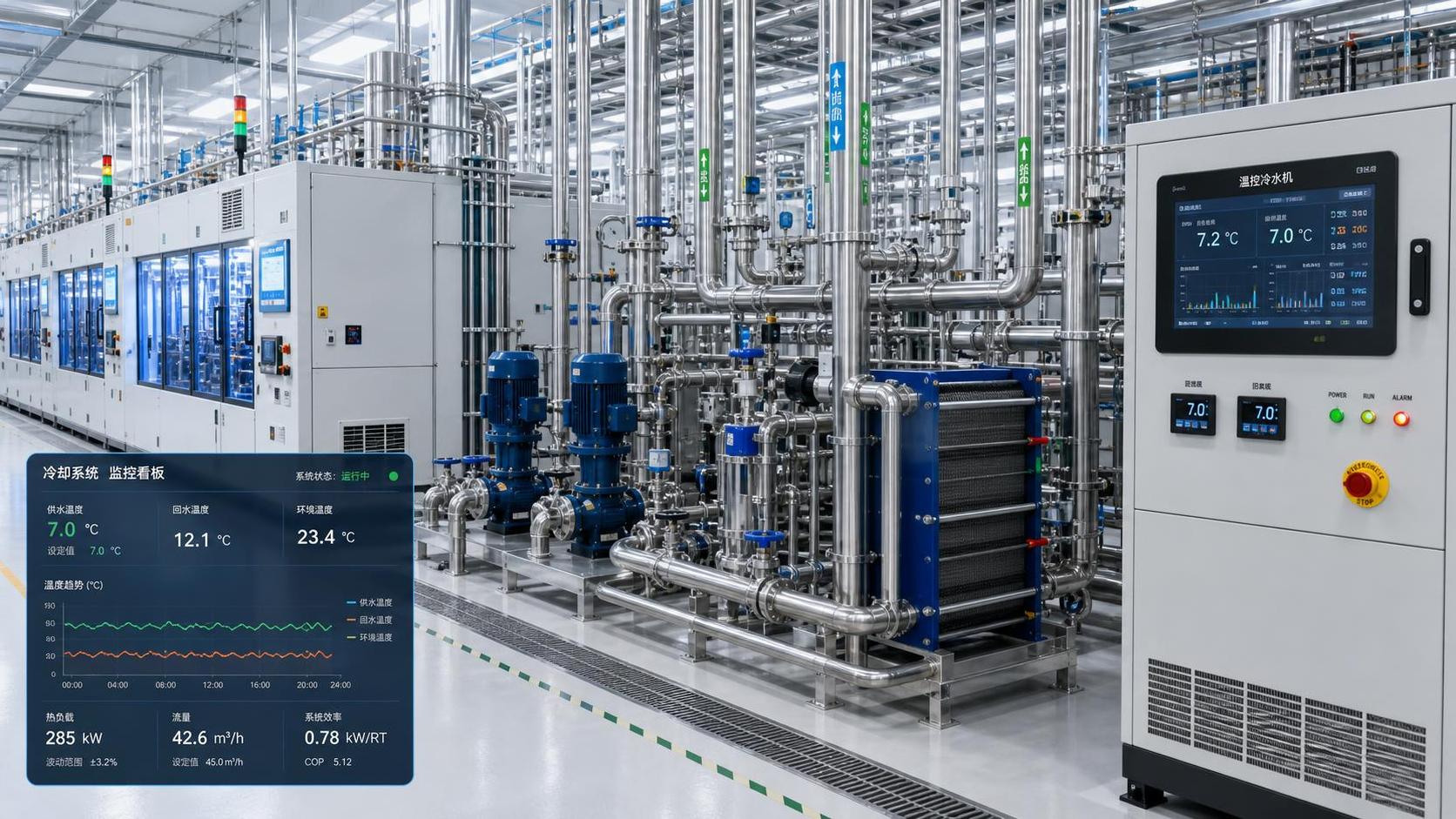
Useful baseline data usually includes load profile, chilled water temperatures, condenser water temperatures, compressor power, pump power, ambient wet-bulb or dry-bulb conditions, and control setpoints.
Where possible, compare several operating states rather than one design point. Daytime peaks, night setbacks, seasonal changes, batch processes, and low-load standby periods often reveal hidden losses.
A practical review often starts with these questions:
- Is the system running close to its intended load range most of the time?
- Are compressors frequently cycling, unloading, or operating below efficient turndown?
- Are approach temperatures widening because of fouling or poor flow balance?
- Do pumps and fans stay at full speed when process demand is low?
- Are temperature setpoints tighter than the process actually requires?
Key indicators that show real performance
No single metric captures energy efficiency perfectly. A balanced evaluation uses several indicators together, then checks whether they support the same story.
The strongest assessments combine these with trend data. A compressor that still meets rated COP may still undermine energy efficiency if condenser temperature keeps drifting upward because tower performance has degraded.
Where losses usually appear
In practice, recurring losses tend to cluster around four areas: thermal exchange, compression, fluid movement, and controls. Looking at them separately helps identify root causes without losing sight of system interaction.
Heat exchange bottlenecks
Fouling, scaling, air recirculation, and poor water distribution all reduce heat transfer. The result is higher approach temperature, longer compressor run time, and declining energy efficiency.
Compression mismatch
Compressors often lose efficiency at unstable part-load operation. Oversizing, frequent starts, slide-valve unloading, or poor sequencing between multiple machines can turn a modern plant into an expensive one.
Pumps and fans running harder than needed
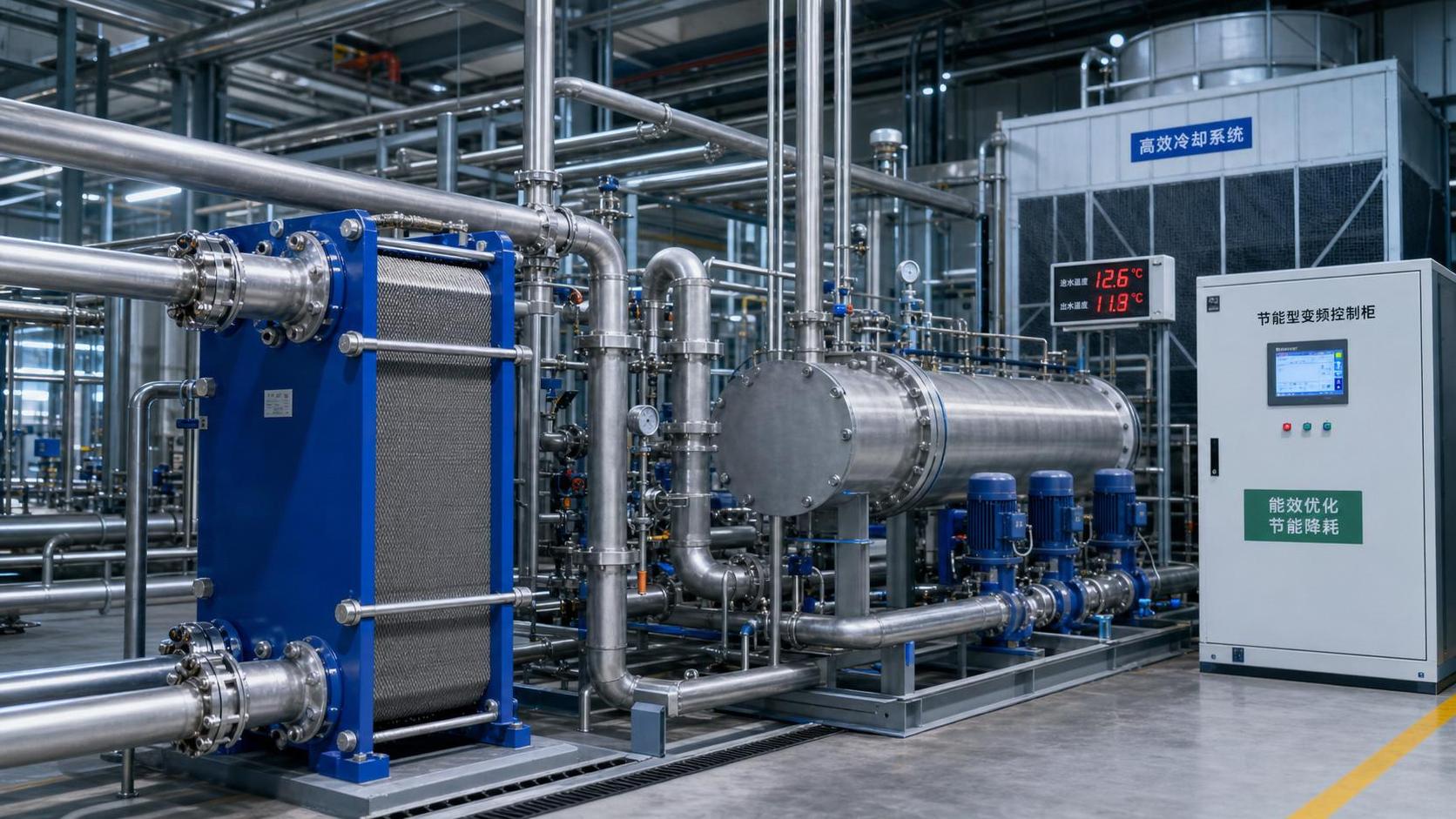
Auxiliary systems are easy to underestimate. Constant-speed pumps, excessive pressure margins, and fixed fan logic can consume substantial power even when cooling demand is moderate.
Control logic that protects comfort, not efficiency
Control strategies are often inherited from old operating habits. Conservative setpoints may protect against risk, but they may also hide large optimization opportunities with little process impact.
How to evaluate by application context
The same metric does not carry equal meaning everywhere. Industrial cooling systems should be assessed against the demands of the process they support.
For high-precision sectors, narrow thermal tolerance may justify energy use that looks high on paper. In food or chemical processing, hygiene, uptime, and product consistency can outweigh a small theoretical efficiency gain.
A useful screening view is shown below.
Turning analysis into better decisions
A good evaluation does not stop with identifying losses. It ranks them by operational impact, retrofit complexity, compliance relevance, and payback realism.
Usually, the fastest gains in energy efficiency come from control tuning, flow optimization, maintenance of exchange surfaces, and better staging of compressors and fans. Major replacement decisions should come later, once the operating baseline is clean.
This is where market intelligence becomes valuable. Broader reporting on refrigerant transitions, oil-free compression, and exchanger design evolution helps separate temporary fashion from durable technical advantage.
GTC-Matrix is useful in that sense because it links technical trends with commercial signals. Energy efficiency decisions are stronger when equipment performance, policy movement, and sector demand are read together.
A practical next step
The most reliable path is to build a repeatable review framework. Start with measured system boundaries, define the load conditions that matter most, and compare thermal output against total electrical input, not just chiller power.
Then check whether losses come from equipment limitation, maintenance drift, or operating logic. That distinction prevents expensive upgrades from being used to solve what is really a control problem.
From there, benchmark against relevant application peers, monitor changes over time, and keep an eye on refrigerant policy, thermal technology shifts, and process demands. In industrial cooling, energy efficiency is not a single score. It is an informed discipline of measurement, interpretation, and timely action.
Related News
- How to Compare Semiconductor Cooling Solutions by Heat Load and Uptime RiskAuthor :Cryogenic Systems Expert

- EU Label Deadline Hits China Chiller ExportsAuthor :Cryogenic Systems Expert

- How Smart Thermal Systems Improve Industrial Cooling EfficiencyAuthor :Cryogenic Systems Expert

- How to Choose Process Cooling Equipment for Stable Temperature ControlAuthor :Cryogenic Systems Expert

- EU Finalizes 2026 HFC Quota Cut for R-134a ChillersAuthor :Cryogenic Systems Expert

- EU Tightens HFC-134a Quotas for Industrial ChillersAuthor :Cryogenic Systems Expert

- REACH SVHC Update Pressures HFC-134a Chiller Supply ChainsAuthor :Cryogenic Systems Expert

- EU PFAS Coolant Ban Reshapes Chiller ExportsAuthor :Cryogenic Systems Expert

- EU REACH Restricts PFAS Cooling Media ImportsAuthor :Cryogenic Systems Expert

- EU Ecodesign Rule Takes Effect for Industrial ChillersAuthor :Cryogenic Systems Expert

- EU REACH Rule Takes Effect for PFAS in Industrial Cooling ExportsAuthor :Cryogenic Systems Expert

- Industrial Cooling for Plastic Processing: How to Size for Stable Cycle TimesAuthor :Cryogenic Systems Expert

- EU F-Gas Update Bars R404A/R507 in Commercial CoolingAuthor :Cryogenic Systems Expert

- DOE Raises Chiller Efficiency Standard From October 2026Author :Cryogenic Systems Expert

- India Mandates BIS Energy Certification for Industrial ChillersAuthor :Cryogenic Systems Expert

- Energy-Efficient Heat Exchange for Process Cooling: Cost vs PaybackAuthor :Cryogenic Systems Expert

- EPA R-134a Import Ban Takes Effect on July 13, 2026Author :Cryogenic Systems Expert

- India BIS Rule Takes Effect for Industrial ChillersAuthor :Cryogenic Systems Expert

- EPA Cuts R134a Import Quotas 20% From July 10Author :Cryogenic Systems Expert

- How to Compare Energy-Efficient Cooling Systems for Factory Expansion ProjectsAuthor :Cryogenic Systems Expert

- Chiller Price Index Rises 11.3% in Q2Author :Cryogenic Systems Expert

- Saudi SASO Tightens Chiller Import Compliance From July 10Author :Cryogenic Systems Expert

- Dubai Opens Fast-Track Chiller TendersAuthor :Cryogenic Systems Expert

- Japan Raises Chiller COP Floor to 6.2 From Sept. 1Author :Cryogenic Systems Expert
![]()
- Compact Thermal Management in Smart Devices: Common Failure RisksAuthor :Cryogenic Systems Expert

- Thermal Management for Batteries: Cooling Methods ComparedAuthor :Cryogenic Systems Expert

- How Compact Thermal Design Extends Smart Device UptimeAuthor :Cryogenic Systems Expert

- Shanghai-Rotterdam Reefer Rates Jump 37% in a WeekAuthor :Cryogenic Systems Expert

- Process Cooling Equipment Low Maintenance: What Cuts Downtime Over 5 Years?Author :Cryogenic Systems Expert

- Semiconductor Cooling Solutions: Which Design Works Best for High-Density Tools?Author :Cryogenic Systems Expert

- Semiconductor Thermal Management Systems: Preventing Yield Loss from Heat DriftAuthor :Cryogenic Systems Expert

- EPA Clears R-1234ze(E) for Industrial ChillersAuthor :Cryogenic Systems Expert
 for Industrial Chillers")
- DOE Raises Chiller IEER Floor to 12.8 From Oct. 2026Author :Cryogenic Systems Expert

- Singapore Refrigeration Show Adds Green Compliance HubAuthor :Cryogenic Systems Expert

- How Food Industry Temperature Control Systems Reduce Product LossAuthor :Cryogenic Systems Expert

- EU REACH Adds 12 SVHCs, Raising Chiller Compliance RiskAuthor :Cryogenic Systems Expert