



How to Compare Semiconductor Cooling Solutions by Heat Load and Uptime Risk




Start with the heat load shape, not the nameplate
When people compare semiconductor cooling solutions, they often begin with rated cooling capacity. That is usually the wrong starting point. In semiconductor environments, the harder question is whether the system can handle the actual heat load profile: steady load, fast spikes, partial-load operation, tool idle periods, and return to production after interruption.
A cooling unit that looks fine on a datasheet can still create trouble if your process swings quickly or if several tools ramp at the same time. Before you compare vendors or architectures, map the load in operational terms:
- peak heat load during normal production
- minimum load during low-throughput or standby periods
- rate of load change during recipe transitions
- whether the load is continuous, cyclic, or highly intermittent
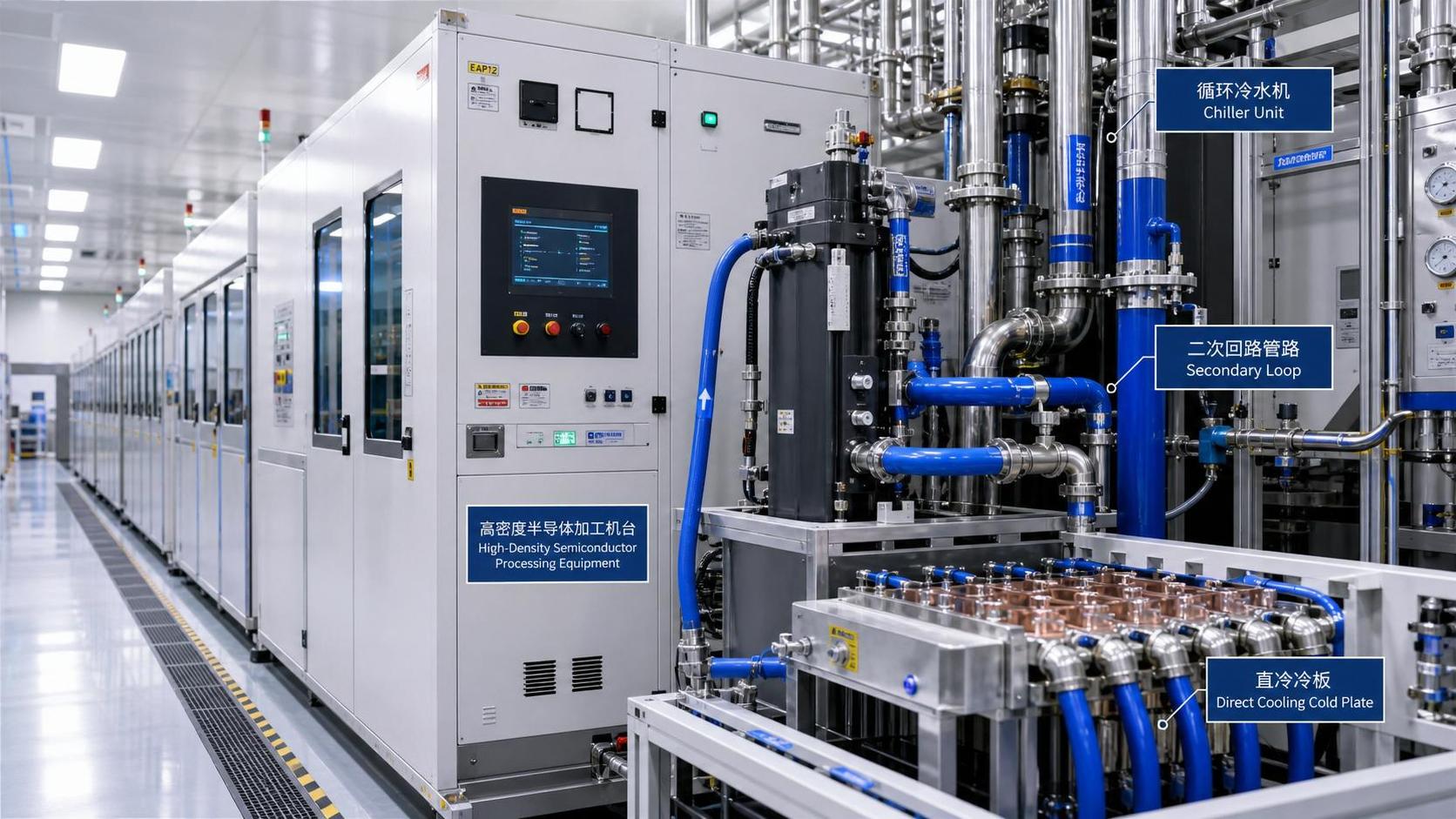
- how much heat must be removed from process tools versus facility-side support systems
If you do not separate those conditions, every later comparison gets blurry. A solution that is efficient at high stable load may struggle when the process spends long periods at 40 to 60 percent capacity. Another may control temperature tightly but react too slowly when a chamber or laser stage sees a sudden thermal jump.
Check the temperature control requirement where the process feels it
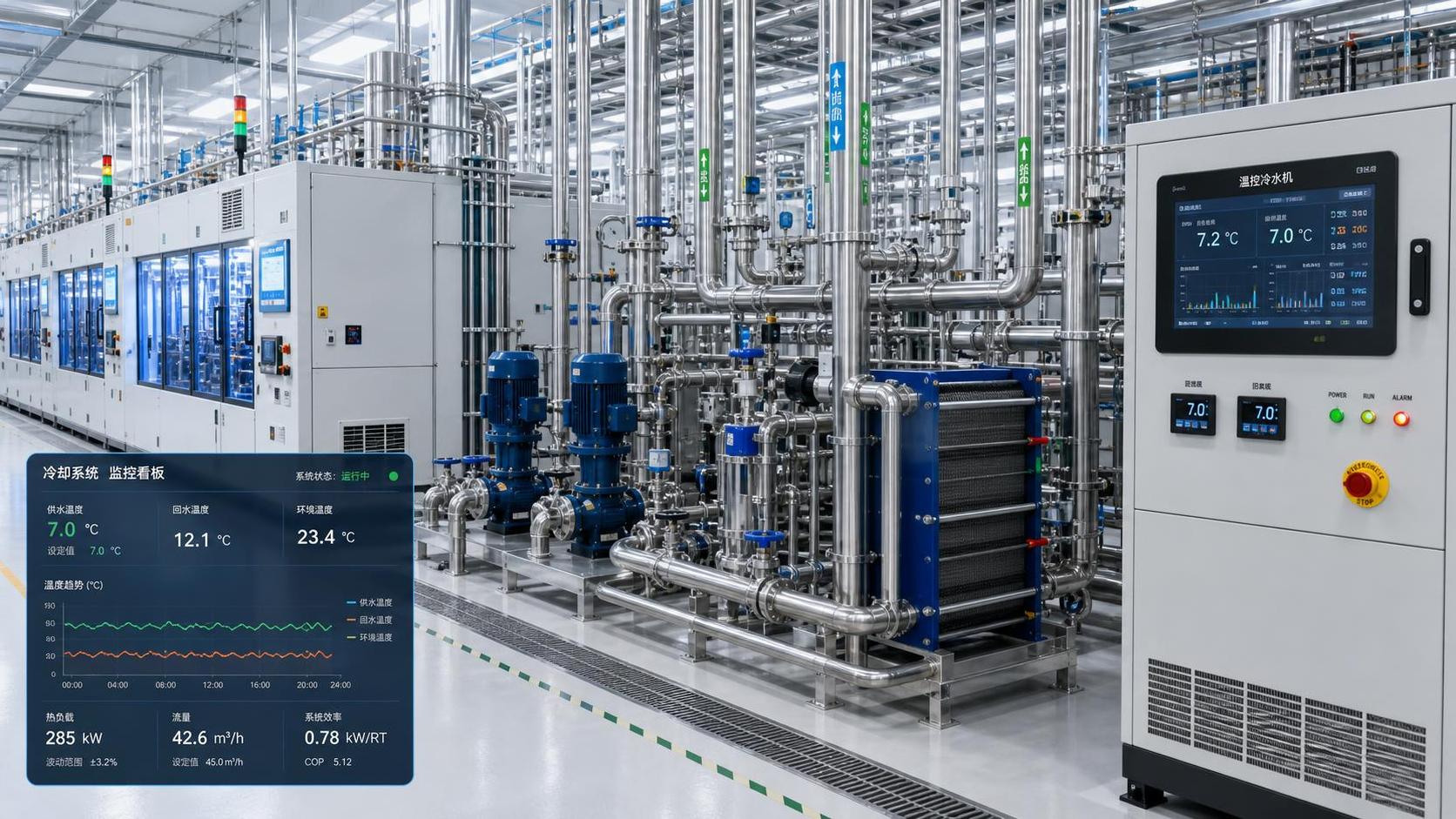
In semiconductor applications, cooling is rarely just about removing heat. It is about holding a process window. That means the key comparison point is not simply supply temperature. It is temperature stability at the point of use, under real operating variation.
During evaluation, ask where the temperature tolerance actually matters: at the tool inlet, the return loop, the platen, the chamber wall, the power electronics, or the process fluid boundary. Different semiconductor cooling solutions can look similar until you ask that question. Then the differences become obvious.
A common mistake is to accept stability claims measured inside the cooling package rather than at the load. Piping length, valve behavior, pump turndown, heat soak, and ambient variation can all widen the real temperature band. If the process is sensitive, request performance information tied to the full loop, not just the internal refrigeration circuit or heat exchanger block.
Separate process risk from facility risk
Not every cooling failure has the same consequence. Some events raise operating cost. Others scrap wafers, interrupt qualification, or create long recovery windows. Technical evaluators usually get better decisions when they split uptime risk into two layers:
That distinction keeps teams from overbuying in the wrong place. Some tools need very tight local thermal control but can tolerate a brief facility disturbance if there is enough buffer volume or controlled shutdown logic. Others are less sensitive to tiny temperature movement but cannot afford a pump trip, a cooling water interruption, or a long compressor restart.
Look for the hidden single points of failure
Uptime risk is often underestimated because redundancy gets discussed too loosely. A system can have two pumps and still have one vulnerable control board, one make-up water path, one sensor set feeding shutdown logic, or one heat rejection path shared across multiple tools.
When comparing semiconductor cooling solutions, walk through the failure chain item by item:
- What happens if the primary compressor, pump, fan, or control module fails?
- Can the system degrade gracefully, or does it trip immediately?
- How is switchover handled: automatic, manual, or supervisory control dependent?
- What instrumentation is needed to keep the backup path available?
- Does maintenance on one component expose the whole loop?
This is where a lot of apparently robust options start to separate. A design with simpler backup logic and cleaner isolation valves may be a better uptime choice than a more sophisticated package that becomes difficult to service without disturbing production.
Do not ignore part-load behavior
Semiconductor facilities rarely live at one perfect operating point. Tool utilization changes. Expansion phases create temporary oversizing. Seasonal conditions shift the heat rejection side. That is why part-load performance matters almost as much as full-load capacity.
What you want to know is simple: when the load drops, does the cooling system remain stable, efficient, and controllable? Poor turndown behavior can cause short cycling, temperature hunting, unstable flow, or unnecessary wear on compressors and pumps. Those issues do not always show up during factory acceptance tests built around nominal conditions.
If your process has long low-load periods, ask for the control sequence under reduced demand. Variable-speed equipment, buffering strategy, bypass arrangement, and sensor placement all affect whether the unit behaves well or becomes a nuisance.
Match coolant quality and materials to the real contamination risk
Cooling reliability in semiconductor settings is not only thermal. Fluid quality and material compatibility matter because small contamination events can turn into unstable control, corrosion, fouling, blocked passages, or tool-side damage.
The useful checklist here is practical:
- What fluid is used in the loop, and what purity level does the connected equipment require?
- Which wetted materials are present in pumps, seals, valves, heat exchangers, and piping?
- Where can particulate, biofilm, corrosion byproducts, or cross-contamination enter the system?
- How are filtration, sampling, draining, and refill handled without exposing the process loop?
A frequent evaluation gap is treating fluid management as an operations problem to solve later. In reality, it should influence technology choice early. Some cooling architectures are simply easier to keep clean, easier to flush, and less likely to trap stagnant zones.
Compare recovery behavior, not just steady-state operation
Most cooling systems look acceptable when everything is stable. The harder test is how they recover after a disturbance: utility fluctuation, brief power loss, emergency stop, warm restart, maintenance isolation, or sudden process load return.
For technical evaluation, recovery behavior deserves its own line item. Ask:
- How quickly can the loop return to temperature and flow control after a trip?
- Does the restart sequence protect the process tool from overshoot or thermal shock?
- Can the system hold a safe standby condition during short interruptions?
- What manual intervention is required before production can resume?
This matters because uptime risk is not only about whether a fault occurs. It is also about how long the fault keeps the line from returning to qualified operation.
Review the monitoring points before you trust the alarms
Alarm lists can look impressive and still fail to protect you. What counts is whether the sensors sit in the right places and whether the alarm thresholds help operators act early enough.
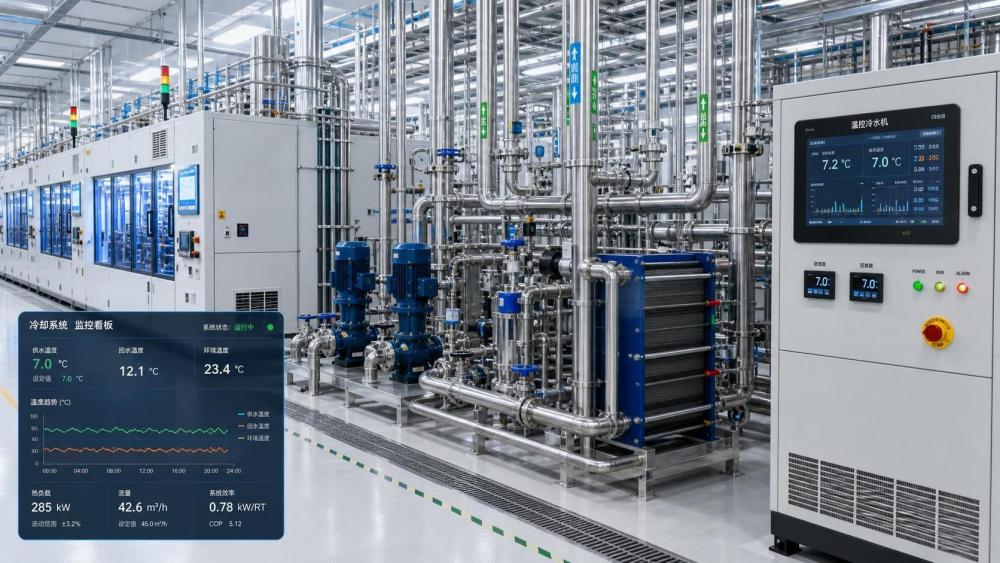
In semiconductor cooling, useful monitoring usually includes more than supply and return temperature. You may need differential pressure across filters, pump status, flow verification at critical branches, fluid level, conductivity or other quality indicators where relevant, and trend visibility that shows slow degradation before a trip happens.
One of the more expensive mistakes is assuming that a common fault output equals meaningful diagnostics. It does not. During comparison, look at what the controls can tell maintenance and process teams after an event, not just whether the unit can send an alarm to the building management system.
Check serviceability as part of uptime, not as a purchasing afterthought
A cooling solution that is awkward to isolate, drain, clean, or inspect tends to accumulate risk. Serviceability has a direct uptime effect because maintenance windows in semiconductor operations are rarely generous.
Good evaluation questions are concrete:
- Can key components be replaced without draining the entire loop?
- Are filters, sensors, and valves accessible in the installed layout?
- Does preventive maintenance require process shutdown, load transfer, or utility interruption?
- Are spare parts likely to be generic industrial items or highly specific assemblies?
This is often where the lowest purchase price stops looking attractive. The unit that is slightly more expensive upfront may reduce mean time to repair simply because people can work on it quickly and without disturbing adjacent systems.
Use a comparison sheet that reflects decision risk
If you compare semiconductor cooling solutions with a generic scoring sheet, you will usually overweight nominal performance and underweight operational resilience. A better approach is to score options against the risks your site actually carries.
A useful structure looks like this:
A practical order for final evaluation
If the shortlist is still crowded, narrow it in this order. Eliminate anything that cannot match the real heat load profile. Then remove options that cannot maintain the required control band at the point of use. After that, focus on uptime exposure: hidden single points of failure, recovery after disturbance, and maintenance impact. Only then does efficiency become a useful tie-breaker.
That sequence keeps the decision anchored to production risk. In semiconductor environments, the best cooling choice is usually not the system with the biggest headline capacity or the most elaborate feature list. It is the one that stays predictable across changing loads, protects the process when something goes wrong, and can be maintained without turning routine service into a production event.
Related News
- How to Compare Semiconductor Cooling Solutions by Heat Load and Uptime RiskAuthor :Cryogenic Systems Expert

- EU Label Deadline Hits China Chiller ExportsAuthor :Cryogenic Systems Expert

- How Smart Thermal Systems Improve Industrial Cooling EfficiencyAuthor :Cryogenic Systems Expert

- How to Choose Process Cooling Equipment for Stable Temperature ControlAuthor :Cryogenic Systems Expert

- EU Finalizes 2026 HFC Quota Cut for R-134a ChillersAuthor :Cryogenic Systems Expert

- EU Tightens HFC-134a Quotas for Industrial ChillersAuthor :Cryogenic Systems Expert

- REACH SVHC Update Pressures HFC-134a Chiller Supply ChainsAuthor :Cryogenic Systems Expert

- EU PFAS Coolant Ban Reshapes Chiller ExportsAuthor :Cryogenic Systems Expert

- EU REACH Restricts PFAS Cooling Media ImportsAuthor :Cryogenic Systems Expert

- EU Ecodesign Rule Takes Effect for Industrial ChillersAuthor :Cryogenic Systems Expert

- EU REACH Rule Takes Effect for PFAS in Industrial Cooling ExportsAuthor :Cryogenic Systems Expert

- Industrial Cooling for Plastic Processing: How to Size for Stable Cycle TimesAuthor :Cryogenic Systems Expert

- EU F-Gas Update Bars R404A/R507 in Commercial CoolingAuthor :Cryogenic Systems Expert

- DOE Raises Chiller Efficiency Standard From October 2026Author :Cryogenic Systems Expert

- India Mandates BIS Energy Certification for Industrial ChillersAuthor :Cryogenic Systems Expert

- Energy-Efficient Heat Exchange for Process Cooling: Cost vs PaybackAuthor :Cryogenic Systems Expert

- EPA R-134a Import Ban Takes Effect on July 13, 2026Author :Cryogenic Systems Expert

- India BIS Rule Takes Effect for Industrial ChillersAuthor :Cryogenic Systems Expert

- EPA Cuts R134a Import Quotas 20% From July 10Author :Cryogenic Systems Expert

- How to Compare Energy-Efficient Cooling Systems for Factory Expansion ProjectsAuthor :Cryogenic Systems Expert

- Chiller Price Index Rises 11.3% in Q2Author :Cryogenic Systems Expert

- Saudi SASO Tightens Chiller Import Compliance From July 10Author :Cryogenic Systems Expert

- Dubai Opens Fast-Track Chiller TendersAuthor :Cryogenic Systems Expert

- Japan Raises Chiller COP Floor to 6.2 From Sept. 1Author :Cryogenic Systems Expert
![]()
- Compact Thermal Management in Smart Devices: Common Failure RisksAuthor :Cryogenic Systems Expert

- Thermal Management for Batteries: Cooling Methods ComparedAuthor :Cryogenic Systems Expert

- How Compact Thermal Design Extends Smart Device UptimeAuthor :Cryogenic Systems Expert

- Shanghai-Rotterdam Reefer Rates Jump 37% in a WeekAuthor :Cryogenic Systems Expert

- Process Cooling Equipment Low Maintenance: What Cuts Downtime Over 5 Years?Author :Cryogenic Systems Expert

- Semiconductor Cooling Solutions: Which Design Works Best for High-Density Tools?Author :Cryogenic Systems Expert

- Semiconductor Thermal Management Systems: Preventing Yield Loss from Heat DriftAuthor :Cryogenic Systems Expert

- EPA Clears R-1234ze(E) for Industrial ChillersAuthor :Cryogenic Systems Expert
 for Industrial Chillers")
- DOE Raises Chiller IEER Floor to 12.8 From Oct. 2026Author :Cryogenic Systems Expert

- Singapore Refrigeration Show Adds Green Compliance HubAuthor :Cryogenic Systems Expert

- How Food Industry Temperature Control Systems Reduce Product LossAuthor :Cryogenic Systems Expert

- EU REACH Adds 12 SVHCs, Raising Chiller Compliance RiskAuthor :Cryogenic Systems Expert