India Mandates BIS Energy Certification for Industrial Chillers




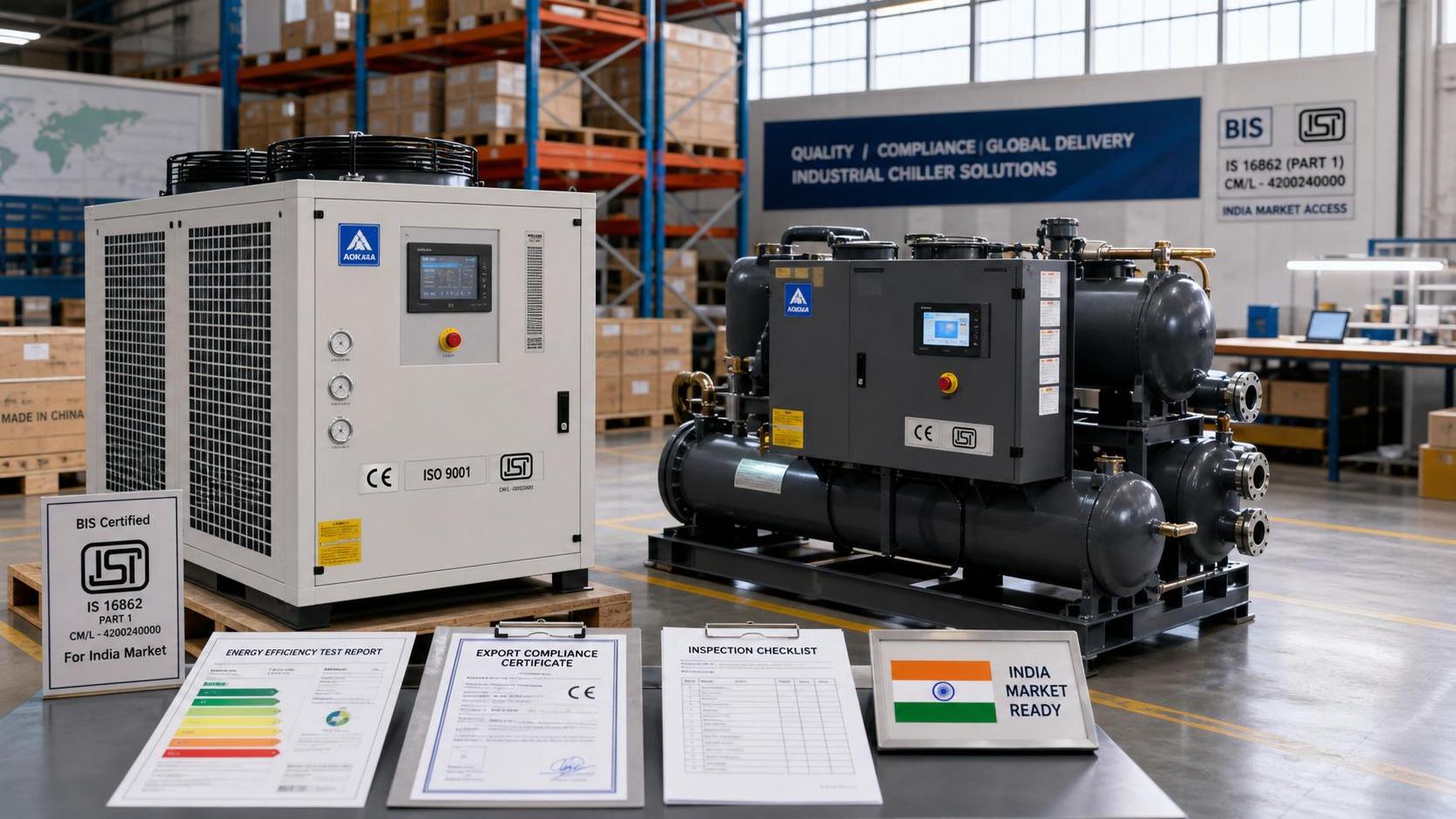
As of August 1, 2026, India has moved industrial chiller compliance from a technical preference to a market-entry requirement. Based on a BIS notice issued on July 13, 2026, both imported and domestically manufactured Industrial Chillers must meet IS 16149:2025 energy-efficiency requirements and carry the BIS mark. For manufacturers, importers, distributors, customs-facing supply chain teams, and buyers serving South and Southeast Asian markets, this is worth close attention because non-compliant units may be stopped at the border, directly affecting clearance, delivery planning, and downstream distribution.
What the new BIS requirement confirms
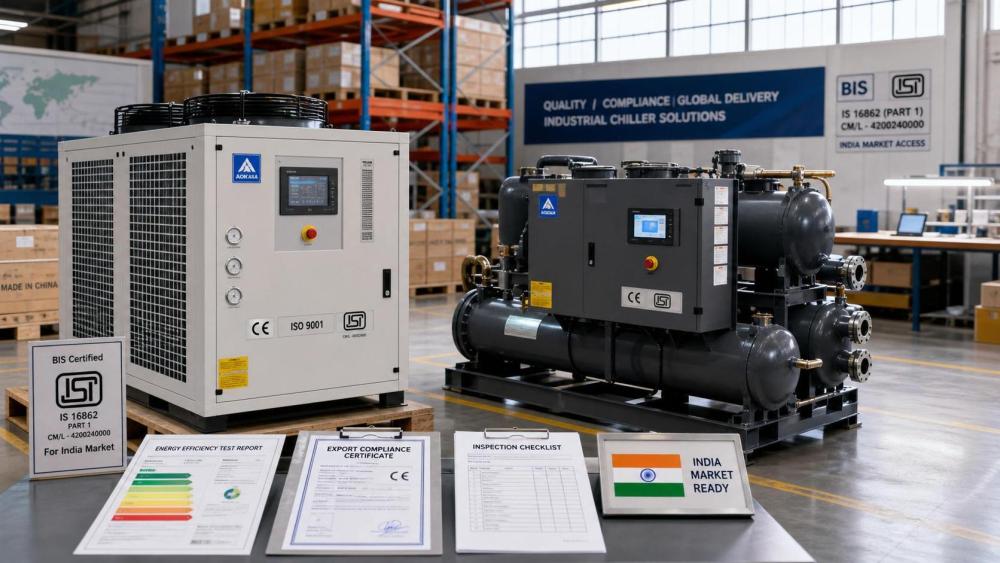
The confirmed requirement is that all Industrial Chillers sold into the Indian market, whether imported or locally produced, are subject to mandatory energy-efficiency certification under IS 16149:2025 from August 1, 2026.
The rule applies to both air-cooled and water-cooled units. The notice highlights two core compliance points: a COP threshold of at least 3.2 and conformity related to variable-frequency control.
The notice also makes the enforcement consequence clear: products without certification may be denied entry by customs. That gives the requirement immediate relevance not only for manufacturers but also for channel partners handling customs clearance and regional distribution.
Where the disruption is most likely to appear
For manufacturers shipping into India
From an industry perspective, manufacturers are likely to feel the impact first at the product qualification stage. The immediate issue is not only whether a unit can be sold, but whether its configuration, documentation, and marking align with the new requirement before shipment. Product lines covering air-cooled and water-cooled chillers will need particular attention where COP performance and variable-frequency control are involved.
For importers and trading companies
Import-oriented businesses may face pressure at the border compliance stage. Because uncertified products may be refused by customs, the practical risk shifts from a later sales problem to an earlier entry problem. What deserves closer attention is whether shipments already prepared for the Indian market have certification status and BIS marking aligned with the new rule.
For distributors in South and Southeast Asia
The summary indicates likely effects on customs clearance and distribution channels across South Asia and Southeast Asia. Observably, distributors working across multiple regional markets may need to separate India-bound inventory from stock intended for other destinations, especially where product specifications or paperwork differ by market.
For buyers and project-facing procurement teams
Procurement teams, especially those depending on imported equipment or scheduled deliveries, may be affected through lead-time uncertainty and supplier qualification checks. The operational concern is whether ordered units can legally enter the market and be delivered as planned, rather than only whether the equipment is commercially available.
What companies should watch now
Check whether product scope and documentation match the rule
Companies should focus first on whether the chillers they handle fall within the covered scope and whether the supporting documents clearly reflect compliance with IS 16149:2025. In practice, this is a documentation and execution issue as much as a technical one.
Review COP and variable-frequency control claims carefully
The notice specifically highlights COP at or above 3.2 and compliance related to variable-frequency control. That means any performance claim, specification sheet, or product communication tied to these points deserves closer internal review before shipment, quotation, or customs handling.
Prepare for customs and delivery friction
Analysis shows that the most immediate business risk is interruption at import clearance. Importers, logistics coordinators, and channel partners should be aligned on certification status, BIS marking, and shipment readiness to reduce the chance of goods being delayed or refused at entry.
Keep customer communication tied to verifiable status
For sales teams and distributors, it is important to distinguish between planned compliance and confirmed compliance. Customer commitments, delivery schedules, and channel allocations should be based on verified certification status rather than assumptions that a product will be accepted after arrival.
Why this reads as more than a routine standards update
Analysis shows that this development is best read as an enforcement-driven market access signal, not just a technical standards notice. The combination of a dated enforcement point, defined efficiency criteria, and a customs consequence means the rule has direct commercial effect from the outset.
At the same time, it is more appropriate to understand this as a live compliance development rather than a fully settled long-term market outcome. The confirmed facts establish the requirement and the immediate enforcement consequence, but market responses, adjustment speed across suppliers, and any later interpretive clarifications still need continued observation.
How the market should frame this change
The practical significance of this update is clear: for industrial chillers entering or produced for India, compliance now sits at the center of saleability and delivery. The rule should not be overstated as a complete reshaping of the sector, but it also should not be treated as a minor administrative change.
At this stage, it is more appropriate to understand the development as an immediate compliance threshold with broader regional distribution implications. For affected businesses, the priority is disciplined execution around certification, marking, shipment readiness, and customer-facing delivery commitments.
Basis of this article and points for continued verification
This article is based on the user-provided news title, event date, and event summary concerning India's BIS requirement for Industrial Chillers from August 1, 2026. The factual section above is limited to that provided information.
For developments of this kind, relevant source types typically include official notices, company announcements, industry association updates, authoritative media coverage, and standards organization documents. A specific official source link was not provided in the input, so the exact official publication path still requires ongoing verification.
Items that remain worth monitoring include any further official wording, implementation clarifications, and how certification enforcement affects customs clearance and distribution execution in India-linked regional channels.
Related News
- How Smart Thermal Systems Improve Industrial Cooling EfficiencyAuthor :Cryogenic Systems Expert

- How to Choose Process Cooling Equipment for Stable Temperature ControlAuthor :Cryogenic Systems Expert

- EU Finalizes 2026 HFC Quota Cut for R-134a ChillersAuthor :Cryogenic Systems Expert

- EU Tightens HFC-134a Quotas for Industrial ChillersAuthor :Cryogenic Systems Expert

- REACH SVHC Update Pressures HFC-134a Chiller Supply ChainsAuthor :Cryogenic Systems Expert

- EU PFAS Coolant Ban Reshapes Chiller ExportsAuthor :Cryogenic Systems Expert

- EU REACH Restricts PFAS Cooling Media ImportsAuthor :Cryogenic Systems Expert

- EU Ecodesign Rule Takes Effect for Industrial ChillersAuthor :Cryogenic Systems Expert

- EU REACH Rule Takes Effect for PFAS in Industrial Cooling ExportsAuthor :Cryogenic Systems Expert

- Industrial Cooling for Plastic Processing: How to Size for Stable Cycle TimesAuthor :Cryogenic Systems Expert

- EU F-Gas Update Bars R404A/R507 in Commercial CoolingAuthor :Cryogenic Systems Expert

- DOE Raises Chiller Efficiency Standard From October 2026Author :Cryogenic Systems Expert

- India Mandates BIS Energy Certification for Industrial ChillersAuthor :Cryogenic Systems Expert

- Energy-Efficient Heat Exchange for Process Cooling: Cost vs PaybackAuthor :Cryogenic Systems Expert

- EPA R-134a Import Ban Takes Effect on July 13, 2026Author :Cryogenic Systems Expert

- India BIS Rule Takes Effect for Industrial ChillersAuthor :Cryogenic Systems Expert

- EPA Cuts R134a Import Quotas 20% From July 10Author :Cryogenic Systems Expert

- How to Compare Energy-Efficient Cooling Systems for Factory Expansion ProjectsAuthor :Cryogenic Systems Expert

- Chiller Price Index Rises 11.3% in Q2Author :Cryogenic Systems Expert

- Saudi SASO Tightens Chiller Import Compliance From July 10Author :Cryogenic Systems Expert

- Dubai Opens Fast-Track Chiller TendersAuthor :Cryogenic Systems Expert

- Japan Raises Chiller COP Floor to 6.2 From Sept. 1Author :Cryogenic Systems Expert
![]()
- Compact Thermal Management in Smart Devices: Common Failure RisksAuthor :Cryogenic Systems Expert

- Thermal Management for Batteries: Cooling Methods ComparedAuthor :Cryogenic Systems Expert

- How Compact Thermal Design Extends Smart Device UptimeAuthor :Cryogenic Systems Expert

- Shanghai-Rotterdam Reefer Rates Jump 37% in a WeekAuthor :Cryogenic Systems Expert

- Process Cooling Equipment Low Maintenance: What Cuts Downtime Over 5 Years?Author :Cryogenic Systems Expert

- Semiconductor Cooling Solutions: Which Design Works Best for High-Density Tools?Author :Cryogenic Systems Expert

- Semiconductor Thermal Management Systems: Preventing Yield Loss from Heat DriftAuthor :Cryogenic Systems Expert

- EPA Clears R-1234ze(E) for Industrial ChillersAuthor :Cryogenic Systems Expert
 for Industrial Chillers")
- DOE Raises Chiller IEER Floor to 12.8 From Oct. 2026Author :Cryogenic Systems Expert

- Singapore Refrigeration Show Adds Green Compliance HubAuthor :Cryogenic Systems Expert

- How Food Industry Temperature Control Systems Reduce Product LossAuthor :Cryogenic Systems Expert

- EU REACH Adds 12 SVHCs, Raising Chiller Compliance RiskAuthor :Cryogenic Systems Expert

- Precision Temperature Control Air Cooling: Key Setup Mistakes That Reduce StabilityAuthor :Cryogenic Systems Expert

- India BEE Eyes APF Labels for Imported ChillersAuthor :Cryogenic Systems Expert