



Semiconductor Cooling Solutions: Which Design Works Best for High-Density Tools?




Semiconductor Cooling Solutions: Which Design Works Best for High-Density Tools?
As chip power density rises and process windows tighten, selecting the right semiconductor cooling solutions has become a critical project decision for high-density tools.
From thermal stability and contamination control to uptime and energy efficiency, every design choice affects yield, risk, and long-term operating cost.
This article helps evaluate which cooling architectures deliver the best fit for demanding semiconductor environments.
In recent projects, the conversation has shifted.
Teams no longer ask only for cooling capacity.
They ask how semiconductor cooling solutions support wafer uniformity, faster ramps, cleaner operation, and lower utility exposure over the asset lifecycle.
That shift matters because high-density tools punish weak thermal design quickly.
A system that looks acceptable on paper can still create drift, hotspots, vibration, or maintenance burden in production.
Why Cooling Design Now Drives Tool Performance
High-density semiconductor tools generate concentrated heat in smaller spaces.
At the same time, process tolerances keep shrinking.
That combination turns thermal management into a direct yield issue, not just a facilities issue.
The most effective semiconductor cooling solutions usually balance five priorities at once:
- tight temperature stability at the point of use
- fast response to dynamic thermal loads
- low contamination risk and material compatibility
- high uptime with predictable maintenance
- acceptable energy and water consumption
When one of these factors is ignored, the hidden cost often shows up later.
It may appear as unstable chamber conditions, longer qualification cycles, or more unexpected downtime.
This is why semiconductor cooling solutions should be reviewed alongside process engineering, facilities planning, and total cost of ownership.
Main Semiconductor Cooling Solutions Used in High-Density Tools
Not every architecture fits every tool type.
Still, most semiconductor cooling solutions fall into a few practical categories.
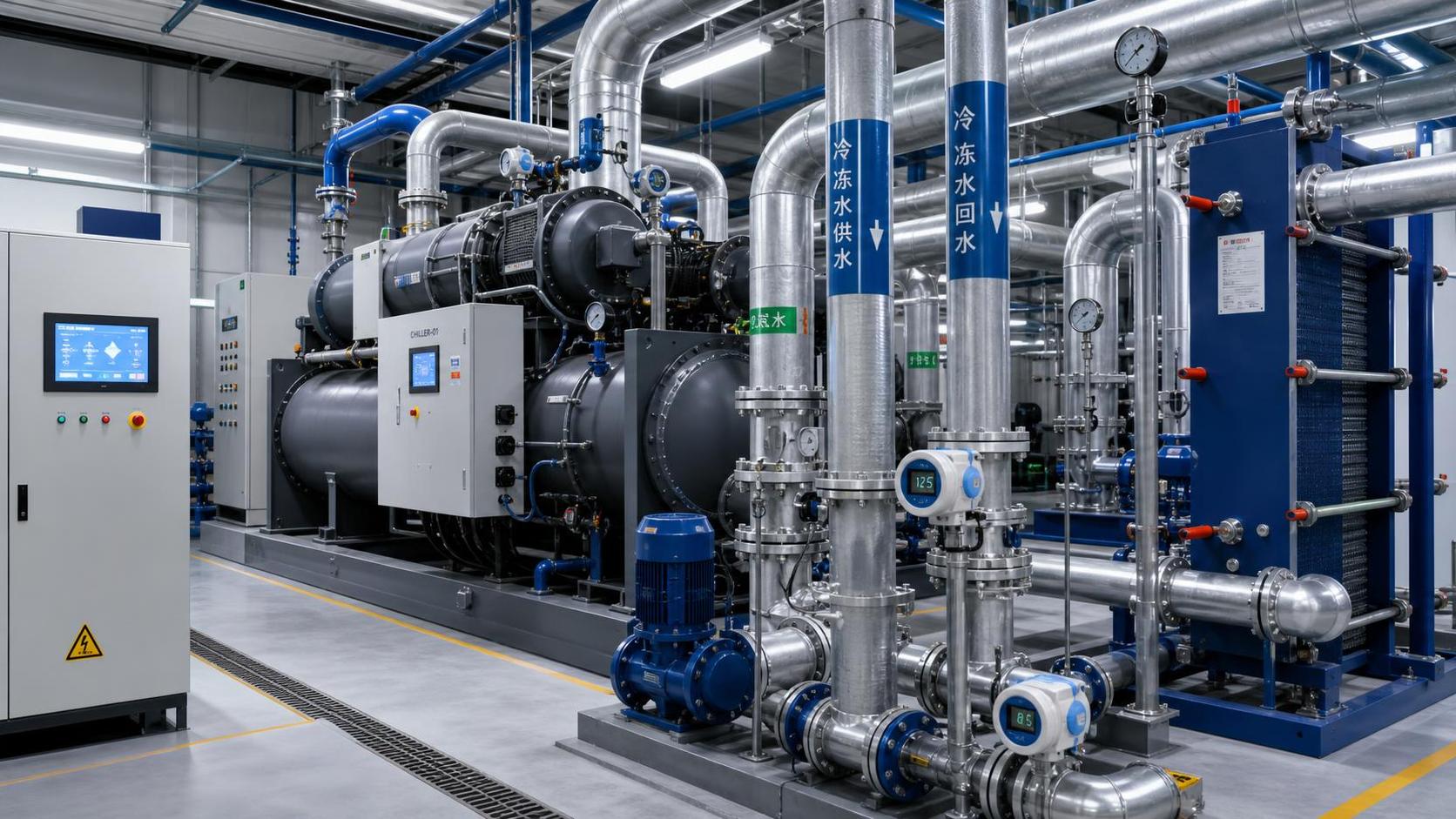
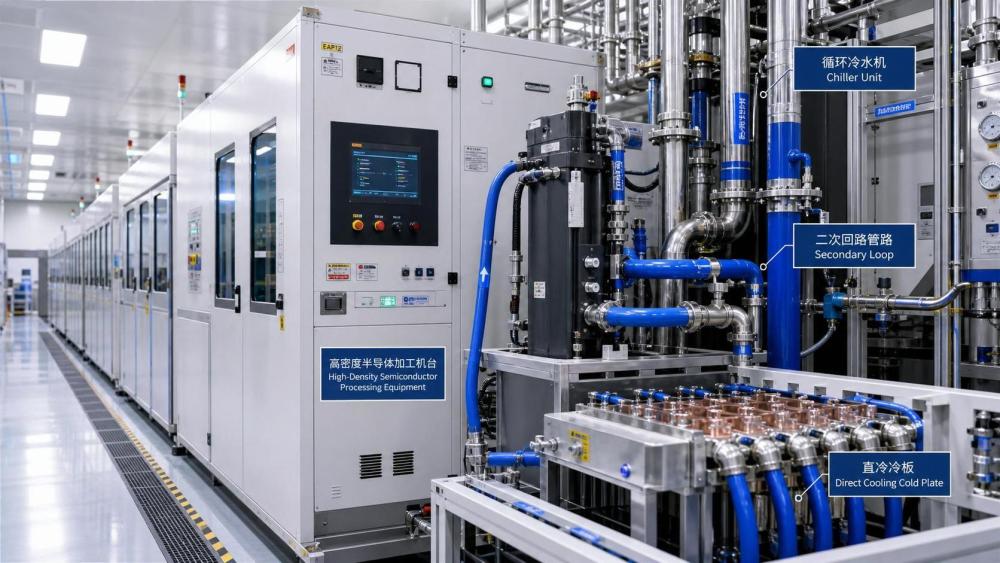
1. Facility Water and Secondary Loop Designs
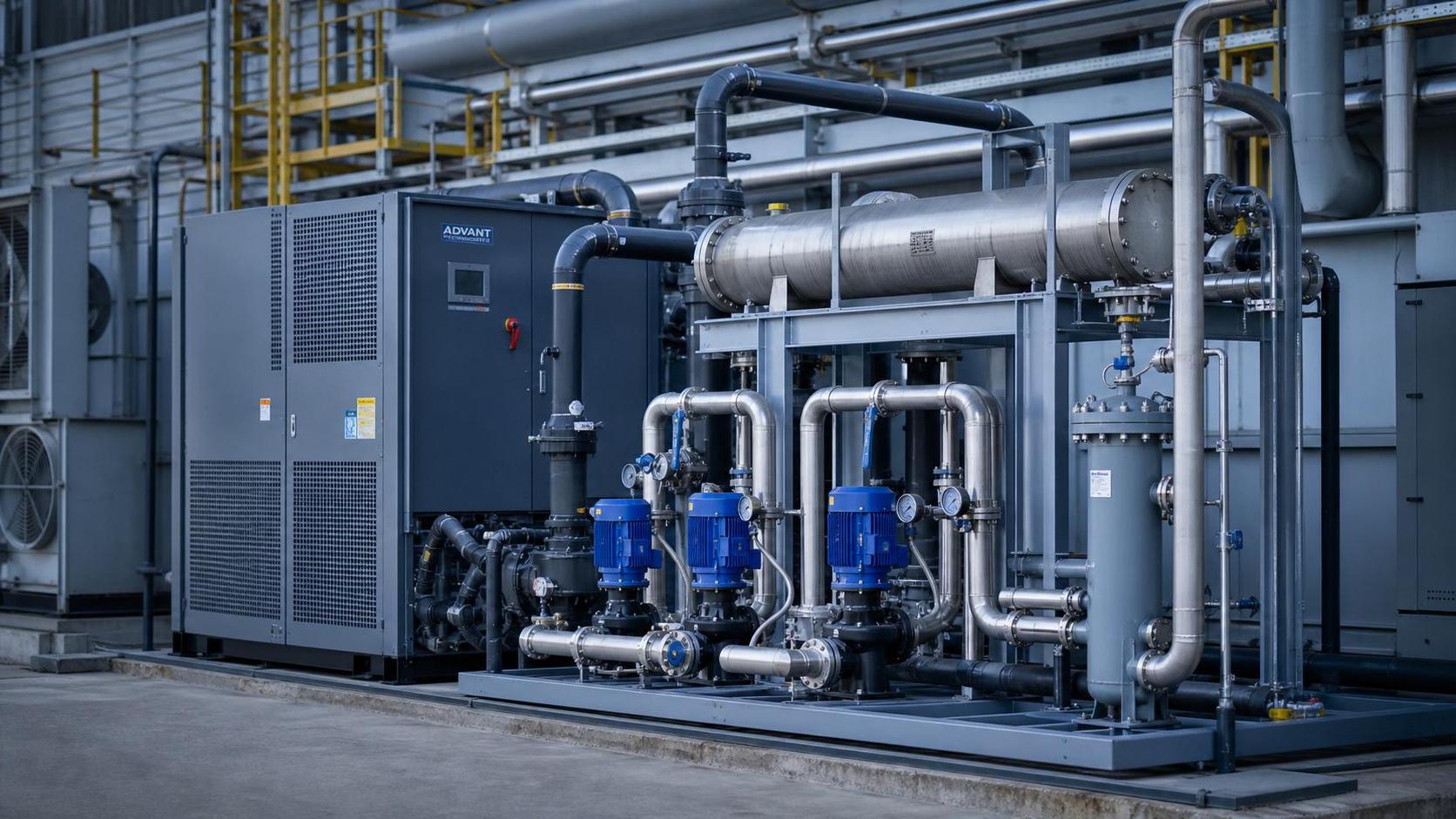
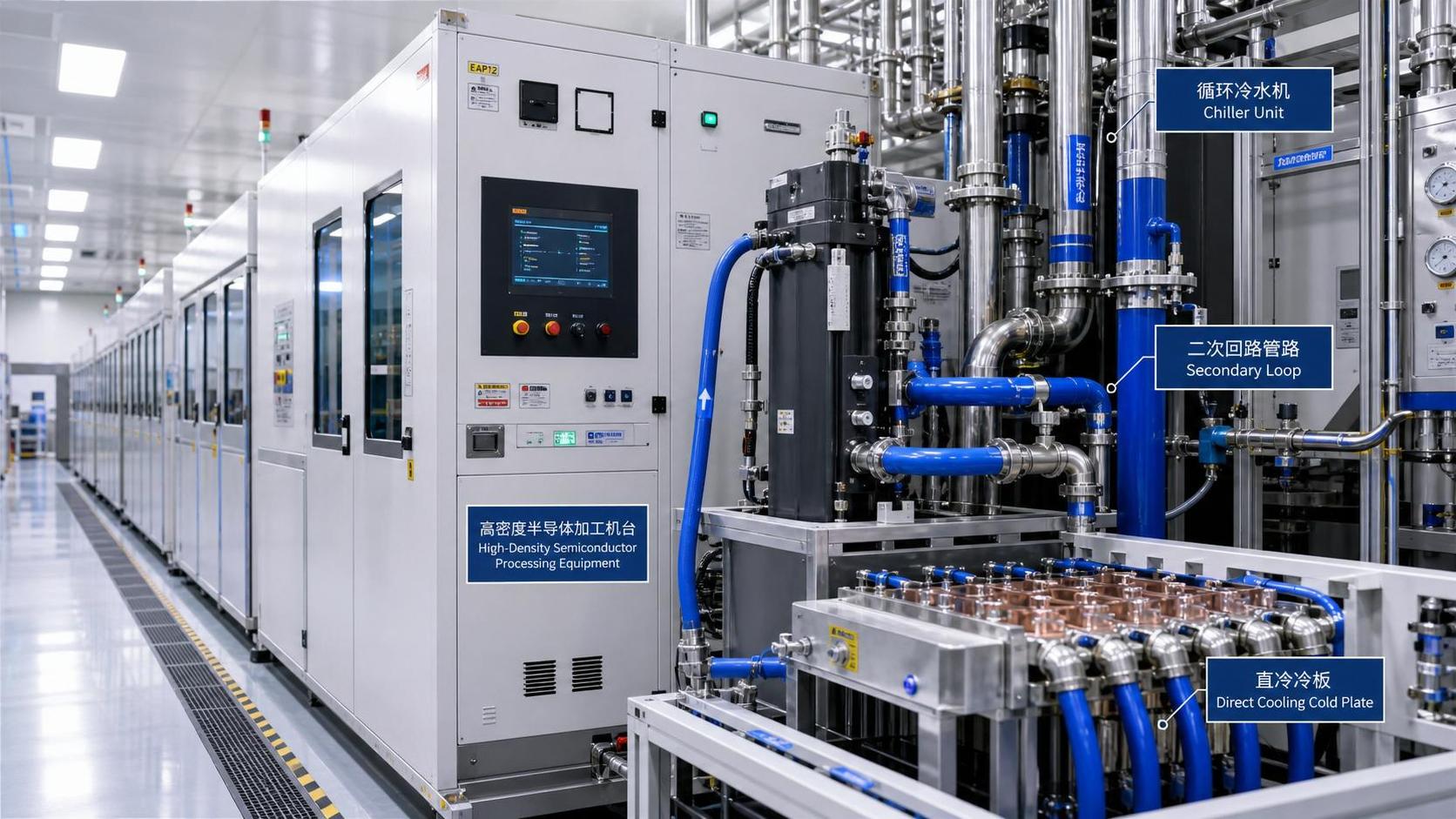
These systems use plant water, then isolate the tool with a secondary loop.
They are common where contamination control and hydraulic stability matter.
Their strength is separation.
The process tool sees controlled fluid conditions, even if plant-side fluctuations exist.
For many fabs, this is the baseline for reliable semiconductor cooling solutions.
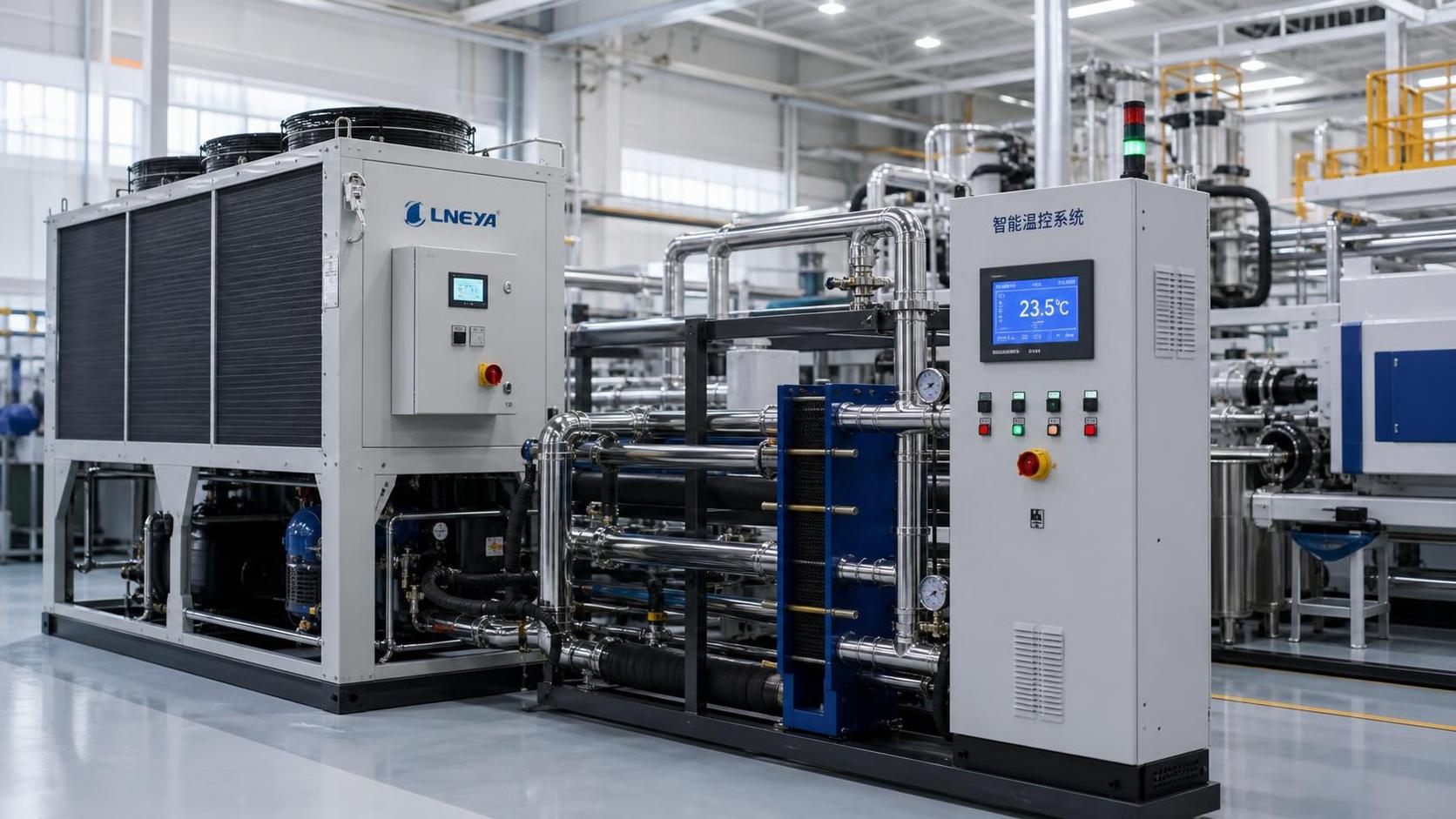
2. Recirculating Chiller Systems
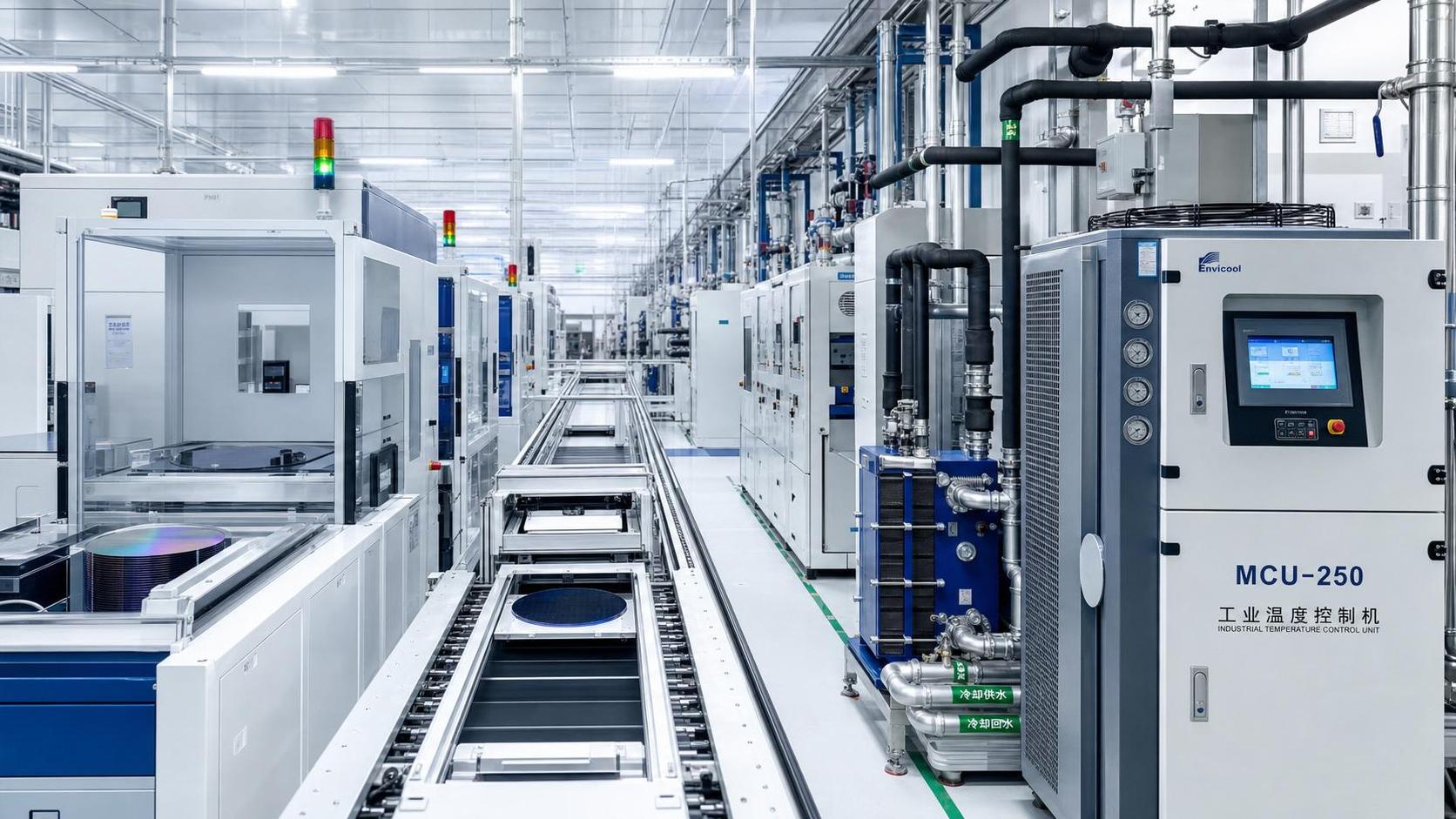
Recirculating chillers offer precise supply temperature and independent cooling control.
They are often selected for etch, deposition, lithography support, and test environments.
The benefit is precision.
The tradeoff is higher system complexity, more components, and stronger maintenance discipline.
3. Direct-to-Component Liquid Cooling
This approach targets heat close to the source.
Cold plates, microchannels, and dedicated loops remove thermal resistance from the path.
For high-density semiconductor cooling solutions, this design can deliver excellent heat flux performance.
However, sealing quality, leak detection, and fluid chemistry become non-negotiable.
4. Refrigerant-Based Localized Cooling
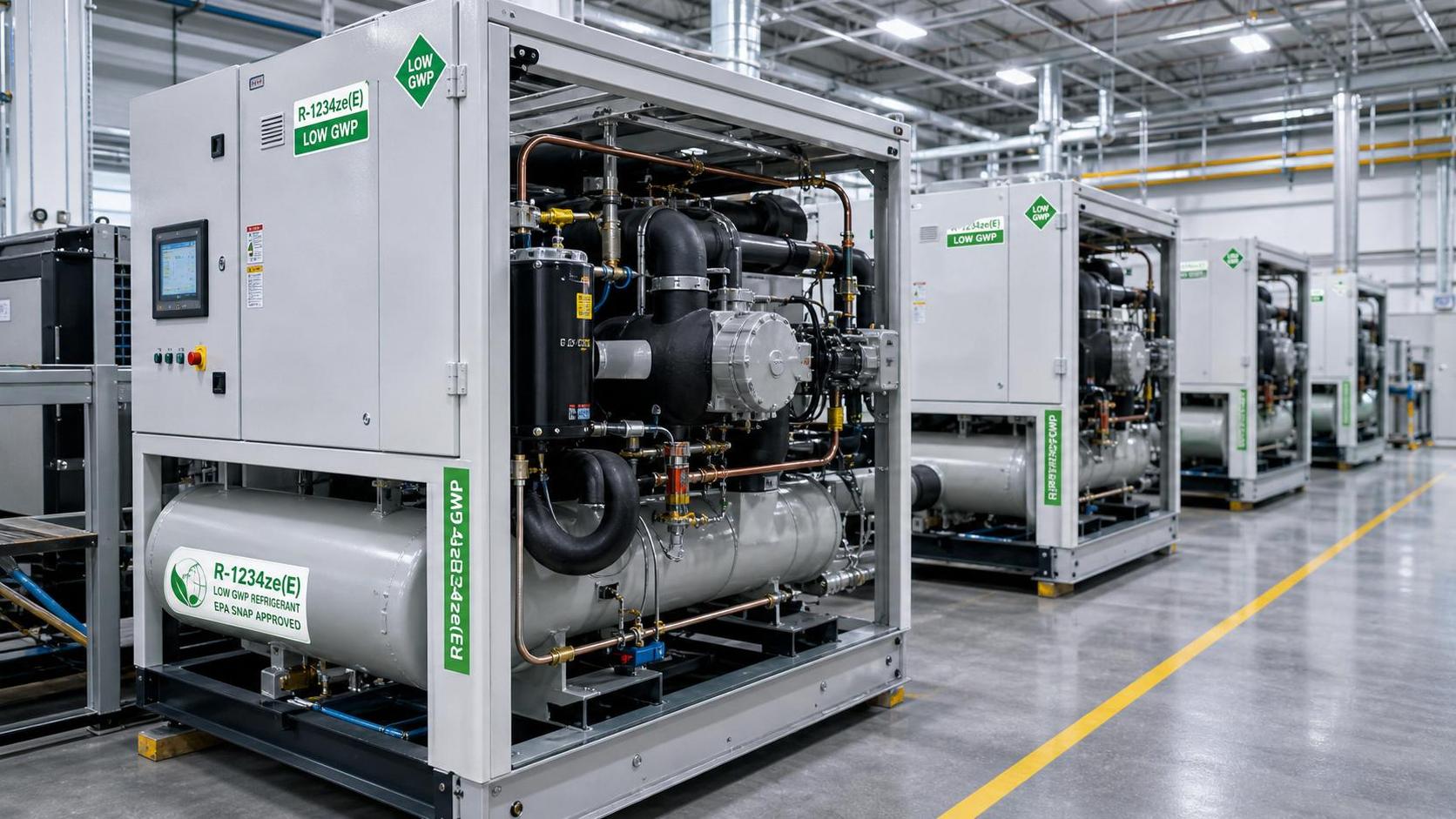
Some tools rely on localized refrigeration for very low or tightly staged temperatures.
This can be effective when ambient or water-based systems cannot hold the required window.
The downside is greater service specialization and tighter refrigerant compliance requirements.
5. Hybrid Cooling Architectures
Hybrid designs combine central utilities with localized precision loops.
More projects are moving in this direction.
The reason is simple.
They allow capacity efficiency at plant level and tighter stability where the process actually needs it.
Which Design Works Best? Start With the Load Profile
There is no universal winner among semiconductor cooling solutions.
The best design depends on how the tool behaves under real load.
A steady thermal load favors one architecture.
A pulsed or rapidly changing load may favor another.
In practice, three questions narrow the field quickly:
- How close must temperature stay to the setpoint during transient events?
- How sensitive is the process to particles, corrosion, or fluid contamination?
- How expensive is unplanned downtime compared with utility cost?
If the answer to all three is “very,” then simple utility cooling is rarely enough.
More precise semiconductor cooling solutions become justified, even with higher upfront cost.
Quick Selection Logic
Decision Factors That Matter More Than Brochure Specs
Selection mistakes usually come from focusing on nominal capacity alone.
The stronger signal comes from design details around reliability and control.
Thermal Stability Under Dynamic Operation
Ask for performance during ramp, idle, step change, and recovery.
That is where semiconductor cooling solutions reveal their real behavior.
Fluid Cleanliness and Material Compatibility
In semiconductor environments, tiny contamination events can trigger outsized losses.
Check wetted materials, filtration strategy, corrosion resistance, and service procedures.
Redundancy and Maintainability
A high-performance design loses value if it is difficult to service.
Look at pump redundancy, valve access, sensor calibration, alarms, and spare parts availability.
Energy and Water Use
With power prices and sustainability targets under pressure, utilities now influence design rankings.
Efficient semiconductor cooling solutions reduce both operating cost and future compliance risk.
Common Project Risks and How to Avoid Them
Several problems repeat across tool cooling projects.
Most are avoidable with earlier cross-functional review.
- Oversizing for peak load only, which hurts control at part load
- Ignoring pressure drop in long distribution paths
- Treating facilities water quality as stable when it is not
- Underestimating maintenance access inside crowded tool areas
- Skipping alarm integration with site monitoring systems
- Choosing low-cost components with poor semiconductor compatibility
A practical review gate helps.
Before final approval, verify load data, utility conditions, failure modes, startup sequence, and service plan.
That step often separates robust semiconductor cooling solutions from expensive rework later.
A Practical Recommendation for High-Density Tools
For most high-density semiconductor tools, hybrid designs are becoming the strongest default option.
They combine central efficiency with local precision, which is exactly what current process demands require.
That said, the right answer still depends on the thermal map, contamination sensitivity, and uptime target.
If the load is concentrated and dynamic, direct liquid cooling deserves serious attention.
If the process needs independent, repeatable control, chiller-based semiconductor cooling solutions often justify their cost.
If the objective is balanced reliability with moderate complexity, a secondary loop remains a strong choice.
The better path is not choosing the most advanced design by default.
It is choosing semiconductor cooling solutions that match the actual process risk, utility context, and ownership model.
In real projects, the best decisions come from testing assumptions early, comparing lifecycle scenarios, and forcing thermal performance into the same conversation as uptime and cost.
That is usually where the most durable value is found.
Related News
- How Smart Thermal Systems Improve Industrial Cooling EfficiencyAuthor :Cryogenic Systems Expert

- How to Choose Process Cooling Equipment for Stable Temperature ControlAuthor :Cryogenic Systems Expert

- EU Finalizes 2026 HFC Quota Cut for R-134a ChillersAuthor :Cryogenic Systems Expert

- EU Tightens HFC-134a Quotas for Industrial ChillersAuthor :Cryogenic Systems Expert

- REACH SVHC Update Pressures HFC-134a Chiller Supply ChainsAuthor :Cryogenic Systems Expert

- EU PFAS Coolant Ban Reshapes Chiller ExportsAuthor :Cryogenic Systems Expert

- EU REACH Restricts PFAS Cooling Media ImportsAuthor :Cryogenic Systems Expert

- EU Ecodesign Rule Takes Effect for Industrial ChillersAuthor :Cryogenic Systems Expert

- EU REACH Rule Takes Effect for PFAS in Industrial Cooling ExportsAuthor :Cryogenic Systems Expert

- Industrial Cooling for Plastic Processing: How to Size for Stable Cycle TimesAuthor :Cryogenic Systems Expert

- EU F-Gas Update Bars R404A/R507 in Commercial CoolingAuthor :Cryogenic Systems Expert

- DOE Raises Chiller Efficiency Standard From October 2026Author :Cryogenic Systems Expert

- India Mandates BIS Energy Certification for Industrial ChillersAuthor :Cryogenic Systems Expert

- Energy-Efficient Heat Exchange for Process Cooling: Cost vs PaybackAuthor :Cryogenic Systems Expert

- EPA R-134a Import Ban Takes Effect on July 13, 2026Author :Cryogenic Systems Expert

- India BIS Rule Takes Effect for Industrial ChillersAuthor :Cryogenic Systems Expert

- EPA Cuts R134a Import Quotas 20% From July 10Author :Cryogenic Systems Expert

- How to Compare Energy-Efficient Cooling Systems for Factory Expansion ProjectsAuthor :Cryogenic Systems Expert

- Chiller Price Index Rises 11.3% in Q2Author :Cryogenic Systems Expert

- Saudi SASO Tightens Chiller Import Compliance From July 10Author :Cryogenic Systems Expert

- Dubai Opens Fast-Track Chiller TendersAuthor :Cryogenic Systems Expert

- Japan Raises Chiller COP Floor to 6.2 From Sept. 1Author :Cryogenic Systems Expert
![]()
- Compact Thermal Management in Smart Devices: Common Failure RisksAuthor :Cryogenic Systems Expert

- Thermal Management for Batteries: Cooling Methods ComparedAuthor :Cryogenic Systems Expert

- How Compact Thermal Design Extends Smart Device UptimeAuthor :Cryogenic Systems Expert

- Shanghai-Rotterdam Reefer Rates Jump 37% in a WeekAuthor :Cryogenic Systems Expert

- Process Cooling Equipment Low Maintenance: What Cuts Downtime Over 5 Years?Author :Cryogenic Systems Expert

- Semiconductor Cooling Solutions: Which Design Works Best for High-Density Tools?Author :Cryogenic Systems Expert

- Semiconductor Thermal Management Systems: Preventing Yield Loss from Heat DriftAuthor :Cryogenic Systems Expert

- EPA Clears R-1234ze(E) for Industrial ChillersAuthor :Cryogenic Systems Expert
 for Industrial Chillers")
- DOE Raises Chiller IEER Floor to 12.8 From Oct. 2026Author :Cryogenic Systems Expert

- Singapore Refrigeration Show Adds Green Compliance HubAuthor :Cryogenic Systems Expert

- How Food Industry Temperature Control Systems Reduce Product LossAuthor :Cryogenic Systems Expert

- EU REACH Adds 12 SVHCs, Raising Chiller Compliance RiskAuthor :Cryogenic Systems Expert

- Precision Temperature Control Air Cooling: Key Setup Mistakes That Reduce StabilityAuthor :Cryogenic Systems Expert

- India BEE Eyes APF Labels for Imported ChillersAuthor :Cryogenic Systems Expert