DOE Raises Chiller IEER Floor to 12.8 From Oct. 2026




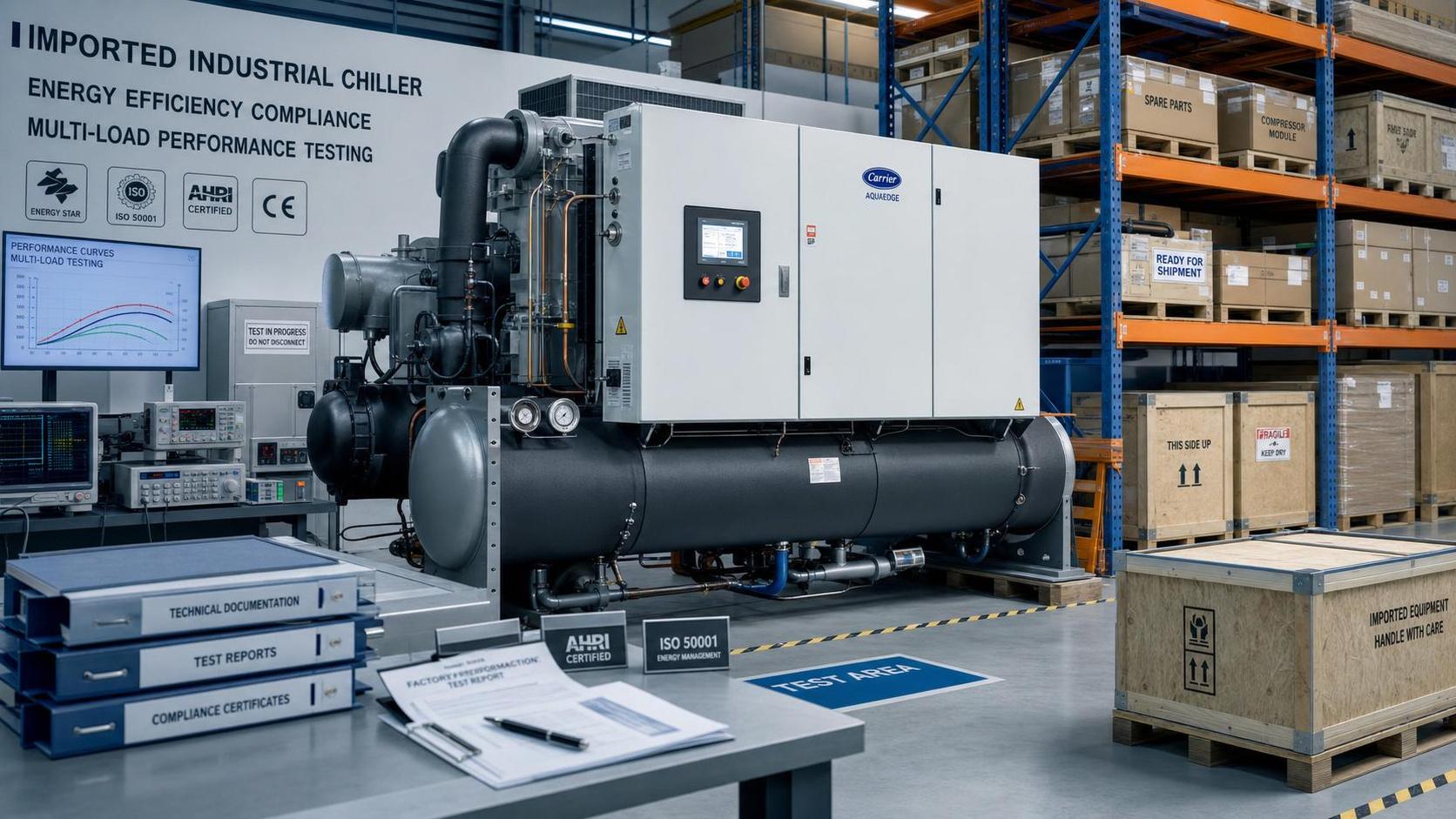
Effective from October 1, 2026, the U.S. Department of Energy's updated efficiency rule for industrial air-cooled chillers turns a technical metric into a direct compliance issue for exporters, buyers, testing bodies, and delivery planning. The change lifts the minimum IEER threshold for units with cooling capacity of at least 135 kW, applies to imported models, and requires testing under AHRI 550/590-2025 without accepting equivalent conversion reports. For companies supplying the U.S. market, this is worth close attention because product qualification, certification timing, nameplate updates, and shipment readiness may all need to be reassessed before delivery.
What the DOE rule now requires
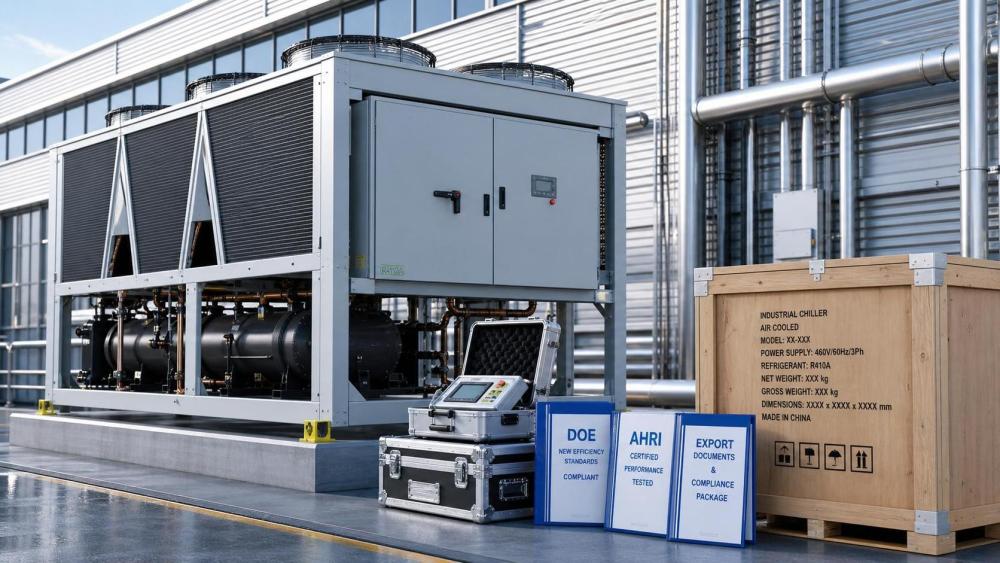
The confirmed facts are clear. The U.S. Department of Energy released a final rule on July 3, 2026 covering industrial air-cooled chillers with cooling capacity of 135 kW or above. Under that rule, the minimum IEER requirement rises from 11.5 to 12.8, and mandatory enforcement starts on October 1, 2026.
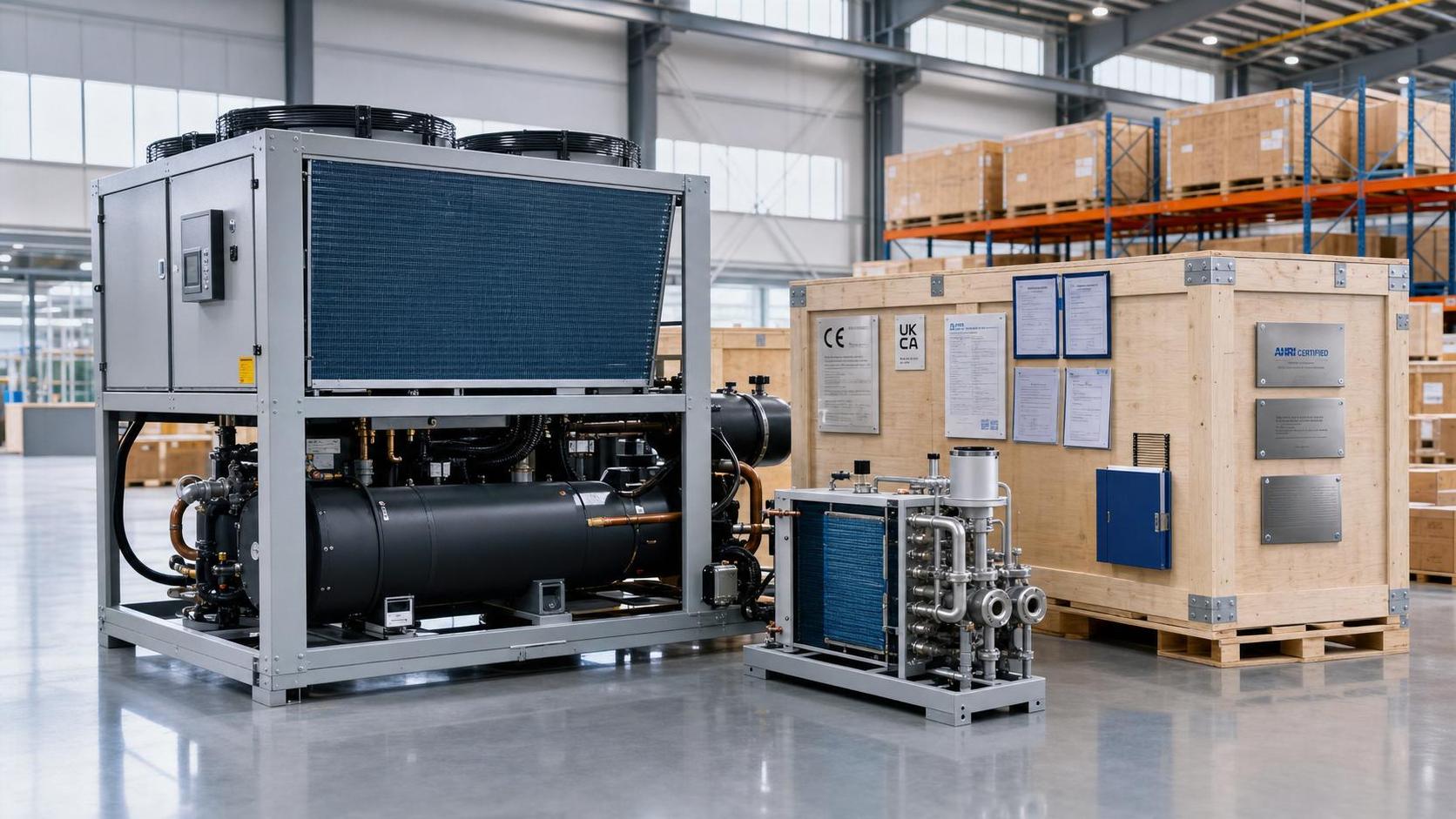
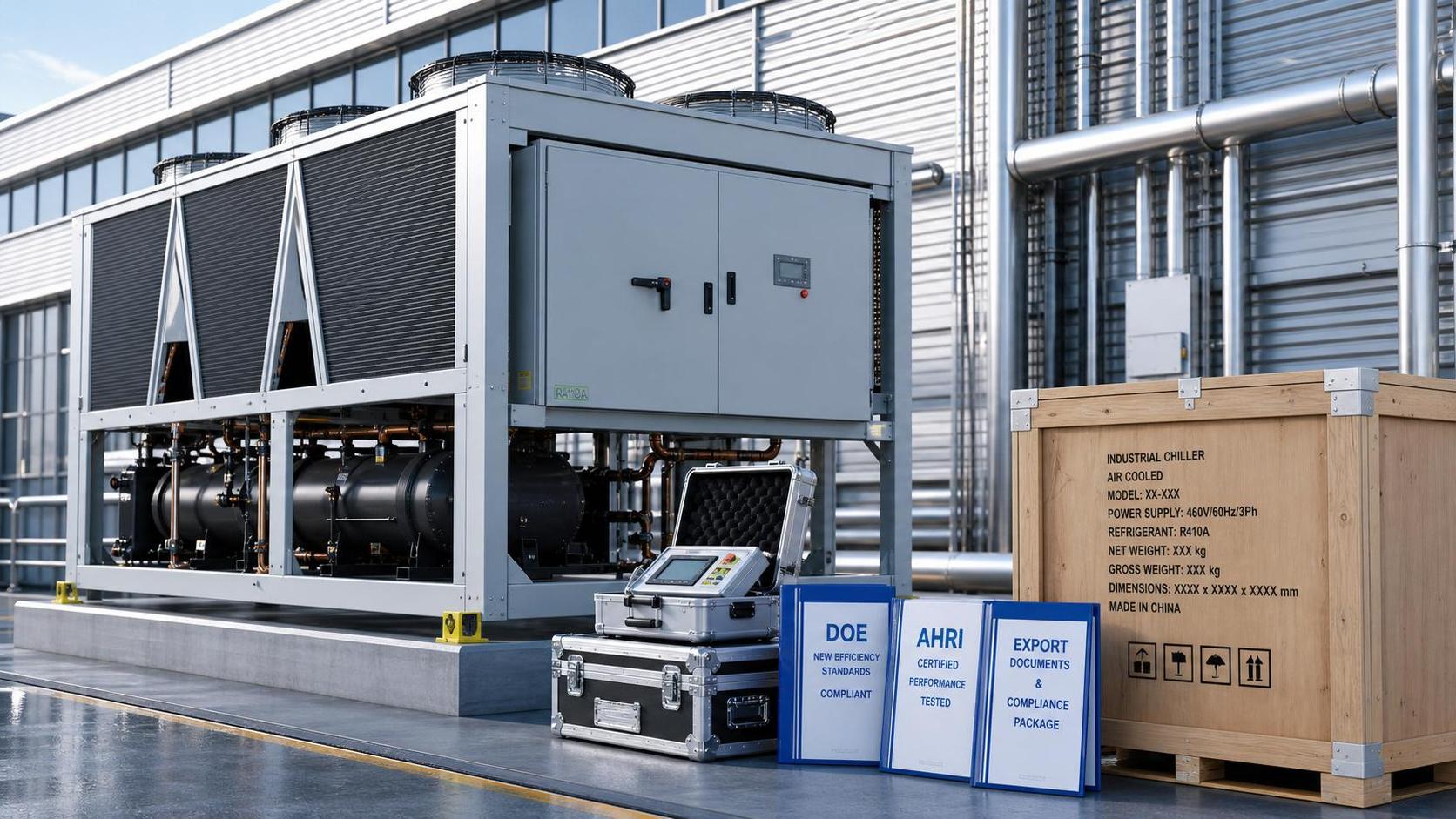
The rule applies to all imported models within the stated scope. Testing must be conducted in accordance with AHRI 550/590-2025, and equivalent conversion reports are not accepted. For Chinese exporters, the update also means re-certification and revised nameplate marking are required.
Where the immediate pressure is likely to appear
Export supply to the U.S. market
From an industry perspective, exporters are likely to feel the change first because market access now depends more directly on whether a covered model can meet the new IEER floor under the specified test method. The practical impact is not limited to product performance itself; it also extends to certification readiness, model documentation, and shipment eligibility for the U.S. market.
What deserves closer attention is that the rule does not allow equivalent conversion reports. That makes prior technical materials harder to reuse where they were prepared on a different basis, and it raises the importance of test documentation that matches the required standard exactly.
Procurement and project specification alignment
Buyers, importers, and project procurement teams may also be affected because technical specifications, tender documents, and supplier qualification checks may need to reflect the updated IEER threshold and the required AHRI 550/590-2025 testing basis. Analysis shows that procurement risk is less about headline policy awareness and more about whether the ordered model, supporting documents, and final delivered unit remain aligned under the new rule.
For transactions already in planning or quotation stages, the key issue is whether the compliance basis used in technical review still matches the enforcement requirement that starts on October 1, 2026.
Certification, testing, and delivery coordination
Certification-related companies, testing service providers, and supply chain coordinators are likely to face pressure in timing and document consistency. Observably, once re-certification and updated nameplate marking become necessary, the workflow between product testing, document issuance, labeling, customs-facing paperwork, and shipment release becomes more tightly connected.
After-sales and traceability functions may also need attention where delivered equipment must be clearly matched to the compliant model description and marking set used for the U.S. market.
What companies should review now
Re-check whether existing models still qualify
Analysis shows that manufacturers and exporters should first review which industrial air-cooled chiller models fall within the stated capacity range and whether their current compliance files are still usable under the new IEER threshold. This is a threshold question because the rule changes both the minimum value and the testing basis.
Verify the testing and certification path
What deserves closer attention is the requirement to test under AHRI 550/590-2025 and the explicit non-acceptance of equivalent conversion reports. Companies involved in export, compliance, or product approval should therefore check whether pending or existing reports satisfy that exact requirement, and whether re-certification schedules affect planned deliveries.
Update nameplates and technical documents together
For Chinese exporters in particular, the confirmed requirement to update nameplate marking means compliance work cannot stop at test results alone. Observably, nameplates, technical files, product literature, and transaction documents should be reviewed together so that the product description used in certification and the product information used in trade and delivery do not drift apart.
Watch contract timing and shipment exposure
From an industry perspective, companies should also review orders, tenders, and delivery plans that may sit close to the October 1, 2026 enforcement date. The input does not provide detailed enforcement practice, so it would be premature to state definite outcomes for every transaction scenario. Still, it is reasonable to monitor whether compliance review, supplier qualification, and delivery scheduling need to be tightened around that date.
How this change should be read at this stage
Observably, this development is better understood as an implemented compliance change rather than a distant policy signal. The final rule has been issued, the enforcement date has been specified, the covered product scope has been identified, and the testing basis has been named. That gives the market a concrete execution framework.
At the same time, analysis shows there is still reason to keep watching how the rule is reflected in certification practice, procurement language, and market-side document review. The most important issue now is not whether the requirement exists, but how consistently it is carried into testing files, supplier submissions, and delivered products.
A rule change with operational consequences
In practical terms, this DOE update is not just an adjustment to an efficiency benchmark. It links a higher IEER threshold with a specified testing standard, excludes equivalent conversion reporting, and requires re-certification and updated marking for affected Chinese exporters. For the industry, the current signal is clear: this should be treated as a live compliance and delivery issue tied to U.S.-bound industrial air-cooled chillers, while some execution details in market practice still merit continued observation.
Basis of this article and points still to monitor
This article is generated based on the user-provided news title, event date, and event summary. For developments of this kind, commonly relevant source types may include official announcements, releases from regulatory authorities, information from customs or trade authorities, industry association notices, standards organization documents, and reporting by authoritative media. A specific official source link was not provided in the input, so further verification remains necessary.
Further observation is still warranted regarding detailed implementation language, certification practice, tender document updates, industry feedback, and how companies execute compliance in actual export and delivery workflows.
Related News
- How Smart Thermal Systems Improve Industrial Cooling EfficiencyAuthor :Cryogenic Systems Expert

- How to Choose Process Cooling Equipment for Stable Temperature ControlAuthor :Cryogenic Systems Expert

- EU Finalizes 2026 HFC Quota Cut for R-134a ChillersAuthor :Cryogenic Systems Expert

- EU Tightens HFC-134a Quotas for Industrial ChillersAuthor :Cryogenic Systems Expert

- REACH SVHC Update Pressures HFC-134a Chiller Supply ChainsAuthor :Cryogenic Systems Expert

- EU PFAS Coolant Ban Reshapes Chiller ExportsAuthor :Cryogenic Systems Expert

- EU REACH Restricts PFAS Cooling Media ImportsAuthor :Cryogenic Systems Expert

- EU Ecodesign Rule Takes Effect for Industrial ChillersAuthor :Cryogenic Systems Expert

- EU REACH Rule Takes Effect for PFAS in Industrial Cooling ExportsAuthor :Cryogenic Systems Expert

- Industrial Cooling for Plastic Processing: How to Size for Stable Cycle TimesAuthor :Cryogenic Systems Expert

- EU F-Gas Update Bars R404A/R507 in Commercial CoolingAuthor :Cryogenic Systems Expert

- DOE Raises Chiller Efficiency Standard From October 2026Author :Cryogenic Systems Expert

- India Mandates BIS Energy Certification for Industrial ChillersAuthor :Cryogenic Systems Expert

- Energy-Efficient Heat Exchange for Process Cooling: Cost vs PaybackAuthor :Cryogenic Systems Expert

- EPA R-134a Import Ban Takes Effect on July 13, 2026Author :Cryogenic Systems Expert

- India BIS Rule Takes Effect for Industrial ChillersAuthor :Cryogenic Systems Expert

- EPA Cuts R134a Import Quotas 20% From July 10Author :Cryogenic Systems Expert

- How to Compare Energy-Efficient Cooling Systems for Factory Expansion ProjectsAuthor :Cryogenic Systems Expert

- Chiller Price Index Rises 11.3% in Q2Author :Cryogenic Systems Expert

- Saudi SASO Tightens Chiller Import Compliance From July 10Author :Cryogenic Systems Expert

- Dubai Opens Fast-Track Chiller TendersAuthor :Cryogenic Systems Expert

- Japan Raises Chiller COP Floor to 6.2 From Sept. 1Author :Cryogenic Systems Expert
![]()
- Compact Thermal Management in Smart Devices: Common Failure RisksAuthor :Cryogenic Systems Expert

- Thermal Management for Batteries: Cooling Methods ComparedAuthor :Cryogenic Systems Expert

- How Compact Thermal Design Extends Smart Device UptimeAuthor :Cryogenic Systems Expert

- Shanghai-Rotterdam Reefer Rates Jump 37% in a WeekAuthor :Cryogenic Systems Expert

- Process Cooling Equipment Low Maintenance: What Cuts Downtime Over 5 Years?Author :Cryogenic Systems Expert

- Semiconductor Cooling Solutions: Which Design Works Best for High-Density Tools?Author :Cryogenic Systems Expert

- Semiconductor Thermal Management Systems: Preventing Yield Loss from Heat DriftAuthor :Cryogenic Systems Expert

- EPA Clears R-1234ze(E) for Industrial ChillersAuthor :Cryogenic Systems Expert
 for Industrial Chillers")
- DOE Raises Chiller IEER Floor to 12.8 From Oct. 2026Author :Cryogenic Systems Expert

- Singapore Refrigeration Show Adds Green Compliance HubAuthor :Cryogenic Systems Expert

- How Food Industry Temperature Control Systems Reduce Product LossAuthor :Cryogenic Systems Expert

- EU REACH Adds 12 SVHCs, Raising Chiller Compliance RiskAuthor :Cryogenic Systems Expert

- Precision Temperature Control Air Cooling: Key Setup Mistakes That Reduce StabilityAuthor :Cryogenic Systems Expert

- India BEE Eyes APF Labels for Imported ChillersAuthor :Cryogenic Systems Expert